DD
MM
YYYY

PAGES

DD
MM
YYYY

spot_img

PAGES

Home Blog Page 66

Sequoia, GIC, and Coatue Lead $25bn Funding Round for Anthropic at $350bn Valuation

0

Venture capital giant Sequoia is joining Singapore’s sovereign wealth fund GIC and U.S. investor Coatue in a massive funding round for Anthropic, the San Francisco-based AI startup behind the Claude chatbot, aiming to raise $25 billion at a $350 billion valuation, the Financial Times reported Sunday, citing sources familiar with the matter.

According to the report, GIC and Coatue are each expected to contribute $1.5 billion toward the round, with Sequoia anchoring the syndicate. Representatives for Anthropic, Sequoia, GIC, and Coatue did not immediately respond to requests for comment.

Anthropic has emerged as one of the leading names in generative AI, attracting global attention for its Claude models, which are positioned as enterprise-friendly alternatives to OpenAI’s ChatGPT. The startup last raised $13 billion in a Series F round in early 2025 at a $183 billion valuation and had also secured commitments for up to $15 billion from Microsoft and Nvidia. The proposed $25 billion round would not only more than double the company’s prior valuation but also mark one of the largest private funding rounds in the technology sector to date.

The astronomical valuations come amid low return on investment (ROI) for many AI startups. OpenAI, for example, has burned through more than $8 billion in 2025 alone while generating relatively modest revenue from subscription services such as ChatGPT Plus.

Analysts caution that much of the AI funding frenzy has been driven by investor confidence in the technology’s long-term transformative potential rather than current profitability. Investors appear willing to tolerate years of negative returns in the belief that AI could one day redefine entire industries, from enterprise software to cloud services and digital automation.

Sequoia’s participation underscores the continued faith of established venture capital in AI, even as valuations reach unprecedented heights. Founded in 1972, Sequoia has backed some of the most successful tech companies in history, including Google, Apple, YouTube, and Cisco. Its involvement signals strong confidence in Anthropic’s technology, enterprise adoption potential, and ability to compete with OpenAI, Google DeepMind, and other generative AI leaders.

The infusion of capital will allow Anthropic to expand its AI research, improve model robustness, scale cloud infrastructure, and accelerate enterprise sales and licensing. Market observers highlight that enterprise adoption has become the primary pathway for monetization, as subscription-based offerings, custom AI solutions, and cloud-powered deployments begin to generate measurable revenue streams.

However, given the scale of the funding and the current state of AI profitability, Anthropic will face intense pressure to convert capital into sustainable revenue while managing costs associated with compute-intensive model training.

Sovereign wealth funds, such as GIC, also play a strategic role in shaping the AI ecosystem. Singapore’s investment reflects the city-state’s ambition to cement its position as a global hub for artificial intelligence, leveraging both capital and policy to attract leading technology firms. Coatue’s participation further illustrates U.S. investor enthusiasm for high-value AI ventures, particularly those with proven technology and enterprise-ready offerings.

The round comes amid a broader surge of capital flowing into the AI sector, which analysts warn is reaching levels reminiscent of historic technology bubbles. While some startups like Google and Meta can rely on profits from existing businesses to fund AI research, companies such as OpenAI and, potentially, Anthropic operate with little revenue relative to cash burn.

OpenAI’s projected cash exhaustion within 18 months, according to analysts, exemplifies the high-risk nature of these investments. Yet, investors continue to back AI, betting that the first firms to dominate foundational models could capture enormous future value, making early losses tolerable.

With this new round, Anthropic is poised to solidify its position as one of the preeminent AI developers globally. The company’s Claude models compete directly with OpenAI’s offerings and are increasingly finding traction with enterprise clients seeking AI solutions optimized for productivity, compliance, and security. Yet the massive influx of capital also raises questions about market sustainability, given that valuations now outpace demonstrable revenue and ROI.

The funding round is likely to reshape the competitive landscape for AI, determining which startups have the resources to scale globally and which may fall behind. The bets are both enormous and speculative for investors: a successful deployment of Claude could cement Anthropic as a dominant player in AI, while failure could echo the fate of prior overhyped tech ventures.

Even so, the continued flow of capital into companies like Anthropic and OpenAI reflects the enduring belief among investors that artificial intelligence represents the next frontier of technological disruption, with potential returns that justify even extreme risk-taking today.


Saudi Stocks Rebound as Market Liberalization Lifts Sentiment Across ME, but Oil Keeps Investors Cautious

0

Saudi Arabian equities ended Sunday’s session higher, clawing back losses from the previous day and reasserting a cautiously constructive tone in the market, even as investors remained wary of soft oil prices and broader global uncertainties.

The Tadawul All Share Index rose 0.9%, recovering from a pullback that had brought an end to a six-session winning streak. Buying interest was concentrated in select large-cap names, with ACWA Power Company jumping 3.9% and Saudi Arabian Mining Company gaining 1.5%, underscoring continued appetite for stocks linked to energy transition, infrastructure, and industrial development themes that sit at the heart of the kingdom’s economic agenda.

The immediate catalyst for the rebound was a government announcement that Saudi Arabia will further liberalize access to its capital markets for foreign investors starting next month. Market participants say the move is designed to make the exchange more attractive to global asset managers, sovereign funds, and pension investors, particularly those with longer investment horizons, and to reinforce Saudi Arabia’s push to position Tadawul as a regional financial hub.

This policy shift comes at a delicate moment for the market. Oil prices, while off recent lows, remain subdued relative to levels that typically provide strong fiscal tailwinds for Gulf economies. That has kept investors selective and has limited broad-based risk-taking, even as domestic economic indicators remain supportive.

Beyond oil, Saudi Arabia’s macroeconomic backdrop continues to offer a cushion. The non-oil economy is expanding at a pace of more than 4%, driven by heavy public investment in mega-projects, tourism, logistics, renewable energy, and advanced manufacturing under the Vision 2030 programme. These projects are not only supporting growth but are also reshaping sectoral leadership within the equity market, gradually reducing its historical dependence on hydrocarbons and banks alone.

Foreign participation has become an increasingly important pillar of market stability. Over the past year, foreign inflows running into tens of billions of riyals have helped deepen liquidity, narrow bid-ask spreads, and soften market swings during periods of global volatility. Analysts note that this growing international investor base is also contributing to more disciplined pricing, as global funds tend to rotate rather than exit abruptly.

Rania Gule, senior market analyst at XS.com – MENA, said these dynamics are likely to keep the Saudi market range-bound in the near term, albeit with a mild upward bias. She said a clearer directional move would likely depend on a combination of stabilizing oil prices and strong quarterly earnings, particularly from banks, energy companies, and telecommunications firms, which remain core drivers of index performance.

In Qatar, equities also edged higher, with the benchmark index adding 0.5%. Gains were led by Industries Qatar, which rose 0.8%, reflecting steady interest in petrochemicals and industrial exporters amid expectations of resilient regional demand and relatively stable feedstock costs.

Outside the Gulf, Egypt continued to stand out as one of the strongest performers in emerging and frontier markets. The EGX30 index advanced 1.4% to a new record high, with almost all constituents closing in positive territory. Egypt Aluminum surged 6.6%, benefiting from a combination of stronger investor confidence, export prospects, and expectations of improved operating conditions.

Gule said the rally in Egyptian equities points to a broader improvement in risk appetite, supported by economic reforms, tighter fiscal discipline, and increased flexibility in the exchange-rate regime. Investors are also positioning ahead of anticipated government initial public offerings and new corporate listings, which are expected to expand market depth and attract fresh foreign capital.

Across the region, the picture that emerges is one of cautious optimism. Structural reforms, capital market liberalization, and diversification efforts are providing a supportive foundation for equities, even as external pressures, from oil price uncertainty to global monetary conditions, continue to shape short-term trading behavior.

Best Crypto for the Future With Up to 10,000x ROI Potential in 2026

0

Not all presales are equal, and in 2026, the gap between token supply and long-term ROI is widening fast. While hype cycles come and go, some projects are building for scale, speed, and price multiples that still fit inside a 100x to 10,000x window. The best crypto for the future isn’t about branding or influencer charts, it’s about structure, access, and timing.

With utilities already live in some cases and insider-free auction models in others, early buyers still have a window before liquidity hits. But that window is closing daily and once it’s priced in, it’s priced out.

Zero Knowledge Proof: No VCs, No Discounts

Zero Knowledge Proof (ZKP) starts this list because of how it’s structured, not just what it builds. The 450-day presale auction is already underway. But here’s the difference: no VC pre-sales, no insider rounds, no early discounts. Just public-only entries, one fixed cap per buyer, and a target raise of $1.7 billion. Price discovery resets daily, so every 24-hour window matters.

This setup eliminates backdoor entries that dilute ROI later. Everyone enters on equal terms, which means the only way to access the 100x to 10,000x window is by participating early, not by waiting for listings or private unlocks. It’s a structure that rewards public positioning over private access.

ZKP’s infrastructure, built on Substrate with Proof-of-Intelligence and zk-SNARKs for verifiable AI comput,e is already functional. But the clock is the real pressure here. The auction doesn’t pause. Supply shrinks every day. In a presale world shaped by dilution and vesting cliffs, ZKP flips the formula. If ROI is based on scarcity and fairness, ZKP is priced for those who understand time, not hype.

2. DeepSnitch AI ($DSNT): Tools First, Token Second

DeepSnitch AI is one of the best crypto for the future because its products came before its listings. The project already has live utilities, including a dashboard, staking mechanics, and on-chain monitoring well ahead of its full token launch.

That approach stands out in a presale environment often built on nothing but a landing page. Demand is growing from users who want early access to working tools and structured incentives, and funding traction reflects that. DSNT’s active ecosystem gives early buyers something to interact with while they wait for exchange exposure, which strengthens its case for real-world use and ROI durability post-launch.

3. Bitcoin Hyper ($HYPER): Layer-2 for the Original Chain

Bitcoin Hyper positions itself as a scaling solution for Bitcoin. It’s not trying to replace BTC, it’s trying to improve it. By bringing smart contract functionality and faster transaction capabilities through a dedicated Layer-2 architecture, HYPER aligns with infrastructure-focused buyers who care more about performance upgrades than meme cycles.

Early presale rounds are pricing upward, and the model leans into BTC’s security base while expanding DeFi access. For buyers asking what’s the best long-term crypto buy, Bitcoin Hyper offers a functional thesis that taps into Bitcoin’s large user base while addressing one of its most persistent limitations: scalability.

4. Nexchain ($NEX): Interoperable AI Chain With Capital Inflow

Nexchain is gaining visibility as an AI Layer-1 project focused on interoperability, a core theme in infrastructure narratives for 2026. With growing capital allocation across its presale rounds, it’s clear NEX is drawing attention from those who want cross-chain flexibility without compromising AI specialization.

The presale doesn’t lean on hype cycles. Instead, it highlights roadmap clarity, technical specs, and liquidity planning. By designing a chain that speaks to other protocols and prioritizes developer compatibility, Nexchain checks multiple utility boxes. If the next crypto to explode is defined by where funds are flowing early NEX fits.

5. Dodgeball Token: Meme Meets GameFi Infrastructure

Dodgeball Token blends community-driven gaming mechanics with Layer-2 tech, placing it in the GameFi category but with more structure than most meme-based entries. Its presale is structured in multiple phases, and early players can access the gaming environment ahead of the full listing.

What’s different here is the hybrid approach. It’s not just community momentum; it’s paired with infrastructure for in-game transactions and rewards, giving it multiple pathways to stay relevant beyond just branding. Analysts mention it as one of the more active gaming presales worth tracking.

Timing vs Access

When evaluating the best crypto for the future, the differentiator is no longer narrative alone, but its structure. ZKP’s public-only, clock-driven raise is designed to concentrate ROI among early buyers instead of unlocking discounts later. Projects like DSNT, NEX, and HYPER offer functional value ahead of launch, while others like Pepeto and APEMARS operate in pricing cycles tied to timing.

For those filtering between hype and substance, the combination of funding structure, delivery speed, and token utility will define which presale coins actually hold value after listings go live.

Maruti Suzuki Bets Big on Gujarat With $3.9bn Plant as India’s Auto Demand Surges

0

Maruti Suzuki will invest 350 billion rupees ($3.9 billion) to build a new manufacturing plant in Gujarat, deepening its footprint in western India as it moves to meet rising domestic demand and strengthen its export base in the world’s third-largest car market.

The decision marks one of the most significant capacity expansion moves by an Indian automaker in recent years, underscoring both the strength of domestic demand and the company’s ambitions beyond India’s borders.

According to the Gujarat state government, the proposed plant will add production capacity of up to 1 million vehicles annually, with manufacturing expected to begin in the 2029 financial year. Once operational, the facility will lift Maruti Suzuki’s total annual production capacity to about 3.4 million vehicles, up from roughly 2.4 million today.

The investment comes at a time when India’s passenger vehicle market continues to show strong momentum. India is now the world’s third-largest car market, and demand has been supported by rising household incomes, easier access to vehicle financing, expanding road infrastructure, and a growing preference for personal mobility. For Maruti, which dominates the entry-level and compact segments, these structural trends remain central to its growth story.

Near-term indicators already point to tight supply conditions. The company currently has an order backlog of about one and a half months for its entry-level models, according to its marketing and sales head, Partho Banerjee. In December, Maruti said sales to domestic dealers surged 37% year on year to a record 178,646 units, highlighting how quickly demand is absorbing existing capacity.

The board has approved an initial investment of 49.6 billion rupees to acquire land for the Gujarat plant, signaling that the project is moving beyond the planning stage. Gujarat has increasingly become Maruti’s manufacturing base of choice, complementing its older facilities in Haryana. The state offers logistical advantages, including access to ports that support exports, as well as a policy environment that has consistently attracted large industrial investments.

Exports are an important part of the expansion logic. Maruti has steadily increased shipments to markets in Africa, Latin America, and parts of Asia, positioning India as a global production hub for Suzuki’s small and compact vehicles. Additional capacity in Gujarat strengthens Maruti’s ability to scale exports without compromising supply to the domestic market.

The long timeline to start production, with output expected only from 2029, also reflects the capital-intensive nature of modern auto plants and the company’s measured approach to expansion. Rather than chasing short-term spikes in demand, Maruti appears to be planning capacity that aligns with its medium- to long-term outlook for India’s auto market, which it expects to keep expanding steadily rather than explosively.

The investment also comes against the backdrop of a changing automotive landscape. While Maruti remains heavily focused on petrol and compressed natural gas vehicles, it is gradually preparing for a future shaped by tighter emission norms and growing electrification. Having additional manufacturing capacity gives the company flexibility to adjust its product mix over time, whether that means scaling up hybrids, introducing more electric models, or responding to regulatory shifts.

For Suzuki Motor, which owns a majority stake in Maruti, the project reinforces India’s central role in its global strategy. India is not only Suzuki’s largest market by volume, but also a critical export base, and large-scale investments such as the Gujarat plant underline the parent company’s long-term commitment.

At the state level, the project strengthens Gujarat’s standing as a key manufacturing hub and is likely to generate significant employment and ancillary industry growth over time. Maruti Suzuki is thus pushing that capacity constraints should not be what limit its growth in a market where demand remains strong, competition is intensifying, and scale continues to matter.

Taken together, the Gujarat investment is less about responding to a single strong sales year and more about positioning for the next phase of India’s automotive growth cycle—one in which Maruti Suzuki intends to remain firmly in the driver’s seat.

EU Weighs Rare Anti-Coercion Measures as Trump Escalates Tariff Threats Over Greenland

0

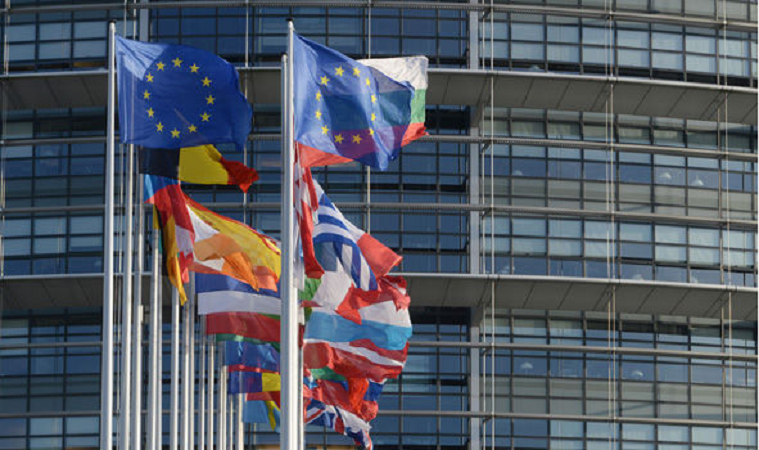
The European Union faced mounting pressure on Sunday to deploy its most powerful and never-before-used trade defense tool after U.S. President Donald Trump threatened sweeping tariffs on European allies in a bid to force the sale of Greenland, sharply escalating an already tense transatlantic dispute.

The situation is fast becoming a stress test of Europe’s economic sovereignty, alliance politics, and willingness to deploy hard trade power against its closest security partner.

Trump’s declaration on Saturday that he would impose escalating tariffs on a group of European countries until the United States is allowed to buy Greenland marked a sharp departure from conventional trade disputes. By explicitly linking punitive economic measures to a territorial demand involving a NATO ally, Washington has pushed the disagreement beyond commerce into the realm of strategic coercion, prompting alarm across European capitals.

At the heart of the EU’s deliberations is whether this moment warrants the first-ever use of the bloc’s Anti-Coercion Instrument, a legal framework designed precisely for situations where a third country seeks to force policy changes through economic pressure. Adopted after years of debate and shaped by earlier disputes with China, the tool was intended as a deterrent. Its possible activation against the United States underscores how dramatically transatlantic relations have shifted.

Diplomats say Sunday’s emergency meeting in Brussels, convened by Cyprus as holder of the EU’s rotating presidency, reflected both urgency and unease. While there is broad agreement that Trump’s approach crosses a line, consensus on how to respond remains elusive. Some governments argue that failure to react forcefully would weaken the EU’s credibility and invite further demands. Others fear that retaliation could spiral into a trade confrontation that Europe, given its export dependence, would struggle to contain.

France has emerged as a leading voice for a robust response. Officials close to President Emmanuel Macron argue that the Greenland episode strikes at the core of European autonomy, not only in trade but in foreign policy. In Paris, the concern is that allowing tariffs to be used as leverage over territorial or security issues would normalize a practice that could later be turned inward against EU decision-making on defense, technology, or industrial policy.

Germany’s industrial lobby has reinforced that view, framing the dispute as a precedent-setting moment. Export-oriented manufacturers, already under pressure from weak global demand and lingering trade barriers, warn that acquiescence would expose European companies to chronic uncertainty. Business leaders stress that the issue is no longer about tariff levels but about whether economic rules can be bent to serve unrelated political goals.

Yet divisions within Europe are real. Italy’s more cautious stance reflects a broader calculation shared by some southern and eastern member states: that keeping channels open to Washington, even in a crisis, may yield better long-term outcomes than immediate retaliation. Prime Minister Giorgia Meloni’s direct call with Trump highlights an alternative strategy centered on personal diplomacy and de-escalation, though its effectiveness remains uncertain.

Britain’s position adds another layer of challenge. While no longer an EU member, London is directly targeted by the tariff threat and has its own limited trade deal with Washington at stake. UK officials have signaled reluctance to escalate, mindful of their dependence on the U.S. relationship in trade, security, and intelligence. That restraint, however, risks leaving Britain isolated if the EU chooses a harder line.

The economic implications are potentially significant. Trump’s threat calls into question the viability of the trade agreements struck last year with both the EU and Britain, deals that were already politically fragile. In Brussels, there is growing skepticism that the European Parliament can proceed with planned tariff reductions for U.S. goods while Washington is openly threatening new duties. Suspending or shelving the agreement would deal a blow to efforts to stabilize transatlantic trade ties after years of friction.

Beyond immediate trade flows, the dispute feeds into a larger debate about Europe’s place in a more transactional global order. The Anti-Coercion Instrument was conceived as part of a broader strategy to equip the EU with tools comparable to those wielded by major powers. Using it against the United States would be a dramatic statement that Europe is prepared to defend its interests regardless of the partner involved, but it would also mark a psychological break in the post-war assumption that transatlantic disputes can always be managed quietly.

The timing has sharpened the contrast in Europe’s external strategy. As Trump’s tariff threat reverberated, the EU was finalizing its free trade agreement with Mercosur, its largest ever. European Commission President Ursula von der Leyen has framed that deal as evidence that Europe remains committed to open, rules-based trade even as others turn to tariffs and pressure. For some policymakers, that makes standing firm against Washington all the more important to preserve the EU’s credibility on the global stage.

However, the bloc is trying to balance deterrence and diplomacy for now. EU officials say no decision has been taken on activating the Anti-Coercion Instrument, but the fact that it is being openly discussed signals how seriously the threat is being taken.

It is not clear whether Europe will ultimately choose retaliation or restraint. What is clear is that the Greenland dispute has already altered the tone of transatlantic relations, exposing fault lines that extend far beyond tariffs and into the future shape of the alliance itself.