DD
MM
YYYY

PAGES

DD
MM
YYYY

spot_img

PAGES

Home Blog Page 6609

UCH Ibadan: When A Hospital Dies!

0

It is a happy moment after getting the news that my sister in-labor has delivered. I and my mum drove down to Ibadan to visit her. Her ward is at the top of one of the 6-floor buildings. At the base, we smiled down to the lift. As we wait with others for the lift to come around and drop it occupant for us to step in, a man came up hurriedly … “you can’t go in there. The Lift cant takes you, we are still looking for a way to let out people inside as the elevator has jammed, no power to carry you unless you will wait for the elevator to rest”.

I was fascinated by his words. What I know is that when people get tucked in the elevator, it is an emergency. The only reason I wasn’t freaking out by the news was that the man was more concerned about us not getting in than the people there getting out. I looked at my mum, I wondered why she is still staying around as I know the problem should not be our problem since there is another way of getting to the top; the stairs. I saw the disappointment in her face as we turned for the stairs. She stayed at the base and inhaled heavily…The Hospital is about to tell me her story.

For months now I have been wanting to write about my experience at the UCH (University College Hospital, Ibadan) two months ago, but couldn’t find a way to start. Is it from my sister that just delivered that we went to visit? Will it be from my mum that we went together? Will it be from me or the hospital itself? If then how I get to start turned out to be not good enough, I only hope you get the message.

If you have not been to the UCH then you might not get the imagery I am hoping to paint with this write-up but yet this is not about the hospital, this is the story of the part of this country we do miss when we are distracted by entertainment on TV or the shenanigans of politics or sport. I am sure the same story can be told from different experiences of people walking this nation.

I wasn’t born in the UCH but that is where I opened my eyes into. The stairs, the smell, the smiling and hard faces of nurses who are to me ladies or women, the periodic appearance of doctors that I know to be men, the tall buildings and the large environment occupied by the hospital. My mum is a nurse, which should explain my relationship with the soul of the hospital. As a woman that schooled in Ibadan, and worked at UCH before We moved to Osun State after its creation, she also had many friends in the hospital. Her friends automatically are mini-mums to me, so I do jump around a lot. The Period at the moment will be between 1990-1993 where I just started schooling.

Visiting UCH 30 years after, nothing much has changed. And 30 years before then, UCH was being created, making the Hospital around 60 years old, let us remember according to the World Health Organization (WHO), in 2005 life expectancy in Nigeria was put at 48 years for males and 50 years for females. Meaning, if UCH were woman, she is already dead…funny.

In a few minutes I am already on the 2nd floor. I looked back and couldn’t find my mum. I traced my steps back to find her half the first-floor stairs waiting, smiling at me as I showed up again. I remember the old days where my mum drags me up the stairs as I try hard to catch up, I became sorry for her but much more sorry for myself how I thought a mother that has aged 30 years from the time in UCH will climb the stairs the same way, so I waited for her as she picked up again. It was at this moment that I got to look around to appreciate again the great hospital which as served the people of Nigeria, cured many and watched many passes away to great beyond (aka death). I paid attention to the staircase.

It is old. I see wear and tear on the stone marble floor of the cases. I wondered what rocks would have gone through from the human feet that have made it depressed like the sole of a shoe overused. The depression went down so much that the iron rod used as a skeleton for the stone also has experienced the same wear-out; bent out. My mind got off and took me back to the elevators, asking my brain to determine how tired the mechanisms must have been considering what time and use have done to the stones on the floor.

It took time, but we got to the maternity ward where my sister and the new baby were. She looks tired. Yes, she just delivered but I also know the mosquitoes that welcome us as we entered had a good part played. I asked her how she copes with the mosquitoes, she said: “stay awake and sleep later in the day”. In my mind, I am already getting mad about the situation in the hospital, but it seems she is not that bothered about the mosquito, even though she only has spent a few days there, I know she has seen more monsters that have put mosquitoes to what they literally are; ‘ants’. As touchy that I was, I wanted to know.
‘Sister, since you got here, have you gone down the floors?’, I asked her.

“No,” she replied. How can I go down, the lifts are not good and it’s painful moving down the stairs. Yesterday was a mother that came with her daughter to deliver her grandchild. She is an old woman. From time to time she has been sent to get drugs or other things for her daughter in-labor. At her first journey, she’s already tired, when it was up to six times she was sent all the way down, she refused to go again”.

“Why?”, I jumped in, “of course, she is exhausted and couldn’t go anymore. The nurses told her if she does not go, her daughter will die, she just sat down on the floor and started crying saying ‘I can’t go again’”

If I have not seen much in life, I have seen the hen that one of her numerous kids is about to die, and I can remember the pity. For a human mother, I can imagine, when you come in to get a grandchild but they told you you will lose even the daughter…

“wow, this is insane, cant the nurses help to get stuff for her…”

“NO, THEY WON’T! THEY ARE WICKED PEOPLE…”

“Nurses are not wicked people” mum interrupted, “they are just understaffed, too much on their hands and the life of others is equally important to them”.

It is not in many situations I feel connected to people, but here is my lil-sis that I used to wake to school, holding her hands tight and protecting her, now she is a lady grown into a big responsibility with natural protective and caring instinct of her own for her baby. Running from pillar to pole to get things done. I wonder if a mother that just delivered should go through all these. In a maternity ward where having male inside is frowned at, so her husband couldn’t help much. I want to do something but I can’t just as a stand transfixed; breathing pains in the air. Where does care start and stop for mothers in Nigeria health system? Pardon me if am just getting into the party but your long stay in it will not make a bad situation good. The experience makes human regeneration seem more like danger than a norm to me.

Mother left practicing nursing long ago, and since then raised in the ranks of academicians. As a lecturer with years of experience, her students are already bosses in hospitals, that explains how I stayed that long in the maternity ward. As a doctor nurse (Ph.D. holder), things get even tighter for her, the height in educational achievement has not lessened the stress. 

We are on our way out after the visitation. I engaged her, trying to process my experience at UCH
“Mum, with all you complain of much workload, where are those students that you guys kept graduating in the Universities across the country?

‘It is the same happening in the universities’ she replied ‘low hands as the government can’t pay them. So many are still looking for jobs, or already in Canada living their essence’.

I couldn’t ask more so I won’t visibly be crying for my country in front of the hospital. 
There is the story of a nation.

Drone-as-a-service (Daas): Potential Use Cases In Africa

0

Drone-as-a-service (Daas), as the name implies, involves the provision of drone and other software capabilities or added offerings, as a service to a client. The software capabilities or added offerings could include maintenance, repair, analysis of video recordings, personnel, communication and connectivity offerings.

Daas has often been touted as a potential use case for 5G in emergency or disaster regions. Here, daas would involve the attachment of a small cell or 5G antenna or Access Point to a drone to provide communication and connectivity offerings to regions with poor coverage that may have experienced humanitarian disaster. In some instances, infra-red cameras are also attached to the drone to detect human presence via heat radiation.

This is very similar to the High Altitude Platform Stations (HAPS), popularized by Facebook, now being spearheaded by Airbus as well. It involves the use of an air-craft to beam internet access to remote areas in developing countries. The success of this project has led to huge interest from regulators and policy makers in developing countries and as such, it is one of the many applications whose allocation of spectrum would be heavily contested at ITU World Radio Congress (WRC) happening in Egypt.

This concept of daas, similar to HAPS, can further be modified for use in developing countries. This service could be provided by any of the mobile operators. Imagine a small HAPS (a small drone attached to a small cell antenna or access point) providing connectivity and communication services to your guests or VIPs at an event. Such service, if offered, would ensure that in a crowded environment, your guests or VIPs enjoy excellent coverage. Guests or VIPS could be offered a password to access such connectivity service. This service could then be charged for based on the number of hours the drone provides communication and connectivity offerings to your guests. Other services such as personalized photography, video analyses, etc, could be included in the offering.

Furthermore, the daas could alternately serve as a cheaper option to the HAPS and could be deployed by Governmental agencies to under-served areas with poor connectivity and communication offerings and hopefully help to bridge the digital divide using allocated funds such as Universal Service Provision Fund.

The above concept can further be expanded for use in regions where real time situational awareness is essential. This would no doubt involve the use of a drone, camera, communication and connectivity offerings, real time analyses of gathered/captured data etc. The low latency requirements of 5G (<1ms) would greatly benefit real time monitoring as it would aid the transfer of video files as well as help decision makers actively make decisions from the gathered and analysed data.

Caveat: Even though these concepts and ideas sound good, they need to be tested before implementation.

The Almajiri’s Conundrum And Improving Nigeria’s Literacy Rate

0

“I call a complete and generous education that which fits a man to perform justly, skillfully, and magnanimously all the offices, both private and public, of peace and war.” — John Milton

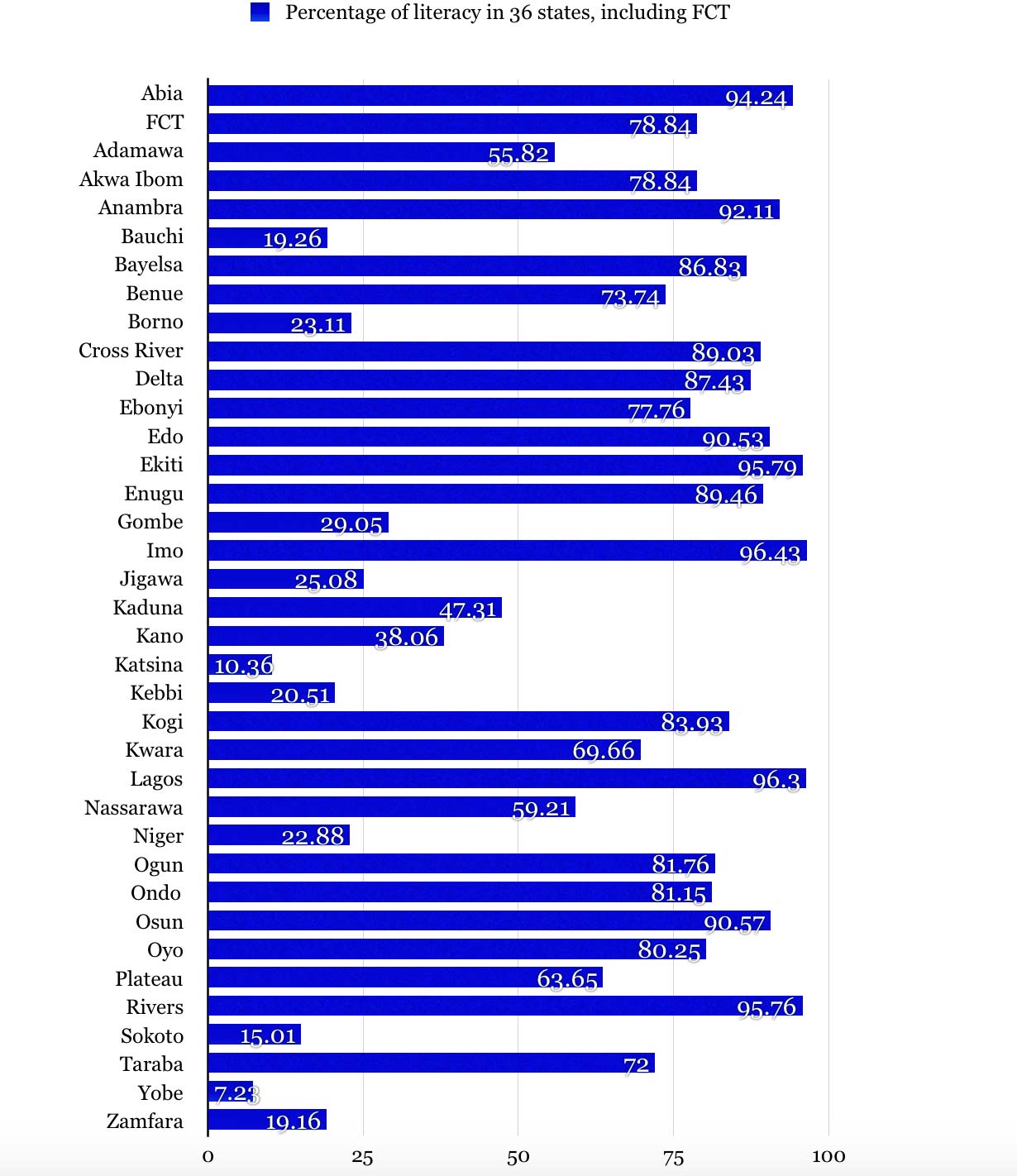
In 2013, a UNICEF Op-ed stated that the prospect of Nigeria achieving education for all by 2015 remains frail. Fast-forward into 2019, the fear expressed by UNICEF has not only become a reality but also, the hope of Nigeria achieving inclusive formal education (western education) for all is still acute. The Global Monitoring Report (GMR) in 2015 revealed that Nigeria has the highest number of out-of-school children (OOSC) in the world. With approximately 10.5 million kids out of school, plus Nigeria dominating 12 other countries that account for 47 percent of the global out-of-school population, it is an ignoble statistics and a preventable endemic in the 21st century.

Although out-of-school children ‘syndrome’ is an educational malaise that is ubiquitous in every part of the Nigerian state, no region has it more pronounced or holds the record of having the highest rate of OOSC than the northern region of the country. With UNICEF Nigeria pegging the percentage of OOSC in northern Nigeria at 60%, the sight of primary school-age children roaming the streets of northern Nigeria states’ capitals during school hours looks normal to the locals considering their obsequiousness to this portentous phenomenon which an average educated alien in the country would term to be appalling.

Of all the spectrum of factors causing OOSC in nigeria; poverty, early marriage, illiteracy, dearth of competent instructors, inadequate facilities and increase in human fecundity, none contributes to the scalar of OOSC like the Almajiri Education System — A relic educational system that originated in the11th century in the ancient Karnem- Borno Empire that stretched from northwest Nigeria, modern-day Chad, and to the doors of Libya. Almajiri is derived from the Arabic word “al muhajirun”, meaning an immigrant. It centered around the Islamic concept of knowledge and migration that encourages the search for knowledge away from home, if the Islamic knowledge acquired is either insufficient or inconvenient.

Before the advent of the British colonialists in Northern Nigeria, the almajiri educational system also known as the Tsangaya system was established as a comprehensive system of education for learning Islamic principles, values, jurisprudence, and theology. It is a facsimile of Islamic learning centers in Muslim countries. In its apotheosis, the almajiri educational system contributed the largest workforce to the northern communities as they made significant contributions to the economy of the society. It is said that the Tsangaya system provided the British colonialists with the first set of colonial staffs in Northern Nigeria. The system though was funded through the State’s treasury, it was not dependent on the state because the students had the liberty to acquire occupational skills in between their Islamic lessons. They were involved in farming, masonry, trade, tailoring, and other artisanal jobs.

The fall of the almajiri education system began in 1904 when the British invaded northern Nigeria and took control of the state’s treasury. The new colonial administration deemed the indigenous educational system incongruous and thus deliberately abolished its state funding claiming that they were religious schools. This denigration of the indigenous educational system by the new colonial masters irked the Mallams, the students, and the society, thereby causing antagonism and acrimony for the new western education that was used to replace the indigenous format. The animosity shown towards the new educational system was compounded by its Christian origin.

Although, dwindled support from the government and the aptness of the incipient western education in the new colonial administration was a wrecking ball to the structure of the almajiri operating system, the Tsangaya education continued to thrive nevertheless, because local Islamic scholars deemed it a religious piety they owed Allah by continuing to teach in the Almajiri schools.

It is also pertinent to note that the Tsangaya educational system continued to exist not because it had any use in the new system, it never did, instead, the indigenous educational system continued to survive because of the deep religious sentiment expressed by the predominantly Muslim population of northern Nigeria against the Christian origins of western education and the inertia expressed by Nigeria’s northern elites. It is an oblique perspective that survived not only to this day but also has become an impediment to the socio-political and economic development of a significant population of northern Nigeria.

The socio-political and economic developments that ensued during the colonial rule and after the country’s independence to this modern epoch has had profound effects on the current state of the Tsangaya educational system. In equal terms, economic misfortunes and the political travesty of successive Nigerian governments have dealt massive blows to the almajiri schools. Mallams who once accepted the job of being teachers to disseminate Islamic knowledge as an act of spiritual obeisance, religious posterity and defiance against the colonists’ choice of education have turned the indigenous educational structure to an apparatus for satisfying their economic wants. Most Tsangaya in northern Nigeria has become an alternative for an orphanage for parents who can’t afford to cater to their offspring.

Stuck in some sort of time warp, the failure of those conventionally entrusted with the administration of the almajiri education to embrace educational progressivism, metamorphize and find a way to assimilate western education into the indigenous education curriculum, and teach skills that resonate with modern economic niche has helped in creating a long line of indigent Quranic teachers and graduates — both the teachers and the recipients of their teachings lack the major skills to contribute to a formal economy and are hence condemned to the catacombs of the informal economy — the students who refuse to take after their impecunious Quranic teachers occupationally tend to fend for themselves doing menial jobs, thereby continuing the vicious cycle.

From a humanitarian perspective, it would be quite obnoxious to encounter an almajiri and not pity his battered innocence. The alamajiri, deprived of the joys and boon of childhood by the society that was suppose to purvey them, their demeanor accentuate their realities: neglect, acute poverty (cognitive & material), gravely distorted future, shambolic governance, lack of parental care, and of course parentage whose current realities have been misshapen by the rabid shenanigans of successive Nigerian governments.

No country has achieved constant economic development without considerable investment in human capital. Previous studies have shown handsome returns to various forms of human capital accumulation: basic education, research, training, learning-by-doing and aptitude building. The distribution of education matters (Ilhan, 2001, p. 2). And failure to address this national disgrace portends great difficulty to the socio-economic wellbeing of the country’s future. The almajiri malaise will hunt Nigeria on two major fronts: economic and security. The nexus between poverty and terrorism is complicated but foot soldiers for terrorist groups have been known to join terror cause solely for financial incentives. Imagine an impoverished population of 10.5million illiterates under a charismatic leader with a bellicose and violent intent, the outcome would be devastating not just in Nigeria but also in the neighboring countries in the West African region already plagued by the activities of ISWAP and Boko Haram.

Furthermore, the world is well into the fourth industrial age and Nigeria is still very much lagging. In a world that is increasingly becoming data driven and artificial intelligence is being used to drive concise policies in agriculture, finance and public administration, the current almajiri curriculums should be revised and merged with western education which would boost the nation’s socio-economic development index. The educational provisions within any given country represent one of the main determinants of the composition and growth of that country’s output and exports and constitute an important ingredient in a system’s capacity to borrow foreign technology effectively(Ilhan, 2001, p. 3). Formal primary and secondary education will increase workers’ productivity either rural or urban. Although the economic prosperity of the almajiri is not a silver bullet for the country’s socio-economic challenges, and successive Nigerian governments at one point in time have been known to erect school structures to address almajiri education and lifestyle, the truth is that bad governments build schools too. More needs to be done to help the almajiri beyond building schools and effort should be made to measure the cost-benefit of investing in them and KPIs developed to the peculiarity of the situation. A concerned government would see the academic and economic inclusion of the almajiri as a concrete strategy for the socio-economic stability of the Nigerian state in the future.

Upon conclusion, inclusive modern education for the almajiri must be intentional because failure to do so is dangerous to the country’s stability, but a well coordinated effort to educate the almajiri in a highly competitive world lays a sweet spot for Nigeria’s economic development.

African Fintech Festival Is ON in Kampala, Uganda #AFFUG

0

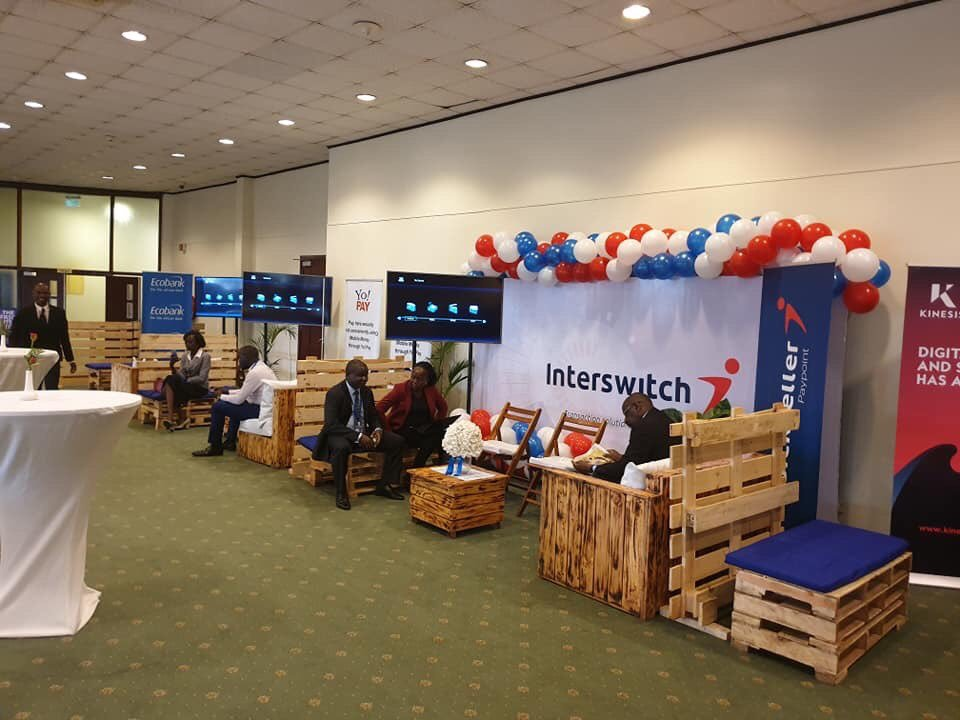
I have made it into Uganda, and tomorrow will deliver the Keynote in this year’s Africa Fintech Festival. Here, the exhibitors are showcasing some of the finest new products in African fintech sector. Our Interswitch is big here, UBA is everywhere with the flag welcoming all. Cellulant, Citi Bank, Ecobank, Standard Bank, etc are all here. It is indeed a festival; I hope to deliver a good lyrics tomorrow.

The time is 8.45am for my keynote tomorrow. And I will be speaking on a new species of companies, called fintech.  The title is “Fintech – Africa’s New Growth Operating System”. If you are in Kampala, Uganda, come over (Serena Hotel), and let us discuss the mechanics of building a sectoral operating system that would power Africa’s commerce.

Ndubuisi Ekekwe To Keynote the Africa Fintech Festival, Nov 2019 in Kampala, Uganda

Understanding The Physics Of Selling

0

“Most times, the best selling books are not the best written books.”

The moment you understand that statement, the ball game changes for you. You’d have more advantage in whatever you do.

What makes a book a best selling book is sometimes because it was sold best or it was selling best irrespective of the content it has.

While I’d strictly recommend that it’s good for a best selling book to be the best written book, I’d also be very plain that having a book with the best content doesn’t automatically mean it would be a best seller.

Now, let’s take this and relate with humans and my observation over the past few months. I have noticed that there’s a new religion flying around and I’m glad I play a huge role in the spread of the religion.

The religion is that “Africa is about to experience a new shift in few years to come, 2023 to be precise.” There will be a good change in the economy of Africa and entrepreneurship will enter a new phase.

This is not just entrepreneurship but there will be exciting opportunities for Africans but only those who embrace this religion will thrive. I have spent about a year preaching this religion.

The religion is all about changing the narrative of education in Africa to a simple definition;

“Education means having access to information that makes you relevant for the world of work in a society at a given time”

Whatever information you receive that makes you relevant in a society to be part of the labour force is a form of education either formal or informal.

Now, before I digress too much, I think I should leave those new religion discussion for another day and how it would change the narrative of Africa. Let me focus on the real issue which is about skills.

The impact of this new religion is that a lot of people are now learning different skills in several fields, several sectors and for several reasons. This is quite interesting to know that Africans are waking up!

We are in the skill economy!!

Let’s not be too fast right here. Do not run before the gun is shot is a warning I’m giving to you reading this. I have a lot of students on this space and months back, about a year plus to be precise, I have also recommended that you learn at least a skill.

A skill doesn’t necessarily mean that you should learn software development, it could be writing, speaking, even singing. Matter of fact, it could be some basic tools in your profession.

I have several skills that I have learnt over the past one year ranging from marketing to business strategy to storytelling, to business writing, to consumer psychology, to product development and a host of others.

I learnt all my skills on my mobile device and I never attended a physical event to learn anyone and I am an expert in them.

Now that everyone is rushing to learn a skill, so many persons have turned themselves to skills coach to make money from this gold rush.

Once you know a little stuff, the next thing is to hold master-classes and monetize it. I don’t have an issue with that anyway even though I don’t do that, I only have an issue with the new narrative flying around which is;

“Once you learn a skill, you’d get a high paying job”

This is the biggest lie of this present age. To every religion comes a fake one. I have seen a couple of people invest hundreds of thousands to learn a skill because they have been told that this is one of the most relevant skills in this age.

Starting from digital marketing to software development to copywriting to a host of others. While it’s true that these skills should give you good jobs, the reality remains that the opportunity for these jobs is still limited and only a very few out of the many will benefit from this.

In case you’re out there and you’ve learnt so many skills yet don’t have a job yet you feel you’d get a job sooner or later, I’m here to tell you that you may not.

You may still remain broke for the rest of your life because jobs firstly are scarce then seeing we’re in Africa, the opportunities for these jobs are limited.

If you’re earning less than one hundred thousand naira from these skills yet it has been two years of practicing full time, then you’re missing a piece of information that will change the whole game for you.

Perhaps, you have learnt the skill and you’re having an issue monetizing it, it is simply because having a skill is not what brings the money, the selling of the skill is what does.

Having a skill is important but selling the skill is just as important. Now, this is where the issue lies because most of these coaches do not really know the application of such skills so they do not know how to teach you to sell it.

I made a post earlier this year when I emphasized on why you should learn a skill to solve a problem. When I mean learn a skill to solve a problem, I don’t mean learning a skill to solve a community problem, neither do I mean learning a skill to go look for a problem to solve.

What I mean is that the approach you follow in learning a skill should be in such a way that you hope or plan to solve a problem with the skill. This helps you understand the fundamentals of such skill, it helps you know what exactly such skill does and gives you a background understanding of what to do with the skill.

To learn more on how to learn a skill to solve a problem, follow here.

Now, that’s by the way. I want to teach you in simple words how to sell your skills. I want to remind you again that; A best selling book doesn’t necessarily have to be the best written book.

I feel you should understand this already. There are few facts I will be sharing with you and you may seem sad after reading it but it’s for the better in order to give you the desired result.

The honest truth is that once you have a skill, it is left for you to create a channel from where such skill is to where it will bring you money. Most people do not know this so they keep fighting or hoping.

The worst thing you can ever do as an African is to hope without taking action. This however is the posture of many youths who have good skills. Hope is not enough.

Yet, I also understand that many people are also trying hard to get their skill out there but they’re not are not also getting results. You are very consistent but consistency is not enough.

Consistency without fully understanding what you’re doing might end up futile for you which is why I decided to write this post.

Firstly, you must know that your friends are not your customers. I wish I can repeat it again but I just hope this sinks into you. When people have skills, the first place they’re quick to show it is on Whatsapp.

If your Whatsapp list consists of your friends alone, then you just wasted your time pushing whatever information you have on the space.

I’d only recommend that you use your Whatsapp for showoff to show friends how you’re making progress with such skill or how very good you are, else you’re just wasting your time.

The only way Whatsapp can benefit you is if you understand Whatsapp marketing or you have strangers on your list. Strangers are your customers and not friends in most cases except your friends fall into the category of those who need your service.

Friends can only be your fans and support but they hardly fit in for customers. So take away the mentality that; “I have posted my content on Whatsapp, at least I’m sharing what I do, I’m loud about it”

You’re not loud about it in the presence of your friends, you’re only trying to make ends meet.

Next, you must be ready to dish out contents. Now, there’s a posture i see people take when dishing out contents. Well, let me first say when I mean dish out contents, I’m not talking about writing them out. No, that’s far from it.

I mean pushing out whatever you do to the best platform that suits what you do. If you’re the shy type, I’d strictly recommend that you get over your shyness as soon as possible. You cannot sell yourself if you keep hiding.

I must quickly add that whatever you do that is legal and has integrity, you shouldn’t be shy about it.

Well, this is a bit of digression but I really need to hammer on this because so many people care about what others say about them. They are scared of criticism, they are scared of mockery and all.

If I was scared, I wouldn’t be writing this remember but I don’t care. Just a few months ago, I had a little business knowledge, wrote for cheaper rates and now I don’t write in Naira anymore. I charge higher.

I wouldn’t get here if I kept my writing to myself. Pushing them out without the fear of criticism got me some spotlight and I’m enjoying them.

Now back to the posture people often take when dishing out contents. People take the posture of; “I’m trying to get better, please understand” or “I just love what I do, that’s all that matters”.

I really wish you all reading this could organize a small event where I could teach on skills physically. Typing is wearing me out because I want to throw my hands in the hair to emphasize a point but you cannot see me.

Stop pushing out your contents without a “chat me up to get my service” posture. The goal of pushing your content is to get people to patronize your service right?

Then I want you to close your eyes and imagine once again. Ask yourself this; “By the time my readers, viewers, followers follow my content up to this point, what should they be thinking? What would they be thinking about me?

Would they be thinking about following me or chatting me up to thank me?

Would they see me as someone who is just enjoying their passion and say “great job” in their mind?

You need to be able to program how to structure your content.

This requires a lot of mental effort but if you understand the problem your skill solves, it makes it a little easier for you.