DD
MM
YYYY

PAGES

DD
MM
YYYY

spot_img

PAGES

Home Blog Page 6611

The Expiration of Data Bundles in Nigeria

7

The news is that Kenya’s leading telecom company has abolished expiration date on data bundles. As you begin to push for such in Nigeria, postulating “Why must data expire in this 21st century in Nigeria?”, I have some words for you.

Safaricom has abolished the expiry of data, calling and SMS bundles as part of the firm’s plan to be simple, transparent and honest across all its products and operations.

The firm announced the move today as it celebrated 19 years of operation since launch in Kenya. This new development just comes days after the firm was taken to court to end data expiry plans.

Both Data bundles, and Calls and SMS with no expiry are immediately available on *544#

“Today, we are starting afresh and going forward we aim to be even more Simple, Transparent and Honest in everything that we do. For our customers, we are a Safaricom that is there, For You,” said Michael Joseph, CEO, Safaricom

Yes, you paid for it and it is now your property, yet it can expire because the telcos make it so. A Kenyan lawyer took it all the way to the court, suing Airtel Kenya, Safaricom and Telkom. But do not be confused, it is very complicated. I will explain – keep reading.

A lawyer and ICT practitioner has sued three mobile telephone operators, arguing that they are illegally depriving consumers of their unused data bundles.

In a complaint filed before the Communications and Multimedia Appeals Tribunal, Mr Adrian Kamotho said he was aggrieved by the high cost of data and frustrated by the arbitrary expiry of hard-earned bundles.

This is the business logic – by making  data bundle expirable, it becomes cheaper for all, since most will never use the fully paid products before they expire! Airlines do the same; by making tickets nonrefundable, ticket prices drop since not many will use all sold tickets, freeing seats for last deal sales. The fact is this: if tickets are refundable, the prices rise!

Yes, airlines will book “seat commitments” on the tickets knowing that the seats could be lost before the planes take off. By raising the price, they cover losses from the cancellations. In other words, if there are ten sold tickets with probability that 2 may cancel, they would ensure that the eight remaining passengers will cover the costs for the ten seats.

But where ticket is nonrefundable, they can make the prices for the ten seats to be low knowing there are no surprises ahead since once a seat is purchased, the revenue is guaranteed.

My point is this: if you make data non-expirable, you will end up forcing telcos to increase the bundle price (or reduce the value at the current price). That may not be a better outcome.

Of course, Safaricom will not be a good case study since its influence in the Kenyan market makes it a monopolist and consequently its pricing cannot be used as a benchmark for a free market. It may simply decide to give away 5% of its revenue since it can afford to do so! But for others, if they have to follow the non-expirable policy, there would be pain at the bottomline.


The Convocation Guest Lecture

1

I will have an opportunity to speak to graduating class of Federal University of Technology Owerri (FUTO) students. This is my first ever convocation guest lecture. I do watch Obama, Bill Gates, etc do this ritual yearly. On Dec 6, I will have the opportunity before some of Nigeria’s finest.

To our Vice Chancellor (Prof Eze), the Governing Council, the Senate, the Committee of Deans, our Professors, the leaders of our alumni association, the FUTO alumni anywhere, and the very best – current FUTO students, I am truly honoured. Selecting who speaks to graduating students is an academic ritual, and to be invited to mount that podium is a moment.

People, I have a question: what do I tell these young people?

If possible, email or share below. I desire to deliver a speech that would inspire them for years!

Ndubuisi Ekekwe Will Deliver 2019 FUTO Convocation Lecture

Google Defines The Manufacturers’ Path with GO

0

In a piece, I noted that Google Pixel is an attempt for Google to define what a real Android (and Chrome) hardware would be just as Microsoft Surface has done for Windows products, blunting the rise of Mac.

This is exactly the reason why Google continues to make Android mobile devices (the Pixel series). Simply, it wants to match iPhone quality and in the process help Android to be seen as an OS that can power great mobile devices of the future. Leaving that work alone to Android OEM partners could affect Android, in the long-term, if the partners fail on execution. Largely, if Google Pixel succeeds, the Pixel will become the benchmark for Android devices. Yes, Google does not need to make money from Pixel – merely inspiring the Android OEMs will be good enough!

In this article, TechCrunch made the same point. Simply, our analysis cannot lead astray!

The Go is clearly Google’s attempt to lead the way for manufacturers looking to explore Chromebook life outside the classroom. It has some nice hardware perks, but it’s not the revolution or revelation ChromeOS needs.

[…]

Google’s recent hardware event was, perhaps, something of a referendum on the play. The original Pixelbook, while not discontinued, has yet to get a refresh two years after launch. Heck, even the troubled Pixel Buds got a reprieve as the company previewed their successor. The Pixelbook, on the other hand, got the Go.

The new device isn’t a Pixelbook replacement — at the very least, Google’s looking to sell through its back stock, with some deep discounts earlier this year. Rather, the device seems to be more a tacit admission that the company was shooting a bit too high the first two times around.

The bottomline is thus: there is a time when outsourcers cannot define your product vision. You need to step up and take charge, just as this comment postulated.

You get to a point where you realise that there are certain things you cannot outsource, if you want to tell stories that are consistent with your values…

Once you figure out that your partners cannot measure up with your level of innovation, you simply take over and show them how it should be done.

There’s no guarantee that you will be successful in the new domain, but if you eventually succeed, you become a reference point, the new benchmark!

The Microsoft Satya Nadella’s Interview on Surface


The ActionAid Nigeria Press Release

0

I may not agree on all the points but these ones are Y for Yes, for me:

  • Spending VAT proceeds on recurrent expenditure is counter-productive.
  • Phase out Senate and let us have only the House in the National Assembly. The experiment at the state level , with only the House equivalent, is just working fine.


The Press Release

Text of a Press Release Issued by the Board of Trustees of ActionAid Nigeria, after a review of the State the Nation on the 26th day of October, 2019 in Abuja, Nigeria

ActionAid Nigeria has followed with keen interest the various developments in Nigeria within the third quarter of 2019. Not discarding the efforts of government in improving the economy, we believe that much more can be done to make Nigeria better and safer for the citizens.

We have therefore reviewed the happenings in government, economy and issues of security within the last quarter, particularly as it affects vulnerable groups: women, children, Persons with Disabilities (PwDs), and the youths. Below are some of our findings and recommendations.

OBSERVATIONS:

• Cost of governance in Nigeria is disproportionately high relative to productivity and there is need for urgent action if government really wants to improve the situation.

• The current VAT collection system is ineffectual and porous. Spending VAT proceeds on recurrent expenditure is counter-productive.

• The 2020 proposed budget has huge provisions for debt servicing and does not address the high need for infrastructural development given the growing population.

• The growing insecurity and volatile environments in different parts of the country will make it very difficult for development programmes to be implemented if not promptly dealt with.

• Climate change is perhaps the most serious environmental threat to the fight against hunger, malnutrition, disease and poverty in Nigeria, mainly through its impact on agricultural productivity.

• The rights of communities where mining take place in Nigeria are not adequately protected. There are gaps in mining laws and investors do not comply with regulations.

• Nigerian universities lack gender-specific mechanisms to tackle violence against students, particularly females and their peculiarities.

RECOMMENDATIONS

1. To cut running cost, Nigeria must reduce the number of Ministries, Departments and Agencies as a matter of urgency. Government also must liaise with the Revenue Mobilization and Fiscal Commission (RMFAC) to slash salaries of all lawmakers and political office holders in order to save money for the infrastructural development of Nigeria especially now that funding the 2020 budget poses a huge challenge. The Senate or the House of Representatives should be scrapped as a bi-cameral legislature increases the cost of governance.

2. There is need for more consultation with stakeholders, as the proposed VAT increase will hike inflation and put more economic burden on the masses. Rather than increase VAT, AAN calls for broadening of the Nigerian tax base. We insist on a thorough appraisal of the current VAT regime and ask FG to account to the people how the proceeds are spent.

3. The 2020 budget should capture adequate funding of Agriculture, Health and Education sectors given their strategic importance. Agriculture employs up to 80% of the population, especially in the informal sector, where the majority of the small-scale food producers are women farmers. The health sector requires improved funding. Our health centers, maternities and hospitals lack basic essential facilities and drugs and evidences have shown that increased investment in these pro-poor sectors has strong impact on poverty and inequality reduction, while simultaneously creating employment opportunities.

4. While we acknowledge that the police alone cannot deliver on security, we charge the Inspector General of Police to take the battle to the criminals’ doorsteps by re-evaluating and implementing new operational strategies to stem the tide of kidnapping, armed robbery and banditry. We urge the federal and states’ legislatures to strengthen Nigeria’s legal framework in order to have stiffer sanctions that will deter people from engaging in criminal activities.

5. All hands must be on deck to cut down on carbon emissions as a way of combating global warming. We urge leaders to show courage in combatting entrenched interests in fighting climate change and also show commitment in investing in the opportunities of the future. Massive and aggressive tree planting campaign should be embarked on to reduce the effects of global warming/climate change. In addition, there should be an explicit national agricultural policy framework, adequate provision for irrigation, drainage, weather forecasting and other agricultural technology infrastructure. Furthermore, to boost agriculture, the following should be prioritized; incentive for training in agriculture, participatory capacity building for farmers, drought resistant and short duration high yielding crops development, integration of indigenous and modern knowledge on climate change adaptation, strengthening of the extension services, and encouragement for the nurturing of existing farmer groups.

6. AAN supports the Federation of Nigerian Mining Host Communities in demanding a review of laws that regulate the mining sector. We demand that the communities’ rights must be protected in the process of issuing licenses for mining. We also call for a robust mining audit to ensure fairness and transparency as well as making legal provisions for artisanal mining.

7. The 9th National Assembly should revisit and prioritize the Sexual Harassment in Tertiary Education Institution Prohibition Bill and Nigerian University Authorities across the country should take preventive measures and protect students, particularly female students by setting up safe systems that protect survivors and encourage them to report and get justice.

The Moi University’s Experiment

0

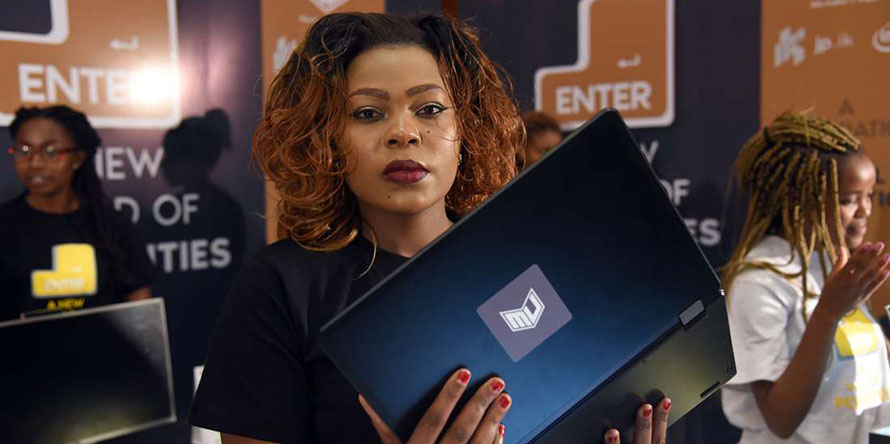
Moi University will be making computers and other digital devices. According to TC Daily, the ” devices include desktops, laptops and workstations using the MU Fortune brand name. Launched in partnership with Portuguese firm, JP.TK, the devices were assembled by the university’s MU technologies Digital Assembly Plant. According to the school, the plant has a capacity to produce 4,000 devices per day. The newly launched devices will retail for between $290.11 and $967.02.”

Moi University unveiled six-locally assembled Information and Communication Technology (ICT) devices that will target students, enterprises, government institutions and SMEs on Tuesday 22.

The devices, under the university’s brand name, were assembled at the university’s digital assembly plant at Rivatex in Eldoret at a cost of Sh500million.

The devices include MU Fortune Slim Book and MU Trigono, Slim desktop, mini Personal Computer (PC), Fortune desktop, Workstation and Workbook all running on the latest intel and Microsoft technologies.

Moi University will have its moment in the market. But the challenge ahead will be what happens in Kenyan borders and ports. Only the Kenyan import policies will help this experiment. With the 4,000 devices per day capacity, the unit economics will not work in favour of the university when some competitors like HP, Dell and Lenovo produce in hundreds of thousands, if not millions of units, daily. That big capacity gives the foreign brand pricing advantage through economies of scale. Yes, for Moi University plant to thrive, Kenya has to adjust some elements of its import policy. If not, this experiment will fail.