DD
MM
YYYY

PAGES

DD
MM
YYYY

spot_img

PAGES

Home Blog Page 6615

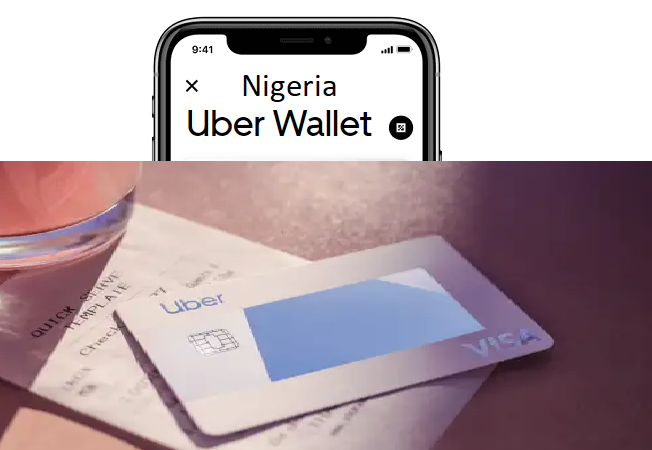
Uber Goes Big on Fintech in Nigeria

0

From Mastercard data, out of $301 billion consumer transactions in Nigeria, about 98% were done with cash as at 2018. Simply, digitizing financial services is the gold rush as we enter a decade of application utility in Nigeria. That is why fintech is hot in Nigeria, and investors are deploying capital in the sector. If you win, glory awaits, massively.

That would take you to the primary source, Mastercard.com, where it notes “According to research done by The Fletcher School and Mastercard Center for Inclusive Growth, of the $301 billion of funds flows from consumers to businesses in Nigeria, 98 percent is still based on cash.”

When OPay executed a massive unification with OBus, ORide, etc, all linked to a payment system, a double play strategy was made evident. Other companies are learning fast, and Uber is in the game; “Uber Money provides financial products that help you access, manage, and grow your money, putting opportunities you want within reach”.

Uber Nigeria has the following products:

  • Uber Debit Card: Access earnings after every trip, and grow your money with real-time cash-back savings.

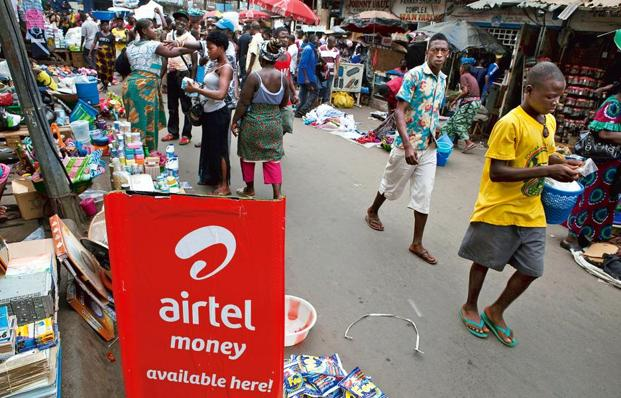
Airtel Africa’s Asset-light Business Model is Working

0

The Airtel Africa asset-light business model is working. The firm outsources some heavy infrastructure investments and projects, focusing on customer experiences as I have noted in the past. This is a clear evidence that business model can transform a company besides whatever technology capabilities you may possess. Few years ago, Airtel Africa was about running out of town; quickly, it changed its strategy and today, it is a “telemoney” firm where the business is growing  with mobile money at 47% and data revenue at 38%. Yes, being a quasi-financial institution is working for Airtel Africa.

In May 2018, I explained why Airtel Nigeria would continue to grow: asset-light business model where outsourced partners do the core infrastructure works while Airtel stays ahead running the customer experiences. Doing that means it can grow faster because it can deploy dozens of partners (who get paid only when they deliver services) working across Nigeria at the same time. It is a very risky business model as the weakest link is now the weakest delivery partner. But it has a solid positive: Airtel Nigeria can largely leave Nigeria with a briefcase, largely unhurt by any turmoil. The only thing it has is the mobile license and the logo: others carry the risks!

This is a summary from TC Daily: Airtel Africa, one of the continent’s biggest telcos, has posted $1.64 billion in revenue for the first half of 2019. The company grew its data revenue by 37.8 percent and recorded a 46.5% growth for its mobile money business. The company, which is present in 14 African countries, now has 100 million subscribers on the continent. Airtel Africa completed a $750 million initial public offering (IPO) with a market capitalization of $3.9 billion. Going forward, the telco says it is prioritizing 4G expansion in its 14 markets.

“In the first six months of this financial year, we delivered revenue growth of 11.4 per cent in constant currency terms, with even higher underlying Earnings before interest depreciation and amortisation (EBITDA) growth as we continued to improve our operating leverage and tight focus on costs. This performance underlines our ability to consistently grow in double digits, powered by our growth engines of Data and Airtel Money growing at 37 per cent and 46 per cent respectively,” he said.

New Business Model Powers Airtel Nigeria over Glo to Second Mobile Operator

Global Skill Partnership: World Bank Urges Nigeria to Export Labor

0

The World Bank has urged Nigeria to see labor migration as a succor to its demographic boom. Nigeria’s population explosion is creating unemployment void that the slow pacing economic growth cannot fill. It is estimated that by 2050, the working population will increase by 125 percent. According to World Bank data, those aged 15 to 64 will increase from 107, 702, 000 in 2019 to 242, 994, 000.

With the current economic outlook, the possibility of finding a job in the near future will be slim because the labor market will be unable to absorb new entrants.

In view of this threat, Nigeria has been urged to reduce the pressure and make most of remittance and skills transfers by promoting new legal labor migration pathways with countries of destination across the globe.

Nigerians are known for their immigration exploits, and the current economic situation has pushed the trend further to a life threatening point. One in 3 Nigerians desires to leave the country.

In June last year, Nigeria overtook India to assume the position of world poverty capital. According to World Poverty Clock, over 94 million Nigerians are living below $1.9 daily, resulting in increased immigration desires among the working age. A situation the labor market has enabled due to lack of productive, gainful employment opportunities for the overgrowing population, most among them, the youths.

The National Bureau of statistics (NBS), reported 23.1 percent unemployment rate in Nigeria for the last quarter of 2019. A 15.6 increase from the 7.5 percent of 2015, and the situation is set to get worse. The World Bank estimated that by 2030, additional 30 million jobs will be needed to usurp the pressure that population increase will have on the country. A challenge the current GDP growth and economic policies are falling short to take on. The GDP growth rate is barely over 2 percent whereas the World Bank noted that even at 6 percent consistent growth per year, only one in four Nigerians will be able to obtain good, wage-paying jobs in the formal sector.

The migration population in Europe has an overwhelming number of Nigerians, most of them traveling illegally. The worst of the situation was exposed through immigrant crisis in Libya, where many Sub-Saharan Africans were captured and sold in an open slave market. Many of them were Nigerians who took the risk of crossing the desert and were willing to risk their necks in unfriendly waters just to get Europe.

The driving force behind the risks has been survival, and the hope of getting to developed countries with higher demand for labor and skilled workforce. Canada, Australia, Iceland and all the countries with deficiency in work-age population are looking to close the gap through migratory manpower. The World Bank is thus urging Nigeria to cash in on external destinations as a potential source of employment for Nigerians.

Such migration is upheld in the National Policy on Labor Migration 2014, but the pathway requires preparing people with the needed skills.

Undertaking projection of human resource requirements in countries of labor and skills demand, with special attention to emerging skills requirements to anticipate meeting demand with matching skills.

Developing financial support schemes to help youth acquire skills that are sought after in both domestic and foreign labor markets.

Promoting the participation of employers and trade union organizations in the provision and funding of vocational training and skills upgrading institutions, to meet international skills requirements.

The potentials of the migration pathway can be maximally utilized through the Global Skill Partnership – a bilateral agreement between the two countries on labor. The country of destination agrees to provide technology and finance to train potential migrants with targeted skills in the country of origin, prior to migration. In return, they will receive migrants with the precise needed skills to integrate and contribute their best upon arrival.

The country of origin will provide the training and ascertain that the migrants are equipped to fit into the work environment abroad. Nigeria is one of the 163 countries who put pen to the agreement.

The pathway, if developed and utilized maximally, has the potential of reducing high rate of illegal immigration while providing good job opportunities for Nigerians.

The World Bank has thus urged the Nigerian Government to test the Global Skill partnership tool in preparation for the pathway initiative as it is currently being trialed around the world.

Armed With Hope, Passion And Talent, Story of Nigerian Graduate Out To Conquer The World Of Quantum Physics

6
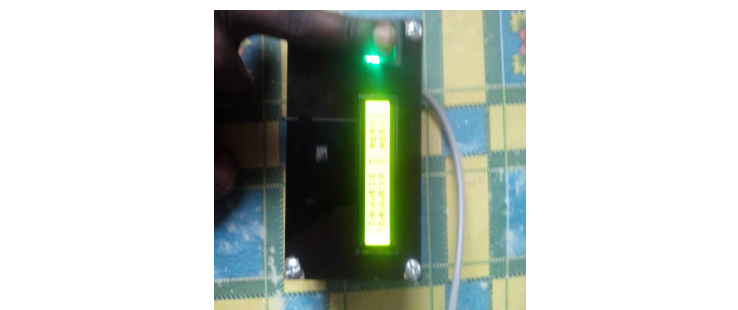
The Finger Print Based Attendance System

For Akorede Abeeb Bello, studying Electrical Electronics Engineering was never part of the plan. He had his eyes set on becoming a medical doctor. He did all he could. But when things were not falling in place for him to realise his life-long ambition, he changed direction. And his story has never been the same again. It was a story of latent passion never realized on time until doors to medical college closed. He did not even like Physics and Further Maths, two subjects that had come to define what he currently d

oes and enjoys. Nevertheless, when he realised he would not also make headway in the new direction he was looking, he deliberately focused on mastering the two subjects. Today, he is all happy for his determination to conquer the two dreaded subjects.

For the 25 year old man, call him an inventor, he would reject the appellation. Tell him he is a genius, he would simply say his love for Quantum and Electronics Physics has led him to a number of designs and constructions. His educational journey so far has shown that he is one Nigerian youth who knows where he is heading to.

Line Following Robot designed and constructed by Akorede

Akorede is a youth corps member currently serving in Ibafo, Ogun State, Nigeria. He planned to read Medicine and Surgery immediately after his O Level. Providence led him to The Polytechnic, Ibadan to study Electrical & Electronics Engineering where he picked serious interest in Physics and Further Mathematics. In a system that lays little emphasis on practicals, Akorede stood out on the basis of his unquenchable love for hands on. His raw love for practical application of what learnt in class made him once a victim of scam. He was duped by  someone who came in to capitalize on the weakness of the system.

According to Akorede, the man had shown up promising to teach the unsuspecting students how to make an inverter. He made his price known. Akorede paid in full. The man took him for a fool and bolted with his money. The passion in the boy did not allow him to rue the situation for long. He went further to enrol himself in a workshop outside the campus to learn more.

Burglar Alarm System designed by Akorede

Soon, his love for higher education propelled him to seek admission to the Federal University of Technology, Minna where he was admitted to study Physics with Electronics. FUTMinna did two great things for him. One, he was able to explore more around the subjects of his interest. He developed a deeper interest in quantum physics, classical physics, optics and electromagnetism at what he called theoretical level.This spurred him to invest his time in the practicals.

For this, he stood out among his colleagues as a result of his deep knowledge in Electronics practicals. Two, the young man also found an enabler in one of his lecturers who had a workshop off the FUTMinna campus. Akorede worked with him there. Through this angel lecturer, he was able to lay his hands on programming projects such as SMS based home automation, SMS based human detection robot and SMS based gas leakage detection.

This made him a teacher of his mates. He tutored them effortlessly.  In his final year, the young man constructed a FingerPrint-based Attendance System as his project. The norm was for students in Akorede’s shoes to contract their project construction. However, he chose to source materials and designed the attendance system. Since leaving FUTMinna, Akorede also has to his credit designs such as Burglary Alarm System, Led Display Message, SMS based Home Automation, SMS Based Human Detection Robot, Line Following Robot, Temperature Control Home Appliance and SMS based Water Level Indicator. If Nigerian education were a system that gave room to creativity and ingenuity, the young man should have been called back to serve the system that produced him.

The Finger Print Based Attendance System

The compulsory one-year service period will soon be over. Akorede looks to the future with eyes full of hope. Yet, he has his fears too. He would like to go further in pursuit of knowledge. He as well cherishes teaching. He is dreaming of a Master’s Degree abroad so that he could to come to class to make future physicists realize their own dreams too. He says being a lecturer would assist him have a workshop, train future engineers and contribute more in his field of Physics and Engineering. On this, he is willing to even read to a doctorate degree.

Despite his abundance of talents and passion, his dream may not fly if he does not get people to enable him. The pangs of surviving in a system that does not support her talents may snatch him away on this great journey of discoveries and inventions. Akorede Abeeb Bello is another Prof. Ndubuisi Ekekwe in the making. This could only happen if he is giving the mentorship and nurturing he requires to live his dream life of a Physicist who will not only contribute in solving the problems of the country in the short term but also assist in raising generations for the future in the long term.

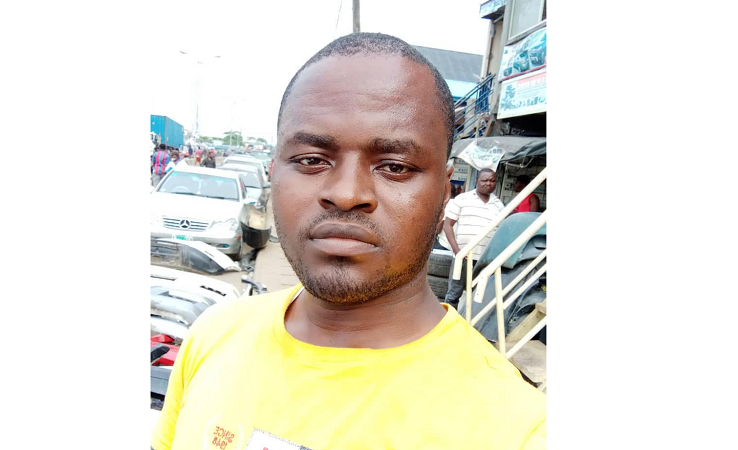
What To Do When The Job Isn’t Coming – A Story by Uka Iro

0

What do you do when the desirable is unavailable?

I had the privilege of learning from a graduate who turned a driver to make ends meet. In fact, I am really impressed with his mindset and understanding of life.

It is good to have you here. Can you introduce yourself briefly?
My name is IRO, UKA IBE. I hail from Akanu Ohafia, Ohafia LGA, Abia State.

I had my first degree in Electrical Engineering from the University of Nigeria, Nsukka (2013 set).

My second degree (M.Sc) in Electrical/Electronics Engineering from the University of Lagos (2016-2018).


I read your story about turning your passion into a profession on LinkedIn and it really got me. I hope you don’t mind sharing it one more time?
Yes, as I stated, driving is one of my hobbies.

It all started as a challenge when I was younger. I lived my early years with my late maternal grandmother. I have a younger cousin that had a small bicycle (we used to call the bicycle ’chopper’).

He’ll come home during xmas with the bicycle. Each time I attempt to ride, I’ll fall. Seeing that he was younger than I am and could do what I can’t do, I was angry at myself.

There was no one to teach me how to ride, so what I did was to wait till night when my younger cousin had gone to bed, then I’ll carry the bicycle and start struggling to ride.

In a few days, I was able to pedal once, twice, thrice and by one week, I could ride a bicycle, though with difficulty.

I later asked my uncle to get me a bicycle which he did, and that was how I started riding.

In no distant time, I saw my elder sister ride motorcycle and I was like, how could she do that? I then started eyeing to learn how to ride a motorcycle which I did learn.

In those days, there was a car owned by my dad that had a fault that he couldn’t fix, he left the car in the village.

I used the static car to teach myself how to start a car, hold down the clutch,  change gears and so on. I became really familiar with the knowledge of how to drive.

Remember, all these were before I became an undergraduate.

So,when I got into UNN, I joined the pilot crew members of my fellowship (CASOR) in 2010. I started by watching our chief pilot and his assistant drive. From there, I was guided for some time before I started driving all by myself.

This is my ninth year in driving. I enjoy driving. So as the job is not forthcoming, I told my mum that I need to start uber or bolt so as to keep body and soul together.

She agreed and raised some amount of money for me to get a Toyota Camry 2009 which I have registered with a logistic company – Bolt.

I am 3weeks on bolt platform and I’ve completed 72 trips as of yesterday with 4.83 current ratings and 90% activity score.


I am happy for you. How did your mom feel like when you told her?
My mum is a risk taker. She knows that it is hard these days. She is a very kind and understanding woman.

She knows I need to get going, no matter how small. She actually made enquiries on her own from other uber drivers and she was convinced.


That’s excellent. How did you feel venturing into a profession everyone sees as a dirty job, and for low-class citizens?
That’s actually a misconception to think that being a Bolt or Uber driver is for low-class  citizens.

Moreover, I don’t see any problem with it because I’ve washed plates in my mum’s restaurant, I’ve served people food in their shops and went back to pick plates and I’ve done least some things worse than it, so I don’t  feel anything.


I love your mindset and the way you see life. Since you have joined Bolt, what can you say about the business?
Bolt is an excellent e-hailing service that connects drivers and passengers. It is a good invention and has created jobs.

Though, there are some things I would love the company to look into. The fares are sometimes ridiculously low compared to taking normal taxis.


Have you ever had an issue with a passenger?
I’ve met impossible people in my mum’s shop. I’ve seen customers that don’t want to pay after eating, I’ve seen impossible ladies and gentlemen. So, I always look forward to seeing them.

As a driver, I must have issues with some passengers, but I know how to be silent and let the matter go.

On Friday, I carried someone that couldn’t pay me complete after the ride.

What did I do? I dropped my account details with him and moved on. There are also wonderful passengers out there.


That’s emotional intelligence come into play. I do hope he does pay you. Would you swap your current job for a white collar job?
Well, if I see a good job, I’ll accept it and still do bolt as side hustle especially on weekends. Weekend trips, especially between Friday evening and Sunday evening are the best.


A smart Nigerian man. Where do you see yourself in the next five years?
I am still growing in my field and I am looking forward to becoming an authority in it.

If I may ask, what field specifically?
Electrical Engineering.


With the rate of unemployment on the rise, what would be your advice to every graduate out there?
They should learn at least one skill while in school. That is what will keep them going within the time they are job hunting.

When I finished NYSC, I used my savings to buy a laptop and a printer. I attended a training on how to buy and print recharge cards. I even went to Glo head office at Abuja to become one of their distributors, but the finance needed was beyond me. Graduates should be ready to learn a skill and try out several opportunities.

In addition, they shouldn’t compare themselves with others else depression starts setting in because you’ll always believe that you are the only one behind. In any situation, they should know that they are not alone in it.


Thank you, Uka Iro, for the wonderful chat. May all your dreams come true.
Thank you so much, Tekedia, for the opportunity to tell my story.