DD
MM
YYYY

PAGES

DD
MM
YYYY

spot_img

PAGES

Home Blog Page 6624

The Tragedy of “African Time”

0

Over the years, Africa has been plagued with a chronic malady instituted in the minds of its people. The high disregard for time and the lackadaisical attitude behind the default in time consensus is alarming. The mindset of arriving minutes or even hours later than pre-agreed has been subtly built into the mental residence of the African people. An average African will never keep to the time, earlier agreed upon, but instead go by the so-called slogan – “it is African time”. My question now is, what is this “African time”?

African time is an erroneous ideology that incorporates in it a disregard for the significance of time. It is an ideology that creates the spirit of irresponsibility meditated in the soul of procrastination and revealed in the body of lateness. “African time” is simply a slogan that  unveils the retrogressive mentality of the African people as Algaswhyneh and Basri (2015) puts it that people’s loss are more pronounced when time is wasted intentionally. Hence, the reason for the loss or retrogression of the African continent. 

Time is one of the most essential resources of life that when misused cannot be regained neither can it be saved for the future. Alwan and Ahmied (2009) had this to say, time is an opportunity to achieve set goals and objectives if used judiciously and could also be a means to failure if wasted. This implies the double-edgedness of the sword of time. Given these statements, one factor responsible for the slow pace of growth and development in the African continent is this issue of time. Africans fail to understand that negligence in keeping to time for a particular event will of a certainty have a ripple effect on the arranged schedule of other events for that day which could spill over into the next day and continues like a chain.  Now, when the achievement of set goals and objectives of an individual are on a go-slow combined with that of other individuals, we discover that the macro entity becomes unable to achieve its set goals and objectives at a fast pace. Thus, a reason for the slow progress being achieved in Africa.

Taking a cursory look at the continentality of advanced nations, one identifiable similar characteristics is the high value placed on time. The high esteem being placed on pre-agreed time for rendezvous or events translates into the positivity seen in their respective nations. It is no surprise that Africa is way behind them because of poor value for time. 

For Africa to experience rapid progress, individuals both leaders and followers must pay respect to the factor of time, put on the garment of responsibility that kicks away procrastination and avoids lateness. Events at all levels should no longer commence later than stated even in the scantiness of attendees. These of course would not translate into positivity suddenly but if consistently executed would re-shapen the mindset of Africans and consequently produce positive results. 

African time is not a positive ideology but an erroneous one that promotes irresponsibility which ultimately translates into failure both at the micro and macro levels. Therefore, the term “African time” should not be seen as a casual or common societal parlance but a societal psychological disease worthy of eradication. Hence, the formulation of the topic, “the tragedy of African time.”

References

Alghaswyneh, O. F., & Basri, W. S. (2015). The role of time management and its impact on students’ academic achievement: A case (students at Northern Borders University). International Research Journal of Finance and Economics, 136, 118-125.  

Alwan, Q.N., & Ahmid, N. R. (2009). Time management: Concepts-operations and applications. Amman, Jordan: DarAl-Thaqafa. 

The Microsoft Satya Nadella’s Interview on Surface

2

Apple Mac was gaining market share from Windows-based PCs and laptops; according to  Fortune, between 2006 and 2012, Apple’s U.S. market share in the PC market jumped from 4% to excess of 14%. But since 2012, Apple’s market share has fallen back to 12%, and has remained around that number for years. Interestingly, 2012 was also the time Microsoft started making Surface. Largely, the arrival of Surface blunted the momentum of Mac devices.

There is a big lesson: Microsoft had relied on partners like HP, Dell and Lenovo to make Windows laptops and computers. Unfortunately, these entities were not at the top of the games on the composite of cost, derivable value and product innovation, triggering the loss of market share `which Windows was experiencing between 2006 and 2012.

But Microsoft decided to enter the hardware business – to make hardware it believes Windows will happily live in. That did not only blunt the encroachment from Apple, it provided a solid platform for Microsoft to create a definitive product Windows-based OEMs (original equipment manufacturers) could use as a standard when making devices.

This is how Microsoft CEO Satya Nadella explains it in an interview.

“In doing a great job with it, I think we are inspiring others to do also a great job and raise their game..If you look at the ecosystem today and the quality of the PCs coming out this holiday from everyone and you compare it to the pre-Surface era, that’s a marked difference.”

This is exactly the reason why Google continues to make Android mobile devices (the Pixel series). Simply, it wants to match iPhone quality and in the process help Android to be seen as an OS that can power great mobile devices of the future. Leaving that work alone to Android OEM partners could affect Android, in the long-term, if the partners fail on execution. Largely, if Google Pixel succeeds, the Pixel will become the benchmark for Android devices. Yes, Google does not need to make money from Pixel – merely inspiring the Android OEMs will be good enough!

Working Towards Gender Equal Opportunities

0

For a long time, the advocacy against gender inequality in all sectors of the society has been on the increase as several scholars, activists, feminists, professionals and organizations, both for profit and not for profit organizations, utilize available opportunities in ensuring that discrimination in the society and at workplace is eradicated completely. Gender equality and women’s empowerment continue to be central themes in global treaties, covenants and declarations because they are now acknowledged as catalysts to people-centered development strategies.

Despite the significant contribution of women in domestic activities and the few societal positions given to them, Nigeria still records a very low rate of women participations in various sectors such as technology, politics, economic, health and agriculture as these sectors are believed to be best fitting for men to occupy. In effect, a well-being and equity perspective, such gender inequalities are problematic as they lower well-being and are a form of injustice in most conceptions of equity or justice (Stephen and Francesa, 2009).

The history of discrimination against women stemmed up from the patriarchal practice where women had been stereotyped to play certain domestic roles and functions while the men dominated vital roles in the society, hence exploiting and oppressing women. This stereotyped culture has hitherto led to the slow development in the aforementioned sectors. Women who have overtime played tremendous roles in the socio-economic development of any nation are given limited slot in Nigerian strategic sectors, especially those stereotyped to be best fitted by men alone.

This practice aroused the interest of both international and local bodies, hence the need to formulate policies with the aim of fostering equality among genders. Policies such as the Beijing Declaration and Platform for Action (BDPFA) were formulated. BDPFA was passed on the Fourth World Conference on Women held in Beijing, China on 4th to 15th September, 1995 and it addresses discrimination against women in key sectors such as education, health, economy and power and decision making, among others. The policy advocated that gender mainstreaming should be strictly followed in all spheres and aspect of an organization.

In Nigeria, the National Gender Policy was formulated in 2002 during the President Olusegun era, with the goal of building a just society devoid of discrimination. The National Gender Policy emerged due to the permissive nature of gender discrimination inherent in the society and it was signed to support gender mainstreaming in policies and governance. The policy also stipulates that 35 percent of women should be present in all governance process. Sani (2013) posits that the attainment of gender equality is not only seen as an end in itself and human rights issue, but as a prerequisite of sustainable development.

Despite the existence of constitutional provisions and commitments to regional and international human rights treaties and conventions, the rights of women and girls are grossly violated and devalued in Nigeria and many African countries.

Schools of thought believes that women (compared to men) lack access to employment opportunities because of low investment in their human capital, especially their low level of education, and lack of skills appropriate for formal labour employment. However, women therefore dominate small-scale commerce in food, textiles, household goods and consumables. The few women employed in the formal labour market work within an environment which is very unconducive and full of discrimination.

Dr. Nancy Snyderman, an American physician wrote thus in her article; “Women in the workplace lack promotion opportunities”:

“It seems that women on the path to leadership tend to get less access to the people, input, and opportunities that accelerate careers. As a result, you see few women advancing to the top of the corporate ladder. This disparity is especially pronounced for women of color, who face the most barriers to advancement and experience the steepest drop-offs with seniority.

The new report from McKinsey & Company and LeanIn.org. finds that for every 100 women promoted to manager, 130 men are promoted. Another statistic that is disheartening is compared to women, almost twice as many men are hired from the outside as directors—and more than three times as many are hired as senior VPs.

A recent article in Fortune Magazine reports that one inequity that seems to jump out more than any other is women being passed over for employment promotion opportunities ”

This erroneous discrimination imposes on the Government, human resource practitioners and recruitment agencies to develop programs, practices and processes aimed at advocating gender equality at workplace, developing and empowering women to meet up with workplace human capital demand.

Ensuring equal representation of women in the workplace can have positive effects across the entire organization and by extension, the nation.

Also, harnessing the benefits of gender diversity enhances collaboration, improves productivity, creativity and innovation in a work system and this reflects in the national performance.

Century Influencers – The Donald Trump Story Part 1

0

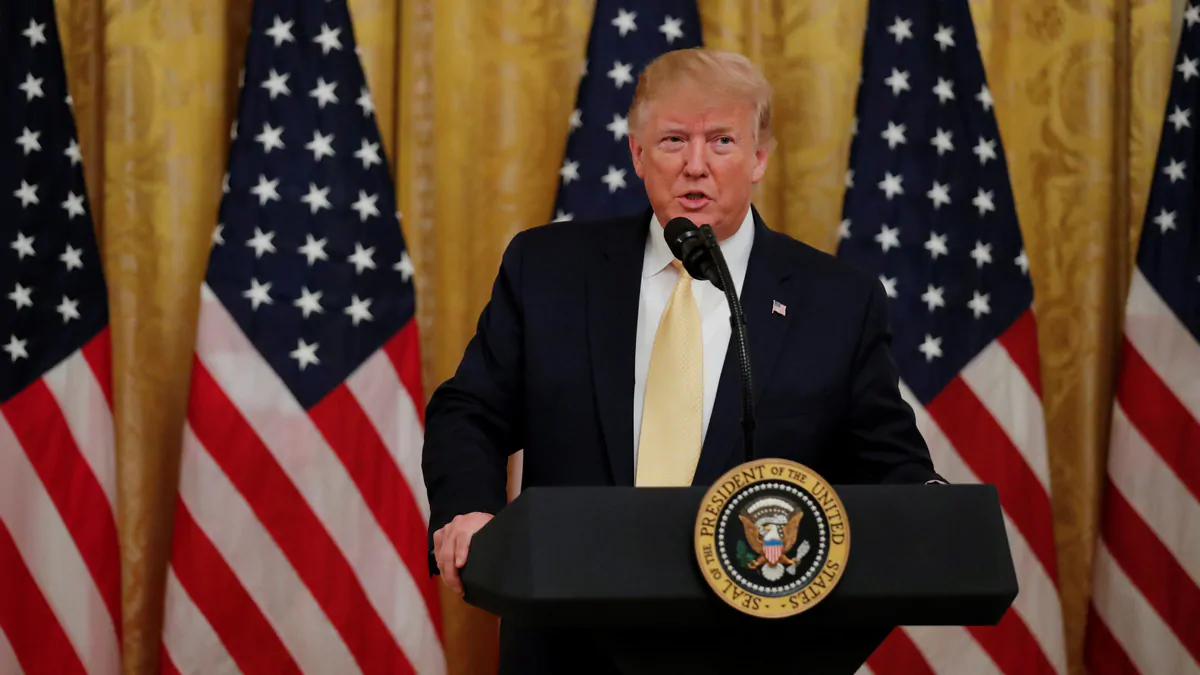
The last 100 years have seen a few folks stand out to become some of the greatest influencers in the history of Mankind. I deem it pertinent to research and document extensive profiles of these super influencers and their remarkable feats as regards business, leadership, human rights, etc. First on the list is Donald Trump, the current president of the United States. We will take a detailed look at his early days, exploring how his family has always succeeded, how he built his empire and his travails in politics. This will be a 5-parts series.

Introduction.

The contest for who would take over the office of the President of the United States in 2017 was one of the hottest in the political history of the country. In the end, the choice narrowed down to two heavy-weights, veteran politician Hillary Clinton- who have been actively involved in the political scene as first lady, senator, and secretary of state- and the controversial billionaire and real estate magnate, Donald J. Trump. It was a hotly contested race with the winner emerging not by popular vote but rather the vote in the Electoral College.  In the usual Trump-style, this victory was with a list of remarkable records, some perceived as positive and some negative. Donald Trump became the oldest and wealthiest person to win the white house seat and the first without a record of military or government service. He was also the second president since Ronald Reagan to have gone through a divorce. The race had its high points and low points for both candidates but in the end, Trump won.

Donald Trump was not a greenhorn in American politics, the fact that he won is a testament to his tenacity and a curious ability to weather the storms that accompany the process of achieving anything worthwhile.  The skills that have served him at various times in his life- as a student, as a property developer on the Manhattan business landscape, as a media personality and as a public citizen- would also serve to propel him to the White House. There are those who wonder how Donald John Trump ever made it to the White House but then Trump has always been an ambitious fellow.

However there is more to success than ambition- there is the place of focus, determination, tenacity and following through by all means possible. Donald J. Trump is an embodiment of these traits and his story illustrates how well these traits have served him and as well when they failed him.

Birth and growing up

Donald J. Trump was born in 1946 in Queens, New York City. He was the fourth of five children birthed by Frederick C. and Mary M. Trump. The elderly Trump- a descendant of Lutheran Germans- was a builder and real estate developer who specialized in constructing and operating middle-income apartments. Frederick’s operation has a wide geographic cover as he was involved in various developments in the Staten Island and Brooklyn sections of New York. In the nick of time, Donald J. Trump would someday share an office with his father in the process of laying the foundations for his own real estate empire tower. The young Trump was an energetic and bright child and enrolled at the Kew Forest School for his kindergarten through seventh- grade studies. After Kew Forest, the New York Military Academy was the next stop on his academic journey. The signature defiance of convention and the streak of playing by his own rules began manifesting at this stage when his parents discovered that the young Trump was already making trips to Manhattan on his own and without their permission. Trump was admitted into Fordham University in 1964 and in 1966- in order to have a more robust knowledge of the real estate business- he transferred to the Wharton School of the University of Pennsylvania which was one of a handful of institutions offering courses in real estate management. He graduated from Wharton in 1968.

In her more than 200 years of political existence, the United States of America has always had presidents with prior government or military service records- from George Washington down to Theodore Roosevelt down to Barack Obama- Donald Trump is the only exception. The Vietnam War was at its apogee when Trump was in college. He obtained four military service deferments during this period even though he was certified fit for service by a military examination board and the local draft board. Critics have tried to use this point to question Donald Trump’s patriotism whenever political issues crop up.

Early Starts

The first Trump to make a fortune in America did so during the gold rush, rather than exploiting gold he was contented with the provision of necessary services. His own son took a much more stable route, learning the building trade and starting a real estate development company. The second Fred C. Trump took advantage of the housing boom which resulted from the policies of Franklin D. Roosevelt during the New Deal Era through the ‘50s to expand his company and made a fortune in the process. Fred C. Trump’s decision to go into real estate development would have tremendous implications for history because it laid the foundation for the emergence of his son who would one day tower over the Manhattan property development landscape.  Donald J. Trump took over the family business in 1971 and it was he who christened the company ‘The Trump Organization’. He soon went on a drive for expansion.

Trump’s goal of being a large scale developer translated into construction and renovation of skyscrapers, golf courses, casinos, and hotels.  Prior to taking over the company in 1971, Donald Trump’s first main project was the revitalization of the Swifton Village complex in 1969. The complex was suffering from poor management and low occupancy rates with two of every five rooms unoccupied. Trump in partnership with his father turned the complex around and occupancy rates were increased from 66% to 100% in a few months. This simple accomplishment would go on to serve as a blueprint for future turn-around projects. This period also marked the beginning of a life of controversy and being in the limelight. In 1973, Donald Trump and his father Fred C. came under the radar of the justice department because of allegations that their company made use of discriminatory policies in renting out apartments to tenants.

The crux of the allegation was that the company discriminated against blacks and other minorities who wanted to rent apartments. Father and son countered this charge, stating that the company’s rent policy is dictated by factors such as income and legal records which unfortunately stood the African Americans of that era in no good stead.  The issue was resolved through the adoption of the Urban League as an intermediary for African Americans seeking to rent an apartment. The episode was to have a lasting impact on junior Trump. A principal player in this episode was Trump’s attorney Roy Cohn who had a flair for responding forcefully to attacks on his interest and valued publicity- even negative, to Roy Cohn even bad publicity could be shaped to his own purposes.  This thinking was to influence Donald Trump and its effects were seen in how he handles attacks and always seeks to be in the limelight albeit with methods that would have been considered disputatious. This particular perspective would also play to his advantage during the presidential campaigns that culminated in his election to the White House.

Part 2 will shed more light on Trump’s business and leadership successes and how we can benefit from his vast array of experiences. Stay tuned…

Curbing Stolen Phone Menace

0

Often times, Nigerians experience or know of people who have experienced mobile phone theft, when commuting to work or other places. This can be a very bitter experience which often causes great inconvenience and oftentimes the victim is left with no choice than to purchase a new set of mobile phone. The stolen phones are then sold to unsuspecting individuals at ridiculous low prices.

GSMA has in the past, worked with telcos, in other parts of the world to help reduce this menace. And I think this practice should be adopted in Nigeria, as it would go a long way in curbing the stolen phone menace as well as reducing insecurity and other terror related offences.

The GSMA practice first involves the individual to identify his/her IMEI (International Mobile equipment Identity), a 15 or 17 digit code that uniquely identifies mobile phones. An individual can obtain his/her IMEI by pressing *#06# from the keypad.

When the phone is stolen, the individual then contacts his/her service provider to report the incident and ask to blacklist the mobile phone by providing his/her IMEI.

Under this practice, service providers develop a database of black listed mobile phones which they share with other service providers to prevent the use of blacklisted mobile phones on their networks.

The database can further be made publicly available to police officials and the general public so that the public can check that the mobile phone they are about to purchase has not been reported stolen or lost. This has been implemented in the US in partnership with GSMA as a stolen phone checker initiative.

In Nigeria, the Government has mandated the registration of SIM cards to curb insecurity and terrorism. At the point of SIM registration, the individual can also be assisted to register their IMEI, associated with their devices.

When an individual desires to transfer the mobile phone ownership to another individual (as sometimes happens), he/she can contact his/her service provider to update the database, which would be shared with other service providers.

If implemented in Nigeria, this practice would no doubt help to curb the stolen phone menace, reduce the risk of purchasing stolen or lost phones and most importantly assist law enforcement officials in tracing and tracking criminals or terrorists.