DD
MM
YYYY

PAGES

DD
MM
YYYY

spot_img

PAGES

Home Blog Page 6624

The Counter-Productivity of Nearsighted Economic Policies: Putting Nigeria’s Closed Borders in Perspective

7

Many government policies (many would quite justifiably argue), in recent times, in Nigeria, have borne underlying demonstrations of insensitivity to the plights of Nigerians in various sectors such as finance, taxation, and international trade. One could cite the recent Central Bank of Nigeria (CBN) cashless policy, the proposed increase in VAT, the imposition of tax funding by corporate citizens for the police force, to name a few. Perhaps, the government’s recent decision, as announced by the Nigerian customs chief, Hameed Ali, that all land borders have been closed until further notice, could assume a front roll seat in the public poll of policies that have been gravely insensitive to the economic plight of Nigerians, especially as the reasons given by the government are the blanket economic and security reasons.

Reality check for me was the unsolicited alterations in my Sunday vitality routine. Traditionally, my Sundays enjoyed the pleasure of eating well prepared rice, at least until now. In what I would better describe as a dramatic turn of events, my desire for a rice meal was supplanted by the reality of eating Eba. Enquiries revealed that the price of rice had become astronomically steep and indeed, it naturally followed that the closure of the borders would have mangled the ordinary courses of demand and supply. 

In the Judging Eye, R, Scott Baker stated that “a beggar’s mistake harms no one but him.” A king’s mistake however, harms everyone but the king. Too often the true measure of power lies in the number who are likely to suffer from a ruler’s stupidity. 

Without much ado, this disquisition is focused on condemning the recent government policy of closing its borders – the same government whose fiscal policies have remained inconsiderate of economic realities and welfare of its citizens or whose tax policies violate the canons of taxation. Clearly this government has become the painted devil frightening its citizens.

The closure of the land borders may be the biggest hit yet on the citizens regardless of the genuine reasons given. Understandably, the government is deeply concerned with the rate of importation which if not looked into is likely to cripple the domestic economy, the influx of illegal and prohibited goods and the influx of illegal immigrants through the land borders which have increased security threats. One thing is established -our borders are porous and badly managed. To that extent, we can applaud the government for its reactive measures but before we do that, take note of the African proverb that reminds the Baboon who celebrates the death of the farmer. For that farmer was he who planted the bananas the baboon ate. 

In truth, this policy in another clime or given different circumstances, may not have been condemned, at least not in its entirety but when placed with the present climes and  given factors such as the strength of our economy, the possible negative implication on the citizens, then this policy becomes bad for failing to match up these realities before implementing the same policies.

In simpler terms, Nigeria’s domestic strength is too weak to cater and meet up to the nation’s need which means that Nigeria must in one way or the other rely on some external trade to meet up with the nation’s need, and create the needed balance in the economy. If it intends closing its borders, then it must bear in mind this reality before doing so, or stand a risk of the negative effects outweighing the positive intention of such act. 

Nigeria’s market structure is more of an oligopoly as compared to a perfect competition market and this is notwithstanding how, in principle, we are termed as a perfect competition market as we have very limited handful of producers who dominate the market hence, never vanishing traces of monopoly in the Nigerian economy. This accounts for why the government regulatory agencies should pay more attention to matters affecting our economy. 

Be that as it may, the closing of land borders will further shrink market participation while encouraging domestic producers to become monopolistic since demand will consequently become higher than supply. Whether this was the undertone intention of the government cannot be known, at least not to the public but the fact is that the citizens are hung out to dry and that is worthy of public outcry.

In all of history’s verifiable annals, statistics have never been in favour of shutting borders as veritable weapon for economic growth or as a reactive measure except in extreme circumstances. The far-reaching effect are onerous, obnoxious and too extreme for those locked within the borders as incidence such as; increase in death tolls, starvation and malnutrition  are close consequences of such act. The Bengal Famine in India in 1943, Cambodia (1976), Chinese Famine in 1959-1961 are historical facts to ponder before taking such decisions. 

Characteristically, in 1984, General Mohammed Buhari did shut Nigeria’s borders ostensibly to stop corrupt officials from escaping justice, and then used military strategy in fighting against basic principle of demand and supply by forcing traders to reduce their price. The effect of this was that a lot of traders closed down their shops, an act which threw Nigeria into a paranoia. Starvation, poor human conditions, lack of health facilities became a rising issue that attracted the United States’ sympathy and beckoned on the then head of state to open the borders. Interestingly, the borders remained closed until 1985 when General Ibrahim Babaginda overthrew the government.

If something isn’t done now and fast, it is only a matter of time for things to take a downward slope and then we will have to watch rice disappear from our table followed by every other amenity or vitality and time ticks slowly when you look at the clock and 2023 is over 1,000 days away from today. 

Furthermore, the diametric contradictions of the border closure against Nigeria’s foreign policy only reeks of hypocrisy on the Nigerian government given its ratification of ECOWAS Agreement on the free movement of member states within agreeing countries, and Nigeria’s signature to the African Continental Free Trade Agreement. It won’t be a stretch to anticipate retaliation from neighboring countries and the African Union, as Nigeria is expected to be a key participant to the AfCFTA. The policy only weakens Nigeria’s position as front liners in these organizations particularly with the ECOWAS except there is a “Brexit” move yet to be revealed. If there is anything this government has taught us, it is to expect surprises. Like Zee world, it gets extraordinary every day.

Notwithstanding the above, we may be at the precipice but then we are not beyond saving, and so the following shall be offered as recommendations to wit:

RECOMMENDATIONS
1. The Federal Competition and Consumer Protection Commission must live out its full use. One of which is to advise the Federal Government on national policies upon investigation of such policies, on matters touching the economy, and capable of destroying competition, and so matters as delicate as this with possibilities of altering economies of scale, competition and market prices thereby leaving consumers at the mercy of producers. These factors should be investigated by the commission and necessary intervention is taken to ensure that competition is not crippled and consumers are protected.

2. The government must become deliberate on increasing local production. Nigeria’s economy does not encourage start-ups; SMEs are not giving enough incentives to encourage growth nor are there good enough policies to increase local production of agricultural produce. If Government intends to protect domestic market, then it must be concerned of its growth not just in principle but in practice. By this I mean, being involved in the agricultural sector just as it is in the oil sector and most recently, the technology sector, loan facilities should not be dubious but accessible to local farmers.

3. The reasons given by the Federal government on the closure of all land borders are too flimsy for such reactive measures. It speaks more of our failures than our successes. If the Nigerian Customs can be more diligent in its duties then our borders will become more law compliant. The level of connivance between importers and the Nigerian customs is a contributory factor to the illegal importation of goods, and so if the government believes its news of border porosity, then the Nigerian Customs must as a matter of urgency be revamped and restructured to actively tackle these issues.

4. The purchasing power of domestic consumer is on a decline as income is either stagnant or decreasing while the cost of products is taking an upward slope. If this distress is not attended to Nigeria’s local production, economic strength may never go up and so Nigeria must restructure its cash injection policies to ensure even distribution across all tiers.

5. Towing the advice, as given by Femi Falana, SAN, the land borders of Nigeria must be open to avoid repercussion and retaliation from neighboring countries who are likely to be affected.   

Twitter UnTweets Political Ads

0

In a surprising move on Wednesday, Twitter CEO and co-founder, Jack Dorsey announced that the social media platform is no longer going to accept political ads.

The debate on the need to ban political ads on social media has been on for months now with Facebook on the forefront.

The influence of social media on elections is growing to a worrisome degree, due to lies and false information dissemination by political mongers.

At a time when fake news and hate speech are seen as threat to human existence, the call to quell political ads on social media has been sounding on high volume, and Twitter is the first to heed the call.

The policy comes in on 22 November so will affect the UK general election in December.

Jack Dorsey’s statement reads thus:

“We’ve made the decision to stop all political advertising on Twitter globally. We believe political message reach should be earned, not bought. Why? A few reasons…

“A political message earns reach when people decide to follow an account or retweet. Paying for reach removes that decision, forcing highly optimized and targeted political messages on people. We believe this decision should not be compromised by money. While internet advertising is incredibly powerful and very effective for commercial advertisers, that power brings significant risks to politics, where it can be used to influence votes to affect the lives of millions.

“Internet political ads present entirely new challenges to civic discourse: machine learning-based optimization of messaging and micro-targeting, unchecked misleading information, and deep fakes. All at increasing velocity, sophistication, and overwhelming scale. These challenges will affect ALL internet communication, not just political ads. Best to focus our efforts on the root problems, without the additional burden and complexity taking money brings.

“Trying to fix both means fixing neither well, and harms our credibility. For instance, it‘s not credible for us to say: “We’re working hard to stop people from gaming our systems to spread misleading info, buuut if someone pays us to target and force people to see their political ad…well…they can say whatever they want! ?” We considered stopping only candidate ads, but issue ads present a way to circumvent.

“Additionally, it isn’t fair for everyone but candidates to buy ads for issues they want to push. So we’re stopping these too. We’re well aware we‘re a small part of a much larger political advertising ecosystem. Some might argue our actions today could favor incumbents. But we have witnessed many social movements reach massive scale without any political advertising. I trust this will only grow. In addition, we need more forward-looking political ad regulation (very difficult to do). Ad transparency requirements are progress, but not enough.

“The internet provides entirely new capabilities, and regulators need to think past the present day to ensure a level playing field. We’ll share the final policy by 11/15, including a few exceptions (ads in support of voter registration will still be allowed, for instance). We’ll start enforcing our new policy on 11/22 to provide current advertisers a notice period before this change goes into effect.

“A final note. This isn’t about free expression. This is about paying for reach. And paying to increase the reach of political speech has significant ramifications that today’s democratic infrastructure may not be prepared to handle. It’s worth stepping back in order to address.”

Fintech Startups Driving Financial Inclusion across the Continent

0
USSD Nigeria

Mobile money is fast dissolving the economic and geographic divide that splits the continent. Fintech startups born and multiplying since 2007 have not only catapulted Africa toward the number one global spot in mobile money, but have also led to dramatic business successes for both entrepreneur borrowers and mobile money startups.

There is opportunity still to be mined. In fact, the World Bank estimates that of the 2 billion people worldwide without access to the modern financial system, one-third live in Sub-Saharan Africa. With time there is little doubt that the disruptive technologies of the Fourth Industrial Revolution will drive the entire continent of Africa forward, not just the urban enclaves.

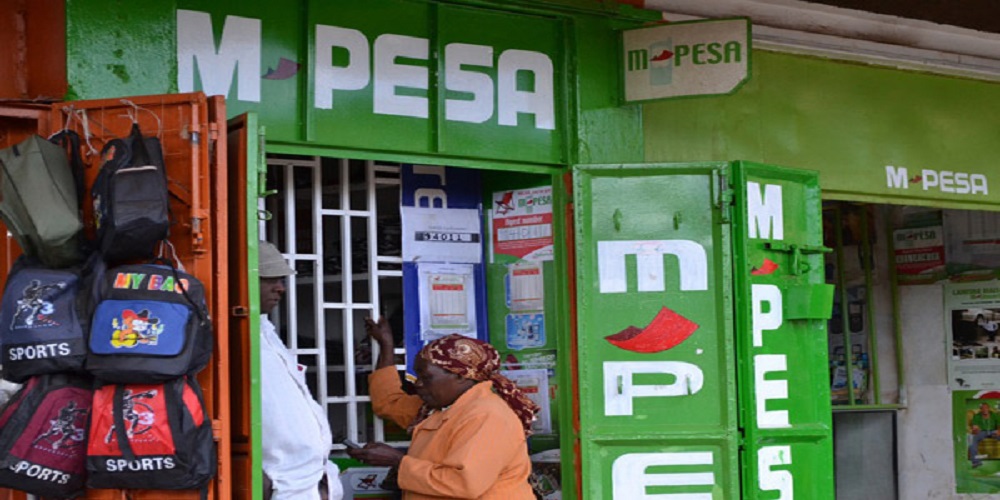
Fueling the “Africa Rising” narrative is the fact that the motherland is the testing ground for many new financial technologies. To wit, there are over 300 fintech startups, with more than 50% having set up shop since 2015. As for mobile money, Africa’s two leading providers, M-Pesa and MTN Mobile Money, earned US$ 550 million and US$ 200 million in service revenues, respectively, in FY 2017.

Fintech startups offering ingenious and innovative mobile-first solutions in Africa are catching on. To bring so many who have never seen, let alone owned a smartphone into the digital economy is phenomenal, pure and simple.

By deepening financial inclusion in the region, mobile money technologies are improving the lives of millions of people who have been without bank accounts, savings, loans, and access to payment services. The technology is helping democratize access to financing, enabling migrant family members to cash cross-border remittances by phone, allowing refugees to realize financial autonomy, and empowering vulnerable women through microloans.

Following in M-Pesa’s footsteps on the continent is WeCashUp, a universal payment platform built upon a combination of old and cutting-edge payment technologies. With it, e-commerce companies can receive funds from Africa’s frontier markets from people with no credit cards who can now shop online, even for plane tickets. WeCashUp’s Cameroonian founder, Cedric Atangana, who is currently earning his MBA at Stanford, saw his company named the Best Fintech in Africa in 2017.

An equally groundbreaking concept is Pezecha, the Nairobi-based startup that uses credit and analytics to assign a credit score to low-income borrowers, thus pioneering peer-to-business microloans and fostering the growth of SMEs, which are responsible for nearly 80% of Africa’s employment, according to the World Bank. More recently, Nairobi-based Twiga Foods partnered with IBM to launch blockchain-based microfinancing for food kiosk owners in Kenya, the cradle of the new development economics according to the McKinsey Global Institute.

Fintechs exemplify how technology is driving financial inclusion in Africa. In their article, Benno Ndolu (of Tanzania’s Central Bank) and Tebello Qhotsokoane (of Oxford’s Commission on Technology and Inclusive Development) report on the vast changes occurring in financial inclusion in East Africa, while offering practical tips to financial inclusion stakeholders as well as those considering the move.

The Fascinating Eden’s Concierge Services in Nigeria, Powered By Digital Tech

0
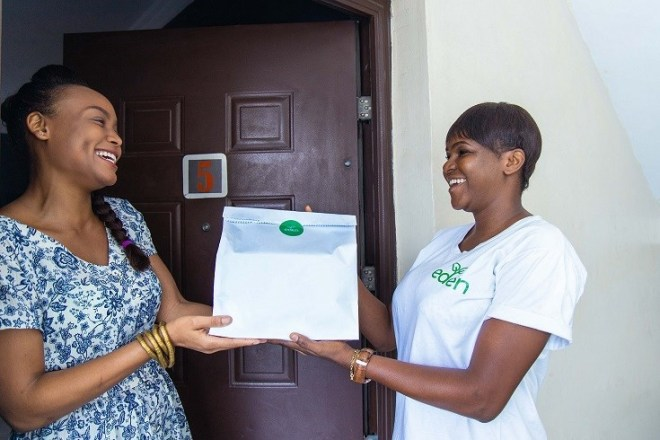
A typical Eden Delivery Service by a Gardener.

The life of an average Nigerian is not easy. You must join the queue that connects to the queue and another queue to get your voters’ card, driver’s license and international passport document. You enter a ride-hailing taxi so you can get going, only for the driver to ask you for directions?—he doesn’t even know the way. You decide to wash your clothes, rearrange your house or apartment by weekend, cook that delicious meal you’ve been craving and chill out with your friends to view that Champions League match, but the Lagos traffic is waiting to show you pepper—Oya nah!

It’s so not easy dealing with work, life’s challenges and our own personal problems on a daily basis. That’s why over time people have always solicited for ‘househelps’. Remember those young boys and girls that do all the chores in your house, and later cause trouble (most times)? Yes, they played a vital role in making your life a less miserable one. But as time keeps winding down and age keeps telling you it’s no longer on your-side there are many things you must stop doing. Yes, you cannot kill yourself remember that.

So, who is going to do all these huge strenuous tasks for you when you are at work, church, vacation, etc? There seems to be a new kid on the block that delivers these services and more. From the overview they are a ‘Concierge Service’. So what’s all these grammar about a ‘Concierge Service’?

Concierge Service An Overview

Some say that the word ‘concierge’ is derived from a Latin word ‘conservus’ which translates to ‘fellow slave’, while some say that it has evolved from the French ‘comte des cierges’, which means ‘the keeper of the candles’, which was essentially the main duty of concierges during the Middle Ages. Nonetheless, the meaning and the duties of the concierges have changed over time. They now perform almost every task for top-level managers, VIP customers of banks and hotels, superstars, or anyone who has enough money to outsource their work to them as reported by Feedough.

So, what is a Concierge?

A Concierge is an individual or a company which is specialized in personal assistance or any other assistance services like household management, lifestyle management, transportation, travel and vacation planning, etc. and provides such personalized services to its clients (usually high-net-worth clients) at a variable price.

The idea is to save the time of the client by performing their routine or specialized tasks.

Do you ever wake up and feel like there should be someone to do your errands while you sit back and relax? To plan your entire holiday or a date, instead of you sitting in front of the computer screen for hours? Do you want an expert to be your personal assistant or your lifestyle manager?

Well, there are companies which provide such services. Their employees will do anything for you as long as it’s legal, moral and ethical.

The Rise of Eden

There are many ways to define Eden. Eden is automation for house chores. It is room service for homes. It is a concierge service without live-in concierges, centrally managed and monitored via a collection of interconnected applications. It is a well-managed marketplace connecting homeowners and high-quality service providers.

At its core, according to the company’s website, “Eden is a superior answer to the question of an inferior lifestyle. If you’ve ever wanted to be done with house chores or wanted better services for things like your laundry, meals, house cleaning, equipment maintenance, etc, then you have silently prayed for Eden.”

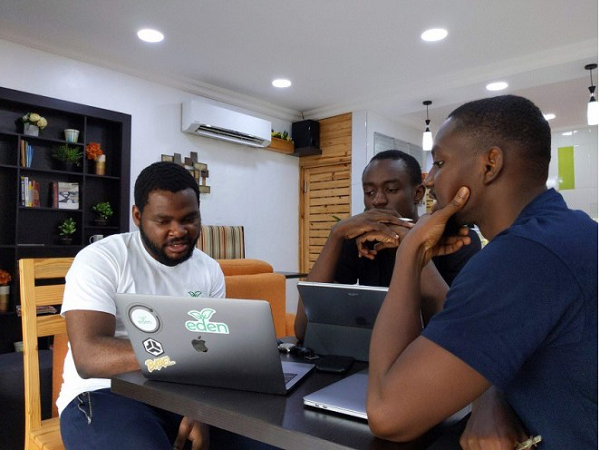
In April 2019, a team of three ex-Andelans; Prosper Otemuyiwa, Slim Momoh and Enegesi who is founder and CEO, came together to build the service full time.

Apart from its founders who previously worked at the African tech talent accelerator, 13 other Andelans who have contributed to an undisclosed seed round also currently fund Eden. Eden’s services target busy professionals in metropolitan cities like Lagos where it started. For a monthly fee ranging between N23,000 ($63.5) to N86,000 ($237.4) depending on the selected plan, the company appoints one of its trained staff called Gardeners to a customer.

These Gardeners deliver services and chores like laundry, cleaning and maintenance, meals and groceries, and electronics servicing, on a recurring basis according to the customer’s selected plans. As the description on its website succinctly puts it, Eden is a ‘a human-powered, tech-enabled service that puts your household chores on autopilot.’

To do this, they collaborate with existing service providers in these industries, vet them and assure subscribers of their reliability. “We don’t work directly with artisans as there is usually no professionalism. So we use a very strict selection criteria and check for things like reference, certification and industry level compliance, liability insurance in case there is damage in the client’s house, and capacity to manage jobs,” Enegesi said.

According to Eden, this quality assurance process is what differentiates the company from others that merely provide the services. When Eden started, Enegesi said they envisioned logistics would be a major challenge because of the structure of Lagos, but tech took care of that end. “Within the first two weeks, we created an algorithm that manages all our logistics and makes everything easier,” he said.

This process would most likely have been easy as all three co-founders are engineers. He however pointed out one hurdle they have had to face many times. “The biggest headache has been communicating the idea of Eden to people and educating them on what we do. Many people thought we were an IoT company, and many other assumptions like that.”

How Does Eden Work?

Eden’s approach is simple. The trick is in their seamless execution:

  1. They find and on-board the best service providers Nigeria has to offer.
  2. They step up their service quality using their rigorously-designed Eden Services Quality Blueprint.
  3. They standardize the pricing for all these service providers so they’re paid fairly while our customers are also not over-billed for these services.
  4. They give you a well-trained home manager, also known as a concierge (they call them “Gardeners”) who manages the execution of the services while you go about your day.
  5. The repeat delivery of excellent service becomes culture through constant iteration.

To deliver Eden at scale, they’ve built two platforms called Garden and Lighthouse.

Garden is the user’s Eden app, designed to push dynamic status updates on your home as soon as you’re on Eden. It updates you on when your home has been cleaned, your fridge restocked, and so on?—?and also tells you when next your services will occur. You can rate services, send special requests to your gardener and basically outsource your home’s tasks.

Lighthouse is our central intelligence system. It learns your preferences and requirements, routes them to the most appropriate Service Partners on schedule, and guides the Gardeners on how best to coordinate the delivery of your services.

Eden logo

The Future

Concierge services are a fairly recent addition to the luxury industry; all thanks to the constantly changing business environment, the technological advancement, and the long working hours of the working professionals. Such limitations have resulted in lack of time in the life of the people. They now wish for either more time or someone who can do the work for them while they free their time for the things that matter. Concierge services business model capitalizes on this need.

Earlier, concierges used to be restricted to hotels or luxury apartment buildings and used to assist guests by making restaurant reservations, arranging spa service, recommending places to visit, booking transportation, etc. But now these individuals and companies have moved ahead and have specialized in a lot of tasks ranging from lining up tickets for concerts or special events, planning a holiday trip, doing the shopping errands, restaurant recommendations and reservations, etc.

The business models of different concierge services providers differ in the types of service provided and to whom it is provided. Some concierges help employers maintain good employer-employee relations, some deal in handling customer grievances, some concierges provide personal travel planning service, while some provide all these services by acting as a personal assistant or lifestyle managers which in the case of Eden —Gardeners.

It should then come as no surprise that Eden’s goal is to make life easier and better across the continent, it is going to be expanding into other African countries in the near future as it delivers this amazing concierge Services—Eden.


Featured image – Prosper Otemuyiwa (L), Silm Momoh (M) and Enegesi (R) (source: Eden)

Required Government Interventions On Fighting Cancer in Nigeria

0

You must have noticed that a lot of breast cancer awareness campaign happened within the month of October. This isn’t a coincidence. October is actually the Breast Cancer Awareness month. As a result, most women had to wear pink or ‘a touch of pink’ all through the month. People like me have pink T-shirts that loudly call women to go for tests or have their breasts examined in order to save their lives. In fact, my own T-shirt has breast cancer boldly written strategically at its front and back. I enjoyed seeing aghast looks on people’s faces when they see me in that shirt. Some even gathered enough courage to chide me for wearing clothes with such loud tabooed expression. Then it will be my turn to laugh at them for seeing ‘breast’ without seeing ‘cancer’ and ‘battle now’.

Some of us in different cities of the federation must have seen cancer awareness posters, groups participating in awareness campaign march, calls for seminars, workshops, and so on. Even the internet buzzed throughout the month with this cancer awareness thing. But, I don’t think anybody saw any public announcement on free cancer tests and diagnosis – this is the basis for this write-up.

Our worries about cancer shouldn’t just end with breast cancer. Cancer can come in different forms, even though it looks like breast cancer is the commonest one – even amongst men. For us women, we are mostly worried about breast and cervical cancer. We have to examine our breasts every now and go for cervical pap smear (every three years) to test for human papilomavirus (HPV), which causes cervical cancer. One good thing is that the cause of cervical cancer has been detected.

The problem with other types of cancers is that their causes have not been detected. The risk factors these oncologists keep mentioning will make you wonder what you are still doing in this world. One of such seminars I attended revealed that even some of the materials used in building our houses expose us to radiation that can cause cancer. And in Nigeria, that is riddled with low income (I don’t want to say ‘poverty’), smoking cheap cigarettes is still prevalent – and you that is minding your business will be the one inhaling the smoke, even more than the smoker himself.

So, apart from cervical cancer, the causes of cancer aren’t known yet – as far as I know. This means that the only way to fight it is through regular tests. And ‘tests’ here isn’t ‘self-diagnosis’; you need to go to the hospital for it. This means you have to spend money; and heavy one at that.

We are constantly told that early detection is the key; but has anyone asked if we have the means for the ‘early detection’? How many Nigerians can afford these tests when they are struggling to put food on their tables? Please, don’t come with the ‘health is wealth’ slogan because everybody knows that already. But, believe me, you wouldn’t think about health when your children are looking at their empty plates because you want to use their ‘chop money’ for mammogram and other tests for cancer cells.

I always wonder why more attention is given to HIV/AIDS, that people already know how to avoid, than to cancer, that the only way to fight is by performing tests. HIV tests are conducted freely or at very low charges in almost every hospital and medical laboratories, but no one will conduct ordinary breast examination for free. Maybe Naija government is waiting for this monstrous disease to become endemic before they do something about it – but God no go gree.

You know one problem with cancer, if you don’t detect it early, it will eat deep and destroy the system. Most Nigerians that have the means to travel out of the country for better medical attention at the early stage of the illness were lucky to survive it. But then, how many people can afford that? Some people after being diagnosed with cancer have to start looking for the heavy money required before treatment commences. By the time they have a little percentage of the money, the disease must have eaten deep into them. This is quite pathetic.

So, if Nigerian government wants to reduce the number of citizens that are killed by cancer, they need to:

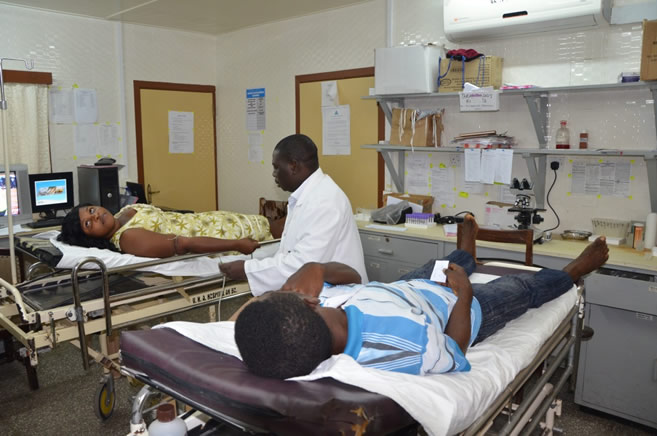
  1. Establish cancer diagnosis centres in every government hospital. If finding oncologists and other related medical practitioners is the problem, they should send some interested medical doctors for the training. This way, every Nigerian can have access to these professionals without having to kill themselves going to tertiary hospitals for ordinary diagnosis.

The good thing about this is that with time, private and missionary hospitals will open their own centres as well.

  1. Run free cancer tests for people. I know they will say that the cost of procuring the reagents or equipment, or whatever they use in doing these tests is expensive; but if Naija government can pay ‘sleeping senators’ heavily, they can also procure these equipment and reagents for their hospitals.
  2. Sponsor many Nigerian doctors and scientists to embark on further research on how to prevent cancer. Please, they should stop giving us funny risk factors that scare the life out of us. They should be more detailed and concrete in their analysis and hit the bull’s eye. We need to know what to avoid so that we run away from cancer.
  3. Create louder awareness on cancer prevention. Most people that died of cancer knew what it was but didn’t give it serious consideration until it hit them. We can’t continue like this. The same way ‘noise’ is being made for HIV/AIDS is still the way it should be made for cancer. NGOs that are looking for new grounds to break may have to come in here. Let more light be thrown on cancer prevention.