DD
MM
YYYY

PAGES

DD
MM
YYYY

spot_img

PAGES

Home Blog Page 6628

How to Promote Your Business with Hashtags

0

In today’s world, Hashtags are being used on various social platforms like Facebook, LinkedIn, Twitter, Instagram, and Pinterest.

Hashtags are one of the important ways to promote your business across social platforms by connecting it to; searches and discovery relevant to your target audience. They help to reach your targeted audience organically and therefore could increase the return on investment.

The just-concluded Big Brother Naija was a typical example of how Hashtags can help to increase brand visibility. Some results were collated on Twitter through the use of Hashtag. Companies can now take advantage of Hashtags to improve their brand visibility online without having to spend extra money on marketing campaigns. Hashtags help to increase social platform engagement with new users.

A “hashtag” can be a label used on words or phrases on social platform posts; which helps in bringing together specific content on relevant topics. Hashtags can be phrases or acronyms which makes your social media posts to be searchable and linkable by others. Listed below are how to promote your business with hashtags;

  • Build use of Brand-specific hashtags: For the success of your brand, you need to explore using your brand name as hashtags; this permits your business to grab attention just by hashtagging the brand. Once the brand name is recognizable, it can simply be turned into a hashtag and can also be taken a step further with a bit of creativity. Always keep your brand-specific hashtag consistent and unique, and use it on all of your social sites. Monitor your brand-specific hashtags to respond to people using them because engaging others using your hashtags can further help to bolster your brand visibility and authenticity. 
  • Enhance your Content hashtags: It is very important to make use of content hashtags. They are the easiest hashtags to incorporate into your tweets, LinkedIn, or Instagram post because you can add them to pretty much anything. Content hashtags are common hashtags that simply pertain to what you’re sharing and what your brand is offering. Content hashtags help to improve the SEO of your posts and spread your posts to your specific or targeted audience. One key advantage of hashtags – your targeted audience gets to see it. This helps to reduce vanity metrics. 
  • Always be on the lookout for trending hashtags: In recent times the social platform users create a lot of trending hashtags every day. Popular trending hashtags are usually based on users finishing a sentence or stating an opinion of something in 5 words or something to that effect. Trending topics are already common as a result of – they’re obtaining plenty of tweets and organic reach, therefore your tweets with trending hashtags are a lot of doubtless to receive engagement.

Final words

Having examined the aforesaid purpose, it’s crystal clear that hashtags can be a game-changer, once used deliberately and strategically, it can help to draw in new customers to your whole business. It can also help to reduce the amount of money you will spend on a marketing campaign. Try it today and see the result.

On the Increasing Need for Widespread EHR Adoption in Nigeria’s Public Health Institutions

0

Electronic health records (EHRs) have been massively adopted as a significant tool in health delivery by health care providers and organizations.  It has brought significant improvements to the quality and efficiency of healthcare delivery. This is most evident in developed countries where EHRs have enjoyed widespread adoption at different levels of healthcare delivery. EHRs since their advent have significantly changed the way in which health information and data are collected, saved and shared.

EHRs are primarily meant to help improve on the delivery, management and other administrative process of the care the patient requires. This helps to create comprehensive record for patients that are useful to them individually and in making population health decisions by the appropriate bodies and authorized care providers. Paper records are difficult to store, maintain and losses (which are common) usually result in loss of useful patient information and data that are relevant to the patient individually and to the population in general.  The benefits of EHR to population health include contributions to the collection of cross-sectional and trend information about the health of populations, information on social and behavioral risks and other influences on population health.

The United States of America for example have the National Electronic Injury Surveillance System (NEISS) which is a system that aggregates robust injury reports across the country using data collected and extracted from EHRs of different hospitals that are part of the system. The datasets contain demographic information, narratives of the injuries, diagnosis and other important information relevant to the injuries.  With this system the American consumer safety commission can easily know which products are resulting in increased injury within the population, they can know how often cases of poisoning occurs without conducting any community studies. It has become a significant tool for surveillance of injuries in the community.

There are also Health Information Exchange (HIE) organization and systems that are created as a means of exchanging information between facilities that use Electronic Health Records, this facilitates the easy sharing of patient data between different facilities for continuation of care. This has also made some aspects of public health easier, for example Healthelink which is an HIE consortium that serves about 1.4 million people with 891 provider organizations in Western New York was used by the Erie County Department of Public Health in the surveillance of Hepatitis, STDs, food outbreak and Rabies investigation, it has played a role in time and cost savings through reduction in required public health field visits by helping to avoid unnecessary rabies post-exposure prophylaxis.

The usage of Artificial Intelligence (AI) in surveillance, prediction and provision of necessary recommendations on population health will also be reliant on the data generated from the EHR systems that will be adopted widely. This will improve the efficiency of community efforts and community health teams in predicting disease outbreaks, identify correlates among different datasets and any other possible use cases of AI in solving population health problems.

EHRs will help improve public health in all regards in Nigeria only if there is widespread adoption with the creation of exchanges especially for public health institutions which serve the largest numbers of the population. Achieving this cannot be done through private initiatives alone, European countries achieved this by central planning through policies, laws and incentives. The USA with its private oriented approach was able to achieve an adoption of about 83% due to the introduction of the Meaningful Use Policy by the US government which was a mix of incentives and penalties. Achieving this in Nigeria will require the Nigerian government to take the enabling seat and introduce policies and laws that will hasten widespread adoption and usage. The citizen’s health will be better for it.

BIBLIOGRAPHY

Benson, T. & Greave, G. (2016). Principles of Health Interoperability (3rd ed.). London: Springer.

Friedman, D. J, Parrish, R. J, MD & Ross, D. A. (2013).  Electronic health records and US public health: current realities and future promise. American Journal of Public Health. 103(9), 1560–1567.        doi:10.2105/AJPH.2013.301220.

Heath. S. (2016). Reviewing the State of EHR Adoption Under Meaningful Use, MACRA. Retrieved here

Magnuson, J. A & Fu, P. C. (2014). Public health informatics and information systems. New York:
Springer.

Nigeria is Underpopulated!

0

In economics, there is a population size that when combined with available natural resources will produce the best national income at any given time. This is referred to as the Optimum Population. If the labour force from a given population is not enough to maximize output in the production year of a country, this will bring about a decline in its GDP and/or per capita GDP and such a country would be said to be underpopulated. On the reverse, if the labour force is too large with respect to other factors of production, this will trigger the law of diminishing returns to scale and, such a country would be said to be overpopulated with consequent decline in the standard of living.

In one of my previous jobs, we were ten staff in a unit with limited resources of seven chairs, one laptop and, less than ten spaces in the cabinet. You can imagine the constant strife and inefficiencies. Nigeria today has over two hundred million inhabitants and there has been so much emphasis from within and outside the country about the dangers of a fast growing population that even the Federal Government of Nigeria considers this to be one of our banes. But let us pause and ask, are we really overpopulated in the economic sense? Literally, to the man on the street, the country is overpopulated because two hundred million is a huge number and, life is so hard for him as a citizen of the poverty capital of the world.

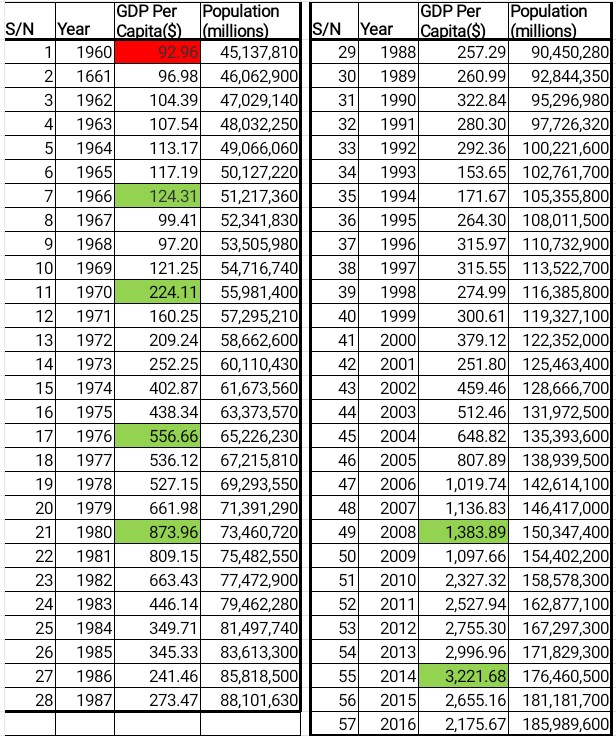
In proffering an answer to the puzzle, I analyzed data on per capita GDP and population size from 1960 to 2017, a scope of 57 years, sourced from indexmundi. From the trend, Nigeria have had six optima populations since its political independence. The first was in 1966 with a population of over 60 million, the citizens enjoyed a relatively high standard of living with a per capita income of $124.31. Then we had optima in 1970, 1976, 1980, and after a quarter of a century we had another in 2008. And after five years of decline from the last optimum, the per capita income recorded an all time highest of $3,221.68 in year 2014.

It is interesting to note that despite our frequent declines in per capita GDP, we have never gone below the lowest per capita GDP of $92.96 in 1960. It is true that our population has multiplied more than five times since 1960 in a span of 59 years, does this imply overpopulation? Recall that a country is said to be underpopulated if its labour force is inadequate to produce the best output given its available natural resources. In the production process, the factors of land, labour, capital and enterprise are combined in certain proportions to produce goods and services which monetary value is summed to get the national income. Consider the production equation below.

  • Y = L + K + ? + E
  • Where Y = GDP = National Income
  • L = Labour (over 58,000,000)
  • K = Capital (low national savings 14.9% of GDP and labour intensive technology)
  • ? = Land (over 70,000,000 hectares of arable land)
  • E = Entrepreneurship

A large labour force is considered an advantage in the production process. High levels of national savings and technology, fertile arable land and competent enterprise to organise other factors are also of significant importance. According to the Nigerian government, we have inadequate labour to exploit our huge natural resources. We have a very low national savings and practice an intense labour production technique. And enterprise, the most important factor, is just beginning to gather momentum in the economy.

From the foregoing we can conclude that “Nigeria is Underpopulated.” The highest standard of living we enjoyed was in 2014. Before this time, everyone believed we were overpopulated. With rising population growth, per capita GDP increase will come from the improvement in any or all of technology, labour, land and enterprise. Remember how the vices and misery of population explosion failed to happen in England according to Rev. Thomas Malthus fears because of the Industrial Revolution.

Our prospect may look bleak when we compare our indices with the rest of the world. With a per capita income of $1,968.56, Nigeria is a negative outlier to the global per capita GDP of $17,300.00 The difference between the standard of living in Luxembourg ($104,103) and Nigeria ($1,968.56) is like the heavens from the earth. But if China, with over a billion people and a per capita income that was below $2,000.00 before its economic reforms, could achieve greater optima populations with a current per capita GDP of $8,826.99, Nigeria has greater potential to do better.

I conclude that, given my little analysis, Nigeria is underpopulated. Reason, our economic carrying capacity is huge; this means the country has the capacity to sustain a maximum population size indefinitely, given the natural resources and economic opportunities that abound in the country. Also, for a long time we have not had the best representation in government. There’s an urgent need to elect the best, a new breed that will not see our population as a problem but a great opportunity for global competition.

The Radio Boom in Osun and its Implications on the State Information Landscape

0

Good governance thrives on a marketplace of ideas. Radio as an arm of the electronic media is the most ubiquitous, popular and highly sought after means of mass communication. Its reach to the nooks and corners of developing nations is legendary. As part of the emerging cities in the millennium, the radio waves have continued to witness more expansion. In Osun, the trend is there, the implications are obvious. The implications are the focus of this piece.

How it all began

The first radio signal was first sent and received in Osun on  25th November, 1991. This followed the attempts to create a media house for the new state carved out from the old Oyo State. Since then, the government owned station has continued to play a leading role in the Osun media landscape. This is in spite of the location of Gold FM, a Radio Nigeria FM Station in Ilesa by the Olusegun Obasanjo led Federal Government. Some form of competition came on board when Uniq 103.1 FM, a privately owned radio station located in Ilesa, also surfaced on the Osun media landscape in 2010. The competition from Ilesa was buoyed up from the central zone with Raypower FM and Rave FM coming in succession to swell the number of radio stations in the State of the Virtue. After them have come  Crown FM, Ife; Timsed FM, Ijebu Ijesa, Oodua FM, Ile Ife and Great FM located on the campus of the Obafemi Awolowo University, also in Ile Ife.

What are the implications of the expanded radio space in Osun?

The radio boom in Osun has its own consequences depending on where one is looking at it. The prospect is looking brighter for the average Osun indigenes and residents and advertisers hoping to derive some benefits from this development. However, radio station owners and managers, the space is getting wider and the audience base is becoming more competitive. For the radio audience in Osun, there is a variety of stations and programmes. The choice is theirs to make. Listeners have more stations to attend to their radio needs and listening pleasure. They are the greatest beneficiaries of this multiplication of radio stations. They have gradually exited an era when they only had access to information from government owned radio station to a number of stations driven by different motives. Their chances of getting their voices heard have also widened. In Osun today, the average listener is the beautiful  bride whose taste bud is now to be romanced with quality programmes. Not only that, the access to multiple voices and ideas on issues now pervades the airwaves in the state. So, no matter how it is considered, the listener is the winner in Osun.

Advertisers too now have wider opportunities to market their products and services to the people. From Osogbo to Ijebu Ijesa, the coast is clearer for the advertisers to spread their messages. There is a break in the long  monopoly of the airwaves enjoyed by the government owned OSBC before now. Jingles in English and Yoruba could continue to roll out on the Osun airwaves.

For the government, the wider information landscape is a major threat.  The voice has been taken out of the radio station previously considered as the government megaphone. The media handlers of the governor now has to monitor the expanded airwaves 24/7 to stay on top of information flow and respond to issues faster than their predecessors. The emerging radio boom now opens the government flanks to more criticism. Where the state owned station might be cautious in interrogating certain issues concerning the owners, their private counterparts would go all the way to open up government policies to scrutiny. While the average citizens are the greatest beneficiaries of the expanding media space, the government appears the most threatened.

Radio station owners and managers are equally under fire. The implication of more players on the airwaves is water tight competition. The narrow source of revenue becomes narrower. The stations compete in terms of audience base and advertising revenue. In broadcast business, the medium first builds a huge listenership which would be patronised by the advertisers. With more stations in competition for the same audience base, getting audience attention becomes water tight. The station with the domineering transmission power that has the reach stays on top. This must be complemented with quality programming and sound mix of great talents. Not only that, creative ways must be devised to make the audience loyal to the station. The mechanism of feedback must be strengthened. The trend of location of the new radio stations in the state is interesting. There seems to be a tug of war between the Osun Central Zone and the Osun East Senatorial District. The state capital, Osogbo is in contention with Ilesa, Ife and Ijebu Ijesa in hosting the radio stations.

The airwaves could only get bigger and better!

The WeWork’s $8 Billion Bailout

2

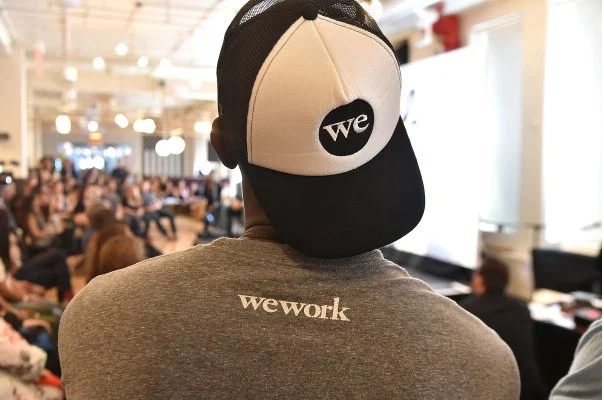
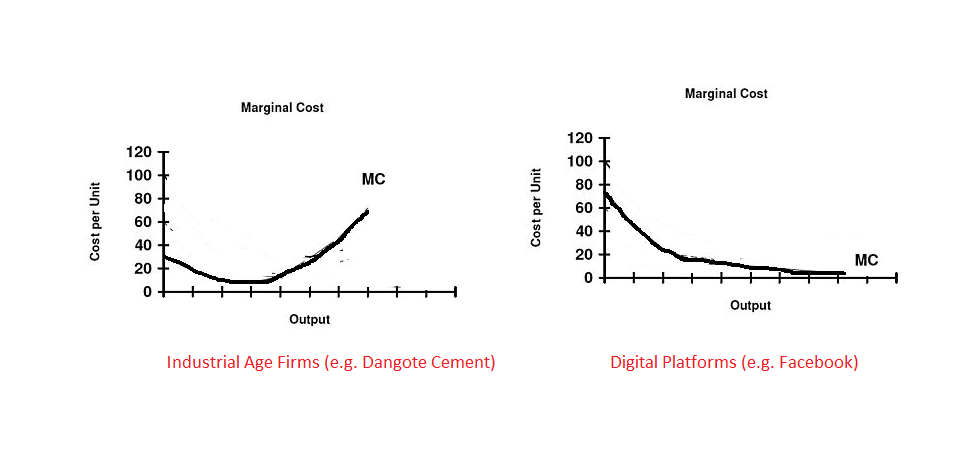
WeWork gets up to $8 billion new capital injection from SoftBank, and now the Japanese investor is on the path to own 80% of the company. This simply settles what everyone has been saying: WeWork (yes, We Company) is not a technology company. Simply, WeWork does not see improved marginal cost with scale, and when that happens, growth does not necessarily become leverageable. If growth is not leverageable, scalable advantage stalls, and the company cannot claim to be (overly) in the technology species. Sure, there are uncommon cases when one can achieve that type of growth, but count real estate out!

The We Company and SoftBank Group have agreed to a new capital infusion, which will see SoftBank committing $5 billion in new financing and issuing a tender offer for another $3 billion in buybacks for shareholders.

After the closing and the tender offer, SoftBank will own approximately 80% of The We Company, according to a statement. However, it will not hold a majority of voting rights, thanks to WeWork’s convoluted ownership structure.

WeWork follows the Left plot. As output increases, marginal cost begins to rise after a time.

What Early Investors Look for in Companies