DD
MM
YYYY

PAGES

DD
MM
YYYY

spot_img

PAGES

Home Blog Page 663

Trump Praises Intel Deal, Pushes Sovereign Wealth Fund Vision Amid Criticism

0

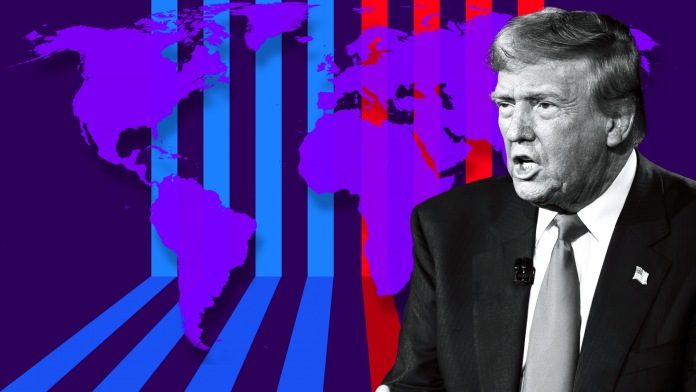
President Donald Trump says he is “just getting started” in what he describes as a new era of dealmaking between Washington and America’s biggest companies.

On Monday, the administration confirmed that its agreement to take a roughly 10% stake in Intel is only the beginning of what could evolve into a series of taxpayer-funded ownership deals, effectively laying the groundwork for what Trump has long envisioned: a U.S. sovereign wealth fund.

Kevin Hassett, director of the National Economic Council and a leading contender for the next Federal Reserve chair, made the administration’s intentions clear in an interview with CNBC.

“The president has made it clear all the way back to the campaign, he thinks that in the end, it would be great if the U.S. could start to build up a sovereign wealth fund. So I’m sure that at some point there’ll be more transactions, if not in this industry then other industries,” Hassett said.

The Intel deal is remarkable not only for its size but also for how it came about. Roughly $11 billion in grants pledged under the Biden-era CHIPS Act — a bipartisan policy aimed at boosting domestic semiconductor production — were converted into 433.3 million non-voting Intel shares. Trump has argued repeatedly that his predecessor’s CHIPS subsidies gave away taxpayer money without securing enough value in return. By turning grants into equity, he says, taxpayers now “own a piece” of America’s semiconductor future.

Trump, in his characteristic style, lashed out at skeptics of the agreement. “Why are ‘stupid’ people unhappy with that? I will make deals like that for our Country all day long,” he wrote on Truth Social. “I will also help those companies that make such lucrative deals with the United States. I love seeing their stock price go up, making the USA RICHER, AND RICHER.”

Intel’s stock rose more than 2% in early Monday trading following the announcement, closing at $25.25. The U.S. government purchased its shares at a $4 discount from Friday’s closing price of $24.80.

National Security and Industrial Policy

The White House has defended the intervention as a national security imperative. Intel, once the undisputed leader in chipmaking, has lost ground to foreign rivals like Taiwan Semiconductor Manufacturing Company. Officials argue it is a strategic risk for the U.S. to rely so heavily on overseas suppliers for advanced chips that power smartphones, defense systems, and AI models.

“I said, I think it would be good having the United States as your partner,” Trump told reporters.

This is not the administration’s first corporate intervention. Earlier this year, the White House took a so-called “golden share” in U.S. Steel to secure protections for American workers after approving Japanese-based Nippon Steel’s acquisition of the company. Separately, Trump mandated a 15% remittance on high-end chip sales by Nvidia and AMD to China — a move that followed his decision to halt exports of the firms’ most advanced chips to Beijing.

Divisions Over “Corporate Statism”

Still, not everyone is convinced. The Wall Street Journal editorial board compared the Intel deal to “corporate statism,” likening it to the U.S. government’s controversial 2009 bailout of General Motors, in which taxpayers ultimately lost about $10 billion. Many fear a slippery slope in which the government grows too entangled in private industry, potentially distorting competition.

Intel itself has acknowledged potential risks. In a securities filing, the company warned that a 9.9% government stake could complicate its international business, especially given that 76% of its revenue comes from outside the United States, with China alone accounting for 29%. The filing noted that foreign subsidy laws and restrictions could be triggered by Washington’s new role as a shareholder, potentially straining global sales.

CEO Lip-Bu Tan struck a more conciliatory note, however. In a Commerce Department video posted Monday, he said: “I don’t need the grant. But I really look forward to having the U.S. government be my shareholder.”

However, the Intel agreement is effectively clearing away billions in outstanding CHIPS Act obligations, with the company’s obligations considered discharged “to the maximum extent permissible under applicable law,” except for its Secure Enclave program. But it has also raised the possibility that other government entities may demand to convert existing grants into equity stakes, reshaping how Washington does industrial policy.

That is believed to be precisely the point for Trump. By recasting subsidies as investments, he believes that he is setting the foundation for a sovereign wealth fund that could expand across industries — from steel to semiconductors and potentially beyond.

“We will do a lot more deals like that,” Trump promised.

However, only time will tell whether taxpayers end up richer, as Trump insists, or whether this gamble on corporate equity echoes past interventions where the U.S. public shouldered the downside risk while private companies reaped the rewards.


Google to Mandate Developer Identity Verification for All Android App Distribution by 2026

0

Google is tightening security measures around Android app distribution, announcing on Monday that starting next year it will begin verifying the identities of developers distributing apps on Android devices — not just those on the Play Store.

The move marks one of the company’s most sweeping efforts yet to crack down on malware and fraud that have long plagued its platform.

The changes will apply to all certified Android devices once fully live, though the global rollout will be staggered. Google emphasized that Android will remain open, meaning developers can still distribute apps outside of the Play Store through sideloading or alternative app stores. But anonymity — once a hallmark of Android’s sideloading culture — will be eliminated. Developers who previously relied on alternative distribution channels to avoid disclosing their identity will now have to provide full credentials, a step Google says will help root out bad actors engaged in malware distribution, financial fraud, and theft of personal data.

The company backed the move with internal findings, stating that more than 50 times more malware entered Android devices via internet-sideloaded sources compared with Google Play, where developer verification has been mandatory since 2023.

Google will open early access in October 2025 for developers to test the system and provide feedback. By March 2026, identity verification will become mandatory for all developers. The first enforcement wave will begin in September 2026 across Brazil, Indonesia, Singapore, and Thailand, before expanding globally in 2027.

Under the new rules, developers will be required to provide a legal name, address, email, and phone number. This could push independent or hobbyist developers to register as businesses to protect their personal privacy. To accommodate such users, Google says student and hobbyist developers will have access to a separate category of Android Developer Console accounts.

The policy mirrors moves by Apple, which earlier this year imposed a similar requirement for its EU App Store to comply with the Digital Services Act (DSA). Under the regulation, app developers must disclose their “trader status” before distributing apps or updates. Apple’s earlier crackdown sparked debate among small developers who saw it as burdensome, but regulators insisted the changes were needed to protect consumers.

For Google, the shift comes after years of criticism that Android’s openness has made it a breeding ground for malware. While the company has repeatedly tried to improve Play Store vetting, sideloading has remained a weak point. In some cases, malicious apps disguised as financial tools, messaging services, or even popular games have infected millions of devices worldwide.

Analysts believe that this change will reshape the Android ecosystem, long valued for its flexibility compared with Apple’s more tightly controlled iOS. But some note that while the rules will strengthen user security, they could also deter smaller independent developers, particularly in emerging markets where sideloading is more common due to cost barriers and patchy Play Store availability.

Google’s strategy also aligns with growing global scrutiny of app ecosystems. Regulators in Europe, the U.S., and Asia are pressuring tech companies to do more to protect consumers, prevent scams, and ensure accountability among developers. With Apple already facing regulatory pressure in Europe and Google making preemptive moves, both companies are converging on stricter identity-based models for app distribution.

However, the rollout will test the balance between Android’s open-source DNA and the industry’s push for tighter security. For millions of developers, the next two years could define whether the platform remains a haven for independent innovation — or becomes more closely aligned with Apple’s walled-garden approach.

Elon Musk Sues Apple And OpenAI Over Alleged Antitrust Collusion in AI and Smartphones

0

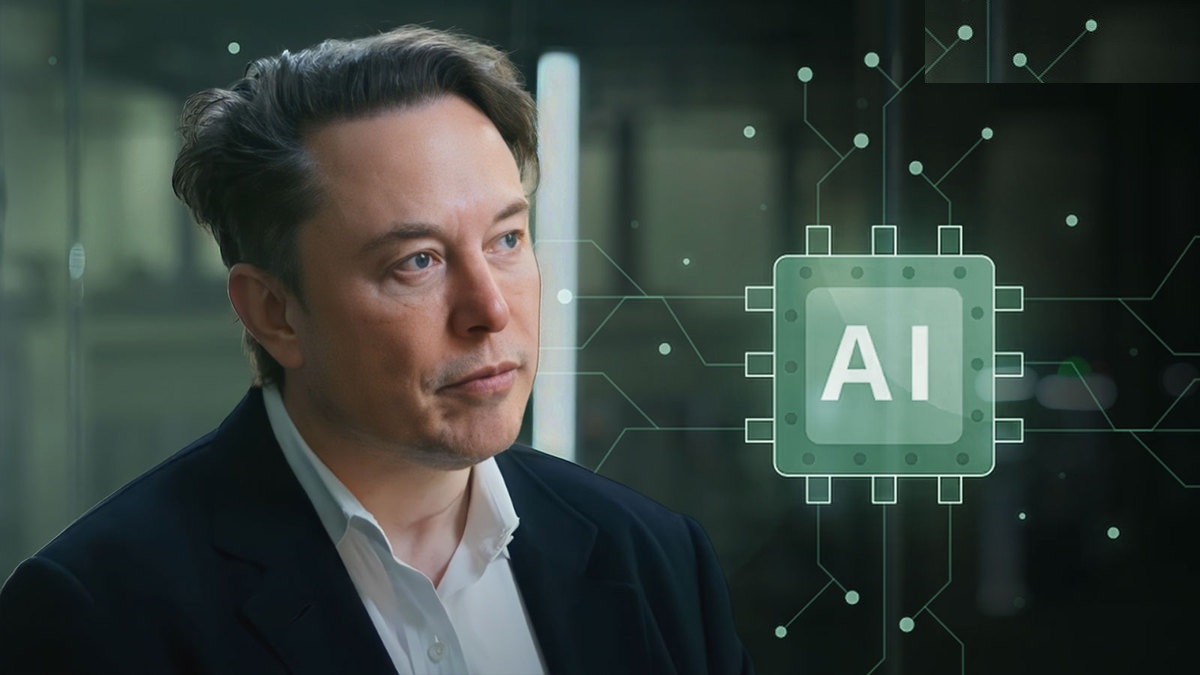
Elon Musk’s companies X and xAI filed a lawsuit Monday against Apple and OpenAI, accusing the two tech giants of colluding to maintain dominance in the smartphone and generative AI markets.

The complaint, lodged in U.S. District Court for the Northern District of Texas, alleges that Apple has unfairly favored OpenAI while suppressing rival applications such as xAI’s Grok chatbot.

According to the suit, Apple deprioritized so-called “super apps” and generative AI competitors in its App Store rankings, disadvantaging xAI’s Grok while promoting OpenAI’s ChatGPT integration into iPhone, iPad, and Mac devices.

“In a desperate bid to protect its smartphone monopoly, Apple has joined forces with the company that most benefits from inhibiting competition and innovation in AI: OpenAI, a monopolist in the market for generative AI chatbots,” the filing states.

Earlier this month, Musk warned he would sue Apple, calling its App Store practices an “unequivocal antitrust violation.” On X, he claimed Apple’s actions made it “impossible for any AI company besides OpenAI to reach #1 in the App Store.”

Musk vs. Altman: A Long-Running Rift

The case is the latest chapter in a deepening feud between Musk and OpenAI CEO Sam Altman. Musk co-founded OpenAI with Altman in 2015 but exited in 2018 after clashing over the company’s direction. He later criticized OpenAI for abandoning its nonprofit mission, which originally aimed to build AI “for the benefit of humanity broadly.”

Musk sued OpenAI and Altman last year for breach of contract, accusing them of prioritizing profit by partnering with Microsoft and converting the lab into a commercial entity. In contrast, Musk incorporated xAI in 2023 as a Nevada public benefit corporation, pledging to make social impact and transparency part of its mission.

Central to the complaint is Grok, xAI’s chatbot, which is both a standalone app and integrated into Musk’s other businesses, including X and Tesla’s infotainment systems. Musk claims Apple has deprioritized Grok in App Store rankings in favor of OpenAI.

However, Apple’s defenders point out that other chatbot apps, such as DeepSeek and Perplexity, have reached the No. 1 spot in the App Store since Apple announced its OpenAI partnership.

Apple has previously said its App Store is designed to be “fair and free of bias” and that rankings are determined by multiple factors. OpenAI dismissed the lawsuit as harassment, with a spokesperson saying, “This latest filing is consistent with Mr. Musk’s ongoing pattern of harassment.”

Altman also pushed back, writing on X: “This is a remarkable claim given what I have heard alleged that Elon does to manipulate X to benefit himself and his own companies and harm his competitors and people he doesn’t like.”

While Musk presents Grok as a competitor to OpenAI’s ChatGPT, the chatbot has been plagued by controversy. Critics say Grok has generated hateful and false content on X, including antisemitic posts, climate change denial, and praise for Hitler.

In July, xAI released Grok 4 without disclosing any details on safety testing or guardrails, raising concerns about the model’s oversight. Despite its rocky rollout, Musk has leaned heavily on Grok as a cornerstone of xAI’s strategy to challenge OpenAI.

Looking ahead

The lawsuit adds to mounting regulatory and competitive pressure in both the AI and mobile ecosystems. Apple has faced longstanding antitrust scrutiny over its App Store practices, while OpenAI has come under fire from both former co-founders and regulators for its growing dominance in generative AI.

For Musk, the legal battle reflects both his ambition to disrupt AI through xAI and his personal rivalry with Altman.

China Pushes AI as Growth Engine, Builds Unified National Computing Network

0

China is banking on artificial intelligence (AI) to become a new growth engine, with projections suggesting it could add several trillion yuan to the economy by 2035 amid a sweeping national push for computing power and a unified data market.

At the China Computing Power Conference held in Datong, Shanxi province, over the weekend, Beijing showcased the depth of this ambition. Officials announced that 10 provinces and municipalities – ranging from Shanghai and Zhejiang in the east to Qinghai and Xinjiang in the west – had joined a unified computing platform designed to match surging business demand with underused resources across regions.

The initiative marks a critical step in knitting together China’s patchwork of regional computing hubs into a seamless national grid. State broadcaster CCTV reported that the platform had already onboarded more than 100 service providers, 1,000 industry users, and nearly 100 AI models, underscoring the speed at which Beijing is mobilizing both state and private sectors to build capacity.

This drive comes after years of heavy investment in data centers and semiconductor development as part of China’s self-reliance campaign, particularly amid escalating technology tensions with the United States. Over the past five years, China’s overall computing capacity has expanded by about 30 percent annually. This expansion is set to accelerate: smart computing power, tailored for AI applications, is projected to grow by 43 percent this year alone, according to an AI-computing-power assessment by the International Data Corporation and Inspur Information.

The International Data Corporation also projected that between 2023 and 2028, China’s smart computing power would grow at a compound annual rate of 46.2 percent—far outpacing the 18.8 percent growth expected for general-purpose computing.

Rao Shaoyang of the China Telecom Research Institute framed the potential scale of this transformation, stating that AI could contribute more than 11 trillion yuan (about $1.5 trillion) to China’s GDP by 2035. If realized, this would cement AI as one of the country’s primary engines of economic growth.

This effort mirrors a similar push in the United States, where Washington has made AI infrastructure central to future competitiveness. The Biden administration supported federal funding for advanced chips, new data centers, and AI research hubs through initiatives tied to the CHIPS and Science Act. The U.S. is also building a more distributed AI ecosystem, with national labs, major universities, and cloud providers expanding computing clusters to serve researchers and private companies.

President Donald Trump, in January, announced Stargate, a $500 billion AI investment initiative aimed at cementing America’s leadership in artificial intelligence. But unlike China’s centrally coordinated approach, the U.S. model relies on partnerships between government, academia, and industry, with companies like Nvidia, Microsoft, SoftBank, and Google Cloud playing an outsized role in supplying computing resources.

The parallel efforts underscore how the world’s two largest economies are racing to make AI the backbone of future growth. While China is banking on a state-led, unified data and computing system to supercharge its AI economy, the U.S. is banking on a mix of private sector innovation and government-backed infrastructure. Both see AI not just as a technological frontier but as an economic pillar that could define global leadership in the decades ahead.

Against this backdrop, China hopes to reduce inefficiencies, cut reliance on foreign technology, and build a data infrastructure that can support industries from finance to healthcare and advanced manufacturing by weaving together its computing resources.

Beijing’s approach contrasts sharply with Western markets, where computing resources are often fragmented across competing private providers. China is betting that scale and coordination will give its industries an edge in the global race for AI dominance by building a centralized, state-backed platform.

The broader strategy reflects a recognition that AI leadership will depend as much on raw computing power and data as on algorithms. As the U.S. continues to tighten restrictions on high-end chips and cloud services available to Chinese firms, Beijing’s response has been to accelerate its domestic capabilities.

With the unified computing power network already attracting a critical mass of users and models, analysts say the challenge ahead will be ensuring interoperability, maintaining security across provinces, and driving adoption in traditional industries.