DD
MM
YYYY

PAGES

DD
MM
YYYY

spot_img

PAGES

Home Blog Page 6635

Curbing Stolen Phone Menace

0

Often times, Nigerians experience or know of people who have experienced mobile phone theft, when commuting to work or other places. This can be a very bitter experience which often causes great inconvenience and oftentimes the victim is left with no choice than to purchase a new set of mobile phone. The stolen phones are then sold to unsuspecting individuals at ridiculous low prices.

GSMA has in the past, worked with telcos, in other parts of the world to help reduce this menace. And I think this practice should be adopted in Nigeria, as it would go a long way in curbing the stolen phone menace as well as reducing insecurity and other terror related offences.

The GSMA practice first involves the individual to identify his/her IMEI (International Mobile equipment Identity), a 15 or 17 digit code that uniquely identifies mobile phones. An individual can obtain his/her IMEI by pressing *#06# from the keypad.

When the phone is stolen, the individual then contacts his/her service provider to report the incident and ask to blacklist the mobile phone by providing his/her IMEI.

Under this practice, service providers develop a database of black listed mobile phones which they share with other service providers to prevent the use of blacklisted mobile phones on their networks.

The database can further be made publicly available to police officials and the general public so that the public can check that the mobile phone they are about to purchase has not been reported stolen or lost. This has been implemented in the US in partnership with GSMA as a stolen phone checker initiative.

In Nigeria, the Government has mandated the registration of SIM cards to curb insecurity and terrorism. At the point of SIM registration, the individual can also be assisted to register their IMEI, associated with their devices.

When an individual desires to transfer the mobile phone ownership to another individual (as sometimes happens), he/she can contact his/her service provider to update the database, which would be shared with other service providers.

If implemented in Nigeria, this practice would no doubt help to curb the stolen phone menace, reduce the risk of purchasing stolen or lost phones and most importantly assist law enforcement officials in tracing and tracking criminals or terrorists.
The New Africa

0

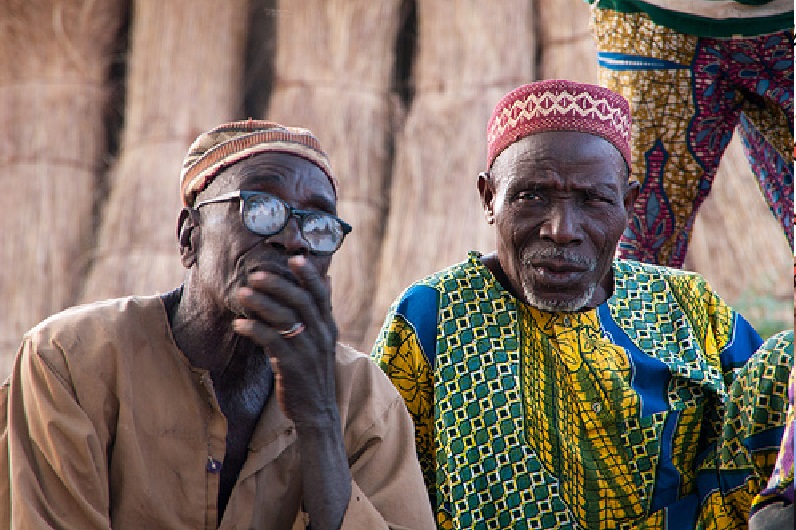
Welcome to the new Africa. Yes, the new Africa where people celebrate mediocrity. A continent where leaders thrive on the ignorance of the people. The people are ignorant. They don’t know their history. Give a crumb of bread and they will follow you into hell.

An African man sees his fellow neighbour as a rival or an enemy. Not even as a brother. Backstabbing each other. The ”I” and ”Me” mentality replaced the ”We” and ”Us” mentality.

You look around, there’s no support system. Back in those days, your children are our children. Your parents are our parents. No segregation, no discrimination and no stratification. Everyone was living for a common goal – ”Peace and Tranquility.”

Today, Africans don’t see eye to eye. South Africans killing another fellow Africans. An African doesn’t feel safe in another African country. Jealousy and hatred are the only reason.

In my previous article, I wrote about parents who send their children to friends and family members to help raise them. Yes, it’s rampant. Due to the financial crisis, some parents can’t afford to feed themselves let alone their child or children. It got a mixed reaction from the readers and widen my scope on the topic.

Initially, I was against it but I saw a different view from a reader, Awa Ndukwe.

Awa Ndukwe said, ”Things happened along the line. Some started well in life, good jobs, home and most especially health. And got into midlife Crisis which could be health related.

  • Why can’t they send their kids to their brother or sisters home?
  • Why can’t they send their kids to a friends home?

Africa was better when it was a communal setting. My kid is our kid mentality and everyone looked out for each other. If only humans become nice, understanding, care and have a bit of kindness, we won’t even have these issues in the first place.  

Trust me no one prays for a mid-life crisis even though I still understand your point.”

Isn’t this the truth? It is nothing but the bitter truth. There is no harm in picking up a child or children if you are financially capable of raising them. After all, when we train a child, we are training a generation and saving it from violence.

Well-Trained children will become good ambassadors and great leaders, which is a win-win for both parties. But how many people know this?

The current state of Africa is down to confusion and separation caused by colonial masters and African leaders.

The political system worsened the continent. The greed to attain power and loot the wealth meant for all by some heartless politicians screwed our continent. They turn the citizens against each other.

A People’s Democratic Party (PDP) member sees an All Progressive Congress (APC) member as a threat and enemy to their selfish interest. I could recall my former colleague at the Federal Polytechnic Ede, Osun, Olusola Olusegun, who was attacked by PDP thugs. Then he was an APC member. I saw the hatred he had for the opposition party – the People’s Democratic Party.

I gave up on politics when I heard he had joined PDP. They call it politics. Yes, it is. A dirty game indeed. Playing politics with the lives of the people. Turning youths against one another. Causing mayhem and chaos across the streets. That’s not the politics that we want.

What can I do about it?

You bet there’s nothing I can do. It’s the new Africa that we have. My question – For how long do we continue to live like this?

I have no idea. We need to go back to our history. Learn from our aged parents. Africans are meant to live like kings and not like a pauper.

Where Manchester United Got It Wrong

0

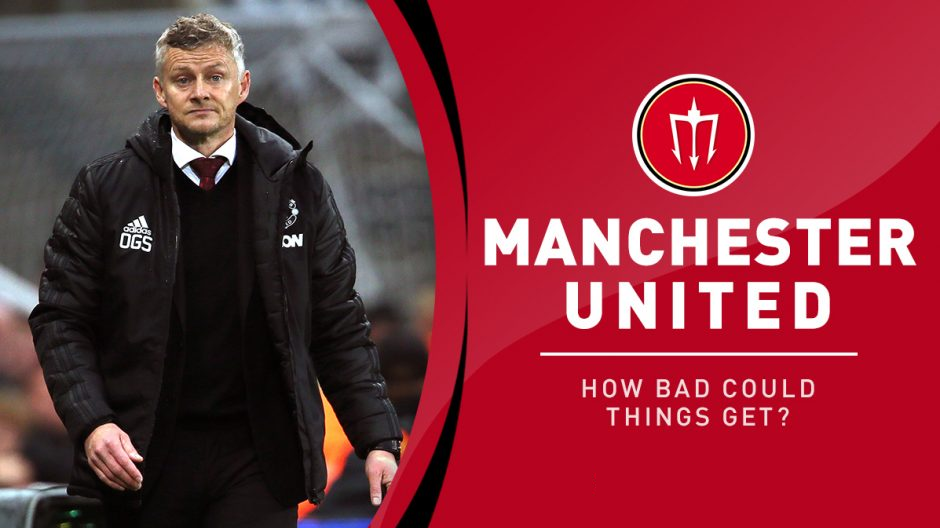
Manchester United Football Club is currently in a mess. The board can blame themselves for the current situation in the club.

They are one of the most successful clubs in the world, no doubt, especially when you look at their cabinet. The number of trophies they’ve won in England and Europe is amazing.

The best era of the football club was under Sir Alex Ferguson, 1986 – 2013. They were a force to be reckoned with as at then. However, it is sad to know that Manchester United fans out there are really having a hard time. The club is nowhere near that level you would have expected.

In fact, they last won the League title six years ago, that was during Sir Alex Ferguson’s era. Since then, it’s been a bunch of disappointment every season, with their fellow neighbour – Manchester City, dominating the English Premier League.

Top profile managers like Jose Mourinho, David Moyes, and Louis Van Gaal, have all had a spell at the club with little or no success that resulted in being kicked out.

But where did Manchester United got it wrong?

They got it wrong by hiring David Moyes as the successor to Sir Alex Ferguson. You would never expect a manager that basically did nothing at Everton than guiding them through the mid-table and avoiding relegation every season, to perform magic at Manchester United.

I doubt if it was the right choice. Since then, they have struggled to replicate the form they showed under Sir Alex Ferguson. One question I asked myself when I read that David Moyes would replace Sir Alex Ferguson was – ”What would he do for them?”

I was disappointed with the appointment. It makes little or no sense to me.

He didn’t disappoint me either as he pulled out several bad results for the club. He was given his marching orders in less than a year in the job.

You’d have thought Man Utd woes would end there when Louis Van Gaal was given the nod. After guiding the Netherlands to third place in the 2014 World Cup, he took the reigns at Old Trafford. Behind doors dispute with the board gave him his marching orders.

Jose Mourinho came to steady the ship. He did an amazing job there. But his problem was Paul Pogba. The French midfielder had a problem with the manager, and things went from bad to worse for the Portuguese. After strings of poor results as well, his three-year reign was halted.

Man United appointed a former player and legend, Ole Gunnar Solskjaer, to take over from Jose Mourinho. Solskjaer convinced the board when given the job on an interim. However, the honeymoon is over for the Norwegian coach as he needs to justify that hiring decision.

He has struggled to find a level of consistency, and the team’s overall display on the pitch is awful. In this new campaign, Man United now find themselves in the relegation zone, a place where you least expect a top club to be.

They look short of confidence and lack the quality to win games. Ole Gunnar Solskjaer got it wrong in his transfer activity as well.

You can’t offload Romelu Lukaku, Ander Herrera and Alexis Sanchez without replacing them with quality players. Keeping Paul Pogba was a mistake. A player who sees himself as too big to wear the Red Devils jersey is not needed.

Pogba was Mourinho’s problem. It was obvious that the board got rid of Jose Mourinho to keep Paul Pogba at the club. But what does he really bring?

I won’t dispute the fact that he is a talented player, but he gives little or nothing to the club in return. You don’t see the fighting spirit in him.

If Manchester United fans can go back to their club history, they would definitely see and understand my point. They need fighters. They need passionate players. Pogba doesn’t have that passion for the club.

Man Utd keeping him is quite a bad decision and maybe – a bad business in the long run. Let him go, get a better player to replace him. They need to follow Liverpool’s pathway. The Liverpool team without Juergen Klopp is a team full of average players. But there’s one thing Klopp has been able to get out of the players  – Passion.

The players feel blessed to put on the Liverpool jerseys. You can see from their display of never give up spirit against Barcelona and Man City. Man Utd needs to do the same.

Get rid of fringe players and build from scratch.

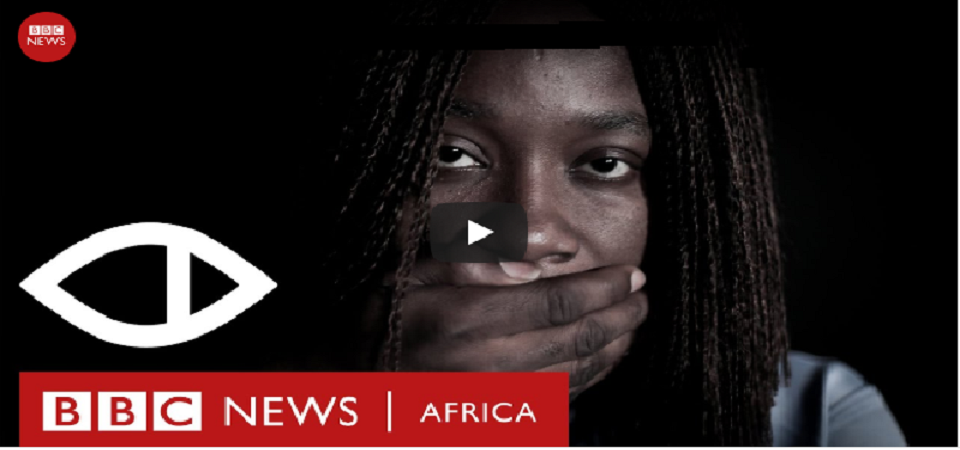
The BBC Sex for Grade Documentary: Matters Arising on Investigative Journalism in Nigeria

3

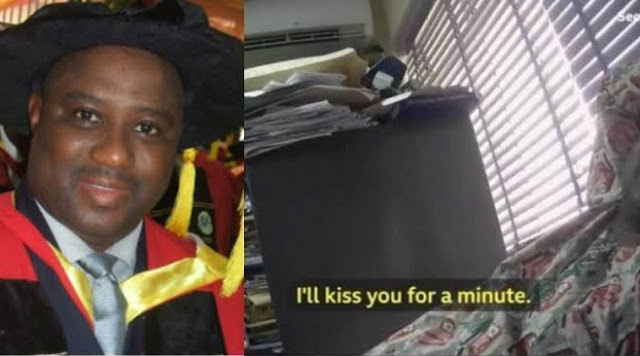
In the last couple of weeks, Nigerians were thrown into frenzy with the release of the BBC’s SEXforGrades Documentary, an outcome of a year of intense undercover investigation in two universities in the West African sub region- University of Lagos, Nigeria and University of Ghana, Legon. The one hour documentary revealed how the BBC journalist Kiki Mordi disguised as a 17-year old admission seeker was sexually exploited and harassed in University of Lagos. Since the release of the documentary, a lot of heat has been generated both online and offline. The two institutions concerned had also responded in words and actions. The four lecturers who were caught on camera dangling favours in exchange for sexual relationship had since been suspended while investigative panels have been set up. Despite the prompt action from the two West African ivory towers, the release of the video equally served as a prompt for Nigerian graduates who had either experienced sexual harassment or witnessed the despicable act to name and shame the perpetrators.

Reactions have been generated on BBC, its viral documentary video and the actions of the two universities involved. The general popular opinion had thumbs up for the BBC’s quest to unravel an issue and provide clarity on the extent of sexual impropriety that has for long become prevalent on Nigerian campuses. The popular opinion favours the prompt action taken by UNILAG on the back of the circulation of the video. They contended that sexual exploitation of students by their lecturers in whatever guise and for whatever reason is condemnable. Such infractions, they reasoned, deserved swift and prompt treatment. And no predator should be allowed to go scot free. They argued that until recently, Nigerian institutions have protected perpetrators of sexual predation. Most often, such allegations were not given committed investigations required by such. Rather, the accused enjoyed institutional support and camaraderie from colleagues bent on protecting their own at all cost. So, they commended the BBC for digging up the ethical dirt that appears to be staining the white cloth of our universities.

There is another camp that believed the BBC is on a smear campaign of institutions in West Africa. This group contended that the media conglomerate was on a mission to discredit West African institutions and attract more patronage for universities in the UK due to a number of reasons. One, they posited that recent educational reforms in the UK which had led to cuts in funds have made foreign students a bride to these universities. These foreign students are also sources of foreign exchange that translated into millions of Pounds. Nigerian and Ghanaian students were said to have formed the bulk of those who seek foreign education abroad. This group of people insisted that the BBC goofed by its hasty generalization of incidents in two universities as a West African problem. The camp believed that sexual harassment and predation is a global phenomenon which has even recorded a frightening rise in universities in the UK and the US. They queried the essence of tagging a global issue as a West African phenomenon if the aim was not diabolical. The two universities are not enough to validate the claim, they argued.

As the arguments, narratives and counter narratives rage on, there is a matter arising on the practice of investigative journalism in Nigeria. For journalism scholars and professionals, there is this ongoing debate about investigative journalism practice in the country. Experts are asking why does it take the BBC to open the lid on issues that are considered widespread such as sexual predation and harassment in Nigerian tertiary institutions in a country which was once noted for its deep investigative journalism practice. Is it a signal that the genre of journalism is gradually dying in the country?

One of the alleged scenes in UNILAG

Is it an indicator of the socio economic and ownership factors that impede journalism as a profession? These and many more questions have been asked.  Media experts and scholars are worried that despite the abundance of competent and capable journalists who could deploy their skills to wring out the facts from the mouth of the lion in the country, most impactful investigative stories are delivered by foreign media outfits such as the BBC. Reasons and factors are explained for this.

Funding has been identified as one of the major reasons for the Nigerian media to have shirked its responsibility of serving as the conscience of the society. In a profession where the general welfare of practitioners has become a burden on media owners, funding covert efforts to open up unethical and sharp practices in both public and private lives in the country is becoming increasingly difficult.

In a research conducted in 2018 to investigate the roles of training and foreign funding in sustaining investigative journalism practice in the country, findings showed a correlation between the level of funding pumped into developing capacities and encouraging journalists to ask questions and hold public officers and corporate bodies in Nigeria accountable and the kind of investigations Nigerian journalists carried out from 2013 to 2018. The study established that media assistance in training and funding enabled the selected media.

The researchers equally observed that the funding bodies’ mission and that of the media outlets seem to meet at a point. The study established the essence of funding for the media to hold the Nigerian society accountable. However, beyond funding, there is a need to train and strengthen the capacity of Nigerian journalists to conduct extensive searches of the country’s public conscience.

Experts have advocated that the frontline media agencies of the federal government should be restructured and repositioned to enable them put their searchlight on the dark corners of our society. They argue that the BBC is also a public media outlet such as FRCN, NTA and VON.  And that there was enough capacity for them to carry out such discreet probing as done by the BBC. The key to Nigerian journalism to keep the conscience of the society lies in giving the appropriate funding, structure and training to develop capacity.

Take Your Chance – Consider David Choe Decision

0

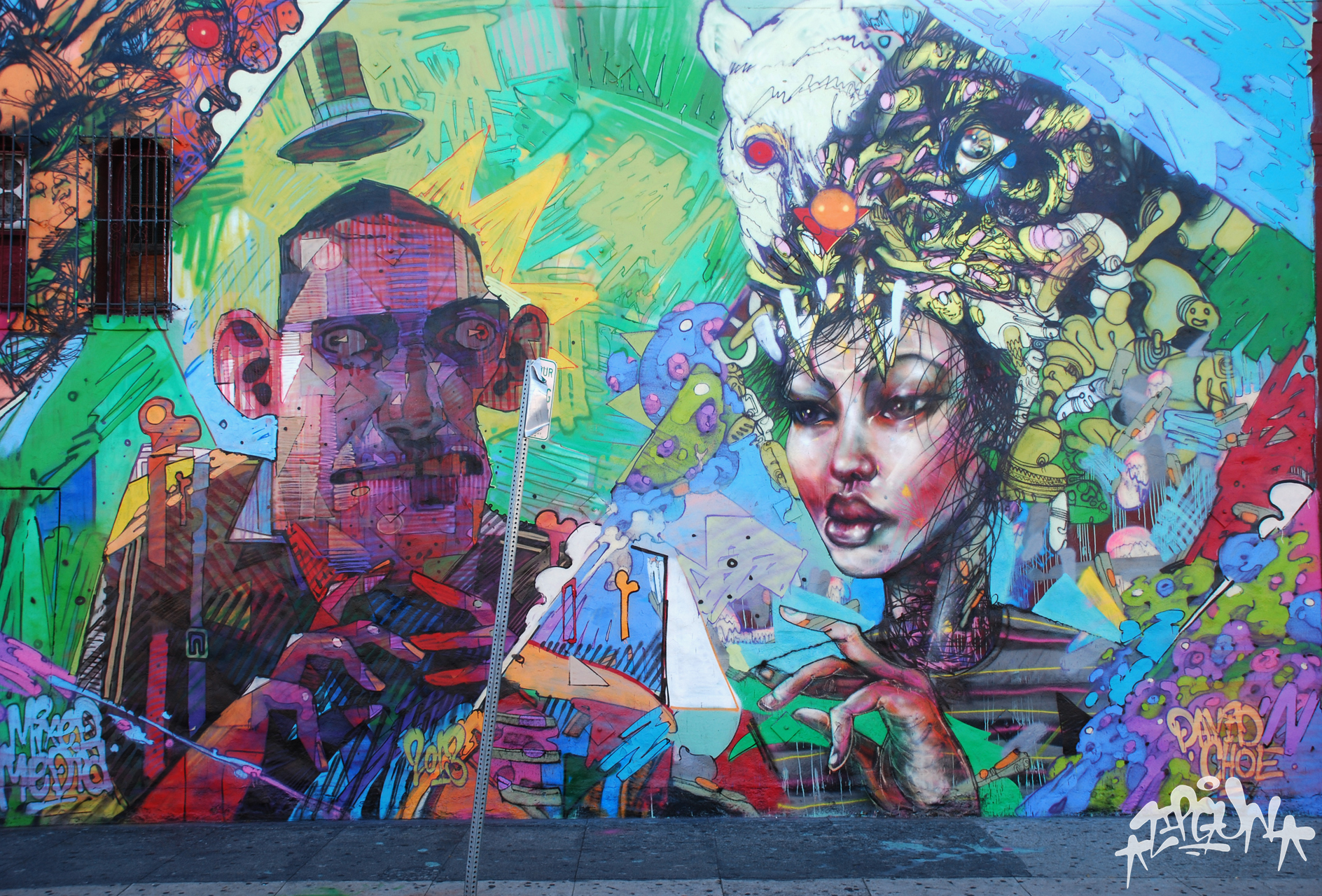
I start with the story of David Choe, you can call him the smartest graffiti artist of all time. If you do,  I believe many would be by your side apart from maybe those who may want to see what he did as nothing more than pure gambling.

There is actually a thin line separating investment and gambling in that both of them contain a measure of uncertainty and a measure of hope.

In 2005 David Chow was to make graffiti Paintings in Facebook first headquarters.  When he finished his paintings, he was supposed to be paid $60,000 for that. I know you’re about to ask who pays that kind of money for a graffiti, but you have to know he was pretty famous before then as he had painted for a few famous individuals prior to that. Besides art is worth as much as one is willing to pay.

According to this CNBC  extract  “Choe’s work caught the eye of Sean Parker, founder of Napster. In 2005, after Parker became president of then-fledgling start-up Facebook, he hired Choe to deck out its original headquarters in Silicon Valley with murals.”

“My prices had been going higher and higher and I was like, ‘Yeah, I mean, if you want me to paint the entire building, it’s going to be 60, you know, 60 grand,” Choe told his interviewer Howard Stern an American radio and television personality.

At that time Choe hated the social media and there was no guarantee whatsoever neither was their any clue that Facebook would amount to anything tangible.

Instead of receiving cash for his work, he chose to  get paid in stocks.

In 2005 it was worth $60,000. By 2012 it had gone up to $200,000,000 and as at 2017, it was worth $500,000,000.

It’s difficult to draw a lesson from this, as even Chow himself never expected to get this fortunate. But at least he took his chance on something that has a probability of success.

Maybe one can take home the fact that somehow he managed to see that investing $60,000 dollars was better than just allowing it to lie dormant in the bank.  Oh, I almost forgot that even if you decide to save it in the bank, the banks would do business with your money, only without your consent. That could be one reason why he should be considered smart.

Or the fact that he made them pay so much just for a piece of graffiti .

Another reason why he deserves some credit is because he was able to negotiate out the part where he got paid in stocks. Many would have walked away with cash.

Also you can consider the fact that he didn’t eventually change his mind along the line and sell his shares. He understood he had to wait, and he actually did the waiting. Many would have cashed out at some point. More like the maxim – A bird in hand is better than two in the forest. At least, he had more than one bird at hand as the money he invested wasn’t all that he had. He had more,  and was able to put aside a fraction for investment. There are risks involved in virtually all activities, it just depends on the kind of risks you’re accustomed to taking.