DD
MM
YYYY

PAGES

DD
MM
YYYY

spot_img

PAGES

Home Blog Page 6636

The BBC Sex for Grade Documentary: Matters Arising on Investigative Journalism in Nigeria

3

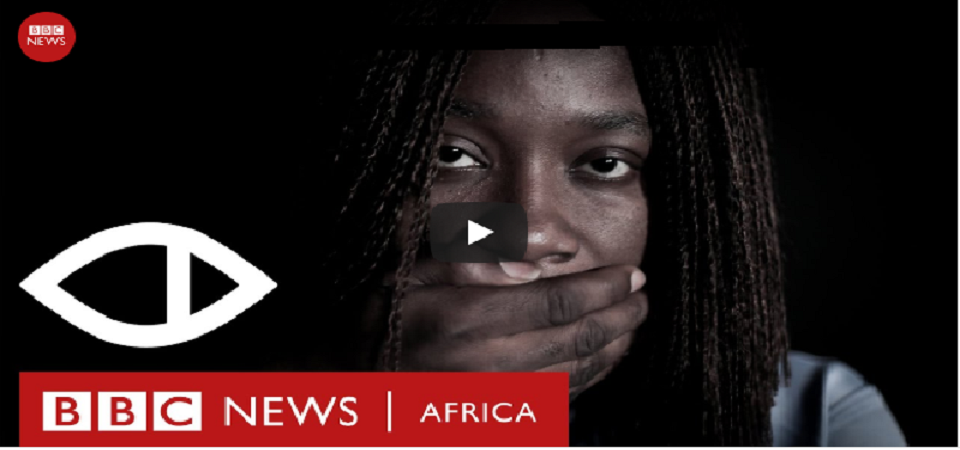
In the last couple of weeks, Nigerians were thrown into frenzy with the release of the BBC’s SEXforGrades Documentary, an outcome of a year of intense undercover investigation in two universities in the West African sub region- University of Lagos, Nigeria and University of Ghana, Legon. The one hour documentary revealed how the BBC journalist Kiki Mordi disguised as a 17-year old admission seeker was sexually exploited and harassed in University of Lagos. Since the release of the documentary, a lot of heat has been generated both online and offline. The two institutions concerned had also responded in words and actions. The four lecturers who were caught on camera dangling favours in exchange for sexual relationship had since been suspended while investigative panels have been set up. Despite the prompt action from the two West African ivory towers, the release of the video equally served as a prompt for Nigerian graduates who had either experienced sexual harassment or witnessed the despicable act to name and shame the perpetrators.

Reactions have been generated on BBC, its viral documentary video and the actions of the two universities involved. The general popular opinion had thumbs up for the BBC’s quest to unravel an issue and provide clarity on the extent of sexual impropriety that has for long become prevalent on Nigerian campuses. The popular opinion favours the prompt action taken by UNILAG on the back of the circulation of the video. They contended that sexual exploitation of students by their lecturers in whatever guise and for whatever reason is condemnable. Such infractions, they reasoned, deserved swift and prompt treatment. And no predator should be allowed to go scot free. They argued that until recently, Nigerian institutions have protected perpetrators of sexual predation. Most often, such allegations were not given committed investigations required by such. Rather, the accused enjoyed institutional support and camaraderie from colleagues bent on protecting their own at all cost. So, they commended the BBC for digging up the ethical dirt that appears to be staining the white cloth of our universities.

There is another camp that believed the BBC is on a smear campaign of institutions in West Africa. This group contended that the media conglomerate was on a mission to discredit West African institutions and attract more patronage for universities in the UK due to a number of reasons. One, they posited that recent educational reforms in the UK which had led to cuts in funds have made foreign students a bride to these universities. These foreign students are also sources of foreign exchange that translated into millions of Pounds. Nigerian and Ghanaian students were said to have formed the bulk of those who seek foreign education abroad. This group of people insisted that the BBC goofed by its hasty generalization of incidents in two universities as a West African problem. The camp believed that sexual harassment and predation is a global phenomenon which has even recorded a frightening rise in universities in the UK and the US. They queried the essence of tagging a global issue as a West African phenomenon if the aim was not diabolical. The two universities are not enough to validate the claim, they argued.

As the arguments, narratives and counter narratives rage on, there is a matter arising on the practice of investigative journalism in Nigeria. For journalism scholars and professionals, there is this ongoing debate about investigative journalism practice in the country. Experts are asking why does it take the BBC to open the lid on issues that are considered widespread such as sexual predation and harassment in Nigerian tertiary institutions in a country which was once noted for its deep investigative journalism practice. Is it a signal that the genre of journalism is gradually dying in the country?
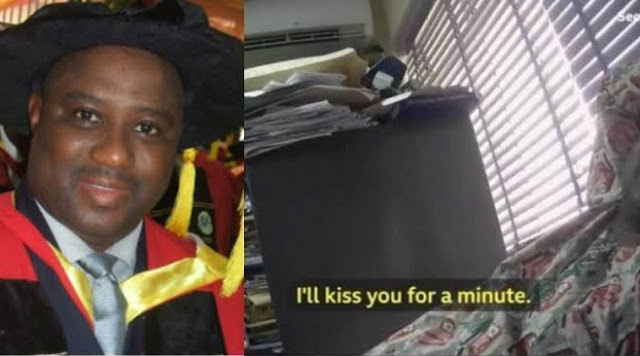
One of the alleged scenes in UNILAG

Is it an indicator of the socio economic and ownership factors that impede journalism as a profession? These and many more questions have been asked.  Media experts and scholars are worried that despite the abundance of competent and capable journalists who could deploy their skills to wring out the facts from the mouth of the lion in the country, most impactful investigative stories are delivered by foreign media outfits such as the BBC. Reasons and factors are explained for this.

Funding has been identified as one of the major reasons for the Nigerian media to have shirked its responsibility of serving as the conscience of the society. In a profession where the general welfare of practitioners has become a burden on media owners, funding covert efforts to open up unethical and sharp practices in both public and private lives in the country is becoming increasingly difficult.

In a research conducted in 2018 to investigate the roles of training and foreign funding in sustaining investigative journalism practice in the country, findings showed a correlation between the level of funding pumped into developing capacities and encouraging journalists to ask questions and hold public officers and corporate bodies in Nigeria accountable and the kind of investigations Nigerian journalists carried out from 2013 to 2018. The study established that media assistance in training and funding enabled the selected media.

The researchers equally observed that the funding bodies’ mission and that of the media outlets seem to meet at a point. The study established the essence of funding for the media to hold the Nigerian society accountable. However, beyond funding, there is a need to train and strengthen the capacity of Nigerian journalists to conduct extensive searches of the country’s public conscience.

Experts have advocated that the frontline media agencies of the federal government should be restructured and repositioned to enable them put their searchlight on the dark corners of our society. They argue that the BBC is also a public media outlet such as FRCN, NTA and VON.  And that there was enough capacity for them to carry out such discreet probing as done by the BBC. The key to Nigerian journalism to keep the conscience of the society lies in giving the appropriate funding, structure and training to develop capacity.
Take Your Chance – Consider David Choe Decision

0

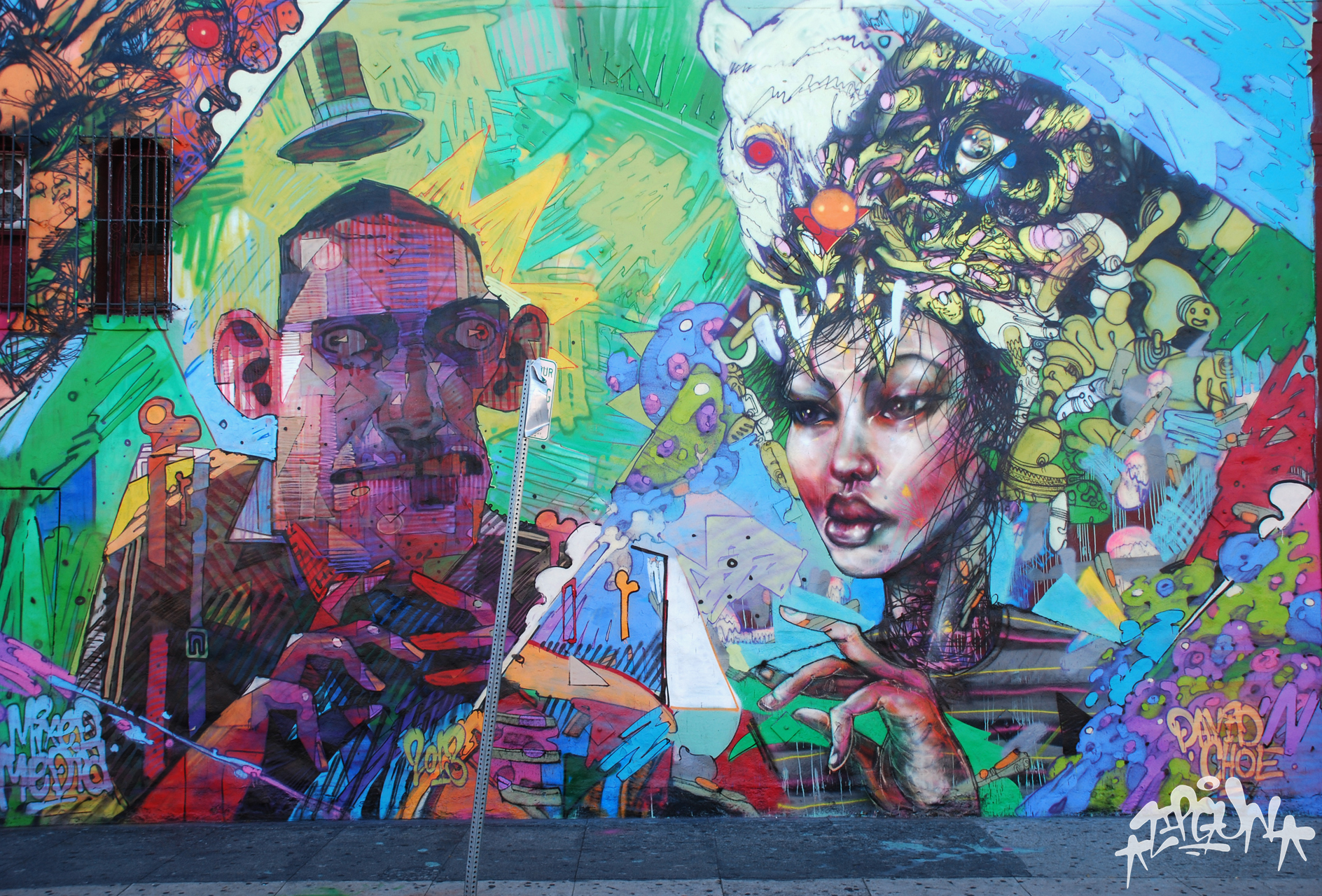
I start with the story of David Choe, you can call him the smartest graffiti artist of all time. If you do,  I believe many would be by your side apart from maybe those who may want to see what he did as nothing more than pure gambling.

There is actually a thin line separating investment and gambling in that both of them contain a measure of uncertainty and a measure of hope.

In 2005 David Chow was to make graffiti Paintings in Facebook first headquarters.  When he finished his paintings, he was supposed to be paid $60,000 for that. I know you’re about to ask who pays that kind of money for a graffiti, but you have to know he was pretty famous before then as he had painted for a few famous individuals prior to that. Besides art is worth as much as one is willing to pay.

According to this CNBC  extract  “Choe’s work caught the eye of Sean Parker, founder of Napster. In 2005, after Parker became president of then-fledgling start-up Facebook, he hired Choe to deck out its original headquarters in Silicon Valley with murals.”

“My prices had been going higher and higher and I was like, ‘Yeah, I mean, if you want me to paint the entire building, it’s going to be 60, you know, 60 grand,” Choe told his interviewer Howard Stern an American radio and television personality.

At that time Choe hated the social media and there was no guarantee whatsoever neither was their any clue that Facebook would amount to anything tangible.

Instead of receiving cash for his work, he chose to  get paid in stocks.

In 2005 it was worth $60,000. By 2012 it had gone up to $200,000,000 and as at 2017, it was worth $500,000,000.

It’s difficult to draw a lesson from this, as even Chow himself never expected to get this fortunate. But at least he took his chance on something that has a probability of success.

Maybe one can take home the fact that somehow he managed to see that investing $60,000 dollars was better than just allowing it to lie dormant in the bank.  Oh, I almost forgot that even if you decide to save it in the bank, the banks would do business with your money, only without your consent. That could be one reason why he should be considered smart.

Or the fact that he made them pay so much just for a piece of graffiti .

Another reason why he deserves some credit is because he was able to negotiate out the part where he got paid in stocks. Many would have walked away with cash.

Also you can consider the fact that he didn’t eventually change his mind along the line and sell his shares. He understood he had to wait, and he actually did the waiting. Many would have cashed out at some point. More like the maxim – A bird in hand is better than two in the forest. At least, he had more than one bird at hand as the money he invested wasn’t all that he had. He had more,  and was able to put aside a fraction for investment. There are risks involved in virtually all activities, it just depends on the kind of risks you’re accustomed to taking.

New NCC Directive Will Push Telcos to Violate Nigeria Data Protection Regulation

2

The Nigeria Communications Commission (NCC) recently directed telecommunication operators (otherwise referred to as telcos) to commence the monitoring of calls and other communication services passing through their networks. The commission also mentioned that telcos who do not comply with this directive will incur a fine of 5 million naira and additional 500,000 naira until compliance. This directive was introduced to curb insecurity and kidnapping incidents within the country.

This is no doubt a positive step undertaken by the commission to address insecurity challenges within the country. However, I would have expected that the commission worked with its sister organisation, the Nigeria Information Technology Development Agency (NITDA), before publicly releasing such a directive.

The Nigeria data protection regulation 2019 defines personal data as any information that can identify a natural person. It specifically mentions that IMEI number, IMSI, SIM etc. as examples of personal data identifier. It also mentions that collection of data can be regarded as processing of personal data.

Furthermore, the Nigeria data protection regulation 2019, section 2.1a (i), clearly states that, ‘personal data shall be collected and processed in accordance with specific legitimate and lawful purpose consented to by the data subject, provided that further processing may be done only for archiving processes in the public interest.’ Section 2.1c states that the data can only be stored for the period within which it is reasonable needed. Section 2.3 specifically mentions and defines that consent ought to be sought from the data subject and how such consent should be obtained.

In line with NCC’s directive, storing of the personal data of the data subject without their consent amounts to a violation of their privacy rights. The directives also did not clearly state the storage period for the collection of such personal data.

Section 2.2 of the Nigeria data protection regulation 2019, no doubt shows that lawful processing may apply in this case, as processing is needed for compliance with a legal obligation to which the controller (telcos) is subject.

Section 2.10 defines penalty for default, where telcos could be subjected to a fine of 2% or 1% of their annual gross revenues from the preceding years, depending on the number of data subjects they are dealing with. This penalty definitely outweighs the fine to be imposed by the NCC, if telcos do not comply with the privacy directive. A comparison of NCC’s fine with the privacy fine shows that telcos would be more compelled to obey the Nigeria data protection regulations. It also put telcos in a difficult and tricky situation where they may have to choose which of the regulations to comply with.

I would advise telcos and the commission to read through this directive, in detail, to understand areas where the NCC’s directive may result in a violation of the privacy rights, as defined by the Nigeria data protection regulation 2019.

Another major concern of this directive is the use of the stored personal data. NCC clearly states that telcos would be responsible for the purchase of equipment needed to store these personal data. Would this not incentivise telcos to process these personal data and perhaps sell such data to marketing or advertising companies? Furthermore, can the personal data be politicized by the Government to intimidate private citizens? These and more questions require pondering.

Clearly, the directive shows that the commission has not communicated their intentions with the sister agency (NITDA). While the intention of the commission is noble, the commission however needs to sit and deliberate with NITDA, to avoid a violation of the privacy of Nigerians as well as avoid confusion to data controllers (such as telcos) on which directive to comply with.

Three Awkward African Thinking

0

All my life in this wonderful continent called – Africa, there are three awkward thinking that I know:

  • A woman can not ask a man out
  • A woman can not marry a man she is older than
  • The stigma on women who have kids out of wedlock.

I was doing shopping in the mall today when I overheard two ladies having a discussion. From what I was able to eavesdrop, she was talking about a guy she admires but she could not make a move to approach the gentleman.

She told her friend, ”The guy is so cute. He gives me chills. I really wish I have the courage to walk up to him and express my feelings.”

But her friend cut in and said, ”Nne, don’t ever try it. This is Africa. A woman should never ask a man out unless she would end up being molested.”

It makes me wonder if it’s a crime for a woman to ask a man out. There is this norm that – it has to be a man asking a woman out. There is this mentality that any woman who asks a man out is cheap or desperate. But honestly, I don’t see anything wrong about it. It doesn’t matter who shoots the shot first, but how the shot was fired is what matters. Maybe I am thinking weird.

Africa is a continent that has so many cultures and traditions. Societal norms and beliefs rule our continent. The sad part of this is – these norms and beliefs are not facts. They are mere opinions of our great grandparents who felt it would help them in having a peaceful coexistence during their time.

Honestly, things have changed. The way they lived back then may not really work with the modern generation. Of course, we can’t neglect the ancient landmarks but at the same time, life is fast evolving. Things are changing every day.

Another thing I found quite interesting is – the age difference. There are many Africans who believe that man must be older than the woman. Yes, due to some physical attributes of the women. But, is it really important?

I have heard some ladies said, ”I can’t date a man younger than me. I can’t even imagine being with someone I am older than.”

There is one thing that I know, age is just a number. Age doesn’t define maturity. When it comes to choosing a partner, age doesn’t really matter. Maybe this has got to do with individual differences. I’ve been with some young men who are more mature and experienced than someone older.

Besides, there is no law that specifies that a woman must be younger. We all grew up with that mentality, maybe because it was written in the Bible that God created Adam before Eve. Who knows?

The last is the stigma on women that have kids out of wedlock. Some guys would easily give up on a lady when they know she has a child or children out of wedlock.

Many would accuse the lady of being wayward. But who are we to judge people?

Anyone can fall victim to mishaps. After all, we all make mistakes. Some people are lucky to come out unscathed while others may not be. Irrespective, everyone deserves a second chance.

In Africa, many single ladies feel like they’ve committed the worst crime when they give birth out of wedlock. Of course, I will never support having child/children out of wedlock, neither will I condemn anyone who falls into that trap.

I prefer to look through the lens of humanity. As humans, we could make some decisions or take some steps that may come back to hurt us, but that is not enough reason to be condemned or crucified.

Enough of castigating people in this category. Let them be. Having a child out of wedlock is enough burden to bear.

Africans need to stop judging them harshly. They deserve to be loved as well. We can’t judge anyone by his/her past. We should rather give them a helping hand to move forward.

After looking at these three things discussed above, I think we still have a long way to go.

We need to do away with some societal norms and ideologies that are discriminatory and isolating.

God bless Africa!

How to Reduce Fuel Tanker Explosions in Nigeria

0

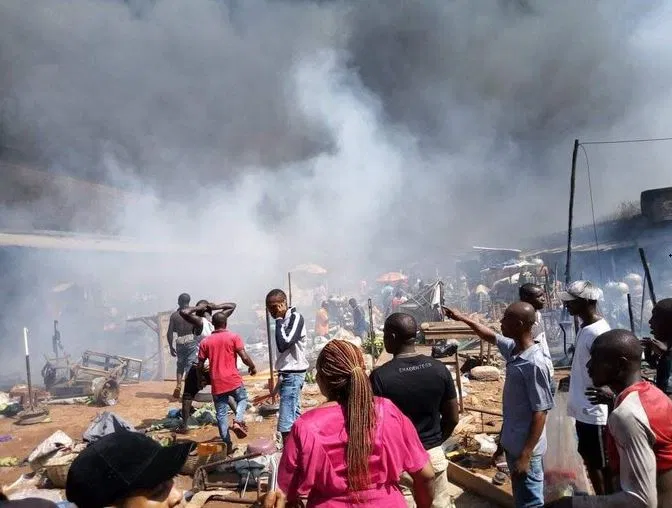
The news of the fuel tanker explosion that recently happened (on Wednesday, 16th October, 2019) in Onitsha spread like wildfire. I was on my way to Anambra State when I heard it. People were calling and checking on their loved ones. Gory pictures (both the authentic and the inauthentic ones) of the fire outbreak were circulating on every social media. It was indeed a day a lot of people won’t forget easily.

This morning, news filtered in that another tanker fell and exploded late in the night at Omagba area of Onitsha. Fortunately, this one was contained by the Anambra State Fire Service (thank God they have ‘water’ this time – if you know, you know).

Another incident like this happened in Onitsha sometime last year (or was it two years ago) at DMGS Roundabout (not too far from Onitsha Main Market). In this very incident, no life was lost but a lot of properties were destroyed because nearby buildings (including the ones housing some banks) and the filling station were affected.

This incident doesn’t happen only in Onitsha. We hear a lot of news about things like this happening in other parts of the country. We can’t continue like this; something needs to be done and done soon too. But it will be good to look at the causes of these tanker falls and explosions.

CAUSES OF TANKER EXPLOSION

We know that most of the cases of tanker explosion has to do with accidents (usually when they fall and spill their contents), but has anyone else asked why the tankers have to fall or have accidents in the first place (besides mechanical and electrical problems)? And why do we record so many casualties (for both properties and humans) during these explosions? Well, below are my two cents on this matter.

  1. Bad Roads: I started with this because that’s the first answer a lot of people will proffer when faced with this question. Yes, bad roads affect these vehicles, just as it affects other types of vehicles. I’ve seen many of them fall in places where there are deep potholes and ditches. This problem of bad roads needs to be tackled as soon as possible.
  2. Reckless Driving: Sometimes these drivers forget that they are driving long vehicles, and that the road is bad. Some of them drive as if they were under the influence of drugs. Note that they are not the only reckless drivers on the road: car and bus drivers also have their own problems. Reckless driving and over speeding contributes a lot to these explosion accidents.
  3. Disturbance by Law Enforcers: An article was published not quite long ago about police checkpoints on our roads and the problems they create. These police officers also target heavy duty vehicles, especially those loaded with goods. Most of the times, these tanker and trailer drivers, in a bid to avoid ‘settling’ these officers, accelerate their speed and swerve through the checkpoint obstructions in very dangerous manner. This type of maneuvering has led to a lot of disasters.
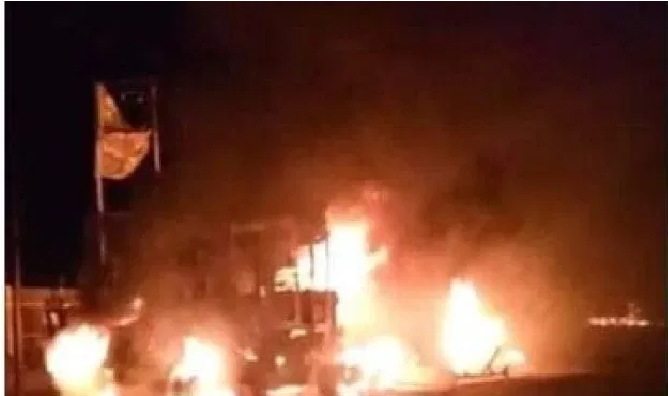
Fuel tanker explosion in Onitsha (Source: Vanguard)

I also want to make it known here that the police are not the only law enforcers that cause these problems. Sometimes, I see groups of young men on the highway that forcefully stop all these heavy trucks to collect money from them. I’ve asked and was told they are ‘special’ task force that monitor and collect passage allowance (or whatever they call it) from heavy duty vehicles. Well, anything is possible in Nigeria.

  1. Filling Stations in Residential Areas and Public Places: Do you know that tankers won’t be passing through residential areas if not because we have filling stations located there. I know more filling stations are springing up closer to our homes and markets because we have to run out to buy ‘fuel’ for our generators; but, are they supposed to be located in these places (especially near markets)?
  2. Disobedience to Road User Rules: I haven’t seen it stipulated but I know there is this rule that holds that heavy duty trucks and tankers shouldn’t be on the road until very late in the evening (or even at night). But I think this rule only works in the FCT. Right now, ‘small’ vehicles struggle through the bad roads with the ‘big’ ones during the daytime. If anything happens then, a lot of people will be affected.
  3. Wrong Packing: You know eh, all these long vehicle drivers always behave like they own the road. They can stop and park their vehicles wherever they want and no one can say or do anything about it. If the vehicle was parked for repair, it will be left there for hours or days. I don’t know why Road Safety doesn’t ‘see’ them.

Like I said earlier, these are the causes I know. I believe there are so many others; it is now left for us to voice them out and hope that the right authority hears them. However, I have a few suggestions on how to reduce the rate of tanker explosions.

HOW TO REDUCE THE CASUALTY RATE IN FUEL TANKER EXPLOSIONS

  • 1. Building filling stations near residential areas and public places should be discouraged.
  • 2. Heavy duty trucks and tankers should be discouraged from plying the roads during the day. Those police officers and other law enforcement agencies should do something about this.
  • 3. If heavy vehicles are to be allowed on the road during the day, a separate road should be provided for them (I believe this is possible).
  • 4. More fire service stations should be created and spread across the country (and they should please be ‘working’). I will also suggest that market authorities set up fire service stations within the market. They shouldn’t wait for government to provide everything (after all they are collecting money from traders, and sometimes buyers).
  • 5. Trailer parks should be provided and the heavy duty truck drivers compelled to park there. If you ask me, I will say that trailer parks should be owned and managed by the private sector. This will make it more effective.

Accidents can never be stopped, but they can be averted. We don’t have to wait for many tanker explosions to happen or for many more lives to be lost before something is done. The right time is now. Nigerians already have enough on their plate; they don’t need more right now.