DD
MM
YYYY

PAGES

DD
MM
YYYY

spot_img

PAGES

Home Blog Page 6639

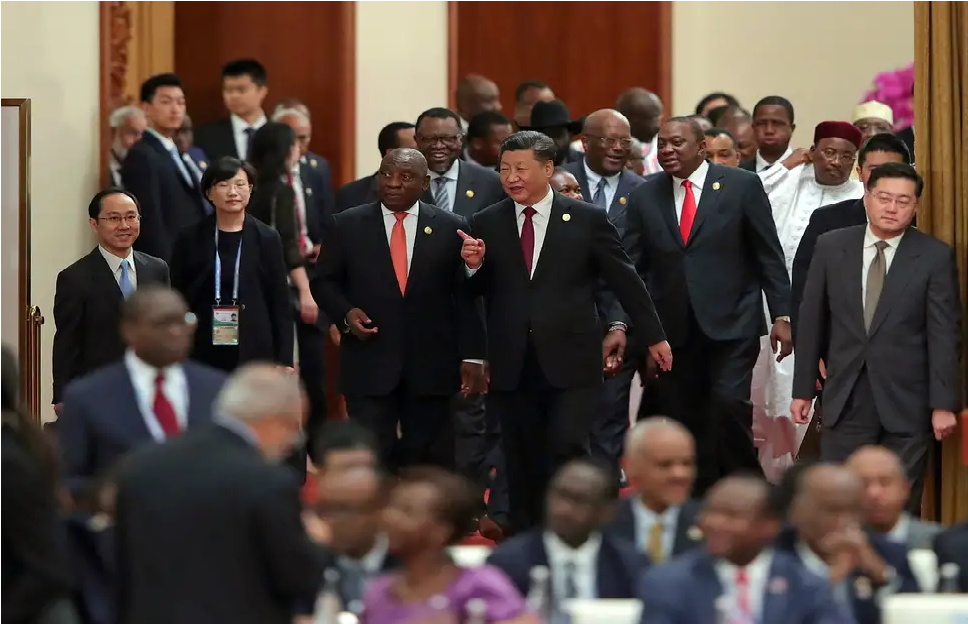
The China-Africa Debt Problem

0

Is China good for Africa?  What about their loans, are they worth taking? When taken, how easy is it to pay back?

On many occasions, we’ve seen the World Bank and other western countries forgive our debts, the ones we couldn’t pay back .That makes me uncomfortable when I hear of African countries taking loans from China.

China has done a lot for Africa, and Africa has also done a lot for China. In some ways, the relationship between these two are symbiotic. The Chinese have what Africans need but cannot afford, so somehow they make it available at a price that seems, at least on the surface, far lower than what you will likely pay if you were dealing with the West.

I recall a particular incident, where the design and construction of a power transmission line was awarded to an Italian firm. After a series of reviews and consideration, they dropped out on the construction phase  as it was practically impossible for them to break even at the price the contract was awarded.

As usual, China came to the rescue.  They took over the construction phase and set to work immediately. It still remains a mystery to this day to many western firms how the Chinese are able to penetrate Africa given the very limited amount that some of these African countries have to pay for some of these services.

Still it cannot be excused that the lower prices the Chinese have to offer often comes at the expense of quality.

Often times, the initial costs are low but eventually they stack up skywards in the long run. So who gains in the end?

From mobile phones to power banks, to railway gauges, the Chinese have been offering Africa what they think they can afford.

Earlier this year, two Chinese banks –Export-Import Bank of China and the China Development Bank – committed in loans about $1.902bn into railway and deep seaport projects in Nigeria.

According to the Commercial Consul, Consulate General of the People’s Republic of China in Lagos, Mr Liu Junsheng, during a press briefing on China’s second Belt and Road Forum for International Cooperation, held in Beijing between April 25 and 27.

“The Export-Import Bank of China provided $1.267bn of the concessional loans accounting for 80.14 per cent of the total contract sum of Addendum No.2 and 2A; and the Nigerian Federal Government provides counterpart funds of $314m, accounting for 19.86 per cent.”

In other words, we borrowed money from China,  gave it back to them in contracts, and still we owe them some money. At least, they aren’t violating the terms and conditions of the contract may be excluding the part that involves durability. Hopefully we keep ours too.

Not long ago, a report came out on China taking over some of Zambia’s national assets including their National Electric Power Company. Not surprising if you ask me. Who takes a loan thinking of not paying back?

Just in 2017 alone, the value of Chinese contracted projects in Africa registered $76.5bn, according to  Jeremy Stevens, a Standard Chartered Bank Economist. “However, despite a sizeable remaining infrastructure deficit on the continent, there is a concern that African countries’ debt-service ability will soon dissolve.”
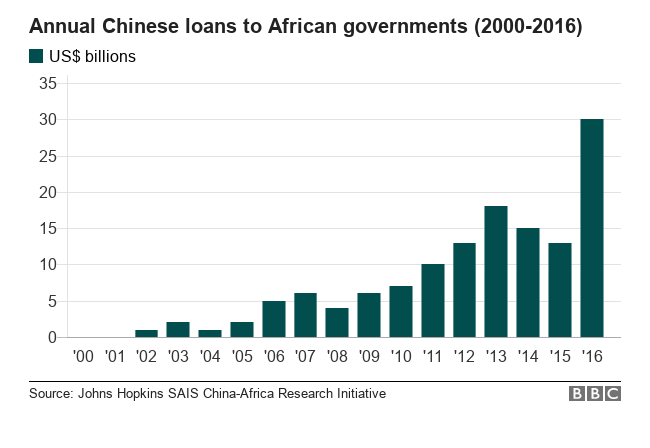
Nevertheless, our own Akinwumi Adesina, the head of the African Development Bank (ADB), a former Nigerian agriculture minister, is among the Chinese defenders. “A lot of people get nervous about China but I am not. I think China is Africa’s friend,” he told the BBC.

According to this report from the BBC, “China is now the single largest bilateral financier of infrastructure in Africa, surpassing the ADB, the European Commission, the European Investment Bank, the International Finance Corporation, the World Bank and the Group of eight (G8) countries combined”. By and large,  if Africa must look east towards China for loans, it must understand that debt forgiveness isn’t a right, and that the Chinese may temporarily forget, but may never forgive.


Jumia Evolves With JumiaOne Lending – Borrow Money in 5 Minutes

2

Last month, I commented on a Jumia job post (looking for lending officers), and noted that it was an “amazing” move by the ecommerce company. I saw the move as positive as no ecommerce company in the emerging markets like India and China has done well without  building a great fintech company. China’s Alibaba has Alipay, India’s Flipkart has PhonePe. It is a slam dunk – Jumia needs to have a fintech company to have a chance in Africa. JumiaOne, the brand name for Jumia payment, is here.

I expect JumiaOne to become the most important component in the Jumia Group in coming years as it morphs pieces of Jumia brands to feed transactions into itself.  Yes, the ecommerce can struggle but the fintech unit will win markets and territories – and profits.

JumiaOne ad on Instagram

Fintech and logistics deliver great balance sheets. Logistics is pay & carry while fintech is my commission & fees. With Jumia One, the mess of African ecommerce paralysis which I have articulated many years in Harvard Business Review will become muted. Jumia needs that as its stock in the NYSE has dropped from near $50 to about $6 now. Yes, Jumia needs to execute the double play strategy where fintech will help it manage the paralysis in the broad ecommerce sector.

Of course, JumiaOne lending arm has to battle Carbon (PayLater), Lydia, and other lending focused fintech companies across countries it operates. But it has a chance as many of these companies can co-exist as everything is still at infancy.

Jumia Reveals Its Future With New Job Postings – And It is Amazing

Soulmate Industries – Join A Session for Global Partners and Distributors

0
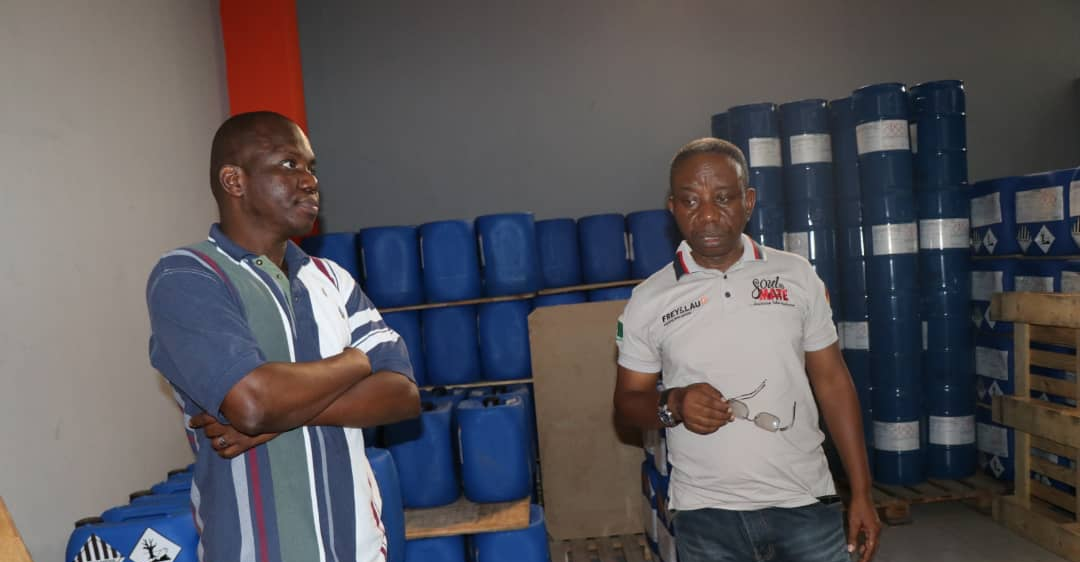
In Soulmate Factory with Founder

Soulmate Industries Ltd is a leading indigenous haircare brand with industry-leading products. It has a big factory in Ikeja Nigeria where the Founder, Sir Ndukwe Osogho-Ajala,  commercialized his undergraduate chemistry project. Soulmate products are used across Africa and beyond. It is today one of the largest indigenous manufacturers in Africa, employing hundreds of people.

If you visit Soulmate complex, you will see amazing young researchers in one of the largest biochemistry industrial labs in the nation. They research, create and launch beauty products whose IPs are 100% Nigerian and African. Soulmate is a leading exporter- it exports agents of beauty to the world, from Nigeria.

With Soulmate Founder in Soulmate Factory

Soulmate Industries is a client in my practice. We will run a retreat in Lagos. Though structured for the business executives, I will have a session for potential partners, local and international.

My wife Ifeoma wants to buy Soulmate in Wal-Mart; Soulmate’s Hair Conditioner Plus was formulated for her hair!. There are other African women in Gambia, Mali, Kenya, UK, etc who are connected to this brand. And we hope to stimulate new demand fans through symphonic innovation. We want partners through different vehicles – JV, MR, etc – to make Soulmate reach these customers.

Email here (on click) – we will want to have a conversation with you on the opportunities. You may need to join us in Lagos if you are in Nigeria; digital connection will be available for partners outside Nigeria or want to connect remotely. The exact dates and venue will be provided to you once we have received your note. Please while writing, tell us a little about your business and experience in the sector.

Soulmate – it’s always amazing when you have found your mate!

A Tour of Soulmate Industries – Sub-Saharan Africa’s Largest Indigenous Hair Beauty Brand

Ndubuisi Ekekwe To Keynote Nigerian Association of Petroleum Explorationists (NAPE) Conference

0

I will keynote the Nigerian Association of Petroleum Explorationists (NAPE) conference next month in Lagos. NAPE is the largest professional association of petroleum geologists and related disciplines in Nigeria and Africa. Members include geologists, geophysicists, CEOs, managers, consultants, students and academicians..

I will speak on a topic I have titled The Explorationists: Abundance in Data.

As an undergraduate student in FUTO, I did two internships in the oil sector – all in NNPC’s Nigerian Gas Company (Owasa Gas Station, NGC HQ). During the 3rd internship, I served in Shell’s Kolo Creek flow station (near Yenagoa). The first night in the station was memorable because I poured vinegar like water as I worked hard to eat everything on the table (those days!).

The industry has changed since those days. We will be having a conversation during NAPE.


Meet Akinyemi Olasunkanmi, A First Class Graduate with a Class

4

”I never bothered looking for a job after graduation because no company will pay me what I want.” – Akinyemi Olasunkanmi

I spent some time with a friend, Akinyemi Olasunkanmi, over the weekend and we had a wonderful discussion that I felt every Nigerian could learn from, especially the youths.

Unemployment has always been a global problem that seems like it would never go away soon. Every year, the higher institutions of learning push out graduates into the labour market with fewer jobs being created. Therefore, making the labour market highly competitive for fresh graduates.

But what can we do in a country like Nigeria where the unemployment rate is abnormal?

Nigeria can boast of having many First Class graduates from prestigious universities in and outside the country but when compared to their relevance in the labour market, it is nothing to write about.

But I met a graduate with a difference. A long-time friend, Akinyemi Olasunkanmi is a First Class graduate of the University of Ilorin, where he studied Statistics. He later went for a Master’s degree in Cameroon on scholarship.

But what surprises me about him, he’s not working under any organization. Lasun, as we would always call him back then at the Federal Polytechnic Ede, majors in writing business plans, statistical analysis, content marketing and agriculture.

Here’s my discussion with the talented entrepreneur:


It’s been a while Lasun, how is life in general?

”It’s been great. I have been soaked into working on business plans on Fiverr and running my poultry as well.”


That’s unbelievable my friend, did you say agriculture?

”Yes, you heard me right. I have been into agriculture before I graduated from Unilorin.”


That sounds strange for a First Class graduate in Statistics, what’s the correlation?

”It’s not strange. It’s a game of self-discovery. I had to find out what I can do for myself before graduation instead of sitting and waiting for a dream job that seems not to exist but an illusion.”


There are many companies who would love to have you, have you ever considered that?

”Yes, but I never bothered looking for a job after graduation because no company will pay me what I want. Initially, I do give it a thought from the onset. Also, I try to be the boss of myself. Find my path and stick to it.”


That’s really inspiring. If I may ask, how did you discover your path?

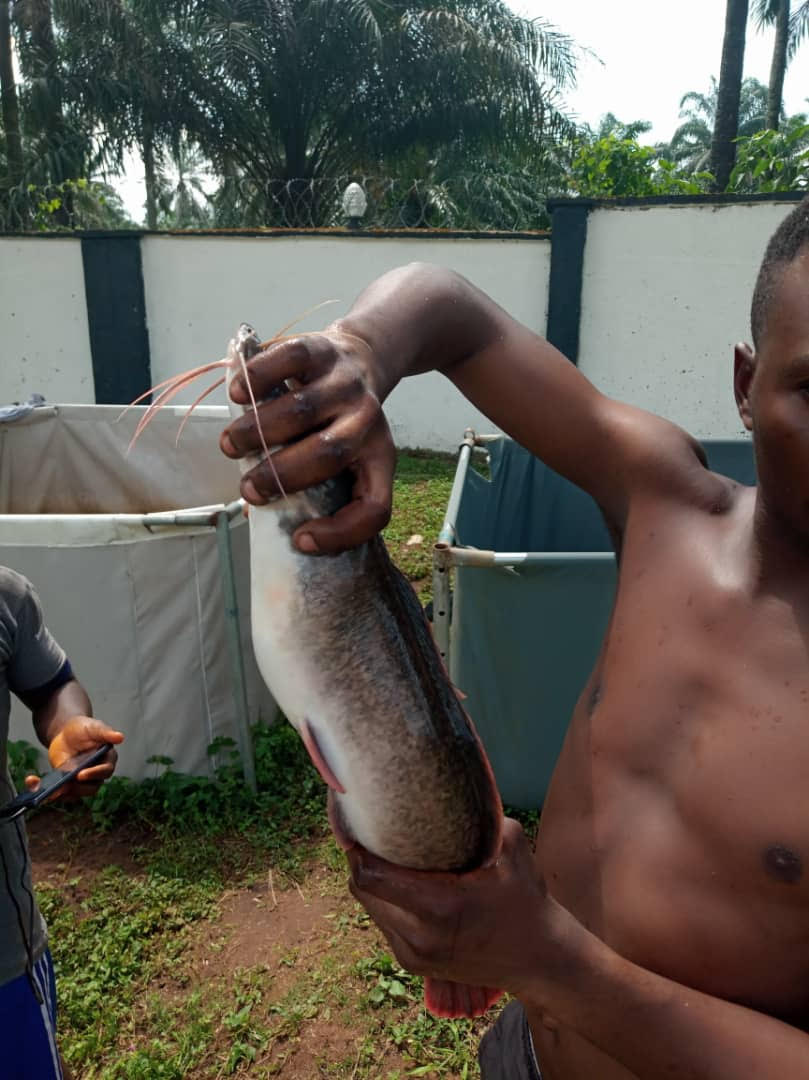
”I learnt about fish farming when working for a boss in order to secure my third-year tuition. I saw a great potential in the business and decided, I would go into it.
While serving at the base, I saw a huge demand for fish and had to do what no one ever did. I built a fish pond in the Navy Base and it became a hot cake.”


Wow! That’s really intriguing. Did you encounter any challenges?

”Of course, I did. When I completed my NYSC program, I came back to Ibadan and started a fish pond. You’d be surprised that all the fish I bought died. I was really discouraged and contemplated its continuity but being someone who doesn’t give up easily, I had to find the ’why’ and ’how’ to put it right.”


You said you write business plans too. How did you also discover that path as well?

”I started that a long time ago, even before I graduated. I started that on Fiverr. Mind you, I am not only writing business plans, I run statistical analysis and do content marketing as well.”


What are your future plans?

”That’s a great question. Honestly, I want to go deeply into agriculture. I am already building a pen. I want to use it for piggery. In the long run, I will add other farm produce.”


Piggery! Have you ever done that?

”Yes. I have reared pigs. That was before I went to Cameroon for my Masters. It’s a lucrative business that many people are not even aware of. I can coach anyone who wants to learn the business. Then, I would definitely further overseas. My dream is to become a lecturer and I’m definitely going for it.”


You seem to be a bunch of talents, my friend. I never doubted you from the onset. Here’s my last question for you, what advice do you have for graduates out there?

”Don’t wait for dream jobs. It doesn’t exist. A dream job is the one you create for yourself. Look out there, you’ll find one.”


Thank you once again, Akinyemi Olasunkanmi. You’ve really been an inspiration for the upcoming generation and I pray that your dreams come true.