DD
MM
YYYY

PAGES

DD
MM
YYYY

spot_img

PAGES

Home Blog Page 665

3 Reasons the Meme Coin Market is Bullish on Little Pepe (LILPEPE) Over Dogecoin (DOGE) and Bonk (BONK)

0

The meme-coin market has evolved far beyond internet jokes and speculative hype. This cycle, one token stands head and shoulders above its predecessors. Little Pepe (LILPEPE) is surging beyond the old guard—Dogecoin and Bonk—and doing so with technical credibility, community momentum, and institutional-grade assurance. Here’s why the meme-coin world is increasingly bullish on LILPEPE.

1.  A Layer-2 Ecosystem Built for Memes

Dogecoin owes its fame to Elon Musk tweets and early adopter enthusiasm; Bonk gained traction through the Solana ecosystem. Both thrive on cultural resonance but lack foundational innovation. Little Pepe, by contrast, is the first meme coin intentionally built from the ground up as an Ethereum-compatible Layer-2 blockchain tailored for meme tokens.

This isn’t a token strapped onto off-the-shelf infrastructure. Little Pepe wields ultra-low transaction fees, rapid confirmation times, and in-built anti-sniper protections to fend off automated bots at launch. Its technical edge ensures scalability and fairness, attributes legacy coins lacked at inception—thus providing LILPEPE with a fundamentally stronger backbone for sustained growth. Meanwhile, Dogecoin’s infrastructure remains dated, and Bonk, while technically modern, belongs to Solana rather than fostering its own chain focused on meme-centric utility.

2.  Momentum, Trust, and Capital—All Moving in One Direction

A robust technical offering is one thing. But for crypto success, it must be backed by real investor conviction. In that arena, LILPEPE is truly excelling.

Presale participants have been lining up—stage after stage, the token has surged past expectations. As of July 30, more than $13.7 million had already been raised by the end of Stage 8, with nearly 9.7 billion tokens sold. That momentum accelerated further in Stage 9, where over $16.47 million was raised in record time, selling more than 11.25 billion tokens and triggering a 90% leap in price from Stage 1. Now entering Stage 11 at $0.002, Little Pepe has sold over 13.1 billion tokens in total.

This is not speculative hype. It’s a consistent, measured climb, anchored in real presale demand. Comparatively, while Dogecoin remains a household name, its tokenomics and upgrades are rooted in legacy architecture. Bonk has carved a niche on Solana, but lacks the infrastructural depth and audit-backed trust that LILPEPE currently offers. As investors look for next-generation plays rather than recycled memes, all signs point to Little Pepe gaining disproportionate attention.

3.  A Roadmap Rooted in Community, Utility, and Growth

A meme coin built on novelty alone tends to fade just as fast as it rises. Little Pepe avoids that pitfall by balancing community-driven excitement with forward-looking utility.

Dogecoin’s success stems from vibrant community memes, and Bonk leverages Solana’s technical ecosystem. Little Pepe blends both worlds. Its roadmap is centered on developing a meme-first launchpad, giving aspiring meme projects a vetted platform to nurture creativity—with the advantage of ultra-low fees and native token alignment. Its blockchain is designed not just for joke tokens, but for the next generation of utility-driven meme ecosystems.

On top of that, its marketing strategy is both viral and strategic. The project is currently running a $777,000 giveaway, awarding $77,000 worth of LILPEPE to ten winners who contribute at least $100 in presale and engage socially. Not only does this create buzz, but it also roots participation in actual investment. Coupled with the credibility that comes from being audited and listed on CoinMarketCap, LILPEPE is leaning into transparency while outfitting itself for growth.

The Contrast with Dogecoin and Bonk

Dogecoin, despite decades of brand recognition, confronts limitations. Its inflationary model and lack of core upgrades cast a long shadow over explosive growth. Its price movements often echo influencer tweets more than technical innovation.

Bonk enjoyed early success via Solana integration and DeFi utility, boasting impressive trading volumes and a loyal Solana-native user base. That makes it a legitimate contender in its space. Yet Bonk lacks the security infrastructure, Layer-2 velocity, and launchpad-driven ecosystem that LILPEPE is building.

Little Pepe, by contrast, blends credibility and sophistication with meme culture. It offers speed, low cost, developer tools, audit transparency, and layered social engagement. That positions it as a rare meme coin with serious ambition.

Bottom Line

In a crowded meme coin landscape, Little Pepe is emerging not as just the latest flash in the pan, but as a carefully constructed contender. Its Ethereum-compatible Layer-2 architecture, audited smart contracts, and presale momentum caught the market’s eye. Its roadmap amplifies that advantage with utility in the form of a launchpad, token-backed growth mechanisms, and community incentives. These elements align to make it a favorite among meme coin speculators who want upside grounded in substance.

Dogecoin and Bonk have earned their places in meme coin lore. Yet if crypto cycles reward evolution alongside energy, Little Pepe stands ready to lead the next wave. With over $20 million raised and more than 13 billion tokens allocated in presale, its foundation is not hype—it’s happening.


For more information about Little Pepe (LILPEPE) visit the links below:

Website: https://littlepepe.com

Whitepaper: https://littlepepe.com/whitepaper.pdf

Telegram: https://t.me/littlepepetoken

 Twitter/X: https://x.com/littlepepetoken

Maximizing Your Bankroll: Expert Strategies for Pinco Casino Players

0

I’ve spent countless nights studying betting patterns and bankroll management so you don’t have to. At Pinco (and yes, even when someone mistypes Pinko casino), smart money management separates the casual spinner from the long-term champion. Let’s dive into practical tactics that will stretch every euro, whether you’re fresh off Pinco casino login or putting your Pinco welcome bonus to work.

Set Your Bankroll Like a Pro

Establishing a clear budget is the foundation of responsible—and profitable—play. When I began my journey, I allocated €200 per week and treated it like an entertainment expense. This approach:

  • Prevents Chasing Losses: You won’t dip into your rent money hoping for a miracle spin.
  • Reduces Tilt: Knowing you can’t exceed €200 takes pressure off each individual wager.
  • Encourages Consistency: You play regular, measured sessions instead of sporadic all-in marathons.

One-Percent to Five-Percent Rule

I swear by keeping individual bets between 1 % and 5 % of my session bankroll. For a €100 session:

Stake Level Bet Size Recommended For
1% €1 per spin Low-volatility slots (e.g., Mystic Pyramid)
5% €5 per spin High-volatility chases when you’re feeling lucky

This simple rule balances longevity with the thrill of chasing a big hit.

Flat vs. Progressive Betting—Choose Wisely

Deciding whether to keep bets flat or ramp up stakes can dramatically impact your results. I tested both sides on SpinSwap™ Wilds, and here’s what I found:

  • Flat Betting gives you steady, predictable play. It’s perfect for new releases where volatility is untested.
  • Progressive Stakes (increasing bets after a win or loss) can amplify momentum—but they also magnify swings. I once turned a €20 win into €85 by upping stakes 10 % after each win, then promptly lost it all when the streak ended.

Progressive methods can be fun, but always cap your losses. For me, a 30 % stop-loss on any streak keeps the swings manageable.

Leverage Bonuses and Mix Games

Your Pinco welcome bonus is more than free spins—it’s a strategic asset. I allocate my bonus spins to low-volatility titles where small wins add up. For example, deploying 50 free spins on Treasure Quests (96.5 % RTP) turned into a solid €45 profit before I even touched my deposit.

Beyond slots, I intersperse sessions with table games. European roulette offers ~97.3 % RTP, giving a gentle counterbalance to slot variance. Mixing game types smooths your overall ROI and keeps sessions fresh.

Track and Refine—The Final Step

Serious players log every session’s start time, end time, stakes, and outcomes. I use a simple spreadsheet: within weeks, patterns emerge. Maybe Wednesday nights on Pinko casino rewrite jackpot history for you, or Thursday afternoons reveal a cold streak. By analyzing your data, you can:

  1. Adjust Bet Sizes based on optimal times.
  2. Shift Game Mix to favor higher-RTP options during losing stretches.
  3. Set Realistic Goals, such as banking a 20 % profit and walking away.
Metric Tracked Benefit
Session Duration Prevent fatigue and tilt
Average Bet Size Ensure alignment with bankroll rules
Net Profit/Loss Identify winning or losing patterns


Smart bankroll management is about discipline, data, and disciplined use of your Pinco welcome bonus. By setting clear limits, choosing the right betting strategy, and continuously refining your approach, you’ll play longer, reduce emotional swings, and maximize every session—whether you’re on Pinco casino login or accidentally poking around Pinko casino. Now go forth, spin responsibly, and may the odds grow ever in your bankroll’s favor!

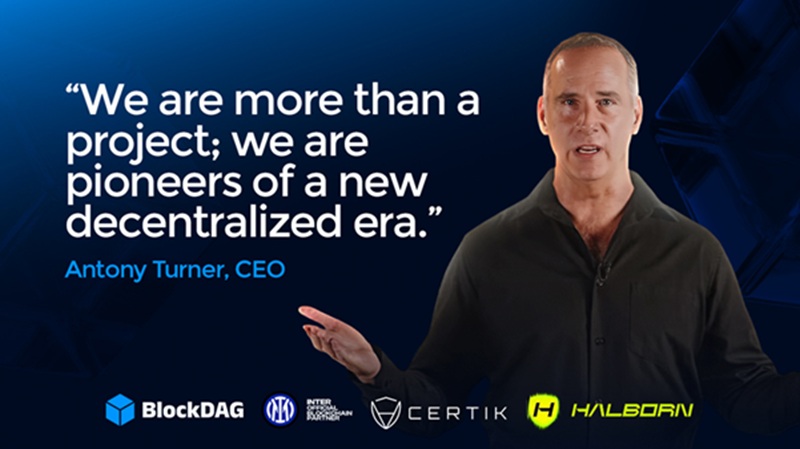
Meet Antony Turner, the CEO Behind BlockDAG’s $379M Presale Success!

0

Until the middle of 2024, BlockDAG stayed deliberately under the radar, much like other Web3 projects in their earliest stages. That changed in July 2024 when Antony Turner, its CEO and founder, made his first public appearance during a major team reveal. The move marked a clear pivot from secrecy to openness, showing the world exactly who was driving the vision.

Turner isn’t just a name attached to a brand; he’s an architect, strategist, and builder who prioritizes community at every stage. His presence brought clarity, confirming that BlockDAG’s long-term goals are already in motion. With $379M raised and 25 billion coins sold at a batch price of $0.0276, his leadership has turned early momentum into measurable results, creating a 2,660% ROI for those who joined from Batch 1.

Experience That Fuels BlockDAG’s Growth

Turner brings a rare mix of Web3, fintech, and systems-building experience to the table. Before starting BlockDAG, he contributed to early blockchain ventures and played a role in scaling platforms designed to handle high transaction volumes securely. His career also includes fintech product design and smart contract frameworks, which gave him a deep understanding of both the technical backbone and financial mechanics of crypto networks.

A consistent theme in his past work is accessibility. Instead of chasing complexity, he focused on simplifying blockchain tools so they could be widely adopted. That same philosophy runs through BlockDAG today, where Turner aims to deliver a platform that developers can easily build on and users can directly benefit from, without unnecessary hurdles. His prior projects gave him a front-row seat to the problems builders face, and BlockDAG reflects his determination to create practical systems with long-term relevance.

Practical Tools at the Heart of the Vision

Turner’s philosophy centers on decentralization and usability. In a July 2024 AMA, he said, “I started BlockDAG because the space was getting louder, not better. We’re here to build.” That belief drives the project’s direction; it’s not only about faster confirmations or cheaper transactions but about creating real value for builders through apps, mining, and staking infrastructure.

Under his guidance, BlockDAG has rolled out the X1 Mobile Miner App and a testnet that supports EVM-compatible contracts. The upcoming Mainnet and developer hackathons are also core elements of the roadmap, designed to make BlockDAG a genuine hub for practical Web3 tools.

Turner’s mission is clear: make blockchain usable, not just marketable. By giving developers the environment they need and users products that actually work, his leadership is shaping BlockDAG into a network with real staying power in an otherwise noisy field.

Community-First Leadership in Action

Where many Web3 leaders fade into the background after launch, Turner has taken the opposite route. He stays visible, personally hosting AMAs, answering questions, and sharing updates about ongoing development. This direct communication keeps the community engaged and reinforces trust in the project’s delivery.

His approach is also reflected in community-facing programs, from the 200 ETH prize pool to presale rewards and mining rig deployments. With more than $379M raised so far and a confirmed ROI of 2,660% from the earliest batch, his mix of transparency and community focus is proving effective.

What sets him apart is his consistency, showing up regularly, staying accountable, and involving users in the growth of the ecosystem rather than keeping them in the dark once the presale milestones are hit.

Summing Up

Turner’s strength lies in balancing vision with execution. His shift from operating in stealth to becoming BlockDAG’s public leader highlights a builder who values results over hype. By anchoring the project in scalable tech while rolling out tools like the X1 App and developer testnet, he’s laying the groundwork for a blockchain built to endure.

The journey from hidden founder to visible CEO reflects a consistent theme: delivery comes before noise. With BlockDAG raising $379M, confirming its launch price at $0.05, and maintaining a growing ecosystem, Turner has positioned the project as more than just another presale story. It’s a network being engineered for lasting impact.

Presale: https://purchase.blockdag.network

Website: https://blockdag.network

Telegram: https://t.me/blockDAGnetworkOfficial

Discord: https://discord.gg/Q7BxghMVyu

China’s Push for Yuan-Backed Stablecoin Could Disrupt Traditional Finance and U.S. Hegemony

0

China is exploring the issuance of yuan-backed stablecoins to boost the global adoption of its currency and counter the dominance of U.S. dollar-backed stablecoins, which hold over 99% of the global stablecoin market.

This marks a significant shift from China’s 2021 ban on crypto trading and mining, driven by concerns over the U.S. dollar’s influence in digital finance and a desire to internationalize the yuan. The State Council is set to review a roadmap in August 2025 that outlines adoption targets, regulatory responsibilities, and risk controls, with Hong Kong and Shanghai as key hubs for implementation.

Hong Kong’s stablecoin ordinance, effective August 1, 2025, positions it as a testing ground, while discussions at the Shanghai Cooperation Organization summit may further promote yuan stablecoin use in cross-border trade.

However, China’s strict capital controls and concerns over capital flight pose challenges, as does the yuan’s low global payment share (2.88% vs. the U.S. dollar’s 47.19% in June 2025). Tech giants like JD.com and Ant Group are pushing for yuan stablecoins, seeing them as a tool to enhance cross-border payments and compete with U.S. financial infrastructure.

A yuan-backed stablecoin could reduce reliance on the U.S. dollar in global trade and finance, as it offers a state-backed, stable digital alternative. With over 99% of stablecoins currently tied to the dollar, a yuan stablecoin directly competes with assets like USDT and USDC.

By promoting yuan stablecoins in international trade, especially within the Shanghai Cooperation Organization or Belt and Road Initiative countries, China could increase the yuan’s global payment share (currently 2.88%).

Stablecoins enable faster, cheaper, and more transparent cross-border transactions compared to traditional banking systems like SWIFT, which can take days and incur high fees. A yuan stablecoin could streamline payments for Chinese tech giants like JD.com and Ant Group, boosting e-commerce and trade in yuan-denominated markets.

Integration with China’s digital yuan (e-CNY) infrastructure could create a seamless ecosystem for domestic and international transactions, further incentivizing yuan use. A yuan stablecoin could bypass Western financial systems, reducing exposure to U.S. sanctions or restrictions on dollar-based transactions.

This aligns with China’s push for financial sovereignty and could appeal to countries seeking alternatives to U.S.-controlled financial networks. Hong Kong’s role as a stablecoin hub under its August 2025 ordinance could position it as a global leader in regulated crypto markets.

China’s strict capital controls, designed to prevent capital flight, may conflict with the open nature of stablecoin transactions. Regulators will need to balance innovation with oversight, potentially limiting the stablecoin’s global reach or creating a two-tier system (domestic vs. international use).

A state-backed stablecoin could legitimize digital currencies in traditional finance, encouraging other nations to explore similar initiatives. This could accelerate the shift from fiat to digital currencies globally. Integration with blockchain platforms like China’s Blockchain-based Service Network (BSN) could enhance interoperability.

Disruptions to Traditional Finance

Banks relying on cross-border payment fees (via SWIFT or correspondent banking) could lose revenue as yuan stablecoins offer faster, cheaper alternatives. This could pressure banks to adopt blockchain solutions or partner with stablecoin issuers.

Traditional financial institutions may face competition from tech firms like Ant Group, which could leverage stablecoins to provide integrated payment and financial services. A successful yuan stablecoin could gradually increase the yuan’s share as a reserve currency, challenging the dollar’s dominance. Central banks and financial institutions may diversify reserves to include yuan-backed assets.

If yuan stablecoins are integrated into DeFi platforms, they could enable new financial products (e.g., lending, derivatives) outside traditional banking systems. This could divert capital flows from banks to decentralized protocols, challenging their intermediation role. However, China’s centralized approach to digital currencies may limit DeFi integration unless regulators loosen control.

The introduction of a yuan stablecoin could push global regulators to accelerate stablecoin frameworks, as seen in Hong Kong’s ordinance. This may force traditional financial institutions to adapt to stricter compliance requirements or compete with regulated stablecoin issuers. Countries may face pressure to develop their own central bank digital currencies (CBDCs).

U.S. dollar-backed stablecoins like USDT and USDC could lose market share in regions where China has strong trade ties. This could disrupt the crypto market, forcing issuers to innovate or lower fees to compete. Stablecoin issuers may also face increased scrutiny from U.S. regulators, fearing a loss of financial influence.

Global trust in the yuan is limited due to China’s capital controls and political risks. Convincing international markets to adopt a yuan stablecoin over dollar-based alternatives will be challenging. Blockchain vulnerabilities or regulatory overreach could hinder scalability and security, impacting user confidence.

The U.S. and allies may counter China’s stablecoin push with sanctions, regulatory barriers, or competing digital dollar initiatives, slowing adoption. A yuan-backed stablecoin could disrupt traditional finance by reducing reliance on the U.S. dollar, streamlining cross-border payments, and accelerating digital currency adoption.

However, its success hinges on overcoming regulatory hurdles, building global trust, and navigating geopolitical tensions. While it may not immediately upend traditional finance, it could catalyze a gradual shift toward a multipolar financial system, with significant implications for banks, reserve currencies, and global trade.

Is BlockDAG the Biggest Crypto Presale in Recent History? Analyzing Its Meteoric $379M Rise So Far!

0

Presales in crypto often start with loud promises, but very few manage to sustain interest once the early rush fades. That’s why BlockDAG’s story is different enough to demand attention.

BlockDAG (BDAG) has combined record fundraising, heavy branding pushes, and a hybrid technical model that blends Proof of Work with DAG design. It’s a mix that has drawn both curiosity and skepticism across the market. With $379 million already raised and a presale ROI hitting 2,660% from its earliest batch, BlockDAG is forcing the question: is this a lasting ecosystem in the making, or just another short-term cycle?

Where BlockDAG Is Showing Strength

BlockDAG’s presale has surpassed $379 million, putting it among the five largest crypto fundraises ever. Its visibility has been powered by sponsorships with Inter Milan and Seattle Orcas, along with global campaigns that pushed its name far beyond crypto circles.

The design is also drawing attention. By blending Proof of Work with DAG architecture, BlockDAG claims to offer scalability without losing security. Its mining ecosystem ranges from large-scale X100 machines to the free X1 Mobile Miner, which has over 2.5 million downloads. This dual setup appeals to both professional miners and casual users.

Hardware miner sales have already crossed 19,300 units, adding more than $7.8 million in revenue before the network is even live. Batch-based presale pricing has also created big early gains. From Batch 1 to Batch 29, BDAG’s return has hit 2,660%, with current pricing set at $0.0276.

BlockDAG’s testnet is another strong point. It already runs dApps, supports NFT minting, and connects with MetaMask, offering developers a real environment for experimentation before mainnet launch.

Roadma, Pressure, and Technology Questions

While the progress looks strong, there are areas that deserve caution. The roadmap is packed with milestones, including a mainnet launch set for early 2025. Hitting that target is uncertain, as ambitious Layer-1 projects often face delays when moving from testnet to live deployment.

The hybrid PoW–DAG model is ambitious but complex. Syncing both systems for speed, consensus, and throughput is technically challenging. There are no published stress results yet showing how this will perform at scale.

Returns from presale also paint an incomplete picture. While the 2,660% gain from Batch 1 to Batch 29 is striking, it reflects presale pricing, not live market value. Once BDAG lists on exchanges, the price will face volatility, early profit-taking, and real adoption tests.

Communication, Community, and Sentiment

BlockDAG has worked to maintain transparency. Weekly updates, open Q&As, and detailed development diaries give the appearance of active communication. The Achievements Page has also been introduced to track milestones publicly.

Community engagement is active, especially on Telegram and X, where discussions around the presale and roadmap remain strong. Market commentary is largely positive but with caution. Some analysts praise its scale and execution, while others point out that raising over $379M doesn’t guarantee lasting adoption.

AInvest, in an August 2025 note, highlighted: “The $379M raised places BlockDAG among the five biggest presales ever, but execution after launch will be the deciding factor.”

The Balancing Point: Breakthrough or Overheated?

BlockDAG has shown unusual momentum for a presale project. It has delivered a live testnet, attracted a global audience, and created real mining engagement before launch. The combination of ecosystem design and presale structure has built confidence so far.

But the real measure lies ahead. Its ability to hit the mainnet deadline, prove the hybrid model under real stress, and stabilize price action on exchanges will determine whether it becomes a defining Layer-1 player or another ambitious presale that struggled to meet expectations.

For now, BlockDAG sits in a space between high potential and unproven delivery, making 2025 the year that will decide its long-term standing.

Presale: https://purchase.blockdag.network

Website: https://blockdag.network

Telegram: https://t.me/blockDAGnetworkOfficial

Discord: https://discord.gg/Q7BxghMVyu