DD
MM
YYYY

PAGES

DD
MM
YYYY

spot_img

PAGES

Home Blog Page 6653

SexForGrades: Lecturers, Stop ‘Praying’ on Female Students

0

Sex is unbearably delicious, sweet and pleasant. The climax is heavenlyGod has wired the human body to desire, have and enjoy sex. But there is a caveat, you should only have sex with your legally married partner. Shior…God has said His own…haq…haq…haq…

Our own is whether we are married or not, we are allowed to have sex indiscriminately notwithstanding the age, and if it is consensual or not. This is why a 40-60-year-old man would rape a toddler, this is why a father sleeps with his daughters and this is why lecturers demand sex from female students. Men like this need to go see a shrink!

There is another set of individuals who are worse off-those who camouflage their indiscriminate sexual escapades and inordinate acts by adorning the religious toga.

This is the case of PASTOR Dr Boniface Igbeneghu, a now-suspended pastor of Foursquare Church and a senior lecturer at one of Nigeria’s prestigious University, University of Lagos “UNILAG”. But his unbridled libido, his sheer disrespect for women, his religious deception, and his disregard for university rules and regulations has landed him in hot water.

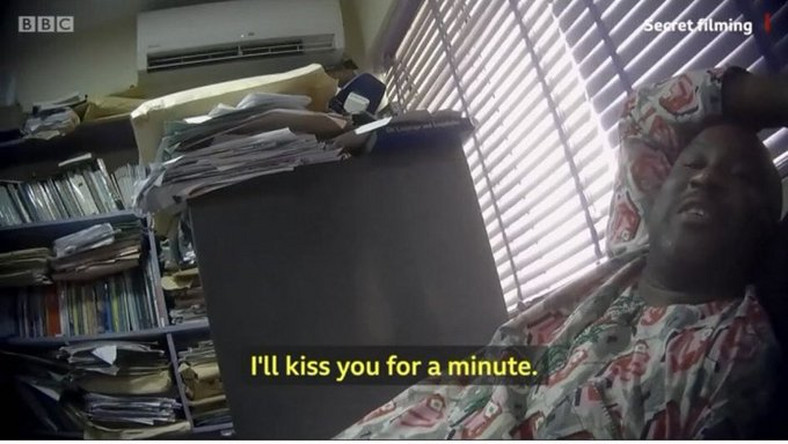
Dr Igbeneghu, who has now been suspended by UNILAG, was caught on camera explicitly and uncouthly soliciting for sex from a 17-year-old posing as a student and seeking his help for securing admission into the university.

His downfall was as a result of an investigation carried out by BBC Africa Eye and was tagged Sex for Grades. In it, reporter Kiki Mordiand a team of undercover female reporters used hidden cameras to document how top lecturers at the University of Lagos conduct themselves with female students. Dr Igbeneghu who had become notorious for demanding to sleep with female students in exchange for grades was one of them.

Dr Igbeneghu is not alone in this #SexForGrades scandal. Across all faculties and departments in Nigeria’s higher institutions; lecturers leverage on their privileged position to pray on female students.

Unfortunately for these students, they have only two choices: it is either they grant the lecturer’s wishes or fail to graduate with fellow course mates. Many choose the former while others drop out like Mordi. There is no system or structure for students to report sexual harassment safely and anonymously. So, the act continues unchecked despite the damning revelations by the BBC Africa Eye team.

Recall Professor Richard Akindele of Obafemi Awolowo University who demanded to have sex five times to pass female student? The Professor was dismissed and charged to court. Nigeria’s snail wheel of justice means we are nowhere near a logical conclusion of that case.

Despite this, the lecturers are becoming more daring and are unrelenting in their female student’s harassment.

Lecturers are supposed to have impeccable ethical and moral standards. This appears to have been jettisoned in Nigeria’s high institutions.

Hence, the management of these institutions as a matter of priority must set up an impregnable reporting system so that any female student that is being harassed by a lecturer can report without fear of being victimised.

Perhaps, establishing a sexual harassment office under the Department of Student Affairs will go a long way and also the University management should send all their lecturers for a mental check-up to determine their state of mind and also train them on how to manage female students.

Sexual harassment of female students is embedded in Nigeria’s educational system and it will take years to be resolved.  However, with everyone watching (online and offline) the lecturers who pray on students and take them to cold rooms, it is a matter of time before they will be exposed.
What if China Mobile Wants to Buy Nigeria’s 9Mobile?

5

The world’s largest telecom firm is China Mobile. It has more than 800 million internet users in its network. But as “typical China”, that number is not even big enough for this telecom giant: it wants to grow. And that means going outside China to find new customers. Africa will be a key destination.

Yes, the massively debt-ridden #3 telecom operator in South Africa, Cell C, is in the market with some of its assets. It has close to $600 million debts to settle. MTN, Vodacom and others are jockeying. The rumour is that China Mobile is coming with a big cheque. Of course, unlike the Americans and Europeans, fixated on espionage, Africa has welcomed Huawei and other Chinese heavyweights because they indeed deliver value for money, and we have no other credible alternative.  I do not see anyone blocking China Mobile in South Africa if it indeed wants to make a play.

A report on Tuesday suggested China Mobile may be about to swoop to the rescue of embattled mobile operator Cell C. Telkom is also rumoured to be circling.

ITWeb, an online technology publication — citing an unnamed source who it said has “knowledge of the matter” — said that talks are taking place between Cell C and China Mobile and that a “deal is imminent”.

TechCentral could not immediately independently determine the veracity of the report, but has heard from several sources in recent weeks that Telkom may again showing some sort of interest in Cell C. Telkom CEO Sipho Maseko had said earlier this year that company was no longer interested in buying the mobile operator.

If the ITWeb report is correct, and China Mobile does buy a stake in the operator — and especially a controlling stake — it could have a significant impact on the South African mobile market, particularly in light of the Chinese company’s deep pockets, technical expertise and buying power.

But forget what happens in South Africa,  I have a question: what if China Mobile comes into Nigeria to acquire 9Mobile? With its massive pockets, the game could change. That is a possibility if indeed Cell C interest turns out to be real. Yes, if that happens, we can say that China Mobile has an African playbook.

This was a risk factor we pointed to an investment boutique whose CEO belongs to my CEO Direct [interested? email here]; they pay an annual subscription fee for an opportunity to speak with me anytime on business matters. We do think, if Cell C indeed goes to China Mobile, MTN Group value will drop because China Mobile will reshape the telecom sector in South Africa. 

Also, we extrapolate that the appetite that takes China Mobile to South Africa will bring it to Nigeria to find better jollof rice (yes, telecom assets). If that happens, publicly traded telecom companies in the Nigerian Stock Exchange  will see massive value erosion. If you are in the investing space, pay attention to what is happening with Cell C and China Mobile. It could signal a major trajectory that China wants to run telecom operations in Africa.

UberBOAT Launches in Lagos

6
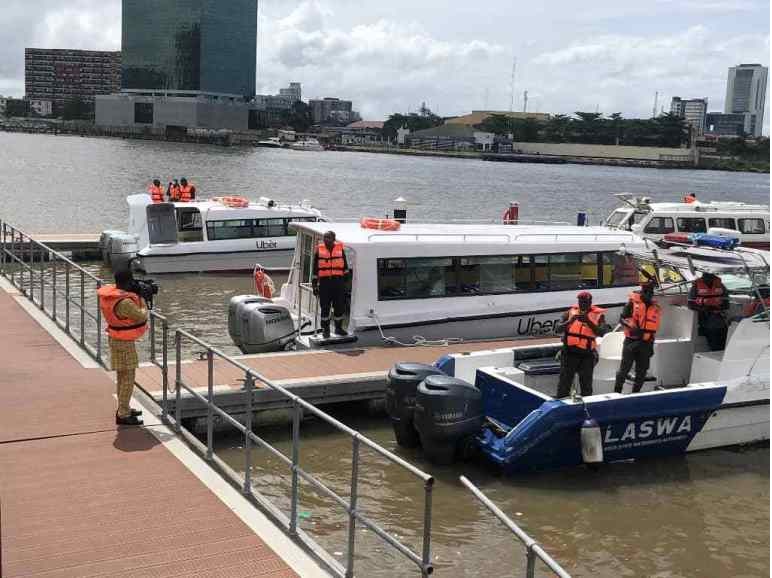
Uber trialed Uber Boat in Lagos

UberBOAT launches in Lagos in partnership with Lagos State Waterways Authority (LASWA). Users will be charged a flat amount of N500 ($1.39) per trip. This is encouraging but it needs scale to have an impact. 

One of the most exciting things in Zurich, Switzerland, is entering a public bus, in some areas, with no requirement to pay any fee. Come out from the central station, enter a bus, and go anywhere you want. The government has figured out that by waiving the fees, more people will use the public buses, triggering more productivity via no traffic on the roads, and good things follow. At the end, it will recover all expenses from better tax receipts.

Sure – one cannot compare Nigeria and Switzerland but getting people to drive less and use public transportation systems which must be adequately provided should be a game plan. Waterways, trains and more buses, priced competitively, would save Lagos from itself. As that happens, Lagos needs neighboring states to disperse its traffic under a better tax structure as I have noted.

Global ride-hailing firm Uber Technologies Inc [UBER.UL] on Friday launched a pilot test of a boat service in Nigeria’s commercial capital Lagos to attract commuters seeking to avoid the megacity’s notoriously congested roads.

[…]

The waterway service, UberBOAT, is operated in partnership with local boat operator Texas Connection Ferries and the Lagos State Waterways Authority (LASWA), said the ride-hailing firm.

[…]

Passengers will be charged a flat fare of 500 naira ($1.39) per trip, compared with about 300 naira by minibus for a similar journey in the commercial hub of the West African country where most people live on less than $2 a day.

Recently, Gokada, a motorbike e-hailing operator, went into the space with GBoat.

Gokada launches GBoat, a boat service in Lagos: “After raising USD 5.3  million from the Rise Capital, bike-hailing firm GoKada is launching a water-borne service, GBoat, to beat Lagos traffic”. Meanwhile Uber unveils Uber Copter in New York. Yes, you can take a helicopter from Manhattan heliport to JFK Airport for $200. Two poles – interesting moments in global transportation.


Blame Our Traders for The Increments in a Bag of Rice

0

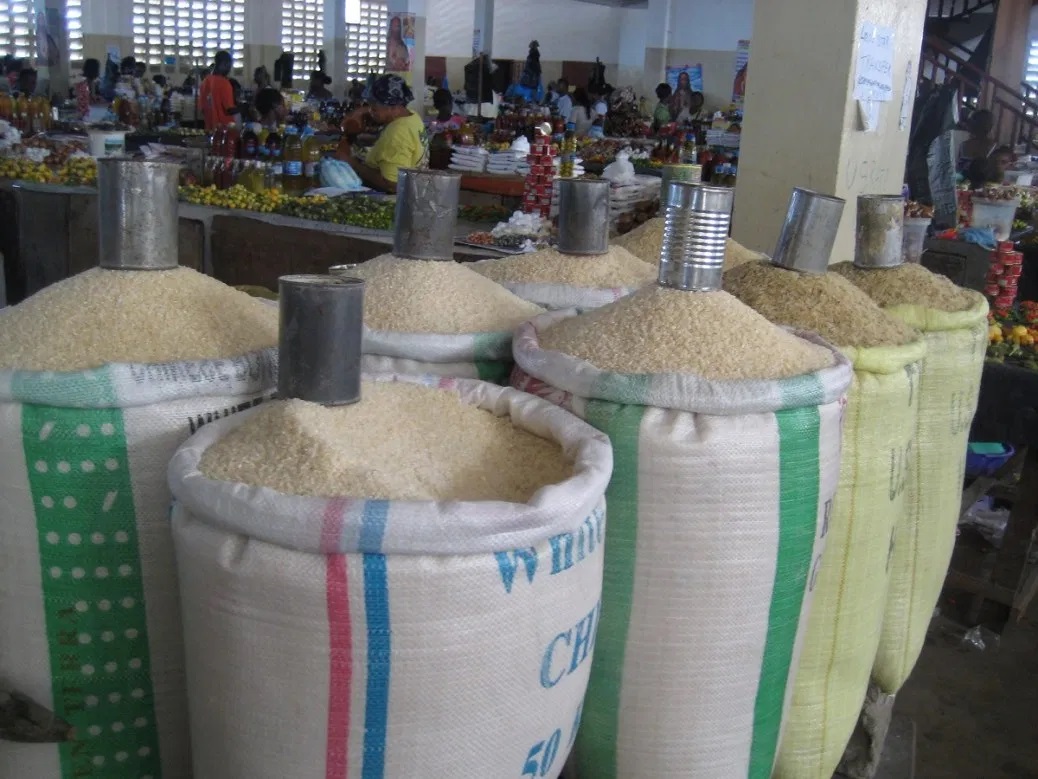
I was at the market on Wednesday, the 9th of August, and I discovered that a bag of rice is now 24000 naira. I could see the dissatisfaction in the eyes of many Nigerians.

Everyone is blaming the president for closing down the border without an alternative. Many don’t see it as a smart move as everything has skyrocketed.

We all know that rice is widely consumed by every citizen. With the border closed indefinitely, and the limited supply from our own factory that can not meet up with the high demand of the citizens, an increase in price is inevitable.

This is a trying time for Nigerians. The masses are feeling the heat and I must admit, but I am not scared of what the future holds.

I commend the president’s effort on this. He has indeed taken a bold step. Of course, it won’t be easy. In fact, we need to go through this tough moment if we must enjoy the future. As much as this is tough on us, it can only get better in a few month’s time. There’s nothing to worry about.

There are lots of positives to take from this brilliant move by President Muhammadu Buhari.

Here are the positives to pick from the closure of the borders:

  • Any country that wants to grow must be a producer and not a consumer. Our country, Nigeria, is over-reliant on imported goods. We are consumers. Only a few are producers. No nation will grow that way. We can not continue to rely  on others for what we consume, it’s time we take responsibility for our future. We need to buy less and sell more. Something we are not ready to do. Nigerians want everything easy but it doesn’t work that way.
  • This will help boost the sales of homemade products. We need to start patronizing our own products. That will help foster the growth of our companies and also give birth to more infant companies. Most of them have gone into extinction because they don’t have the financial capacity to compete with imported goods. The closure of the border will provide an enabling environment for businesses to grow.
  • More jobs will be created. When homemade companies thrive, they’ll definitely grow. Therefore, they’ll be needing more hands in their companies. This will help in creating more jobs. Isn’t it something to rejoice about? With the rate of unemployment on the rise, we need to come up with a solution or else our graduates will be frustrated and keep roaming the streets without direction.
  • Revenue will be generated. The government needs to make more money to support the nation’s thin budget. Since the border has been closed, the Head of the Nigerian Customs Service reported that they’ve recorded over 5 billion naira per day. This is a very good figure. It makes me think about how much we’ve wasted in the past. If we want the Nigerian dream, we must be willing to pay the price.

This is a moment where everyone has to come together and join hands together to lift the nation high.

We often blame the president for this increment in the price of food and other non-perishable goods in the country. But the truth is, the president has played a little role in this. We should rather blame ourselves for whatsoever that’s happening in the country.

We are our own enemies. I am ashamed of our traders. Most of them had purposely inflated the price of these commodities. They have seen it as an opportunity to make more money. I am not surprised by that, filling stations also do that.

We all can sit in our homes or offices and blame the president forever, it won’t change the fact that we don’t have empathy for ourselves. We are the ones making life hard and unbearable yet we blame the leaders. Piling pressure and inflicting pains during the trying moment is what we call good business.

If we look further, we will see a clearer picture of what the president is trying to do. But our greedy act would not let us see the bright future ahead. You’ll be surprised that some people will produce substandard goods just to exploit the citizens. We all want to make a profit on ourselves.

I’m not against anyone making a profit in business. Of course, the purpose of every business is to make a profit but when this is done to exploit the masses, then it makes no sense at all.

Here’s one thing I will leave you with – the president is not feeling the heat, neither are the politicians. So when you think of making a profit at the expense of the masses, remember that we are in this together.

The Buhari’s Rice Experiment

3

Few weeks ago, the Nigerian government closed the nation’s borders with Niger  Republic and Benin Republic. From all angles, you can make noise that the border closure may be violating the spirit of AfCFTA, the trade agreement, designed to bring commerce and industry closer in Africa. But Nigeria has a game plan: check rice smuggling into Nigeria.

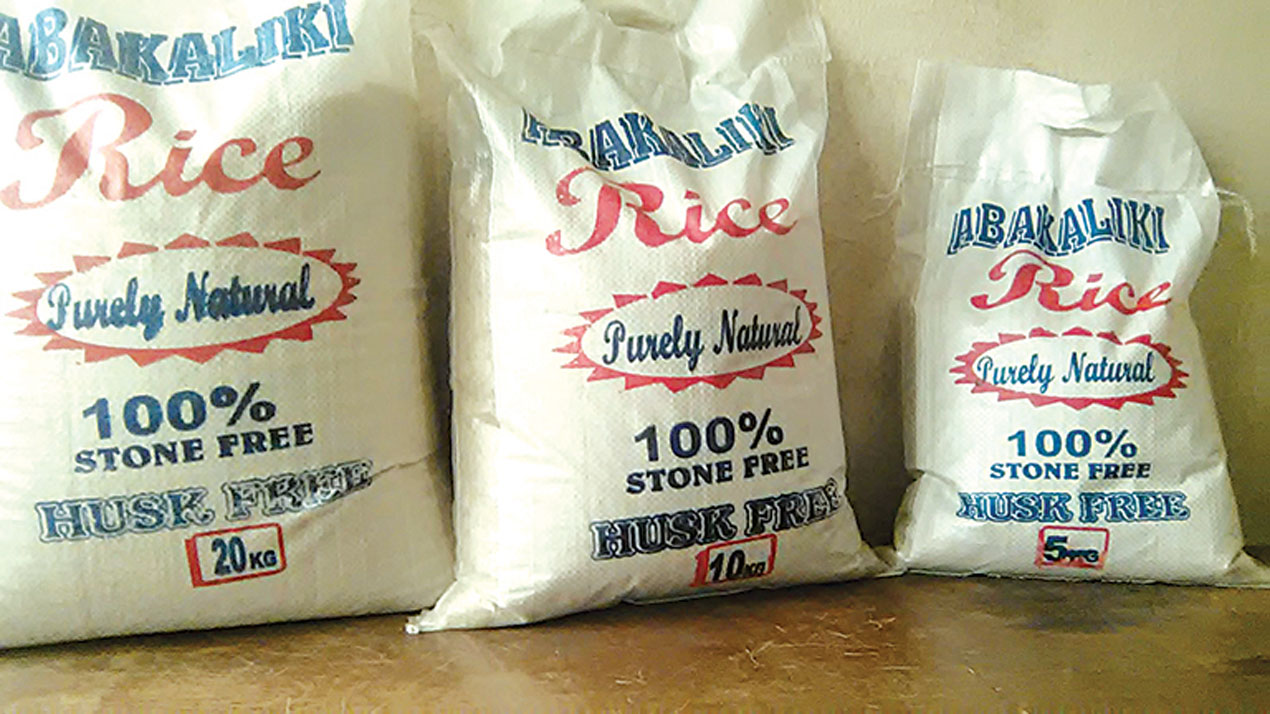
Do not blame me – I tend to pick unstructured data including paying attention to the price or rice and availability of rice. In Umuahia, Abia State, this week, the price of (foreign) rice is hitting N18,000 per bag if you can find one. 

But besides the price and the supply, these are things I pick from this policy:

  • Nigeria is not producing enough rice that can meet demand. This contradicts all the statements from Audu Ogbeh, the former minister of agriculture, who boasted last year that Nigeria has attained parity on internal supply and demand.
  • Smuggling of rice is massive. Official data shows that rice is not banned in Nigeria even though the central bank is not supporting its importation with special exchange rate. Yet, by closing the Niger and Benin Republic borders, scarcity has been created. The implication is that most of the rice consumed in Nigeria are smuggled. 
  • Benin Republic and Niger Republic do not eat a lot of rice. Apparently, the mind-blowing imports into these nations are destined for Nigerian family tables. With the borders closed, I expect drops on the volume of rice imports into these nations, in coming weeks.
  • This scarcity can equilibrate in 4-8 weeks (time it could take ships from Asia to Nigeria) as importers begin using Nigerian ports over Nigerien and Benin Republic ports.

Nigeria should sustain this policy but make sure there is a faster clearance for imported rice via the opened ports so that supply can get into the country. This is also the time banks should help their customers to ensure they are using ports which are opened in Nigeria for quick delivery so that supply-demand will normalize.

We need this type of experiment. My suggestion next time will be for government to educate importers and customs to ensure when supply-demand disequilibrium like this happens, immediate actions can be taken to normalize things. It is purely evident that local production cannot do that in the short-run, so a Plan B must be in existence.