DD
MM
YYYY

PAGES

DD
MM
YYYY

spot_img

PAGES

Home Blog Page 6653

SERAP’s Open Letter to Buhari for the Implementation of Judicial Financial Autonomy Report.

0

The Social Economic Rights and Accountability Project (SERAP), has sent an open letter to President Muhammadu Buhari urging him to publish and fully implement the recommendations of the report on financial autonomy of state legislature and the judiciary.

The social economic rights group took the step in light of the frequent disobedient to court orders by the Federal Government.

It is believed that somehow, the Federal Government is commanding some economic influence over the judiciary, which is against the principles of separation of power.

SERAP, in the letter signed by its deputy director, Kolawole Oluwadare, thus urged president Buhari to use his office to promote accountability and judicial independence by publishing the report he received back in June. The letter reads:

“In the context of a growing attack on the country’s judiciary by the authorities and politicians, the full implementation of the report will contribute to improving judicial independence, and respect for constitutional principles of separation of powers and systems of checks and balances designed to prevent political interference and ensure respect for the rule of law.”

“Equal treatment before the law is a pillar of democratic societies. But when judicial financial autonomy and by extension, independence and sanctity is undermined, the scales of justice are tipped, and ordinary Nigerians suffer. In fact, when judicial autonomy and independence is under siege, everyone loses, as the voice of the innocent goes unheard, while the guilty continue to act with impunity.”

“The failure to publish the full recommendations of the report and to begin to implement them has continued to undermine the country’s judicial systems, and deny citizens’ access to justice and basic human right to a fair and impartial justice system.”

“Ensuring the financial autonomy and independence of the courts would improve the ability of our judicial systems to deliver justice effectively and efficiently. it would also allow the court to jealously guard the rights of innocent men and women, and ensure that the guilty receive a fair and impartial hearing, as well as remove the dangerous possibility of summary justice.”

“We urge you to ensure full respect for the rule of law and due process in words and actions.”

“A financially autonomous judiciary is crucial for the effectiveness and success of your anti-corruption agenda, and important for the realization of citizen’s human rights. Unless the report is fully implemented, trust in the court’s impartiality and independence will continue to be eroded, and the core judicial functions, access to justice, and the broader accountability function of the judiciary, will continue to be undermined.”

“A weak judiciary would mean that impunity for corrupt officials will remain, as the ability of our government and ant-corruption agencies to prosecute grand corruption, as well as public trust and confidence in institutions of government and public officials, will continue to be undermined.”

“SERAP is extremely concerned about the growing attack on the independence of the judiciary and the sanctity of our justice system, particularly the repeated failures by your government, state governments and politicians to respect and comply with court decision and orders.”

“SERAP notes that you received in June 2019, the report of the Abubakar Malami-led presidential Implementation Committee on Financial Autonomy of State legislature and Judiciary. The committee, inaugurated by you on March 22, 2019 was tasked to fashion out strategies and modalities for implementation of the financial autonomy of the state legislature and judiciary, in compliance with section 121 (3) of the 1999 Constitution as (amended).”

“When you received the report, you stated that, ‘I went through a terrible time getting here for the three times I contested elections. That is why I want to stabilize the system so that others will not pass through the same experience.”

“This worrying situation threatens to undermine the judiciary’s fragile independence, and the sacred constitutional principles of separation of powers and systems of checks and balances.”

“Continuing refusal to respect and obey court decisions and orders if not urgently stopped will lead to increased corruption and impunity. Disobedience of court orders is an implicit interference in the judicial system, and shows a flagrant disregard for Nigeria’s constitution of 1999 (as amended) and international obligations. Persistent disobedience of court orders and decisions threatens any gains in the fight against corruption that your government may have recorded.”

“SERAP is concerned about the growing list of court orders and decisions that have been flagrantly disobeyed by your government, the most recent being the order of justice Taiwo Taiwo, Federal High Court, Abuja granting bail to the publisher of SaharaReporters, Mr. Omoyele Sowore, and the reported attempts by your government to drag Justice Taiwo before National Judicial Council (NJC) on account of his decision to grant bail to Mr. Sowore.”

“Other high-profile judgements your government is refusing to obey include at least three judgements obtained by SERAP. The first is the judgement by Justice Hadiza Rabiu Shagari ordering the government to tell Nigerians about the stolen asset it allegedly recovered, with details of the amounts recovered. The second judgement, by Justice Mohammed Idris, orederd the government to publish details on the spending of the stolen fund recovered by successive governments since the return of democracy in 1999.”

“The third judgement, Justice Chuka Austine Obizor, a professor of law, ordered the government to publish details of payments to all defaulting and allegedly corrupt electricity contractors and companies by the governments of former president Olusegun Obasanjo, former president Umaru Musa Yar’Adua, former president Goodluck Jonathan, and your government.”

“Another court order that is yet to be complied with is the order for the release of Islamic Movement of Nigeria leader, Sheikh Ibrahim El-zakzaky and his wife, Zeena , from unlawful detention, obtained by human rights lawyer and Senior Advocate of Nigeria, Femi falana.”

#StopRobbingUs: Nigerian Tech Community Raising Fund to Fight Police Oppression

0

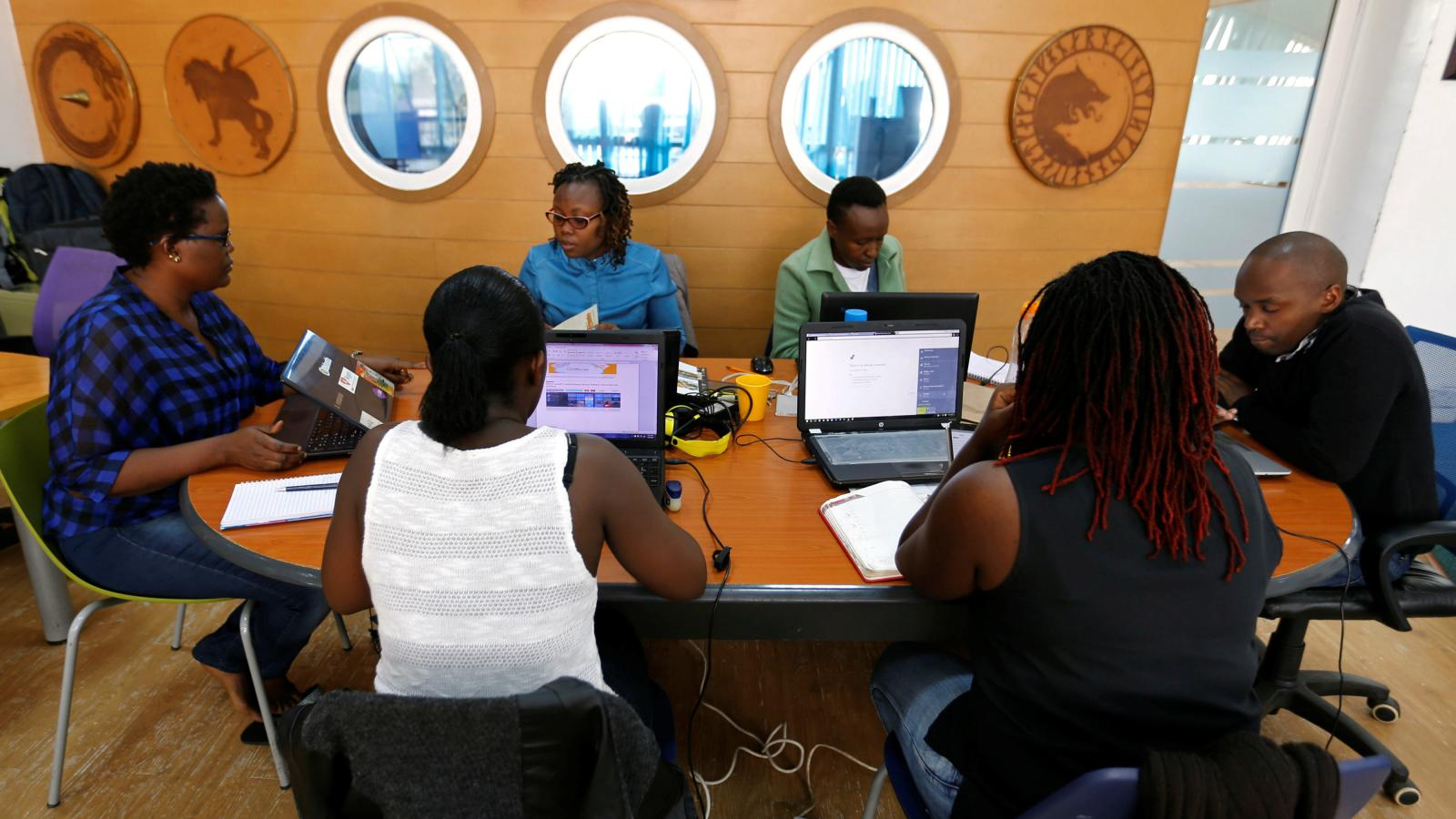
On Saturday, September 28, a Lagos based software Engineer, Toni Astor, narrated on Twitter, a bitter ordeal he had with men of the Nigerian Police in Ogudu area of Lagos State. His story reels on intimidation, brutality and extortion – a familiar trend that many tech guys in Nigeria can relate with.

The story went viral, attracting the interest of Police Crime Response Unit (PCRU), a body designated to handle cases of police extortion, brutality and other excesses. But it attracted the interest of the Nigerian tech community.

So came the birth of the hashtag, #StopRobbingUs, and pathetic stories that trended along with it. Nigerian tech leaders threw their weight behind the movement, the goal was to find a permanent solution to the impunity that has enabled the extortions. Enough is Enough (EiE), a social accountability group has stood up in support of the initiative to commence a Class Action Lawsuit against the police.

And other tech moguls are standing by the #StopRobbingUs movement. Led by Bosun Tijani of CcHUB, Jason Njoku of Iroko, Iyin Aboyeji of Future Africa, and Oluyomi Ojo of Printivo, among others, there’s unwavering determination to get to the root of the matter. Flutterwave has launched a fundraiser for the campaign, and according to reports, the response has been impressive as money is said to be coming from all angles. Over $30, 000 has been raised in just 24 hours after the launch. Flutterwave CEO, Olugbenga Agboola, promised that the company will waive all charges on the payment link.

Human Rights lawyer and the convener of #EndSars campaign, Segun Awosanya, has also joined the campaign. Since 2017, he has been at the forefront of the struggle to tame rogue police officers who prey on innocent citizens to enrich themselves. The pattern has not changed: iphone, laptop or any other gadgets is an evidence of being a cyber-fraudster (Yahoo Yahoo). You only have to negotiate your way out of their hold by paying a sum. If you don’t have cash on you, you use the ATM.

The tech community has been at the receiving end of the system because they use gadgets more than any other people. And that’s why they are rising to the challenge of protecting their own. The CEO of CcHUB, Bosun Tijani, said:

“Our ask is simple. Stop arresting our colleagues. This is an ongoing concern for Nigeria’s tech community. A talent problem already exists in our sector, yet police, particularly SARS’ harassment, accentuates the talent drain in our industry.

“This is central issue for jobs and youth empowerment in Nigeria and the continued, illegal attacks on our country’s young people should be treated as a national emergency.

“Beyond its pro-innovation rhetoric, the Nigerian government continues to turn a blind eye to the robbery and psychological intimidation of young tech talent.”

According to startup Genome, the Nigerian tech industry is the most valuable in Africa with about 700 startups commanding $2 billion. Partech reported that in 2018, Nigeria attracted $306 million tech investments.

In the face of dwindling oil revenue and wobbling economy, technology is seen as an alternative to economic growth. The US tech-based economy is an ample example of what tech can mean to the economy when the government provides the environments it will thrive on.

With over $1.6 trillion market value in 2019, and about $326 billion in export, the US economy doesn’t care about the downturn in the oil sector, even though it has more oil reserves than Nigeria. The quest for cleaner energy is also a threat that its inevitability cannot be ignored. These instances are expected to instigate the Nigerian Government to facilitate tech-enabling environment, where the police will not be a threat to tech innovators.

However, the wake-up call has been heard, and the tech community is no longer leaving matters into government’s hands to handle. Beside the initiative to sue the police, there is also plan to develop apps that will track police activities and record events as their unfold so as to hold them accountable.

The Press Release

Nigerian Tech Community Fights Back Against SARS

Tech Leaders Consider Legal Action Against Illegal Arrests of Software Engineers

Monday 30 September 2019. Lagos, Nigeria. Nigeria’s technology leaders have launched #StopRobbingUs, a campaign to put an end to the common practice where Nigerian police stop young people with laptops and unlawfully arrest, attack or, in extreme circumstances, kidnap them, forcing them to withdraw funds from their bank accounts in order to regain their freedom. Working alongside Enough is Enough Nigeria [EiE], a network of individuals and organisations that promote good governance and public accountability in Nigeria, the #StopRobbingUs movement is now considering a Class Action Lawsuit on police brutality.

Led by ‘Bosun Tijani of CcHUB, Jason Njoku of IROKO, Iyin “E” Aboyeji of Future.Africa and Oluyomi Ojo of Printivo, amongst others, the campaign is calling for the Federal Government of Nigeria to intervene in the continued practice of illegally arresting and extorting young people in Nigeria who work in the technology sector. A fundraiser has been launched by Flutterwave to raise money for a legal intervention and public awareness programme, which has already seen donations flooding in from across the globe.

The #StopRobbingUs campaign comes after Toni Astro, a Lagos-based software engineer, posted on Twitter a harrowing account of his encounter with Special Anti-Robbery Squad [SARS] officers in Ketu, Lagos. During his ordeal on Saturday 28th September, Astro was allegedly publicly intimidated, arrested, beaten and extorted, in order to secure his freedom. News of SARS officers (Nigeria Police and all tactical units) targeting software engineers is a frequent occurrence in Lagos and this is the latest in a string of attacks. Today’s news builds on the larger #EndSARS movement that has rocked Nigeria over the last year, which has used social media to appeal for an end to the frequent robberies of Nigerians, by security operatives who are supposed to protect them.

‘Bosun Tijani, CEO CcHUB says, “Our ask is simple. Stop arresting our colleagues. This is an ongoing concern for Nigeria’s tech community. A talent problem already exists in our sector, yet police, particularly SARS’ harassment, accentuates the talent drain in our industry. This is the central issue for jobs and youth empowerment in Nigeria and the continued, illegal attacks on our country’s young people should be treated as a national emergency. Beyond its pro-innovation rhetoric, the Nigerian government continues to turn a blind eye to the robbery and psychological intimidation of young tech talent.

“We are social innovators, entrepreneurs, engineers and business leaders who work in Nigeria’s technology and innovation sector. Over the last few decades, we have collectively helped to build an innovative, highly respected tech industry that has elevated Nigeria on the global stage and demonstrated that young Nigerians can do great things. The bedrock of our industry is Nigeria’s young and ambitious technology talent. They drive our operations, build our products, serve our customers and solve difficult problems for society everyday. Without this talent our industry would not exist. Nigeria’s tech community is mobilizing, and fast. Collectively, we have remained silent for too long. As of now, our voice will be deafening, and we plan to see the #StopRobbingUs campaign through to the very end.”

In an online statement, Jason Njoku, CEO IROKO called for “a robust and concerted legal effort” to combat SARS’ indiscriminate attacks on Nigeria’s young technology workers. The tech community is now mobilizing to deliver this, working alongside key partners including EiE, Segun Awosanya (@Segalink), government bodies and the police. The fundraising effort backed by Flutterwave has already seen donations in excess of N11,000,000 million (~$30,000) in less than 24hours, with funds still flooding in.The company’s CEO, Olugbenga Agboola, has stated that the payments platform will “waive all charges on the payment link.”

Nigeria is Africa’s most valuable tech ecosystem, with 400-700 startups worth $2billion according to startup genome report and last year alone, the country attracted $306m in tech investment, according to a report by Partech.

Named tech leaders of the campaign include: Bosun Tijani, Jason Njoku Oluyomi Ojo, Olumide “D.O” Olusanya, Adetunji Eleso, Odunayo Eweniyi, Adewale Yusuf, Tayo Oviosu, Jessica Hope, Chinedu Azodoh, Editi Effiong, Damilola Teidi-Ayoola, Femi Longe, Idris Ayodeji Bello, Jay Alabraba, Kola Aina, Shola Akinlade, Gbenga Agboola, Mark Essien, Sim Shagaya, Aanu Adeoye, Tomiwa Aladekomo, Benjamin Dada, Shola Adekoya, Oo Nwoye, Prosper Otemuyiwa, Nelson Olaonipekun, Dele Bakare, Ngozi Dozie, Chijioke Dozie.

Governor Gboyega Oyetola’s Cabinet List in Osun: It is not yet Uhuru

0

After close to a year that Governor Gboyega Oyetola has been in the saddle of affairs in Osun State, he released the list of nominees for commissioners and special advisers on Tuesday 24 September, 2019. The much awaited list read on the floor of the State House of Assembly and which has flooded the social media and online news platforms has attracted a lot of attention from politicians, analysts, residents and indigenes of the state. The governor was listed among the nineteen governors in Nigeria who have failed to constitute a cabinet after months in office. As expected, there were complaints and compliments that accompanied the release of the list.

While some bemoaned the absence of some purported names which were part of the different lists hitherto flying around before the final one was let out of the bag, others rued the perceived lopsidedness in the cabinet of the governor. Politicians and analysts have questioned why the two local councils in Osogbo metropolis was not given its rightful number of slots despite the huge votes that have continuously been coming from the State Capital over the years to ensure the ruling party had its hold on power in the state. Others are challenging why some local governments such as Egbedore and Orolu did not even get a slot at all in the list.

While the furore that accompanied the release of the list seems not out of place in the Nigerian context of democratic governance. Here people see appointment of politicians into public offices as their own way of being represented on the table where resources are allocated among competing demands. Yet, for very discerning minds, the questions being raised are far from being the right ones.

For a state whose books are precariously hanging in the balance, the list should have been more of a concern in terms of the number of appointees and the value to be brought to the table of governance in Osun. The first question should have been to query whether the state has the resources to cater for those appointed to assist the governor in directing the affairs of the state. This question is germane for obvious reasons. Sources have said the state’s purse is in the red. Having inherited a state whose debts are said to be humongous and capable of putting the state to a standstill as far as developmental strides are concerned, one wonders how the governor would pay the salaries and other entitlement of the 35 cabinet nominees. This is not the only source of worry. Recently, the Federal Government of Nigeria has also asked owing states to start paying back the bailout earlier given out in 2015. This is in billions of naira.

If that question is in the affirmative, people should also probe what is the value these new appointees would bring to the table to ensure the looming financial disaster does not make the state go under. The debt issue is one part of the problem. The other part is the signing into law of the new minimum wage by the federal government. The labour unions, who have been itching to kick-start the process of implementing the new salary structure in the state, would go into full action. This is on the heels of the state’s inability to pay the arrears of the modulated salary inherited from the immediate past administration. How would the governor convince the labour force that the state’s purse is lean?

It is my opinion that the people of the state should have also looked at other metrics for the choice of cabinet nominees. What is the intellectual and professional value the new appointees are going to add to governance in the state? For a list that is full of politicians sparsely mixed with very few core technocrats, the state’s return on investment in terms of emoluments and other entitlements of the prospective cabinet members may not yield much. But time will tell.

For years in this democracy, people have consistently used the same yardsticks to determine inclusion in government whether at the national or sub national levels. Other important factors are set side. In democracies where political patronage, zonal considerations and familial attachment to prominent politicians occupy the front seat in determining who gets what in a government, there may not be much to be expected in terms of  real service delivery to the people who bear the most painful part of the democratic experiment. For Osun, despite the fact that the constitution of cabinet indicates readiness for real governance, the coast is not yet clear for impactful governance.

Blame the Lecturers and not Education

0

The impact of Education on Nigerians and the country as a whole can’t be denied. It is something that has really helped a lot.

However, I am worried about people who think education is a scam. Should I call them illiterates?

How could they have forgotten so fast that without a basic education, you are a nobody in our society? You can’t even stand amongst your equals.

This belief is kind of rampant amongst the youths these days that I always ask myself, ”how can I convince my friends to reason with me that education isn’t actually a scam?

So I came up with solutions. But before I share it, I need to change the youths mindset towards education.

Nigerians should see school as a scam but not education.

Here’s my reason –  There are many universities out there that the number of students that write carryover exams every year is more than the students in the school.

I had an experience last year, February, during an examination on political science, the students that wrote carryover in my department were actually more than the Year One students. When I saw them, I was actually amazed and furious. I made findings and realized that it was actually the lecturers that caused all the problems we are having in so many universities today especially in the state universities.

I was in a lecture room after our quiz, a political science lecturer came into the class and said, “I don’t care if you have written everything you know, if you don’t bring your money for sorting into my office, you have failed”.

I was astonished. Lecturers like this are the reason why Nigerian students often see education as a scam. But I believe the problem can be solved because there is a solution to every known problem. There are some lecturers that don’t even come to classes.

However, I can recommend two solutions  to tackle these corrupt lecturers.

Lecturers attending class regularly: The vice-chancellor should try as much as possible to create a monitoring sheet for all lecturers. In order to fish out the lazy ones that miss classes and as well punish them by suspending such lecturers.

Better still, students should be able to report the lecturer in question just like the one that happened in my school. A female lecturer that came only came once to teach us. The worst part, she covered all the syllabus in that same day. That was five topics in 45 minutes.

You can imagine. She even threatened to fail us if we try to report her but we did and she was suspended for her actions. That acted as a lesson for others.

Lecturers should be paid: I often discovered that some of these lecturers are being owed for months. This could lead anyone to indulge in corrupt practices. They also have bills and families to cater for. If we must tackle corruption in the institution, both parties must be responsible, I mean, the government and lecturers.

Lessons from Mozambique in Scaling Rural Electricity

0

Nigeria’s electricity paralysis has seen over 80 million of Nigerian citizens in 8,000 villages live without access to electricity. Only one out of every five Nigerians, has access to energy from the national grid, according to PWC.

Consider Mozambique, where Fenix International, a subsidiary of energy conglomerate ENGIE, which recently launched operations to unlock access to 200,000 households with affordable solar energy and financial inclusion through a pay as you go mode,l within three years, after successfully connecting 500,000 customers in Nigeria, Benin Republic, Côte D’ Ivoire, Uganda and Zambia.

It has established strategic partnerships with Vodacom and Vodafone MPesa to fix frictions associated with distribution, connectivity and mobile payments which left rural Mozambicans without electricity access despite sitting on one of the world’s largest deposits of natural gas.

Mozambique currently has only 27 percent of households connected to electricity and has set a target to reach 100 percent of its citizens with electricity by 2030 through its Pro Energia initiative.

Fenix will focus on those in the northern part of the country and those who utilize expensive, dangerous and non-environmentally friendly means to generate electricity.  The latest offering of Fenix Power is a mobile telephone solution which allows the provider to know product usage and potential technical issues remotely in real time, utilizing the Internet of Things, to reduce costs by delivering affordable energy to rural customers.

Nigerian solar power providers such as Arnergy whose OEM products have allowed it to deepen electricity provision for individual homes, mini grids, commercial and industrial users, onboarding 20 hospitals and is scaling to reach 35,000 businesses within the next five years with about 20 percent of this from the health sector. The firm offers energy as a service which gives its customers access to electricity on a subscription basis, a lease to own model which has a moratorium of 12 to 48 months, and outright acquisition. It should learn from Fenix to disrupt its competition, and scale up, by collaborating with Airtel, MTN or Glo, to offer energy as a service and  financial inclusion too.