DD
MM
YYYY

PAGES

DD
MM
YYYY

spot_img

PAGES

Home Blog Page 6664

Reasons Why People Easily Settle For Less

0

This may not go down so well with some people, but it is the truth – Nigerians settle for less. They do this because they have programmed themselves to suffer. In fact, Nigerians enjoy suffering. In Nigeria, you can hear people bragging about how they suffer most. You can hear statements like, “See this one that’s ‘making mouth’ about how he suffered as if he can compare his own to mine”, as if there’s an award for suffering.

I know readers will be fast to judge that things are not easy in the country. I am not against that, but we shouldn’t use it as excuse to settle for less. Honestly, Nigerians make it look as if someone has to suffer first before being successful. This is why someone whose father paved way for is looked down on because he didn’t ‘suffer’.

I once told someone that what most people do these days is struggling, and not hustling. The person didn’t understand me because to him, struggling and hustling are one and same thing. Anyway, let me clear the air a little bit. When you hustle or struggle, you get to leave your comfort zone which will make you uncomfortable for sometime. But then, if you are smart, you’ll find a way to control and manipulate your environment to give you what you want – this is hustling. But when you allow the environment to control and manipulate you and keep you where it likes, you are struggling (and that’s when suffering sets in). So in summary, a hustler uses his brain while a struggler uses just his body (lol).

Ok, let’s get back to where we were. The ‘you-need-to-suffer-to-make-it’ syndrome is affecting a lot of things in this country. To be honest, I believe things are the way they are in this country because of our mindset. Because we believe nothing good must come easy we swallow up a lot of trash dished out to us.

Ok, let me point out some ways this affects us:

a. Most Nigerians are uncomfortable with embracing modern day technology because they don’t want to be called lazy. Ok, let me ask. How many of us have vacuum cleaners in our houses? Don’t worry, I haven’t even seen it (lol). What about other home appliances like dish washers, rice cookers, foo-foo pounders and the rest? Ok, coming to our offices, how many offices are conducive for people to stay and be productive to their maximum point? What about office equipment and machines that could make works easier and more efficient? Of course if you complain, your colleagues will tell you to ‘manage’ because this is ‘Naija’, where ‘things are hard’. And if your boss hears it, he will tell you to either make do with what you have or procure them with your salary.

b. Our public office holders actually treat us the way they do because they know we will just sigh and decide to ‘manage’. They know Nigerians easily adapt to difficult situations and whatever is dished out to them won’t really bother them. Honestly, if we haven’t embraced suffering the way we do, there is no way we will be plying bad roads that break our bones and send us to hospitals. It’s because of our mindset that a lot of communities in the country do not have portable water, which has been provided for. What about civil servants that have not been paid for months at a stretch? Of course they will survive; they have been surviving since so what’s the difference? Our ‘suffering’ mindset is denying us good governance; we need to do something about that.

c. Our utility companies misbehave as well. It is because of the way we see life that ‘NEPA’ will give us power for only 8 hours and we will say, “they have tried o. If they are giving it to us like this everyday we won’t be complaining” (as if we don’t pay them). And because we have decided to settle for less, these people are not planning to improve.

d. Our education system is also witnessing this suffering syndrome. I always say that the coming of private schools to Nigeria has changed the outlook of Nigerian education system (though a lot of works still need to be done). Those of us that went to public schools do not cherish going to school, especially in our primary schools. We always look for reasons why we should skip classes, all because of the hardship experienced at school. But today, children look forward to going to school (especially private primary and nursery school children) because they go there to study and play in good environment that has all the necessary facilities. As for our public schools, well, a look at their students while going to school will tell you where they will rather be.

e. A lot of Nigerians are unemployed or underemployed right now because they believe they must suffer first before ‘making it’. So they look at themselves as passing through the ‘suffering’ stage, which will usher in the ‘success’ stage. I don’t know how this ideology came into our country because it is not in our culture. Yes, what our culture preaches is diligence and hard work. In fact, in Igbo tradition, when people suffer, it is seen as temptation, ill luck or repercussion. Our tradition doesn’t preach that you suffer first before you land your dream job. So, if you know someone that tied himself down with this mindset, kindly let him know that he can aim higher and achieve.

f. We don’t direct the career path of our young ones because we believe that when they grow up they ‘will suffer like every other person’ until they find their footing. But then, what about those that continue to suffer without finding their footings? Shouldn’t we have helped them at the right time? Must we allow them to pass through the same pain we experienced because we believe that’s the only way they will be ‘wise’?

A lot of people have developed this ideology that they must suffer before they find their right path. If you ask me, I will say that it was passed onto them by their parents. So we have been passing on this suffering syndrome unto the next generation and that means that the old story will continue.

We need to understand that there is nothing wrong with coming out of school and landing your dream job, or going into the career you have passion for. Let’s stop preaching about ‘suffering’ and ‘struggling’ and start preaching about ‘fun’ and ‘hustling’
How NIRSAL’s Mapping Will Unlock Financing for Agribusiness in Nigeria

0

The Nigeria Incentive Based Risk Sharing System for Agricultural Lending(NIRSAL) was established by the Central Bank of Nigeria to collaborate with all the players in the agricultural sector to fix the frictions in the agribusiness value chains and de risk it to unlock financing and investments. Despite this strategic intervention for Nigerian farmers, agriculture is still underfunded due to certain risks which have made banks not to dole out the funds to operators in the agro-value chain.

The Nigeria Incentive-Based Risk Sharing System for Agricultural Lending (NIRSAL Plc.) is a US$500million Non-Bank Financial Institution wholly-owned by the Central Bank of Nigeria (CBN) created to Redefine, Dimension, Measure, Re-Price and Share agribusiness-related credit risks in Nigeria.

Established in collaboration with the Federal Ministry of Agriculture and Rural Development (FMARD) and Nigerian Bankers’ Committee in 2013, NIRSAL’s mandate is to stimulate the flow of affordable finance and investments into the agricultural sector by de-risking the agribusiness finance value chain, fixing agricultural value chains, building long-term capacity, and institutionalizing incentives for agricultural lending through its five (5) strategic pillars, namely: Risk Sharing, Insurance, Technical Assistance, Incentives and Rating.

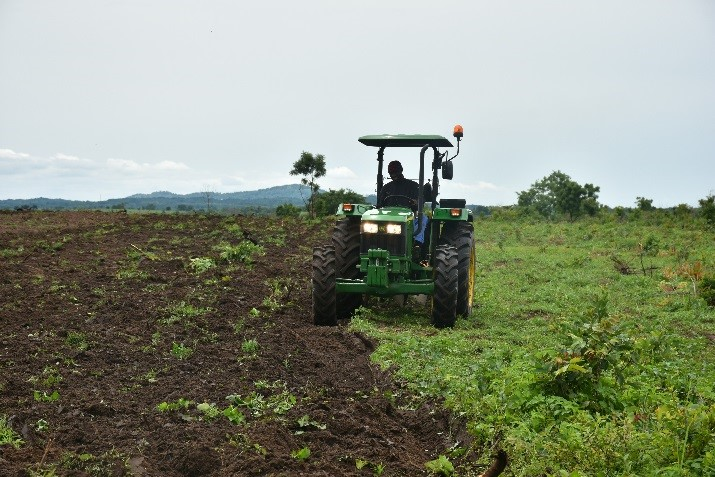
NIRSAL has recently introduced Mapping To Market Concept which will redesign agricultural financing risk management and agribusiness models that take cognizance of the fact that the banks will only fund a sector that is secured, with controlled risk and structured. To redesign the Black Hole, i.e. Upstream Agricultural Sector, which has high risks making it unattractive for bank lending despite being the foundation that other components of the ecosystem are dependent on, NIRSAL has acquired advanced geospatial technologies such as Satellite Imaging Data to be supported by Unmanned Aerial System platforms. These tools offer the following benefits:

  • Efficient for monitoring large swathes of farmland such as in the North East and North West region due to their land mass
  • Identification of the most ecologically endowed areas for specific commodities
  • Remote sensing of crop health status and aggregation of fragmented farmlands.

Lack of available and accurate data to support investments in agriculture in Nigeria is a bane to the value chain and the acquisition of these state of the art technology by NIRSAL will correct this anomaly.

Through its Mapping To Market redesign, NIRSAL will pre-sell smallholder farming Geo-cooperatives to finance. They are developed and mapped in sync with the natural ecologies of specific commodities with farmers who will be deepened with financial and technical capabilities to produce specific crops in large quantities to service the offtake market coordinated by NIRSAL in line with pre-agreed quantity, quality and price parameters.

This initiative will create thousands of large, integrated, bankable clusters of farmers with a minimum ticket of 250 farmers mapped to a 250Ha Geo-Cooperative to downstream markets under guaranteed offtake arrangements such as facilitation of working capital and asset financing for all key stakeholders in the specific commodity value chain. Mapping of these players to each other and the Geo-Cooperative tickets, domiciliation of all loan accounts with a financing bank or a consortium of banks and a near zero cash movement between the locked in parties to the transaction will deepen the agro space in Nigeria. Anchored by NIRSAL’s Credit Risk Guarantee supported by its Risk Management Tools, Techniques, Methodologies, Processes, Technical Assistance Facility and Global Partnerships, the inherent capabilities will provide a holistic monitoring mechanism for each project.

Nigeria’s agricultural industry will soon witness its golden moment courtesy of the Mapping To Market strategic intervention to fully unlock its potential for food security and economic prosperity.

NCC To Establish Emergency Communication Centers Around Nigeria

0

The Federal Ministry of Information has on Tuesday, commissioned the National Emergency Toll-Free Number – 112 in Katsina State. The Honorable Minister of Communication, Dr. Isa Ali Ibrahim Pantami, said the goal is to establish Emergency Communication Centers (ECC), in each state of the federation.

Before now, only a few states in Nigeria like Anambra, Akwa Ibom, Benue, Edo, Enugu, FCT, Imo, Kaduna, Kano, Katsina, Ondo, Ogun, Oyo and Plateau have operational 112 Emergency Communication Centers. And its effectiveness was not at all times certain. A reason why the Lagos State Government created the 767 toll free emergency number.

In June, the Federal Executive Council (FEC), directed the Nigerian Communication Commission (NCC), to establish 112 centers in each state. The FEC also directed that training should be given to personnel for the effective dispatch of distress calls to relevant agencies.

Each state is required to volunteer a piece of land for the purpose of the call center.

Hon. Pantami said the move is timely considering prevalent security challenges existing in the country right now, and other cases of emergencies like flood or fire.

He also used the opportunity to campaign for SIM registration, emphasizing that every unregistered sim card will be cut off on the 25th of September. He said the decision is to use the medium to checkmate the activities of criminal elements operating behind phone lines. That once a crime is committed using a telephone, it would only take 60 minutes to fish out the culprit.

The Minister said the next state in line for ECC is Ogun, and urged Nigerians to display security consciousness by alerting security agencies when they notice criminal activities.

The Nigerian Police, Nigerian Civil Defense Corps, National Emergency Management Agency, Fire services, Federal Road Safety Corps etc. are all connected to the ECC, and their personnel have been urged to live up to their responsibilities in cases of emergency.

Africa and the Responsibility to Protect, a Costly Political Choice

0
Africa Union AU

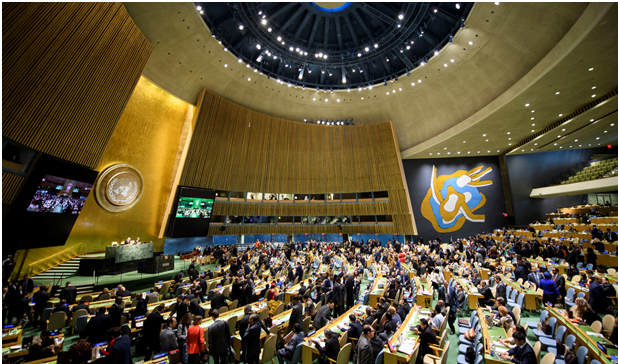
On September 20, 2019, Country representatives at the on-going 74th Session of the United Nations General Assembly (UNGA 74), voted either in favour of or against the responsibility to protect and the prevention of genocide, war crimes, ethnic cleansing and crimes against humanity. Surprisingly, some countries decided to abstain from voting. The responsibility to protect “embodies a political commitment to end the worst forms of violence and persecution”. The principle was formed following the inability of the international community to prevent the atrocities of the Balkans and ethnic cleansing in the Rwandan massacre of the 1990s, coupled with the public outcry, criticizing the military intervention in Kosovo by the North Atlantic Treaty Organization (NATO) as overreaching and a violation of the prohibition of the use of force.

I struggle to understand why any nation within the bounds of reasonableness and good conscience would vote against a principle as laudable as the responsibility to protect. It is even worse and a sign of reckless indifference if a nation abstains from voting.

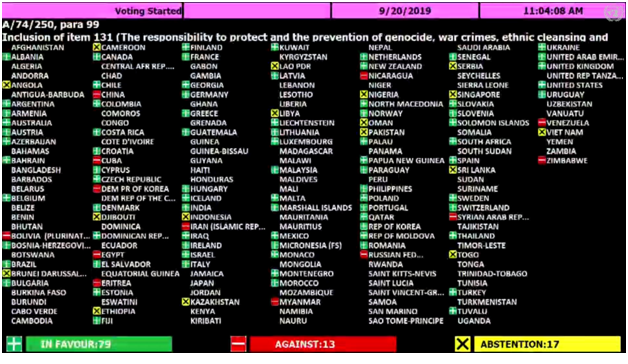
The figure below shows the outcome of the vote for the inclusion of item 131 (the responsibility to protect and the prevention of genocide, war crimes, ethnic cleansing and crimes against humanity) in the draft of the agenda of the 74th session of the UN General Assembly.

Source: UN General Assembly 74th Session.

The UN General Assembly is the main deliberative, policymaking and representative organ of the UN. All Member States have equal representation and each of the 193 Members in the Assembly has one vote. It is important to note that votes on all resolutions require a simple majority except recommendations on peace and security, the election of Security Council members, Economic and Social Council members, and budgetary questions which require a two-thirds majority of vote by Member States.  Unfortunately, resolutions passed by the UN General Assembly is not binding on Member States. That power resides only with the UN Security Council acting under Chapter VII of the Charter.

The non-binding power of resolutions by the UN General Assembly could partly explain why of all the 50 African countries present, only Morocco, Senegal and South Africa voted in favour of including the responsibility to protect in the agenda of the UNGA 74.

ARGUMENTS AGAINST THE PRINCIPLE OF RESPONSIBILITY TO PROTECT

Besides the non-binding nature of the UN General Assembly resolutions, what could be the other reasons for the African countries that voted against or abstained from voting? Two reasons quickly come to mind – The unpredictability of the extent of force in military intervention where misuse is probable, and more importantly, the likelihood of undermining of State sovereignty. Interestingly, most of the countries that voted against the inclusion of the responsibility to protect on the UNGA 74 agenda are predominantly resource-rich countries which raises the question of trust. I get it.

Addressing these concerns would require credible commitment from intervening forces to abide by the spirit and letter of the principle as set out in paragraphs 138, 139 and 140, respectively. Note that the use of force applies only when appropriate diplomatic, humanitarian and other peaceful means fail to achieve the expected result. The principle expressly states that, “should peaceful means be inadequate and national authorities manifestly fail to protect their populations from genocide, war crimes, ethnic cleansing and crimes against humanity”, the International Community through the United Nations would intervene to restore peace. Military intervention becomes expedient under this circumstance because the world would be playing a zero-sum game if we choose not to act in the face of unconscionable and brazen crimes against humanity.

WHY DOES THE RESPONSIBILITY TO PROTECT MATTER?   

Article 2 of the Human Rights Act clearly specifies the right to life as fundamental and sacrosanct, implying that nobody, including the Government, can try to end your life. It mandates Government to make laws and take appropriate steps to protect any life in danger of death. It is basic knowledge that no meaningful development can take place in a hostile environment. Let us awaken our consciousness by at least having these conversations and subsequently following them up with conscientious actions.

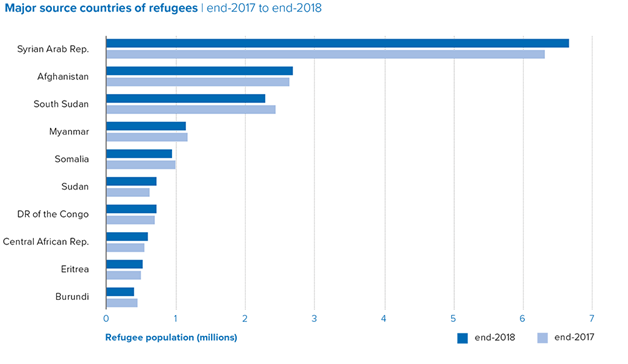
The figure below is a report by the United Nations High Commission for Refugees (UNHCR) showing the trend in source countries of refugees as at the end of 2018. African countries make up 7 of the top 10 source countries for refugees globally.

Source: UNHCR, Global Trends Forced Displacement in 2018


While South Sudan, Somalia and Burundi recorded a drop in the number of refugee seekers year-on-year, Sudan, Democratic Republic of Congo, Central African Republic, and Eritrea increased between 2017 and 2018. Responsibility to protect matters because human lives matter.

I sincerely hope that African countries have not individually and collectively made a costly political choice by their refusal to vote in favour of the responsibility to protect. Only time will tell.

Public Service Interest or Public Funds Interest

0

A picture is worth a thousand words, nevertheless let’s take a dive into the world of arithmetic again in addition to the above picture.

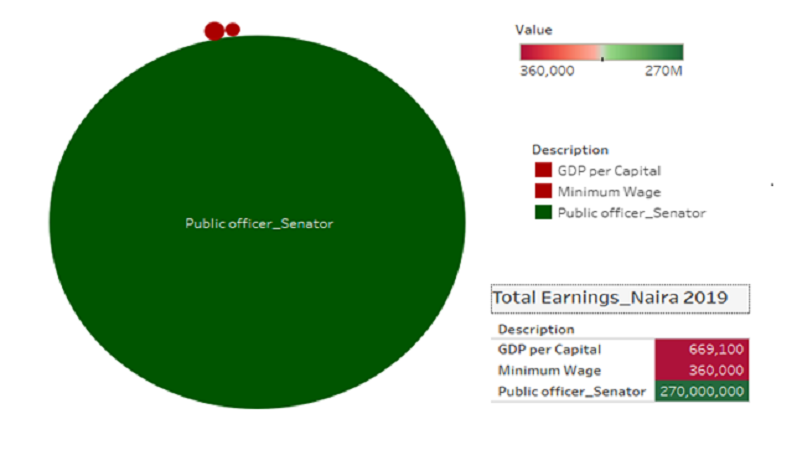
With reference to the interview granted by Senator Shehu Garba on BBC network, here is an assessment of earnings of public officers in this case Nigeria Senator against minimum wage and GDP per capita. An elected Senator has access to annual earnings of about N270 million naira while the minimum wage in the country is set at N360,000 naira annually. A simple arithmetic shows us that it will take  750 years for an employee earning the minimum wage to equal the annual earnings of the Senator while it takes the Country GDP per capita 400 years to do the same.

Now let’s consider their counterpart from a country like the United States. A US Senator annual earnings is $174,000 which is equivalent to N62 million naira while the annual minimum wage is set at $15,040 equivalent to about N5.5 million naira. It takes 11.5 years for an employee earning minimum wage to equal the annual earnings of a US Senator.

When you compare, contrast and recall the 750 years it takes for an employee earning minimum wage to equal the possible earning of a Nigeria Senator, you will quickly understand why politics is the biggest investments and dangerous venture in the Country. Remember that Senators are just a fraction of the larger political team earning from the public funds.

Considering the fact that the majority of the Country population lacks access to basic amenities,  and live in tough conditions, are the public officers supposed to be a financial drain to the public funds or it’s the financial drain itself that causes the neglect of their public responsibilities?