DD
MM
YYYY

PAGES

DD
MM
YYYY

spot_img

PAGES

Home Blog Page 6692

“Nigerian Scientist Develops” Syndrome: A Growing Misnomer In Public Communicating Of Research Findings

0

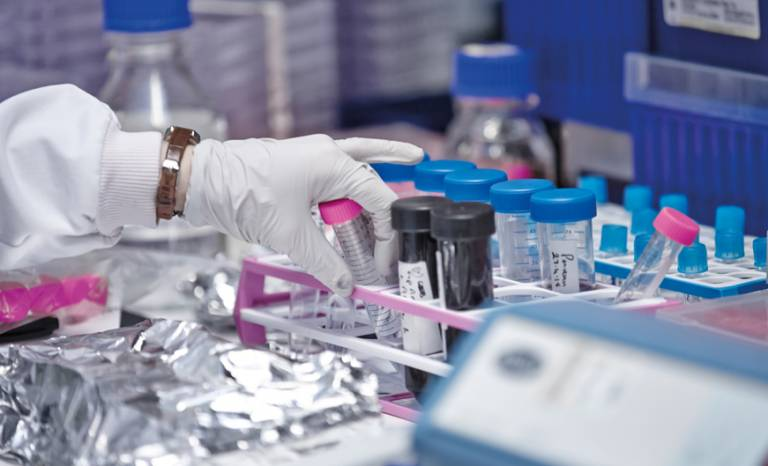
Scientists are trained to solve societal problems through innovative research. Various transferable skills are however needed to achieve the aim of any research. Aside critical thinking, project management and time management skills, ability to effectively communicate the findings of research to various stakeholders is of great importance to any research scientist.

Effective research findings communication entails conveying the findings of research to the appropriate audience using appropriate methods. For example, research findings can be communicated to professionals via conferences (local or international), scientific publications in peer-reviewed journals. Technical jargons are allowed and are easily understood by the professionals in such field of research. However, the above-aforementioned methods cannot be used to communicate research findings to the public except the findings are communicated in layman’s language devoid of technical jargons. Although scientists are encouraged to communicate their research findings to the public and professional colleagues as this will help to showcase the impact of their research activities, there is a growing misnomer in how scientists are doing this, especially in Nigeria.

In the last few years, headlines such as “Nigerian scientist develops so and so” is becoming rampant. For example, August 29, 2019, it was reported in one of the major newspapers in Nigeria that a “Nigerian scientist develops cancer drugs from African plants”. While this could be a laudable achievement, there is a misnomer in how it was reported. The original report was an interview with the female scientist in one of the Universities in Nigeria by a freelance journalist. The original interview that was held in Abuja was published on 23 August 2019 by a reputable foreign publishing firm. The title of the interview was “Developing cancer drugs from African plants” in which the research scientist discussed her research activities involving plants. A thorough review of the original interview shows that the scientist never claimed to have developed a drug to cure cancer but rather she stated that her research aims at:

“identifying potent, safe and effective anticancer agents from Nigerian plants. We have screened and confirmed the cytotoxic activities of extracts of the drumstick (Moringa oleifera) and soursop (Annona muricata) trees as well as the native Nigerian shrub Peristrophe bicalyculata on cervical carcinoma and fetal lung carcinoma cell lines. We also studied what anticancer mechanisms these plants exhibit. We found that these plants act in the body through” One of the studies involving P. bicalyculata was published in the Romanian Biotechnological Letters in 2013. It was concluded in the study that “methanolic ethylacetate fraction of Peristrophe bicalyculata is a potential source of chemotherapeutic agent”

Early August 2019, various news outlets in the country reported that a “Nigerian Research Fellow develops anti-tuberculosis metal drugs in India”. The Indian mentor to the Nigerian researcher stated in the original interview that “When we compared the metallodrugs with the original anti-TB drugs, the metallodrugs were more effective. We did an in-vitro test against bacteria. The metals we have chosen are non-harmful to human beings. Also, we found that of all the metallodrugs, the copper complex of ciprofloxacin is most effective”. One of the online news outlets stated that “she has been able to create medicine like ciprofloxacin HCl, ofloxacin, pyrazinamide and moxifloxacin HCl”. However, the Nigeria scientist never claimed to have “create ciprofloxacin HCL”.

Stages of drug discovery in brief

Drug discovery involves three major stages, namely, pre-clinical, clinical and post clinical.

The pre-clinical stage involves laboratory investigation (also known as in-vitro or test tube) of various sources of potential drug agents that could have inhibitory or destructive (anti-bacterial, anti-viral, anti-cancer, anti-malaria e.t.c) effects. It is the preliminary stage of the expensive drug discovery journal that could last for several years. While there could be a lot of success in this stage, this does not guarantee success at the next stage. Successful results at the stage then proceed to the second step, which is the clinical stage. Depending on the funding source(s), the confidentiality of the potential of a drug is usually maintained. Secondly, the results could be published in scientific journals to enable scrutiny by other research scientists who are expert in that field. This stage could also involve patenting of the results, especially the “novel active substance”.

The clinical stage involves testing of the positive results obtained in stage one on live animal or human subjects (in-vivo). This process aims to investigate the behaviour of the “potential drug” in animals or humans as the behaviour could be completely different from that of in-vitro. This stage also helps to identify any potential side effect of the “potential drug”. This stage cannot proceed without adequate approval of various government agencies. Once, the approval is obtained, then the clinical study (called trial) would be carried out in comparison with control. If successful after various trials, the last stage – post clinical sets in. The last stage is the public announcement of the “new drug”. The drug could then be mass-produced and made available to the public.

In conclusion, as could be seen from the brief explanation of how drugs are developed, the Nigerian scientist has not developed cancer drugs from African plants but rather, she has extracted and characterized (pre-clinical stage) active African plant phytochemicals that could be a potential cancer drug if successful at the other stages of drug development especially the clinical stage. The newspaper title would have been” Nigeria scientist identified active ingredients in African plants that could be a potential anti-cancer drug” of Nigeria scientist was successful in the first stage of developing a new potential anti-cancer drug. This will help avoid public confusion and misnomer in communicating research findings. While scientists are the best to describe and interpret the results of their research, the service of experienced research/science communicators could be employed. Newspaper outlets need to confirm directly from the original source(s) before publishing reports on “Nigerian scientist develops” so and so as this could be misleading the public and lastly, public communication of research findings could also be carried out through the researchers’ institutions.

African Commission Moves to Sue South Africa, First Batch of Nigerians Returning

0

The number of Nigerians who have decided to leave South Africa for Nigeria is increasing. In the wake of new wave of attacks that came with more people, weapons, and government support, more foreign nationals are left with no option other than run for their dear lives.

About 400 Nigerians are set to return in 3 days, while several others will come subsequently. The Sowetan Live, reported that protesters from various hostels in eastern Johannesburg have been unleashed into the streets with weapons, singing “foreigners must go” songs, and looting every shop within their reach.

The police said that at least one person has been killed as security forces try to stop the mob from looting shops belonging to migrants.

The recent attacks are believed to have been emboldened by South African Government’s support for the xenophobia. Notable government officials have been noticed excusing it. The former president, Thabo Mbeki told the press:

“Attacks in South Africa are not targeted at legitimate Nigerians but against Nigerian criminals.”

When summoned by the Nigerian Government, the South African high commissioner to Nigeria denied there is xenophobic attacks against Nigerians, and later claimed that it’s all because Nigerians are drug dealers.

Nigeria’s relationship with South Africa has deteriorated as a result of the recent events. And the Nigeria’s Government’s plan to repatriate willing Nigerians through volunteered plane of AirPeace Nigeria, is underway, as many Nigerians are already undergoing registration and other necessary documentations are being carried out.

The Nigerian Commissioner to South Africa, Kabiru Bala, said:

“We are documenting them. Those without travel documents, we shall provide them with emergency travel certificates.

“There are other governmental procedures that we must observe. Relevant government agencies in Nigeria must be informed and must be ready to receive the returnees.

“Hard work is now going on at High Commission and Consulate in this regard. As soon as all procedures and relevant protocols are observed, the return is assured and guaranteed.”

The first batch of returnees is expected to leave South Africa on Wednesday.

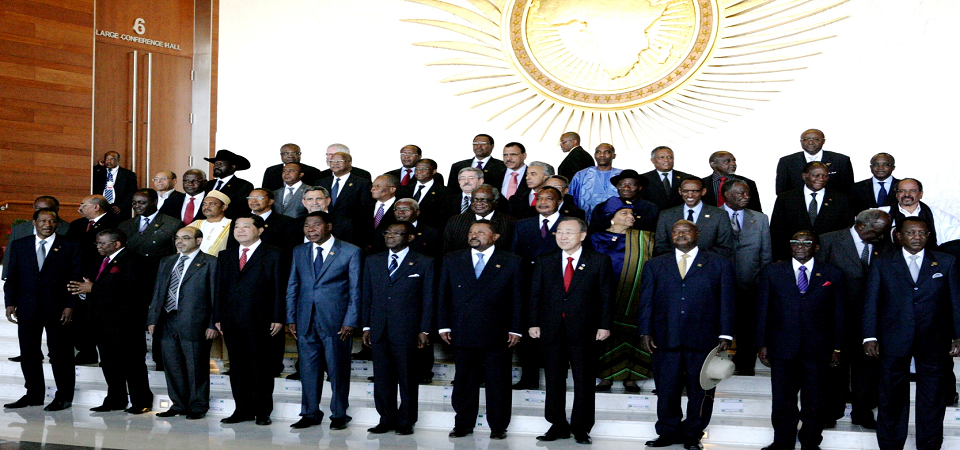
Meanwhile, the Socio-Economic Rights and Accountability Project (SERAP), has urged the African Commission to sue the South African Government for enabling the xenophobic attacks that has resulted in loss of many lives and property. The group asked the African Commission to press for $10 billion in damages.

The chairperson of the Commission, Ms Soyata Maiga, in response to the request, has agreed that the African Commission will take appropriate actions on SERAP’s request to get justice for the victims, which includes adequate compensation for the victims at the tune of $10 billion. In a response email to SERAP today, Maiga wrote:

“Thank you for your open letter requesting our commission to take action to court. I have just shared the letter with Ms Jamesina Essie King, the chair of the Working Group on Economic, Social and Cultural Rights, for follow up and appropriate actions.”

Ndubuisi Ekekwe To Deliver FUTO Alumni 2019 Biennial Lecture [Register, FREE]

2

On behalf of our elders and legends of our alumni community, and the junior ones coming after people in my range, I invite you to Federal University of Technology Owerri Alumni Biennial Lecture in Lagos next month. I will deliver the Keynote and my topic will be The Pursuit of Exponential Development.

Event: The Biennial Lecture

Date: Oct 24, 2019

Time: 10.00 AM

Venue: Nigeria Institute of International Affairs, Lagos

This is a free event – click to register here.


Jumia Reveals Its Future With New Job Postings – And It is Amazing

3

“We remain focused on all aspects of our growth strategy, particularly JumiaPay, as we continue to drive its usage in our markets,” Jumia noted in its quarterly report with U.S. SEC.

That was a very powerful observation because no ecommerce company in emerging markets like India and China has done well without  building a great paytech company. China’s Alibaba has Alipay, India’s Flipkart has PhonePe. Jumia needs to make JumiaPay big.

Did you notice a pattern? The PhonePe is the double play for FlipKart. Yes, no matter what is happening in the ecommerce space, the payment arm will be doing just fine [commissions on transactions are assured]. Also, it turns out that successful ecommerce companies like Alibaba (with Alipay) in emerging markets have always have payment units.

To execute this and build a really great fintech business, Jumia has jobs for loan officers. Simply, Jumia wants to build a Lending Business and through that structure will deepen its JumiaPay. This fintech will bring unification of payments, lending and transaction processing at scale.

Our Junior loan officer will assist the development of Jumia Lending in Kenya by presenting our solution to our sellers. He/she will be helping our sellers to apply for a loan, and with the help of the loan officer will review the data collected and the applications. The Junior loan officer will be part of the JumiaPay team in Kenya and work side by side with the loan officer.

Did you notice a parallel with OPay’s amalgam of services like ORide, OTrike, OBus, etc? Yes, Jumia does have properties it can use to stimulate  transactions volume for JumiaPay. Those include  logistics services, hotel and flight booking, food ordering and drink delivery platform.

I expect JumiaPay to become the most important component in the Jumia Group in coming years as it morphs all these pieces to feed transactions into it. Possibly, it can spin it off to give huge payday to its investors. Yes, the ecommerce can struggle but the paytech will win markets and territories – and profits. That makes this super-focus on payment a great move.

And as that happens, a double play is born at scale in Jumia.

Child Protection Suggestions

0

Every week we receive news of children molested by adults, teenagers or older children. Girls are not the only victims here, boys also suffer this. We read and hear stories of how minors were molested in their homes, schools, places of worship, neighbours’ homes, relatives’ homes, and so on. The painful thing is that the suspected culprits are usually people these victims trusted so much (this may be the reason they were not detected on time). These scary stories make it known to all of us that our children are not safe unless we take precautions to make them so.

I know a lot of people will say that the world is turning bad. But I’ll want to make it clear to all that because we hear a lot more about bad things these days doesn’t mean they weren’t happening before. The only reason we hear so much now is because social media brings news from different parts of the world to us.

Campaigns, seminars and conferences have been organised and carried out by concerned individuals and professional organisations to create awareness and address the problem of child abuse. Usually, these talks are organised for mothers alone, who are believed to be the ones in-charge of children upbringing. This might appear strategic but it has not really yielded the desired results because children still encounter this offence against their innocence.

There is need to reach out to as much parents and guardians as possible. There is no need to decide who the home-maker or home-keeper is in this case; every parent should be involved in keeping their children and wards safe.

I will suggest the following as ways children can be kept safe from molestations:

1. Parents should make their children understand that their private parts are still parts of their body and should therefore be talked about like they do any other part. I know that in Africa, it is a taboo to talk about your privates, but if calling them is the only way to keep them safe, then I don’t see any problem with that. However, to still respect our culture, I and my boys created euphemistic names for their privates so it doesn’t sound offensive when they say it outside. But some psychologists say that they should be free to call them whatever name(s) they are known by within the community so that they don’t easily get deceived. Whatever you decide, just ensure that your children are free to discuss every part of their body with you.

2. In as much as our children should feel free with raising issues related to their private parts, they should also be taught why those parts have to be covered and kept private. We usually start this training from birth. So, teach your child that no one should touch or see his or her private part and that he or she shouldn’t touch or see anybody else’ own. And you should also respect their privacy when they start demanding for it.

3. Handle your children personal needs yourself. Parents should not allow a third party to handle their children’s personal and private matters. For example, parents should make it their duties to bath their children and clean them up when they use the toilet. This way, that child will not allow anyone else come close. In fact, your child should know that he, mummy and daddy are the only ones that are allowed to see his privates.

4. We have to censor the movies our children watch, be it on television or on phones. Never be too tired to watch TV with your children. Please don’t say you won’t since they are watching cartoons because I have seen some cartoons that have pornographic and violent scenes. Censor whatever they have to watch to be sure they are good for their age.

5. Be mindful with what you do and say around your children. We teachers always treat cases of small children going into the toilets to ‘touch’ each other, or children using sexually suggestive words to their classmate(s). Actions like this always point towards bad parenting because they either learnt these things from watching their parents do it, or from seeing ‘uncle’ and ‘aunty’ do it. It can also be from movies they watch or from practicing it with someone else. So, let’s be careful with what we do before them thinking they don’t see or understand us. We might just be destroying their innocence.

6. We should be mindful of the visitors we bring home. A psychologist that gave us a talk while I was in Ibadan said that the research she carried out showed that most of these abusers are the older cousins, uncles and aunties that came to visit and stay for sometime. So, I’ll say, be mindful of who comes into your house. Don’t ever say that you know anybody so well because it takes only six months for someone to change his values. In a situation where you can’t help having someone in, and you have vulnerable children, be bold enough to create a boundary between your children and that person. For example, tell your children not to go into uncle’s room for anything, and let uncle know that he should stay away from your children’s room. Don’t worry about being called bad names, you are only protecting your own.

This also calls for private lesson tutors. Whether he or she is coming to your house or your child is going to his, please, keep your antennas working. Don’t over-trust anyone.

7. Keep watchful eyes on your wards. Yes, be their monitoring spirits. In fact, get a hawk eye and use it to follow them around. Pay close attention to them and monitor any changes you see. Also keep a sharp listening ear for their gossips, information can come from there. Trust me, you don’t want to take chances.

8. Be your children’s friend. You should feel free to discuss anything with them. Laugh with them, gist with them, play with them, keep their secrets, let them see you as their equal; in fact create no boundary with what they can tell you. This doesn’t mean you don’t chide them when they misbehave. If your children can discuss any topic with you without you flaring up or judging them, they will definitely tell you when that man or woman starts luring them in.

9. You should help your children build their self-esteem. These children need assurance every now and now. Tell them they are intelligent, beautiful, charming, wonderful, and so on. Give them hugs every now and then. Call then by their pet names. We Nigerians are not so good in this type of thing because we think they are unnecessary excesses. If we fail to show them deep affection and reassurance, someone else will do that. Let’s just pray that person wouldn’t be the wolf in sheep’s clothing.

10. I don’t think it is improper to teach your children to stay away from people’s homes when you are not there. Some neighbours may make you feel that you are training your children to become snobs because they wouldn’t relate openly with people around. Please remember, you have your reasons for doing that. Let your children learn not to go into or stay in people homes, or offices, alone. And don’t ask them to stay in a neighbour’s house when they come back from school because you won’t be home. Keep them in the school until you are done. Then pick them from there.

11. We parents should be the first people to teach our children about their sexuality. This comes in bits. Don’t ever say they are too young to learn. Teach them the one they need to learn at each stage. For example, my first son is just eight but he is already aware that there is a difference between a man and a woman. He already knows that a man grows up to marry a woman, who was his girlfriend (*eyes rolling*). Two weeks ago he asked when his voice will change to be like a man’s own, and when he will have hairs in his armpit. And just yesterday, he watched a cartoon named “The Star” and he asked whether human beings push babies out of the ‘bom-bom’ just like grandma goats do. We are gradually there, and I’m preparing for the harder questions when they start rolling in. I hope to be ready to answer them like they are no big deal. So, don’t delay any longer. The questions are there in their minds, waiting for the right time and way to be presented. Let them know that they can ask you and get their desired answers. But warn them not to discuss what you told them with strangers.

12. What about your house helps? These are another set of people that can do this harm to children. Please, let the job descriptions of your help be limited. It shouldn’t extend to your children’s private lives. On the same hand, if you bring in a help, try to protect him or her from possible abuse by any member of your household. It is quite inhuman that you know you have a rapist in the house and you bring in a house help without keeping a closer watch over her. Let’s treat others just as we want them to treat us.

13. Our schools should also monitor their teachers, workers and head teachers. The cases of defilements in schools, and places of worship, where children are supposed to be safe, are quite alarming. Schools should teach these children how to avoid situations like this. They should open Guidance and Counselling sections and encourage these children to visit them when they have challenges. Teachers should also be friendly to these children so that they can easily relay their problems to them. Then, any teacher or member of staff that is considered a threat to the students should be immediately relieved of his duty.

As for our places of worship, parents should accompany their children to churches, mosques, temples and synagogues. Deny them of any private visits to these places, or their priests, if you are not allowed in.

14. The law is lukewarm towards rapists and child-molesters. The demand for evidence and all those legal hullaballoo is making paedophiles and rapists get away unscathed. Our legal sector should help us protect our children.

15. I have always said that psychologists should be encouraged to face their primary duties. Every year a large number of them are graduated from the universities but they all end up practicing in other fields. These people are needed here because majority of these paedophiles seem to need some counselling.

16. More awareness needs to be created on how parents – both mothers and fathers – should protect their children’s innocence. For now, we can use the social media to do that. We need to spread the news. It may not reach many people at a time, but it will eventually get to the right ones.

No matter how busy you are, remember your children are your primary objectives. After all, they are the reasons we are hustling day and night. So, take care of them and preserve their innocence so they will be there for you when you need them most.

Happy School Resumption Week!