DD
MM
YYYY

PAGES

DD
MM
YYYY

spot_img

PAGES

Home Blog Page 6730

The Government Should Pay Pensioners At Due Time

0

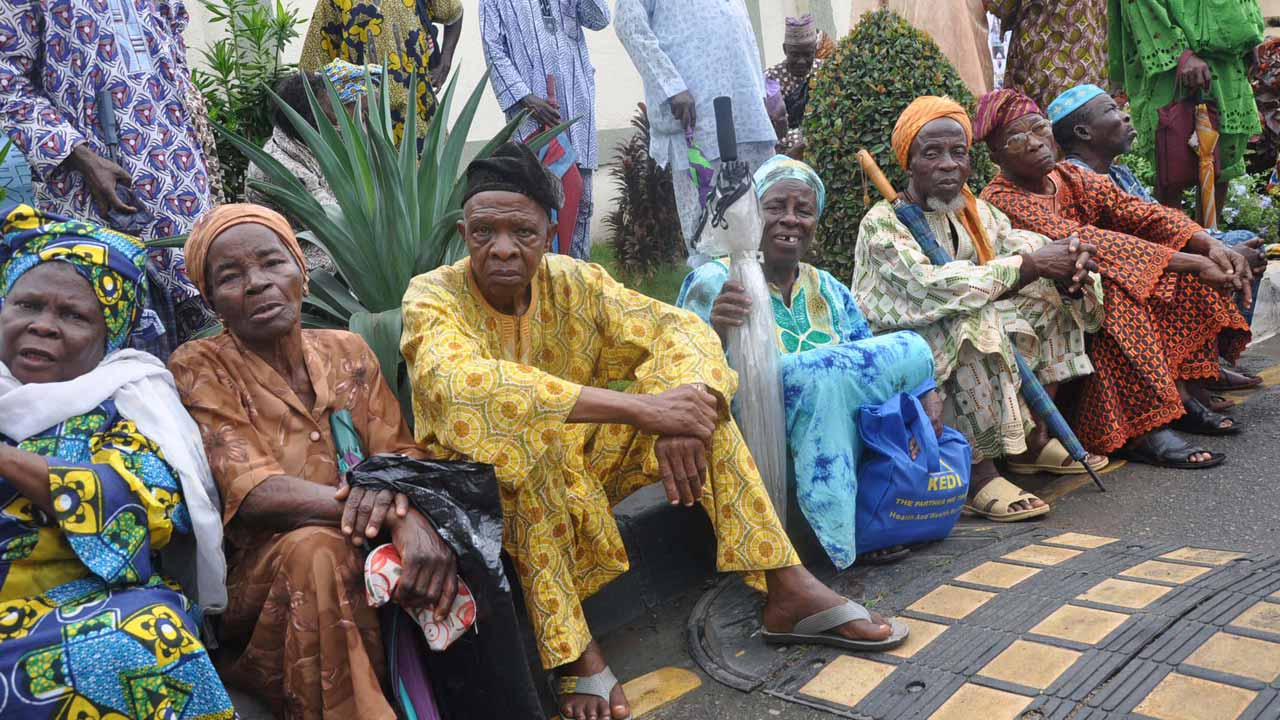
They say rest is sweet after labour. But it’s not the case with pensioners. Their struggle continues after retiring. What do we say about the government who owes retirees?

It’s a bit strange provided these people made a living from the peanuts they were paid. Many never enjoyed the fruit of their labour because they had to invest all their meager salaries on their child/children’s education.

Meaning, their best lives were lived serving the government in other to cater for their children. Of course, training their children also means they are building the nation. But why do they have to suffer to be paid their pension? It happens a lot in the country. It hits me from the bone to the marrow.

Come to think of it, these parents have a few years to live after retirement, so when will they be given their entitlement or gratuity. I know of many retirees who died while waiting for the pension or gratuity. Some who are still alive never got paid a dime. The process to go about it is so unbearable and frustrating.

I know many would say, didn’t they train their children? Perhaps, they should be taking care of them at old age.

Yes, they did train their children. But we all know the situation in the country, getting a job is an uphill battle. It takes a miracle to get one faster. Besides, it’s their sweat. They are entitled to it.

If past governments were given their entitlements and rights at the appropriate time, I wonder why the citizens should die before they receive theirs.

Hence, my plea to all the state governments in the 36 states of Nigeria, pay the retirees. Give them the reward for their labour.

All fingers are not equal. Some of these people rely solely on the little monthly pension. Not all got a big paycheck during service, so they could not build an empire from it or start a side business that could sustain them.

Why starve them?

Why put them into avoidable depression?

I hope this article will get across to the governments.

God bless Nigeria!

Nation Building: Towards Economic Success and Improved Quality of Life for Nigerians

0

Improving confidence in Nigeria can be broadly categorized into the aspects of the people and foreign investors. This paper aims to highlight the drastic decline in Nigerians’ level of trust in the government, and the lack of investor confidence in establishing businesses in Nigeria. Building upon recent statistics, the work answers the question: ‘How do we improve Nigeria’s foreign reputation and local patriotism?’ It also highlights the common problems faced and suggests viable solutions to them. Finally, recommendations are put forward in the essay to achieve economic success and improved quality of life. 

1.0 INTRODUCTION

Confidence, according to the Longman dictionary, is the feeling of trusting someone to work well and produce positive results. It is the quality of trust. Nation building in this context refers not to a newly created state, but, according to the Department of Arts and Culture SA, to the process whereby a society of people with diverse origins, histories, languages, cultures and religions come together within the boundaries of a sovereign state upholding a unified legal dispensation, working towards eradicating the divisions/ injustices of the past and fostering unity promoting National consciousness for its citizens. Inclusive economic growth, as defined by Thangvel Palanivel, is ensuring that we reach the most vulnerable people of the society in all sectors. The basis of inclusive economic growth is the equality of opportunity and participation in growth by all, with a special focus on the working poor and the unemployed (Paloma, 2015).

2.0 THE CONFIDENCE OF THE PEOPLE

Trust is indispensable in building a solid nation. It is, as stated in the concept note, the social glue binding everyone together irrespective of all the differences. What are adhesives known for? If used in crafting an artwork, a masterpiece well put together is produced. The good thing about trust is that it moves in hand with patriotism.  A critical observation of the Nigerian society will reveal the lack of trust Nigerians exhibit in different scopes.

Lamentably, people do not trust the quality of goods made in Nigeria but would gladly spend a fortune purchasing foreign products. No matter how hard the sellers try to convince, the buyers always deem them inferior. This attitude discourages local production of goods and industrialization.  As at March 2019, Nigeria spends N1,002 billion on importation (News Feed, Trading economics). On the aspect of the military, the former Inspector general of police, Suleiman Abba, has publicly asserted that the major problem facing the police is lack of public trust (Punch, 2018). The police are notable for receiving bribe on the highways and even on the police stations, part of the reason why some arbitrators take laws into their hands and set criminals ablaze in public scenes- jungle justice. During elections, the electorates turn sick of political apathy. They believe the transiting government is no different from the incoming one because politicians have betrayed the people’s  trust in the past. They don’t take the politicians by their manifestos anymore and they don’t expect too much luxury from them either. The Sentimental RUGA bill is a typical example of a grave distrust playing out. The numerous cases are limited in this work due to want of space. A lop-sided confidence cannot effectively guarantee economic success and that leads us to the next aspect.

3.0 FOREIGN INVESTORS’ CONFIDENCE 

It is not enough achieving the largest economy in Africa and a GDP of 2.01%; we need to attract the foreign direct investment (FDI) to boost the GDP in a geometrical progression. Nigeria’s FDI fell from N532.63 billion to N379.84 billion in 2017, most being in the telecom and energy sectors (ThisDay, 2018). On equity investment, between 2013 and 2018, the numbers flattened to $139 million this year -2019 from $2.9 billion in 2013 (Rapoza, 2019). Investors face poor electricity, inconsistent polices, instability in exchange rates, infrastructural dearth, security issues, legal disputes, security issues, bureaucracy, corruption,  an unfavorable tax system, harsh regulations and so on. All these hurt investments from flourishing in Nigeria. Mambilla hydroelectric dam project would have been Nigeria’s biggest hydropower plant capable of generating 3050MW of power; had a dispute not ensued between Sunrise and Nigeria which resulted in the later facing a fine of $2.3billion over breach of contract. A similar battle is ongoing in the London court with an energy project P&ID. This kind of relationship scares investors away from the shores of Nigeria. 

4.0 ENHANCING THE CONFIDENCE: SOLUTIONS AND RECOMMENDATIONS 

4.1 For improved quality of life for Nigerians: what can be done?

4.1.1 Operation regain-the-trust campaign:  A campaign should be introduced from the end of security agencies. The objective of the campaign would be divided into three goals: To publicize the intention of the campaign, to keep to the promises and to impress the people, in that order. The Nigerian army had tried this previously with the South east communities in 2017. They army discovered the people didn’t trust them so they engaged in corporate social responsibilities to win them back but unfortunately, that too was misinterpreted and alarm raised nation wide (Onwuka, 2017). But my trust campaign proposal will take a different turn. Here, the order of the  goals will be dutifully followed, the people will be impressed more by displaying humanitarian services like cleaning the streets, repainting old facilities and renovating community properties, etc. A huge impact will be made and it will be like a reunion between a mother and her many children. 

4.1.2 Practical civil-education: The values of trust, cooperation, and confidence are core topics in the compulsory subject, civic education taught in our schools but more needs to be done in order to drive the point home. We could add practical sessions and field works from which  the observations would be converted to numbers that can as well be used in plotting graphs at the end. The activities will make the concept more substantial to the learners. There is no better time to start the reformation than from a young generation. 

4.1.3 Strict sanctions and public penaltiesWith a standing rule of politicians making realizable promises and fulfilling the contents of their manifestos, any defaulter should be publicly disciplined. Not limited to that, fund looters, fake news mongers, and corrupt officers should be made to undergo very strict sanctions. As we witnessed in Buhari’s government, the proactive measures taken made more defaulters to return the stolen funds willingly. This could be an effective solution  when the media is not biased. 

4.1.4 Tackling it from the source: What stained the peoples’ trust?:This question is critical. The concept note of this essay used the word ‘rebuilding’ meaning that a house of trust once existed. Truly, poverty, violence, unemployment, high mortality rate, insecurity has hardened the hearts of the people. Hopelessness and sadness is prevailing the nation. Generally, the government can rebuild the people’s trust by fostering development in the nation. Provide jobs for the people, ensure their utmost security, protect their interests and show them that you care. That’s the best way to restore the trust. 

4.2 Towards Economic Success: what is the way forward?

4.2.1 Tax reduction and minimized regulations: David Bruckmeier, a sub-Saharan business intelligence analyst at London-based political risk firm AKE group has identified an unfavorable tax system as one of the things that discourages investors (Rapoza 2019). A good example is the MTN fine of N1.04 trillion which was reduced to N330 billon  (NCC 2019). Such kind of alarming amount is enough to make the seat too hot for investors and eventually show them the way out. Therefore I recommend that the taxation scheme should be readjusted and the numerous regulations under which investors must operate should be modified to accommodate them comfortably; keeping in mind the limit of the luxury. 

4.2.2 End/prevent all disputes: Fighting with our fortune is a foolish adventure. Nigeria has continued to lose more and more money by engaging in disputes with P&ID, Sunrise, etc. We cannot build our nation by wasting the money that could be channeled into productive projects. Friendliness and hospitality are the rules of the game. The government should end all the disputes and prevent future occurrences. That energy should be utilized in creating deeper economic relationships with the international communities in similarity to the Nigeria-China ties.

4.2.3 Role of the federal ministry: In Nigeria, there are 2 ministries at the fore front of attracting foreign investors – the Ministry for Foreign Affairs and the Ministry of Industry, Trade and Investment. To observe that the word ‘foreign investor’ is missing among the six Nigerian foreign policies is really something to call out for. The ministry of foreign affairs needs to include it and form a special liaison with the trade and investment ministry on that note. The Nigerian investment  promotion commission (NIPC) which is an arm under the ministry of trade and investment should prioritize the foreign investors on their scale of preferences and put up attractive incitement on the media to boost their confidence. 

5.0 CONCLUSION

Nigeria is perturbed by several economic challenges, but in order to maintain a sustainable and competitive nation that will promote inclusive economic growth, we need to take one step at a time. The essay has outlined viable solutions that can enhance the confidence in Nigeria and beyond.  There is therefore a need for co-operation from the government, the citizens, the media, the organizations and everyone without exception to take appropriate action. We can maximize our potentials for a blessed Nigeria. The glue is trust.

REFERENCES

Abba, S. (2018). Lack of public trust, major problem facing the police. News feed. Retrieved from http://www.punchng.com

Achebe, C. (2012). Interview: what Nigeria means to me. The guardian. Retrieved from http://www.netng.com

Department of arts and culture South Africa (2019).  “What is nation building?” Frequently asked questions. Retrieved from http://www.dac.gov.za

Ekekwe, N. (2019). Forum: stop the attacks in Lagos. Blog post. Retrieved from https://www.tekedia.com

Mannir, D.A. (2010). View point: what it means to be a Nigerian. Focus on Africa magazine. Retrieved from http://www.bbc.com

National bureau of statistics (2019). Nigeria gross domestic product report first quarter 2019. PDF document. Retrieved from http://www.nigerianstat.gov.ng

National communications commission (2019). NCC: MTN has paid N275billion sim infraction fine. Press release. Media team. Retrieved from http://www.ncc.gov.ng

Nigerian economic summit group (2019). Daily morning news and updates. www.nesgroup.org

Onwuka, A. (2017). Opinion: Why the army vaccination rumour caused panic. News feed. Retrieved from http://www.punchng.com

Oxford advanced learners’ dictionary 8th edition.

Paloma, D. (2015). Our perspective: what does inclusive economic growth actually mean in practice? A blog post. Retrieved from http:// www.undp.org

Rapoza, K. (2019). Nigeria has become Africa’s money losing machine. Retrieved from http://www.forbes.com

The Importance of ‘Summer’ Schools to Nigerians

0

Most of us in this country would have noticed that within this month of August, a lot of school-aged children were seen going up and down the streets, with their school bags hanging on their backs. In fact, if you happen to be at home within the week, you will enjoy the quietness that comes between 9am to 12pm when most of the children within the vicinity have gone for their ‘summer’ lessons.

When I first heard about summer schools and classes in Nigeria, I was confused because we don’t have any season called ‘summer’ here. But someone told me that why that name was given to it was because we hold summer classes in Nigeria within the same time some countries experience their summer; and that most of our people travel out of the country to enjoy that season with them. It doesn’t make sense to me either. But since they already call it Summer School, Summer Classes, Summer Lessons, Summer Camps and so on, we have to do that too.

I’ve seen a lot of people that kick against this holiday programme for children. The major argument presented by this group is that these children need to rest their brains during the holiday. Some also said that parents need that period to bond well with their children. These points are all correct, but then, there are still some reasons why ‘Summer Schools’ are still important in our society.

I will try to group these points according to its importance to the schools, the parents and the children.

A. For the Schools

1. Customer Attraction and Retention: This is the major reason most schools engage in this programme. If you have noticed, new schools start off with summer classes, and some of them make it free of charge.

Now if you are wondering how these schools attract customers through summer programmes, I will tell you. The first thing they do is that they either charge very low fees for the classes, or they make it free of charge. The essence of this is that the parents of the children within that vicinity will be attracted by the cheapness of the programme. When they finally bring these people together, the teachers will then do the rest by making students from other schools feel that the teachers in their schools weren’t teaching them enough.

How do they do this? They bring up those topics that are usually avoided by teachers in Nigerian schools (though they are in the curriculum) and then teach them deeply. A good example of such topics are phonetics and phonology in the English language (most of our English teachers avoid them like the plague).

As for how they retain their customers, since they are running that programme, their students living nearby will have no reason to go to another school (and face the same tactics used by this school).

So, when these children go home, they will complain to their parents about how Teacher A and Teacher B in their current schools are not good and so they want to go to School B, where the teachers are very good. Now, I’ve leaked our secrets.

One more thing, schools that have beautiful surroundings and good facilities use the summer programme to exhibit them and bring in new customers.

2. Extra Income for Schools: Schools that collect fees for summer lessons obtain extra income for carrying out some projects. For example, some schools use the income from summer lessons to pay August salaries, repaint the school buildings or buy textbooks that will be resold to the students at resumption.

3. Extra Income for the Teachers: Teachers that partake in summer classes are always paid for it. This is a way of obtaining the extra fund they need. Some of them may even engage some of the students in private tutorials and generate more income from there.

B. For the Parents

a. Keeping the Children Safe: Some working parents are not comfortable with leaving their children alone at home or with some relatives and friends they couldn’t vouch for. Summer schools therefore provide the best alternative for them.

b. Keeping the Children Busy: Everybody knows that children are always busy. They must definitely find something to do. If they are not well monitored, they can either destroy something or hurt themselves. So to decide that they should sit back home and rest their brains may not really be wise (unless there is an adult left with them). Anyway, summer class is one way to keep these children busy within the long vacation.

C. For the Children

a. Networking: If you think these children don’t want to network, then I’ll suggest that you have a rethink. To be honest, the major reason these young ones want to go to summer classes is to meet with old friends, make new ones and play their hearts out. You need to spend some time with them in their classes to understand what I’m saying here.

b. Preparing for the Next Class: This doesn’t mean that every child that went for a summer class is going to learn everything he/she will meet in the next class as the term resumes. But, one good thing about the summer classes is that they give these students insights into what they will meet within their first month in their new classes. This has a way of making the students have more confidence as they go back to school.

I, however, have some suggestions to make towards how these schools should be run. The first thing I will like to point out is that the number of hours spent on academic activities should be reduced. In fact, if it is possible, let some days be free of any academic works. As a matter of fact, these children need time to play and socialise under the watchful eyes of the teachers. Everything shouldn’t be about academics.

Secondly, summer schools in Nigeria should find a way to inculcate extracurricular activities into their programmes. I know that this means that extra charges have to be made, but let them work something out first. Why I’m suggesting this is that this may be the only time these children will have to try out some of their talents.

Next is that, if it will be convenient, some schools can organise morning and evening classes. Maybe different programmes will be held during the morning classes and another set during the evening classes. This will allow those who couldn’t make the morning classes to come for the evening ones.

Finally, our public schools should be encouraged to start up summer schools. I noticed that their school compounds are used during this ‘summer’ period by some private individuals who organise their own programmes and tutorials. Let them follow the trend to make their students feel as special as those from private schools. The holiday is too long for these students to sit down at home while their parents are out there pursuing their careers.

Most summer classes have ended right now, while the rest will end next week. It will be advisable for those schools that missed this year’s own to start now to plan for the one of next year. They have a lot to benefit from it.

Quantum Denomination

0

Some years ago, while in the University, I went to buy a tin of tomato paste which cost N20 per tin and I knew that the cost of a dozen was N200. After about a month, I found out that the tin cost N30 and a dozen cost N290. I was surprised to see that the cost of the tin had increased from N20 to N30 that is, 50% increase. I asked the retailer the reason she did not sell at N25, she replied that she wouldn’t make any gain which we calculated together by dividing N290 by 12. Then I remember that if small denominations such as 1Kobo, 5Kobo, 10Kobo, 50Kobo, N1 etc were available, she would have at least sold at N27 or N28 per tin and would still make her gain. Then this term “Quantum Denomination” sprung in my heart.

The term was actually borrowed from physics. In physics, a quantum is the minimum amount of any physical entity (physical property) involved in an interaction.

I used the term metaphorically to express the effect of the small denominations on our daily business transaction..

Then in the University, I wanted to write an article titled “Quantum Denomination” but I couldn’t articulate my thoughts.

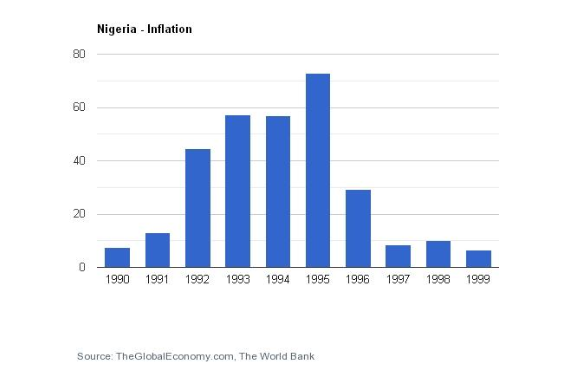
It reminds me of the rate at which inflation has eaten up into the Nigerian economy that even the N5 and N10 notes are losing their purchasing power and the confidence people have in them.

Though there are other causes of inflation e.g. Excess Demand over supply, Rising Cost of production, inflation Imported and Exchange rate but the rate at which the non-availability of these denominations has fuelled inflation in Nigeria cannot be undermined. They are like those small things which have the greatest effect. 

The worst effect of inflation is the erosion of value of a country’s currency. We see the Italian lira lost its value and the German Dutch once did. Others are poverty, higher borrowing cost, increased cost of living, fall in purchasing power and standard of living.

The value of Nigerian currency dwindled rapidly into the verge of entering the fourth republic. So, before the fourth republic, the people of Nigeria had lost confidence in the denominations as the purchasing power of those denominations had become naught especially in the Southern Nigeria. 

While other CBN Governors administered around the problem, the coming in of Professor Charles Soludo in 2004 saw the need to reawaken the people’s confidence in the denominations. He started the resuscitation exercise with the coins especially the N1 and the N2. The effort was unfruitful as the people refused to accept the denominations in their transactions.

The governor also tried to enforce acceptability through the banking sector, but the people have the will. The people would rather leave their transaction balances than to have the denominations with them because they had the premonition that no one would accept from them.

This went on for some months that the government gave up its effort to resuscitate the denominations.

What was the mistake the Government made?

In 2012, I carried out a mini research on why these denominations were still being accepted in countries which were even advanced than ours and had been for years before us.

I realized that in those countries the effort to maintain the small denominations is inclusive at every government level. The government ensured that every price of goods is quoted with their small denominations and even in their decimals. In the US, you will see that a particular good is sold at $92.30 etc. The same thing happens in other developed countries.

I realized that though the Central Bank Management then tried to resuscitate the denominations but enforcement in one sector or through one sector made it not to see the light of the day. The CBN focused using the monetary policy and within the monetary economy neglecting the real/product economy where the real activities of exchange occurs.

That is, the resuscitation can not only be done by one unit of the economy alone, all hands must be on deck.

The Effect of Extinction of the “Quantum Denomination”

The extinction of the denominations has made the cost of goods increased sky-rocketedly.

Prices have been known to be sticky according to Maynard Keynes, the father of Macroeconomics. That is, it will always go up as the economy increases its volume of transactions in goods and services. Inflation is bound to happen but the rate at which it increases is the problem.

For instance, between 2015 and 2016 when the price of a bag of sachet water containing 20 pieces of sachet was N50 naira, retailers were able to sell at the rate of N5 per sachet making between 80% to 100% profit depending of number of wastage. But when the price of a bag of sachet water went up to about N70 naira, the retailers could have increased by just N1 or N2 naira. But due to non availability and non-acceptability of these small denominations, we had the retailers increased the price to N10 per sachet. That is a wholesome 100% increase. We see how the non availability and non acceptance of these quantum denominations fuel inflation at high rate.

Solution

  1. The policy makers should make effort to resuscitate the use of these denominations if we are serious about curbing high rate of inflation in Nigeria. The inflation data often given by NBS are computed using the CPI (Consumer Price Index, which uses basic goods and services consume by people). That is, the effect is high on consumers whose large percentage of their income goes into the purchase of basic food items
  2. Government can collaborate with supermarkets and its agencies to give incentives to those people who purchase items using the denominations.
  3. However, the effort has to be at all government level.

And I believe my analysis will give some insights into providing additional solutions

Ndubuisi Ekekwe Will Speak In Sterling Bank’s Agriculture Summit – Ag, The $1 Trillion Sector

2

I will be speaking in Sterling Bank Plc’s Agriculture Summit Africa. The Summit’s objective is to create a platform for both private and public investors to discuss the opportunities that exist in Africa’s Agricultural sector and how to harness the same for development and wealth creation. The event holds 5th to 6th of September in Hilton Abuja.

In a statement, the bank said that the summit themed, “Agriculture – Your Piece of The Trillion-Dollar Economy,” seeks actualization of the $1 trillion African agribusiness economy dream by 2030.”

Group Head, Agric Finance and Solid Minerals at Sterling Bank, Bukola Awosanya, said “Agriculture productivity in Africa is low and a source of concern in the sector that account for 60 per cent of the continent’s labour force and 75 per cent of its domestic trade. And the creation of a single African market with over 1.2 billion people through the Continental Free Trade Area (AfCFTA) treaty is not without possible adverse impact on the sector’s growth which calls for a pan-African agriculture summit. “Sterling Bank has been at the forefront of Nigeria’s agricultural transformation agenda which seeks commercialization at scale nationwide through focus on value chains where the country has comparative advantage. This market-led transformation driven by strategic partnerships is stimulating investment, creating new jobs, wealth and food security. It is imperative that this same model is adopted across the 54 countries that now make up the single African market to improve productivity, guarantee food security and ensure a future of shared prosperity for all Africans,” Awosanya said.

Africa is entering a golden era of agricultural production where technology will drive productivity. We expect continuous improvement in crop yield over the next few years. Everyone knows that fixing agriculture will fix Africa because more than 65% of Africa’s working population is employed in agriculture. So, it has the most catalytic impacts possible in raising millions of people out of poverty. That $1 trillion market will surely arrive before 2030.