DD
MM
YYYY

PAGES

DD
MM
YYYY

spot_img

PAGES

Home Blog Page 6732

The US Increases Visa Fees For Nigerians (Full Statement)

0

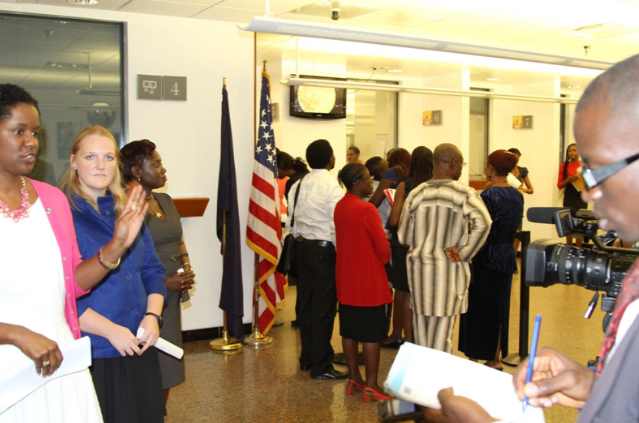
The US Embassy Nigeria, in a stunning move, has announced increased visa application fees for Nigerians, effective August 29. In the wake of time when Nigerians are feeling ripped off by visa fees, hoping there could be downward review, especially for the US, it’s not good news.

This afternoon, the US Mission in Nigeria issued a statement on that. Below is the full statement and table indicating the exact amount changed in each in each category of visa application.

REVISED VISA RECIPROCITY SCHEDULE FOR NIGERIA: Effective worldwide on 29 August, Nigerian citizens will be required to pay a visa issuance fee, or reciprocity fee, for all approved applications for nonimmigrant visas in B, F, H1B, I, L, and R visa classifications. The reciprocity fee will be charged in addition to the nonimmigrant visa application fee, also known as the MRV fee, which all applicants pay at the time of application. Nigerian citizens whose applications for a nonimmigrant visa are denied will not be charged the new reciprocity fee. Both reciprocity and MRV fees are non-refundable, and their amounts vary based on visa classification.

U.S. law requires U.S. visa fees and validity periods to be based on the treatment afforded to U.S. citizens by foreign governments, insofar as possible. Visa issuance fees are implemented under the principle of reciprocity: when a foreign government imposes additional visa fees on U.S. citizens, the United States will impose reciprocal fees on citizens of that country for similar types of visas. Nationals of a number of countries worldwide are currently required to pay this type of fee after their nonimmigrant visa application is approved.

The total cost for a U.S. citizen to obtain a visa to Nigeria is currently higher than the total cost for a Nigerian to obtain a comparable visa to the United States. The new reciprocity fee for Nigerian citizens is meant to eliminate that cost difference.

Since early 2018, the U.S. government has engaged the Nigerian government to request that the Nigerian government change the fees charged to U.S. citizens for certain visa categories. After eighteen months of review and consultations, the government of Nigeria has not changed its fee structure for U.S. citizen visa applicants, requiring the U.S. Department of State to enact new reciprocity fees in accordance with our visa laws.

The reciprocity fee will be required for all Nigerian citizens worldwide, regardless of where they are applying for a nonimmigrant visa to the United States. The reciprocity fee is required for each visa that is issued, which means both adults and minors whose visa applications are approved will be charged the reciprocity fee. The fee can only be paid at the U.S. Embassy or the U.S. Consulate General. The reciprocity fee cannot be paid at banks or any other location.

Below is the table of the complete reciprocity visa fees and their classifications.

What this means is that Nigerians will be paying about (nonrefundable) N100, 000 per visa application. In the light of recent event involving 80 Nigerians who were arrested in the US for wire fraud, many believe that the timing is suggesting reprisal and indicating stricter visa measures to discourage visa application.

But there is so much revenue in it for the US to make this notion true. There is also only one way to find out what the true intention is: if the Nigerian Government reverses its visa application fees to commiserate the original rates, and the US Government fails to do the same. Meanwhile, it’s burden that has been placed on many Nigerian dreams.

Class – Reciprocity fee

B1 – $110

B2 – $110

B1/B2 – $110

F1 – $110

F2 – $110

H1B/H4 -$180

I – $210

L1/ L2 – $303

R1 / R2 – $80
Nigeria’s Electricity Supply Goes Premium

0

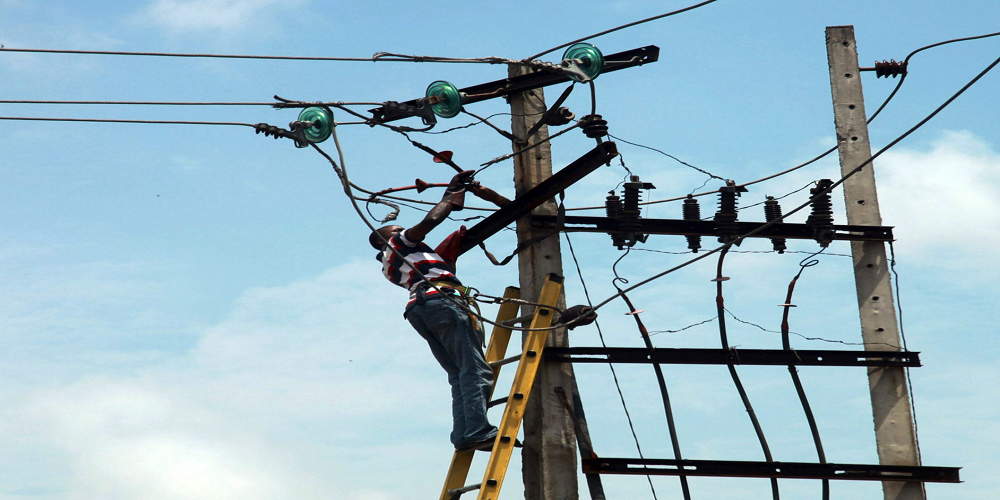
The premium power supply initiative, a.k.a “willing seller, willing buyer” has kicked off in some highbrow areas of Lagos. The initiative was introduced into the power sector as a remedy to the constant dispute between DisCos and consumers over pricing. The National Electricity Regulatory Commission (NERC), has for years, disapproved tariff increment requests by DisCos. Stating that the available power supply cannot justify any increment, and incessant complaints by consumers was becoming a burden as weighty as providing adequate power supply.

Since 2013, when the power sector was privatized, NERC has failed to review electricity pricing six times, under the Multi Year Tariff Order (MYTO). A situation that DisCos claim has cost the power sector N1.4 trillion. But NERC believed if the loss doesn’t go the way of DisCos, it would definitely go the way of consumers. It was upon this dilemma that the “willing seller, willing buyer” initiative was birthed, and many places in Lagos are embracing the idea delightfully.

On August 7, BusinessDay reported that Ikoyi, Victoria Island and Banana Island are already in a deal with Eko Distribution Company (EKDC), which has seen their power supply moved to 20 – 22 hours per day, at a cost of around N45 kilowatt per hour.

Two days ago, TheCable reported that Magodo Estate has been enjoying 23 to 24 hours’ power supply from Ikeja Distribution Company (IKDC), using the premium plan.

The EKDC, in an interview explained what the premium power supply is all about and how it works.

“Premium power supply of electricity is the purchase of electricity beyond the existing standards with guaranteed performance levels.

“The initiative differentiates itself from the grid supply as it bypasses the feeder and grid limitations associated with regular power supply.

“it is aimed at providing exclusive services to identified customers who are willing to pay for a stable electricity supply at premium price.” The DisCo said.

What this means is that the DisCos will source alternate power generation that is not connected to the National Grid. In that way, they will be able to meet the premium supply demand without tampering with the supply quota of the regular consumers.

For instance, IKDC is sourcing for 100MW from Egbin Power Plant which is independent from the National Grid. While the DisCo maintains the infrastructure, consumers are expected to sign a Power Purchase Agreement, that will enable the DisCos to provide them with Meters through the Meters Asset Provider (MAPs) service.

Many consumers seem so delighted with the development, saying it’s better to pay N45 per kilowatt than to pay N85-N95 per kWh for generators which besides noise pollution causes environmental hazards.

The strategy will create an avenue for DisCos to make up for losses being incurred as a result of regulatory policies that have for years discouraged upward review of tariff. It will also enable checks and balances that have been missing because of infrastructural deficiencies. NERC has not been able to query DisCos because of these challenges, but that is about to change with the new premium power supply initiative.

How To Answer A Cheap But Technical Interview Question

1

Picture yourself in an interview that has over 1000 applicants. You definitely know you must be on top of your game to stand a chance of getting through to the next stage. 

Let’s agree you have prepared well enough and you are standing in front of the Recruiter/Hiring Manager, then here comes the big question for you: “Can you tell me about your weaknesses.”

The next thing that runs through your mind is – ”How do you tell someone that you want to impress about the areas that you really are crap at?”

Most people (job seekers especially) often make up something that honestly sounds really fake.

Typical examples: “I work too hard”, “I care too much ”, “I can work under pressure.”

So how do you answer this question and impress the interviewer?

Well for starters – don’t say  “weaknesses”, rather call them your “development needs”. It is much more positive – don’t you think?

And then talk about your development needs.

 Your development needs could be:

  • The need to learn how to communicate more effectively
  • To learn how to say no more often
  • Or to learn how to influence upwards
     

Whatever your development needs are – write them down and then write out what you are doing to develop them.

So here is a little text that could work:

“I prefer to call weaknesses – development needs.”

“One of the areas that I am working on developing is my management skills and helping my team to be more productive. I am doing this by reading books (mention some of the books you are reading) and I have commenced a course (mention as well) in developing myself in this area.”

Isn’t this better than saying, “A weakness I have is that – I am a bad manager”?

An interview is always a place to show your ability and convince the Hiring Manager that you are the right fit for the available role. Don’t be blown away by the cheap question. You only need to be smart while answering some cheap but technical questions.

The Myth of Starting Small

0
Digital Startups

You are always told to start small. You are also told not to stay small. But we need to face the reality of Starting small. Does everyone has the capability of starting small? How will starting small help me become big? What are the things that need to be put in place before I can start small?

The fact is, not everyone that started small and ended up big, some are still small and may still remain small, some failed while starting small and they gave up while some started small and ended up big.

If you were to ask me whether starting small is meant for everyone, my answer would me be an ambiguous one, Yes and No. Before giving my reason for this ambiguous answer, let’s take a look at what it means to start small.

To an average Nigerian, starting small means to start from scratch, starting from nothing or little, starting when you had no recognition from anyone, starting when no one believes in you, that is starting small. Which is correct.

But I would like to define starting small as starting with the basics with the mindset to develop a strong foundation to be big from the basics. An understanding of the basic gives you a clear focus on how to become big.

For instance, a solid foundation in mathematics would help you to understand further mathematics, so you have to understand mathematics very well which is the perquisite before you can perform well in further mathematics.

So back to my ambiguous answer on starting small.

Is starting small is not meant for everyone?

No- because without a basic understanding of what is required of you to start small you might find it difficult to end up big. And for the other answer, Yes- because you need to learn how to start small before you can become big. So what are the myth we need to address for starting small.

  • Just start anyhow.

The issue about this myth is,it is not complete. Don’t just start anyhow, start with a learning mindset because you will encounter challenges that you will need to go back to learn some new skills, read to gain some insight and also you might need to be mentored. So don’t just start anyhow, start anyhow to learn.

  • 2.Start small so that you can start making money.

A lot lot people start a business just to make profit. Hello, nobody is saying that making a profit is bad, infant it is actually important to make a profit. But that should not be your focus. Your focus should be to bring and add value, so from the value you are adding you would make profit. So, instead of starting to make profit why not start to add value.

  • You don’t need to have some basic knowledge /skills to start.

Starting without an idea of the skill or knowledge about the business is disastrous. Some business might require no skill at all to start but you might need to have some fundamental basic knowledge such as understanding the marketplace, know your target audience, the needs of the customers and so on. Even if started small without any of these (skills or knowledge),You might need to acquire some knowledge or skill when you are making it big. You can see you need to have some basics.

  • Start by doing what you love.

Yes, it is a good idea to start a business or go into something you love. But the problem with this statement is not all what you love would bring value to the customers.

For example, I love to read. Yes it a good thing to be a bookworm but what value is it bringing to the market, potential customers, etc. The only way it can be valuable is to make what I love valuable. Therefore, I have to develop myself more by reading more,then make it valuable by teaching, public speaking, writing(blogs,articles,etc), becoming an author, etc, which would bring value to my target customers.

So don’t start with what you love doing, make what you love valuable.

Whatever business you doing or career you are into, you need to start small before you can be big. But don’t start small without having all the basic requirements or you might end up small.

Nigeria’s Bike Hailing Service I Would Pay For

3

The news of Gokada’s sudden (but not unforeseen) shutdown due to ‘Increased competition, regulatory hurdles, and operational issues’ is quite profound. It really got me thinking, who is Gokada’s competition? Almost everyone would say ORide and Max Okada but I beg to differ.

I believe the biggest challenge and competition to Gokada and indeed the bike hailing business is the traditional commercial motorcycle system that they are trying to disrupt. While these are still early days, it is important that the key players evaluate and re-evaluate their value proposition. Simply put, bike hailing is not yet a ‘must have’ but still ‘nice to have solution.’ While ORide is recording impressive numbers which are driven through its aggressive marketing campaigns, its sight seems a full logistics enabler with the launch of its Obus and OTrike business. But on its own, ORide and indeed the others might not be the next big thing a lot of people are making them out to be. My reasons are as follows:

  • Size of The Commercial Motorcycle Market: Assuming Lagos has a total of 10,000 commercial motorcycles (which is a very conservative figure) and each makes say N3000 per day. That translates to N30million per day and over 10 billion naira a year commercial motorcycles make in Lagos. This dwarfs the revenue and funds the bike hailing companies currently have. When you also factor the low barrier to entry to get a commercial motorcycle, you realize that the number can only increase. Though the barrier to entry for becoming a driver for bike hailing is lower than getting a commercial motorcycle, it does not offer the same level of freedom and control the commercial drivers have. 
  • No Clear Advantage over Existing Model: Uber, Taxify and Kobo360 have very clear advantages over the existing systems they met. With Uber, you could finally get air conditioned high grade cars to ride at a price that was cheaper than the old rickety Kabu Kabu and Yellow Taxis.

It is a no-brainer; those who use the cab hailing services for the 1st time can see the clear advantages. The same cannot be said for bike hailing. What real advantages do they bring to the table? Affordability? Not so much without promos. Comfort? I would say no, most normal Okadas are actually more comfortable than the ones Gokada and co-provide. Access? Bike hailing companies are still mostly limited to the same routes regular Okadas ply. Speed of service? They are actually worse off than commercial motorcycles in this. Courtesy of drivers? Perhaps, but a lot of regular Okada riders are ok in courtesy. Safety? This is their biggest selling point, but do we have data to back their claims up? If the difference is not astronomical, it would not matter much to their market, the average working class Nigerian.

In summary, I do not think what the bike hailing companies are offering is really solving a hard problem for people. What I believe they have now is a novelty (with the 3 competing for the very small albeit growing market that buys into it) but it can evolve into something much more. For instance, there are 2 features I am craving for which would make bike hailing a must use for me.  

The first is access to restricted areas. One of the ironies of Lagos state is that a lot of properties in high brow residential estates are being used for commercial purposes. From Dolphin estate, to Lekki phase 1, the number of offices and workers therein is remarkable. However, these estates do not allow traditional commercial motorcycles and buses. This presents a blue ocean market for the bike hailing business: serving the workers in such estates. If they can strike a deal with each estate (which should not be too difficult if they pay a sizable fee and have some guarantees on safety and security) they can run a service irresistible to those workers where they pick them up from their houses and drop them off in front of their offices inside the estate and vice versa thereby avoiding the early morning and evening traffic Lagos is notorious for. A person staying in Ketu could wake up at 6:30am and still make it to work before 8:00am in Lekki. There are thousands of workers in Lagos that want this!!!

The 2nd is a subscription based service model. Imagine a subscription service where users pay, let’s say, N3000 to enjoy benefits such as month long discounts, free rides, increased access to routes such as estates, Etc. This would be a viable path to sustained profitability as it ensures a steady source of income, helping segment the user base into regular and premium customers. The company can then focus on growing the customer base for each category of users. 

A monthly subscription would be a great way to build brand loyalty by ensuring that bike hailing companies don’t need to resort to crazy timed promos to get people to use their app for a season. The users can be at ease knowing they would be paying, for example, N500 as against say N2000 from Ikeja to Victoria Island every day for the foreseeable future. This would in turn increased daily engagement for the app. 

These are just some of the new features that would win me and a lot of people over because they address a pressing problem I cannot solve otherwise. That I think should be what Bike hailing should be all about.