DD
MM
YYYY

PAGES

DD
MM
YYYY

spot_img

PAGES

Home Blog Page 6740

‘Mai Bulala’: The Custodian of Corporal Punishments in Nigerian Schools

0

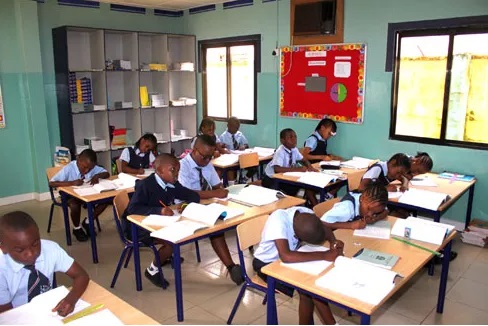
Those of us that had one or two things to do with schools in the Northern part of Nigeria will be familiar with this term. ‘Mai Bulala’ is an Hausa term that literarily means the ‘Master of Whip’. He is a professional flogger. I encountered one that earns his living by flogging students during my NYSC in Zamfara State. I was short of words when I saw him in action. I wanted to plead on behalf of the students receiving his ‘service’ that early morning but other corpers and some teachers told me to stay away so that I don’t receive my own. Chai! I wept for those boys.

But let’s be honest with ourselves, Mai Bulala exists in almost every school in Nigeria. We see them in all public schools. The only difference here is that the one I met in Zamfara State was employed to mete out corporal punishments on students, and nothing more. But if you look around, you will see that every school, or almost all schools, have that one teacher that students are taken to because he knows ‘how to flog’ students very well. So don’t think that only the northerners have this problem I’m about to point out here.

Before you wonder if I am among those people that ‘spoil the child and spare the rod’ hear me out first. I believe in people being held responsible for their actions, but I believe there are better ways of doing that other than hitting the person with a whip, or even with bare hands. One of the people that advocated this view used to say that the best way to raise children is by ‘making them feel your presence and not your punishment’. That statement never made sense to me until I put it into practice. It may not be easy initially but with time you fall into it.

There are many disadvantages to meting out corporal punishment to children and teenagers. I am happy that some schools are beginning to banish it because they have seen how ineffective and destructive it could be, in the long run. I will try to mention some of its commonest destructive effects on the receivers.

1. School Dropout: When a student knows what is waiting for him at school, he will decide to sit back home. Most of these students that have been labelled ‘stubborn’ and the school authority believe that they could ‘tame’ them with whip. Because of this incessant flogging, these students may decide to change schools or withdraw completely from education pursuit.

2. Development of Aggressive Personality: We have heard so much about students that attack their teachers who punished them as well as their fellow students that directly or indirectly contributed to it. This attitude is just a reaction of the students to the aggressive characters they were exposed to. Naturally, exposure to much aggression breeds aggression.

3. Phobia and Disillusionment with the Education System: Learning entails that the learner makes mistakes and should be allowed to learn from them without being unnecessarily punished. Our teachers don’t always remember this when dealing with their students’ mistakes. People always find it hilarious whenever I tell them that the only teaching aid we had in those days were whips, but that was true. I mean, just look at this – if you were given a class work on Mathematics and you failed any of them … anyway, just wait for Mai Bulala. So we were always tensed up each time it was Mathematics class. No wonder we didn’t do well in Maths then (at least most of us didn’t do well in Maths because we didn’t like it, or rather were afraid of it). Please, don’t say it happened in those days because it still happens now.

Attitudes like this could make the student see themselves as incapable of learning. It could make students develop phobia or hatred for a teacher or a subject. It can even make the students hate going to school entirely.

4. Loss of Talent and Personalities: One of the worst things this type of punishment does to students is stripping them of their personalities and natural talents. This is one of the reasons Nigerian education system could not identify and harness their students’ talents until they are old enough to identify them by themselves, that is if they have not taken up somebody else’s personality.

5. Inconsistent Personality: Some resilient students who could not withstand the shock and pain of corporal punishments adopt different personalities to pull them through different situations that may warrant corporal punishments. This is why someone may be ‘nice’ to a particular teacher, ‘naughty’ to another teacher, ‘docile’ to his parents and then to his fellow students, he is ‘terror’. You can then ask yourself how to define this person.

6. Physical Injury: Apart from the bruises and cuts left behind by the whips, a little miscalculation by the flogger can send the whip on the delicate parts of the body where it will leave a permanent damage. A lot of teachers have been arrested for causing injuries to their students during this act. We have also heard of those that killed their students. So, what then is the gain of giving out punishment and getting jailed for it?

These are just some of the side effects of the use of whip to correct students in our schools. These effects can show in different ways and forms. I understand that schools use corporal punishments because they see it as the easier and faster way to correct students and deter others from committing the same offence. But, looking at the destructive effects it causes in the long run, they may have to consider other ways of correcting students that are equally effective but with little or no destructive effects. The ones I can vouch for include:

  •  Establishing a Guidance and Counselling Unit: These are the only people in our education system that kick against corporal punishment. It will be worthy to note that the counselling should also be extended to teachers.
  • Close Contact between School Management and Parents: Some schools only think of involving parents in school matters when there is need for funding. The only way I have seen Nigerian schools connecting with parents is through the PTA meetings. But then, PTA meeting isn’t enough. The school management should get parents involved in most of the school activities. The school should be like a family involving staff, students and their parents. Students rarely misbehave in schools when they know their parents are just a stone-throw away – except in the case of parents that encourage unruly behaviours in their children (story for another day).
  • Constant Communication between the Teachers and their Students’ Parents: I personally encourage teachers to feel free to contact me on any matter concerning my children, just as I contact them when I want to learn some things. The effect of this is that a synergy is built between teachers and parents, and they both have one common goal – the students.
  •  Better Relationship between Teachers and Students: Students should see their teachers as someone they could trust. One of the advantages of this is that the students easily open up to their teachers, who they tell their challenges and these teachers in turn advise them properly. I can tell you that most of those obstinate students have teachers they confide in and are therefore docile to.
  •  Appropriate Teaching Methods for Different Classes: This is one thing some teachers don’t really know. Teachers need to stop being rigid with their teaching method. They have to apply the best one for each class. For example, it may not work if a teacher asks SS 3 male students to stand up and read something that is written on the board, or to repeat something he said (especially if some girls are around). This is because they are likely not going to respond (it has something to do with their age). So the teacher had to device a good method to do his teaching (and be ready to tell jokes and receive some). If not, the students may respond negatively and be called unruly.
  • Emotional Intelligence Training for Teachers: When I was the head teacher of a school, I used to tell my fellow teachers to look upon everything that happened within the school as a job. I usually tell them that no child came to the school because they wanted to insult their teachers. So they shouldn’t treat any student’s misbehaviour personally. Teachers need to learn how to control their emotions because they are handling human beings, not lower animals. Any slightest mistake could lead to something grave.
  • Suspension: This is usually employed when the school wants to disband a group that is disrupting school activities. The usual thing here is to invite parents of these concerned students, relay their children’s activities to them, and then ask them to take them home for further counselling. In a situation like this, it is always more effective to allow the person that is the ring leader, or the group nucleus, to stay home longer. This will ensure that the students do not regroup when they return.
  • Disciplinary Panel: This panel is usually made of different teachers, who come together to objectively listen to the student’s side of the story before deciding on the right punishment to be meted out. The good thing about the presence of this panel in every school is that teachers do not bother giving out punishments to students. All they have to do is refer any unruly behaviour to this panel and let the student argue his or her way out of his/her due punishment.
  • Detention: The best time to detain a student is during games or short break. No child wants to miss them, so they behave. While I was still teaching in primary and secondary schools, any student that I detain will be made to write a comprehensive report during that detention period on why he was receiving the punishment. Trust me, the students prefer to sit down and watch others play to writing that long essay.

Ok, nobody said that being a teacher is easy. But corporal punishment shouldn’t be seen as the way to make it easier. Apart from unprofessional, corporal punishment is harmful to our students, our teachers and the society.
The US Increases Visa Fees For Nigerians (Full Statement)

0

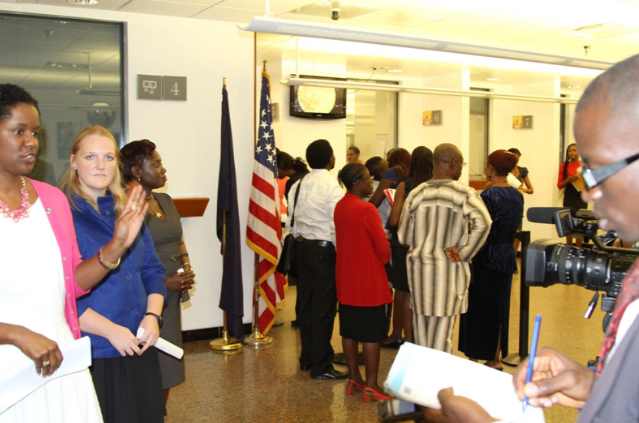
The US Embassy Nigeria, in a stunning move, has announced increased visa application fees for Nigerians, effective August 29. In the wake of time when Nigerians are feeling ripped off by visa fees, hoping there could be downward review, especially for the US, it’s not good news.

This afternoon, the US Mission in Nigeria issued a statement on that. Below is the full statement and table indicating the exact amount changed in each in each category of visa application.

REVISED VISA RECIPROCITY SCHEDULE FOR NIGERIA: Effective worldwide on 29 August, Nigerian citizens will be required to pay a visa issuance fee, or reciprocity fee, for all approved applications for nonimmigrant visas in B, F, H1B, I, L, and R visa classifications. The reciprocity fee will be charged in addition to the nonimmigrant visa application fee, also known as the MRV fee, which all applicants pay at the time of application. Nigerian citizens whose applications for a nonimmigrant visa are denied will not be charged the new reciprocity fee. Both reciprocity and MRV fees are non-refundable, and their amounts vary based on visa classification.

U.S. law requires U.S. visa fees and validity periods to be based on the treatment afforded to U.S. citizens by foreign governments, insofar as possible. Visa issuance fees are implemented under the principle of reciprocity: when a foreign government imposes additional visa fees on U.S. citizens, the United States will impose reciprocal fees on citizens of that country for similar types of visas. Nationals of a number of countries worldwide are currently required to pay this type of fee after their nonimmigrant visa application is approved.

The total cost for a U.S. citizen to obtain a visa to Nigeria is currently higher than the total cost for a Nigerian to obtain a comparable visa to the United States. The new reciprocity fee for Nigerian citizens is meant to eliminate that cost difference.

Since early 2018, the U.S. government has engaged the Nigerian government to request that the Nigerian government change the fees charged to U.S. citizens for certain visa categories. After eighteen months of review and consultations, the government of Nigeria has not changed its fee structure for U.S. citizen visa applicants, requiring the U.S. Department of State to enact new reciprocity fees in accordance with our visa laws.

The reciprocity fee will be required for all Nigerian citizens worldwide, regardless of where they are applying for a nonimmigrant visa to the United States. The reciprocity fee is required for each visa that is issued, which means both adults and minors whose visa applications are approved will be charged the reciprocity fee. The fee can only be paid at the U.S. Embassy or the U.S. Consulate General. The reciprocity fee cannot be paid at banks or any other location.

Below is the table of the complete reciprocity visa fees and their classifications.

What this means is that Nigerians will be paying about (nonrefundable) N100, 000 per visa application. In the light of recent event involving 80 Nigerians who were arrested in the US for wire fraud, many believe that the timing is suggesting reprisal and indicating stricter visa measures to discourage visa application.

But there is so much revenue in it for the US to make this notion true. There is also only one way to find out what the true intention is: if the Nigerian Government reverses its visa application fees to commiserate the original rates, and the US Government fails to do the same. Meanwhile, it’s burden that has been placed on many Nigerian dreams.

Class – Reciprocity fee

B1 – $110

B2 – $110

B1/B2 – $110

F1 – $110

F2 – $110

H1B/H4 -$180

I – $210

L1/ L2 – $303

R1 / R2 – $80

Nigeria’s Electricity Supply Goes Premium

0

The premium power supply initiative, a.k.a “willing seller, willing buyer” has kicked off in some highbrow areas of Lagos. The initiative was introduced into the power sector as a remedy to the constant dispute between DisCos and consumers over pricing. The National Electricity Regulatory Commission (NERC), has for years, disapproved tariff increment requests by DisCos. Stating that the available power supply cannot justify any increment, and incessant complaints by consumers was becoming a burden as weighty as providing adequate power supply.

Since 2013, when the power sector was privatized, NERC has failed to review electricity pricing six times, under the Multi Year Tariff Order (MYTO). A situation that DisCos claim has cost the power sector N1.4 trillion. But NERC believed if the loss doesn’t go the way of DisCos, it would definitely go the way of consumers. It was upon this dilemma that the “willing seller, willing buyer” initiative was birthed, and many places in Lagos are embracing the idea delightfully.

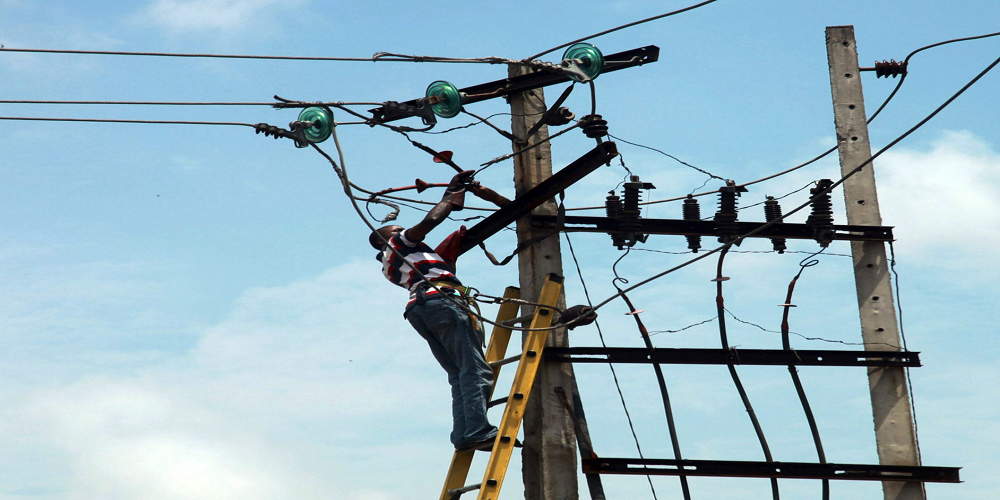
On August 7, BusinessDay reported that Ikoyi, Victoria Island and Banana Island are already in a deal with Eko Distribution Company (EKDC), which has seen their power supply moved to 20 – 22 hours per day, at a cost of around N45 kilowatt per hour.

Two days ago, TheCable reported that Magodo Estate has been enjoying 23 to 24 hours’ power supply from Ikeja Distribution Company (IKDC), using the premium plan.

The EKDC, in an interview explained what the premium power supply is all about and how it works.

“Premium power supply of electricity is the purchase of electricity beyond the existing standards with guaranteed performance levels.

“The initiative differentiates itself from the grid supply as it bypasses the feeder and grid limitations associated with regular power supply.

“it is aimed at providing exclusive services to identified customers who are willing to pay for a stable electricity supply at premium price.” The DisCo said.

What this means is that the DisCos will source alternate power generation that is not connected to the National Grid. In that way, they will be able to meet the premium supply demand without tampering with the supply quota of the regular consumers.

For instance, IKDC is sourcing for 100MW from Egbin Power Plant which is independent from the National Grid. While the DisCo maintains the infrastructure, consumers are expected to sign a Power Purchase Agreement, that will enable the DisCos to provide them with Meters through the Meters Asset Provider (MAPs) service.

Many consumers seem so delighted with the development, saying it’s better to pay N45 per kilowatt than to pay N85-N95 per kWh for generators which besides noise pollution causes environmental hazards.

The strategy will create an avenue for DisCos to make up for losses being incurred as a result of regulatory policies that have for years discouraged upward review of tariff. It will also enable checks and balances that have been missing because of infrastructural deficiencies. NERC has not been able to query DisCos because of these challenges, but that is about to change with the new premium power supply initiative.

How To Answer A Cheap But Technical Interview Question

1

Picture yourself in an interview that has over 1000 applicants. You definitely know you must be on top of your game to stand a chance of getting through to the next stage. 

Let’s agree you have prepared well enough and you are standing in front of the Recruiter/Hiring Manager, then here comes the big question for you: “Can you tell me about your weaknesses.”

The next thing that runs through your mind is – ”How do you tell someone that you want to impress about the areas that you really are crap at?”

Most people (job seekers especially) often make up something that honestly sounds really fake.

Typical examples: “I work too hard”, “I care too much ”, “I can work under pressure.”

So how do you answer this question and impress the interviewer?

Well for starters – don’t say  “weaknesses”, rather call them your “development needs”. It is much more positive – don’t you think?

And then talk about your development needs.

 Your development needs could be:

  • The need to learn how to communicate more effectively
  • To learn how to say no more often
  • Or to learn how to influence upwards
     

Whatever your development needs are – write them down and then write out what you are doing to develop them.

So here is a little text that could work:

“I prefer to call weaknesses – development needs.”

“One of the areas that I am working on developing is my management skills and helping my team to be more productive. I am doing this by reading books (mention some of the books you are reading) and I have commenced a course (mention as well) in developing myself in this area.”

Isn’t this better than saying, “A weakness I have is that – I am a bad manager”?

An interview is always a place to show your ability and convince the Hiring Manager that you are the right fit for the available role. Don’t be blown away by the cheap question. You only need to be smart while answering some cheap but technical questions.

The Myth of Starting Small

0
Digital Startups

You are always told to start small. You are also told not to stay small. But we need to face the reality of Starting small. Does everyone has the capability of starting small? How will starting small help me become big? What are the things that need to be put in place before I can start small?

The fact is, not everyone that started small and ended up big, some are still small and may still remain small, some failed while starting small and they gave up while some started small and ended up big.

If you were to ask me whether starting small is meant for everyone, my answer would me be an ambiguous one, Yes and No. Before giving my reason for this ambiguous answer, let’s take a look at what it means to start small.

To an average Nigerian, starting small means to start from scratch, starting from nothing or little, starting when you had no recognition from anyone, starting when no one believes in you, that is starting small. Which is correct.

But I would like to define starting small as starting with the basics with the mindset to develop a strong foundation to be big from the basics. An understanding of the basic gives you a clear focus on how to become big.

For instance, a solid foundation in mathematics would help you to understand further mathematics, so you have to understand mathematics very well which is the perquisite before you can perform well in further mathematics.

So back to my ambiguous answer on starting small.

Is starting small is not meant for everyone?

No- because without a basic understanding of what is required of you to start small you might find it difficult to end up big. And for the other answer, Yes- because you need to learn how to start small before you can become big. So what are the myth we need to address for starting small.

  • Just start anyhow.

The issue about this myth is,it is not complete. Don’t just start anyhow, start with a learning mindset because you will encounter challenges that you will need to go back to learn some new skills, read to gain some insight and also you might need to be mentored. So don’t just start anyhow, start anyhow to learn.

  • 2.Start small so that you can start making money.

A lot lot people start a business just to make profit. Hello, nobody is saying that making a profit is bad, infant it is actually important to make a profit. But that should not be your focus. Your focus should be to bring and add value, so from the value you are adding you would make profit. So, instead of starting to make profit why not start to add value.

  • You don’t need to have some basic knowledge /skills to start.

Starting without an idea of the skill or knowledge about the business is disastrous. Some business might require no skill at all to start but you might need to have some fundamental basic knowledge such as understanding the marketplace, know your target audience, the needs of the customers and so on. Even if started small without any of these (skills or knowledge),You might need to acquire some knowledge or skill when you are making it big. You can see you need to have some basics.

  • Start by doing what you love.

Yes, it is a good idea to start a business or go into something you love. But the problem with this statement is not all what you love would bring value to the customers.

For example, I love to read. Yes it a good thing to be a bookworm but what value is it bringing to the market, potential customers, etc. The only way it can be valuable is to make what I love valuable. Therefore, I have to develop myself more by reading more,then make it valuable by teaching, public speaking, writing(blogs,articles,etc), becoming an author, etc, which would bring value to my target customers.

So don’t start with what you love doing, make what you love valuable.

Whatever business you doing or career you are into, you need to start small before you can be big. But don’t start small without having all the basic requirements or you might end up small.