Most parts of the world have been pushing to cage Huwaei
The groundwork for fifth generation technology, better known as 5G is taking unprecedented sweep through the US. With Huawei out of the way, information technology giants, Ericsson is leading the charge. A faster internet future depends so much on 5G, and Ericsson is laying the groundwork to see that it happens as soon as possible.
Towers have been the most challenging aspect of the network establishment, but some climbers have been contacted to install the towers and equip them with 5G network service equipment.
Ericcson who currently has 350, 000 towers across the U.S is expected to expand the numbers to 1 million in the next four years in anticipation of the service subscription boom.
The head of networks at Ericsson North America, Kevin Zvokel, said:
“Towers Climbers are really the backbone behind the network. They climb infrastructures, whether it’s rooftops or major towers, and they actually assemble and construct the equipment on top of these cell towers that we all use every day.”
Jordan Robinson, a tower technician associate and Marine Corps Veteran has already been hired by Ericsson, to install and plant the needed devices in hard to reach areas.
Ericsson said Global data traffic is expected to surge by the end of 2023, by eight times. And 20% of the global population is expected to be covered by 5G, with 1 billion 5G subscriptions, 9 billion mobile subscriptions, and 20 billion connected internet related devices. So there is a real need for more efficient technologies to contain the boom.
Information technology experts have been optimistic and excited that the future of data exchange will become faster when there is technology to transfer data hundreds or a thousand times faster.
The CEO of Dell, Michael Dell, told CNBC: “I think this is going to unlock a wave of innovative and new business models across all sorts of industries.
“The amount of data created, the amount of infrastructure required, and then the need to be able to analyze that data in real time and turn it into useful insights and actions is a tremendous opportunity.”
Another big character who has thrown weight on 5G’s advancement is the U.S president Donald Trump. In a 5G held an event at the White House in April, Trump said that the technology and job it will introduce are not things to be lax about, “it’s a must win.”
The 5G network is expected to provide 3 million jobs among other opportunities in the American labor market. With companies like Verizon planning to expand its 5G market base with 30 more this year, the excitement to take a giant leap from 4G to 5G is real.
Although the Chinese company Huawei claims that the U.S doesn’t use the most 5G advanced technology, Ericsson is trying to refute the claim with the way it’s tackling the most difficult part of the job, setting up the towers.
Huawei was sanctioned due to the security lapses detected on its devices, believed to be deliberately designed to enable Chinese Government surveillance.
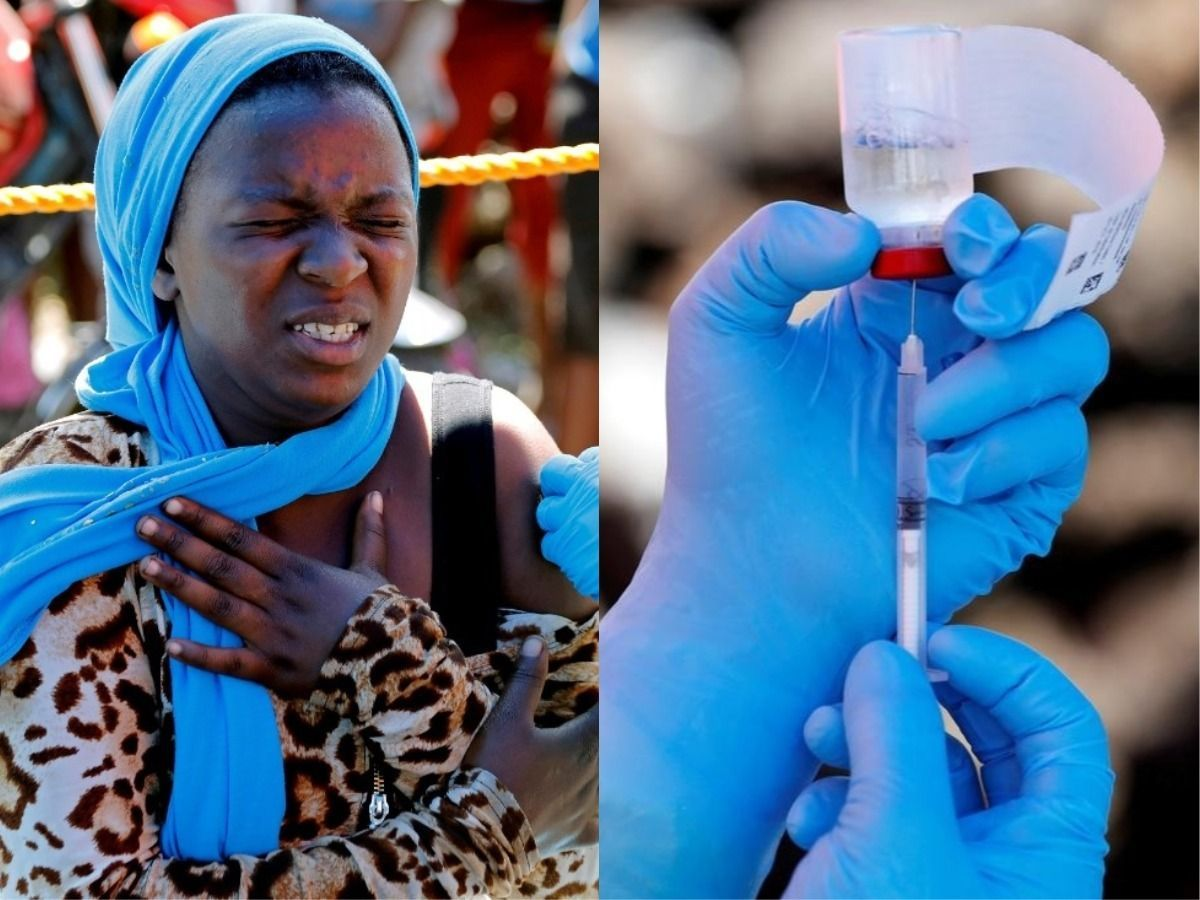
The battle against Ebola seems to be getting close to its end with humans claiming victory. Two experimental drugs have become so effective that the virus is no longer considered a “without cure” disease. The experimental drugs, REGN-EB3 and mAb-114, are monoclonal antibodies that are infused intravenously into the blood.
REGN-EB3 is produced by Regeneron Pharmaceuticals in Tarrytown, New York. The mAb-114 was developed by the National Institute of Health, and the production license was issued to Ridgeback Biotherapeutics of Miami. They have both outperformed other 4 antibodies that were put on trial in November last year, and trumped the viral epidemic to the degree of hope.
According to Newyork Times, Antibodies are Y-shaped proteins normally made by the immune system that clamp onto the outer shells of viral particles, preventing it from entering cells. Scientists concocted the big Y shaped proteins to recognize the specific shapes of invading bacteria and viruses and then recruit the immune cells to attack those pathogens.
The experimental trial involving 499 patients proved more effective than the others previously used starting in 2014, when the disease swept through West Africa. The mortality rate for REGN-EB3 was 29% and mAb-114 was 34%. That leaves a high contrast gap between them and the previous two drugs – Zmapp which had a mortality rate of 49%, and Remdesivir which had 53%.
The new drugs even proved more effective on patients whose cases were treated early. There was a significant drop in mortality rate for the two drugs. For REGN-EB3, it was 6% and for mAb-114, it was 11%. A record that has triggered unprecedented excitement in the medical research world. The director of the National Institute of Allergy and Infectious Diseases (NIAID), Dr. Anthony S Fauci, who is also one of the researchers leading the trial said:
“It means we do have now what looks like treatments for a disease which, not too long ago, we really had no therapeutic approach at all.”
Hence, there is resonating difference between now and then that predicts total cure of the disease in the near future.
The high percentage of success recorded in this trial plays another vital role in curbing the future outbreak ebola. Some Congolese villages have not had it cordial with health officials, especially when they are terrified by their own vulnerability. There is rumor that ebola does not exist, that what is happening is more like a biological weapon being tested on African soil. This has led to some concealing their infected family members and attacking medical teams.
They don’t know what to believe, and they don’t know who to trust. A problem that could only be solved by a high rate of success in combating the virus. If about 90% of recorded cases get cured, the people will know what to believe and who to trust.
On August 13 2019, two people cured using the experimental drugs were discharged from a treatment center in Goma, DRC, and were allowed to go back to their families. And it’s a testimony.
The director general of Congo’s National Institute for Biomedical Research (NIBR), Dr. Jean-Jacques Muyembe, who has dedicated his entire adult life fighting ebola, and led the research team that discovered the cure couldn’t hold back his excitement. He said:
“I spent four decades of my life thinking how to treat patients with ebola virus. So this is the achievement of my life.
“From now on, we will no longer say that ebola is incurable.”
The win seems so personal to him because it will change the attitude of his people toward health workers and the virus itself.
“These advances will help save thousands of lives.
“Now we can say that 90% can come out of treatment cured, they will start believing it and developing trust.” He added
Dr. Muyembe was among the team that first discovered ebola in 1976, in DRC (then Zaire). He has since then dedicated his life to finding a cure to the virus. The 77 years old feels fulfilled that his efforts have paid off after so many years, and it has also ignited the hope that the future can reckon with.
The makers of the REGN-EB3 and mAb-114 have promised that the drugs will be made available swiftly in enough quantities.
The focus of this year’s World Health Day is achieving Universal Health Coverage through primary health care. Universal health coverage is WHO’s number one goal. Key to achieving it is ensuring that everyone can obtain the care they need, when they need it, right in the heart of the community.
Progress is being made in countries in all regions of the world, but I have observed that this is not the case in Nigeria. Millions of Nigerians still do not have access at all to health care. Millions more are forced to choose between healthcare and other daily expenses such as food, clothing and even a home.
According to the World Health Organization, primary health care is a critical foundation for universal health coverage. It can address the vast majority of people’s health needs throughout their lives. Universal health coverage (UHC) is about ensuring all people can get quality health services, where and when they need them, without suffering financial hardship.
No one should have to choose between good health and other life necessities.
UHC is key to people and nations’ health and well-being.
Everyone can play a part in the path to UHC, by taking part in a UHC conversation.
Too many Nigerians are currently missing out on health coverage; “Universal” in UHC means “for all”, without discrimination, leaving no one behind. Everyone everywhere has a right to benefit from health services they need without falling into poverty when using them. We must begin to make UHC a priority agenda in Nigeria.
I am calling on the Nigerian Government to take UHC very seriously and provide the very basic healthcare needs of the populace. UHC is everyone’s business, this includes the leaders, health care workers, patient’s etc, and we should all work together and make our voices to be heard.
Here are some facts and figures about the state of UHC today (Source: WHO)
Incurring catastrophic expenses for health care is a global problem. In richer countries in Europe, Latin America and parts of Asia, which have achieved high levels of access to health services, increasing numbers of people are spending at least 10 percent of their household budgets on out-of-pocket health expenses.
UHC means that all people and communities receive the health services they need without suffering financial hardship. UHC enables everyone to access the services that address the most important causes of disease and death and ensures that the quality of those services is good enough to improve the health of the people who receive them.
UHC is not just about health care and financing the health system of a country. It encompasses all components of the health system: systems and healthcare providers that deliver health services to people, health facilities and communications networks, health technologies, information systems, quality assurance mechanisms and governance and legislation.
Can community health care workers address the Primary healthcare Crises in Nigeria?
‘Community health –care workers know the traditions, cultures and practices of their communities, making them indispensable especially during an outbreak of emergencies’ (WHO).
With the reduction in the number of doctors in Nigeria today, it is high time the health ministry makes use of ad hoc staff to fill in the gap in suitable aspects of primary care provision.
In many developed countries of the world who can boast of a good number of primary health care centers per geographical area/population, they still make use of physician associates, health visitors, advanced nurse practitioners, pharmacist independent prescribers, nurse advisors, and health care assistants etc to fill in the gap.
In Nigeria we do not have enough medical practitioners per population or geographical area. This is the time to train and retrain more community health care workers to help in managing long term conditions, reduction in childhood illnesses due to lack of immunization.
Trained birth attendants will also help reduce maternal mortality and community nursing care will reduce infant mortality.
Studies have been conducted in some developing countries and there is enormous evidence to portray the importance of integrating lay health workers in primary health care force.
I believe this is a step in the right direction if we must provide universal health coverage in Nigeria.
The systematic integration of community health workers at a large scale could be an effective and a rapidly implementable approach to the current primary care workload crisis we have in Nigeria.
I feel there is a sense of urgency for this; and I’m calling on all stakeholders to work together towards achieving UHC in Nigeria.
Over the next few years, one of the most critical infrastructures that will play a critical role in the formation and growth of digital companies, from ecommerce to fintech, is cloud computing. Cloud helps ideas scale rapidly by enabling companies to optimally acquire computing resources they need at the capacity they require. By moving what used to be an exorbitant fixed cost investment into an affordable subscription model, companies can have access to hosting and computing services in a phased format, making it possible to start digital business with lower capital.
Cloud computing is the on-demand availability of computer system resources, especially data storage and computing power, without direct active management by the user. The term is generally used to describe data centers available to many users over the Internet. (Wikipedia)
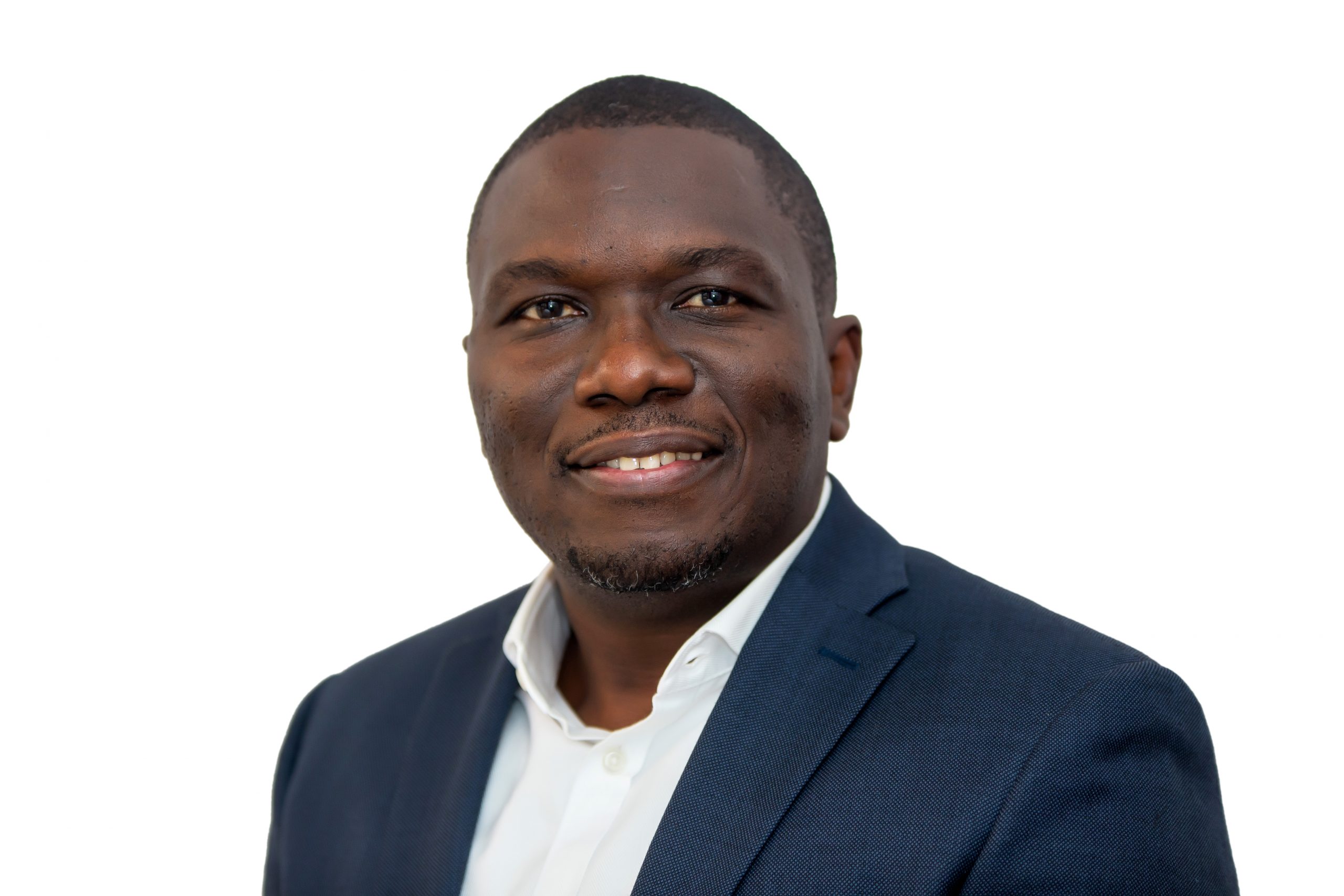
Layer3, a category-king indigenous ICT company, has unveiledLayer3Cloud. This cloud service is engineered for Nigeria and broad African business ecosystem. Layer3 was founded by my Federal University of Technology Owerri, Nigeria (FUTO) classmate, Oyaje Idoko (pictured above) – a leader in Africa’s ICT sector.
Layer3Cloud is an Infrastructure-as-a-Service (IaaS) solution that allows businesses and organizations of all types to remotely and virtually build, manage, store and instantly deploy servers and data in our secure data centers all without the financial outlay on hardware, maintenance or replacement, yet retaining the ability to access and administer all services as needed. Layer3Cloud runs out of ISO certified data centers in Abuja and Lagos ensuring maximum availability, security, and disaster recovery.
We are transforming the way businesses think about IT: A new, commodity-focused approach ensures maximum resource efficiency by ensuring outlay is aligned fully with IT usage.
Additionally, we can provide a full end-to-end managed private cloud service, acting as your very own IT team, 24x7x365, managing, monitoring and maintaining your systems around the clock to ensure your institution is always online.
The cloud service sector in Nigeria has been growing as companies begin to move their services and operations to the cloud. Besides the largely cost-competitiveness, cloud simplifies operations, with data consolidated more effectively. Cost, technology usability and customer service are major elements which continue to drive adoption; Layer3Cloud is positioning itself in the local technology and business domains with its offerings. Those services include:
Enterprises: Layer3Cloud provides a mature range of solutions designed specifically for the unique security, compliance, privacy, and governance requirements of large organizations.
Public Sector: The future of the Nigerian public sector demands a scalable cloud platform. The Layer3Cloud platform is purpose-built, running out of in-country certified data centers and it allows government agencies meet the data sovereignty policy requirements of the country.
Startups and Web Hosting Firms: Layer3Cloud understands that start-ups have constraints and have to be frugal with where and how to allocate their limited funds. The firm works with them from the spark of an idea, to the first customer and beyond. The solutions are designed to help startups build and grow startups.
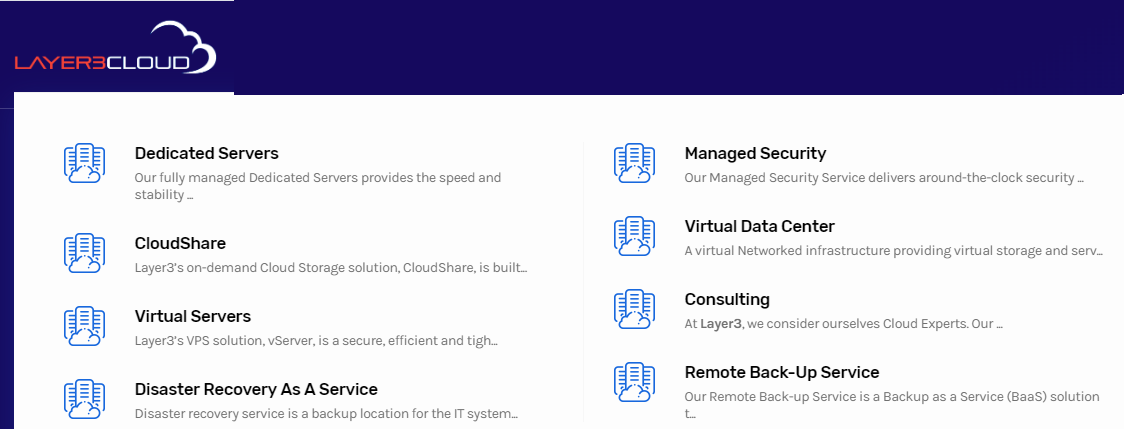
Here are some key services offered by Layer3Cloud.
Layer3Cloud Services
The Benefits of Layer3Cloud
Layer3Cloud is building critical building blocks of computing elements, the primitives, in its data center businesses with specific focus on Nigeria and Africa. Through these elements, companies can have access to file taxes, handle procurement, HR administration, and more. The benefit is that companies can reduce outside constancy by relying on these primitives which are optimized and flavored for the specific local market.
Low Latency, Fast Data Throughput: Layer3Cloud datacenter is stationed in Nigeria. This gives it an edge over global competitors on latency. Benchmarked with global competitors, Layer3 speed is faster for companies in Nigeria.The service also has fast data throughput.
Local Support: Layer3Cloud has team members in major Nigerian cities to physically assist companies deploy on its cloud infrastructure. In other words, if you are starting up and needs help, the engineers will come in person to help you navigate the process.
Affordable: Layer3Cloud is priced in Naira which provides huge comparative advantages to companies earning revenues on Naira.
Secure, Reliable, in Compliance: Layer3Cloud provides top-notch security and reliability. It easily helps companies meet all thelocal compliance to regulations on data privacy and management in Nigeria. Your main server or disaster recovery recovery servers will find a good home in Layer3Cloud.
Key Features
The datacenter business in Nigeria is advancing. Innovations in products and technology are leading the way. Layer3Cloud as an indigenous company understands the competitive forces. It has to build great products before foreign competitors build them. Speaking with the team, they noted that they are differentiating to serve local clients in Nigeria and Africa in many ways. Here are some key features in Layer3Cloud.
Dynamic scalability at a moment’s notice
Localized service in Nigeria means extremely fast and ultra-low latency access to resources compared to foreign-based services
99.9% availability
VMware Certified Cloud Service
Self-service and 24/7 support
Advanced networking and security add-ons: Firewall, VPN, IPSec, SSL
One of many awards Layer3 has received
All Together
The cloud service in Nigeria is expected to see massive growth as Nigerian technology ecosystems deepen. In a world that is unconstrained and unbounded, there is no reason not to embrace cloud especially where it is offered by an indigenous firm you can visit its offices, and the firm will give you time to understand your business needs.
Begin your free Demo by contacting Layer3Cloud today.
KAIOS Technologies is a startup on a mission to bridge the digital divide by connecting the next billion non consumers who are at the base of the pyramid and not served by the current telco players without access to internet in emerging countries.
In developing countries such as in Africa, internet infrastructure is not available to millions across the continent and where it exists in some parts due to corruption, it costs a lot which makes it unaffordable for many.
Google’s Project Loon was conceived to fix this friction in emerging markets while Facebook launched it’s Internet Access Free Basic programme to provide accessibility to basic internet across Africa. These initiatives have still not made internet consumption a basic affordable commodity, which will help to provide the opportunities that will empower Africa’s young generation to unlock their potentials for prosperity.
KAIOS believes that it’s emerging operating system for smart feature phones will redesign the mobile communications market focused on the lower income consumers with more than devices running on it’s platform already shipped in Canada, USA, Asia, Europe and other parts of the world. Devices which run on it’s Operating System requires limited memory and still offers a rich user experience with access to apps like Google Assistant, Whats App, Youtube, Facebook, Google Maps and Twitter.
KAIOS brings apps, Wi-Fi, GPS and other advanced features to non touch smartphones and has established partnerships with leading Original Device Manufacturers/Original Equipment Manufacturers and carriers such as AT&T, Sprint, T-Mobile, Reliance Jio, HMD Global, Micromax, Doro, Bullit, Maxcom, MTN which launched it’s feature phone powered by KAIOS this year in Nigeria, Africa’s largest market, Orange and China Mobile and plans to be embedded in over 150million devices globally before the end of 2019.