DD
MM
YYYY

PAGES

DD
MM
YYYY

spot_img

PAGES

Home Blog Page 6757

Assimilating into New Teams and Mastering Workplace Procedures

0
Work Space

Finding yourself in a new work environment is something that can leave you second guessing all the time. First, it takes some time to get used to new ways of doing things, new work schedules and even getting familiarized with new colleagues. Of course, a few awkward moments are expected. This is normal. 

In one particular instance, a worker who was new in a particular organization, and who happened to have met a new acquaintance at work was given a list of dos and don’ts by his new “friend” on how to approach every manager. I understand what the friend was trying to do. He was just trying to make things as easy as possible for his new colleague.  This isn’t particularly a bad thing as many organizations even organize orientation programmes for new employees as it helps in familiarization.

Still, it is important to note that studying the organization by making your own observations will give you a perspective that suits you. There is no guarantee that Manager A who reacted in a particular way under a particular circumstance to Mr B  will react in a similar way to Mr C in the same kind of circumstance. This is true for so many reasons. One being that the difference in personalities can make people to react differently even in identical circumstances . Hence, you get situations like this where a particular individual does a particular thing and gets away with it, whereas another fellow who does something similar pays dearly for doing the same thing. Then he thinks it has something to do with bias. Maybe it does, maybe it doesn’t. The tips outlined below can help one familiarize in a new work environment:

  • Get Updated: Go through their website, study space,  come a little bit earlier than the other workmates so you can have that extra hour you need to look around and see how things are.
  • Be Friendly and Create A Good First Impression: This helps in so many ways as many people will continue to see  you based on the initial impression you created. Introduce yourself to people properly. Try to mingle, don’t isolate yourself.
  • Ask Questions. Asking questions where you need clarifications will save you the time and embarrassing associated with making unnecessary assumptions.
  • Maintain Neutrality: Don’t take sides on issues you don’t know how it began or what led to it. Don’t see anyone for now as an ally. 
  • Be Positive and Optimistic: You can see the changes from the positive end. It could be a new adventure worth embarking on; just explore the new opportunities and also see it as a forum where you meet new people .

Remember this isn’t just about getting familiar with people in a new place, it is also about understanding organizational procedures. The essence of having these procedures is to eventually make the system function in a smoother and more efficient manner. In some firms, money cannot be taken out of the company account without the endorsement of maybe two or three principal officers. This kind of additional protocol would help prevent unnecessary withdrawals from a particular individual for personal  reasons. In some organizations, an additional protocol may be created to provide an additional line of security to checkmate illegal activities from taking place.

An organizational procedure by definition  is a step-by-step description of the tasks required to support and carry out organizational policies. They also help to provide a clear understanding to employees of what is actually expected of them.

In many instances as I have seen, some organizational procedures create unnecessary bottlenecks preventing  the smooth flow of work. There have been instances where work has been delayed or eventually suspended because of the signature of a particular official after two or three other signatories may have given their consent. We see that all the time in many agencies and yet wonder why some establishments fail to live up to their full capacities. 

So before creating or continuing a particular organizational process we should ask the following questions:

  • Will this procedure lead to quicker work delivery?
  • Does it serve as an additional security check?
  • Does it improve documentation and record keeping?

If it passes these tests, then maybe you can consider having that process as part of your organizational procedure.
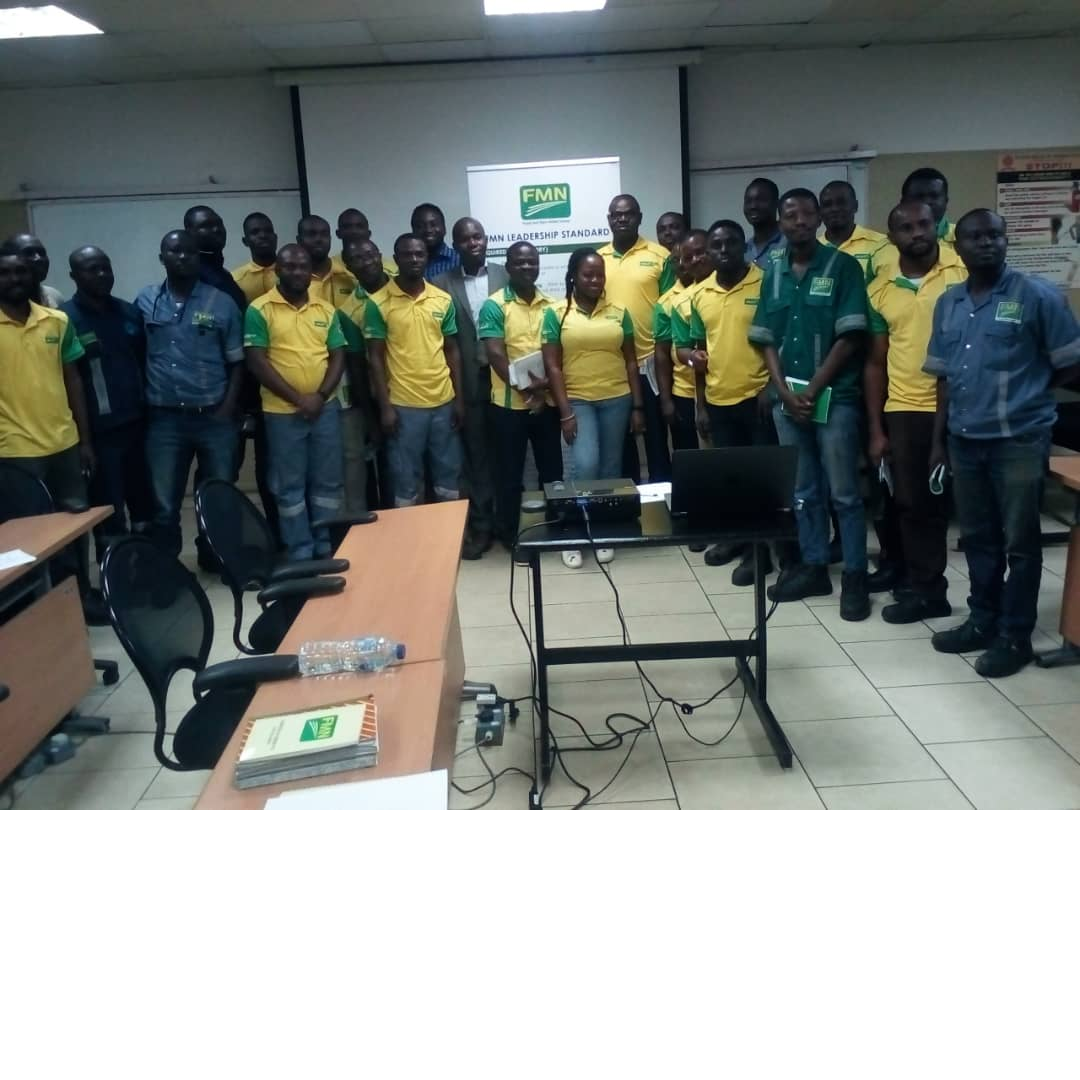

Did A Workshop In Flour Mills Nigeria Plc

0

We all grew up using their products. Flour Mills Nigeria Plc is an iconic company in Nigeria.  Golden Penny brand has supported families across our nation; the company has Golden Penny Flour, Golden Penny Pasta, Golden Penny Garri, and many more. The Garri one is amazing on the redesign and elevation FMN effected on this Nigerian food heritage. Yesterday, I spent time in this company, on a Management and Leadership workshop, explaining the mechanics of modern leadership, flavored with digital, and how brands like FMN can innovate, grow and  keep pace in a changing world.

The Lesson from Neymar’s Footballing Trajectory

0

Neymar Da Silva Jnr, the Brazilian superstar forward, who plays for French Ligue 1 giant Paris Saint Germain has been in the news with each day reminiscing over his period at FC Barcelona amidst a transfer back to Catalunya.

When he was signed from Brazilian soccer giant Santos FC by Fc Barcelona in the summer transfer window ahead of the 2013/2014 season, he was seen as the heir to the dominance of Lionel Messi and Cristiano Ronaldo on global football as the world’s two best players. Messi was an influence to him and in the four years they played together alongside fellow South American and Uruguayan star forward, Luis Suarez, they formed the most feared trio in the history of soccer with an average of 100 goals scored between them each season for the period they played together. 

Messi mentored Neymar and helped him to become the world’s third best footballer while he was at FC Barcelona. His brand value grew immensely resulting in commercial deals from brands in Brazil and across the globe.

Then, the Arab Sheikhs who own PSG (Paris Saint Germain) came calling. Neymar felt he had learnt enough from Messi and was tired of playing under his shadows. He needed a new challenge where he was going to become his own man.  FC Barcelona made a historic comeback in the 2016/2017 Champions League match against PSG who led the first leg 4-0 at home in Paris to win 6-1 at the return match in Camp Nou; Barcelona with Neymar scoring twice to steal the show as the man of the match.

At the end of the day, Catalan media celebrated Messi and he felt that was enough of being second fiddle. A world record transfer of $222million (200million euros) from PSG was done and Neymar was set to begin another step in his career trajectory. But little did he know that his journey would be filled with thorns. Injuries over the past two seasons, not making the nominees for the 2018 Ballon D’Or, disciplinary issues made Neymar Jnr regret his move as French soccer prodigy Kylian Mbappe has overshadowed him in contributions on the field of play.

While Neymar awaits a return back to where he calls his second home beyond Brazil, it is pertinent as you make decisions regarding your career trajectory, consider where you are happy and in love with your job ahead of following the money and living a life filled with regrets later. There is also a need to ensure you have the support of people that can make you better.

Management Philosophies of Leading Football Managers

0

What does the ideal manager look like to you. A man in a suit who walks around the work space looking out for signs of inefficiency and calling out non productive employees, holding meetings and briefings periodically?  Some years back , a senior colleague once told me that a particular individual whom we haven’t come to know fully yet doesn’t have the personality of a great manager. Whatever his reason was, he was convinced that his thoughts were correct. He cited a number of instances and even drew comparisons with individuals who have occupied such positions in the past. 

We were having this conversation until it came to a point where we completely disagreed. There isn’t a particular behavior or personality trait that automatically qualifies or pre-determines one as a good or effective manager. Luckily, he was into football just like me, so I drew him to what he was familiar with. Based on the personalities of different successful football managers, I would like to analyze some managerial methods used among successful coaches.

Jose Mourinho (Pressure Cooker): In 2004, he took a relatively unknown FC Porto team to Champions League glory. Arguable the best football manager in the history of the game,  Jose Mourinho is known for pressuring his players into achieving their goals. Sometimes, it doesn’t matter how the results are achieved. In an interview years back, Mourinho once said that he prefers to play stupidly and come out with maximum points than impress the fans with beautiful football with nothing to show for it in the end. This philosophy worked in his first spell at Chelsea where he won the domestic league twice consecutively, worked at Inter – Milan where he won the  Champions League after eliminating Barcelona with 10 men in the semi finals, even though he never was the favorite .

This method worked effectively in his early years as a manager but started failing as some footballers didn’t buy the idea of any individual putting them in unnecessary pressure or stress. He fell out with Cristiano Ronaldo, Iker Casillas, Mesut Ozil and others at Real Madrid leading to his shameful dismissal without achieving much success at the end of his spell there .

It also Failed in his second spell at Chelsea after it was rumoured that the players ganged up against him, leading to speculations of deliberate under performance from the Boys which lead to his dismissal. A similar thing also happened at Manchester United. He is also known for his hair dryer treatment of players and physical confrontations. As scenes abound where he could be seen kicking the water bottle angrily in disapproval of an action.

Pep Guardiola (The Tactical Extrovert) : He is known for his tactical prowess and for inventing the tiki – taka . He believes the way you play matters more than the results. He once said that he would be happier playing well, even if he doesn’t win the game eventually. Many consider him the best current active manager as he has won the Champions League trophy twice and has also won domestic titles in Spain, Germany and England.

Still many have criticised his success based on the fact that he always spends heavily on purchasing players, and that he hasn’t been tested with a smaller or less funded Football team. He is also known to have a close bond with many of  his players although he never really worked well with players like Zlatan Ibrahimovic and Yaya Toure. 

Joachim Lowe (Tactical Introvert): A world-class manager known for his tactical abilities. Arguably one of the best tacticians the game has ever seen. In a knock out match against Ghana in 2014, he brought in a substitute who scored the crucial equalizer in just his first touch of the game. He won the World Cup in 2014, a bronze medal in 2006 and 2010 respectively. He is the silent type of manager who sits,  always analysing the game. Successful in his own light. His players liked and respected him.

Still he fell out with Ballack and later on Mesut Ozil. And crashed out in the group stage of the 2018 World Cup.

Sir Alex Fergusson (The Father Figure): The most successful coach in the history of English Football with ,13 domestic titles, two UEFA Champions League trophies and a lot more. His fatherly approach helped the club achieve extraordinary feats with very average players. He just simply brought out the best in them. He scolded when necessary and commended when necessary .

Yet, many felt he should have done more in European Football considering his managerial longevity. 

Jurgen Klopp (The Motivator): After his 3-0 loss to Barcelona in the Semi finals of the 2018/2019 Champions League,  this is what Klopp had to say:

“What did I say to them after the game? I said that I am really proud of them, that I liked a lot of things about the game..I don’t have to think about the next game against Barcelona yet, we have Newcastle and that will have all of our focus. We will go to the hotel, have a proper sleep, get up in the morning and fly home…Whatever happens, these boys, I couldn’t be more proud of them. People who haven’t seen the game will see the result and say strange things about it, but they always strike back in these kind of games.”

In the return leg, his boys managed to overturn the three goal deficit when they scored four unreplied goals against Barcelona, eventually given him his first UCL trophy. He is known as a good motivator with a close bond with his players.

Yet many consider his track record of losing so many finals as a dent in his managerial career.

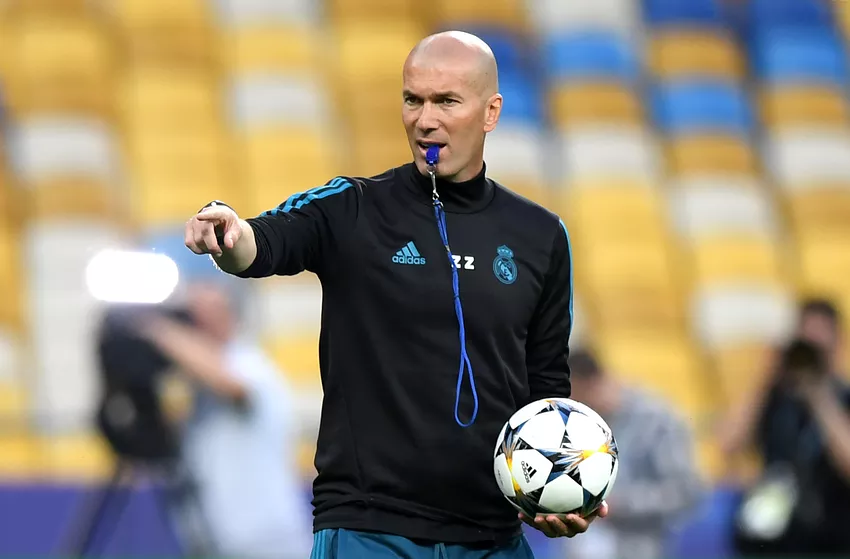
Zinadine Zidane (The Silent Confident Boss):  With three Champions League trophies consecutively, Zidane stands as one of the most successful managers in the game’s history. His cool, calm, and relaxed approach enabled his players play with full confidence and maximum self expression. He had good players, and he was a three time winner of the FIFA Player of the year; the confidence coming from these can hardly be ignored.

People believe he still should try out smaller teams that don’t have elite footballers to prove his worth.

These are very successful Managers,  with very different Personalities and Management styles .So what kind of personality should a manager have?

Well, it depends on where and who you are managing, and how the results are measured.

Why Scaling The Greatest Of All Charities Is Important

0

Discussions related to charity have always been sensitive because charity is closely associated with religion (another hyper sensitive area). In fact a lot of people believe that being charitable will ensure their success in this life and happiness in the life after. This strong belief has also been gainfully used by beneficiaries to obtain more from their benefactors.

I am not here to discourage the act of charity; I only want to divulge my observations on its effects on the beneficiaries. I know charity is all about giving money, food and other necessities to the needy, but has anyone actually asked who the needy truly are? How do we know who they are? How do we measure their needs? When will they cease to be among the needy? How long will they continue to live on charity? Can’t they be gainfully employed?

And, has anybody else ever wondered why the countries that benefit from charities still remained impoverished? Well, I believe the experts have answers to this. But I bet you that the first excuse everybody will give regarding this is bad governance.

Anyway, I don’t think I can answer the questions concerning the negative effects of charity on the country, but I believe I can give an insight on its effects on individuals. I know that benefactors are also affected, something that most people know, but my focus here is on the beneficiaries.

Charity affects the self-esteem of the beneficiaries. I have seen so many people who, deep down, believe that they can’t survive without the help of their benefactors. Some say it is fate, some call it luck, and others, curse. Some believed they owe their benefactors so much gratitude that they make themselves their benefactors’ slaves.

One that I met recently felt too uncomfortable to submit his CV to a new school within my area because he couldn’t envision himself earning a living. He already had the servitude spirit because he, his siblings and his mother lived off the charity of a relative, who sponsored his education to ND level. So, for him, serving this uncle is the only way he could repay him for his generosity. He believed it is inappropriate for him to look for a job since the uncle needs him around.

Some beneficiaries feel that the act of charity they benefit from is their entitlement. This ordinarily is not supposed to affect their desire to find a source of income. However, for some reasons unexplainable, most of the people that feel this way end up not earning a living. Someone who comes to me every now and then for a little help unwittingly revealed that since I am paid by the federal government, my salary is as good as hers, after all the money is for every Nigerian (*eyes rolling*). I can’t really say, but I believe part of why she wouldn’t apply for a job in a nearby establishment, like I have been suggesting to her is because she believes that I and the others should ‘share’ our earnings with her.

I have equally met people who hold that they are entitled to charity because their benefactors were made ‘rich’ by God so that they could help them (the beneficiaries). Some of them even told me that if their benefactors refuse to help them, his wealth will disappear, or rather God will take their wealth away from them. So, for them, some people are made poor so that the rich will have people to carter for (sounds unbelievable but it is true). In other words, their benefactors’ incomes are also theirs (except that the benefactors are the custodians).

Charity can increase laziness of the beneficiaries and thereby cause over-dependence on the benefactors. This could lead to a lot of social vices because when the benefactor fails to ‘perform’ as usual, the beneficiaries will find other ‘easy’ way to make their living. Also, the benefactors may decide to make these beneficiaries carry out heinous jobs.

There was this woman my mother was always giving food and money to because her husband has no stable source of income. One day she came to see my mother as usual. But my mother told her that she should clear the grasses around the compound so that she will pay her instead of merely ‘dashing’ her money. She did the work halfway and came for the money. My mother gave her half of what she usually gives her and asked her to finish up the work to collect the remaining. She also told her that henceforth, she will be paying her salary for doing some odd jobs in the compound. Of course, this woman ran.

I know that people may think that she begs because she was lazy. But, what if no one gave her when she begged, wouldn’t she be forced to work?

People that benefit from charity do not have the zeal to improve on themselves. Like I said earlier, charity can encourage over-dependence of the beneficiaries on the benefactors. I think this is the major problem with Africa and the Africans.

The desire to improve only comes up when someone needs to earn extra income and knows that he has nowhere to turn to but to himself. But in a situation where this person knows that he can get that extra from someone else through charity, he will relax. Trust me, that shop owner in the village who opens his shop irregularly will be forced to work harder if that his brother or sister that always restock his shop decides to cut him off.

Like I said, this is the problem with Africa. Africans have this mindset that they need help from the Global North before they can survive. This, beside bad governance, is the reason Africa is still where it is.

So, charity is good, really good, but that doesn’t mean that we should make it the only way of helping humanity. We need to be sure that the person we are helping truly deserves it. We need to be sure that the beneficiary of our generosity understands that he or she should find a source of earning because our help is only temporary. We have to be sure that our help is not having negative effects on the beneficiaries. And let us always remember that since it is a charity, it is not business. Hence, we should not expect anything in return. This way, the beneficiaries will not feel enslaved to us.

Remember the saying – give a man a fish, and you feed him for a day. Teach a man to fish, and you feed him for a lifetime. This is the greatest of all charities.