
DD
MM
YYYY

PAGES

DD
MM
YYYY

spot_img

PAGES

Home Blog Page 6766

Entrepreneurial Young People Are Driving Nigeria’s Development Efforts

0

Deji Oduntan, Obi Ozor, Chidi Nwaogu and Shola Akinlade, do these names sound familiar? Maybe and maybe not. These are the most sought-after young Nigerian entrepreneurs in 2019 who are playing significant roles in the areas of transportation, logistics, publications and fintech.

For the development efforts of the Nigerian nation to yield tangible and sustainable results, the energies, resources, creative talents and labour of the nation’s largest demographic must be harnessed. Young people are needed as catalysts for developing the country and for exploiting the abundance of resources to create the kind of nation we all want. The youths are not only leaders of tomorrow, but partners in the progress of today.

As Nigeria’s population grows—it is more than 180 million now—and as our cities faces critical challenges like housing shortage, traffic congestion, poor infrastructure and lack of adequate transportation systems, young people are stepping up to tackle some of these challenges using, you guessed, technology. Take Deji Oduntan of GOKADA, an e-hailing motorbike service in Nigeria’s largest city Lagos for example. Gokada is helping Lagosians beat the city’s legendary traffic snarls to get to work and cut down the long hours lost to gridlock. 

Then there is Obi Ozor and his team at Kobo360, a Nigerian digital startup that is delivering faster freight and cargo transport services around the country. Even as the African Continental Free Trade Agreement (ACFTA) kicks off, Kobo360’s G-LOS (Global Logistics Operating System) is ready to power the ACFTA, from west to east, north to south to deepen productivity and reduce supply chain friction.

Publiseer, a multi award winning free digital publishing platform owned by Chidi and Chika Nwaogu is providing independent authors and artists a chance to have their works seen by the rest of the world and to profit handsomely from their own content. Shola Akinlade and Ezra Olubi are solving Nigeria’s long standing problem of payment for ambitious business owners by building an online financial solution startup, Paystack, which makes it easy for businesses to accept secure payments from multiple local and global payment channels.

From the instances cited above, it goes without saying that young people are the wheels that drive innovative initiatives that begets true development. They are the catalyst that accelerates the pace of development and progress of the nation. They are needed because they are the most active segment of the society and the major determiners of peace and economic progress of a nation. If Nigeria wants to accelerate growth and development, she must appreciate the importance of the role of young people in driving the change that we all want to see. She must provide a climate that would allow young people to thrive and create innovative solutions to our problems without boggling them down with bureaucracy and corruption.

Our greatest demographic asset as a nation today is our young people. They make up more than 67 percent of the entire population. For us to profit from this asset as a nation, increased efforts towards making quality education more accessible, affordable and available across the nation must become our topmost priority. Our young people must get quality education—an education with a curriculum that is unique and freshly designed to meet the everyday needs and the challenges of the nation.

“In our contemporary time,” says Prof Ndubuisi Ekekwe, a Nigerian professor, inventor, engineer, author, and entrepreneur at Fasmicro, “U.S. has the best universities and it remains the most dynamic global economy. As I have written, on Mines of Knowledge, any nation that dominates the accumulation and processing of knowledge typically “rules” the world. From the Babylonian Empire to the American empire of today, when you win on Knowledge you win on economy and human development.” Nigeria cannot afford but to win here.

In the 21st Century, the natural resource that matters most is the talent of a nation’s citizens. The role of top-grade higher education of international quality in helping young people become catalysts in the achievement of the Nigerian nation’s efforts for development and progress is as important as soul to body. Top-grade education is a lever to human and social development. Apart from imparting skills and knowledge in the citizens, education eliminates ignorance and intolerance; it enlightens and empowers the citizens for employment and peaceful coexistence.

Education is pivotal for the discovery of one’s innate abilities, factual self and potentials. Education is exposure and responsibility combined. It exposes young people to a new and dynamic way of life and it creates a sense of responsibility in them to give back to the society by contributing their skills and training in the development of their community. Top-grade education is the only way young people can learn and develop the skills needed to drive the nation forward.

Today, Nigeria has the largest population of young people on the African continent. This workforce is enough to replicate Silicon Valley in every State in Nigeria in 3 years. With increased access and investment in top-grade quality education, we can have more of the likes of Deji Oduntan, Obi Ozor, Chidi Nwaogu and Shola Akinlade in every home, in every community and in every state, and we could make Nigeria the envy of the world.

With concerted efforts to educate our young people, Nigeria can enjoy top-notch sustainable development and stand tall and proud in the comity of nations and say, with the intellectual capacities of our young people, we are becoming a first world country.

China Shows The Risk of Africa’s Planned Monetary Union

5

One of the biggest challenges the monetary union which African Union plans to implement in the continent will be lack of flexibility to use monetary policies to drive economic agenda for respective member states. In other words, if a supranational bank which will become the central bank of the member states takes over, monetary policy tools cannot be deployed to fix some economic situations at member country level.

In other words, no matter what Liberia does, if Nigeria is having problems with its economy, ECO will have challenges and Liberia will struggle. Why? The economy of Nigeria is what will influence the performance of ECO in West Africa. Magically, the small Liberian economy which is not up to the economy of Eti Osa local government area in Lagos state will be under the shadows of the big brother named Nigeria. There will be welfare losses to these smaller countries but none can rattle Nigeria because they are very small. All of them will hope Nigeria gets all right, otherwise ECO will cause havoc in their economies.

In modern global economics, monetary policy instrument is extremely potent in trade. For heterogeneous markets like Africa where economies have divergent economic structures and architectures, it could be catastrophic to lump them together, depriving member states flexibility to normalize shocks.

For example, if Nigeria cannot devalue its currency to deal with deterioration in global crude oil pricing position, Nigerian citizens will experience welfare losses. As that happens in Nigeria, it will also affect smaller economies like Togo which are not directly affected by the oil shocks. Simply, if Africa integrates, Nigerian paralysis could affect neighboring smaller economies.

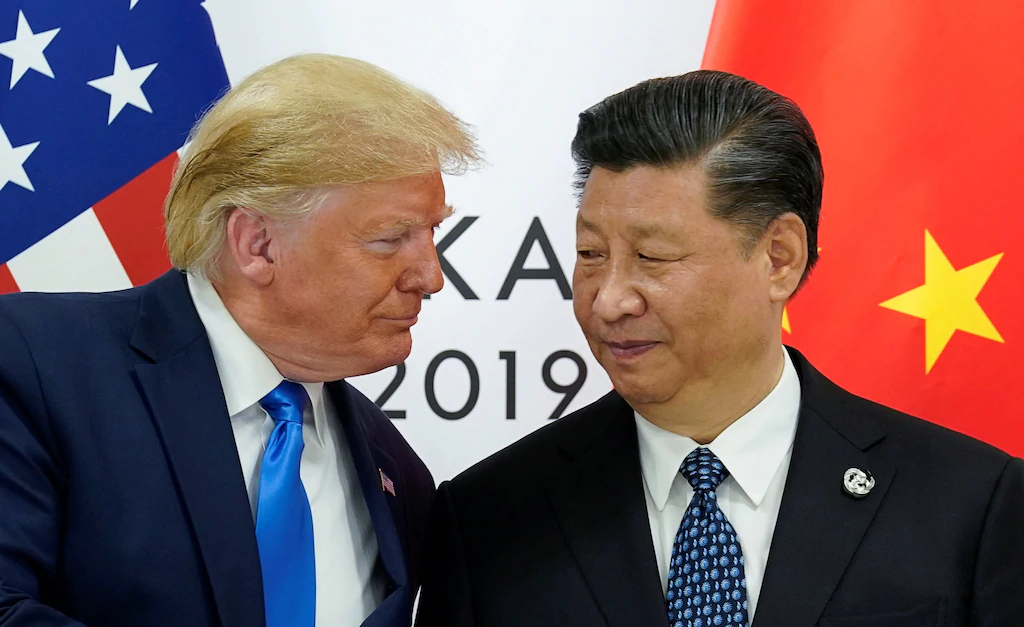
China is showing the power of that flexibility as it uses it currency tool to adjust for the impact of President Trump trade tariffs on Chinese goods. So, if U.S. raises tariff, China devalues its currency, partly offsetting the impact of that tariff. Provided that China has control of this tool, it can adjust for some basic impacts of tariff.

A yearlong U.S.-China trade war boiled over on Monday as Washington accused Beijing of manipulating its currency after China let the yuan drop to its lowest point in more than a decade.

The U.S. Treasury Department announced late on Monday that it had determined for the first time since 1994 that China was manipulating its currency, knocking the U.S. dollar .DXY sharply lower and sending gold prices XAU= to a six-year high.

Largely, a monetary union in Africa will take out that tool from member states.  That could be extremely consequential for member states when their primary commodities (usually the main sources of foreign exchange earnings) are undergoing global pricing shocks.

Investing in Africa Should Be on Your To-do List

0

I grew up resenting my environment and how things were done around me. Building my social life as a Nigerian, I mingled with several persons nurturing same thought and it was clear that nearly half the population wanted a change or at least an improvement but sadly, everyone had their way of dealing with things.

For instance, some of them went on to blame the government for their woes. They are probably right because, well, the government wasn’t performing nearly as half as they ought to. And if the government provided the basic amenities, perhaps more jobs would be created with a reduced crime rate. That will be a step closer to a better society.

However, these people quickly forgot that the government alone can’t build a country. The modern-day civilization is a partnership between the government and the citizens. In most cases, 80% of the structures are owned by the people but then again, the people need help in making it happen.

Most African republics are referred to as “The Developing Country” and while those who started this classification were only thinking of the little infrastructures in the countries, opportunists and other smart entities now know better. Indeed, the average individual would rather migrate to the developed world. Who would blame them? These places may come with serene environments and better infrastructures but there’s one major thing that can’t be compared to a developing country – opportunities.

You can debate it however you want but it won’t change the fact that developing countries offer more potential profitable opportunities than the world powers in terms of investing.

The key phrase: A developed country already has virtually everything you need but the developing countries lack most things and this is where the opportunity is. African countries hold several layers of opportunities for you to create these needed products/services for a large hungry market.

Africans spend a lot, no doubt. Even the British can testify how thousands of Nigerians troop in there to acquire properties and gadgets. This alone makes African countries a huge consumer market. It’s probably one of the reasons most mobile phone brands are moving their main distribution chain here.

Since Africa hosts thousands of opportunities, why are we not getting richer? Well, because not many of us are creating things. Yes, there are hundreds of thousands of entrepreneurs but how many of them have the shot? Many of us have what it takes (the relentless technical founders, great disrupting concepts, etc) but there’s usually something holding us back – The Funds.

And hey, good luck convincing someone to invest in your idea as an African. Most of us don’t even have the funds to build the prototype, it’s that bad. How can a place with such a pool of opportunities, talents, creativity and hardworking people remain untapped? This still baffles our greatest philosophers.

Well, I wouldn’t say I’m good at cracking puzzles but to me, the answer is quite obvious. We need another partnership but not with the federation this time. Those with money need to also see these opportunities and envision how much more they can grow their money by investing in Africa or at least consider the good deeds and their ability to easily stand out just by backing an African brand.

Thankfully, investing in Africa is getting more convenient as companies like Slourish are creating ways for anyone to easily invest in Nigerian entrepreneurs. Slourish, a business micro-investing community-based platform founded by Latii Brayllot is now ushering in an exciting future for both investors and African entrepreneurs alike.

With a growing number of angel networks and venture capitalists now focusing on Africa, all it takes is for an investor to indicate their interest in the venture capital firm and in no time, that investor will be actively backing African brands without doing any of the hard work. An example of such venture capital is EchoVC.

Investment AB Kinnevik which was founded since 1936 is one of the largest listed investment companies in Europe and they are also actively getting their piece of the cake in Africa as they have invested in several notable African brands such as Millicom, Tele2, Jumia, MTG, Konga, Rocket Internet, Iroko Partners and several others. If you like investing through an investment company, investing in Africa through AB Kinnevik is a good option.

Some investors love to invest in groups and firms like Helios Investment Partners are always open to quality investors. Being a private equity and venture capital firm that invests in Africa, with a focus on Nigeria, South Africa, and Kenya, you will be able to put your money to good use.

Moreso, if you are a fan of equity crowdfunding, companies like Uprise.africa are making it easier for anyone to easily invest in Africa without having to leave the shores of their homeland. According to Uprise.africa, investors only need to create an account on their platform and they could be investing in South African startups in no time.

Another great way of investing in African brands is by linking up with business competition organizers to get a clear view of strong African startup teams that are ready to change the way we do things. Attending the demo days helps you gain insight but being a part of it grants you a more convenient way of investing in them.

Africa holds thousands of problems that need quality solutions and if you are smart enough to tap in, going home richer will be the least of your rewards. To rephrase this, I would say Africa already has a bunch load of these solutions and what is left is for you to back them with some funds and boom! Everyone goes home happy.

Fortunately, the world is beginning to see the profitability in African brands and this is why startups like Paystack, Kobo360, Kudi etc. are now getting millions of dollars in investments from hundreds of both domestic and foreign investors.

Big Data Use in the 21st Century: Safeguarding Your Company Against Liability

0

Data is the new Oil! Data is an essential resource that powers the information economy just as oil has fueled the industrial economy. Enormous quantities of data are generated every single day by companies doing business on the internet. Even traditional brick-and-mortar businesses collect tremendous amounts of information from their customers in order to extract value from analyzing the trends that make or break their businesses.[1]

What is Big Data? Big Data are extremely large information sets that may be analysed computationally to reveal patterns, trends, and associations, especially relating to human behaviour and interactions. This is largely due to the rise of computers, the Internet and technology capable of capturing data from the world we live in. Nowadays, almost every action we take leaves a digital trail. We generate data whenever we go online, when we carry our GPS-equipped smartphones, when we shop online etc. These information can be anything from a name, an address, a photo, an email address, bank details, posts on social networking websites, medical information etc.

A World Economic Forum report shows that 15 billion devices will be connected to the internet by 2015 and 50 billion by 2020. The amount of data stored on the internet is predicted to grow exponentially and looks set to be 44 times larger in 2020 than it was in 2009.[2] Once upon a time, the wealthiest were those with most natural resources, now, we live in a knowledge economy, where the more you know is proportional to the more data you have access to.

According to Forbes Technology Council, if you burned all of the data created in just one day onto DVDs, you could stack them on top of each other and reach the moon – twice.[3] Professor William Edwards Deming, the great American engineer sums this quest up when he said, “In God we trust; all others must bring data.” Therefore, data is to the digital economy what oil is to the industrial economy.

Government, retailers and multinational corporations are now able to access more data today than ever before. Companies are now taking advantage of data insights to improve decision-making, enter new markets, and deliver better customer experiences. From understanding and targeting customers, to client’s decision making, understanding user spending habits, to Predictive Equipment Maintenance in the oil and gas industry (predicting the remaining optimal life of their systems and components, ensuring that their assets operate at optimum production efficiency).

In the United States, Target, a retail company, is now able to very accurately predict when one of its customers will expect a baby.[4] Using big data, Telecom companies can now better predict customer churn; Wal-Mart can predict what products will sell; and car insurance companies understand how well their customers actually drive. In Nigeria, Kudi.ai has developed a chatbot that uses AI to understand user requests, drive conversations, understand user spending habits and prevent fraud. Zenvus Technology uses remote IoT (Internet of Things) sensors and cloud computing to help farmers with data-driven advice on improving crop health and yields, as well as access to lending, insurance and commodity trading services.

The International Data Corporation said that worldwide revenues for big data and business analytics will grow from $103.1 billion in 2016 to more than $203 billion in 2020, at a compound annual growth rate of 11.7%. Revenue from the sales of big data and business analytics applications, tools, and services is placed at more than $187 billion in 2019.[5]

Unregulated processing of personal information can have a significant impact on key human rights such as privacy and dignity of human person. This fast-growing industry therefore prompted regulators to step in to restrain those who control its flow. On the 24th of July, 2019, Facebook agreed to pay a $100m fine imposed by the United States Securities and Exchange Commission, for misleading investors about the risks it faced from misuse of user data. In a similar vein, on the 30th of July, 2019, The Greek Data Protection Authority imposed a 150,000 Euros fine on Price Waterhouse Cooper (PWC) for the illegal processing of personal data of its employees and breaching the EU General Data Protection Regulation (GDPR).

All these can be prevented if adequate legal framework is put in place before a company commences processing personal data. Whether you’re setting up an e-commerce platform, a telecommunication company, a bank or financial agency, abiding by the necessary data protection policy should form part of your business plan. Ensuring your clients, customers and/or employees sign a Data Protection Agreement (DPA) or Data Protection Policy will afford them the opportunity to understand in full how their Data will be processed and it will also serve as a guiding document in case of any dispute. With the immense benefits that can be derived from leveraging big data, companies must be careful in the processing of personal data to avoid sanctions. Data Protection operates on three basic principles to wit, personal data should be processed lawfully, fairly and transparently.

In Nigeria, Data Protection is regulated by the Nigeria Data Protection Regulation, 2019 made by The National Information Technology Development Agency (NITDA) pursuant to the NITDA Act of 2007.  The NDPR defines ‘Personal Data’ as “any information relating to an identified or identifiable natural person (‘data subject’); an identifiable natural person is one who can be identified, directly or indirectly, in particular by reference to an identifier such as a name, an identification number, location data, an online identifier or to one or more factors specific to the physical, physiological, genetic, mental, economic, cultural or social identity of that natural person; It can be anything from a name, address, a photo, an email address, bank details, posts on social networking websites, medical information, and other unique identifier such as but not limited to MAC address, IP address, IMEI number, IMSI number, SIM and others”.

It defines ‘Processing’ as “any operation or set of operations which is performed on personal data or on sets of personal data, whether or not by automated means, such as collection, recording, organisation, structuring, storage, adaptation or alteration, retrieval, consultation, use, disclosure by transmission, dissemination or otherwise making available, alignment or combination, restriction, erasure or destruction”. And it defines a ‘Data Controller’ as “any person who either alone, jointly with other persons or in common with other persons or as a statutory body determines the purposes for and the manner in which personal data is processed or is to be processed”.

The NDPR provides that any person subject to the Regulation who is found to be in breach of the data privacy rights of any Data Subject shall be liable in addition to any other criminal liability, to the following:

  1. a) in the case of a Data Controller dealing with more than 10,000 Data Subjects, payment of the fine of 2% of Annual Gross Revenue of the preceding year or payment of the sum of 10 million naira whichever is greater;
  2. b) in the case of a Data Controller dealing with less than 10,000 Data Subjects, payment of the fine of 1% of the Annual Gross Revenue of the preceding year or payment of the sum of 2 million naira whichever is greater.

The African Union Convention on Cyber-security and Personal Data Protection, 2014 is another effort by African States to protect and regulate dealings with personal data. The Convention amongst others, provides for rules on trans-border data flows.

Adopted in June, 2014, at the African Union Summit in Malabo, Equatorial Guinea, the Convention commits state parties to ‘establishing a legal framework aimed at strengthening fundamental rights and public freedoms, particularly the protection of physical data and to punish any violation of privacy without prejudice to the principle of free flow of data.’[6]

In conclusion, every Data Controller should ensure that users of its e-commerce website, its employees, customers and/or clients are adequately informed of their rights as it relates to Data Protection. The Data Protection Agreement (DPA), Data Protection Policy or the Privacy Policy need to be clear and spell out the rights of the Data Subject and what the Data will be used for.

References

[1]Ed Aviza; Data is the Gold of the 21st Century  Available at https://www.cloudbakers.com/blog/author/ed-aviza

[2]How much is your personal data worth? https://www.theguardian.com/news/datablog/2014/apr/22/how-much-is-personal-data-worth

[3]https://www.forbes.com/sites/forbestechcouncil/2018/01/31/information-to-insights-why-business-needs-artificial-intelligence/

[4]https://slate.com/human-interest/2014/06/big-data-whats-even-creepier-than-target-guessing-that-youre-pregnant.html

[5]https://www.informationweek.com/big-data/big-data-analytics/big-data-analytics-sales-will-reach-$187-billion-by-2019/d/d-id/1325631

[6] Article 8(1)

Soon, ALL Digital Products Will Be FREE

2

If markets are perfect, the marginal cost of a digital (online) product will be absolute zero. Marginal cost of a digital product comprises mainly of transaction and distribution costs. Most times, transaction costs (e.g. debit card fees) are expended whether offline or online, and consequently unavoidable. But distribution costs (e.g. the cost of serving an additional user in your blog) tend to near zero in the digital space. 

It is this inherent feature of the marginal cost that makes online scaling easier. Scaling means adding more users, triggering network effects – a positive continuum where just having more users makes digital ecosystems more useful and valuable to users. The most important feature in Facebook is that it has many people therein; every other thing is sub-optimal in value. Yes, if you make a better website than Facebook but without the people, not many people will care.

As you examine this construct, it is evident that winning in the digital space will mean pricing at the lowest possible price factor. Interestingly, as the web advances, online markets will become more perfect. That means, marginal cost will tend to absolute zero; near zero marginal cost means free digital products for users.

Platforms like Facebook and LinkedIn are already offering many services free because their distribution costs are near zero. So, already the web has attained an equilibrium point where distribution cost is moving towards absolute zero. However,  the transaction cost remains stubbornly non-zero since many online transaction services like payment require fees.

In coming years, blockchain and cryptocurrency will make transaction cost to shift to near zero. When that happens, many services like banking, remittance and payment services which cannot be offered FREE today will become free. Those emerging “advanced apps” on the internet will make transaction cost disappear.

As you build, watch how this evolving paradigm will shape pricing of your digital products.