DD
MM
YYYY

PAGES

DD
MM
YYYY

spot_img

PAGES

Home Blog Page 6767

How To Make Profit In Your Company By Building Value Bridges

0

Just last night, I made the same mistake I have been teaching people to avoid because I was in a hurry to make money.

I needed to raise some amount of money to get an accommodation for my startup as well as some other things, so I decided to hold a masterclass to raise money. Then all of a sudden, I expected everyone to subscribe to the fee without offering any value in the first place.

I only realized that only those who knew me were ready to make the payment to be part of the class. Others who did not know me didn’t see a reason to make any payment because they have never received any value from me. So, it was hard convincing them to join the masterclass. Now, I have decided to give some value before charging any fees.

Here’s the point, there are people who are in a hurry to get clients and customers. I mean in a big hurry to get good deals and make money. Yet, there’s one big way to ruin your business or your company, and that is by totally skipping the value part.

In a business model, the value proposition is just so important that there’s no way you can generate revenue without having a value proposition. The value proposition is the bridge that helps consumers, clients to cross over to your product or business and make payment.

When trying to found a company or start an idea, it is wiser to focus on the value the idea will bring to your target audience more than how urgent you want to make a profit.

I made this same mistake early last year. I had an awesome idea and I was in a hurry to convert the idea to money but I had nothing in my value proposition, I just had a few tricks on how to force the money out of my customers pocket. I was going to fail on day 2 if I used that model.

Is it possible to make money without offering any value? Yes! Very possible. I mean it’s possible. However, that’s how you can set up our company to fail on day 2. Value is just like a bridge in which your customers cross; it is what they see. It is the channel they pass to cross over to you, it is what convinces them.

Once you don’t have any bridge, there’s practically no way more potential customers will be able to come over even if the early adopters can jump over the bridge. The early adopters can afford to jump over; they don’t mind. But others will find it so stressful and would rather go for a safer and more convenient option.

The number of bridges you build will determine the number of people that can pass through. The wider the bridge, the more the people that can pass through, the more the bridges the more the number of people as well.

The more attractive the bridge is, the more the people that will come around; and the durable the bridge is, the easier it is for any potential customer to trust you, and also eventually return to pay for your product or service a second time.

Don’t be in a haste to draw up revenue without first working on the value offer. The more the value channels, the lesser the risk of your business or company folding up.

Pay more attention to your value proposition and come up with ways that you can generate profit from them, but never make the mistake of making profit without value; you’d fail.

How Do You Come Up With A Good Value Proposition

  1. Make researches on the problems your target customers are facing and how your product or service can meet them: In this scenario, the more you pay attention to how you can solve their problems, you begin to get more options on different ways to generate profit. However, if you focus on getting profit alone, you might as well not be able to come up with different ways to make profit.
  2. Make a table of preference to show which ranks most in solving their immediate needs which they will pay for. That should be your priority.
  3. Make proper research on the channels available to reach your target customers; if those channels are not available or do not exist, create one. However, if those channels are saturated or not penetrable, then you need to rank it lower than the channels through which will reach your target customers.
  4. Know which value brings more paying customers; rank it top. Will 100 people purchase your sunglasses to protect themselves from the sun or 500 get it for fashion?

The value proposition to customers varies. It could be to offer a semi-free product for them to test. You are totally to figure it out yourself.

Why A Freelancer is Not An Entrepreneur

1

Welcome to the age of entrepreneurship. The age where there are no teachers in classes, the age where there are no farmers on the fields, the age where the doctors and lawyers are in their dream companies and have forsaken their professions.

The age of confusion!

It has now become a common trend for everyone to call themselves entrepreneurs and I know that is a careless statement borne out of lack of proper understanding of what entrepreneurship is.

All of a sudden, youths are beginning to resent the statement of working for someone or working 9 – 5 jobs. I really do wonder how many entrepreneurs work from 9 – 12. Matter of fact, they do sleep in offices, get depressed, worried and all.

I have seen lots of young ladies call themselves fashion designers who would do better interning or working with a fashion brand.

I’ll try to explain the difference between entrepreneurship and freelancing so you’d know where you fall into and not get yourself killed over wrong decisions.

An entrepreneur is someone who has created a business that can run on itself even if the boss is on a 2-year vacation. It is having a business in which the system and structure have been set in motion and you can easily opt out of the running work process.

That means you have successfully leveraged on other people’s skills and experiences as well as expertise to create a workflow that does not necessarily include you. I am not talking about the CEO of a company. A CEO can be employed. He must resume to work daily else he won’t get paid.

A freelancer on the other hand is someone who has acquired a skill, a knowledge and is being paid for it. If you don’t show up to work, you don’t get paid because you didn’t show up. Although most entrepreneurs start from this stage.

Don’t let me make you feel bad but being a graphics designer is not entrepreneurship, except you can easily opt out of the workflow and money still comes in; you’re just a freelancer. Same as a writer, a fashion designer and all.

Now to my main point. We don’t all have to be entrepreneurs. Do not mistake it for leading. A leader is someone who is in charge of other people’s decision and movement. You can be a teacher, a doctor, a lawyer, or a farmer.

Subsistence farming is not entrepreneurship but a farmer can be an entrepreneur. A farmer can also be a leader. Leading means standing out, being remarkable, making the choice to create a difference, to take the big risks for people.

So you see, being an entrepreneur is not the same as being a freelancer and a leader. Be wise enough to know what will scale for you and stop the whole noise-making about entrepreneurship. Do you have what it takes?

Do you have the skill and know nothing about handling a business, handling risk, then stay a freelancer. But you could also become a leader among freelancers. That means you’ve chosen to lead, to stay ahead, to care, to be remarkable.

African Agriculture – What The Future Holds

0

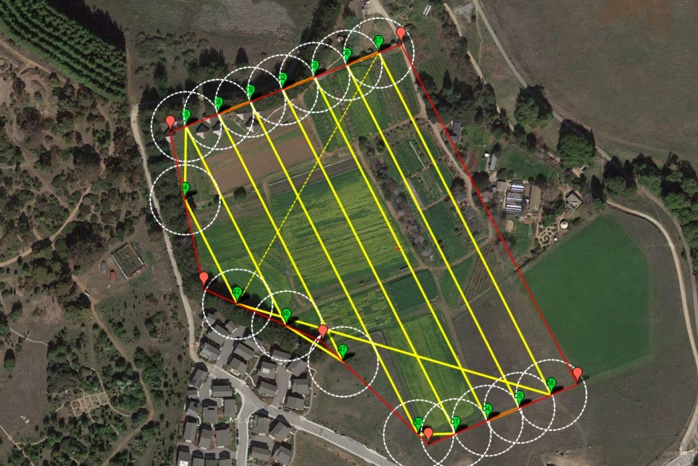
It’s impossible to talk about the African economic landscape without having to mention Agriculture. Agriculture is the major source of income in Africa. According to the African Development Bank’s Report, agriculture is the highest employer of labour in Africa. Yes, 7 out of every 10 people working in the rural areas (which constitute almost half of the population) are directly or indirectly involved in agriculture. Thus, it’s not difficult to identify why it is practically impossible to transform the local economy without a major transformation in the agricultural sector.

As an agribusiness expert, I’ve been asked several times of the opportunities that are in this sector for the elites. The answer is always simple; if you must make a fortune through agriculture, you will have to look beyond now. You need to understand the trend and try to forecast what will happen to the sector in the next five to ten years, and even 50.

While I may not be able to tell you all the changes that will take place in the African food system, I can authoritatively say that the future of agriculture in Africa is not going to be cutlass and hoe. That era is fast fading away. We are in the era of information, and knowledge is going to play a pivotal role in this critical sector.

It’s good to own lands, tractors, irrigation system and all the inputs, but if you do not have the right knowledge, you will not make much impact on agriculture in the nearest future.

I’m not only referring to the technical knowledge of how to farm, harvest or add value. As good as these are, if that’s all you’ve got, you are also going to be at the losing end.

The knowledge that will put you ahead of the competition in agriculture is what I refer to as the “Integrated Knowledge”. It cuts across farm and inventory management, people and financial management, marketing distribution and logistics through low tech knowledge like web designing and software development to high tech knowledge such as blockchain technology, artificial intelligence, machine learning, big data, etc.

In the nearest future, you don’t have to get your hands dirty on the soil to reap the benefit of the Agricultural revolution.

Access to sufficient food is everyone’s responsibility; irrespective of our career and expertise. If you can think outside the box, you will definitely have a place to make a significant contribution.

A massive revolution in African agriculture is budding and it is going to be driven by knowledge. The earlier you build your capacity to take advantage of the redesign, the better you will be positioned. 


Ajaoko Agribusiness Academy provides a tailor-made, comprehensive practical training you need in agriculture. Talk to us on 08167303461 to see how you can seize these opportunities.

The Importance of Good Packaging

2

I stood for some minutes at the popular Abakpa Texaco Bus-Stop (in Enugu metropolis) to admire the prowess of the numerous commercial bus conductors around the area. I observed the different ways they call out for customers. If you don’t listen attentively you may not understand what they were saying and the route they ply. But I noticed something different about these conductors. There are the young men with their spectacular hairdos: some with dreadlocks, some with bushy hair and others with clean shaves and bushy beard.

And then there are the elderly men, all carrying normal ‘African gentleman’ hairdo. I found out that most of the young men wore torn jean trousers and T- or round-neck shirts while all the elderly men wore pants and button down shirts. The remarkable thing about these people is that the young men do not have difficulties attracting passengers into their buses, unlike the elderly ones. If you ask me, I’ll say that the elderly ones do not look like bus conductors, so they had hard times convincing customers of their profession. Their packaging speaks something different.

Packaging here is talking about how an outward appearance tells the inward quality. It is about how things are seen by people based on how it was presented to them. The packaging I’m talking about here isn’t just about how goods are packaged and presented, but also how a person presents himself to others. Packaging is a very simple act which can either attract or repel the right people.

I know that a lot of people think that the outward appearance doesn’t really matter. These set of people believe that the most important thing is the content of the package. Yes, the content is very important, but, as the Igbos say, the eyes will eat first before the mouth. This is to say that if the thing isn’t appealing to the sense of sight, the desire to consume it will not be there. I will give some insights on why good packaging is necessary.

First of all, good packaging creates a very good impression when seen for the first time. People will be very impressed with what they observed before trying to find out what it contains. For example, I will not be impressed if I enter a banking hall and see shabbily dressed staff giving shabby services in shabbily equipped offices. I don’t think I will want to entrust my money to them. They will have to do a lot of work to convince me of their competency.

The second reason is attractiveness. Has anyone else ever wondered why biscuits are packaged in beautiful shiny wrappers? If nothing else, it attracts buyers who have it somewhere in their mind that what is inside that packet will be as good as what is outside. This is also the same thing with people who packaged themselves properly. They always give out positive aura which endears them to people.

Good packaging breeds trusts. Ok, so I walked into a school to make an enquiry and the first teacher I met couldn’t speak two complete sentences without committing a grammatical blunder. The first thing I will tell myself is that the school doesn’t employ qualified teachers, and is therefore not good enough. This is also the case with electronic machines packaged in inferior cartons. The buyer will believe that if the producer isn’t rich enough to afford a good packet, he wouldn’t be rich enough to create a good machine.

Good packaging brings respect. There is this viral meme about a lawyer wearing a robe with holes and a torn dirty wig. I don’t think that sort of a lawyer will be respected by his clients and society no matter how good he is.

Ok, we have seen some reasons why we need to package ourselves and our goods properly, let us look at some ways we can achieve that.

  1. One important thing to look into is on improving the general outlook of our offices. The first impression people have when they walk into an office matters a lot. They will take in the neatness, arrangement of furniture, type of furniture and other aesthetic features in the office. If I walk into a hairdressing salon, for example, and it looks unkempt and shabby, I will beat down the price of the hairdo to the minimum. I won’t accept to pay a high price for whatever services I receive there, even if they were good. This attitude will of course change if I find myself in a well furnished and equipped salon (here, I’ll be praying that I can afford whatever they call out).
  2. The wrappers and packets of goods should be durable, as well as attractive. There is a need for this because people are easily attracted to goods’ packets. A good example of this is the way goods are packaged in pastry industry. If you have noticed, a lot of people are into chin-chin making but only few supply theirs outside their locality. This is because most of them packaged theirs in cheap poly bags, which makes it unsafe and inconvenient to move the goods from one place to another. Besides, people believe that foods packaged in sealed and high quality wrappers are more hygienic.
  3. The language we use says a lot about our occupation, social class and identity. There is need for us to work on our choice of words. Take the examples of the commercial bus conductors, the young men among them have this slang they use that the elderly ones do not. This gave them the edge needed in their occupation. This should also be the case with other professions. Speak the way that shows who you are. Work on your use of language. You can do this by standing in front of the mirror for five minutes every day to talk to yourself. I will come back later in another article to throw more light on this.
  4. The saying that we are addressed the way we dress should also be considered here. I am not saying we should spend all we earn on clothing. At least we should look smart and decent. And also, our dressing can tell our profession. So, wear outfits that are suitable for your profession. Our society has actually chosen outfits for every occupation. Which one is for yours? Remember, it is all about packaging. You are trying to tell what is inside you from your outward appearance. If you are a teacher and you dress like a dancer, people will treat you like a dancer. Don’t confuse people with your dressing.
  5. Our attitude says much about us too. Some professions require politeness while some require rudeness (lol – that’s Naija for you). Honestly, it is hard to see a commercial bus conductor that will not rudely demand for the transport fare. People are used to that, anyway. So, let your attitude depict who you are. If you give people the attitude that is contrary to that which is expected of someone in your profession, they will place you at the levels you may not like. Be polite and nice to people irrespective of what is inside you.
  6. There is need for companies to invest in their staff. They should organise in-house trainings and seminars for them so as to aid their professionalism. If it is possible, companies should make soft loans available to their staff so they can easily sponsor their further studies and provide for their basic needs. Companies that are rich enough can provide car loans for their staff too. Honestly, prospective customers also check out staff of companies. I know I do that a lot. A company with happy and good looking staff is worth making business with. I mean, if they can take care of their staff, they can take care of your investment.

Ok, so we have seen what packaging can do. This is not just for businesses. Workers too need to package themselves. The unemployed need that too (you can’t go into an office to seek for a job if you don’t have a good front).

However, I am not saying that we have to spend all our money on beautifying the outside while the inside is rotten. Work on both the outside and the inside. The truth is that the outside is what brings in the business, or the job, but the inside is what keeps it.

The Molue Strategy in Marketing

0

The evolution of the internet and the emergence of digital channels have made it easier for brands to build impactful connections with their consumers at a fraction of the cost when compared to other traditional media. The presence of this poses a challenge. The challenge is that the digital space is becoming crowded with average consumer being exposed in a day to more content than he can consume in a lifetime. 

It becomes imperative for brands to constantly craft unique and innovative ways to standout in a crowded ecosystem. There are myriads of ways to accomplish this; one of which is yet to be fully maximized is the creation of an exclusive social community. Yes, a platform that allows consumers to both connect and consume in one platform. 

Another is taking a sales and marketing learning from one of the most iconic means of transportation in Nigeria: The Molue.

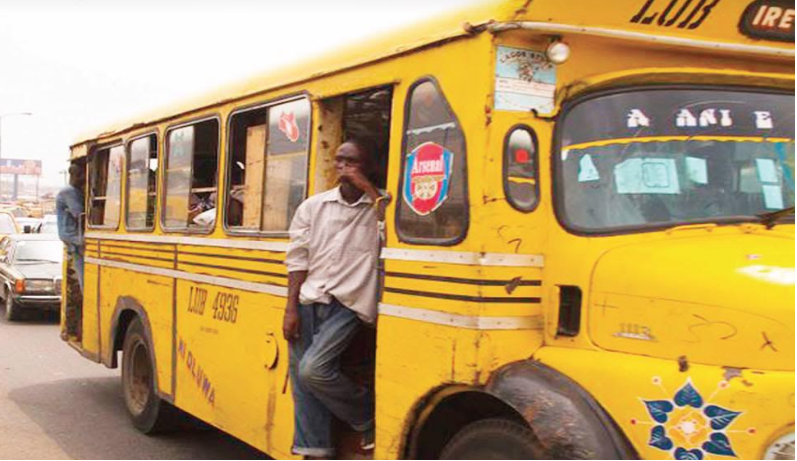
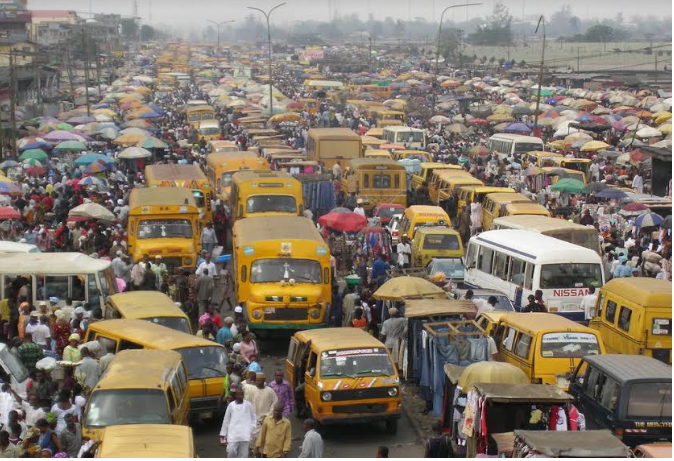
Molue is the nickname given to the huge yellow buses that at a time was the major means of transportation for many Lagosians particularly the middle class. It starts operating as early as 4am and continues till midnight. The rugged and rickety buses are legendary. And their availability has made it the King of the road. It was almost impossible to travel on major routes without coming in contact with it.

One of the striking features of a Molue is that it is large and spacious and could take up to 50 people in a single trip; you could call it the 44/99 principle as observed by Fela Anikulapo Kuti.

Friendship with a stranger usually starts from recognition, an awareness of his presence, a first impression and a point of the meeting. E.g. If you regularly commute in public transport, you would notice that there’s a strong recall when the stranger you met the first time enters your bus again on a different day. Sometimes you feel confident and ready to interact with him though on a casual level.

Even merrier if it’s the opposite sex, and there was some form of eye contact the last time. I digress.

Let’s take a journey into the interesting world of a Molue, a large ecosystem where we can learn new ways to engage our consumers online. Buckle your seat belt.

 In a Molue, there are two entry points manned by two conductors who are tasked with the job of getting passengers into the bus by calling out their routes.

Often times, there’s always a struggle to get in; this is because of an identified consumer need- “I need to get from point A to Point B now and if I don’t double my effort, I might spend the rest of the day here’.

Inside the Molue is an ecosystem filled with 6 types of personalities.

The Rumour-Monger: He’s in the bus to propagate fake news; this is often triggered by ignorance

The Politician: The one who always has a perspective on every political issue in the country and claims to be there when Nigeria found Oil in Oloibiri.

The Preacher: The man of God who takes a visible spot to share the good news to the people.

The Learned: He’s the one that spends the trip asking himself what the ‘hell’ he’s doing in this bus. He has a supposed educated opinion which can’t be comprehended by the majority of the passengers.

The fearful: They’re the driver’s human speedometer, should in case he starts to receive a phone call from Heaven. They are there to ensure he’s called into the order and you can see this from their occasional screams.

Then there’s the final group called the Sales Team. Their brilliance is non-nonpareil.

Note: In a Molue, everybody is everybody’s friend on matters they share a similar interest in, anything outside that, it’s a war.

Let’s do a quick dive in on the Sales Team.

We have the Sales Man or Woman; a brilliant chap who knows how to get to the hearts of his target audience. Yes, a first-class sales man who has an above average knowledge of the product he is selling to them.

They speak so well about the product that sometimes you just want to hear them speak on, even when you’re convinced that it’s a lie.

I had an encounter with one before, the salesman brought out a disposable cup from his bag (which looked like his everyday pitch kit). The cup had a green leaf on it, and he started by saying anywhere you see this green leaf, it means it is an authentic and international product. Next, he brought out the product he wanted to sell and went on praising it and showing people it had the same green leaf we had just seen. I was dazed about this act of mental trickery but most of the passengers seemed intrigued and interested.

But that’s not all about the Sales Team, the salesman always has some unidentified hyper-men positioned strategically to corroborate whatever he says.

For Example, the first hype-man goes “I bought this product before and it brought instant relief to the toothache I was feeling, it works”. Second, with a dramatic tone “True o, I have heard about this product before, my neighbor spoke to me about it, in fact, give me two”. This basically begins to arouse curiosity, coupled with the Salesman’s pitch.

Identifying this interest, the salesman goes “I have only ten left, who else is buying?”. Remember the people on the bus are more than ten, so basically, supply can’t meet demand, then another tussle starts between the passengers.

The Salesman might probably have more than ten products but he needs to stick to the script, he can sell the others in his next trip.

So let’s connect all this; in this short view, some processes took place but I’d just highlight the topline.

First is Need: as a brand it is important to know what makes your consumers tick and build around that. They would only respond favorable when they perceive that your brand understands their needs.

Second is Recognition: their needs are established but they also seek a person, place or thing that can solve it. Across the journey to fulfilling this need your brand has to be visible. With digital, you can effectively map your consumers online journey and engage them in the moment.

Third is Invitation: onboard your potential customer with a compelling call to action. It’s an important step in converting your prospective customers.

Fourth is Engagement: building trust and interactions with your consumer which has a way of shaping the way the brand is perceived.

Finally, Sales. I believe that if you can get into the minds of the consumers, getting into their pockets won’t be difficult (well except if they don’t have the money)

Advertising and marketing are swiftly evolving and I personally believe brands should invest in building a community- Niche or Mainstream because it converts the relationship from transactional to communal.