DD
MM
YYYY

PAGES

DD
MM
YYYY

spot_img

PAGES

Home Blog Page 677

$376M Raised: Why BlockDAG Rises Above Pi Network and Binance Coin

0

The crypto market is buzzing with progress from established names and ambitious challengers. Pi Network is navigating its Open Mainnet phase, while Binance Coin is targeting bold new price levels. Yet another project is making headlines by building strength across all fronts.

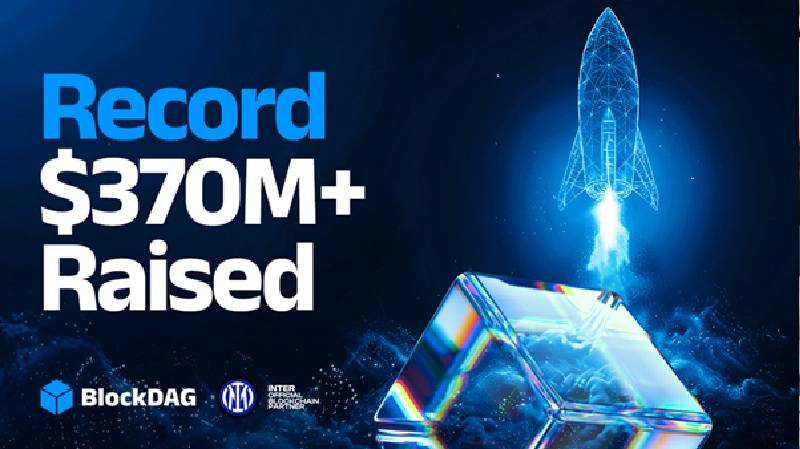
BlockDAG has already raised more than $376 million, sold 25.2 billion coins, and priced its Batch 29 at $0.0276 ahead of a $0.05 launch. Its momentum comes not from hype alone but from a focused plan of ambassador outreach, top-tier sports deals, and proven mining hardware.

For those searching for the best long term crypto option, BlockDAG’s ability to combine adoption incentives with tangible results sets a higher bar. It shows that even leading projects could struggle to keep pace.

Pi Network Looks for Stability After Mainnet Launch

The Pi Network outlook has improved in 2025 following its Open Mainnet release on February 20. This upgrade ended the closed environment and enabled integration with wallets, exchanges, and other chains. Thousands of new decentralized apps have joined its blockchain, raising transaction activity.
Now trading at $0.4015, Pi has rebounded nearly 10% after sliding to $0.335, its lowest in months. This rise reflects fewer token unlocks, whale buying, and supportive chart signals. Still, migration issues and KYC delays persist, with only 9 million tokens migrated and 19 million users verified.

Although Pi shows stronger fundamentals, exchange delays, governance risks, and supply growth remain barriers. Its future depends on balancing ecosystem growth with supply pressure, something BlockDAG already manages with clear execution.

Binance Coin Maintains Bullish Momentum

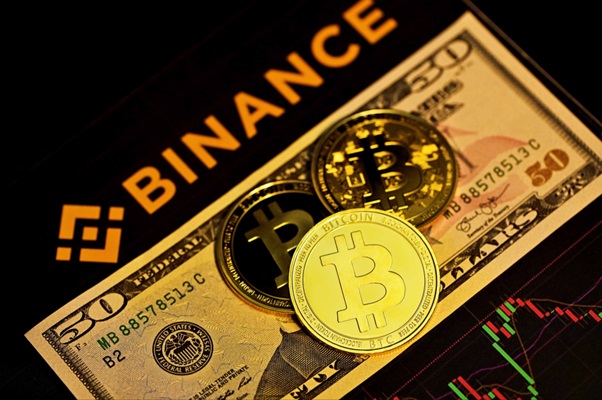
Binance Coin (BNB) is holding a bullish pattern that points toward higher targets. Trading near $777, its chart signals potential moves to $950, $1,050, and even $1,200 if momentum holds. It currently rests on strong support between $650 and $700, following a breakout similar to Bitcoin’s earlier runs.

Near-term resistance lies between $820 and $830, while the $850 to $950 zone is the next critical test. A clean break above that level could push BNB into four-digit prices. To sustain growth, however, it must keep demand near $780 to $790.

Despite its strength, BNB’s large-cap size means slower percentage gains compared to younger projects. That is why BlockDAG’s presale progress and infrastructure delivery stand out as a stronger long-term growth play.

BlockDAG: $376M Raised, Global Expansion & Proven Mining Tech

BlockDAG’s rise is powered by three major drivers: a global ambassador network, leading sports partnerships, and mining hardware built for both scale and accessibility.

The Ambassador Program turns members into promoters by rewarding event hosting, content creation, and outreach efforts. This approach spreads awareness across multiple regions and embeds BlockDAG into communities before its exchange debut.

Sports Partnerships extend BlockDAG’s reach into mainstream audiences. Its work with the Seattle Orcas cricket team and the Seattle Seawolves rugby team includes NFTs, fan coins, matchday rewards, and exclusive content. This strategy bridges blockchain with sports, building trust and emotional ties while pushing brand recognition further.

The July 23 Live Demo of the X1 and X10 miners highlighted its ready infrastructure. The X1 mobile miner, with over 2.5 million users, allows mining directly from smartphones. The X10 hardware miner can generate up to 200 BDAG daily at the $0.05 listing price, proving its scalability.

Currently priced at $0.0276 in Batch 29, BlockDAG has sold over 25.2 billion coins, raised more than $376 million, and earned $7.8 million in miner sales across 19,300 units. This mix of grassroots growth, mainstream exposure, and working products creates a strong foundation for long-term success.

Final Take: BlockDAG Leads the Long Term Crypto Race

Pi Network’s progress is tied to its Mainnet but slowed by migration and governance challenges. Binance Coin shows bullish potential yet faces natural limits as a large-cap asset.

BlockDAG is pushing forward with clear global growth strategies and functional infrastructure. Its ambassador system, sports partnerships, and mining tools position it as more than just a presale project. With $376 million raised, a clear gap to its $0.05 launch, and millions already using its products, BlockDAG has the mix of credibility and growth that few projects achieve before listing.

For anyone weighing the best long term crypto options, BlockDAG is emerging as the project capable of outperforming both new challengers and established names in the years ahead.

Presale: https://purchase.blockdag.network

Website: https://blockdag.network

Telegram: https://t.me/blockDAGnetworkOfficial

Discord: https://discord.gg/Q7BxghMVyu

Tekedia and Blucera Launch AI Consulting Practice for African Enterprises

0

Good People, I am happy to announce that Tekedia Institute and Blucera have launched an AI consulting practice with focus on African enterprises. Today, boards and executive management of banks, insurance firms, manufacturers, etc across Africa are coming to us to provide business and technical leadership for their AI journey.

With a winning academic program in Tekedia AI in Business Masterclass and Tekedia AI Technical Lab, we have become a trusted knowledge partner in our continent. Now, we want to be in your office, with knowledge and technical solutions, to ensure you get AI right.

Boards and Executive Management, I have a message: Are you tired of those endless “AI working groups” that produce slick presentations but no tangible ROI (return on investment)? It is typical as many organizations struggle to move from strategy to successful implementation. Our mission is to bridge that gap by providing deep technical expertise, custom solutions, and proven adoption strategies that drive measurable business outcomes.

Our business growth philosophy is anchored on our AI Centricity Framework which is designed to empower your customers, employees, technologists, and partners/ suppliers for an AI-powered organization by training, and building AI agents and generative AI solutions. The destination is AI-anchored new business models that enable whole-scale business transformations.

Go here, and learn how to work with AI practising consultants, irrespective of the size of your firm.

OpenAI’s Altman warns U.S. may be underestimating China’s AI drive amid shifting chip policies

0

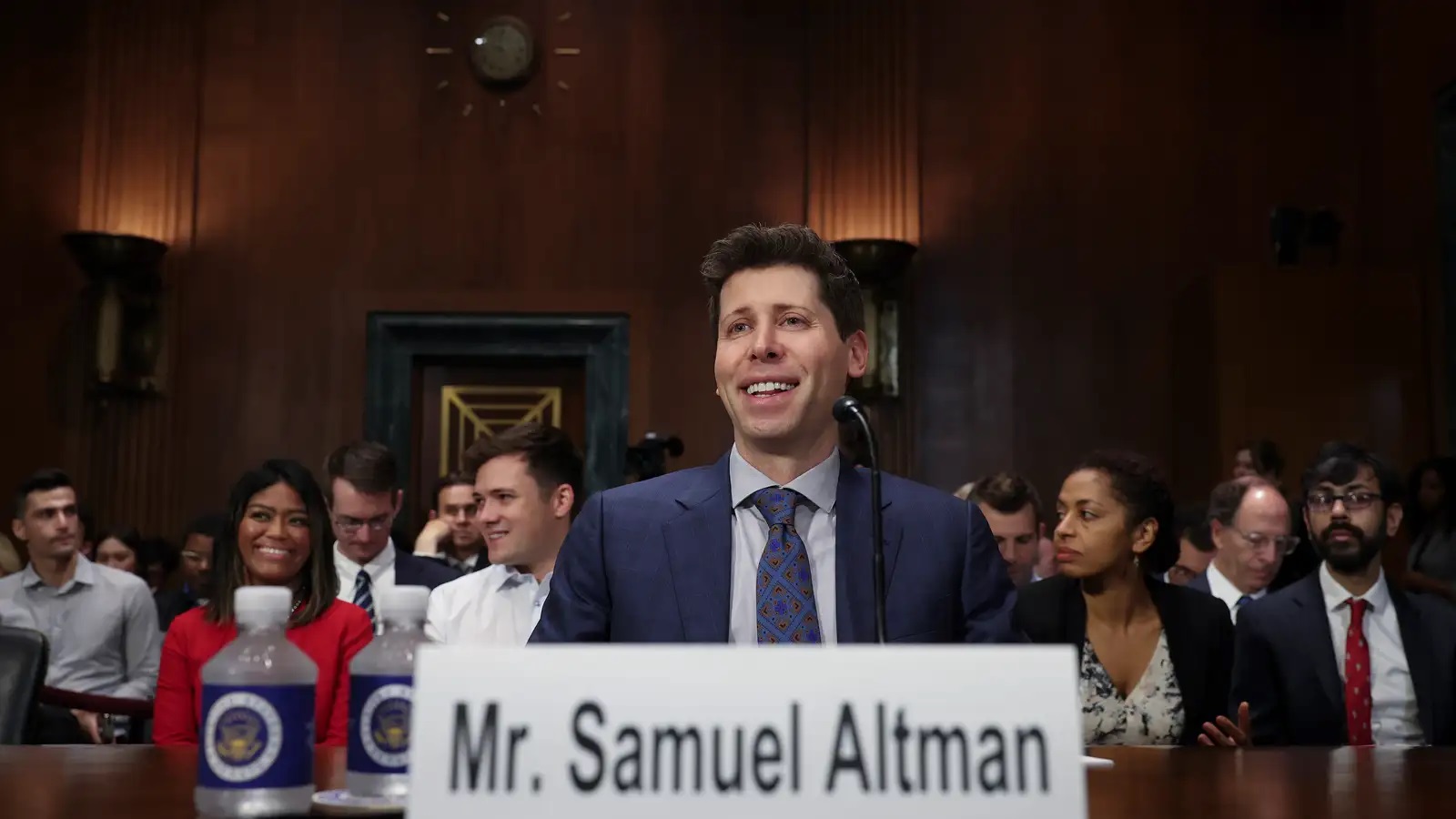
OpenAI chief executive Sam Altman has warned that the United States may be underestimating both the scale and complexity of China’s rapid progress in artificial intelligence, stressing that export controls alone are unlikely to stop Beijing’s rise.

“I’m worried about China,” Altman said, during an unusually candid on-the-record conversation with a small group of reporters over Mediterranean tapas in San Francisco’s Presidio. He described the AI race between Washington and Beijing as “deeply entangled” and far more consequential than a simple scoreboard comparison of which side is ahead.

“There’s inference capacity, where China probably can build faster. There’s research, there’s product; a lot of layers to the whole thing,” he explained. “I don’t think it’ll be as simple as: Is the U.S. or China ahead?”

Altman’s skepticism was most pointed on the question of U.S. export controls. Washington has steadily tightened restrictions on semiconductor sales to China, hoping to choke off the hardware needed for advanced AI development. But Altman suggested the approach is mismatched against technical realities.

“You can export-control one thing, but maybe not the right thing… maybe people build fabs or find other workarounds,” he said, referring to fabrication plants that produce cutting-edge chips.

“I’d love an easy solution,” he added. “But my instinct is: That’s hard.”

The Biden administration had previously imposed curbs on the sale of high-end GPUs, but in April, President Donald Trump went further, ordering a halt on shipments of advanced processors altogether — including models that had been redesigned to comply with Biden-era rules. The result was a sweeping embargo that rattled Silicon Valley and further strained U.S.–China relations.

Yet the policy has already begun to loosen under pressure from American industry. Nvidia’s CEO Jensen Huang had criticized the restrictions, saying that it costs the company about $50 billion in revenue. He added that it emboldens China’s domestic production.

Last month, Washington quietly granted Nvidia approval to export its H20 processor to Chinese clients, a chip designed to meet “China-safe” thresholds while still offering enough computing power for commercial AI tasks. The move came as part of a broader agreement that controversially requires Nvidia and AMD to hand over 15 percent of their China-related chip revenue to the federal government — a compromise critics say illustrates the difficulty of balancing national security with corporate interests.

China, meanwhile, has responded with caution. Beijing’s cybersecurity regulators recently summoned Nvidia officials to discuss “serious security concerns” about U.S.-made AI processors, warning that chips such as the H20 could contain backdoors capable of tracking or disabling Chinese systems remotely. Analysts say the move highlights Beijing’s determination to double down on self-reliance by accelerating domestic chip production, with Huawei and other Chinese suppliers already stepping up to fill the gap left by U.S. restrictions.

Altman’s warning underscores the risk that Washington’s export-control strategy may not only fall short but also spur China to invest even more aggressively in its own semiconductor ecosystem.

“My instinct is that doesn’t work,” he said of U.S. restrictions.

The challenge is thus becoming clear to policymakers in Washington: limiting chip exports to China will only aid its domestic semiconductor manufacturing, creating a leadership opportunity for the Asian giant in the AI arms race.

SoftBank to Invest $2 Billion in Intel Through Stock At $23 Per Share

0

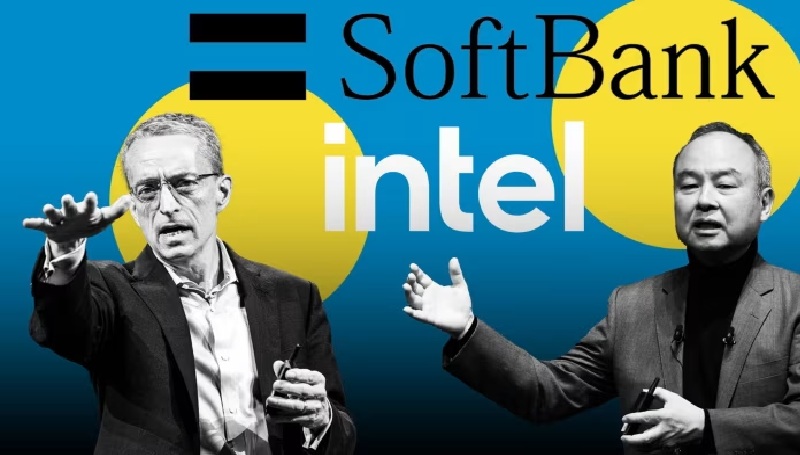
Japanese conglomerate SoftBank has agreed to make a $2 billion investment in Intel, a move that signals renewed confidence in the U.S. semiconductor industry and aligns with Washington’s aggressive push to bring chip manufacturing back onshore.

The deal, announced Monday after markets closed, will see SoftBank purchase Intel common stock at $23 per share. Intel shares, which ended the day at $23.66, jumped more than 5% in after-hours trading following the announcement.

SoftBank Chairman and CEO Masayoshi Son described the investment as a commitment to “advanced technology and semiconductors in the United States,” calling Intel a vital player in ensuring America’s long-term leadership in innovation.

“Semiconductors are the foundation of every industry. For more than 50 years, Intel has been a trusted leader in innovation. This strategic investment reflects our belief that advanced semiconductor manufacturing and supply will further expand in the United States, with Intel playing a critical role,” Son said.

For Intel, the deal offers a powerful vote of confidence as the company fights to reclaim ground lost to rivals like Nvidia. The chipmaker has been undertaking a sweeping restructuring under new CEO Lip-Bu Tan, who was appointed earlier this year. Intel has cut back non-core businesses, including shuttering its automotive architecture arm and laying off most of the staff there, while also reducing its Intel Foundry division workforce by as much as 20%. The aim is to refocus on its most profitable businesses: client processors and data centers.

Tan welcomed the SoftBank investment, framing it as a deepening of ties with one of the world’s most influential technology investors.

“We are very pleased to deepen our relationship with SoftBank, a company that’s at the forefront of so many areas of emerging technology and innovation and shares our commitment to advancing U.S. technology and manufacturing leadership. Masa and I have worked closely together for decades, and I appreciate the confidence he has placed in Intel with this investment,” Tan said.

The deal also ties into a broader political context. President Donald Trump has made semiconductor manufacturing a centerpiece of his domestic industrial policy, repeatedly stressing that America must reduce its reliance on foreign chip suppliers, particularly from Asia. Just last week, the Trump administration threatened new tariffs on imported semiconductor chips, part of its strategy to spur domestic investment in the sector.

SoftBank’s decision to pour money into Intel comes against that backdrop and is widely seen as part of the company’s pledge to expand U.S. investments under Trump’s push for domestic manufacturing.

SoftBank itself has been actively ramping up its presence in America. Beyond its stake in Intel, the company recently acquired Foxconn’s former factory in Lordstown, Ohio, which it plans to repurpose into a hub for AI data centers. The move underscores Son’s conviction that the future of artificial intelligence depends heavily on robust chip manufacturing and data infrastructure — both areas in which the U.S. is seeking to assert global leadership.

For Intel, the SoftBank deal provides more than just a financial boost. It positions the company as a central partner in the geopolitical struggle over semiconductor supremacy, a sector increasingly at the heart of U.S.-China tensions. Washington has imposed curbs on advanced chip exports to Beijing, while China, in turn, has accelerated efforts to build up its domestic chipmaking capabilities. Analysts say SoftBank’s investment strengthens Intel’s ability to remain competitive in this volatile landscape.

The announcement also comes as CEO Lip-Bu Tan faces political turbulence of his own. President Trump recently called for his resignation, citing supposed conflicts of interest — an accusation made without evidence. Reports also surfaced that the administration had explored taking a direct stake in Intel as part of its broader effort to shore up domestic chipmaking.

While those discussions remain uncertain, the SoftBank deal appears to provide the political cover Intel needs at a critical time. It signals to Washington that global investors remain bullish on U.S. technology leadership, especially in semiconductors — an industry Trump has described as the “backbone of the 21st-century economy.”

As the shares of Intel surged after the announcement, some analysts note that the deal could inject much-needed momentum into the company’s turnaround story.

Shiba Inu’s 76% Drop from Its ATH Triggers Strong Investor Migration to Competitor Token Below $0.0025 in August 2025

0

Shiba Inu, the meme coin that once dominated conversations, is now faltering. After plunging approximately 76% from its all-time high, investors are diversifying, and a fresh competitor priced under $0.0025 is gaining real momentum. Amid this shift, Little Pepe (LILPEPE) is emerging from its presale with powerful signs of staying power—and its narrative couldn’t be more compelling.

The Fall of a Giant

Shiba Inu’s steep decline isn’t just statistical—it signifies eroded confidence. Once ranked among the top cryptocurrencies, SHIB has now slipped beyond the top 20, holding a market cap of roughly $7.26 billion and trading at around $0.0000123. That drop equates to nearly three-quarters loss from its previous highs. The fall isn’t solely price action. High-impact whale transactions have dried up, falling by 100%, which drastically reduced liquidity in August. Internal friction further undermines investor assurance: leadership remains shrouded in anonymity, leaving retail traders skeptical. However, planned developments include a Layer 3 blockchain, metaverse experiences like Shiba Eternity, and even a native stablecoin. These could elevate its utility and pave a path to recovery.

Why Investors Are Seeking Alternatives

The current meme-coin environment is shifting. No longer are cute dogs enough to sustain valuation. Investors now demand infrastructure, tokenomics that make sense, and transparent leadership. Shiba Inu, which once represented pure meme-driven speculation, has now become a cautionary tale of stagnation and unmet potential. This void creates an opening for tokens that combine viral energy with strategic design and utility. Packs of disappointed SHIB holders are sniffing out alternatives that can outpace inertia, offering both upside and substance.

Enter Little Pepe (LILPEPE): Presale Power Meets Utility Vision

Among emerging contenders, Little Pepe stands out. Its presale has soared through nine stages, raising over $18.8 million and moving more than 12.5 billion tokens—now entering Stage 10 at $0.0019. Today marks a new milestone: the project has secured a CertiK audit, a mark of security and transparency. Unlike many meme coins, LILPEPE—built on an EVM-compatible Layer 2 blockchain—delivers real infrastructure. Transactions are fast and affordable, fees are minimal, and technical hurdles common to Ethereum’s mainnet are mitigated. Tokenomics are transparent, allocating presale supply, with additional allocations for liquidity, staking rewards, and marketing, all underpinned by zero-tax trading. The presale’s rapid sell-outs underscore market appetite for this blend of culture and code. Each stage has outpaced the last: Stage 6 concluded early with $8.8 million raised, Stage 7 launched at $0.0016 and leaped past $10 million, and Stage 8 wrapped up cleanly with over $12 million raised.

Market Recognition and Community Momentum

Little Pepe isn’t just trending—it’s being acknowledged. Cointelegraph reports that Stage 9 was completed in record time, with Stage 10 now live at $0.0019. Meanwhile, coverage in regional outlets highlights the project’s potential to eclipse Shiba Inu: LILPEPE has raised over $18.8 million and is emerging as a serious contender thanks to its Layer 2 backing and strong community initiatives like its $777,000 giveaway. Unlike SHIB’s fading narrative, LILPEPE’s story is growing. It’s not built on nostalgia or speculation alone—its foundation is scalability, governance, and real-world utility. That transition makes it irresistible to investors looking for bold upside, not past glory.

A Shift in Meme Coin Dynamics

The meme coin landscape is evolving. SHIB once exemplified memetic success on hype alone, but it failed to innovate fast enough. The present landscape favors tokens that combine cultural resonance with utility, transparent management, and purposeful infrastructure. LILPEPE embodies this evolution. It keeps the vibrancy and humor of meme culture while anchoring it in speedy, low-cost transaction infrastructure. For those still holding Shiba Inu, this moment calls for reevaluation. Without clear signs of renewed leadership or strategic breakthroughs, the downside is real.  Investors might see Little Pepe as a forward-looking choice. The presale performance, audit credentials, and infrastructure-first approach present more than potential but a structured path toward utility and growth. For those looking to redeploy capital from declining bets into next-gen innovation, LILPEPE offers a compelling runway.

Conclusion: A New Era of Meme Coin Investing

Shiba Inu’s dramatic drop has become pivotal. It reveals what happens when sentiment fades and substance is absent. In contrast, Little Pepe exemplifies what meme coins are becoming: projects rooted in culture yet powered by utility. This isn’t just hype. LILPEPE has demonstrated the capacity to build, sell out presale stages, secure audits, and capture market excitement. For investors aiming to ride this next wave, LILPEPE may well represent the top-rising token of this cycle.


For more information about Little Pepe (LILPEPE) visit the links below:

Website: https://littlepepe.com

Whitepaper: https://littlepepe.com/whitepaper.pdf

Telegram: https://t.me/littlepepetoken

Twitter/X: https://x.com/littlepepetoken