DD
MM
YYYY

PAGES

DD
MM
YYYY

spot_img

PAGES

Home Blog Page 6795

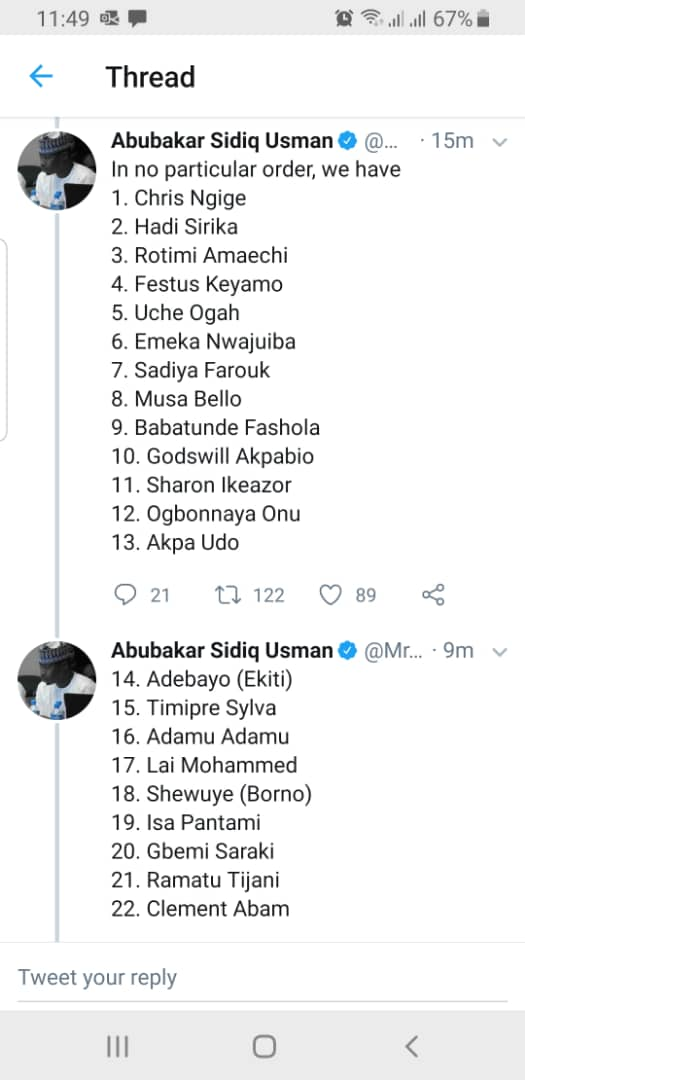
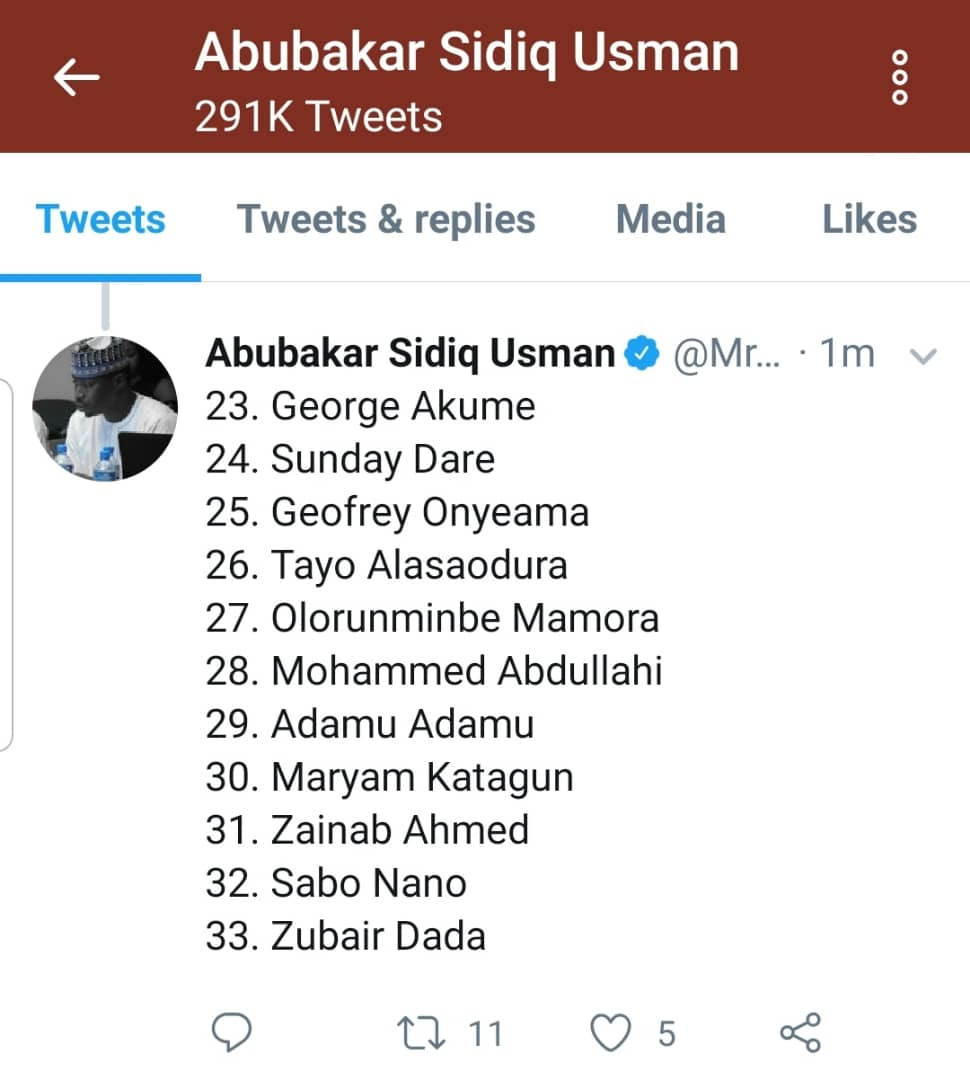
Full List of Buhari Ministerial Nominees for Second Term – Akpabio, Keyamo, Fashola, etc

4

These are the names President Buhari sent to Senate for confirmation as he gets ready with his cabinet for his second term in office.

The Fallacy of the Fourth Industrial Revolution in Nigeria, Africa

0

By Ajayi Joel

We need electric cars in Africa by 2020!

If there’s any way to ruin our economy, it is to quickly assume we are on the same level of development as the western countries. This is no racism but even down to fashion, we are not there. Let’s leave fashion aside, I’m here to debunk the myth that we are in the age of 4IR (4th industrial revolution).

What’s my reason for writing this piece, and is there anything at all to learn from this? We, yes, both the government and non-government!

I have seen a lot of start-ups jump the gun with their ideas, and while it may seem so nice to me, it would have been better if the ideas weren’t targeted at Nigerians or even Africans. Unfortunately, they are. What do I mean by jump the gun? What I simply mean is that the industrial revolution has different phases, and these start-ups are way ahead in the phase down to the fourth.

Here’s why we are not in the fourth industrial age and why we cannot skip the phases.

  1. The fourth industrial age is the age of automation: Explaining this succinctly, I will say automation can only work if there is a structure. When I mean a structure, a structure is a set of systems put in place to ensure that machines keep working in positions that humans should. I am here to say that our jobs are firstly safe, and that only a few jobs will be replaced in the next decade if we do not go through the other industrial ages. Right now, we are in the first industrial age, and the first industrial age is characterized by discoveries. We are not in any way near the second industrial revolution which is the age of industrialization.

Structures can only be set based on previous experience. The western world was able to come up with a structure because they saw or discovered that the previous system had set backs in different areas and they saw the need to overhaul, replace, and modify those existing systems, and the previous existing system was the age of assembling and information. That phase came about when they also discovered that there was a need  for advancement from the industrial age.

  1. African countries cannot manufacture: Fine, let us praise what Rwanda is doing in the area of manufacturing. However, talking about Nigeria, we have not begun to manufacture, to produce and for us to be able to do this, we will need to depend on machineries. Machineries that we need to invent, or bring in. There’s this hype that every youth should go learn AI skills and I wonder if they want to work in Nigeria or get gigs outside the country because unemployment will rise if that’s what all our youths rush into. We cannot let AI automate food process if we haven’t begun planting. We cannot get AI to plant for us if we do not work to get the seed.

The next stage that the government should pay attention to is the production age, the manufacturing age. This stage will provide more jobs than we can imagine. If the economy will thrive then we cannot depend on the gig economy alone; we need to depend on the industrial economy. Matter of fact, we will not dwell so much in this age but we need to get there first.

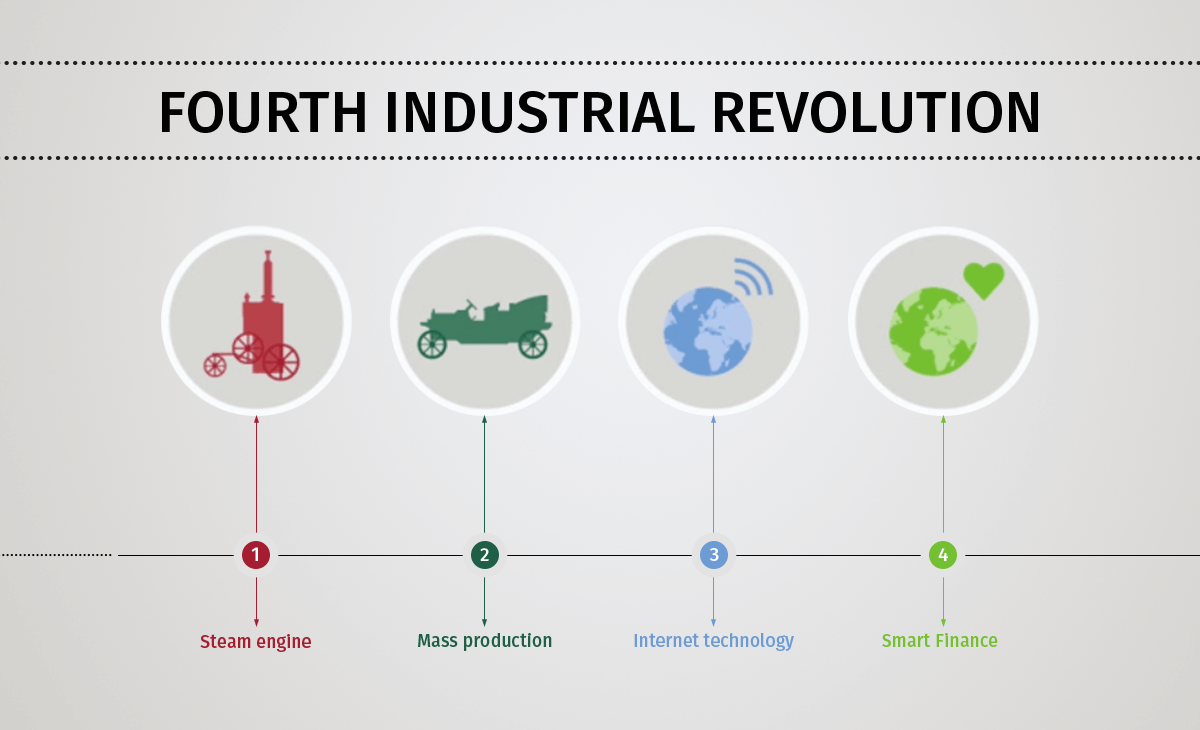
4th industrial revolution

The skill set required to work in the industrial age is quite different from the ones required to work in the skilled economy but both are necessary if we want to move forward. Production and manufacturing should be at the heart of the government of African countries as this will both provide more jobs, determine the path which we will follow in the coming times. You will not know which tractor will work on your farm if you have not tried your hoe on it. Now, that’s a proverb.

  1. AI runs on data: This is the third industrial revolution and we are not anywhere near it. We do not have any reasonable database in Nigeria. Automation will only work if there is some sort of accumulated information overtime that gives it instruction and helps it behave in a certain way before it begins to build its own mind.

You cannot tell a robot to walk if you do not train it the way humans are walking. The third industrial revolution is the information age and why I’m so convinced that we have not gotten to this age is because at this stage, there will begin to be lots of displacement of factory workers, those who sit in offices to operate manually will be displaced as well as data will have channels and accessing it will be seamless.

You will not need to queue in offices to get manual recording as there will be a linking between all your profiles. This is the age of assembling as well. Data will be building itself to provide a structure which I mentioned earlier. How do I know we are not in the information age in Nigeria?

Someone once posted on Facebook that we’d begin to use AI in marketing in Africa.

In Africa? For real? AI runs on data so does marketing. Do we have a database for information in Africa? So what does AI want to process to begin to run on its own? I spent 1 good year making researches because I wanted to build an online platform for learning.

Google gave me vague answers. Maybe you should Google the number of youths in Lagos between 18 and 26 who have interest in design. You’d find no response. Go to Facebook and do page search, the response will be very few. For those doing digital marketing, getting huge number of people on a certain keyword sometimes requires much more money.

How did I get data? Google form; I put a clickbait. I offered one of my exclusive books “After school, what next” for free only if you followed a link.

The link directed you to my Google form. You’d need to answer those questions compulsorily, then place your email. After that, I’d tell you to help me share.

That was how I got data.

In our bid to clamor for electric cars, we totally overlook the fact that electricity needs to be stable, and that the transportation system and logistics need to be fixed; all parts of the manufacturing age and data age. Roads need to be fixed which means more bitumen need to be refined and more gravel need to be mined.

My point; our tech ecosystem should stop raising shoulders about how they are preparing us for the fourth industrial revolution when we are not ready for the third. Our technology is not there yet but efforts should be geared to fast track the process.

This Is How You Can Become A Content Marketing Specialist

0

By Nwaka Osakwuni

Content marketing according to Wikipedia “is a form of marketing focused on creating, publishing, and distributing content for a targeted audience online”. This is one of the simplest definitions of content marketing.

I have always been a writer but my focus has always been on academic writing and editing, helping individuals write business plans and proposals, and my all-time favorite, helping folks write professional CVs. However, I have always heard the terms; content marketing, advertising copywriting, etc., yet I knew little or nothing about them. There was a conflict within me. I knew how to write but I didn’t know how to “convince or persuade” people with my writing.

During my active Facebook days, I used to have a guy on my friends’ list who is copywriter. One day, I asked him privately what he’ll charge me for a good advertising copy. And he told me N1million! I asked him “for just a page or two of an advertising copy?” He laughed and said “Yes”.

Truth be told, he knows how to captivate an audience. If he advertises something on Facebook, he gets hundreds of folks commenting with “I’m interested”. So, I took it on myself to learn how to sell with words. I learned that to be successful in building a career in content marketing, there are some skills you need to build outside of learning diction, grammar, phrase construction, and paragraph transitioning.

Below are 3 steps on how you can become a better writer and position yourself as a content marketing specialist. These skills are somewhat compulsory to learn.

  1. Start writing – write a thousand words daily

Becoming a content marketing specialist means you should know how to write a lot of content. You have to know how to prepare contents before becoming a content marketer. In writing, it’s always easier to start with the hardest and work your way down. Learning how to write 50,000 words in 30 days is way more difficult than learning how transition from one paragraph to another.

If you find it difficult to write a lot of content at a go, then start by writing a thousand words daily. If you cannot meet up with a thousand words daily, then try a lower target. There is the option of 500 words daily. This target will help you learn how to write (type) fast and come up with a 500 words content in a few minutes.

  1. Explore writing styles

Writing just like other fields is filled with styles, formats, systems, etc. To become a good content creator, pick a writing style that suits you. Aside the basic formal and informal writing, we have other major styles – expository, persuasive, descriptive, and narrative. As a prospective content marketing specialist, it’s advisable to focus on the informal writing genre which in a way covers the styles listed above. Formal writing fits only two purposes – one, it is the writing genre of the workplace and the corporate world where you deal with whitepapers, proposals, business documentations, etc. Two, formal writing is mostly used for academic purposes.

Our emphasis here is how to attract people and make them follow your call-to-action. We don’t need academics here. We need persuasion, narration, and storytelling. Don’t be bothered if academic writing style isn’t your thing. Explore other styles and adopt the one(s) you are most comfortable with.

  1. Test the waters with social media (LinkedIn)

Now you have learned how to write over a thousand words daily and you have explored all writing styles and adopted one or two that you are very comfortable with. What’s next? Test your skills using social media especially LinkedIn.

Why LinkedIn? It’s a complex platform where you can keep posting content for a year and not get more than 5 ‘likes’ in total. If you can learn how to post contents on LinkedIn and get other users engaged in your posts with comments, shares, likes, etc. Then you have learned another secret skill I call attraction marketing which is a great addition to the number of skills you’ll need as a content marketing specialist.

Try telling stories on social media with mix of persuasion to others to come and contribute to your posts via comments is a method of learning how to do what we call advertising copies or copywriting.

How is this done? You tell a story by narrating a past event (this serves as your anecdote) and your story secretly exposes a problem. Then you talk about why that problem must be solved, write your proposed solution, and finally, you drop a call-to-action. You can do all of these in a post of less than 500 words.

If you do this and you get responses (called engagements), you are on your way to become a content marketing specialist.

Becoming a great content marketer is a process you can master. And if mastered correctly, companies will pay you handsomely to use words to attract paying customers to them. Every company exists to make money. Show them you can bring in customers with words, and you’ll become a goldmine!

Am I Really A Leader?

0

By Jude Okolie

At about 3am last night, I received a call from a very good friend. It is not unusual for him to call at odd hours, however this particular one was surprising. Few days back, he had posted some pictures of his holiday trip on social media. I said to myself, why would he be calling me at midnight when he should be sleeping after a long holiday trip.

In his words…

  • “ I quit, I quit , I quit, I am going away, I am leaving everything behind ”
  • “ The job which I once loved has turned to sour ”
  • “ The  profession which I once cherished has transformed  into a nightmare ”
  • “ The work environment is toxic “
  • “ There is no chance for improvement “
  • ‘ My boss sucks “
  • “ The atmosphere does not support personal growth “
  • “ My boss doesn’t care if we exists, he only takes pride in his abilities “
  • “ I have been treated with disdain and utmost injustice “
  • “ I have endured enough “

Those words hurts, given that he was one of the best in his field and probably the most determined and hardworking personality I have ever known. Nevertheless, the issue of leadership ought be discussed openly. His major complaint was that the company lacks leadership and vision. There comes the question. Who is a leader? What qualifies you as a leader? Is leadership a trait, character or something that should be learned and improved on?

Most dictionaries define a leader as someone who guides or directs a group while leadership is defined as an act or instance of leading. Although this conventional definition stands true, in my own perception a leader is more than just directing a group of people and leadership is more than the act of leading. A leader should be seen as a charismatic, elegant, selfless and compassionate individual who prides success as the level of influence and impact he has on others without expecting anything in return.

Who is a leader ?

Whenever I think of leaders I think of important personalities like the late Nelson Mandela, Late Mahatma Gandhi, Bill and Melinda Gates, Pony Ma etc. These people are influencers, they have affected a lots of people positively, they have given people hope . I recently heard that Bill Gates lost his ranking as the world’s 2nd-richest man due to his generosity and numerous donations. Bill and Melinda were named the most generous philanthropist in the United states recently. For me Bill is still the richest man in world, he has influenced many  lives positively. His charitable donations and different trust funds to support poverty, global health and Education is motivating especially in Africa. I was a direct beneficiary of one of his generous donations. Not forgetting the selflessness of the late Nelson Mandela towards tackling apartheid and racism in South Africa.

Leaders should be distinguished from prominent individuals, you can be popular, rich, appear in the news every time and yet not possess the trait to be called a leader. It is time to ask yourself this question….

  • How many lives  have I touched with my wealth?
  • How can I influence my community with my knowledge?
  • How can I help someone with my skills?
  • How can I contribute positively towards the advancement of science and technology with my academic training?

We all have excuses for not being a  leader or not helping others out. Some would say I don’t have enough money to give out, to some it is time, to some it is lack of resources while to others it is religion or health issues. I once worked at an organization where we had to raise funds to support various charitable organizations by making phone calls. Let us compare this two scenarios I encountered (Note that the names used here are fictitious  and does not represent the real  individuals.

  1. Jumbo is a graduate who is unable to find a job in his field. After three years of job hunting he gave up and decided to work at a grocery store with a minimum wage salary. This is barely enough to pay his student loan ( he never got a scholarship) and take care of his sick mother. I called him and asked him to support organization Y (name withheld) by making a charitable donation of $ 100. He mentioned that he cannot afford $100 but he is willing to help support and influence Y. He said he could only afford $70 and he would be sending the cheque in a few days.
  2. Adaka a former classmate of Mr. Jumbo who studied on scholarship and does not have to pay any student loan. Has been working at a top firm since graduation. His annual basic salary is 10 times what Mr. Jumbo earns. He boasted to me how he bought a house recently with outright payment, changed his car, travelled to Hawaii with his family for vacation and how much he has saved for his retirement plan within 3 years. After an hour conversation with him, I could deduce that he takes pride in talking about his success. I have no issue with that, As a matter of fact  I never saw his as someone that is  garrulous. I asked him for $100 to support Organization Y that once awarded him a scholarship. His response still baffles me. In his words “ I don’t have any extra cash to give out for donations, I don’t waste money bye. “

Compare the two scenario/ individuals and tell me who is more influential. Sometimes we are quick to forget that it is imperative to give back to the same cause that helped us. Gratitude is something we should never take for granted. If I was offered a scholarship to attend college, someday I would be motivated to give back towards the same cause.

Qualities of a good leader

As mentioned earlier, a good leader should be able to inspire others. Inspiration could come from life style, things you do or say , places you go and how you react in the face of challenges. Compassion and selflessness  is also an attribute  that should be found in all leaders. You should not only care for people below you, but show interest in their life style and wellbeing.  I also observe leaders who are honest, accountable and cherish integrity as good leaders. You should be able to take responsibilities  for your actions and decisions, communicate and listen to complaints of your followers and supporters also strive to elevate those below you by constantly motivating them.

Leadership could exist in different environment, at home, at work, in school, in meetings or even in a party. Never fail to demonstrate those attributes anywhere and anytime.  Do not despise the start of little beginnings, start small and see how your influence grows.

 Is Africa the case of “ The blind leads the blind ” or “ The blind leads people with clear vision “

I write this section with too  many questions than answers. Africa is a continent blessed with abundant resources that is enough to posit them as a power continent. Yet the continent is nowhere near. Some countries are still wallowing in abject poverty, security issues are still rampant. Most importantly, political instability is still dominant as evidenced in the recently concluded Nigerian election.  Every problem points to bad leadership. Forbes list of five worst Africa leaders include: Teodoro Obiang Nguema Mbasogo, President of Equatorial Guinea, José Eduardo dos Santos, President of Angola, Robert Mugabe, President of Zimbabwe, King Mswati III, King of Swaziland and Omar Al-Bashir, President of Sudan. Are some of these leaders responsible for the problems in their respective countries?

 When you look at these leaders and the state of political unrest, poverty and instability their country is at the moment, you start questioning their patriotism. Questions like is .. how on earth were they allowed to serve for such a long period of time, could it be the case of the  blind leads the blind and there is no one with clear vision to stop them. Could it be that the bright minds  are actually fleeing the country to save their lives or for better opportunities? As evidenced by the recent influx to Canada by Nigerians.

More questions than answers. In my own opinion I think emigration  is a big loss for Africa. Someone once said, if all the doctors in Nigeria keeps moving to Canada, there would be no doctors left in the country. If all the bright minds are leaving the country who are those left behind.  Everyone wants a better life, a good value for their money. When you home cannot provide you comfort, you are forced to seek for comfort elsewhere. That is the case of Africa at the moment. As a prophet is not well appreciated in his own home.

Even some African  leaders do not believe in their health system, education and research institute. I know of a president that spent more than two months outside his country receiving health care. Whose children studied outside his country. Why spend some much for education and health care in another country when you could easily fix the one at home?

Why would I help others grow and build their homes when my house is on  fire? Is it a case of wickedness, negligence, ignorance or lack of patriotism. I wish I could answer the question.

It is time to wake up, take initiatives and implement the change that we crave for, desire and deserve. Could it be that this is a pure case of “the blind leads the blind”. More needs to be done to posit Africa in their rightful place and give the continent the global recognition it deserves. New faces needs to take up challenges, now is the time or never. 

How can I be a good leader?

Take it or leave it, in our own personal domain we are all leaders. Now how can you be a good leader. There are tons of recommendation for good leadership online (including the qualities outlined above), but from my own experience two most important task a good leader should do are: (1) Reflection (2) Keep track.

Reflection

Reflection is a practice that involves taking a step back, analyzing a situation or scenario , critically thinking about it , learning from the experiences, documenting what went wrong and how it could be averted. Preparing for future scenarios and opportunities based on the past experience as indicated from the reflection.

Every leader has to reflect on their decisions, look at the big picture of how it has affected people around them and prepare recommendations for future improvement. Reflection is a power tool that helps calm the mind, keep our conscience in place and averts future disaster. Reflection could be done by writing or even by soliloquizing, sometimes we could easily obtain valid points from writing. We could fall back to what we have written and make notes for future occurrences.

Every leader should reflect on their leadership experiences, sometimes a good communication with followers helps to identify loopholes in decision making. The most important aspect is learning from mistakes and wrong policies. Reflection also shows the intention to learn, selflessness and compassionate.

Keep Track

The day you stop learning, you start decaying. As a leader you should keep abreast with recent events, technological trends and societal changes. Keep track with your followers and what is happening around them. Attend meetings, conferences, public events and gatherings. Listen more than you speak. This shows that you care. Learning and improving yourself also shows how much you are willing to help others grow.

Be willing to move out of your comfort zone. I once had a teacher that has been using identical slides to teach a class for five years. Even though a lot of discovery has been added, nothing has changed in his presentation. He lost the trust and respect of his students because he was not willing to learn and improve. When you keep abreast with the world, you observe new leaders, learn new skills that foster good leadership.

Examining Nigeria’s Power Sector Partnership with Siemens

4

By Samuel Nwite

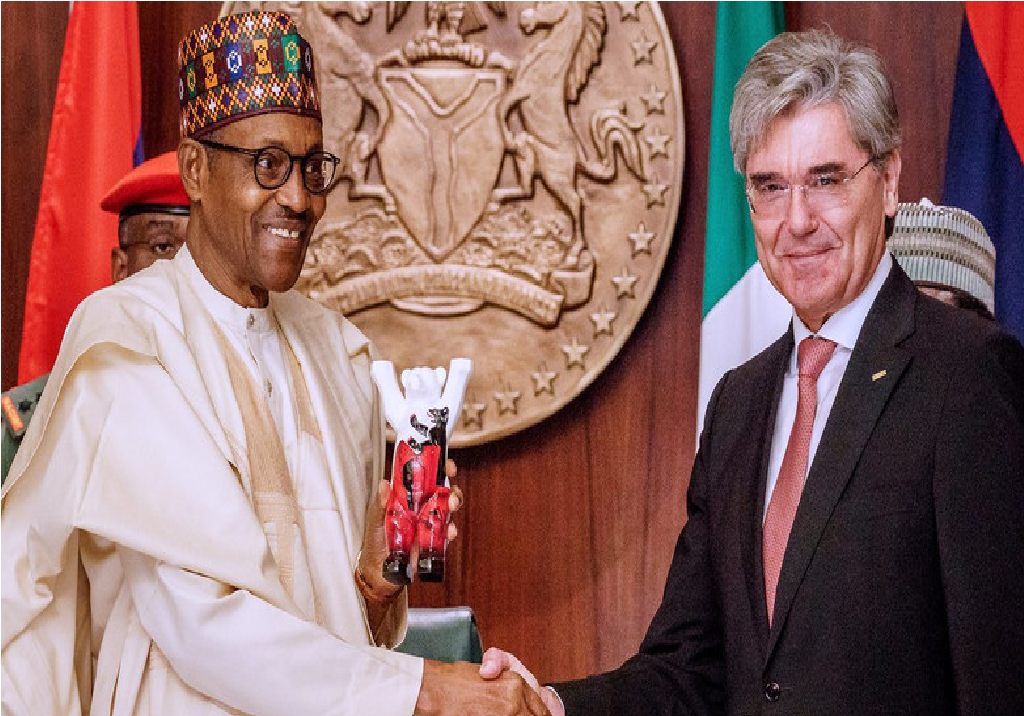
The Federal Government of Nigeria has signed a partnership deal with the German Government and Siemens AG. The presidency announced the partnership this afternoon as a step in addressing the epileptic situation of power supply in Nigeria. The deal, which is designed to take effect in 2 phases, has a target of 7, 000 megawatts of power generation by 2021, (the 1st phase) and subsequently, 11, 000 megawatts by 2023, (the 2nd phase). President Muhammadu Buhari stated that the initiative has become necessary in the face of helplessness of Nigerians with current power supply infrastructure.

Siemens is investing in distribution companies, the TCN and NERC, and has been tasked to apply German and European standards in their service delivery. President Buhari went further to explain how they plan to achieve service efficiency. He said.

“Our intention is to ensure that our cooperation is structured under a Government to Government framework. No middlemen will be involved. So that way, we can achieve value for money for Nigerians.”

The Global CEO of Siemens, Joe Kaeser, was on ground to sign the deal that is believed will make a significant difference in the power sector. The unending excuses from power stake holders have given enough reason for the government to look for practical alternative. This initiative is expected to pave the way for other investors to come in.

The monopoly that has been maintained by the government for about two decades now has done nothing but aggravate the situation. About $2 billion have been spent annually since 1999, by successive governments, and there is nothing to show for it. In 2010, when President GoodLuck Jonathan launched the Power Sector Reform Roadmap, it was in a bid to shift power investment to private sector.

When the privatization actually took place in 2013, and all the generating companies (Gencos) were sold, there was high expectation from consumers that was never met. Ever since then, power generation has been wobbling from 4, 000 to 5, 000 megawatts, when Nigeria needs about 180, 000 megawatts to generate stable power supply, and there is no clear plan to get around that figure except that Electricity Operators wanted to increase the cost of consumption, and by so doing, attract investors by showing them how lucrative the electricity business could be in Nigeria.

Well, the attempt to increase revenue by overcharging consumers was resisted. But the Central Bank of Nigeria (CBN) came with a plan: it launched in 2015, the $1.1 billion Nigeria Electricity Stabilization Facility to provide soft loans to operators. And the government also raise tariff through the Multi Year Tariff Order (MYTO) which was introduced in 2012, to subtly raise consumers tariff. Consumption price was raised by a 45 percent average. That means that, from 2015 – 2024, low residential power users will pay N24 per Kwh, and high domestic consumers will pay N29 per Kwh.

That’s more like extortion and was resisted by civil society groups and labor congress, even the National Assembly called it “retrogressive.” So the implementation did not take place. However, the operators found another means of raising tariff – estimated billing. The need to distribute prepared meters to consumers has been stymied by one excuse or the other. Even when the Metering Equipment Provider (MEP) was initiated, and the National Electricity Regulatory Company (NERC) ordered Discos to supply them to consumers who are willing to pay, there has not been any significant improvement in the number of people who use prepared meters.

In view of these exigencies, the federal Government’s initiative to partner with Siemens and the German Government could be the alternative that the Nigerian power sector has ever needed.