DD
MM
YYYY

PAGES

DD
MM
YYYY

spot_img

PAGES

Home Blog Page 6798

The Entropy of Nature: The Ultimate Material Value Tends Naturally to Zero

0

By Orji Obinna

In layman’s term, one of the implications of the second law of thermodynamics is that physical systems break down with time or that decay is constant or better still that things naturally tend to disorder. This points to the fact that the world around us is finite, and that its ultimate material value tends gradually (naturally) to zero. That’s why rocks are disintegrating, that’s why men and women are growing old, that’s why buildings when left unattended fall into disrepair, that’s why vehicles can’t run perpetually without refueling at regular intervals.

If for instance, an entire city was left alone and undisturbed and isolated from any sort of interference for say 500 years, even in the absence of rain, sun or many other weather elements, decay would still consume it. In other words for continued existence and usefulness in this material universe of ours, we need a constant  external energy source to replenish whatever is lost to the environment. Whatever that external source maybe!

On the other hand, the non material things in the universe have the ability to build up over time even though they can still disintegrate when left unguided and unattended . These are properties that cannot be explained from the evolutionary point of view because they are non-material in nature. (At the very zenith of evolution, it explains our existence only as mere biological machines): patience, kindness, wisdom, empathy – you can go on and on and on.

So if an individual physical body is disintegrating as he ages, and as the clock ticks further and further, he should make conscious effort to build up his non material qualities like wisdom, knowledge, empathy and so on.

This should be the goal, as the material M approaches zero (0), the non-material N should approach infinity (~) . This is the only way to get the better of time dependent decay. So in the end, this accumulated non-material could be transferred or propagated across the breadth of time.

Imagine just for a moment that instead of accumulating knowledge in mathematics (including the discovery of pi), astronomy, geography, and biology, the ancient Greeks focused on preserving their athletic bodies sculpted by war, nutrition and gymnastics which eventually would succumb to entropy. Possibly, there wouldn’t have been the renaissance, Penicillin, steam engine, computers and many other things benefiting us today.

Many of the things we enjoy today are as a result of thousands of years of accumulation of intangibles, purifying humans like gold passed through fire, leading to the emancipation of the human mind, culminating in events like the abolishment of slavery, better human right laws, democracy and the de-legalization of racism.

In the end it wouldn’t be wrong if I quote, “Do not store up for yourselves treasures on earth, where moths and vermin destroy, and where thieves break in and steal. But store up for yourselves treasures in “heaven”, where moths and vermin do not destroy, and where thieves do not break in and steal”.

Success Tab Uses Modern Tools To Promote Learning for Nigerian Students

1

By Nnamdi Odumody

Nelson Mandela, South Africa’s anti-apartheid hero and former President, said that education is the greatest weapon which an individual can use to change the world. Nigeria currently lags behind the rest of her peers in global performance ratings due to poor investment in education which has spiralled to a non-productive economy with the poorest people in the world and an enclave of insecurity.

Oluwakoyejo Oluwatosin believes that every Nigerian child deserves quality basic education at the primary and secondary levels which is the most crucial stage in their development to become successful in life. He saw the friction in the quality of educational content and mode of dissemination by teachers in public schools. That led to the development of Success Tab, an educational tablet with over 100 e-textbooks, 15 years model questions for WAEC examinations, 13 years model questions for JAMB examinations, 10 years model questions for NECO examinations, Instant Chats with Educators trained by top educational institutions like Corona Schools, 50 Educational Games pre-installed, and Social Media timeout for the students.

That timeout was included in order to prevent addiction and make the tools more effective with Parental Control for parents in order to monitor their kids so that they don’t visit, consume harmful content or engage in nefarious activities with their peers as well become victims of cyberbullying.

It has a 16GB internal storage with a 10.01 screen size, 2GB RAM, 5000 MAH Battery, 5.0 Camera, 1200 X 800 Resolution, a protective leather case with screen guard and is available at 60,000 naira only. To scale access for the product by its target market, a flexible payment plan which comes with an initial deposit of 6,000 naira plus logistics fee of 1,500 naira is available. The balance is spread over six months at 11,900 naira monthly.

Success Tab wants to improve learning outcomes for every Nigerian child so that they can become globally competitive in order to participate in the knowledge economy.

Fishery is Nigeria’s Undervalued Oil

0

By Oko Ebuka

The world is naturally endowed with various kinds of resourceful materials to earn a decent living from, ranging from agricultural products, non-agricultural and aquatic resources. Fish is a vital component in aquaculture that provides millions of people proteins and other forms of economic gains. Some countries pride their economic achievements from the proceeds of fishing alone therefore placing them strategically in the economic map of the maritime business.

According to Wahab G. and Olalekan J. (2018), Nigeria is a maritime nation where 9 out of the 36 states have a coastline in the Atlantic Ocean. The coastal federal states of Nigeria are Ogun, Lagos, Ondo, Edo, Delta, Bayelsa, Rivers, Akwa Ibom, and Cross Rivers States, all found in the southern part of the country. The importance of the fisheries sector to individuals and the economy of many developed and developing countries cannot be overemphasized.

The 2018 report of Food and Agriculture Organizations, FAO, of United Nations, UN, showed that total world fisheries and aquaculture production and utilization in 2016 were 170.9m tonnes. It is also notable that fish provides more than 60.0% of the world’s supply of protein, especially in developing countries. Its importance could be felt directly and indirectly among rural and urban residents in Nigeria.

Fish are an important protein source in the diet of Nigerians. Protein from fish is highly digestible and of high nutritional value and consists of complete arrays of amino acids, vitamins, and minerals. Apart from its high quality, fish is a cheaper source of protein compared to other animal protein sources such as beef, pork, chicken, and goat meats.

Furthermore, according to Nigerian Maritime Administration and Safety Agency, NIMASA, during the African day of seas and oceans themed, “Harnessing Nigeria’s Marine Biodiversity for Accelerated Economic Growth”, said that fish makes vital contributions to the food and nutritional security of over 200 million Africans. Join us as we look into ways of harnessing the marine biodiversity of African Seas and Oceans. Fish contribute 57%, and the other groups 49% of the total and 48 species of bony fishes in Lagos Lagoon alone. There are over 200 species of fish in Nigerian inland waters, 14 species of reptiles, 7 species of mammals, 59 species of amphibians and 72 species of water-associated birds.

In Nigeria, fisheries, particularly an important subsector, contributes about 3.00–5.00% to the agriculture share of the Gross Domestic Product (GDP). Fishery in Nigerian inland waters have not being properly harnessed the same way other natural resources such as crude oil and gold mining. It is practically disheartening and shameful to say that fishing contributed only 5% in Gross Domestic Product, GDP in 2018.

However, the holistic emphasis laid on crude oil and its components by the federal government of Nigeria has relegated this prolific sub-sector in the agricultural sector. Recently, the Nigerian National Assembly passed the bill that will establish the institution of fishery in Nigeria to keep the hopes of proper research in the maritime industry which in a way can boost the morale of the dying sector.

Why is it wasting?

A renowned maritime security expert, Captain Alfred Oluwasegun said that the major reason behind the negligence of the fish business is heavily linked to the security issues in Nigeria’s inland waters which supposed to be protected by seafarers. According to him, “you cannot even fish in these waters because it is not secured.

Its effect on unemployment…

The Captain further linked the adverse effect of poor fishing in Nigeria to the massive unemployed youths roaming about the streets which the fishing industry, if properly managed will create both direct and indirect jobs for the teeming youths across the nations.

He said, “I don’t know why government is not looking in that direction and they think everything is oil. But the reality is if you really want to achieve the blue economy then this water needs to be secured. Nigerian economy will grow even without any stress because we cannot tackle insecurity without tackling unemployment.

“Imagine we have over 500 fishing trawler in the water and the smallest of the fishing water will employ not less than 11 cadets as personnel imagine the number of youths that will be gainfully employed.

“We now import fish in the country now even when our waters doesn’t have fish season, any moment you launch your net you catch fish and we are not fishing in this water because of insecurity.  Imagine we have 500 trawlers in each of the zones; it will give many youth indirect jobs”, he concluded.

Open Letter to Engr. Oluwaseyi Makinde, Executive Governor of Oyo State

3

By Mutiu Iyanda


Dear Governor Makinde,

When I read that you have decided to let the world know you have N48 billion worth of assets, I was perturbed that you may not be able to protect yourself from knocks from different segments of our society because many people still do not believe that we can have people with high level of integrity in governance considering systemic corruption since independence.

After reading the news, my argument while discussing with other colleagues, was that how would a governor exposing himself to pro bono public scrutiny by declaring such assets knowing that many colleagues are not willing to do. After second thought, I realised that you are fulfilling part of your inclusive governance and transparency promised during campaigns.

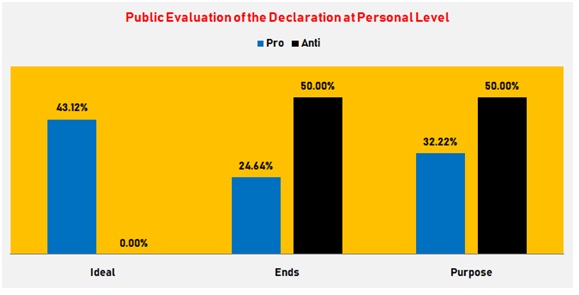
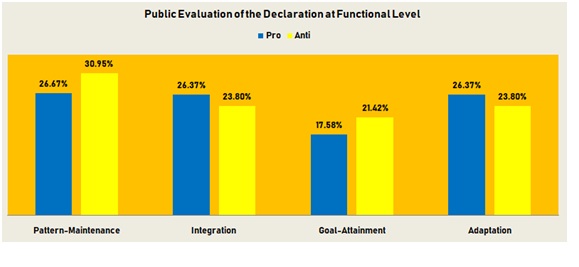
I also realised that your action is part of elements that would actually determine your readiness to fulfil the social and economic contracts you signed with the people and residents of Oyo state. As the Code of Conduct Bureau in the state awaits directives to verify your assets, I have gone scientific and analysed various views on the declaration. Mr Governor. My 7 day sojourn in the heaps of comments and reactions from the Nigerians, especially social commentators and professionals have shown that the public has evaluated your action using personal and functional tactics.

As at the time I was with them, they have scrutinised your action within the macro and micro socioeconomic issues in the country, particularly in Oyo state. Two categories of the evaluators exist. I discovered that despite the level of corruption in our country, you still have some people who believe that your style of politics is quite different. I see this category of people as pro.

The other camp does not believe that you have such assets. Even, if you have the assets, they must have been acquired through favouritism and other means. They believe that ends must be considered before seeing any politician as a messiah who will turn their biggest problems to biggest opportunities for them. I classify this group as anti.

Source: Newspapers’ Reports, Facebook, LinkedIn, Infoprations Analysis, 2019

Mr Governor. It is good to realise that these groups, in spite of different ideological orientations towards your action, believe that declaring the assets is not enough. If truly the assets have been acquired through hard work and integrity over the years, your administration should be able to implement the personal template that ensures the growth of the fortune at the ministries, agencies and departments in Oyo state.

While sieving their comments and reactions, I expect to discover the same level of praising and eulogising you received during campaigns. But it was not. With this, I realise that Nigerians and people of Oyo state are watching you, waiting for the four years to end and dissect your actions and inactions for another four years consideration.

At this juncture, Mr Governor, it is highly imperative to ensure that you do not deviate from the policy thrusts you presented to the public during campaigns. The failure to adhere to your policy thrusts would enhance the realisation of the fear being exhibited by the anti group. Already, they believed that the last day of your administration is appropriate to gauge your integrity about protecting public funds from looting by proxies. Considering the age-long corruption in the public institutions, the anti group is not convinced that you would be able to maintain, integrate and adapt your personal values to the governance structure in Oyo state.

Source: Newspapers’ Reports, Facebook, LinkedIn, Infoprations Analysis, 2019

As you think, I also discovered…

Mr Governor, as you thought about the public reactions regarding your action few days after the declaration, I felt that it would be good if I let you know that people across the country had significant interest in the action. For 7 days, I was with them; they sought information about your assets, your personality and how good governance would be delivered in Oyo state.

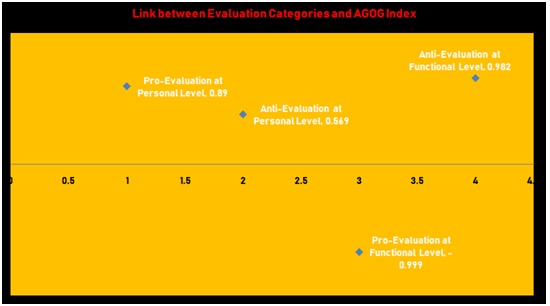
With that, I decided to explore their 118 views along with their interest in the assets, your personality and good governance. For the purpose of easy comprehension, as you continue reading this letter, I have dubbed the interest in the assets, yourself and good governance as AGOG Index.

For the pro-public evaluation group, it is obvious that you had good image among them. Their evaluation connects with the AGOG Index by 89.0%. This implies that one unit of positive evaluation increases their interest in the AGOG Index by 89.0%. In most cases, they see you as a person who doesn’t need to embezzle state funds, receive kickbacks from contractors, inflate contracts among other forms of highly placed corrupt practices. “All he has to do is to watch out for saboteurs in his government.”

Mr Governor, despite the good image, this group swung a little when your action was evaluated within functional level. Their one unit of evaluation only established 56.9% increase in AGOG Index. This calls for reflection! One of the members of the group informed that you need to set up a committee, comprising intellectuals and subject matter experts, who will work with you as you implement your strategic plan for the state.

Yes. As you expect, anti group’s evaluation of your action had a negative impact on the AGOG Index. One unit of their anti-evaluation strategies decreases their interest in the Index by 99.9%. In fact, it facilitated their interest in seeking information on how you acquired the assets and the extent to which you have been able to change humanity through the assets before becoming governor. “There is no outburst here. Nigerians should stop celebrating nonsense. How many people did he employed with assets of over N48 billion.”

Mr Governor! There is a reason to rejoice. In spite of the group’s anti-evaluation strategies, their interest links with the Index by 98.2% when they did the evaluation using functional approach. This indicates that they are groping how the assets would prevent you from looting the state funds and deliver the right dividend of democracy to the people and residents in Oyo state.  “Declaration of asset is nothing compared to having good intentions for the state.”

Mr Governor. I hope you will examine the insights holistically towards inclusive governance and social protection you promised the people and residents. By the end of your first tenure, I hope your actions and programmes would be sufficient enough to ensure second tenure for you.

Source: Newspapers’ Reports, Facebook, LinkedIn, Infoprations Analysis, 2019

Yours faithfully,

Mutiu Iyanda

Lagos, Nigeria

Of Advertised Roles, Recruitment by Referral, and the Perception Problem

0

By Obinna Ejide

I know two young men, Peter and Paul (not real names). Peter spent many hours in many months preparing for the Graduate Record Examination (GRE). He attempted the exam thrice before getting a score competitive for consideration into a fully-funded PhD programme abroad. He also submitted applications to over 10 schools worldwide before he was finally awarded a scholarship to a university in the US.

But Paul? Paul was in the comfort of his office in a high-brow street in Nigeria’s commercial capital, Lagos, when his former lecturer on Postdoc in the US mailed him, referring him to a fully-funded Masters and PhD programme in one of US’ finest universities. He would later recommend Paul for the programme, too. Paul had not sat for the GRE; he would later take one month break to prepare for the exam and ace it with a high score at the first attempt. But one application and—jackpot! He was offered a provisional admission. Remember Peter and Paul.

Life is not fair, is it? No. But that is not the issue.

Perhaps the above story is what plays out in some recruitment systems. Openings for roles are advertised in the media, members of the team requesting staff reach out to their first degree connections, asking for referrals, and perhaps one or several referrals are interviewed and a candidate amongst the referrals is selected for the role, right? Your thoughts echo mine. Do recruiters like this recruitment technique? I think they do, because it saves them time and other resources. Do the hires from such recruitment method do well in their assigned roles? That does not bother me now, because I feel that is not the right question. The right question now, I think, should be, is such a recruitment method free and fair?

Just as in an election, where those who are entitled to vote have the right to vote and are free to make their choice candidate(s), likewise, employers do have the right to pick whichever candidate(s) they deem fit for vacant roles. On the other side of the table, it is interesting to know that, as with candidates in an election, too, it is only fair that all candidates have equal rights (opportunities) to be selected. So, a 2:1 candidate without “connection” should stand the same chance of securing a job for an advertised role as another [candidate] with similar qualification whose friend or relative is a staff in the organization open for applications. Yes? What does Nigerian labour law say?

Let me say first, that Nigerian labour laws need to be revised and given due consideration when dealing with stakeholders in a recruitment process, but a peek at Part 1 of the Nigerian Labour Act Chapter 198, Laws of the Federation of Nigeria 1990, throws a light on what is expected of a recruitment process:

“24. (1) If any person is desirous of recruiting-

(a) for himself or any other person; or

(b) for any association of employers; or

(c) for a public authority; or

(d) for the government of any country outside Nigeria, the services of any citizen as a worker in Nigeria or elsewhere, he may apply in writing to the Minister giving the particulars specified in subsection (2) of this section.


(2) The particulars referred to in subsection (1) of this section are-

(a) the number of workers required;

(b) the place where the work is to be performed;

(c) the nature of the work;

(d) the wages to be paid;

(e) the duration of the proposed contract; and

(f) whether or not it is desired to obtain the workers through a recruiter.

My question is: given its clandestine nature, is recruitment via referral a transparent one? I think recruitment via referral that satisfies the extant labour laws given above would be adjured transparent, because the law is silent on the communication of the open role(s) to the public. Only the Minister, I see here, is required to be advised about the recruitment.

Perhaps, there are other laws I am oblivious of: update me if necessary.

The law itself suggests that tax evasion may be one of the reasons many companies do make their recruitments secret in that manner. But beside this “cost-benefit”, what other advantage do they gain? I hope you have not forgotten about my friends, Peter and Paul, already. Paul, the “lucky guy”, had a strong academic performance and aptitude for learning. In fact, he graduated tops in his class during his undergraduate studies. He had, at that time, too, participated in inter-university competitions, and was also awarded a scholarship for undergraduates by a multinational company.

I won’t fail to mention, too, that he also kept in touch with his seniors, including his former lecturer on Postdoc in the US, telling them about his interest in pursuing a postgraduate program away (perhaps, one would say we have found that missing “connection” link, yes?). But that is not the point; the point is this: there was already an evidence of success hoped for in the role of the postgraduate student desired by the university before a formal consideration was made. You see, referral, on the part of the referrer, comes with an additional risk: the risk that your candidate would not perform as well as expected, which would raise questions about your sense of judgement or motive as a staff or, perhaps, an aspiring leader, for referring the candidate—because it is expected that you should tell, from the onset, whether your candidate is a good fit for a role.

Call it Reputational Risk. Beyond knowing Paul as that young man who was interested in a postgraduate program away, Paul’s former lecturer knew his abilities to perform on the given role. The risk increases when you single-source the role; this method of recruitment is often characterized in roles that involve highly-technical job responsibilities to be delivered over a specified period of time.

So, recruitment via referral—the candidate just has to be perfect to make it right. That is what recruitment via referral is or, at least, should be. The other option is to take a chance on an unknown candidate out there and believe he/she is worth the risk.

But the advantage of recruitment advertised with no need for referral letters required from the onset is not [only] that every qualified person stands an equal chance of getting selected, [because the cognitive bias of the recruiter may still annul the equality effect that such open recruitment would have dressed the recruitment process]; for instance, I have heard a recruiter in the management consulting space say she does not like hiring bankers for new roles because, more often than not, the new (former banker) hires revert back to their former profession after a short while.

This should bother us, and I also think fact checks need to be made on such claim. But lest I digress—an advantage of an advertised recruitment without request for referrals, I believe, is that it creates more choices for people to take chances on. A young man/woman who is in a remote village somewhere in Nigeria can dream of settling down in Lagos, Port Harcourt, Abuja, Enugu or Kano simply because a firm advertised their recruitment online. Peter was able to dream of flying over many rivers and seas to pursue an international degree simply because openings for a postgraduate role in a far-away land were advertised. It took him 10 attempts, you may say, but that one jackpot in a thousand trials is an attestation that advertised openings are not surreal real, that everything is not by “connection”.

But if every job seeker is encouraged to adapt to what some see as the “changing nature of recruitment”, and organizations react and take their flirtation of recruitment via referral beyond romance, and make a stronger commitment to it by embedding it in the core of their recruitment strategy, in Nigeria, I foresee a future where there would be a rise in the number of qualified but unemployed graduates, and dearth of professionals in the various sectors of the economy due to the singular reason of perception management. I mean, a massive flux of talents to abroad would be witnessed because there would be a perception problem that “there are no opportunities within until you know someone”, even when the opportunities may be present. And it would become a huge cost to bring home Nigerian professionals abroad—and I refer to these expatriates as “the black neo-colonials”—when such is the situation.

For a sustainable development in recruiting, this is the time for organizations to do a forecast of the cost-benefit analysis of both recruitment methods to predict their future impact in societies.