DD
MM
YYYY

PAGES

DD
MM
YYYY

spot_img

PAGES

Home Blog Page 6799

The Brilliance of Bashir Umar’s Honesty to ALL Nigerians

2
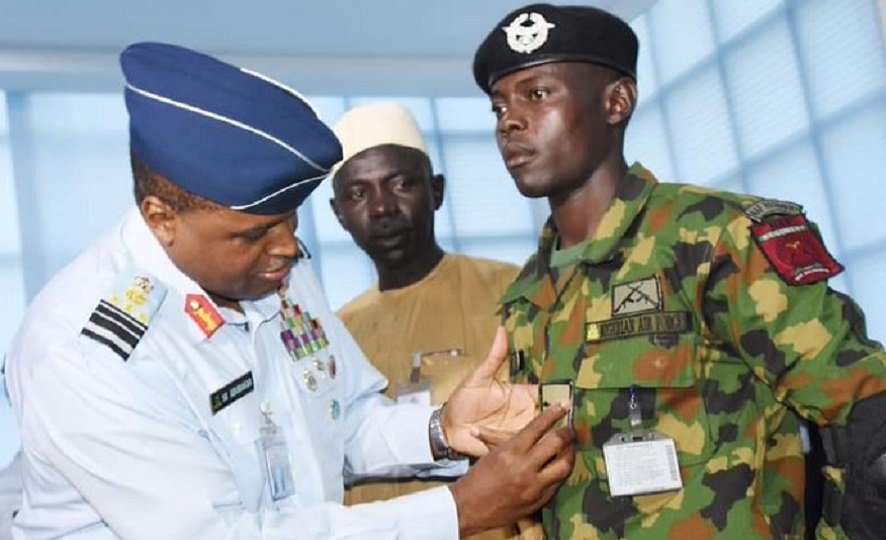
Umar decoration on his promotion

On Sunday July 7, when ACM Bashir Umar stumbled on 37, 000 euros ($41,000 or N14,820,000) at Kano airport, the Air Force personnel had two choices: 

  1. Grab the cash and quietly walk away, resign from service and live a private life and his poverty will be in the past. 
  2. Return the money to the owner, remain poor but honest. 

He chose the latter, a decision that would have sounded silly in a country where integrity is scarce, and survival is for the fittest.


He was not the first to do something like that, so what’s the big deal? In 2014, a cleaner, Josephine Agwu, who works at the Murtala Muhammed International Airport Lagos, found 12 million naira and returned it to the owner. 

There have been little instances of honesty here and there in a country where corruption is paramount. But not enough to disregard sincere efforts of fidelity that has become so insignificant because of the contagiousness of corruption that has tainted the image of Nigeria, and enabled the askance look especially from the outside.

You could recall that it was in the same month of July that five Nigerian soldiers were declared wanted for absconding with millions of naira belonging to a VIP they were escorting. That’s just the tip of the iceberg in many cases of fraud and disloyalty growing with disheartening prevalence. Mockery and ridicule have been employed as recruitment tools by the majority who have accepted stealing as a way of life. The stories fill the news everyday.

There are excuses though, “Nigerian Leaders are thieves, they are only there looting public funds in large sums. And they do so with utmost impunity. So why should I not do the same when I have the chance”? This is the defense line of an average Nigerian whenever the question of honesty comes into play. The soldiers who scampered with the millions of naira they were escorting had been handling such transactions involving huge amount of money for so long. So they know the drill, most of these transactions are illicit, and their principals live off it to the penury and jealousy of their subordinates.

The Nigerian Army has not been able to explain what the millions being escorted from Sokoto to Abuja was meant for, and the VIP, Mr. Okiti, an Army commander, is yet to make any explanatory statement about the huge sum. It’s a constant display of impunity that has always put sensitive conscience on a state of dichotomy, and it’s only those who developed their conscience on the staunch of fidelity that can resist the urge to join them when obviously they can’t beat them. ACM Bashir Umar is one of those. There is always a question of what do you have to gain on the side of morality when there is impunity to be enjoyed on the other side?

Bashir Umar received a double promotion to corporal, Josephine Agwu also was promoted at her place of work, and appreciative Nigerians donated money to her to the tone of 1.4 million naira. But the objective in being honest is never to be promoted or to be praised financially by people. 

It’s more like being a good example to a fragile conscience, or a personal hygiene awareness campaign in a time of deadly virus. “But it’s just some drops of clean water from the dirty stream,” says the man who has not read the Bible’s story of the 12 Spies. The insignificant 2 numbers with positive claims won over the 10 who had negative reports. And God was pleased. 

In fact, their testimony resulted in victory for the rest of the Israel nation. But the two Spies were different because of their mental attitude, they had trained themselves to see through the good and bad, and to take sides with the good. So fidelity is like a personal hygienic attitude that protects a person from diseases, and it starts with little things like:

  • Picking up a wallet with a stash of cash and fighting off the urge to keep it.
  • Picking up a lost phone and returning it to the owner.
  • Paying the bus conductor when he has forgotten to take money from you.
  • Returning money to the owner when your account is mistakenly credited etc.

No doubt, these traits helped Bashir Umar and Josephine Agwu to develop a measure of honesty that has stood the test of our corruptible time. And it has also inspired so many others to do the same. The benefit of honesty goes beyond you being a reference point of trust and all the public applause. It comes with peculiar peace that its source is rooted in your heart.

Examples of rare virtues of honesty should be study cases at homes and schools. The younger generation needs to replace what is immorally common with what is morally scarce. A corruption free future cannot be attained by anti-graft laws only, but through a mindset that sees graft as an unwelcome guest in the mind.
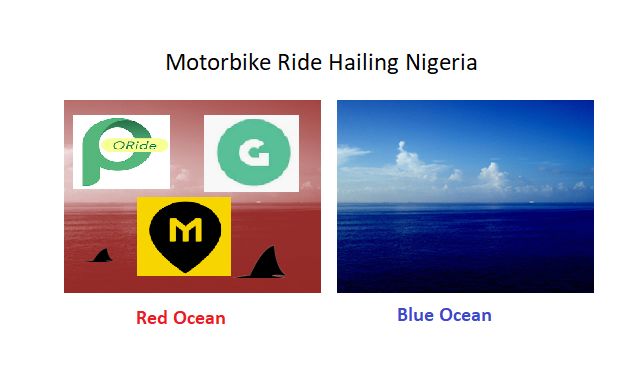
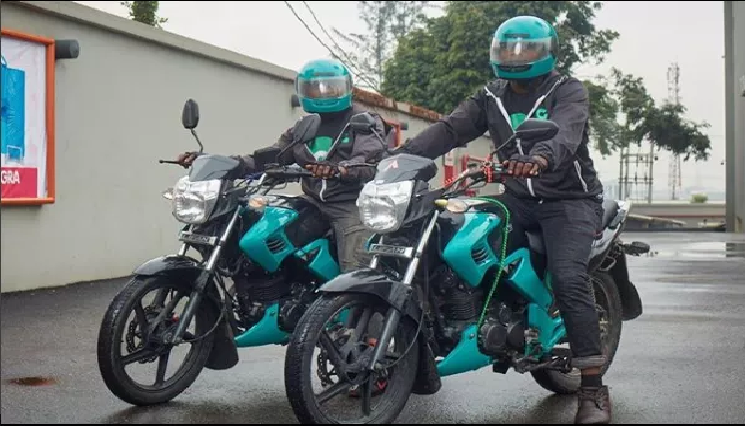
ORide Joins Gokada, Max in Motorbike Red Ocean – Should Startups Swim in Blue or Red Ocean?

10

You might not be too familiar with those terms – blue ocean and red ocean – but I’d simplify them as I explain. Yesterday, I was reading through a post on Facebook; I’d say it was really insightful and I give kudos to the writer. He simply analysed the ride hailing market in Nigeria and how one brand takes over another brand. Matter of fact, I learnt from it because I haven’t been paying attention to the ride sharing industry in the country and I am beginning to see the positive side of it despite the fact that I had my issues and concerns about the sustainability of such an industry. Now, my mind is at rest so far.

In his article, he explained how Opera mini started ORide service with the game plan of having a huge share in the ride hailing market by tormenting the likes of Gokada and Max. I really love the strategy they implemented, and I must give kudos to them. However, he didn’t point out some cogent factors which is why I decided to write this post. From his analysis, ORide decided to charge the sum of two hundred naira for any trip around Lagos. Although, I’m not so sure if this is really true, however in such a location like Nigeria, people always want good value for cheaper prices. It happens in other countries though but Africans seem to like this a lot.

Here’s my point: ORide offers two hundred naira to a location that a startup like Gokada will charge five hundred naira. With time, you’d discover that people will quickly shift to using ORide service which will be a huge threat to the scaling of other ride hailing services. Good strategy, right?

But where’s the cash flow? You are trying to snuff out other start-ups, yet running at a loss; does it make sense? Yes, it does since ORide is owned by Opera with lots of capital. They can keep funding it from their other sources of revenue. Opera can be bleeding from that end, yet not run down, since it’s just one small arm of the company. They can continue till they own the market; then later adjust their prices.

However, this can not be possible if you’re a start-up. This post is addressed to start-ups on why it’s better to focus on a small blue ocean than dive in a red ocean.

Let me give a practical example and why I still do not see Bigi cola as a threat to Coca Cola even till date. Bigi Cola sells for a hundred naira while Coca-Cola sells for one hundred and fifty naira. It sounds quite intelligent that they used such opportunity to penetrate the market and are scaling. However, they are fighting a price war with Coca-Cola and a price war is a lost battle if you are a smaller company with lesser money.

Here’s why; Coca Cola is a big brand. Matter of fact, Coca Cola is in almost all countries in the world. They make their revenues from these countries altogether and they still penetrate more countries. Bigi Cola on the other hand is a Nigerian brand. It’s just developing in the market. Going on a price war is very risky. If they have a huge source of funding, fine, if they have other sources of revenue, fine. However, selling for hundred naira because Coca-Cola sells for one fifty over the same selling point is risky. Coca Cola can decide to go on a price war with Bigi Cola. They can reduce the price of their drinks to eighty Naira. Would it affect their brand value? Well, maybe but like I said, Africans always go for better product, cheaper quality.

Will Coca-Cola be running at a loss, definitely. However, it will be just be in Nigeria alone; they can at least balance it from other countries. The goal is to kill Bigi Cola. Will Bigi Cola want to go cheaper? Well, I don’t know how much money they do have.

Same thing with how Elon Musk started Tesla. He went on another different niche. He went for a blue ocean; uncontested all-electric car market. If you’re a startup, you don’t rush into a red ocean. Red ocean is full of competition. Your goal should be stability and cash flow not competition. How much do you have?

Did Jeff Bezos try the the low price strategy with Amazon? Yes, he did. He didn’t make money for years, he was acquiring customers. Microsoft also played monopoly. It’s possible to go heads on if you have the money. Luckily for you, you can displace the existing company or companies.

All Together

If you’re just starting, a small blue ocean is your best bet. This doesn’t mean you cannot scale in the red ocean where there are sharks and all. You might bleed to death if you don’t have what it takes to survive in the contested red ocean.

So just like ORide is trying to beat other ride hailing services, I think it has a good bet on the strategy since it has the capital and size. But that does not mean that the red ocean model can work for all startups.

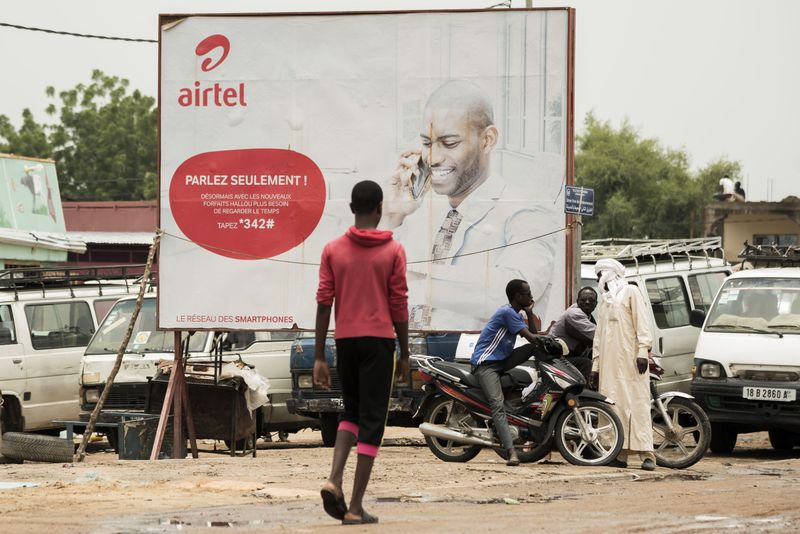
Lagos Exchange’s 3rd Largest Company, Airtel Africa, Continues To Lose the ARPU Battle

2

These are the largest public traded companies in Nigeria (by market cap) in order – Dangote Cement, MTN, Airtel, and Unilever. Technically, they are also the largest companies in Nigeria by valuation (I am not sure there are private ones larger than these four). MTN and Airtel have found themselves ahead of Unilever. Meanwhile, Airtel Nigeria continues to anchor Airtel Africa business which posted $132.2 net profit last quarter. When Interswitch gets in the game, it will move some places in the ranking.

Bharti Airtel’s Africa arm posted net profit of $132.2 million in the June quarter, a fall of 12.2% from the corresponding quarter of the previous year, as higher finance costs and lower gains on exceptional items offset its growth in operating profit.

It posted revenue of $795.9 million, up 6.9% year-on-year from $744.5 million, largely driven by double-digit growth in Nigeria and East Africa, but partially offset by a decline in revenue in the rest of Africa, the company said.

The revenue increase is significant for the African arm of Bharti Airtel, which battles a bruising tariff war with rival Reliance Jio Infocomm Ltd at home.

Airtel Africa’s customer base stands at 99.7 million. Its average revenue per user (Arpu) was $2.7 in the June quarter.

The key data there is the ARPU which is now $2.7. Last year, it was $3 for Airtel Africa.

Yet, even though Airtel Africa made a full year profit, challenges lie ahead. Just as I have noted on MTN Nigeria which had seen its ARPU (average revenue per user) dropped from $22 (in 2005) to $4.14 in Q1 2018, Airtel Africa is even doing worse: $3 in 2017. Airtel does not break its African operation by countries; so we do not have Airtel specific Nigerian number. (9Mobile and Glo are private companies; you do not expect to know anything about their financials.)

When The President’s Tweets Become Risk Factors; The Abuja Screening

0

First, do not worry that I am not writing about what they are doing in Abuja. I simply do not know where to begin. Yes, I find it offensive to allow ministerial nominees to bow and leave in Senate when we have real issues in the nation. Yet, I do not blame the Senate: why send them for confirmation without revealing their expected ministries? Practically, there is no way to assess these nominees without knowing their portfolios. But that is Nigeria!

Imagine if someone was nominated for Defense ministry – a simple question on how to protect the border would naturally follow. But with no portfolio, assessment becomes the quality of the eye contacts between ministerial nominees and the Senators.

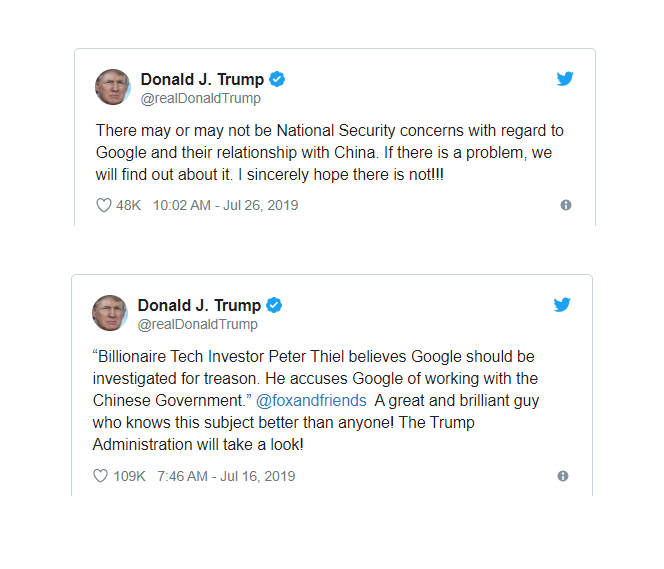
So, I go to America. If you are a risk manager, is there a likelihood that you would see the Tweet of your national president as a risk factor? This President Trump tweet sequence is fascinatingly unbelievable! Poor Google!

The president of the United States called out two of the nation’s largest tech firms in a pair of tweets this morning. Google  was the first target. The statement follows weeks of suggested investigations of the tech giant over a supposed relationship with China


General Electric (GE) Returns To Its Roots With Access Bank Nigeria Partnership

0

When they sold GE Capital, I made it clear that GE was done: ” The new businesses are not bringing free cashflow to compensate what GE Capital was providing.” My thesis was that anyone in GE that thinks that companies buy expensive GE products because they are great has a malaria fever. Simply, most parts of the world came to GE because GE had a really good financing engine. But when GE took out the GE Capital, it then exposed its main customers to the open market financing which is never friendly to the type of things GE makes. You want me to go to a bank to get capital to finance a turbine? I am sure this country will prefer darkness because commercial banks will mess this DISCO (distribution company) up.

The summary here is that GE did not know that GE Capital was its double play for shipping those hardware solutions. Even if it was not making money via GE Capital, GE Capital was critical for most monies GE Power, GE Healthcare and other units were making. You can read the double play strategy here.

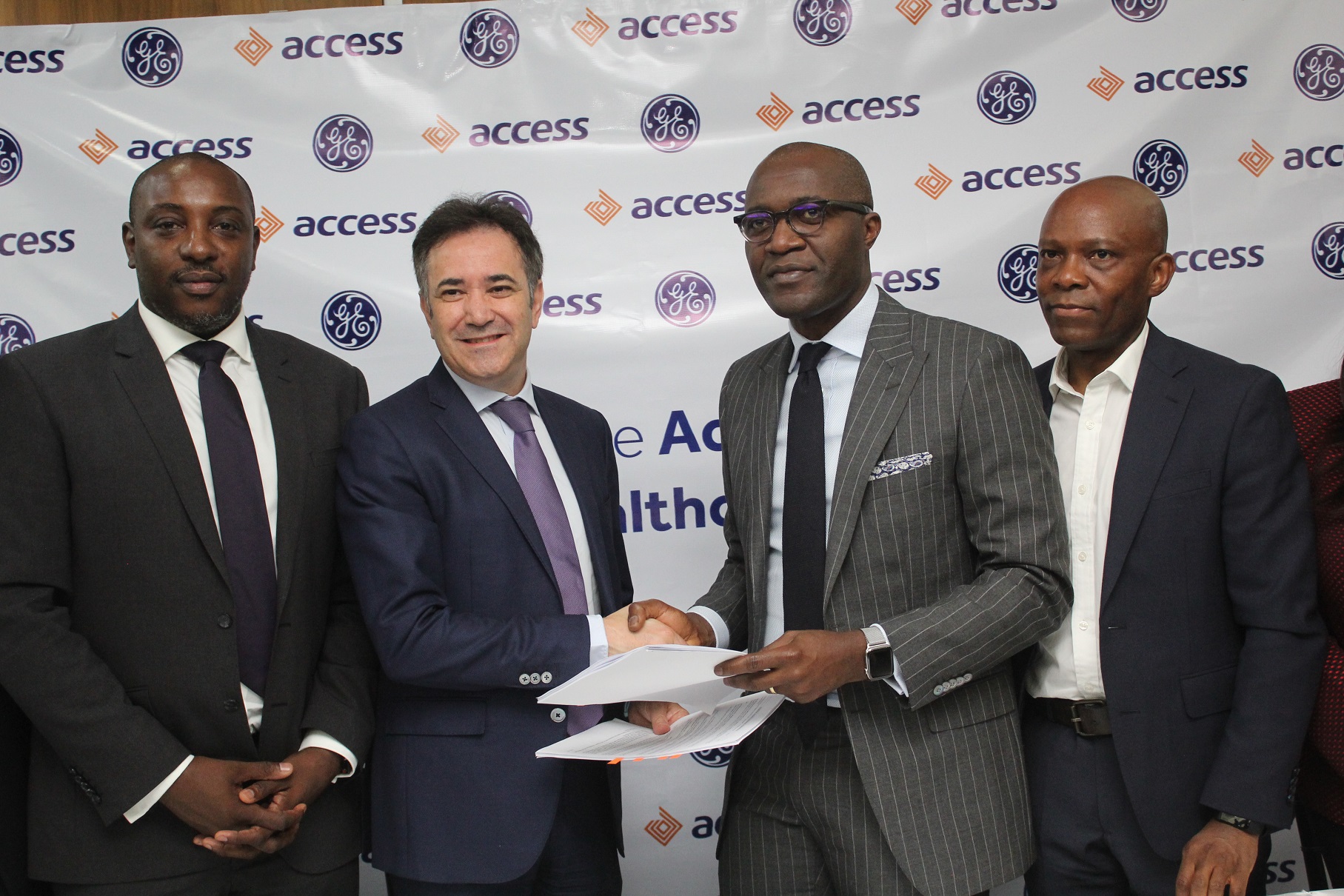
Now, it seems GE is coming back to that root: help customers buy things by making solutions more affordable. Yes, Access Bank and GE are partnering to help institutions acquire GE Healthcare solutions in Nigeria: “Access Bank and GE Healthcare  are to provide sustainable healthcare equipment financing to private healthcare providers”. GE must have negotiated better interest rates for these customers which none could have gotten directly with Access Bank.

Access Bank and GE Healthcare  are to provide sustainable healthcare equipment financing to private healthcare providers; The partnership will help the private healthcare providers to deliver access to affordable healthcare services.

GE Healthcare and Access Bank Nigeria have entered into a partnership to provide Nigeria’s Private Healthcare Providers with equipment financing. Under the partnership, borrowers will be able to secure loans of up to $800,000 negotiable, based on the customer requirement.

Access Bank will provide access to loans for eligible healthcare providers, while GE Healthcare will support the program through provision of GE healthcare equipment and technical support. The equipment under the partnership scope include Imaging Solutions including Magnetic Resonance Imaging (MRI) and Computed Tomography (CT), Ultrasound Machines and Life Care Solutions. Borrowers which qualify for loans include private healthcare providers such as hospitals, clinics, diagnostic centres and other private practices offering a broad array of services.

GE needs to scale that to have a chance of coming back. Financing is its double play which it lost when it sold GE Capital.