DD
MM
YYYY

PAGES

DD
MM
YYYY

spot_img

PAGES

Home Blog Page 680

OpenAI’s Altman warns U.S. may be underestimating China’s AI drive amid shifting chip policies

0

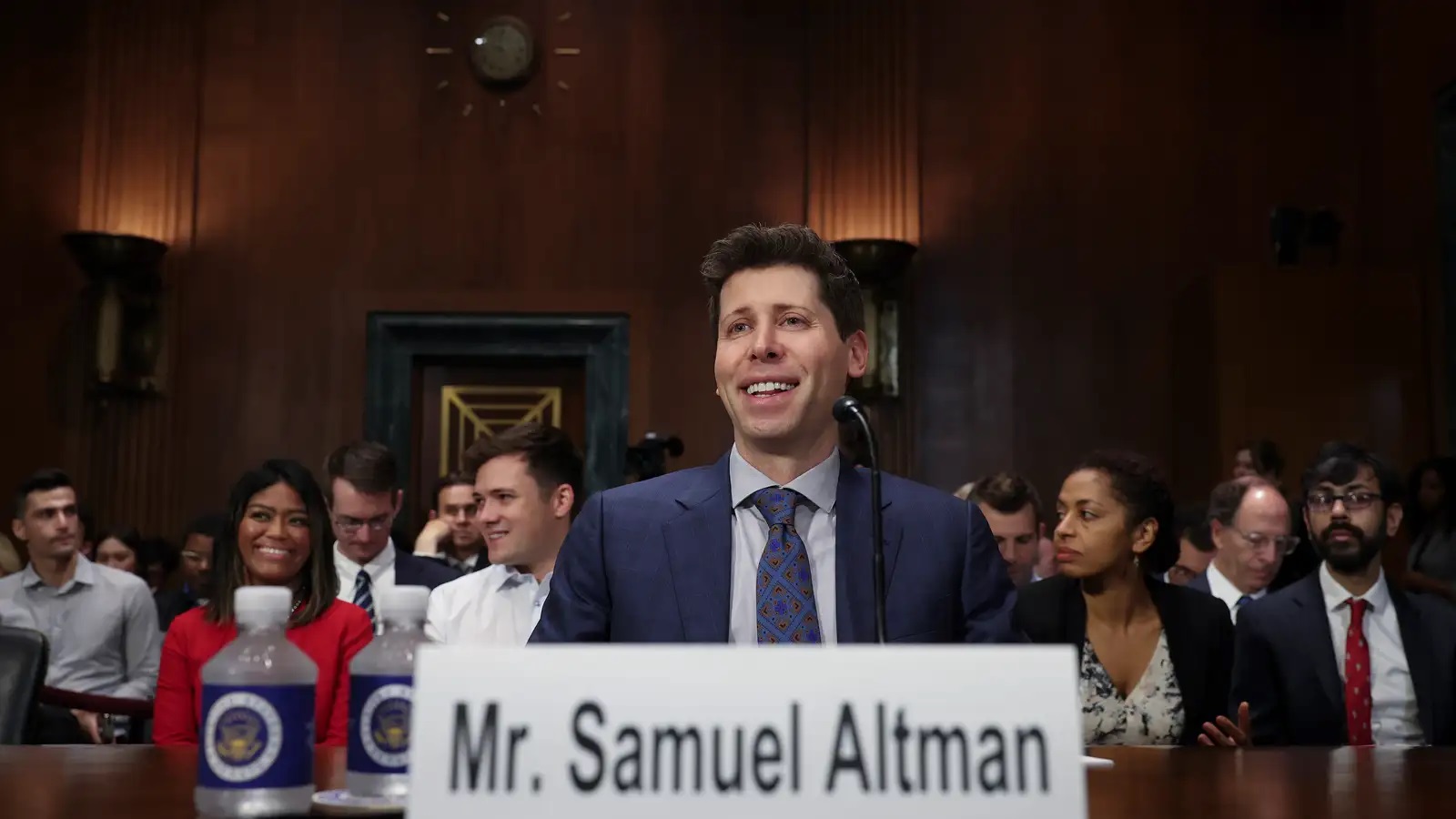
OpenAI chief executive Sam Altman has warned that the United States may be underestimating both the scale and complexity of China’s rapid progress in artificial intelligence, stressing that export controls alone are unlikely to stop Beijing’s rise.

“I’m worried about China,” Altman said, during an unusually candid on-the-record conversation with a small group of reporters over Mediterranean tapas in San Francisco’s Presidio. He described the AI race between Washington and Beijing as “deeply entangled” and far more consequential than a simple scoreboard comparison of which side is ahead.

“There’s inference capacity, where China probably can build faster. There’s research, there’s product; a lot of layers to the whole thing,” he explained. “I don’t think it’ll be as simple as: Is the U.S. or China ahead?”

Altman’s skepticism was most pointed on the question of U.S. export controls. Washington has steadily tightened restrictions on semiconductor sales to China, hoping to choke off the hardware needed for advanced AI development. But Altman suggested the approach is mismatched against technical realities.

“You can export-control one thing, but maybe not the right thing… maybe people build fabs or find other workarounds,” he said, referring to fabrication plants that produce cutting-edge chips.

“I’d love an easy solution,” he added. “But my instinct is: That’s hard.”

The Biden administration had previously imposed curbs on the sale of high-end GPUs, but in April, President Donald Trump went further, ordering a halt on shipments of advanced processors altogether — including models that had been redesigned to comply with Biden-era rules. The result was a sweeping embargo that rattled Silicon Valley and further strained U.S.–China relations.

Yet the policy has already begun to loosen under pressure from American industry. Nvidia’s CEO Jensen Huang had criticized the restrictions, saying that it costs the company about $50 billion in revenue. He added that it emboldens China’s domestic production.

Last month, Washington quietly granted Nvidia approval to export its H20 processor to Chinese clients, a chip designed to meet “China-safe” thresholds while still offering enough computing power for commercial AI tasks. The move came as part of a broader agreement that controversially requires Nvidia and AMD to hand over 15 percent of their China-related chip revenue to the federal government — a compromise critics say illustrates the difficulty of balancing national security with corporate interests.

China, meanwhile, has responded with caution. Beijing’s cybersecurity regulators recently summoned Nvidia officials to discuss “serious security concerns” about U.S.-made AI processors, warning that chips such as the H20 could contain backdoors capable of tracking or disabling Chinese systems remotely. Analysts say the move highlights Beijing’s determination to double down on self-reliance by accelerating domestic chip production, with Huawei and other Chinese suppliers already stepping up to fill the gap left by U.S. restrictions.

Altman’s warning underscores the risk that Washington’s export-control strategy may not only fall short but also spur China to invest even more aggressively in its own semiconductor ecosystem.

“My instinct is that doesn’t work,” he said of U.S. restrictions.

The challenge is thus becoming clear to policymakers in Washington: limiting chip exports to China will only aid its domestic semiconductor manufacturing, creating a leadership opportunity for the Asian giant in the AI arms race.

SoftBank to Invest $2 Billion in Intel Through Stock At $23 Per Share

0

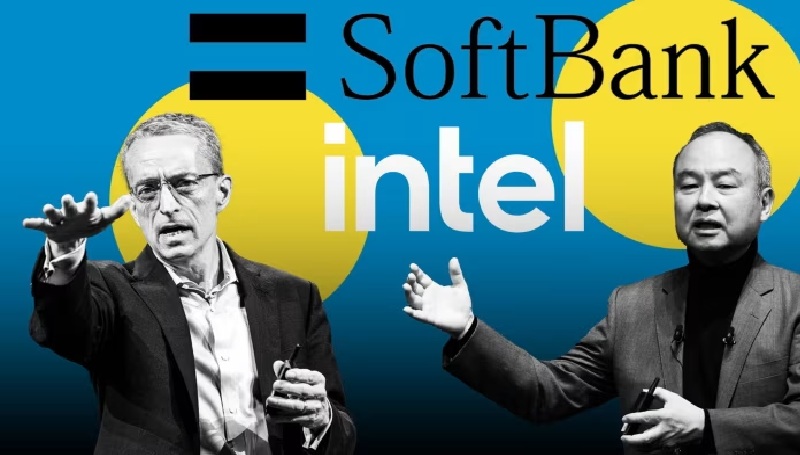
Japanese conglomerate SoftBank has agreed to make a $2 billion investment in Intel, a move that signals renewed confidence in the U.S. semiconductor industry and aligns with Washington’s aggressive push to bring chip manufacturing back onshore.

The deal, announced Monday after markets closed, will see SoftBank purchase Intel common stock at $23 per share. Intel shares, which ended the day at $23.66, jumped more than 5% in after-hours trading following the announcement.

SoftBank Chairman and CEO Masayoshi Son described the investment as a commitment to “advanced technology and semiconductors in the United States,” calling Intel a vital player in ensuring America’s long-term leadership in innovation.

“Semiconductors are the foundation of every industry. For more than 50 years, Intel has been a trusted leader in innovation. This strategic investment reflects our belief that advanced semiconductor manufacturing and supply will further expand in the United States, with Intel playing a critical role,” Son said.

For Intel, the deal offers a powerful vote of confidence as the company fights to reclaim ground lost to rivals like Nvidia. The chipmaker has been undertaking a sweeping restructuring under new CEO Lip-Bu Tan, who was appointed earlier this year. Intel has cut back non-core businesses, including shuttering its automotive architecture arm and laying off most of the staff there, while also reducing its Intel Foundry division workforce by as much as 20%. The aim is to refocus on its most profitable businesses: client processors and data centers.

Tan welcomed the SoftBank investment, framing it as a deepening of ties with one of the world’s most influential technology investors.

“We are very pleased to deepen our relationship with SoftBank, a company that’s at the forefront of so many areas of emerging technology and innovation and shares our commitment to advancing U.S. technology and manufacturing leadership. Masa and I have worked closely together for decades, and I appreciate the confidence he has placed in Intel with this investment,” Tan said.

The deal also ties into a broader political context. President Donald Trump has made semiconductor manufacturing a centerpiece of his domestic industrial policy, repeatedly stressing that America must reduce its reliance on foreign chip suppliers, particularly from Asia. Just last week, the Trump administration threatened new tariffs on imported semiconductor chips, part of its strategy to spur domestic investment in the sector.

SoftBank’s decision to pour money into Intel comes against that backdrop and is widely seen as part of the company’s pledge to expand U.S. investments under Trump’s push for domestic manufacturing.

SoftBank itself has been actively ramping up its presence in America. Beyond its stake in Intel, the company recently acquired Foxconn’s former factory in Lordstown, Ohio, which it plans to repurpose into a hub for AI data centers. The move underscores Son’s conviction that the future of artificial intelligence depends heavily on robust chip manufacturing and data infrastructure — both areas in which the U.S. is seeking to assert global leadership.

For Intel, the SoftBank deal provides more than just a financial boost. It positions the company as a central partner in the geopolitical struggle over semiconductor supremacy, a sector increasingly at the heart of U.S.-China tensions. Washington has imposed curbs on advanced chip exports to Beijing, while China, in turn, has accelerated efforts to build up its domestic chipmaking capabilities. Analysts say SoftBank’s investment strengthens Intel’s ability to remain competitive in this volatile landscape.

The announcement also comes as CEO Lip-Bu Tan faces political turbulence of his own. President Trump recently called for his resignation, citing supposed conflicts of interest — an accusation made without evidence. Reports also surfaced that the administration had explored taking a direct stake in Intel as part of its broader effort to shore up domestic chipmaking.

While those discussions remain uncertain, the SoftBank deal appears to provide the political cover Intel needs at a critical time. It signals to Washington that global investors remain bullish on U.S. technology leadership, especially in semiconductors — an industry Trump has described as the “backbone of the 21st-century economy.”

As the shares of Intel surged after the announcement, some analysts note that the deal could inject much-needed momentum into the company’s turnaround story.

Shiba Inu’s 76% Drop from Its ATH Triggers Strong Investor Migration to Competitor Token Below $0.0025 in August 2025

0

Shiba Inu, the meme coin that once dominated conversations, is now faltering. After plunging approximately 76% from its all-time high, investors are diversifying, and a fresh competitor priced under $0.0025 is gaining real momentum. Amid this shift, Little Pepe (LILPEPE) is emerging from its presale with powerful signs of staying power—and its narrative couldn’t be more compelling.

The Fall of a Giant

Shiba Inu’s steep decline isn’t just statistical—it signifies eroded confidence. Once ranked among the top cryptocurrencies, SHIB has now slipped beyond the top 20, holding a market cap of roughly $7.26 billion and trading at around $0.0000123. That drop equates to nearly three-quarters loss from its previous highs. The fall isn’t solely price action. High-impact whale transactions have dried up, falling by 100%, which drastically reduced liquidity in August. Internal friction further undermines investor assurance: leadership remains shrouded in anonymity, leaving retail traders skeptical. However, planned developments include a Layer 3 blockchain, metaverse experiences like Shiba Eternity, and even a native stablecoin. These could elevate its utility and pave a path to recovery.

Why Investors Are Seeking Alternatives

The current meme-coin environment is shifting. No longer are cute dogs enough to sustain valuation. Investors now demand infrastructure, tokenomics that make sense, and transparent leadership. Shiba Inu, which once represented pure meme-driven speculation, has now become a cautionary tale of stagnation and unmet potential. This void creates an opening for tokens that combine viral energy with strategic design and utility. Packs of disappointed SHIB holders are sniffing out alternatives that can outpace inertia, offering both upside and substance.

Enter Little Pepe (LILPEPE): Presale Power Meets Utility Vision

Among emerging contenders, Little Pepe stands out. Its presale has soared through nine stages, raising over $18.8 million and moving more than 12.5 billion tokens—now entering Stage 10 at $0.0019. Today marks a new milestone: the project has secured a CertiK audit, a mark of security and transparency. Unlike many meme coins, LILPEPE—built on an EVM-compatible Layer 2 blockchain—delivers real infrastructure. Transactions are fast and affordable, fees are minimal, and technical hurdles common to Ethereum’s mainnet are mitigated. Tokenomics are transparent, allocating presale supply, with additional allocations for liquidity, staking rewards, and marketing, all underpinned by zero-tax trading. The presale’s rapid sell-outs underscore market appetite for this blend of culture and code. Each stage has outpaced the last: Stage 6 concluded early with $8.8 million raised, Stage 7 launched at $0.0016 and leaped past $10 million, and Stage 8 wrapped up cleanly with over $12 million raised.

Market Recognition and Community Momentum

Little Pepe isn’t just trending—it’s being acknowledged. Cointelegraph reports that Stage 9 was completed in record time, with Stage 10 now live at $0.0019. Meanwhile, coverage in regional outlets highlights the project’s potential to eclipse Shiba Inu: LILPEPE has raised over $18.8 million and is emerging as a serious contender thanks to its Layer 2 backing and strong community initiatives like its $777,000 giveaway. Unlike SHIB’s fading narrative, LILPEPE’s story is growing. It’s not built on nostalgia or speculation alone—its foundation is scalability, governance, and real-world utility. That transition makes it irresistible to investors looking for bold upside, not past glory.

A Shift in Meme Coin Dynamics

The meme coin landscape is evolving. SHIB once exemplified memetic success on hype alone, but it failed to innovate fast enough. The present landscape favors tokens that combine cultural resonance with utility, transparent management, and purposeful infrastructure. LILPEPE embodies this evolution. It keeps the vibrancy and humor of meme culture while anchoring it in speedy, low-cost transaction infrastructure. For those still holding Shiba Inu, this moment calls for reevaluation. Without clear signs of renewed leadership or strategic breakthroughs, the downside is real.  Investors might see Little Pepe as a forward-looking choice. The presale performance, audit credentials, and infrastructure-first approach present more than potential but a structured path toward utility and growth. For those looking to redeploy capital from declining bets into next-gen innovation, LILPEPE offers a compelling runway.

Conclusion: A New Era of Meme Coin Investing

Shiba Inu’s dramatic drop has become pivotal. It reveals what happens when sentiment fades and substance is absent. In contrast, Little Pepe exemplifies what meme coins are becoming: projects rooted in culture yet powered by utility. This isn’t just hype. LILPEPE has demonstrated the capacity to build, sell out presale stages, secure audits, and capture market excitement. For investors aiming to ride this next wave, LILPEPE may well represent the top-rising token of this cycle.


For more information about Little Pepe (LILPEPE) visit the links below:

Website: https://littlepepe.com

Whitepaper: https://littlepepe.com/whitepaper.pdf

Telegram: https://t.me/littlepepetoken

Twitter/X: https://x.com/littlepepetoken

Top 3 Explosive Presales Poised for 200x ROI—Ozak AI’s Near-$2M Presale Shows It Could Outperform Solana & Shiba Inu

0

Early-stage presales present one of the most lucrative opportunities for investors looking for massive returns. With some projects already showing signs of explosive growth, here’s a look at three presales currently capturing investor attention, each with the potential for 200x ROI or more. The most promising of them is Ozak AI ($OZ), which will outperform even such industry leaders as Solana (SOL) and Shiba Inu (SHIB).

1. Ozak AI: The AI Meets Blockchain With Real-World Benefits

Ozak AI is a new blockchain project merging predictive artificial intelligence with decentralized infrastructure to deliver real-time financial insight—tailored for both everyday investors and institutions. It uses advanced forecasting models—like ARIMA, neural networks, and linear regression—paired with a secure data pipeline (the Ozak Stream Network, or OSN) to feed these predictions.

At its core are Prediction Agents—AI-powered tools you can configure to monitor market trends, trigger alerts, and generate forecasts that fit your strategy. The platform also features decentralized physical infrastructure (DePIN), encrypted data vaults, and integration with Ethereum Layer-2 (Arbitrum Orbit). These components work together to ensure data reliability, scalability, and smart-contract efficiency.

The $OZ token powers the ecosystem, with a total supply capped at 10 billion. It has already been audited by CertiK, earning credibility among investors, and is listed on major trackers like CoinMarketCap and CoinGecko.

The ongoing $OZ token presale has been gaining strong traction, structured across multiple stages with rising prices. In Stage 4, tokens are priced at $0.005 (up 400% from the initial price of $0.001), with nearly $2 million already raised and more than 158 million tokens sold. Analysts suggest Ozak AI could launch around $1 and potentially climb to $2.80 by 2026, which would represent life-changing returns for early participants.

2. Little Pepe ($LILPEPE)—Meme Coin that has Real Utility

For meme coin enthusiasts, Little Pepe is making waves with its Layer-2 blockchain and real utility. The presale is soon ending but is at the stage of 96.99% of the tokens sold and 19.57 million dollars raised of a $22.32 million aim at a current price of 0.0020. The post-Marketplace price will be triggered once the presale has completed, and the price will rise to 0.0021 since the project will set further price hikes.

The Ethereum-compatible Layer-2 infrastructure used by Little Pepe is what makes the platform stand out from other meme coins since they are cheaper and faster. Being a meme coin that has a sound technical background, Little Pepe is attracting the attention of both developers and investors. Its Meme Launchpad, staking, and DAO governance capabilities are features that offer a growth prospect in the long term, which is lacking in the general meme tokens, benefiting solely from hype.

3. Snaky Way ($AKE): A Multi-chain Meme Coin that has Gaming Utility

Snaky Way is offering a new angle to the meme coin sector and has built staking and gaming utility in. At the current price of $0.0001025, the presale has already attracted $229,438 out of a target of 367,009, and a rise in price is impending as the presale goes into its latter days.

The Snaky Way is differentiated by these mechanics driven by AI that provide stable growth and encourage long-term holding. The token is also coupled to the gaming platforms, providing a differentiation similar to other meme coins by introducing gaming and staking capabilities. Snaky Way can be an ideal meme coin when one wants additional functionality with it.

Final Thought

Ozak AI, Little Pepe, and Snaky Way presales are each promising names in the realm of meme tokens, as well as blockchain technology. Though Ozak AI spearheads with its AI-based solutions and impressive presale rates, Little Pepe and Snaky Way take their positions within the meme coin and gaming utility niche.

Each of these projects has a potential of 200x ROI, which is the reason why they are an attractive venture to investors. These presales offer the best way of diversifying a portfolio. Ozak AI has the potential to become a serious competitor in the AI-powered blockchain industry, and Little Pepe and Snaky Way have their unique approaches in regard to the concept of the meme coin as real-life marketable assets.


For more information about Ozak AI, visit the links below:

Website: https://ozak.ai/

Twitter/X: https://x.com/OzakAGI

Telegram: https://t.me/OzakAGI

6 Reasons Ozak AI Could Outperform Shiba Inu, Cardano, and XRP as the Top AI Crypto in 2026

0

Shiba Inu, Cardano, and XRP have been 100% active in the digital asset space for years. However, many investors have not seen the returns they anticipated. Shiba Inu faces oversupply challenges, Cardano has security concerns, and XRP continues to deal with legal uncertainty. Ozak AI is gaining attention for taking a different routine with clear progress, strong tokenomics, and real-world utility.

What Is Ozak AI?

Ozak AI is an artificial intelligence built on the blockchain system. It provides real-time data processing and enterprise analytics and modeling of predictions.

Core technologies include:

DePIN (Decentralized Physical Infrastructure Network) that enables secure, distributed data handling using blockchain and IPFS. Through OSN (Ozak Stream Network), Ozak AI feeds real-time, verified data from multiple sources.

Additionally, there is the Prediction Agent (PA), which analyzes internal and external datasets to support financial and business decision-making. The project positions itself in the AI and crypto sectors with a long-term goal of solving data transparency, reliability, and autonomous financial operations.

Presale Overview

The $OZ token presale began at $0.001. It progressed through:

  • Stage 2 at $0.002
  • Stage 3 at $0.003
  • Current Stage 4 at $0.005

The next stage (Stage 5) will see the token priced at $0.01. From $0.001 to $0.01, that’s a 900% price increase. If the $OZ token reaches $1 at listing, that would mean a 99,900% return from the first stage.

Tokenomics Breakdown

  • Total Supply: 10 billion $OZ
  • Presale Allocation: 3 billion
  • Community/Ecosystem: 3 billion
  • Reserve: 2 billion
  • Liquidity: 1 billion
  • Team and Advisors: 1 billion

To date, 160,850,431.729 $OZ tokens have been sold, raising more than $2,004,252.068 in funding.

6 Reasons Why Ozak AI Could Outperform ADA, XRP and SHIB Combined

  1. Limited Supply Model

Shiba Inu has a supply of more than 589 trillion tokens, with 410 trillion burned. Nevertheless, more than 584 trillion is still circulating. Ozak AI will cap its total supply to only 10 billion, generating scarcity and enhanced price uptick capacity since less supply can pinpoint the pressure on a price to boost inflation.

  1. Clear Legal Path

The legality of XRP has been a persistent problem that has caused doubt in investor confidence. Ozak AI is transparent when it comes to regulation laws, and it is not restricted in any way that is known of. This removes uncertainty and supports long-term participation.

  1. Real-World Use Cases 

The application of Ozak AI spans the sphere of real-time financial decision-making, enterprise-level analytics, predictive modeling, and support of IoT infrastructures. DePIN provides fault resilience and fault tolerance amongst distributed nodes, and OSN provides reliable market data. All of these functions expand the usage beyond speculative trading, and it has a direct connection to the demand of tokens.

  1. Strong Security Measures

The Cardano Foundation’s X (Twitter) account was compromised in mid-2024, exposing weaknesses in project security. Ozak AI completed a Certik audit, which adds an additional layer of smart contract verification and blockchain protection.

  1. Price Movement and ROI

The $OZ token price has grown from $0.001 to $0.005. At $0.01 in the next stage, early participants could see a 900% ROI. If the token lists at $1, a $100 investment at the start would grow to $100,000. None of the compared tokens, Shiba Inu, Cardano, or XRP, have shown similar returns in the same timeframe.

  1. Active Community Incentives

Ozak AI is currently running a $1 million giveaway where 100 winners will share the allocated grants. A holding of at least $100 worth of OZ tokens is required in order to join the giveaway. This approach encourages wider token holding and community engagement while supporting long-term growth.

Conclusion:

Ozak AI is also progressively going through the presale phases that lead to an increase in price and market engagement. In comparison to the oversupply of Shiba Inu, the recent breakthrough of Cardano security and the unsettled legal issues of XRP, the picture of Ozak AI is a well-organized initiative with evident development.

Ozak AI is unique due to 10 billion tokens, done security audits, real-life applications, and a clear roadmap. It already exists on CoinMarketCap and CoinGecko, and it is being directed towards a dollar listing price. When trends continue, then by 2026 Ozak AI may emerge as the top AI crypto asset.


For more information about Ozak AI, visit the links below:

Website: https://ozak.ai/

Twitter/X: https://x.com/OzakAGI

Telegram: https://t.me/OzakAGI