DD
MM
YYYY

PAGES

DD
MM
YYYY

spot_img

PAGES

Home Blog Page 6802

The Challenges and Benefits of African Continental Free Trade Area (AfCFTA)

0

By Adeola Onikoyi 

On the 7th of July 2019 at the 12th Extraordinary Session of the Assembly of the Union on African Continental Free Trade Area (AfCFTA) in Niamey, Niger, Nigeria signed on to the African Continental Free Trade Agreement, marking a landmark moment in the history of the African continent as Nigeria joined a list of 54 African nations (Eritrea, the only hold out has indicated interest in signing the agreement) in signing on to what will be the largest trading block in the world. With the inclusion of the Nigerian and South African economies, the agreement is poised to bring on an unprecedented opportunity for the free movement of goods and indeed people across the African continent.

However, the success of this agreement lies in African countries tackling and solving some of the deeply rooted issues that have held back and bedevilled free trade across the continent for decades. This article will look at some of the benefits of this agreement, as well as some of the challenges it is sure to face.

Background

The AfCFTA was conceived in January 2012 after the 18th Ordinary Session of the Assembly of Heads of State and Government of the African Union, held in Ethiopia. It was agreed that a Continental free Trade Area will be established with the following objectives;

  • To create a single continental market for goods and services, with free movement of business persons and investments, and thus pave the way for accelerating the establishment of the Continental Customs Union and the African customs union.
  • To expand intra African trade through better harmonization and coordination of trade liberalization and facilitation regimes and instruments across Regional Economic Communities (RECs) and across Africa in general.
  • To resolve the challenges of multiple and overlapping memberships and expedite the regional and continental integration processes.
  • To enhance competitiveness at the industry and enterprise level through exploiting opportunities for scale production, continental market access and better reallocation of resources.

The agreement was then agreed to and signed by 44 countries at the 10th Extraordinary Session of the African Union on AfCFTA in Rwanda. An additional 10 countries have also now signed on to the agreement with ratification occurring at a speedy pace and the agreement came into force (technically) on 30 May 2019.

Benefits

As I previously stated, the AfCFTA will create the largest trading block in the world. The thing is, with all 55 African countries signing on, this agreement will be the world’s largest by number of countries, covering more than 1.2 billion people and a combined GDP of $2.5 trillion, according to the UN Economic Commission for Africa (ECA). Furthermore, the agreement mandates that countries joining AfCFTA must commit to removing tariffs on at least 90% of the goods they produce. The benefits of these are obviously enormous. Economists believe that tariff-free access to a huge and unified market like the one envisioned in this agreement, will encourage manufacturers and service providers to increase production; an increase in demand will instigate an increase in production, which in turn will lower unit costs. This will lead to consumers paying less for goods and services thereby helping to improve the economies of several African countries.

One of the major benefits of the agreement is that it will open up new markets for a lot of African owned companies. The agreement will allow African owned companies to expand their customer base and lead to new products and services. What this does is that it not only helps companies grow, it will also make investing in innovation viable.

In furtherance of this, another major benefit of the agreement is that it will help grow the manufacturing sector and increase the percentage of GDP manufacturing contributes. Presently, manufacturing represents only about 10% of total GDP in Africa, on average and this is well below levels seen in many other developing regions. A bigger and more robust manufacturing sector will lead SMEs to create more well-paid jobs, especially for young people.

Significantly, the AfCFTA will lead to a reduction in input costs when it comes to manufacturing. This is so because the agreement will ease the process of importing raw materials from other African countries. It will also enable SMEs to set up assembly firms in other African countries, to access cheaper means of production.

These are just some of the benefits of the agreement and however wonderful it all sounds, the agreement is sure to face some certain challenges.

Challenges

Transportation…… Arguably the single biggest infrastructural challenge that has held back the African continent for decades. The issue of transportation and logistical challenges on the African continent is one so fundamentally rooted in the pace of development across the continent that one can easily see the link between the more developed African nations, their transportation networks and economic growth, compared to their African counterparts. The issues relating to the easy transportation of especially perishable goods across the African continent will be a major challenge countries need to solve or at the very least have a plan for, for the AfCFTA to truly work. Abolishing tariffs and removing trade barriers are all well and good and will make an impact. However, if the costs of transporting goods from Ghana to Ethiopia far outweigh any potential benefits of a tariff free trade, then is it worth it? If moving goods from the port city of Mombasa and delivering them in Bamako, Mali will be nearly impossible, then some will say, what is the point? Road networks both within countries and across the border of especially landlocked countries must be improved. Rail networks must be built and existing ones improved and upgraded. Air transport also must be better as all these will ease the movement of goods across the continent.

Another major challenge and problem that will be encountered will be the potential increase in competitive pressure and the choking of local SMEs. Many emerging African markets rely on farming for employment. These small family farms will not be able to compete with large agri-businesses in high-income African countries like South Africa, Kenya, Ethiopia, Egypt and Nigeria. This will lead loss of farms, income, and a potential to increase unemployment. The fact that consumers will always prefer cheaper products may also lead to local producers losing huge sales to foreign suppliers, because they can lower the cost of their products by leveraging on the reduced tariffs imposed on imported goods. The dumping of cheap products by countries with already established manufacturing industries on smaller nation is a real possibility and is dangerous. It will stall growth and is one of the reasons countries like Nigeria and South Africa were hesitant to sign the agreement.

Significantly, the threat the agreement poses to the protection of intellectual property in Africa is not talked about much. The agreement could potential leave African companies more open to intellectual property theft. The fact is that many African countries don’t have enough laws in place that protect patents, inventions and new processes. The laws they do have aren’t always strictly enforced. As a result, companies’ ideas often get stolen. With the AfCFTA, this could get worse as new ideas and innovations might lose protection moving across borders so easily.

Conclusion

Having laid out some of the potential benefits and challenges of the AfCTA, I will conclude with this. I believe it is a better option than the current reliance on foreign aid and cheap foreign products. Quite a few western countries and trading blocs have indicated interest in signing a trade deal with Africa over the years and this shows the potential of African trade. The fact that intra African trade is also low has created this unique opportunity for African countries to truly strive for independence long after the colonisers have gone. Some have argued that the trade deals and agreements African countries sign with western countries and blocks give room to new kinds of colonialism. Well, this is an agreement made by Africans for Africans. I believe it can work. However, the challenges have to be met and faced head on.

Maximizing Space and Time

3

By Orji Obinna

I would like to call this economics for dummies or for people in the streets. I don’t know what space or time means to you?  But for me, within the context of this article, space means location, and time means season.  Many like me may have observed what happens to commodities as they move across these two quantities. Yes something happens to them depending on the kind of item in question.

Paul A Samuelson, former economic adviser to Ronald Reagan and winner of the Nobel Prize for economics 1970, wrote extensively about that in his book ‘Economics ‘.But to be honest, this isn’t about what’s being taught in Ivy League schools or principles left exclusively for MBA grads from Harvard Business school, this is something that is so fundamental that practically everyone can understand why it works.

Maximizing Location

There is a commodity in Aba whose value would be higher in Abuja for example even without any upgrade in quality. What’s the price of yam in Nasarawa? And what’s the price of the same size and quality of yam in Port Harcourt? Of course, the difference in price could be explained by considering say, the cost of transportation, and maybe the relative differential in demand and supply across those spaces. But that aside, it doesn’t account for all the additional value that the item may have in its new location.

This is one of the oldest and arguably the most successful ways of becoming a businessman or entrepreneur.

This same spirit led early Europeans into expeditions to unknown territories. In one scenario, the explorers gave local Indians mirror which considering the location had more value to them, in exchange for gold. In another instance, valuable human resources were traded for dane guns and mirrors. As unethical as it may seem or may actually be, it was a business deal based upon the basic principles of offer and acceptance.  This may on the surface look like a variation to comparative advantage but it isn’t. (Yes, I do acknowledge that they could be elements where full values were not realized by natives because of the power of colonialism).

I know a fellow who made a fortune just by transporting a particular type of grass (vegetable) which cattle grazed on in the north down to the south where  it was eaten as a local dish. He did this repeatedly on many occasions before the locals discovered what it was used for.

This is simple but it works.

Maximizing Time

What’s the price of clothing accessories in January, and what’s the price in late March or April or even mid to late December?   Irrespective of the commodity in question, the value of all items changes with time. How much was a plot of land in Lekki (in Lagos) 10 years ago?  And how much is it now?  Inflation?  Well, maybe; maybe not. Years ago I met a friend who would buy practically anything you want to sell so long as he got the better you in the deal and then wait patiently for a time when he would sell it for its real value. He always did. This is like the stock market apart from the fact that you can hardly lose. This is how it works. Buy or sell a commodity, wait for the value to increase or decrease, then buy or sell.

Finally, this article has been written purely to reemphasize some basic economic principles that have led many without formal education to economic prosperity even though they did so instinctively. You see them everywhere from Alaba to Aba to Sabon Gari or Onitsha (all in Nigeria). It has also been written for anybody out there who is interested in making a few more bucks just by playing around space and time, even though you aren’t an economic genius or an entrepreneur with a killer idea. You want to make a few more? I mean who doesn’t want to?

Redesigning Labour Structure to Deepen Economic Competitiveness

0

By Jola-Michael Samson

I was unable to sleep on a fateful night when the thought of one of Nigeria’s major issues came to my mind. Immediately the perception of “HALF A LOAF of BREAD IS BETTER THAN NONE” came to my mind. So, I decided to share it to get your critics or support, possibly we could finally arrived at the lasting solution which may be embraced by our government for implementation.

This concept may not be totally appreciated by many of us that are presently employed but if it is properly communicated and cushioned with the suggestions hereinafter, it will reduce and almost wiped out the malaise.

This concept is all about the following key points

  1. Changing the working days of all workers (Government & Private) to 15 days per month and the salary should be cut by half the same way (i.e. 15 days work = 15 days pay).
  2. Employing another set of people to cover the remaining 15 days in the month with the remaining 15 days salary.

(Please Note: this may not be applied to workers at management levels).

Cushion Suggestions

  1. Privately owned company may not found this difficult to implement.
    1. For government workers, a “Personnel Management Agency” (PMA) should be created whose Head Office will be at the Governor’s Office and branches across all the local government. Its core functions will be:
    a. Staff Identity Management (SIM)
    b. Salary and Pension Processing (SPP)
    c. Staff Loan Management (SLM)
  2. Government should increase its pension contribution to the workers monthly (e.g 2:1 ratio).
  3. Government must provide “Business Loan” (present salary of employee times 5) at a very bearable interest rate in conjunction with a reliable financial institution in Nigeria to the affected staff. New staff that will be employed under this scheme should be entitled to this benefit at a specified time.
    (Please Note): Workers who seem to be successful in their business will definitely quit job to focus more on business as time goes on.
  4. Policies to avoid staff distraction on the job should be formulated to promote commitment.

Benefits of this Concept

  1.  The unemployment rate in the state will drastically reduce.
  2.  It will increase the political and economic power of the state.
  3.  It will encourage immigration
  4.  It will give government and private organizations the opportunity to utilize vast ideas and capacity with little resources.
  5.  It will create more employment for the semi-skilled and unskilled labour.

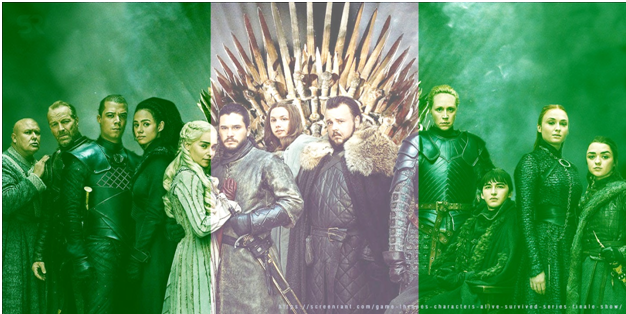
Review of Game of Thrones and Six Lessons for Nigerians

0

By Orisemeke Afam

May 19, 2019 was the day the last episode of Game of Thrones was aired. Mixed feelings crept into fans on a global scale as this TV series steadily came to an end. Game of Thrones is an American fantasy drama, which is an adaptation of ‘A Song of Ice and Fire’ written by George R.R Martin.

For a show that first aired 17 April, 2011, it was not until the build up to the start of the final season (eight years later) that I took an interest – and why wouldn’t anyone? In 2018 alone all over the US, according to IndieWire, 2545 babies have been named Arya, with Khaleesi coming in as a distant second with 560 babies, both of which are Characters in this epic TV series.

It is true that Season Eight ushered in so many talking points and even divided its diehard audience, but take nothing away from the show – It was and has continued to remain a behemoth among other all-time TV series. Game of Thrones is a beautiful mixture of everything (from action to drama, fantasy to humour, all garnished under the thrills of suspense). A strong cast all round, and a remarkable success on the journey towards excellent delivery, the VFX mastery was fully on show as seen in the enhancement of several locations and depiction of the three dragons.

I was particularly intrigued by the coming to life of ‘Ghost’ and the other pack of Wolves, confirmed to be a mixture of real animals and computer-generated Imagery (CGI). The whole experience was such a delight to watch and of course, the numbers confirm this with about 12 million viewers in the US (32million across all platforms by Season Seven), having risen from a mere average of 2.5million viewers back in 2011 when the show started.

The final season aired, however, leading to a bittersweet ending, which seemed unbefitting for a TV show that had risen to stardom over the years. The story development felt rather rushed from a general standpoint; for one, Khaleesi, who was all about freeing people from their despotic leaders immediately started to show flashes of the same cruelty she fought against. Just one display of her growing mercilessness by burning King’s Landing to the ground got her killed – and by someone, who she truly loved in the person of Jon Snow. Brandon Stark, who never seemed interested in ephemeral things and apparently played no visible role in this regard, finally gets to sit on the throne – very strange!

In my opinion, the writing at the later stages seemed suspect. The show also felt too sexist sometimes and demeaning to women; not forgetting a higher-than-average portrayal of nudity and the use of profanity, which could have been toned down a notch in the interest of the wider audience. I refer to this because contrary to general opinion, I believe art can have moral content. Art in itself is rarely meaningless and therefore, has every power to influence its audience either positively or negatively.

Other than these concerns of mine, Game of Thrones is a remarkable piece of art overall.

So, shutting myself out of all the excitement generated by fans everywhere on social media, I decided to quietly binge through the entire seasons after the dust settled. I was quiet about it for one reason – to safely escape from the jaws of prowling ‘Spoilers’ around me!

Now having watched it, I can say my five most loved characters in ascending order are; Daenarys Tagaryen (for her desire to chase her destiny and free the oppressed), Arya Stark (for her show of doggedness and general growth, despite her travails), Jon Snow (For putting first the interest of humanity), Tyrion Lannister (for his wisdom and use of words) and finally Lady Mormont of Bear Island (for her portrayal of young feisty leadership and her overall impact within the limited screen time she got compared to the rest on the list).

Ramsay Bolton for me has to be the undisputed king of villainy in the entire show and for all Cersei’s evil deeds; her death was rather cute and unconvincing. However, I have to say it was gratifying to see Joffrey Baratheon and Ramsay Bolton poisoned to death and ravaged to smithereens by his human flesh-eating hounds respectively – oh well, do feel free to call me Wicked on this one.

Aside from the excitement this Show brings, there are a lot of life lessons to draw from it, but ultimately there are SIX (6) things Nigerians can learn, given the present state of our affairs.

  1. Education is Gold

“I read it in a book” is a line fondly accredited to Samwell Tarly, who wasn’t exactly a Fight Champion but sought answers in the fine prints of books and emerged with critical information that helped in winning the ultimate war against the Army of the dead. Tyrion Lannister also talked about the mind needing books like the sword needs a whetstone to sharpen its edges.

Education gives an advantage of perspective and the Nigerian Government must build capacity that equals its people’s love for learning.

Given the financial value of our budget, about 20% should be ascribed to education for maximum impact. The average of 7.5% in the last 10 years is a sad situation that is sure to take us nowhere.

  1. The Common Enemy

If any Nigerian must take only one message from this article, it has to be this one. The Night’s Watch despised the Wildings. The Targaryens, Baratheons, Lannisters, Starks scuffled one way or the other for the Iron throne in a bid to rule the seven kingdoms – they all had their differences dating back to generations. However, when it came to defeating the White Walkers (Army of the Dead) led by the Night King; Jon Snow understood early on that the existing bickering among the several kingdoms meant nothing in comparison to getting annihilated by the White walkers. They recognized that it was the battle of the living against the dead, so they put their differences aside, fought side by side and won the War.

Yoruba, Efik, Igbo, Ijaw, Hausa, Tiv, Fulani, Benin, Igala and the many other tribes in the Country really do not count for much in the larger scheme of things, because our socioeconomic problems are common to all of us. Majority of us, regardless of our tribes, suffer; bad roads, lack of electricity, defunct healthcare, insecurity, and all other in-country vices.  We must separate divisive politics from good governance and win the war as a collective. Of course, some of perpetrators of these divide-and-rule schemes come as supposed friends, but in truth, they are actually white walkers belonging to the Army of the dead.

  1. General Interest supersedes Personal Interest

It is not enough to ‘dey your dey’ as fondly promoted these days in our local parlance. Rather, we must think about the consequences of mindless self-gratification first before taking further action.

The gory events that took place at the Red Wedding, where the Starks were massacred would have been averted if Rob Stark acted in the interest of his Kinsmen by honouring the agreement to marry one of Walder Frey’s Daughters. He ‘followed his heart’ instead by marrying someone else – Talisa; making Lord Frey a laughing stock among his pairs and we all know what happened next. Another important lesson here is to remember that People never forget how you made them feel, because as humans, we are emotional beings.

  1. Today’s seed can become tomorrow’s Forest

The undoing of the Starks on many occasions was as a result of their penchant for spreading their trust way too thin. Ned Stark’s absolute trust that King Joffrey will stand by his word cost him his head.

He may have been beheaded very early in the show, but his values left larger traces for the future, spreading across every member of his Household.  From Jon Snow to Brandon, Sansa to Arya; House Stark came out the ultimate Victors.

Every Giant you see today was once a toddler. Another example was Khaleesi, whose seed of determination got her two strong armies (the Dothrakis and the Unsullied) as well as three dragons.

Do not consider Nigeria’s problems too weighty to resolve. You have your role to play, regardless of what you think – in the words of Lord Varys; “A very small man can cast a very large shadow”.

Positive impact is not the only tangible that multiplies, Vices can equally spread quickly leading to disaster if not curtailed – just like the grayscale plague, and not everyone will be as lucky as Jorah Mormont, who recovered. Everyone one of us should learn to be accountable for our actions; caution our tongues and be mindful of our social media posts to reduce the chances of other people latching on to any form of destructive energy.

  1. A Pawn is always at a disadvantage

I couldn’t help but feel pity for the young bride of Lord Frey, who had a knife held to her throat by her Captor. Here was what Lord Frey did the one time she needed someone to stand up for her; he shrugged in consent and said, ‘…I will find another”.

To our Paid Publicist, Twitter Warlords and Electoral Offenders, who remain willing pawns, groveling at the feet of unscrupulous Politicians; be aware that their quest towards gratifying their insatiable urges for wealth and power will likely be sponsored by your calamities. When things go wrong (and they usually do), you will simply be yet another victim caught in the crossfire; and just like Walder Frey, they will move on to the next ignorant ‘you’ on the streets ever willing to do their bidding. Be guided!

And to the self-absorbed leaders out there, who get the children of others to commit their fingerprints to many atrocities and then of course, when their fingers get burned, they go on to the next set of fingers, because their greed must come to fruition, regardless – a classic ‘littlefinger’ move. Sounds smart but in Ramsay Bolton’s voice, “If you think this has a happy ending, you haven’t been paying attention”. Your scheming can only go so far and believe it when I say, just like Lord Baelish, you will be your own undoing.

  1. There is Power in Numbers.

Strength is such as asset to have but having the number can be far greater an asset.

The White Walkers (a.k.a The Army of the dead) were not exactly skillful fighters, yet they posed a problem to the living even as they soldiered on in massive numbers. At the battle of Winterfell, many fans of the show will not forget quickly how the belligerent Dothrakis (in their tens of thousands) charged towards them in droves and got extinguished in a matter of seconds.

There is power in numbers and to a greater degree, much more power when dealing with well-trained human capital. Except for UAE and Saudi Arabia, eight of the ten most powerful Countries in the world are in the top 50 most populated Countries. Nigeria may have its challenges but can be formidable by virtue of its number and diversity. One can only go so far but a group of people can go the distance.

“Let me tell you something about wolves, child. When the snows fall and the white winds blow, the lone wolf dies, but the pack survives,” – Ned Stark to Arya Stark.

Yes, Nigeria has some unresolved problems, but these issues are skin deep rather than deep lying contrary to the narrative of self-centred ‘pseudo’ Nationalists among us. The chaos we see today in our Country is not a product of happenstance. It is premeditated and designed to perfection, to the benefit of a few greedy lot.

So for those of us, who believe we can co-exist as a Nation under the right framework; what do we say to those people, who are hell bent on plummeting Nigeria to the depths of irredeemability?

Not today!

Here’s how LinkedIn can fast track your job search

6

By Chinedu J. Ihekwoaba

The life of a job seeker can be frustrating.

Now that the era of traditional recruitment is almost over, how will our qualified graduates get a job that matches their abilities?

I know many graduates with MSc getting peanuts as monthly salaries. In this era of the minimum wage, not all graduates would earn the new $90/month. Many would even earn below $50/month. That is very unfortunate for Nigeria.

I have been there before. I once earned $20/month and was even protective of my job. I know how difficult it is to get a job in Nigeria, so losing a job that pays peanut is not always an option to some Nigerians.

These days, jobs that pay peanuts are very hard to come by, leaving many graduates unemployed for a long period of time. What makes it uninteresting, the longer you stay unemployed, the lower your chances of getting jobs.

But do you know that a platform like LinkedIn can fast track your job search?

Here are ways LinkedIn can fast track your job search:

  • Connecting with professionals

I always advise graduates to build connections with professionals in their fields. Remember, traditional recruitment is almost over and graduates must build connections to stand a chance of being referred for jobs or favoured in job interviews. LinkedIn provides that opportunity.

  • Sharing your knowledge

I was the last person who would believe that you can be paid to write. However, LinkedIn proved me wrong in many ways. I have been writing since 2017 and I can tell you one truth, writing changed my life. LinkedIn made me.

In 2017, I didn’t get a job which I felt I passed the interview. I almost cried because I had invested a lot of time and resources into it.

A few months after, I made money from writing. The funniest part, the money was many times the salary of the job I missed.

I didn’t do anything special to earn that salary, the only thing I did was to share my expertise.

There are many graduates who are actually holding their breakthroughs in their heads, why not let it out with your pen. The world is waiting to read from you. 

  • Sharing your profile

I had a friend who told his uncle he needed a job. His uncle requested his CV to be forwarded to his email. However, my friend forgot and didn’t send it.

Two days after, he messaged his uncle on WhatsApp. His uncle thought he wanted to remind him of their previous discussion, he quickly told my friend, ”Dami I got your CV. Don’t worry, I have sent it to some companies.”

My friend was gutted. He wondered how true that was because he has not even forwarded his CV to him. That’s how most people play with your emotions and personal life!

You can make your journey easier by sharing your own profile on your LinkedIn page at your own wish, ease or time.

Remember, LinkedIn is a professional platform and every message shared, is a step closer to your dream job.

  • Getting Ranked

One thing LinkedIn does better, it gets you ranked. The higher you are ranked, the better your visibility. You also stand a chance of being found by amazing professionals. I have written for companies who found me through LinkedIn.

This is simply because I was ranked by LinkedIn. My profile is rated an all-star by LinkedIn, therefore, that makes it possible to be found by professionals in my niche.

My conclusion, in a world where everything is in excess, you will need to be extraordinary to get anything meaningful out of it. 

Always remember that life is not fair, it wasn’t meant to be. It’s your responsibility to make it work for you. Life will not give you what you want but everything you want in life has been given to you. 


Interested in taking my Digital Skill Course, reach out to me on LinkedIn or send an email to chinedu@bamf.media