DD
MM
YYYY

PAGES

DD
MM
YYYY

spot_img

PAGES

Home Blog Page 6814

Why You Should Have A Contract?

1

By BHL Solutions

Why you should have a contract? It would benefit you, if you become familiar with a particular contracting procedures and options available to you. Without contracts, when one member of the party in a deal defaults, no binding law can hold him responsible for damages. In business, no matter how we wish to view partners in business positively, there are often scams. For instance, if you make a purchase from an e-commerce company whose operations are online, with no contract to hold them accountable when the product is defective or not what you want, you are losing.   A business becomes less risky, when you take contracts serious during collaborations. It saves you resources, and also, time that would be spent in a legal battle.

What are contracts?

Contracts are legal documents between two or more parties. But before a contract becomes enforceable, the contract should have certain elements. Regardless of where the contract was formed, the law requires that these seven elements exist. If one or more of these elements don’t exist in the contract, the contract would be void and the parties would be excused from any obligations.

The Elements of a Contract:

Offer:  Offer begins a contract. One party has to propose to the other party, including terms, before a contract to start. When the offer is communicated to the other party, he/she has the right to accept, reject, or amend the offer.

Acceptance: can be done in writing, in person, or over the phone. The acceptance must simply be communicated to the offering party, with an obvious declaration that the accepting party intends to be bound by the terms.

Consideration: is something of value that the parties are contracting to exchange. They can exchange money for property or services, as long as it is of   value for the other party.

Competence / Capacity: is the legal capacity and ability of a party to enter into a contract. A party has to be 18 years and above for a contract to be binding. When a minor signs a contract, the contract is not binding. Another reason for incapacity is mental illness. A person incapacitated by a disease or disability, who does not understand the terms of a contract he entered, has the right to rescind his acceptance of an offer, voiding the contract.

Mutual Consent: if consent is not mutual, then a contract is not binding. Consent obtained on duress, or because of the exercise of undue influence, that consent is involuntary and the contract is void.

Legality: A contract is only enforceable if the activity in the contract is legal.

Writing: A written contract is required for all transactions involving real estate (i.e., lease or sale of a home), any promises to marry, any agreements to pay a third party’s debt and any transaction in which performance cannot be completed within one year of the contract signing. Although it is not all contracts that needs to be written, but under the law, certain contracts need to be written to be enforceable.

Advantages of a Contract

  • Provides proof of what was agreed between you and the other party.
  • Helps to prevent future misunderstandings or disputes by making the agreement clear from the beginning
  • Gives you security and peace of mind by having the terms of the agreement down on paper which the terms do not change
  • Reduce the risk of a dispute regarding payments, responsibilities, and timeframes that the service to be performed under the contract
  • Sets how disputes will be resolved
  • Specifies how either party can end the contract before the work is completed.

In conclusion, having a contract allows you prevent misunderstanding in the future. It provides a record of the terms agreed on, and serves a reliable evidence of the intentions of each party. And it is recommended to have one to prevent these kinds of disputes, whether you are a small business owner, a freelancer or a big company.


Perspectives from BHL Solutions.
The Aberration Called “Roadworthiness” in Nigeria

0

By Samuel Nwite

The water was deep like a fishpond with mound corridors created by vehicular movement. Your vehicle tyres could tell in mud colors that they are not pleased, and so is the stained car struggling to swim through to your destination. You could hear other vehicles complain in squeaking and creaking voices. It’s more like a volcano, but they called it road.

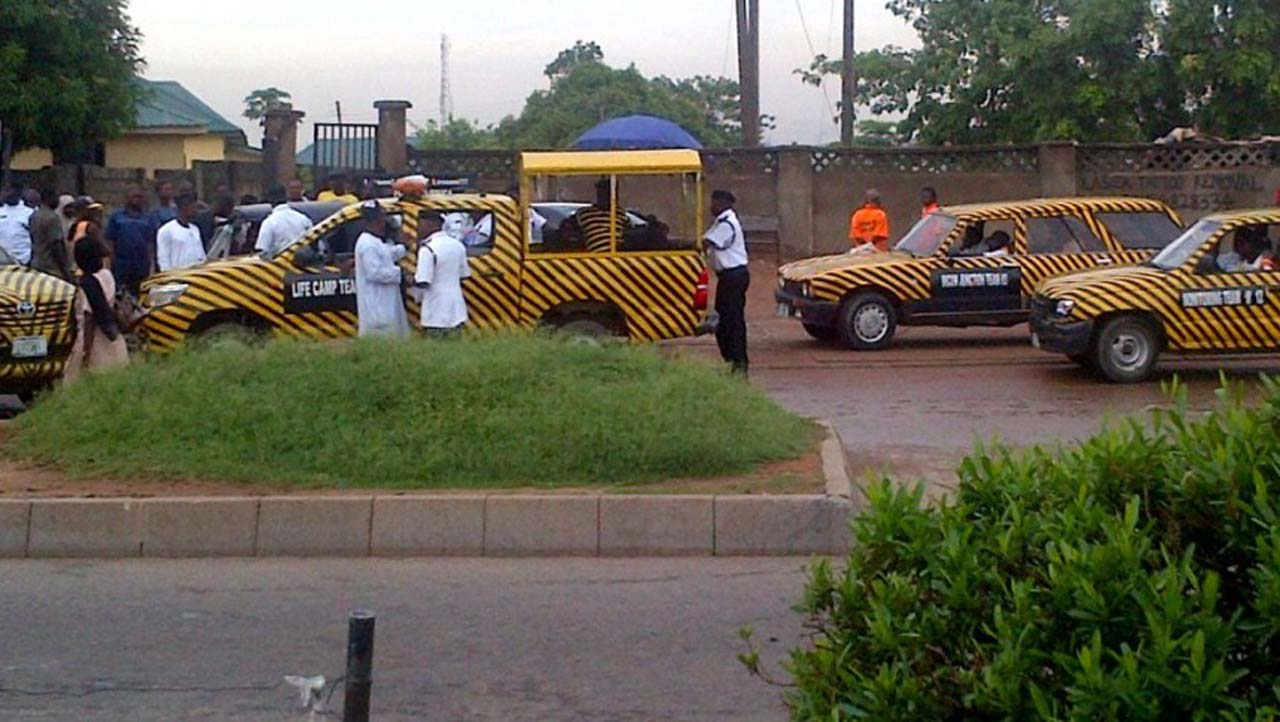
Right after the pond is a Road Traffic Officer, waving you to pull over. As you take your foot off the gas and wheel to the side of the road, he stands by the window and asks: “where is your roadworthiness”? Your anguish deepens as you search through your car documents, looking for ‘roadworthiness’ where there is no road. That’s the aberration that we have been forced to embrace in Nigeria.

“Roadworthiness is a property or ability of a car, bus, truck or any kind of automobile to be in a suitable operating condition or meeting acceptable standards for safe driving and transport of people, baggage or cargo in roads or streets.”

This vehicle requirement has enabled standards for safe driving by reducing the chances of vehicles breaking down on the roads to cause obstruction, and minimizing automobile emission. But that’s in first and second world countries, in third world countries like Nigeria, it’s only a means of generating revenue for the governments and extortion for the enforcement agents.

For instance, in Lagos State, the cost of roadworthiness is N5, 200 for an average car, multiplied by about 5.500 million vehicles registered in Lagos, that’s a whopping 286 billion in revenue. Other states generate substantial revenues also according to their roadworthiness cost and the number of vehicles registered and renewed in the state at its expiration. Most Nigerians have no problems paying these fees, they only have problems with the roads they are paying for its worthiness.

Apart from the Federal Capital Territory (FCT), there is no other state in Nigeria that could boast of roads that justify the roadworthiness law. A few good roads maybe, in the capital cities, and the rest are between small and large potholes, death traps and not-motor-able. What this means is that a brand new car that plied Nigerian roads on its first time, may not pass a road worthiness test after. It’s a brunt that motorists have swallowed whole because they don’t have choice.

John, (not real name) an Uber Driver narrated his bitter experience on Apapa-Oshodi expressway. He said, “It was late at night, and I was driving home for the day. Just after Cele Bus Stop, there’s a hole big enough to swallow a car whole, I didn’t see it on time, so it was too late before I stepped on the brake. And by the sound, I knew I was not going to drive the car home.”

“A toying van appeared from nowhere to offer his service, I had no choice but to accept his offer. Although I was mad at the government, I was glad I got out unhurt.”

He is not the only one, some others have had worse experiences. Darlington, a Facebook user shared his near death ordeal on Benin-Ore expressway. He posted, “Help me thank God, my family and I have just survived a giant pothole. Our car tumbled twice, it’s a miracle that we got out alive. A toying van took us home.” There is always a toying van on standby because they figured out they will be victims of portholes.

But not all the victims were that fortunate to make it. The 2017 Federal Road Safety Corps (FRSC) accidents data indicated that over 100 deaths were as result of bad roads. Sadly, there is no one being held accountable, there is no one paying for the evitable auto crashes enabled by poor road infrastructure. Same can’t be said when traffic officers catch you driving a car without roadworthiness certification. Your car will be impounded, you will be fined heavily or extorted proportionately.

The revenue generation from roadworthiness fees in high populated states like Lagos is enough to rid the roads of potholes. Alas, the concept of roadworthiness has been rationalized in Nigeria to the detriment of all road users. The roads are not vehicle worthy, and cars and their owners are paying the high price. About the 121, 000-mile network of roads in Nigeria, only a few have been bestowed with the needed maintenance that will enhance automobile performance and life. Other consequences include loss of manpower in traffic gridlocks resulting from bad roads. And that is no good news to Nigeria’s wobbling economy. Over N450 billion is lost annually to bad roads through goods and services perishing in accidents caused by debilitated roads.

Roadworthiness certification of vehicles is a safety practice obtainable in many parts of the world that have helped to keep the environment clean and safe. The main purpose shouldn’t be to generate revenue for the governments. So the Nigerian governments should understand that vehicle-worthy roads beget roadworthy vehicles.

The World Begins To Pay China

4

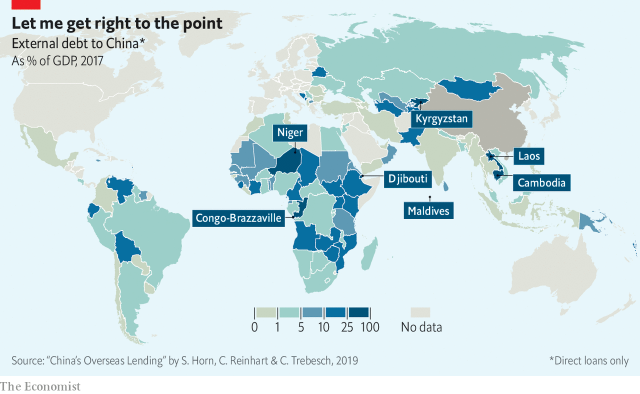
The International Monetary Fund (IMF) has approved a bailout for Congo Republic which has been under the weight of loans it took from China. Magically, China gets its money back, and also keeps the prized cobalt mines which had been priced into the loan financing. This is turning out in a different way: a western institution bailing out a country which owes China. For Congo, IMF arrived on time. And because IMF arrived, other nations will knock on the door for help. China smiles!

The International Monetary Fund’s (IMF) executive board approved a bailout worth nearly $449 million for OPEC member Congo Republic on July 11, potentially setting a precedent for other nations struggling under the weight of large debts to China.

China has aggressively courted African nations for investments seen as advantageous to its national agenda.

In Congo, China has provided billions in aid, allowing it to secure rights to mine for cobalt, a material that’s a key component to making lithium-ion batteries used to power electric vehicles—an industry targeted by Beijing for development.

China had already eclipsed both IMF and World Bank as the entity holding the largest official debt in the world: “more than twice the size of the International Monetary Fund and the World Bank combined”, Economist notes. Yes, IMF will get really busy in coming years for that amazing country named China which has simply figured out this planet earth!

According to the report, the amount of foreign debt held by China is 50% greater than previously thought, making it the largest official creditor in the world. More than twice the size of the International Monetary Fund and the World Bank combined, says The Economist. The value of China’s outbound credit lines has surged from virtually nil in 2000 to over $700 billion today but China has kept much of that debt “hidden” by not reporting it to bodies like the IMF. (Fortune newsletter)

A new study by Sebastian Horn and Christoph Trebesch of the Kiel Institute for the World Economy and Carmen Reinhart of Harvard University offers the most comprehensive picture yet of China’s official credit flows (including state-owned banks). It adds to concern about whether China has sowed the seeds for debt problems abroad. They find that nearly half of China’s lending to developing countries is “hidden”, in that neither the World Bank nor the imf has data on it. (Economist)

Biochar Integrated Circular Food System Can Transform Agriculture

0
Commercialize Agriculture Ideas

By Nnamdi Odumody

Biochar Integrated Circular Food System is an innovative solution for increasing the productivity and long term sustainability of food supply in the world. Agric waste such as crop residues, fallen twigs, date palm fronds, animal manure and animal bones can be processed to biochar, a carbon rich material which has the capacity to retain water and nutrients thereby increasing productivity. Biochar’s unique properties allow it to be applied in crop waste management, clean renewable energy for farmers, drinking water treatment and purification, animal feeding and health, aquaponics and fish water treatment, composting of crop residues and manure, market waste, & fish processing wastes.

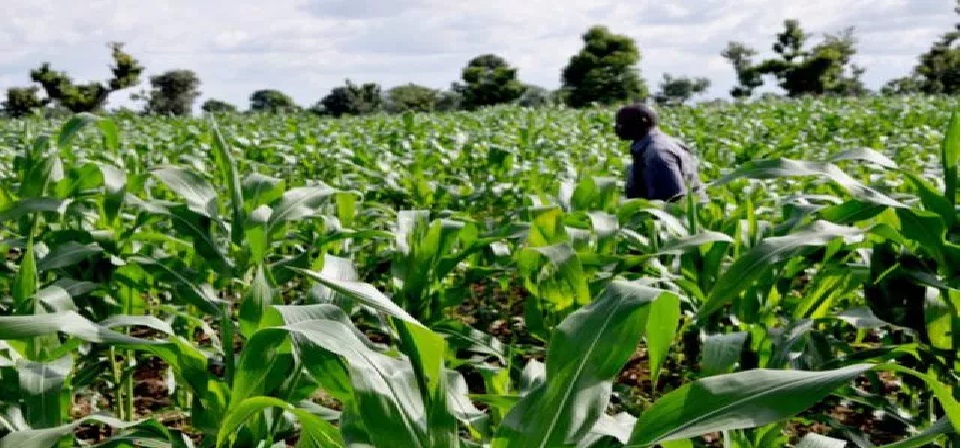
Biochar has the capacity to absorb water up to 5 times its weight, and absorbs nutrients such as nitrogen, potassium and phosphorus, which makes it valuable in arid regions such as Northern Nigeria, Sahel, North Africa and the Middle East. It is used in hydroponics in retaining moisture and nutrients and improves water quality when utilized in aquaponics by absorbing impurities. Recent research has shown that biochar increases crop yields by 25 percent on the average in acidic, low fertile and low fertilizer inputs in the tropics.

Source: EC

Biochar is an affordable substitute for limestone that can be produced onsite by farmers. It also helps in preventing pollution and spread of diseases in livestock farms. Manure biochar can be used to create organic fertilizer for vegetable crops, maize, millet, date palms, mangoes, cocoa and coffee. Biochar from plants can be deployed to maintain the healthy digestive system of poultry, goats and cattle. Its effects improve growth rates, milk production and reduction of toxins in milk and odors. The application of biochar derived from maize stalk in manure composting reduces ammonia and methane emissions, reducing global warming. Biochar prevents diseases caused by ammonia in poultry farms and footpad diseases on the floors.

With numerous applications across the agri-industry value chain, Biochar will help in increasing efficiency and promoting a green smart environment.

Big Brother Naija’s Yesterday Episode and Challenge of Women Leadership

4

By John Beecroft

I’ not a fan of the BBNaija show – I would rather watch anime and movies instead. But for the sake of family bonding, I usually watch the annoying show with my babe for an hour or two daily. Typically, I just stare at the TV and say a few words, but yesterday (Friday 12th) was different.

‘Big Brother’ had given a task to the housemates to contribute 2,500 Bet9ja coins, the currency of the Big Brother House, among themselves – you can watch it here. Problem was that the housemates had amassed varying amount of coins over the two weeks they had spent in the house, with some having as low as 20 and others as much as 500. As can be imagined, the coins had become extremely valuable as they represented the line between staying in the house and eviction for some of the housemates.

I came home while the housemates were having a meeting discussing how to gather the required coins. While there are many ways the coins could have been gathered, the housemates had chosen a pragmatic approach: Every one was to give up 65% of their coins. (Total amount of coins in the house was about 3,800 and 65% of that amounted to about 2,500 coins.)

And so the debate started with some complaining and others encouraging. Perhaps as expected, the guys had no issues with contributing the required coins, but it was quite annoying to watch the ladies argue and complain. KimOprah and Tacha in particular gave a new definition to the word ‘selfish’. To ‘Jeff the banker’, fell the hard task of convincing everyone to give up their hard-earned coins and he went about it by mollifying the ladies.

Now let me ask a question: What was Jeff’s main goal? If your answer is ‘to collect 65% of everyone’s coins’, then you are a follower! But we will come back to that later.

While I was quiet but extremely curious about how things were going to end, my heavily invested babe was busy with the 2 Rs – ranting and raging – because of the way things were going and how the ladies were behaving. She got particularly angry at Jeff for being too gentle with the ladies. Finally, she asked me “What do you think?” Here’s what I told her: Jeff is a leader.

Of course, she flipped at that!

In life, everyone chooses to either be a leader or a follower. The choice is shown in the things they individually choose to focus on. Followers see a small picture, hence choose to focus on the mundane issues e.g. how many coins did Tacha drop? Leaders on the other hand see the big picture and focus on the goal: We need to gather 2,500 Bet9ja coins. While how the coins are gathered is very important, leaders realise that it is not nearly as important as the goal.

This tenet of leadership, I learnt many years ago as a young man. Whenever I got angry at work or was getting lost in details, my coach would ask me “But what is your goal?” Of course, that’s much easier said than done, but it does not change the truth of it. Losing sight of that goal is what makes many of us lose our tempers and our heads with it. And the moment you lose your head and the sight of the goal, the real task – that of leading – is lost. Yes, you might win some coins here and there, but you will remain a follower.

Some of the ladies especially could not accept Tacha refusing to give up 60% of her coins and were ready to make everything go bonkers. The guys on the other hand were busy making up for the deficits. At that point, the split in the house became painfully obvious: The Leaders and The Followers. Unfortunately, the leaders were almost all guys, while the followers were almost all females. And this is one of the tragedies of our society and the world at large.

Yes, we want women in positions of power/service, but more important than having women in power is having goal-focused people in service. Yet, if BBNaija is a microcosm of Nigeria, which I believe it is, then it shows why lots of females are not ready for those roles. Many all too easily allow their emotions becloud their judgement; they cannot focus on the goal. Mind you, the goal is not about ‘right’ or ‘wrong’ just as being right does not make you a leader. ‘Ella the presenter’ had given more than 60% of her coins and was ready to scatter everything when Tacha refused to contribute hers. Yes, she was very right to be upset, but in getting stuck on that minor detail of Tacha’s 60%, she had lost sight of the goal – the instruction to gather 2,500 coins.

But though this may be more prevalent with ladies, it’s not about them alone. As I tried explaining to my babe why Jeff was a leader and the righteously angry babes were followers, I realised that I was also losing focus of the goal. My goal in having that conversation with her was in helping her understand leadership. But as we argued, without realising, my focus shifted to proving that I was right. Still the same discussion and the same points, but the mood had changed because I – the leader of the Bee clan – had lost sight of the goal.

So really, this write-up is not just for our female-folk, it’s for everyone who chooses to be a leader. Remember, keep your very valid emotions in check and focus on the goal. There’s nothing more important than the goal. And as you go along, remember that you’re not alone on this journey into leadership; we’re all in it together.