DD
MM
YYYY

PAGES

DD
MM
YYYY

spot_img

PAGES

Home Blog Page 682

Dogecoin (DOGE) Investors Hope DOGE Will Finally Hit $1, but Here’s Why Little Pepe (LILPEPE) Is Already Winning the Meme Coin Race

0

Dogecoin (DOGE) investors have long anticipated the possibility of the token reaching the $1 mark, a milestone that has yet to be achieved. While DOGE maintains a significant market presence, Little Pepe (LILPEPE) is attracting attention for taking a different approach to the meme coin market. LILPEPE operates as the native token of Pepe Chain, an EVM-compatible Layer 2 blockchain designed exclusively for meme projects.

Unlike many Layer 2 solutions that focus on enterprise applications or DeFi, Pepe Chain is structured to optimize the creation and trading of community-driven tokens. The network offers near-instant transactions and gas fees that remain a fraction of a cent. By addressing technical challenges specific to meme projects—such as high fees, slow confirmation times, and vulnerability to bot exploitation—the platform positions itself as a specialized alternative to general-purpose chains.

Security and Launchpad Infrastructure

The Little Pepe framework is principally concerned with security and accessibility. The smart contracts of the chain have built-in anti-front-running systems to constrain the effects of automated trading bots, which is a known problem in meme coin launches. Moreover, the model of the distribution of its tokens provides pre-allocations to liquidity pools and chain reserves in order to prevent sudden liquidity pulls. Also, the upcoming meme launchpad feature gives creators assets and templates to assist the issuance, marketing, and development of tokens. This lowers the technical hurdles to starting new projects, therefore allowing influencers, artists and independent developers to start tokens within a small period. To the participants, the payoff is that there is a constant stream of new meme assets in a controlled environment.

Market Performance and Upcoming Exchange Listings

Little Pepe’s presale performance has demonstrated consistent demand. As of August 11, the project is in Stage 10 of its presale for $0.0019 per token, with more than 93% of this stage sold. The total funds raised have surpassed $18.47 million, following a series of earlier stages that sold out rapidly.

The project is already listed on CoinMarketCap, and it has already secured two Tier-1 centralized exchange listings on launch. Such arrangements will give liquidity and direct trade in line when the token is released. There is also a constant $777,000 giveaway running, in which ten winners will receive $77,000 worth of tokens, as it is part of the community engagement strategy of the project. Although Dogecoin has its place in the wider cryptocurrency ecosystem, the purposeful construction of infrastructure, efficient transactions, and safeguards have made Little Pepe stand out as the model in its meme coin peer group. A successful blockchain ecosystem and presale have put LILPEPE as a competitive alternative among the millions of contributors and their investors to experience exposure to meme-based digital assets.


For More Details About Little PEPE, Visit The Below Link:

Website: https://littlepepe.com 
Samsung Gains Ground on Apple in The U.S Market as Foldable Phones Surge in Demand

0

In a dynamic shift within the U.S smartphone market, Samsung is steadily carving out a larger slice of the pie, challenging Apple’s long-standing dominance.

The rise of foldable phones, with their innovative designs and cutting-edge features, is fueling Samsung’s momentum

With shipments surging in the second quarter and market share climbing from 23% to 31%, according to Canalys.

Over the same period, Apple’s share slipped from 56% to 49%, signaling renewed competition between the two tech giants. However, the Cupertino giant remains top of the U.S. smartphone market, taking new smartphone sales in the U.S. Also globally, the tech giant is often in second place around the global smartphone market, but recent slips point out turbulence for the company.

A decade ago, the Apple-Samsung battle was defined by screen size. Samsung’s large-display phones pushed Apple to introduce the iPhone 6 in 2014, a turning point that helped the iPhone dominate. Today, the rivalry has resurfaced, this time centered on foldable screens.

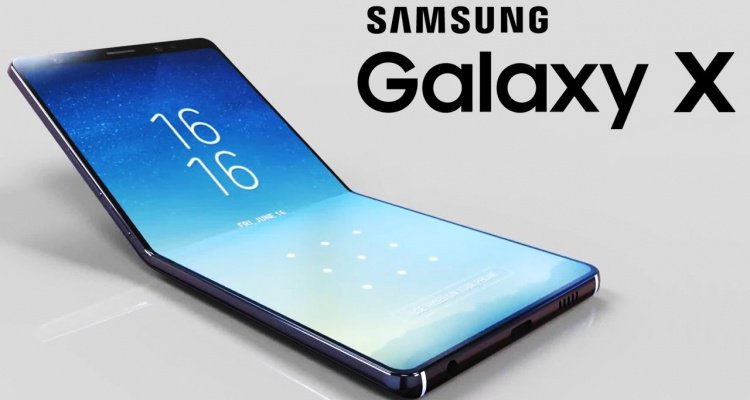
Recall that last month, Samsung launched two new foldable models, the Galaxy Z Fold 7, which transforms into a tablet, and the Z Flip, a modern take on the classic flip phone. The Galaxy Z Fold7 is Samsung’s slimmest, lightest, and most durable smartphone yet in the Samsung folding phone series, featuring the latest Galaxy AI1 and Google Gemini2.

On the other hand, the Galaxy Z Flip7 FE combines the stylish flip phone design of the Galaxy Z Flip7 with impressive specs, Galaxy AI1, and Google Gemini2. Both devices, along with the slim Galaxy S25 Edge, have gained traction on social media, boosted by viral durability tests and overwhelmingly positive user sentiment.

CNBC reports that in the past month, Samsung’s premium devices, including the Z Fold 7, were mentioned over 50,000 times on social media, and 83% of those mentions were positive or neutral, according to data from Sprout Social, a social media analytics company.

Analysts say Apple is preparing to answer back with a slimmer iPhone expected next month and potentially its first foldable model in 2026. The report claims there will be no “iPhone 18” base model in 2026, breaking a tradition that has seen Apple launch four flagship variants every fall. Instead, the company is expected to introduce the iPhone 18 Air, iPhone 18 Pro, iPhone 18 Pro Max, and its first foldable iPhone.

The foldable iPhone is expected to be the highlight of the 2026 lineup, with reports estimating a retail price between $2,000 and $2,500, making it Apple’s most expensive iPhone yet. The company is said to be betting that premium buyers will flock to the new form factor, even as it shifts the more affordable models into a different release window. JPMorgan Chase analyst Samik Chatterjee noted that investor attention is already shifting toward the anticipated iPhone 18 lineup, which may debut Apple’s first foldable device.

Despite Samsung’s recent momentum helped by product diversity, tariffs reshaping shipments, and strong social buzz, Apple still leads the U.S. market with nearly half of all smartphone sales. However, its recent slip has weighed on investor confidence, with Apple shares down 7.5% this year, while Samsung’s stock has climbed 35% in 2025.

With Samsung’s launch of foldable phones and Apple’s plans to roll out its own foldable devices, it is gradually bringing back the flip phone era, which gained popularity in the early 2000s. Tech experts said the new product launch probably reflected the fact that people now mostly access the internet on their phones, rather than laptops or tablets, and are looking for a device that optimises that experience.

With Apple reporting a 13% year-over-year increase in iPhone sales in July 2025, and Samsung pushing the envelope on design innovation, the Apple-Samsung fight for smartphone dominance has reignited once again, and this time, it’s all about the screen.

Bitcoin Slumps From Record High as Traders Face $500M Wipeout

0

The cryptocurrency market started the fresh week on a sharp downturn, with more than $500 million in long positions wiped out amid rising macroeconomic concerns and renewed uncertainty around U.S. monetary policy.

Bitcoin price was down 2.3% over the past 24 hours early on Monday, at around $115,494 after hitting a fresh all-time high of $124,496 last week, its fourth record this year. At one point, the token dipped as low as $114,706 before retracing to $116,055 at the time of writing this report. Ethereum slid 4% to $4,283.15, retreating after nearing its $4,800 record last week.

Both assets sold off after hotter-than-expected July wholesale inflation data fueled doubts over a potential Federal Reserve rate cut in September. Also, several large altcoins were falling. XRP dropped 3.8% and Solana was down 6%. Popular memecoin Dogecoin fell 5.2%.

The selloff triggered a wave of forced liquidations, as 133,643 traders were wiped out in the past 24 hours, totaling $576.35 million, according to Coin Metrics. That included $123 million in bitcoin liquidations and $178 million in ether liquidations, as traders were forced to sell assets at market prices to cover leveraged positions.

Investor sentiment was further dampened by Treasury Secretary Scott Bessent, who stated that the U.S. government’s strategic bitcoin reserve, established by President Donald Trump in March this year, will be limited to forfeited bitcoin assets, as officials seek “budget-neutral” ways to expand holdings.

“We’re not going to be buying that, but we are going to use confiscated assets and continue to build that up,” he said.

His words, however, contradict market expectations formed after U.S. President Donald Trump’s March executive order, which called for “budget-neutral strategies” to grow the reserve. That order, signed on March 6, established a strategic Bitcoin reserve and a separate digital asset stockpile funded initially with cryptocurrency seized in criminal cases.

The broader crypto market tracked the declines. The CoinDesk 20 index fell 3.7%, while crypto-related stocks also dropped: Bitmine Immersion slid 8%, newly listed exchange Bullish fell 7%, and both Coinbase and Circle lost 2%.

Commenting on the sharp slump in the price of Bitcoin as well as other crypto assets, market analyst at XS, Antonio Di Giacomo, said,

“Bitcoin’s recent pullback after reaching an all-time high highlights the significant impact of macroeconomic indicators on the cryptocurrency market. Short-term volatility contracts with a backdrop of rising institutional adoption and increasingly sophisticated corporate strategies”.

Several analysts predict that moving forward, the most likely drivers for crypto prices this week will be comments from Federal Reserve chair Jerome Powell at the Jackson Hole Symposium, alongside minutes from the Fed’s most recent meeting.

Traders are now looking ahead to the Federal Reserve’s Jackson Hole symposium later this week and Thursday’s jobless claims data for fresh signals on policy direction.

However, many analysts view the pullback as a healthy consolidation rather than a sign of deeper trouble. Despite Friday outflows, crypto ETFs saw strong weekly inflows, $547 million into bitcoin funds and a record $2.9 billion into ether funds, marking ETH’s 14th consecutive week of inflows.

For now, the August slump is seen as a cooldown before September, when macro risks and Fed decisions may once again take center stage in shaping the crypto rally.

Cryptos With the Most Potential: Cardano Eyes $1, Chainlink Gains Backing, While BlockDAG’s $376M Breaks Records

0

Cardano is pushing toward a long-awaited breakout, Chainlink is winning attention from whales and institutions, and BlockDAG (BDAG) is reshaping how mining and community adoption work.

These three names are gaining serious traction, but each is doing it in a different way. Cardano is aiming to clear the $1 mark, with strong technical patterns confirming bullish strength. Chainlink is seeing whale moves worth millions and institutional backing that is taking it closer to $30 and beyond.

Then there is BlockDAG, already fueled by more than $376 million raised, over 25.2 billion coins sold, and 19,300 miners shipped worth $7.8 million. With these numbers and real-world partnerships, it could soon outpace both ADA and LINK in the race for crypto with the most potential.

Chainlink’s Whale Surge and Institutional Backing

Chainlink (LINK) has climbed over 30% this week, now trading at $23.50 after a 9% daily rise, with $1.35 billion in trading volume. Whale moves highlight the rally, including a 510,000 LINK ($11.13M) withdrawal from Binance to Compound, plus other buys totaling $13 million. Active addresses jumped from 5,500 to 9,410, proving both retail and whales are active.

Institutional adoption is also strong. Partners such as Fidelity, Swift, Citi, DTCC, JPMorgan, and BNP Paribas are using Chainlink in their systems. Chainlink Reserve also allows fiat-based payments in its network, boosting DEX volume to $1.298 billion in 24 hours.

Technically, LINK broke out after retesting $18 and now eyes $30. Analyst Posty calls it “too cheap,” suggesting a $100 target with market cap growth from $15B to $100B. This mix of whale action and Wall Street presence places LINK high in the crypto with most potential list.

Cardano’s Path Toward $1

Cardano (ADA) is trading close to $0.87, rising more than 4% as bullish momentum spreads across the market. Futures Open Interest jumped to $1.43 billion, up from $1.2 billion on August 3. This follows July’s rise to $0.93, when OI peaked at $1.74 billion before cooling.

In the past 24 hours, about $3.35 million in trades were liquidated, including $2.4 million from shorts, confirming buyers remain in control. ADA still faces a resistance trendline from December’s $1.32 high, but a clean breakout could open the door to $1.00 next.

Indicators support the move. ADA flashed a MACD buy signal, while Golden Cross formations are strengthening. If selling slows the run, support sits at $0.74, $0.72, and $0.71. Together, ADA’s setup shows why it remains a serious competitor for crypto with most potential.

BlockDAG’s Presale Boom: $376M Raised & 19,300 Miners Sold!

Unlike ADA and LINK, which chase price spikes, BlockDAG is building a foundation for long-term growth. Its presale has already secured more than $376 million, with BDAG priced at $0.0276 in Batch 29 and a listing price of $0.05.

A major driver is mining adoption. BlockDAG has distributed 2.5 million X1 mobile miners, letting users mine without expensive rigs. The project also launched its X10 miner, showcased live on July 23. The X10 generates up to 200 BDAG daily, ten times more than the X1, making it useful for both newcomers and serious miners. Already, over 19,300 miners have been sold, worth $7.8 million, delivering strong momentum.

Security has been a focus too. BlockDAG passed audits by CertiK and Halborn, fixing flagged issues and adding safeguards like multi-signature protection and parallel PoW processing. This ensures reliability for payments and enterprise adoption.

Beyond tech, BlockDAG is building awareness through official sports partnerships with the Seattle Orcas cricket team and Seattle Seawolves rugby team for 2025. These deals add NFTs, fan coins, and digital fan engagement to bring crypto closer to mainstream culture.

With 25.2 billion coins sold and early buyers seeing 2,660% ROI across batches 1–29, BlockDAG is not just another presale. It is scaling with community reach, practical mining, real-world links, and exchange listings lined up, making it the crypto with most potential heading into 2025.

Final Word

Cardano is approaching a breakout that could send it to $1. Chainlink is winning big whale and institutional support as it pushes toward $30. Both are strong, but BlockDAG’s foundation is different.

It combines $376 million raised, 25.2B coins sold, 19,300 miners shipped, sports deals, and strong audits. With these achievements already secured before launch, it is preparing for global scaling.

Where ADA and LINK rely mostly on market cycles, BlockDAG already shows proven adoption, mining access, and revenue strength. That is why in the race for crypto with the most potential, BlockDAG’s mining network and execution may be the real game changer for 2025.

Presale: https://purchase.blockdag.network

Website: https://blockdag.network

Telegram: https://t.me/blockDAGnetworkOfficial

Discord: https://discord.gg/Q7BxghMVyu

Nigeria Moves to Decentralize PPP Approvals, Empowering MDAs to Fast-Track Infrastructure Projects

0

The Infrastructure Concession Regulatory Commission (ICRC) has unveiled new guidelines on Public-Private Partnerships (PPPs), decentralizing approval powers to Ministries, Departments, and Agencies (MDAs) in a move aimed at accelerating project delivery and unlocking private sector investments for Nigeria’s ailing infrastructure.

The Commission announced the reforms in a statement on Sunday, explaining that the framework was developed under the ICRC Act of 2005 and aligns with a Presidential directive to overhaul Nigeria’s infrastructure delivery model through PPPs.

The new rules establish a structured process for the conception, development, and execution of PPP projects nationwide. They also grant MDAs greater authority to approve projects, while the ICRC retains oversight responsibilities to ensure compliance, transparency, and accountability.

Speaking during the launch of the framework at a high-level stakeholders’ engagement, ICRC Director-General Dr. Jobson Oseodion Ewalefoh underscored that the reforms are central to President Bola Ahmed Tinubu’s economic vision of liberalizing and modernizing the nation’s infrastructure financing.

“The new guidelines are in response to President Tinubu’s vision to liberalize the economy and in line with his charge to the ICRC to seek innovative ways to attract private sector finance to build infrastructure through PPPs,” Ewalefoh said. “They decentralize project approvals to empower MDAs for faster delivery while safeguarding the ICRC’s role as regulator of PPPs in Nigeria.”

Ewalefoh clarified that the ICRC will continue to act as a regulator and facilitator, not an operator or grantor of projects, and will remain central to coordinating negotiations between MDAs and private partners to ensure projects are bankable, transparent, and fair.

The Commission also emphasized that while MDAs now enjoy more flexibility, the decentralization comes with stricter accountability measures and a zero-tolerance stance on non-compliance. According to the ICRC, the combination of decentralized approvals and stronger compliance checks is expected to unlock billions of naira in private investment and cement Nigeria’s standing as one of Africa’s leading destinations for transformative infrastructure projects.

The guidelines build on a policy approved by President Tinubu in June 2025, which empowered the ICRC to independently approve projects below N20 billion without seeking Federal Executive Council (FEC) clearance. Under the updated rules, ministries can now greenlight projects under N20 billion, while agencies and parastatals can approve those below N10 billion. Larger projects above the threshold, or those spanning multiple ministries, will still require FEC approval.

To support this process, the framework introduces Project Approval Boards (PABs) within MDAs, tasked with vetting and approving eligible projects, subject to ICRC certification. Crucially, all PPPs must be fully financed by the private sector, with no federal treasury guarantees or commitments. Regardless of scope or value, every project must undergo ICRC’s due diligence before securing final approval.

Analysts say the move signals a bold attempt by the Tinubu administration to close Nigeria’s yawning infrastructure gap, estimated at over $100 billion, while reducing bottlenecks that have historically stalled project delivery.

Why This Matters

Nigeria’s big-ticket PPP projects—roads, bridges, ports, pipelines, and power plants—have historically been hampered by bureaucratic delays, fragmented approval processes, and underfunding. The new ICRC framework, by decentralizing approval authority via MDA-embedded Project Approval Boards (PABs) and streamlining due diligence, aims to:

  • Decrease lead times for project selection and contracting.
  • Enhance institutional capacity through accountability incentives.
  • Attract private capital by offering clarity and regulatory predictability.
  • Ensure compliance and value-for-money through ICRC oversight, zero public treasury guarantees, and mandatory private financing.

If applied effectively, this reform could help restart and scale landmark projects like the AKK Gas Pipeline—and put more stalled initiatives back on track.