DD
MM
YYYY

PAGES

DD
MM
YYYY

spot_img

PAGES

Home Blog Page 682

Riders in Atlanta Are Choosing Robotaxis Over Human Drivers, Signaling a New Era for Uber and the Gig Economy

0

A quiet but telling shift is playing out on the streets of Atlanta. Some Uber passengers, given the choice between a human driver and a driverless Waymo, are deliberately refusing the human option — waiting longer, canceling trips, and re-requesting rides until a robotaxi appears.

What once felt like a futuristic experiment is now turning into a customer preference, and it may mark the beginning of a profound transformation in ride-hailing.

Since Uber introduced Waymo’s self-driving cars into its Atlanta platform in late June, residents like Nate Galesic have leaned heavily into the technology. He admits to declining trip after trip until the app assigns him a robotaxi, a habit he has repeated for more than 35 rides. As an assistant director for TV and film products, Galesic told BI he usually drives himself home after a long day on set. Not having to drive — or face judgment from a ride-hailing driver if he nods off along the way — is another benefit of autonomous vehicles, he said.

“I’ve always dreamt about the day when I could just pass out on the way to and from work,” Galesic told BI. “Now I can do that without the small talk.”

Another rider, Andrew Nerney, describes a similar approach: canceling multiple times until he finally lands a Waymo, even though most of his trips are short, under $12.

“Each day, I see Waymos with passengers more frequently,” he added, underscoring that this is no longer a novelty but an emerging preference.

The behavior captures a pivotal moment. For the first time, Uber’s customers are openly demonstrating that they would rather trust algorithms, sensors, and software than a gig worker behind the wheel. While Uber users cannot guarantee that they’ll get a ride in a Waymo in Atlanta, some are working the system to get paired with one.

The implications are enormous, not just for Uber but for the entire gig economy.

Waymo, Alphabet’s self-driving unit, has gradually expanded from its first commercial rides in Phoenix in 2017 to San Francisco, Los Angeles, and Austin, with a fleet of more than 1,500 fully driverless cars. Atlanta now joins that map, though for the moment Uber and Waymo only operate “dozens” of cars within a limited 65-square-mile zone. The companies say the fleet will grow into “hundreds” in the coming years, mirroring Austin, where about 100 are already deployed.

But what feels like progress for tech enthusiasts spells potential disaster for Uber’s drivers. Uber has long described its flexible labor model as a gateway to income for millions worldwide. If more riders follow Galesic and Nerney’s example — canceling human drivers to wait for robots — that workforce risks being pushed aside, with automation directly replacing people rather than complementing them.

Many believe that the early signs in Atlanta could be the “first crack” in Uber’s labor model. For Uber, autonomy has always been part of its long game. Labor is its single biggest cost, and replacing drivers with driverless cars is a way to lower expenses and eventually boost profitability.

Former CEO Travis Kalanick openly admitted the company’s survival depended on driverless cars. While the company now frames partnerships like the one with Waymo as “expanding choice,” the trajectory is clear.

But the transformation is far from complete. Robotaxis still face skepticism, safety concerns, and regulatory hurdles. Crashes involving autonomous systems have kept regulators cautious, and polls consistently show Americans are more uneasy than excited about self-driving technology.

Frank McCleary, a partner at consulting firm Arthur D. Little’s automotive and manufacturing practice, said deadly accidents involving self-driving vehicles are one reason that potential riders might be wary.

“That negative news cycle has sort of pushed some folks away from it,” he told Business Insider.

Yet for a growing number of riders, those hesitations are secondary to convenience. “New tech doesn’t become massively adopted overnight,” Galesic said. “But once you’ve experienced a driverless ride, it’s hard to go back.”

The long-term question is no longer whether Uber drivers will be replaced, but how fast — and whether the gig economy that reshaped modern work can survive this tech evolution.

U.S. Envoy Says Putin Open to ‘Article 5-Like’ Protection for Ukraine in Potential Peace Deal

0

Washington is weighing what could be the most significant concession from Moscow since the war in Ukraine began.

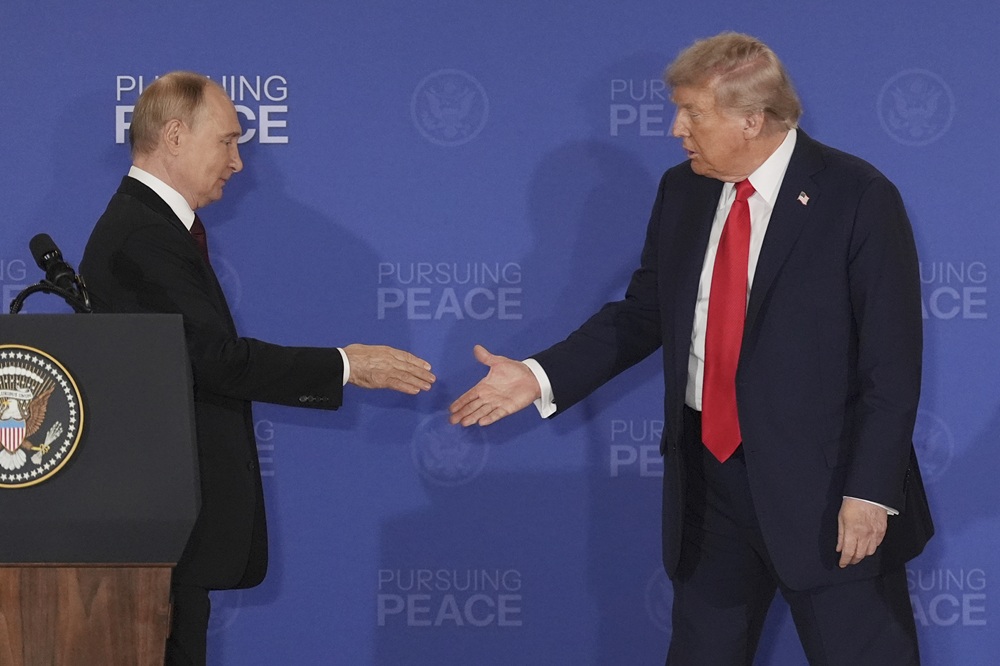
U.S. special envoy Steve Witkoff said Sunday that Russian President Vladimir Putin has agreed to let the United States and European partners extend “Article 5-like protection” to Ukraine as part of a possible security guarantee aimed at ending the conflict.

“We were able to win the following concession: that the United States could offer Article Five-like protection, which is one of the real reasons why Ukraine wants to be in NATO,” Witkoff said in an interview on CNN. “It was the first time we had ever heard the Russians agree to that.”

NATO’s Article 5 obligates all members of the alliance to treat an attack on one as an attack on all, compelling collective defense measures. For Ukraine, which has long sought NATO membership as a shield against Moscow, the promise of such protection — even outside formal membership — would mark a historic shift.

European Commission President Ursula von der Leyen welcomed the U.S. announcement, saying the European Union “is ready to do its share.” Ukrainian President Volodymyr Zelenskyy also hailed the development as “a historic decision,” stressing that any guarantee must be practical, offering protection “on land, in the air, and at sea,” and must involve Europe.

The envoy’s remarks come just after President Donald Trump held talks with Putin in Alaska, meetings that the White House described as “productive” despite the absence of a ceasefire agreement. Trump had repeatedly called for a swift and lasting truce, but the summit ended without such a breakthrough, raising concerns in Kyiv and European capitals that the U.S. leader might soften Washington’s stance.

In the days since, Trump has insisted that “the best way” to end the conflict is through a comprehensive peace deal. Witkoff said the Alaska talks covered “almost all the other issues necessary for a peace deal,” though he declined to detail them, adding only that “we began to see some moderation in the way they’re thinking about getting to a final peace deal.”

Still, U.S. officials caution that a resolution remains distant. Secretary of State Marco Rubio said Sunday that while progress was made, “we’re still a long ways off” from a peace agreement. He warned Russia would face “additional consequences” if talks collapse, but argued against further sanctions for now.

“The minute you levy additional sanctions, strong additional sanctions, the talking stops,” Rubio said on ABC News.

However, the proposal stirs curiosity. If Putin truly accepted Article 5-style security conditions for Ukraine, it would contradict one of Moscow’s main justifications for its invasion: blocking Kyiv’s NATO aspirations. The Kremlin has repeatedly demanded that Ukraine abandon those ambitions and recognize Russia’s annexations of Crimea and large parts of eastern Ukraine.

Reports following Friday’s summit suggested Trump floated a deal in which Kyiv would surrender the Donbas region. Zelenskyy, however, has been adamant that Ukraine will never cede sovereign territory, saying doing so would breach the Constitution and embolden Russia to strike again.

“Everyone agrees that borders must not be changed by force,” he wrote on X.

With Trump scheduled to meet Zelenskyy and European leaders on Monday, discussions are expected to focus on what security guarantees should look like and how Ukraine could be rebuilt after nearly four years of devastating war.

“There has to be talk about what the territories are going to look like and what the border lines are going to look like at the end of this conflict,” Rubio said. “There has to be talk about how Ukraine is rebuilt, and how do you rebuild a country that’s been attacked as often as it has.”

For Kyiv, that rebuilding begins with assurances that the nightmare of invasion will not be repeated — and for now, Putin’s unexpected concession may be the closest it has come to that guarantee.

How SMEs Distribute Campaigns Across Devices

0

Behind every campaign is a strategic choice. Which devices and operating systems should businesses prioritize to maximize impact? A recent dataset analyzing campaigns across small, medium, and enterprise businesses provides fascinating insights into how organizations allocate their efforts between Android, iOS, and Windows devices across global regions. The results show an unexpectedly balanced playing field and important lessons for digital marketers.

A Global Equilibrium

At the global level, campaigns are strikingly evenly distributed: Android accounts for 33.0% of all campaigns, iOS 33.7%, and Windows 33.4%. This near-perfect balance suggests that, despite the varying strengths of each ecosystem, businesses see value in diversifying their outreach rather than committing to a single platform. In other words, successful digital strategies are less about platform loyalty and more about platform inclusivity. Individuals interact with brands across multiple devices and ecosystems, and businesses are adapting accordingly by meeting them wherever they are.

Regional Insights

While the global picture shows balance, regional trends reveal the strategic nuance in campaign planning. In Africa, iOS takes the lead with 34.7% of campaigns, slightly ahead of Android and Windows, indicating marketers view iOS users as a premium audience. Asia-Pacific shows almost mathematical equality across platforms, reflecting the need for inclusivity in a highly diverse region. Europe skews slightly toward Android and iOS, signaling a mobile-first mindset, while North America sees Windows edge out the competition, pointing to enterprise campaigns aligned with workplace productivity. South America mirrors Africa with a tilt toward iOS, again emphasizing the pursuit of higher-value consumers.

Business Size and Strategy

These regional differences connect closely to the size and nature of businesses. Small businesses often concentrate on platforms where engagement translates most directly into sales, which explains iOS’s stronger share in regions where premium consumers dominate. Medium-sized firms, in growth mode, may pursue balanced strategies to test the best-performing platforms. Enterprises, with greater resources, tend to spread campaigns broadly but lean into Windows in professional contexts, especially in North America. The choices businesses make reflect not just platform availability but the perceived value of audiences in each market.

Lessons for Marketers

From this distribution, several lessons emerge. Diversification is essential: excluding one platform risks losing a third of potential reach. Regional strategy matters; what works in one region may fail in another. Business size shapes priorities, SMEs and enterprises differ in how they allocate campaigns, and marketers must adjust their guidance accordingly. Audience behavior is the ultimate driver. iOS may attract premium consumers, Android offers breadth of reach, and Windows represents productivity-oriented users. Aligning campaign objectives with these user profiles is critical for ROI.

The big question is whether this balance will hold in the years to come. As ecosystems evolve, businesses may shift their allocations: Windows strengthening mobile integration, Android expanding in emerging markets, and Apple reinforcing its premium positioning. Yet, one principle will remain constant: digital campaigns succeed when they reflect the complexity of real consumer behavior. For today’s marketers, the takeaway is clear. Balance your bets, respect regional differences, and meet your audiences wherever they are. In a digital landscape defined by diversity, inclusivity across platforms is not just wise, it is the foundation for long-term success.

Estimating Equity Investment Return [video]

0

Estimating equity investment return

The Excel in Tekedia Daily podcast in Blucera or Tekedia Startup Masterclass portal or Tekedia Capital board


From Tekedia AI Companion, here is the summary of the presentation (pdf).

Modeling Startup Investment Return: A Guide

Section 1: Introduction to Investment Return Modeling

This presentation provides an in-depth look at modeling investment returns for an equity investment in a startup. The core concept revolves around understanding how an initial investment, coupled with the company’s growth and subsequent funding rounds, affects a shareholder’s return. The lecture uses a practical example of investing $10,000 in a startup initially valued at $50 million.

Section 2: Understanding Dilution

Dilution is a crucial concept in startup investing. It occurs when a company issues new shares, decreasing the ownership percentage of existing shareholders.

  • Cap Table: The lecture introduces the concept of a cap table (capitalization table), which is a record of all shareholders and their ownership percentages.
  • The 100% Rule: The total ownership of a company must always equal 100%. When a new investor buys a stake, they must be accommodated, which means the percentages of existing shareholders are reduced.
  • A simple example: If 10 people each own 10% of a company, and a new investor buys 20%, the original 10 people now collectively own only 80% (100% – 20%). Their individual percentage ownership is diluted.

Section 3: The Dilution Paradox: How Dilution Can Be a Good Thing

While dilution reduces your ownership percentage, it is often a sign of a healthy, growing company. The lecture explains a key paradox: a smaller percentage of a much larger, more valuable company can be worth significantly more than a larger percentage of a smaller, less valuable company. When a company brings in a new investor with a large amount of capital (e.g., $100 million), it increases the overall value of the company, and thus the value of your stake, even if your percentage ownership is lower.

Section 4: Calculating Investment Returns

The presentation provides a step-by-step approach to calculating potential returns, using the concept of multiples.

  • Initial Investment: $10,000
  • Initial Valuation: $50 million
  • Initial Ownership: The initial ownership is calculated as , or 0.02%.
  • Multiple (X): The return is often expressed as a multiple (e.g., 10x, 27x, 50x), which represents how many times your initial investment you received back.
  • Impact of Lower Valuation: The lecture emphasizes that investing in a company with a lower valuation (e.g., $10 million instead of $50 million) at the beginning of the investment journey can lead to a much higher multiple, such as 50x.

Section 5: Case Study: Y Combinator

The lecture references Y Combinator as a real-world example of these principles.

  • Average Dilution: The average dilution for Y Combinator startups that reach unicorn status is between 40% and 55%.
  • Example Calculation: An investment of $10,000 at a company valuation of $30 million that reaches unicorn status with a 40% dilution rate would yield approximately a 20x return.

Section 6: Summary and Conclusion

Extensive Summary

The video lecture provides a clear and concise explanation of how to model returns on a startup investment. It highlights the importance of understanding dilution, which is the reduction of an investor’s ownership percentage as a company raises additional capital. While dilution may sound negative, the lecture argues that it is often a positive sign, as it indicates the company is growing and increasing in value. The core of the model is that a smaller percentage of a higher-valued company can be worth much more than a larger percentage of a lower-valued one.

The calculation of returns is based on multiples, or “x,” which signifies the profit as a ratio of the initial investment. The lecture uses a practical example of a $10,000 investment in a startup to illustrate these principles and even uses Y Combinator as a case study to provide real-world data on average dilution rates and corresponding returns. Ultimately, the key takeaway is that the initial valuation of the company and the subsequent rate of dilution are the two most critical factors in determining the final investment return.

Conclusion

In conclusion, this presentation has covered the essential components of modeling startup investment returns as described in the provided transcript. The lecture effectively explains the mechanics of dilution and its surprising role in creating value for investors. By providing a clear framework and a real-world case study, it helps investors understand that the key to significant returns isn’t just a high ownership percentage but rather a company’s ability to grow rapidly, thereby increasing the value of their diluted stake. It is a valuable tool for anyone considering an early-stage startup investment.

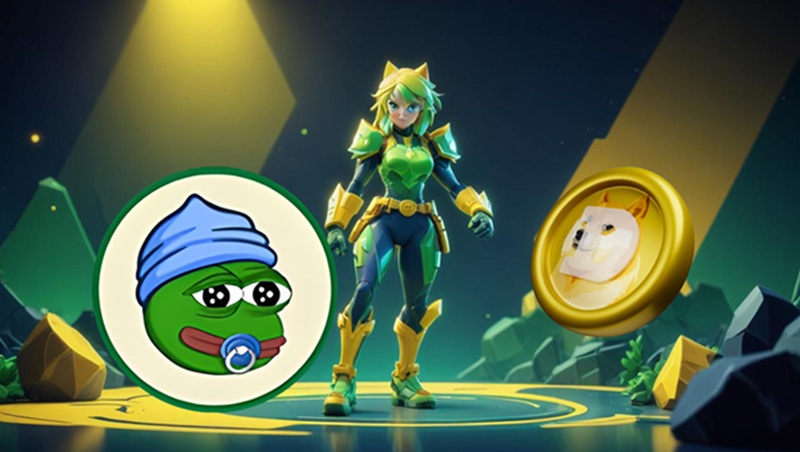
Dogecoin (DOGE) Investors Hope DOGE Will Finally Hit $1, but Here’s Why Little Pepe (LILPEPE) Is Already Winning the Meme Coin Race

0

Dogecoin (DOGE) investors have long anticipated the possibility of the token reaching the $1 mark, a milestone that has yet to be achieved. While DOGE maintains a significant market presence, Little Pepe (LILPEPE) is attracting attention for taking a different approach to the meme coin market. LILPEPE operates as the native token of Pepe Chain, an EVM-compatible Layer 2 blockchain designed exclusively for meme projects.

Unlike many Layer 2 solutions that focus on enterprise applications or DeFi, Pepe Chain is structured to optimize the creation and trading of community-driven tokens. The network offers near-instant transactions and gas fees that remain a fraction of a cent. By addressing technical challenges specific to meme projects—such as high fees, slow confirmation times, and vulnerability to bot exploitation—the platform positions itself as a specialized alternative to general-purpose chains.

Security and Launchpad Infrastructure

The Little Pepe framework is principally concerned with security and accessibility. The smart contracts of the chain have built-in anti-front-running systems to constrain the effects of automated trading bots, which is a known problem in meme coin launches. Moreover, the model of the distribution of its tokens provides pre-allocations to liquidity pools and chain reserves in order to prevent sudden liquidity pulls. Also, the upcoming meme launchpad feature gives creators assets and templates to assist the issuance, marketing, and development of tokens. This lowers the technical hurdles to starting new projects, therefore allowing influencers, artists and independent developers to start tokens within a small period. To the participants, the payoff is that there is a constant stream of new meme assets in a controlled environment.

Market Performance and Upcoming Exchange Listings

Little Pepe’s presale performance has demonstrated consistent demand. As of August 11, the project is in Stage 10 of its presale for $0.0019 per token, with more than 93% of this stage sold. The total funds raised have surpassed $18.47 million, following a series of earlier stages that sold out rapidly.

The project is already listed on CoinMarketCap, and it has already secured two Tier-1 centralized exchange listings on launch. Such arrangements will give liquidity and direct trade in line when the token is released. There is also a constant $777,000 giveaway running, in which ten winners will receive $77,000 worth of tokens, as it is part of the community engagement strategy of the project. Although Dogecoin has its place in the wider cryptocurrency ecosystem, the purposeful construction of infrastructure, efficient transactions, and safeguards have made Little Pepe stand out as the model in its meme coin peer group. A successful blockchain ecosystem and presale have put LILPEPE as a competitive alternative among the millions of contributors and their investors to experience exposure to meme-based digital assets.


For More Details About Little PEPE, Visit The Below Link:

Website: https://littlepepe.com