DD
MM
YYYY

PAGES

DD
MM
YYYY

spot_img

PAGES

Home Blog Page 6832

The Mechanics of Hacking Startup Growth

0

By Iselowo Kolawole Kehinde

When launching a new product or startup, hacking is key to the rapid process of growth and hiring a good Growth Hacker is even more important. There are four processes I feel that are vital and must be carefully considered..

1.) Activation: how do you get people to see or know your products? Is it Direct Marketing, Social Media Marketing, Display Advertising, SEO (search engine optimization) or SEM (search engine marketing)?

2.) Acquisition: after the right people see you online, how do you convert them and generate leads and revenue from them? This has to do with your landing page and offers.

3.) Retention: how do you make people addicted to your product or service and always get them coming back for more? Is it via your UGC (User Generated Content) or Freemium Services?

4.) Referral: how do you get already satisfied clients and customers that you are purchasing from to refer your product to someone? This is very vital – you should look at things like Email Marketing, Retargeting, Excellent Service Provided, Referral Bonus, Feedbacks and New Features Upgrade.

Synergy Between UI and UX

Interestingly, pursuing growth typically requires a good level of customer experience. Yes, there needs to be a synergy between UI and UX. I tell people UI (User Interface) makes your application beautiful but UX (User Xperience) makes your application meaningful. The beauty about UI is that it should leave a first impression visually and should be appealing while your UX should leave a lifetime impression based on services being rendered.

UX is all about Ease of Use, Process Automation, Ease of Access, Maneuverability and Speed of Navigation. You should be able to switch tabs as fast as possible, your UX shouldn’t confuse your users, it should enlighten them. E.g. you can’t develop an emergency or SOS application and then request the prospective users to fully sign up before having full access to the application to send out an emergency distress call in time of trouble.

All Together

The best way to hack growth is to give users great experiences through superior services. That will help turn those users from customers to fans. Do not neglect the power of UI and UX in your design.


Jumia Now Evolving As A True Ecommerce Firm with Jumia Prime

0

How do you become a true ecommerce company in Nigeria? You fix the marginal cost paralysis associated with logistics and delivery.  Jumia Prime is possibly going to make Jumia one. So, if people have paid the subscription through Jumia Prime which offers largely free shipping, the implication is that the disincentive to shop online will be gone. I have maintained that you are not a true ecommerce business if your operation cannot become nationwide as you manage your logistics challenges, pushing you to only operate in selected cities. Unlike the operators in U.S., Canada and Europe which are supported by their national postal services, Nigerian ecommerce players have to build up the logistics. Those western entities, powered by the postal services, are largely nationwide operators on day 1 while Nigerian ones have to move city by city because they have to deal with logistics.

According to her, among major achievements recorded include the nationwide expansion of its last mile delivery hubs to accommodate 33 new ones. Others include the integration of 25 new logistics partners to its network of partners and the addition of 4 major local languages to assist customers to place orders by phone.

“These are deliberate efforts towards expanding the reach of e-commerce in rural cities where prepayment had been the only payment option, thereby expanding the footprint of payment on delivery to these cities. We have also observed that some of our customers prefer to interact with our customer service agents in their various native languages. In response, we have integrated the 4 major local languages – Hausa, Yoruba, Igbo, and Pidgin,” she added.

In yet another strategic move towards improving customers’ delivery experience and helping them save money on shipping, Jumia also introduced for the first time ever in the Nigerian e-commerce sector, Jumia Prime package which is a paid subscription package that enables customers to shop on Jumia with zero shipping fees for a preset duration.

If Jumia can fix the logistics challenges through these newly on-boarded 25 logistics partners, running on its Prime service, the firm will see even people in villagers using its service. Making that possible without increasing the effective cost of the goods (product cost and shipping cost) will be a game changer in the sector. Yes, if Jumia can do all those and still keep the price of the products at parity with what the supermarket or open market around the corner offers, it becomes a real option in the lives of Nigerian shoppers. No matter what happens, this company is throwing many things in this sector.

One Kiosk Africa is Transforming Nigeria’s Ecommerce Sector with Logistics

0

By Nnamdi Odumody

The Nigerian ecommerce market is estimated at over $15billion with growth potential to $75 billion by 2025 according to McKinsey. As a result of poor delivery timeline, and high cost in price and logistics for delivery due to absence of logistics infrastructure, safety concerns as regards data leak of customers, and quality of product, the sector is experiencing low impact and penetration. These factors have contributed to a high increase of unhappy customers, and shut down of several ecommerce platforms over the past 5 years.

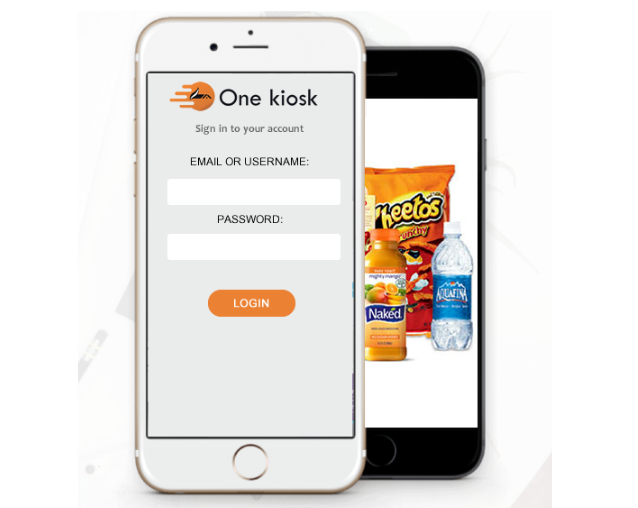
One Kiosk Africa is Africa’s first ecommerce platform with community inclusiveness as its focuses on connecting communities and people with what they desire and love in 59 minutes. It connects people to merchants within a 1-2 km radius in their locale to deliver whatever product they need after payment has been made. Its ecommerce platform wants to solve the problem of poor turnaround time to connect with merchants within a neighborhood and associated cost of logistics involved to deliver online orders. It uses GPS technology to match and track the nearest merchant to you within the shortest possible distance. Through its artificial intelligence algorithm, user behavior and need patterns are tracked to match them with the best merchants around them in real time.

Onekiosk online #shoplocal: One Kiosk Africa is redefining the E-commerce space and empowering communities.

1hour Click & Receive: One Kiosk Africa seeks to redefine the E-commerce retail market by improving efficiency using technology to ensure deliver is within 20-59 minutes.

Thriving Local Business: We intend to change the narrative by ensuring that every man becomes a potential merchant to deliver goods and services thus integrating a stronger community (platform).

One Kiosk Africa’s escrow payment solution builds and promotes trust and confidence in its users to shop online as it holds funds in trust for the buyer releasing it only when value has been given by the seller.

With over 15,000 active users comprising merchants and consumers which is expected to increase by 400 percent, once its mobile application is launched later this year. By December 2019, it will have created about 100,000 direct and indirect jobs in Nigeria serving about 250,000 users.

In the next 12 months, it wants to serve at least half a million customers and communities through its platform. It intends to introduce workable offerings for its merchants to increase their capacity to effectively take control of their delivery system, either by absorbing its One Pro Delivery members, or create its own system and grow to over 3.5 million users in Nigeria, Ghana, Kenya, Egypt and South Africa, creating over 1 million direct and indirect jobs through its platform ecosystem.

Nigeria still remains the headquarters of piracy attacks

0

By Oko Ebuka

Nigeria has once again recorded the highest number of piracy attacks on vessels in the first quarter of 2019 in global statistics with a total number of 14 attacks.

According to the report released by International Maritime Bureau, IMB, on piracy attacks on vessels in the Q1, January – March, 2019, it shows that a grand total of 38 attacks occurred globally with Nigeria leading the chart with 14 attacks, followed by Venezuela with 4 attacks; while Ghana, China and Indonesia recorded 3 attacks each as other countries recorded 1 attack each.

The report further show that there is reduction on piracy attack on Nigerian vessels compared to Q1 2018 which recorded 22 attacks within the same period in 2018.

It also revealed in the report that a total of 14 piracy attack on global vessels occurred in January, while February and March recorded 12 attacks respectively.

In regional incidents, the report showed that Africa recorded the highest number of attacks with 22 incidents, America with 8, South-East Asia with 4, East Asia with 3, and Indian sub-continent with 1 attack.

According to the report also, a total of 6 actual attacks took place on boarded Nigerian vessels with 3 anchored and another 3 steaming, with zero highjack, 1 attempted attack and 7 fired upon with 4 incidents occurring in Lagos Sea alone.

The decline in piracy attacks has been influenced by the efforts of Nigerian Maritime Administrative and Safety Agency, NIMASA, in collaboration with Nigerian Navy, NN, to end piracy operations within the Nigerian waters as federal government procured security gadgets for fight against piracy and other illegal activities on the countries territorial waters.

Recall that DG, NIMASA, Dr. Dakuku Peterside recently expressed the Agency’s desire to work with other stakeholders and hasten the action on the passage of the Anti-Piracy and Other related Crimes at Sea into law to enable Nigerian vessels have free movement at seas.

He also stated that Nigeria’s unwavering commitment to its leadership role in the war on piracy and maritime crimes will be extended in all the region of Gulf of Guinea, an area wholly considered the global challenging maritime crime base in Africa.

Corruption, Nepotism Stalls Call-up System in Nigerian Ports

0

By Oko Ebuka

Despite the efforts to stabilize the swift movements of trucks in and out of wharf in order to improve the ease of doing business in the maritime sector the situation is still getting worse as the securities of Nigerian Ports Authority, NPA, have been accused of collecting bribe and promoting favoritism against the ethics of call-up system.

In an exclusive chat with Vanguard Maritime Report, a stakeholder of Association of Maritime Truck Owners, AMATO, Goddy England, disclosed that NPA security personnel don’t welcome the idea of call-up number system as it prevents them from collecting bribes from truck owners.

According to Goddy, “NPA security department don’t welcome call-up number as they are collecting bribe up to N5, 000 from creek road to the gate.

“Some people pay their way to go without call-up. They don’t check their manifest because of the bribe given to them. Once they give them some huge amount of money for the truck to go, the following day the truck will get delivery. You will see some people indulging in forgery and still make their way to the port at the end of the day.

“But we that follow the normal procedures will be there for three to four weeks so we are losing. My drivers are complaining because they will be on the road before getting to Apapa. Now they are in Lilypond since two weeks as it has not come to their turn because it has not being stamped and signed but some people will go in today and get it today. The thing supposed to be normal process, first come first serve.

“With the huge amount of money we are spending now, N50, 000,- N60,000 for container, at the end of the day the truck will still be three weeks waiting for stamping. They have points, if you get to this point you pay, before you get to Apapa you will spend up to N30, 000.

“If really they are working, all the trucks will enter Lilypond and from there pick off”, he added.

In addition to this, one of the truck drivers, Geoffrey Nwosu also told Vanguard Maritime Report that it takes up to 2-3 weeks before getting their trucks cleared from Lilypond due to delay in the call-up number.

“There is always a delay in call-up number and it takes us 2-3 weeks before gaining access in Lilypond”, Nwosu complained.

On the issue of sticker, Goddy England lamented on the N11, 000 fee charges for minimum standard sticker by the Nigerian Ports Authority, NPA, which adds no value to their truck business as they are always harassed by NPA security agencies.

In his words, “we pay N11, 000 for sticker for over two years now. What is the safety of the sticker? They claimed it is for minimum standard but we can’t see anything standard about it as we keep on suffering from the harsh conditions within and outside the port.

“You can calculate the number of trucks with this sticker and see the huge amount of money they are collecting from us you will be surprised”, he concluded.