DD
MM
YYYY

PAGES

DD
MM
YYYY

spot_img

PAGES

Home Blog Page 6842

Nigerian Banks will get Virtual Network Operators Licenses to Win Mobile Banking

3
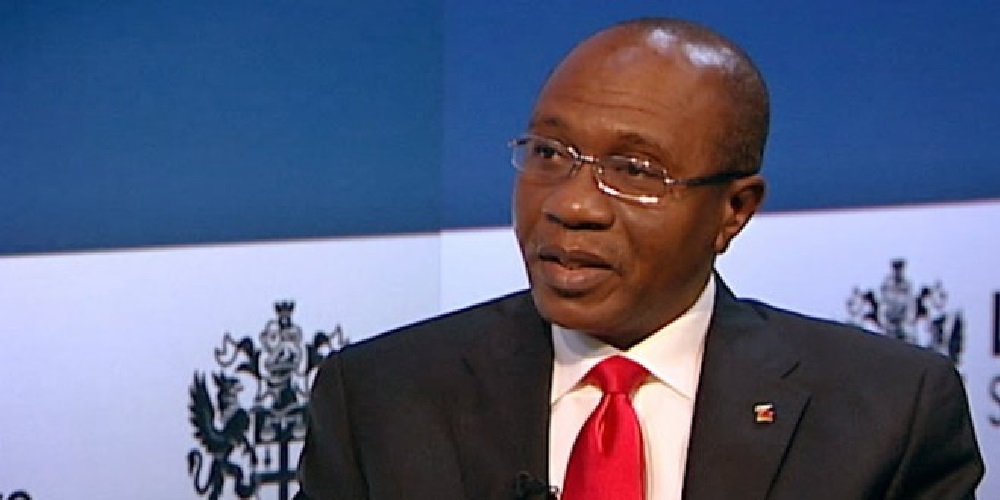
Godwin Emefiele (CBN governor)

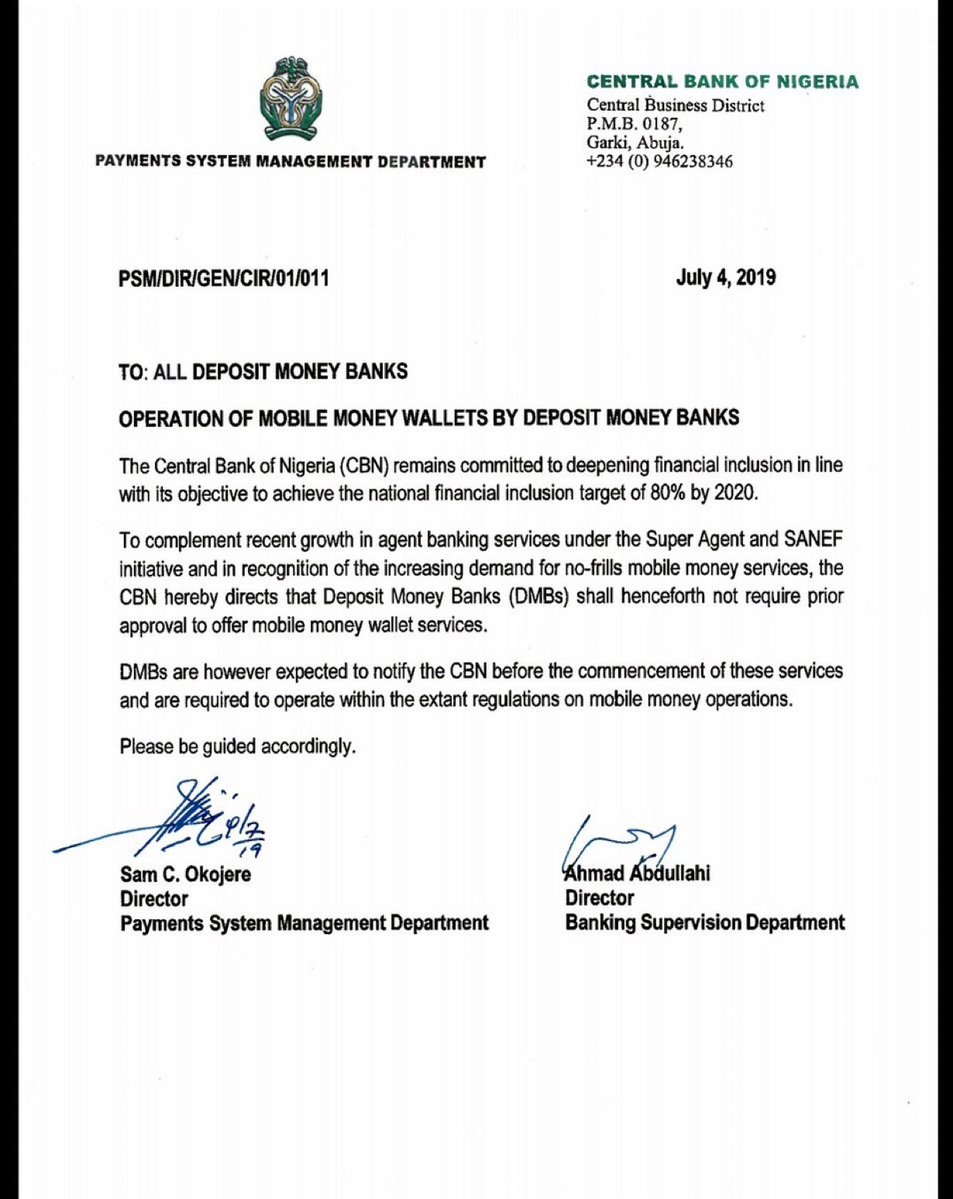
I got the message – the Central Bank of Nigeria allowing commercial banks to operate mobile money wallets without prior approval will not change anything. That is largely the consensus from the community. Many posited that only mobile agents (scratch card vendors) can make mobile money work even as CBN continues its mainly bank-driven mobile money penetration strategy.

But this is my hypothesis for the optimism: I expect NCC (Nigerian Communications Commission) to license full-fledged virtual network operators (VNO) in Nigeria in the next few years: “A virtual network operator (VNO) or mobile virtual network operator (MVNO) is a provider of management services and a reseller of network services from other telecommunications suppliers that does not own the telecommunication infrastructure”. Simply, you can have a telecom brand selling sim card and airtime, but underneath, you are operating say under MTN, Glo or Airtel; most customers will not know. You buy bulk minutes from say MTN on huge discounts and then resell, focusing on customer care and service for differentiation. It is popular in US with companies like Boost, Safelink and Cricket Wireless.

As soon as that happens, I expect GTBank to be the first bank to get a license. The Habari banking philosophy will need that. Once it gets a license, it will reduce the marginal cost of the human-banking (yes, agency banking) unit with telco services across rural areas. Yes, that same channel will power the mobile money banking services even though the telco and the banking services may be on different servers for compliance sake. CBN is relaxing many rules as it wants the banks to have the capacities to compete in Nigeria.


World Telecom Stocks Show Africa is the Growth Region in the Sector

2

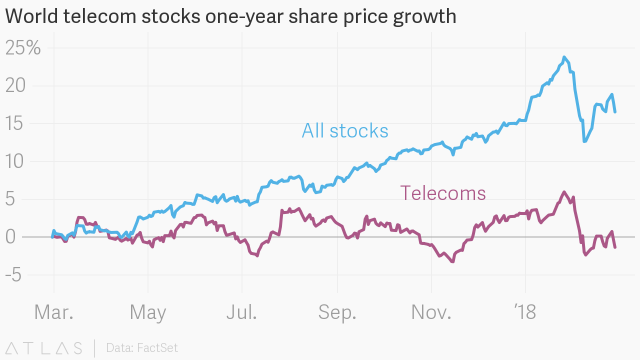
MTN Nigeria now enjoys a market cap of N2.636 trillion ($8.5 billion), clearly more than 20% of the total value of the Nigerian Stock Exchange. This is simply amazing because the global average of telecom stocks is actually below water, according to data compiled by Quartz. Yes, despite the largely boom stock era in the developed world, the telecoms have struggled. In the developed world, telcos have been normalized – dead pipes powering modern commerce. Yes, they are stuck at the center of that smiling curve.

But in the developing world, they remain the promise to get us into modern commerce. This shift is huge, and the reason to understand that it is getting easier to become a millionaire in developing world than in the developed world. Have that in mind because more wealth will be created in the developing world than anywhere on earth over the next three decades. But that does not mean that the indigenes of the developing world will be the custodian of that wealth!

Africa has a promise for the telecom sector even as the developed world flattens.

Nigeria’s Central Bank Unleashes Banks for Mobile Money

2
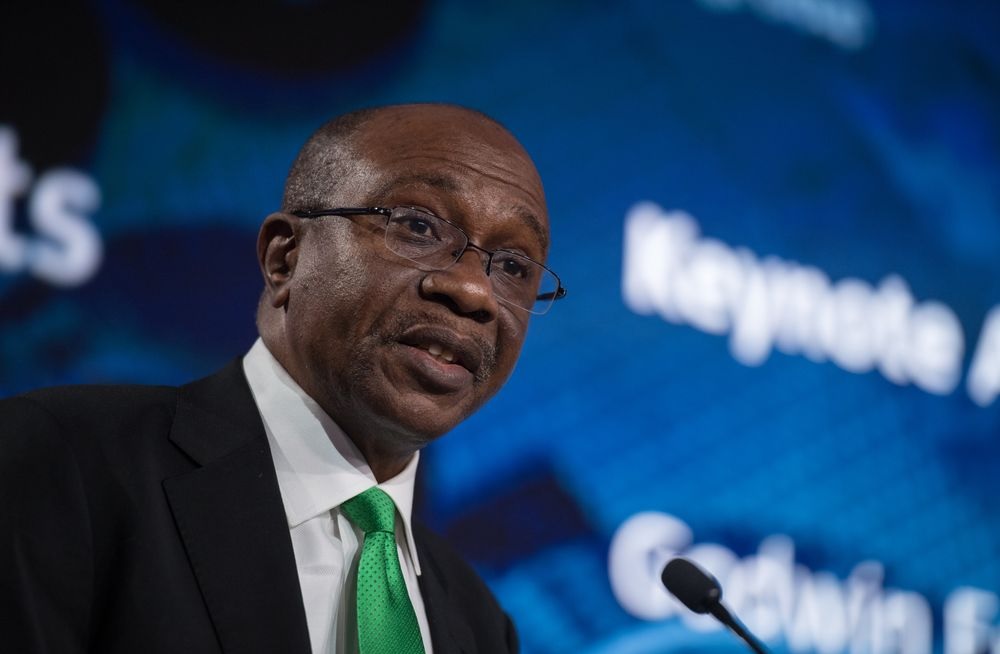
CBN Governor

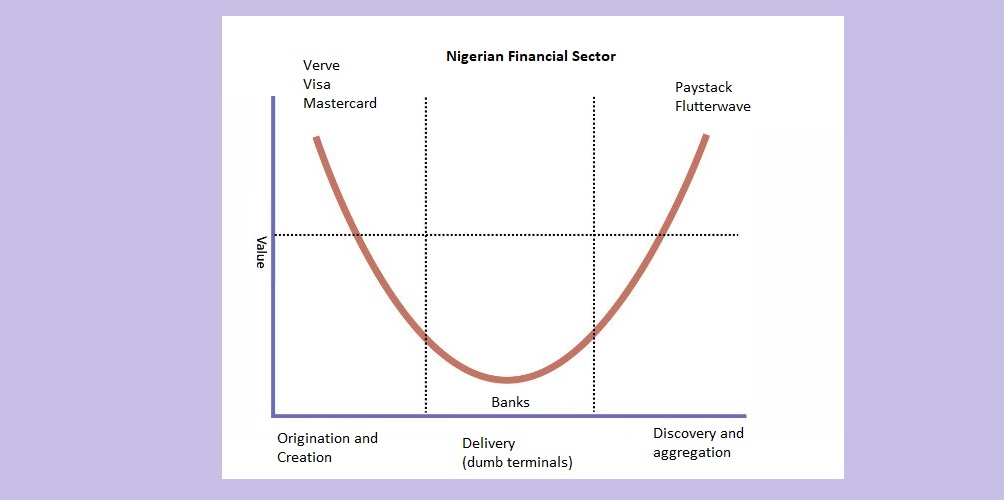
In Nigeria, banks are at the center of gravity for anything financial services: for all you do, you need BVN (bank verification number) and only banks issue BVN. But banks struggled, initially, to find value as fintechs began their redesigns. As I noted in my video on Smiling Curve, banks were at the center where value is marginal. Fintechs had always played at the edges of the curve.

But wait, the Central Bank of Nigeria has the memo: unleash the banks to move at the speed of now. Yes, going forward, deposit monetary banks (yes, commercial banks) can operate mobile money wallet services without prior approval. This opens many opportunities for banks.

Why ask a company to apply and wait weeks for review on something competitors can do overnight? Sure, they need to be regulated since they have other people’s money. But yet, you can still allow them to dream bigger in their businesses. The best fintechs in Nigeria include some of our banks.


From Comment section


UNN Makes Nigeria’s Tesla Electric Car: Lion Ozumba 551 (Photos)

13

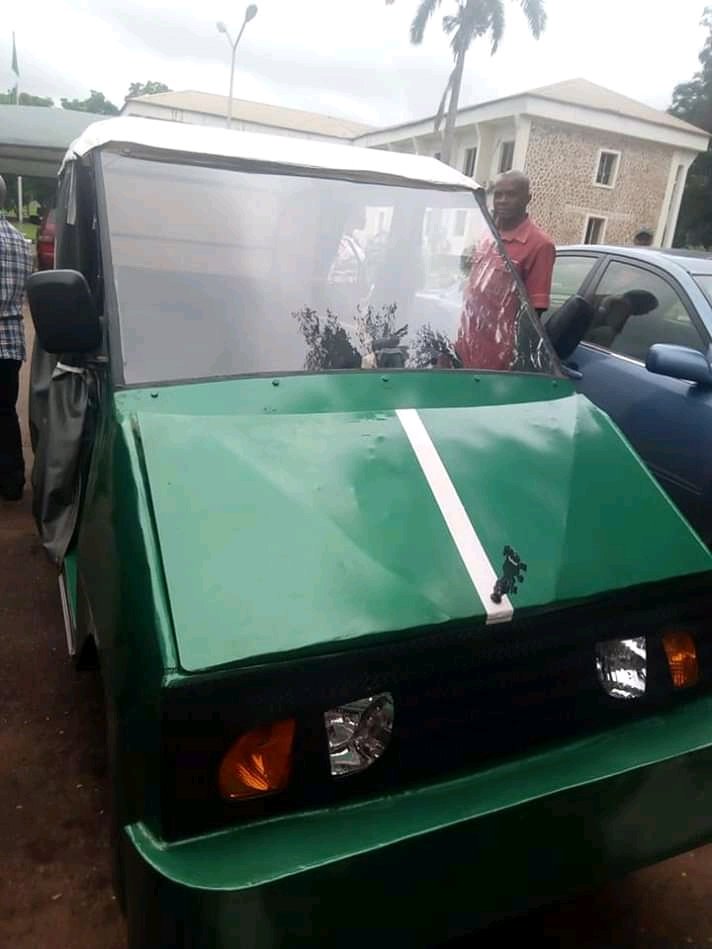
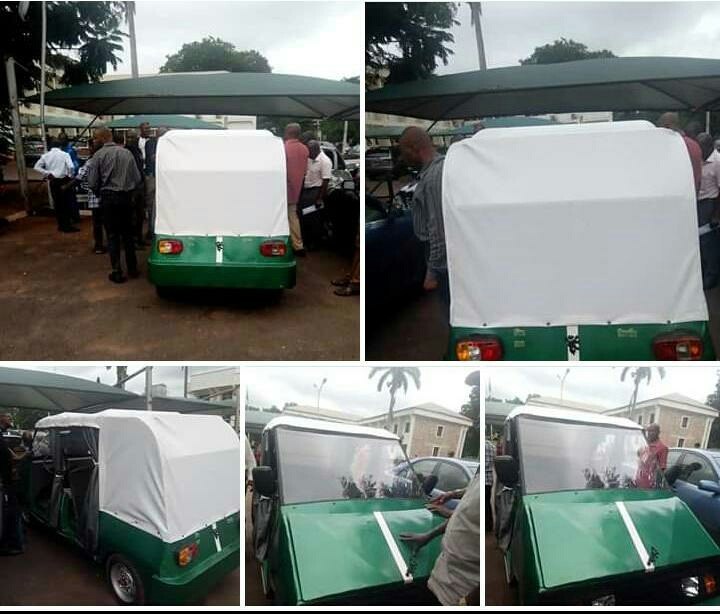
University of Nigeria Nsukka (UNN) has created Nigeria’s first electric car. Yes, the Nigerian version of Tesla. It is called Lion Ozumba 551. UNN graduates are Lions and the Vice Chancellor under which the show ran is named Ozumba.

Yet, UNN should not over-celebrate this. In 1968 during the Biafra War, UNN students and professors produced military-grade vehicles and one of the most sophisticated indigenous bombs in modern Africa (Ogbunigwe). In Okigwe, they built a refinery to refine crude oil when all the axes were closed. So, UNN should chill, this is not a big deal when you look at the history of UNN. Nigeria had done all these things more than 50 years ago and used in warfare.

Sylvester Akalonu,Gordian Ezekwe, Benjamin Nwosu, Willy Achukwu, Okezie Confidence and other members of the highly elite Research and Production Organisation of Biafra accomplished what Raytheon and Boeing could not get closer. How? They worked with nothing to achieve great engineering feats including designing, testing and mass producing the Ogbunigwe within months!

Do not take my words; visit Umuahia and you will see those equipment. Sure – congratulations to the students. Yes, congratulations to UNN. Let’s get them to the market.

Mr Jelani Aliyu, the Director-General of National Automotive Design and Development Council (NADDC) has commended the University of Nigeria, Nsukka (UNN) for being the first institution to produce electric car in the country.

Aliyu made the commendation in Nsukka on Monday during the unveiling of a five-seater Electric Car, named ‘Lion Ozumba 551?, produced by the Faculty of Engineering in the university, NAN reports.

He urged other universities in the country to emulate UNN in giving serious attention to issues concerning innovations and technology in order to move the country to the next level.

He said: “NADDC on Feb. 6, invited UNN, University of Lagos, Usman Dan Fodio University and Metrological Institute and urged them to prepare a paper design on how to produce electric car in the country.

“The council is happy that UNN is the first to prepare a paper design and produced electrical car that has been unveiled and test-run today in the university.
“We urge other universities and higher institutions in the country to emulate innovation and technology spirit of UNN.”

The NADDC boss, who was represented by Mr David Oyetunji, Director Finance and Account in the council, hoped that the growth in automobile industry in the country would help to create more employments and save the nation’s foreign reserves spent in importing cars into the country.

“NADDC commends UNN, which recently produced the first gasification plant that used organic waste to generate electricity and today the same university is unveiling first electric-built car in the country,’’ Aliyu said.

In a remark, Prof. Charles Igwe, the Vice Chancellor (VC) of the university, who was visibly excited, said his administration would continue to give innovation and technology the highest attention in order to move the university to the next level.

Igwe expressed appreciation to the immediate past VC of UNN, Prof. Benjamin Ozumba, who, he said, laid the foundation for innovation and technology in the institution.

“I feel happy that I inherited strong institution from Ozumba and I promised I will consolidate on his numerous achievements.

“I commend the Engineering Faculty for making the university proud and naming the car after Ozumba, who ignited the fire of innovation and technology in the university.

“I also commend NADDC for its encouragement as well as giving UNN a chance to show its potential,” Igwe said.

Source of Press Release is Breaking Times
LinkedIn Comment on Feed

Interesting indeed. But personally I think they could have done better on the body work of the car. The shapes are not great at all. When. Sth is to be done it should be done well.

Response: Thank you [] I serve as the Vehicle dynamics sub-team lead on this project, I formulated the mathematical model and also designed the transmission system. so I think I’m in the best position to respond to your comment.

I totally agree that the general aesthetics of the vehicle is quite poor but this is due to the fact that the vehicle was fabricated in the poorly equipped engineering laboratory with no CNC machines, 3D printer or any advanced manufacturing process. Also the project is part of students project and thus there is limited funds. We initially wanted to design, simulate and then contact any good manufacturing firm to produce a mold for us to cast a carbon fiber shell/monocaque but the cost is outrageous. So we decided to stick to the traditional method. And I believe no team anywhere in the world will be able to do better under same condition and funding.
Thank You

Forerunner of Facebook Libra, South Africa’s Wala Goes Bankrupt

2

South Africa’s Wala, a decentralized financial system for emerging market consumers, has gone bankrupt; it was unable to raise follow-up funds. This was a company which wanted to do what Facebook Libra is promising Africa: get underbanked and unbanked into the formal financial ecosystem. Through Dala, its cryptocurrency, Wala did make efforts. But it was not enough. The problem was not technology but the very fact that Wala relied heavily on the banks, exchanges and the very institutions it was trying to eliminate! It is common sense: if you expect to help a man that does not have a bank account, and you are required by law to get money from him through the banking institutions, you already have a problem. Simply, you cannot do without banking because without the banks you cannot be in business!

The collapse of a blockchain payments startup looking to serve the “unbanked” doesn’t bode well for other companies with similar plans, like, well, Facebook.

In late 2017, the South Africa-based Wala rolled out its cryptocurrency in developing countries across Africa, where it hoped to eventually substitute the local, volatile currencies for its own cryptocurrency, Dala.

But on June 24, after nearly two years, the company went belly up, laying off the majority of its 100 staff and announcing in a Medium post that it had failed to raise a second round of investment. The cause was clear: Wala was unable to disentangle itself from the banking system it hoped to exist apart from and, eventually, replace.

[…]

“Whether it was exchanging money, or enabling our users to purchase goods and services,” he added, “we weren’t able to completely remove reliance or connection to the incumbent infrastructure.”

This is my call: the easiest way to get underbanked and unbanked into the formal financial ecosystem is through the current institutions like banks. Why? The rules have already decided that anyone that wants to fix any of these issues must work with banks in Africa. So, if everyone must work with the banks, the best deal is simply to revamp the banks and make them better. If you do that, job is done.

No fintech can advance faster than the banks in this space since ALL fintechs depend heavily on banks to operate and function in Africa. The Central Bank of Nigeria may not be wrong when it felt the banks can get it more users at scale.

Yet, while Wala was a forerunner to Facebook Libra, the size and scale of Facebook along with the resources mean that the comparison may not be fair. So, that Wala failed does not mean that Facebook Libra cannot thrive.