DD
MM
YYYY

PAGES

DD
MM
YYYY

spot_img

PAGES

Home Blog Page 6847

Learning from the IBM Salesman

2

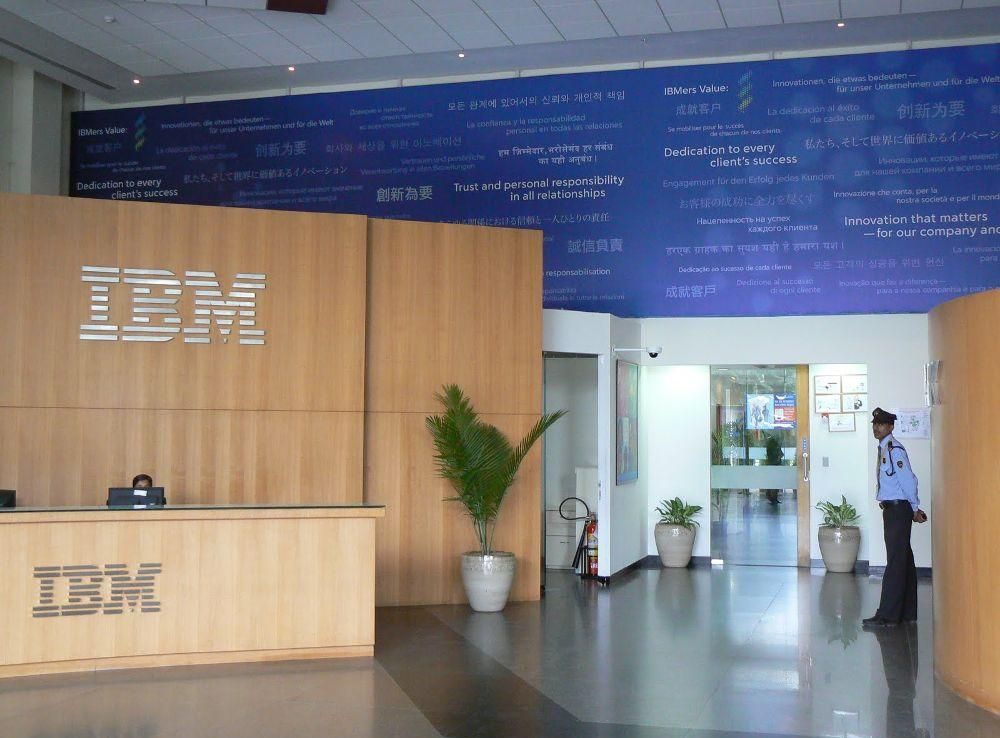
IBM had and continues to have a great history. But it is evident that IBM is not seen as one of the most innovative and dominant technology companies of this era. When you discuss great tech companies, you imagine the likes of Google, Apple and Samsung despite the fact that IBM is as great as them, if not technically greater, in some domains. Yes, this is not really about technology but customer perceptions and imaginations. For example, IBM has spent years working on AI for different applications but the AI solutions many of us experience in our homes and pockets are coming from Amazon Alexa, Google Assistant and Apple Siri. IBM may be doing great in the enterprise world, but its impact remains abstract to many people. Yet, there is something IBM has in abundance for us: technology history to learn.

Great companies tend to have alluring stories to explain their origins: a charismatic founder, an innovative idea, or a product or technology that goes on to become part of the culture of America itself. IBM’s story isn’t like that. As explained in a new history of the firm by former IBM executive James Cortada, the company’s beginnings trace to the financial ambitions of New York businessman Charles Flint. He had a talent for cobbling together companies to reap rewards through public stock offerings, and in 1911 he stitched several firms into a holding corporation called the Computing-Tabulating-Recording Company…

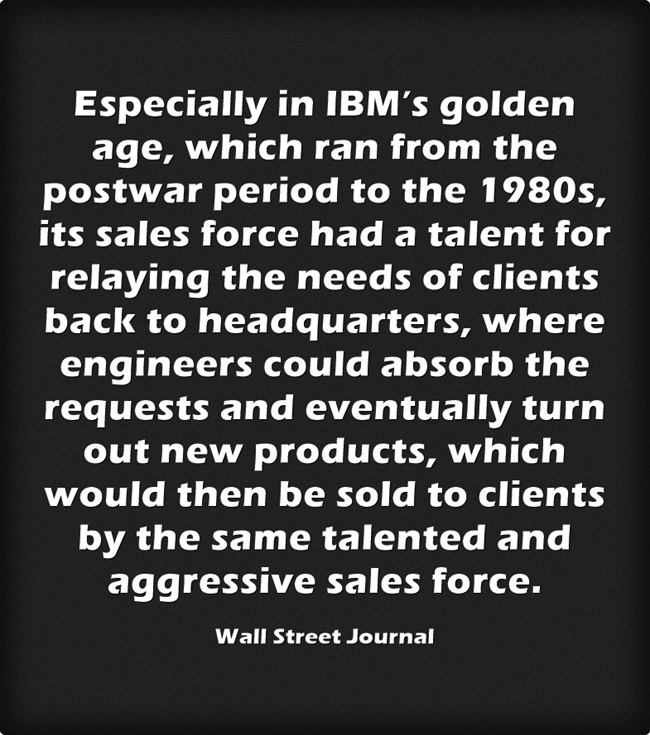
Simply, you can get into the mind of the IBM salesman, and how the salesman communicates the needs of the customers to the engineer. And the engineer meets those needs through products and solutions, and then returns back to the salesman for him to sell to the customers. It is an amazing part of IBM triumph for decades. This quote explains it cleverly.

Four Tips on Team Building

0
BHL Solution manages technical projects

By BHL Solutions

In any organization, people management is profoundly a difficult task to handle, it seems easy but is hardly so. We are a different group of people with our baggage which we drag along  together with our skills. This is why there are so many strained relationships between coworkers.

What is a team?

Team is a group of people organized to work on project or together, interdependently and cooperatively, to meet the demands of their customers by accomplishing a common goal.

In team building, daily interaction between the employees while carrying out the requirements of their job is part of the process. This is a type of team building structure which comes naturally, to ensure that group members know how to communicate with each other. Another form of team building, can involve structured activities and exercises which are externally facilitated. It doesn’t matter how one wishes to build their team, as long as the group members get to bond.  A bonded team has a higher level of success in completing projects effectively than a non-bonded team.

Tips on How to Build/have  a successful Team 

Communicate: Communication is important, when you don’t leverage on that, a lot of people on the team would feel left out. For instance, when everyone has the information and other members have not been filled in on what is going on, leads to one part of the team questioning their value. So, fostering a certain level of transparency while communicating, whenever possible, keeps the energy in the team same. An open line of communication helps your team members share or create a more productive workflow. When you let the team members weigh in on feedback, and are allowed to evaluate decisions, which in turn would give them a feeling of ownership over their work, leading to better performance.

Get to Know Each Other: Work colleagues shouldn’t be mandated to be friends with each other, on a personal level. But it takes nothing, for team members to get to know each other, maybe engage with each other on a monthly basis, during social gatherings. This is a chance for team members to know each other outside work, understand what each person brings to the table, and how to have discussions with little or no disagreements. Situations like this foster conducive environment for team work to grow.

Value Each Other: No roles should be treated higher or lower than the other. Every member should feel that their input matters and is crucial. With this sense of importance among team members, efforts would be generated to enhance performance. When one feels undervalued, work becomes mechanical, and reduces the amount of the input each member puts in.

Set Goals Together: Whether it is a short or long term goal for a project, your team members should be actively involved in the process. If this becomes the base of every project worked on, knowing the outcome and the task necessary for each member to pursue puts everything in better perspective. When everyone knows his/her deadlines, the task would easily be accomplished. Also, it allows the team members the opportunity to help one another in order to achieve the bigger picture.


Perspectives from BHL Solutions.

Top 10 Emerging Technologies – The World Economic Forum, 2019

0

By Nnamdi Odumody

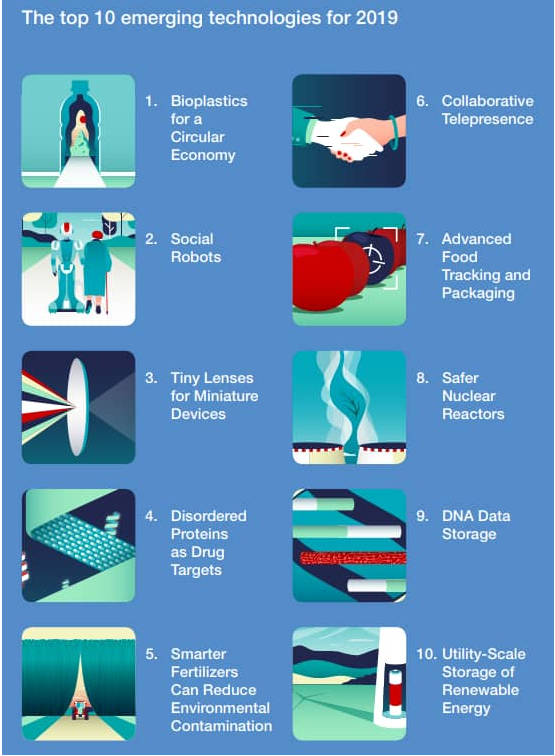
Here are the top ten emerging technologies of 2019 according to the World Economic Forum.

  1. Bioplastics for a Circular Economy: Plastic waste in the ocean kills sea animals. It also causes environmental nuisance when dumped in landfills. The use of Biodegradable plastics helps to create a Circular Economy as the plastic waste can be converted to biomass energy. Biodegradable plastics like the common one from petrochemicals consists of polymers which can be molded in their fluid state into a variety of forms. Chrysalix Technologies, a spin off from Imperial College London has created a process that uses low cost ionic liquids to separate cellulose and lignin from starting materials. Finnish Biotech company MetGen Oy produces a number of genetically engineered enzymes that cleave lignins of different origins into components needed for a wide range of applications. Mobus is developing lignin based plastic pellets for use in biodegradable flower pots, agricultural mulches, etc.
  2. Social Robots: These are robots which use artificial intelligence in response to data captured from cameras and other sensors by recognizing people’s voices, faces and emotions, interpret speech and gestures, responds accurately to complex verbal and non verbal cues, makes eye contact, speaks conversationally, and adapts to people’s needs by learning from feedback, rewards and criticisms.  Pepper, a humanoid robot from Softbank Robotics recognizes faces and basic human emotions and engages in conversations via a touchscreen on its chest. About 15,000 Pepper robots worldwide perform hotel check-ins, airport customer service, shopping assistance and fast food checkout while at Alibaba’s Flyzoo Future Hotel in Hangzhou, China it’s T-Mall Genie helps guests adjust their room temperature, lights, curtains and TV, plays music and even handle room service. In Dubai Airport, its police robot helps answer tourist enquiries in English and Arabic.
  3. Meta Lenses for Miniature Devices: Metalenses are flat surface, thinner than a micron that is covered with an array of nanoscale objects such as jutting pillars or drilled holes. As incident light hits these elements, many of its properties change including its polarization, intensity, phase and direction of propagation. They allow for greater miniaturization of microscopes and other laboratory tools as well as consumer products like cameras, mixed reality headsets and optical sensors for internet of things solutions as well as enhancing the functionality of optical fibres.
  4. Disordered Protein As Drug Targets: Scientists are utilizing a rigorous combination of biophysics, computational power and a better understanding of the way that IDPs (Intrinsically Displaced Proteins) function to identify compounds that inhibit these proteins and some have emerged as bonafide drug candidates. French and Spanish researchers in 2017 proved that an FDA approved drug called trifluoperazine which is used in treating psychotic disorders and anxiety bound to and inhibited NUPR1, a disordered protein involved in a form of pancreatic cancer. Large scale screening tests to evaluate thousands of drug candidates for therapeutic potential have shown several that inhibit c-Myc with some headed towards clinical development.
  5. Smarter Fertilizers To Tackle Environmental Contamination: Smart fertilizers made possible by sophisticated materials and manufacturing techniques that can tune the shells so that they alter release rates in desired ways as the soil’s temperature, acidity or moisture changes have been developed recently. Through the combination of different types of tuned capsules, manufacturers can make fertilizers that have profiles tailored to the needs of specific crops or growing conditions. Haifa Group and ICL Specialty Fertilizers are examples of those offering more precise control.
  6. Collaborative Telepresence: Collaborative telepresence is transforming how people collaborate virtually in business and beyond. Proximie, an augmented reality enabled surgery platform builds a bridge between surgeons in developed countries and those operating under austere conditions in developing countries. Recently Dr Ling Zhipei, a Chinese surgeon performed the first ever brain surgery over a 3,000km distance through China Mobile’s network and Huawei’s 5G technology.
  7. Advanced Food Tracking and Packaging: IBM’s Food Trust, a blockchain platform for the food industry which integrates growers, distributors and retailers to create a trusted record of a food’s journey through the end to end supply chain. Walmart used this system to trace the origin of a contaminated item in seconds. Other food giants such as Carrefour, Sam’s Club, Smithfield foods, Beefchain, Albertsons Companies, Wakefern Food and Topco Associates have joined this initiative. Timestrip UK and Vitsab International have independently developed RFID tags that change colour if a product has been exposed to above recommended temperatures while Insignia Technologies created a solution which slowly changes colour after a package has been opened and indicates when it’s time to dispose the food into the refuse bin.
  8. Safer Nuclear Reactors: Manufacturing developments are seeing to the production of accident tolerant fuels which are less likely to overheat and in case they do will produce little or no hydrogen. Some are replacing zircomium and uranium dioxide with different materials. The new fuels could help nuclear plants run more efficiently making nuclear power cost competitive for electricity generation.
  9. DNA for Data Storage: DNA can accurately store massive amounts of data at a density which exceeds that of electric devices. Measuring about one metre on a side, at about 10 bits per cubic centimeter, all the world’s current storage needs could be meet by a cube of DNA.
  10. Utility Scale Storage Of Renewable Energy: Advancements in technology are seeing a redesign from solely lithium ion batteries to batteries which can generate and store four- eight hours or more of electricity which is long enough to shift solar generated power to the evening peak in demand.


The Dance Continues – Resilient Super Eagles

0

A sage said that good numbers make you a great presenter before a company Board. Yes, irrespective of the presentation skills, if you are bleeding market share and losing customers here and there, no master-presentation skill will save you. But if you have great numbers, even if you stammer, you will be a great presenter!  That is why I tell founders to do one thing to become good Board presenters: have GREAT numbers. Once your numbers are good, few will care how you present.

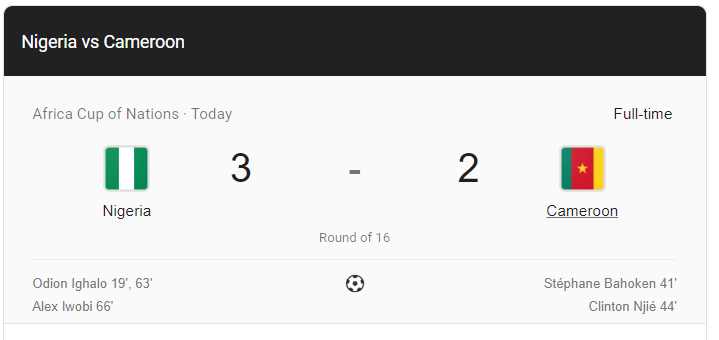
On that parallel, Nigeria moves to Quarter Final of the African Cup of Nations. They are dancing well because the numbers are there: the highest level in the competition right now is quarter final and Nigeria is there. I congratulate our boys for rising to the moment. When Cameroon was up 2-1, I felt it was over. The Indomitable Lions do not have a history of imploding especially in Africa.

I mean, I want many people to be happy in Nigeria at least for some few hours. Now, all the way to the Finals.

The African Leadership University Is Reinventing Education in Africa

0

By Nnamdi Odumody

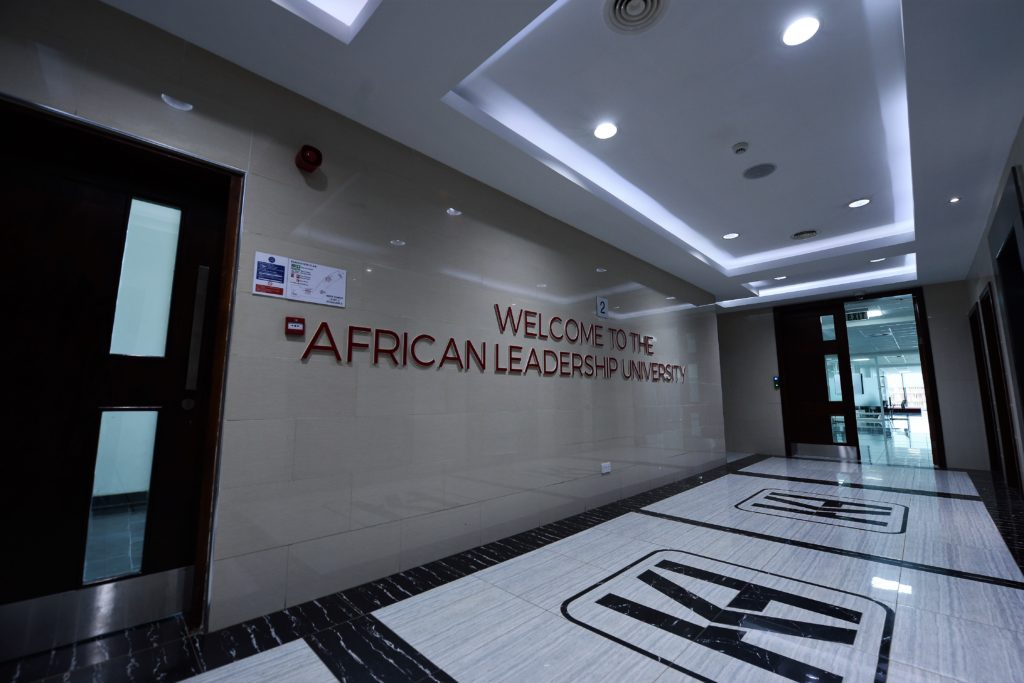
The African Leadership University founded by Fred Swaniker, a Ghanaian social entrepreneur, who wanted to fix the leadership paralysis is redesigning education in Africa. The program goes with an innovative approach to 21st century education with undergraduate and postgraduate experiences to develop Africa’s next generation of leaders. It prepares its students not just to excel, but also to lead. It prioritizes students that have key skills that are widely applicable and transferable across disciplines.

In its Year 1 Leadership Core, students build 4 fundamental skill areas necessary for every job. They develop the quantitative reasoning skills and data analysis abilities needed by entry level employees and industry executives, gain critical thinking skills and problem solving experience working on real life projects with its employer partners. In the process, the students develop core skills and best practices to communicate effectively in the professional world, and discover the skills and mindset needed to unlock their leadership potentials. Students begin their career development journey from day 1 with internships and student venture opportunities integrated throughout their undergraduate program.

For its undergraduate program, it offers 8 accredited degree programs in its Pamplemousses campus in the northern region of Mauritius which include BA Business Management, Bsc Computing, BEng Electrical Power Systems Engineering and BA Social Sciences. In its Kigali, Rwanda campus, it offers Bsc Computer Science, BA Entrepreneurship, BA Global Challenges, and BA International Business & Trade.

The learning process helps its undergraduates to discover the gaps in their knowledge, exchange knowledge with their peers, learn at their own pace and extend their learning to other contexts.

The African Leadership University School of Business MBA program is unique compared to other programs from different tertiary institutions across the continent in the sense that its cases are written in the context of African business with Faculty having extensive, diverse and respected experiences of doing business on the continent. There is a 20 month work-study program which blends six weeks of in person learning in Kigali with interactive online learning, allowing students to stay in work, grow as leaders while applying learning on the job.

Another unique program which African Leadership University offers which sets it apart from its peers is the MBA for Conservation Leaders offered by its School of Wildlife Conservation. This program is designed for emerging leaders in sectors that impact or depend on wildlife and natural landscapes or those in traditional conservation organizations, combining its School of Business 20 month MBA program with a specialization in Conservation Leadership for full time working professionals.

The African Leadership University wants to develop 3 million leaders that will be the pillars of Africa’s transformation by 2035. Its vision and mission are audacious, bold, and with a continent-centric view in modeling these young leaders of tomorrow. The knowledge base of the 21st century in this continent looks hopeful.