DD
MM
YYYY

PAGES

DD
MM
YYYY

spot_img

PAGES

Home Blog Page 6848

Anything is Nothing When Starting a Business

4

By Jude Odika

Three weeks ago, I had a brief chat with an acquaintance who recently started a small agri-business. In the course of our discussion, I was curious about how the person came about the business idea, and what prompted the person to go into business as against going the conventional route of seeking and taking up employment right after college. So, I asked. The response I got was that the person had applied to several jobs and after interviewing with two different companies and got no positive result, the person resorted to entrepreneurship. In the person’s opinion, instead of striving so hard to get an employment and ‘slave’ for another person, it is better to strive hard knowing that you are working for yourself. And this really got me thinking.

Now, I was not so concerned about personal capabilities here, because I think this person is intelligent and smart. But I am very concerned about the thought process that led to the person’s decision to go into business. I think that this person, just like many others out there, have misconstrued the concept of entrepreneurship and what it takes to achieve success in that space. And unless this level of thinking is upgraded very quickly, there might not be a business before long.

In part one of this two-part series, I wrote about being intentional about your career path. It was basically for those that are about to begin their career and those seeking to make progress in theirs. In this sequel, I would like to address individuals who want to, or have already started up ‘anything’ in the form of a business, all in the name of being referred to as an entrepreneur or simply being their own boss, and not having to answer to anyone. I hope to help these individuals understand why ‘anything’, in the context of starting a business without a solid mission, ultimately amounts to nothing as well.

I believe that, if you are going to start any business primarily because you could not secure a job, then your chances of achieving entrepreneurial success are almost next to none, especially if you do not have any prior experience of running a business. If you think that because securing a job is very hard then you would have better luck with entrepreneurship, you just might be in for a big surprise. This is not to say that everyone who starts a business right out of college would not succeed. No, it goes to say that those who do it just for the sake of the status, without an evolving sense of mission overtime, typically don’t succeed. Join me as I share my thoughts on why jumping right into starting a business for two categories of individuals is a poor strategy, and might ultimately be a bad idea.

Those in the first category are fresh college graduates. You see, there is this present rave about being an entrepreneur, so much that both those who are and those who think they are almost wear it like a badge of honour. And now, almost every graduate wants to be an entrepreneur right out of school. They want to do their own ‘thing’ and get access to the big bucks (especially investor funds) as quickly as possible. What I find interesting is that these people typically draw their inspirations from absorbing contents around the successes of the likes of Mark Zuckerberg, Jeff Bezos, Steve Jobs, etc. But they do little to absorb contents around, and possibly get inspiration from, the processes that equipped these people with the capabilities that have now allowed them to attain great entrepreneurial success. The keyword here is capability!

Capability enables you to execute on any business idea backed by a great sense of mission. In order words, no matter how great your business idea might be, if you do not have the capability to execute properly, you will get minimal or no success. In fact, an average idea backed by excellent execution will always do better than an excellent idea backed by average execution. So, dear fresh college graduates, before you engage in your lofty dreams of being the next Steve Jobs or Jeff Bezos, be certain that you have what it takes to execute; because if you don’t, you will not be able to attract quality investors for your venture. I’ll tell you that for free as someone who has been there, done that. Invest in yourself first, and acquire as much knowledge and skills as possible before you begin your entrepreneurial journey. Read books, volunteer, take up a job. But not just any volunteer opportunity or any job, be deliberate about it; seek out the ones that will help you acquire the skills you need faster. Doing that comes with a double advantage: you learn what you need to drive your mission, and while at it, you earn what you need to take care of your bills.

Those in the second category are those who are already in paid employment, but want to start their own business because they are frustrated at their jobs. The first thing that comes to my mind whenever I encounter people like this is: show me a job or endeavour that does not come with some level of frustration, and I will show you a job or endeavour that does not exist. Now, I am not advocating that you should stay in a toxic work environment where there is no regard for the dignity of work and the humans that put in the work. My point here is, try to focus on the learning opportunities rather than allowing the frustrations get to you. And when you have reached the height of the learning curve, then it is time to exit to the next venture. Approaching job frustrations from this perspective will help you build resilience – a core skill you must have as an entrepreneur anyways. But if there are no specific learning opportunities for you there, then you shouldn’t be there in the first place, frustrations or no frustrations. And when you have acquired the skills and capabilities that you will need to succeed in that business venture you have been thinking about, then you can launch. But not before. It is true that Nigeria and Africa in general need more businesses that are solving real life problems, but these businesses have to be sustainable and even scalable for them to effectively address the present challenges plaguing the continent. And one of the key components of a sustainable and scalable business is excellent execution, and that you can achieve by acquiring relevant capabilities.

In conclusion, I submit that until we upgrade our thought process to approach entrepreneurship and business in general from the perspective of giving rather than getting, our businesses will continue to struggle in many ways. If we focus on giving value, then we would naturally get rewarded by getting value in return. This does not mean that running the business will be very smooth and there will be no challenges; no, there will be challenges and this is where the core skill of resilience comes into play. The fastest way I know to build your ability to give value, is to constantly give value where ever and when ever is possible to do so. No matter how little or insignificant you think it might be, do it consistently and you will get better at it. And while you are it, always keep in mind that you cannot give what you don’t have. So, the more you acquire capabilities, the more you are able to give value, and the more you get value. However, in all you acquire, give, and get, find and stay true to your purpose!
Safi Organics Wants To Solve Africa’s Fertilizer Paralysis

0

By Nnamdi Odumody

According to a recent report from the Food and Agricultural Organization, over 821 million people are suffering from hunger globally while almost all the sub-regions of Africa are faced with an increase in malnourishment which affects their productivity as a hungry man is equally an angry one. As a result of rising temperatures which leads to climate change, agriculture and food security are under threats.

Agriculture accounts for a quarter of annual GDP in Kenya.  Across Africa, it is a big contributor to GDP. The soil quality in major parts of the continent is poor and suffers from poor yield. Largely, fertilizer which is used in the African continent by most farmers is imported and not designed for utilization on the soil of the continent. Due to the high price of fertilizer, the cost of food production for subsistence farmers is high which contributes to food insecurity.

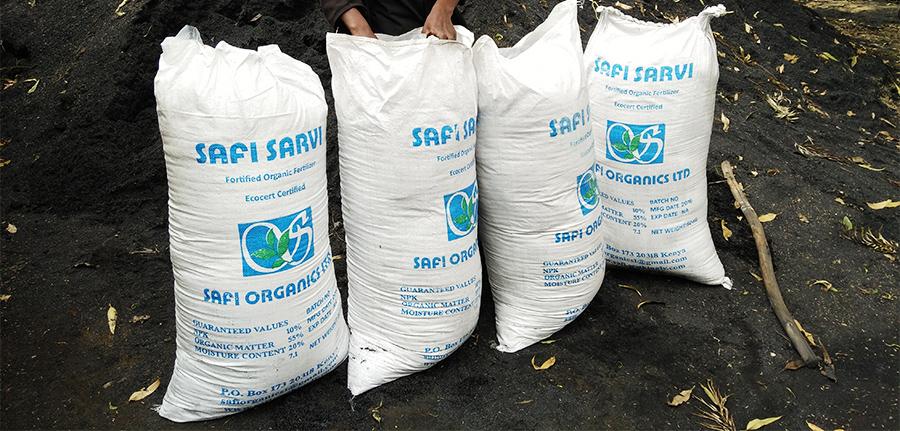
Samuel Rigu, a Kenyan scientist founded Safi Organics to fix this friction by providing African farmers with an alternative fertilizer tailored for the African soil at a lower cost. His solution turns waste chaff from agricultural produce into an organic conditioner that benefits the soil whilst producing better harvest.

By burning agricultural food waste with a mixture of ingredients, he is able to create a charcoal which can be used as fertilizer. The Safi Sarvi fertilizer improves crop yields by reducing soil acidity thereby allowing farmers to grow more with less fertilizer. It also increases nutrient holding, improves soil retention and reduces the pollutants in runoff amongst other benefits.

Safi Organics won the Total Startupper Challenge 2016. Its innovation will help to solve the fertilizer paralysis which is threatening the efficiency and productivity of African farmers, causing food insecurity which is  the root of many conflicts plaguing Africa.

What’s wrong with Messi’ Argentina?

0

By Samuel Nwite

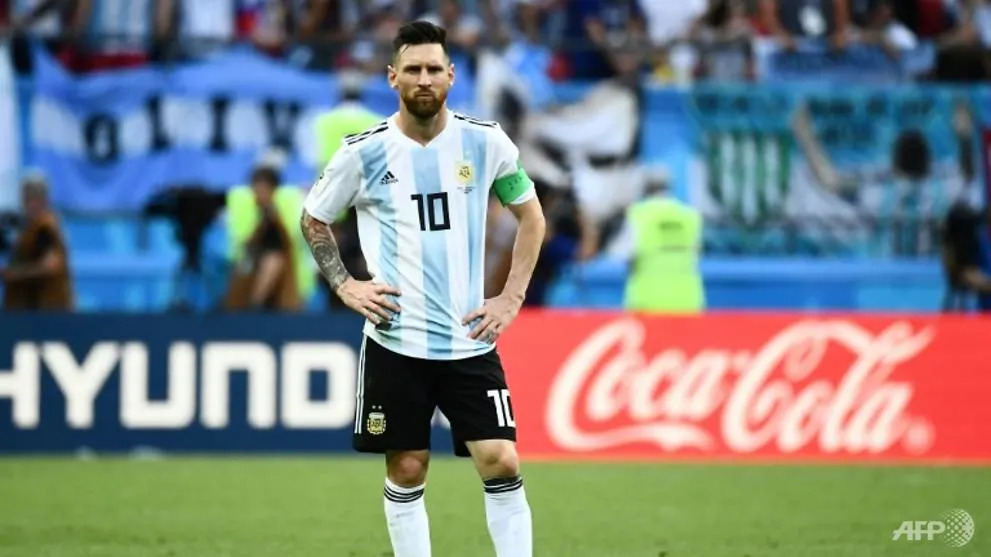
The last time Lionel Messi lifted a trophy with an Argentine team was in 2008, when the Olympic team beat Nigeria to the gold medal. Since then, the quest for a major trophy has been trolled by humiliating drought. It’s been 11 disappointing years, and the quest for a trophy, spurred by the hope of millions of yearning fans is still a dream and pains to the young man on whose shoulders the hope and dream rest.

They’ve been to four finals since then, but unfortunately, the finals were only good enough to bring Messi and Argentina close to the dream. The ‘closeness’ doesn’t bring hope but disappointments that have added to the troll, especially when Cristiano Ronaldo, Messi’s rival, is doing quite the opposite with Portugal. Ronaldo has won two major trophies with Portugal, the 2016 Uefa championship, and in 2019, the Uefa Nations League. It is based on these successes with his national team that Ronaldo’s fans conferred the title of the Greatest of All Times (GOAT) on him. Although Messi has more professional trophies (34) than Ronaldo (29), international football has become a yardstick that many people use to rate them.

Lionel Messi’s success in Barcelona is adding weight to this burden, his love for his country and her people has not been justified by a trophy. Not that he is not trying, he has made more close attempts to win than Ronaldo, but it just isn’t working. Coaches have been changed, players have been replaced, and several chances have come by. What then is wrong with Messi’s Argentina?

In 2014, Argentina had the closest chance in recent history to update their trophy status. The world cup in Brazil trumped the memories of early exit in other tournaments, they got to the final. With a star studded squad, hope was so high, the trophy drought has met its match. But the squad didn’t live up to the hope, Argentina lost the world cup to Germany, and Lionel Messi’s team and fans who entertained that hope had to wait for some other time. That time came in 2015, when once again, Argentina reached the final of Copa America. The only hurdle to the title was Chile, beat them and change the story. The trophy was just one shot away, although they took the shot, they didn’t aim right. Chile won on penalties, and the wait continued.

Not for so long anyway, the 2016 Copa America Centenario presented another chance. And once again, the decider match was against a familiar enemy who created a vindictive memory just a year ago, Chile. The assumption was that the Albiceleste had learned their lessons, and the bitterness in the past year’s memory would spur a win. It didn’t happen. Argentina once again lost to Chile, with Messi taking the lost kick. That was 3 finals in 3 years, and it didn’t go down well with him. So he announced his retirement from international football, a decision that drew international sympathy and pleas. Everyone who loves football begged him to rescind his decision, even the Argentine president intervened. So it was a sigh of relief when he reversed his decision, the Argentine team needed their leader because there is still many battles to be won.

Their world cup qualifier campaign was so dismal that it boiled down to the last game. Messi of course, compensated his country for the past loss, scoring hat-trick against Venezuela, and Argentina was on their way to Russia 2018. And there was hope for a trophy once again. But the team performance didn’t support the high held hope, which resulted in their loss to the eventual winners, France. Once again, there was no trophy.

When Cristiano Ronaldo won the UEFA Nations League in 2019, with Portugal, the pressure to add a major laurel to his international closet beckoned on Messi. “There is hope, 2019 Copa America will be the time.” So they said. It was until last night that everyone realized how wrong they have been. The first half of the semi-final match saw Brazil winning 1-0. “Messi will change the game in the second half.” They said. The second half came, and Brazil went up with one more goal, and that was the end of the 2019 Copa America journey for Messi’s Argentina. And the hope is getting really dim. There are only 2020 Copa America and 2022 Qatar world cup left.

What is wrong with the team?

Argentina has some quality players doing well in their various clubs in Europe, but they all live short of the needed quality in the national team. When there is no Messi, the team becomes a joke to watch. The fact that Albiceleste is built around Messi isn’t the problem, the dismal function emanates from lack of needed quality to compete. The forwards are good, talk of Aguero and Messi and there is a trembling in the opponent’s yard. But same can’t be said of the midfield. Argentina’s midfield is so mediocre that it’s easily exposed whenever they meet a big team. And so it’s the defense. So the job isn’t even, and Messi has to play the role of midfielders, which gives the opponents the space to move in on the team. And when they do, the Argentine defense could barely stop them. In cases where there is Messi magic, or a collective breakthrough, there is no guarantee that the goals scored could be defended. The open midfield means that the opponent has a free pass to test a wobbling defense. So every team facing Argentina knows that the best way to beat them is to hold Messi out and the rest of the Argentine team will wallow in helplessness.

The inconsistency in the coaching habit of the Argentine Football Association (AFA) has also contributed immensely to the lackluster performance of the team. AFA has hired four coaches in four years, with each trying to set a pattern, a winning legacy in a very short time. So there is no team philosophy, there is no game ideology, the outcome of every match depends on what the opponents do and what they do not do. And there is no hope for a better team in the nearest future.

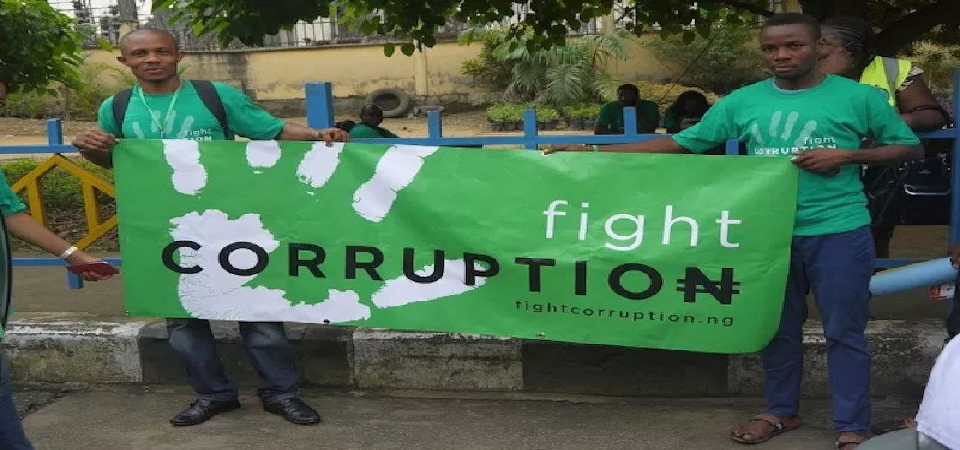
Nigeria’s Masks of Corruption are Ethnicity and Religion

0
anti-corruption tool

By Sani Nahuche

Ethnicity and religion are perhaps characteristic of an individual’s culture. For instance, it is not rare to find a tribe or people that largely belong to one religion.  For instance, most Filipinos are Christians, predominantly Roman Catholics and most people from Saudi Arabia will most likely be Muslims.

However, while too a large extent these stereotypes may be true, the danger lies in generalising them across a wide range of people – or to believe that every Filipino is a Catholic and every Saudi Arabian is a Muslim – would not only be shortsighted but would be entirely far-fetched.

In Nigeria, Religion can be thought to be very stratified across the various ethnic groups. It is often thought or sometimes wrongly assumed that every northerner is a Muslim or every southerner is a Christian. Apart from tribalism, which is already drawing a huge and undesirable boundary amongst Nigerians, religion is another factor that is sadly posing as a divisive tool.

For most parts, Amongst the three major ethnic tribes in Nigeria, only the Yoruba’s feature a fair mix of Muslims and Christians, where most Igbos are Christians and a good number of Hausas tend to be Muslim. But as stated earlier, using any one metric to judge an entire ethnic group would be credulous and primitive.

You would presume that if not anything, religion like sports is meant to unify people. But then again, we all know that it is not the gun that kills, but the man behind the trigger. It would appear today that we have seemingly or have been willfully coerced into seeing religion as a tool to divide us and once again pit us against each other.

Words like, he is a Christian, she is a Muslim, or he’s from the northern part of Nigerian and so must be somehow loyal and associated to the conquest of Islam are common metrics that Nigerians judge each political candidate and sometimes even one another by. Perhaps, we have become highly sentimental about the God or Allah we worship, even if most religions preach love and tolerance.

Like tribalism and ignorance, ethnicity and religion are tools that have been readily taken advantage of by the elites to once again, conquer and divide the masses. Those who take pleasure in plundering the commonwealth of the country are well aware that once Nigerians ignore petty sentiments and divisions that we have regrettably held onto for so long, the spotlight would beam on the affairs of the government. Thus, their nefarious activities would be exposed, and they would be seen as the larcenists and wolves in sheep clothing that a good majority of them really are.

Therefore, how best to mask corruption and loot unabated if not by hiding under the cloak or ethnicity and religion. Corrupt and sinister politicians have continued to hide under the guise of being a Muslim or Christian when they are being hunted down for their many sins by a member of the opposite ethnic group or religion. The troubling part of it all is that the citizens also buy into this buffoonery and take sides, but as we all know, there is no honour amongst thieves, and they would go to any lengths to cover their tracks, even if it means exploiting religion for their own selfish gains.

The time has indeed come for the populace to wake up from their now very long slumber and recognise that first, we are all Humans, then Nigerians before a member of any Religion or ethnic group. We also must also draw a visible but thin line between religion and ethnicity and must not allow insular sentiments guide and dictate our view of other people, ethnicity or religion.

There is still a big question mark over why we still practice the “Quota System” – a system where positions are considered not strictly on merit or qualification but based on geographical area and ethnicity. This unfortunate system has contributed to the rot across our government and civil service agencies alike. Once competency and skills are overlooked, there is bound to be lethargy, corruption and all sorts of other vices will rear their ugly head to thwart any real growth or progress – something Nigeria hasn’t experienced in a long time.

Collectively as a people we must rid ourselves of any form of prejudice that may arise due to the next man’s religion or tribe. No ethnic group should be wrongfully marked for any particular crime or vice, neither should people gain cheap sympathy or perpetuate evil under the pretence of religion. We must realise that several and distinct individuals form ethnic groups and once anybody is found to have broken the law, they must face the consequence as a Nigerian, not as a Christian or Muslim or a member of any tribe, clan or religion.

According to our constitution, we are all Nigerians and enjoy equal rights and privileges and be it a position in office or a corruption scandal or trial; we must learn to evaluate people based on their qualities and judge them based on their crimes and never based on their religion or ethnicity. The moment we communally grow above the ethnic and religious divide, we will become one step closer to awakening from our long overdue slumber as a people and most importantly, as a Nation.

The Orange’s “The Rise of The African Tech Scene” Report

0

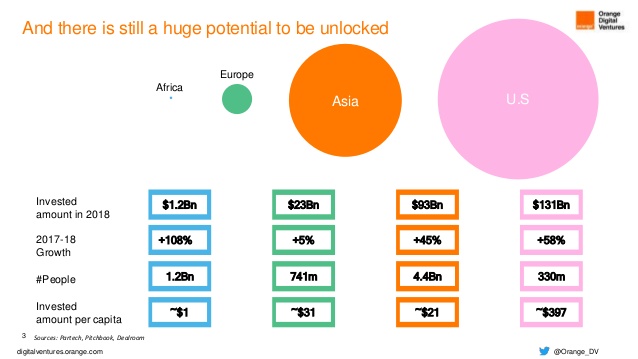
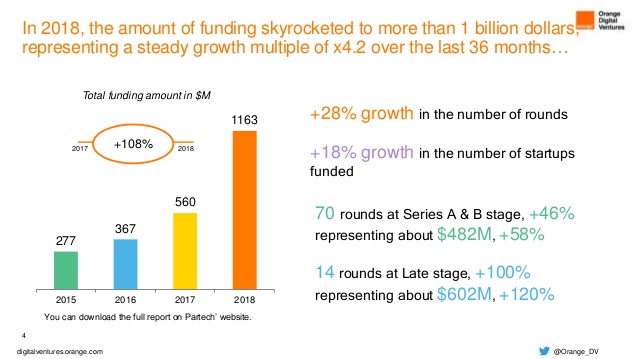
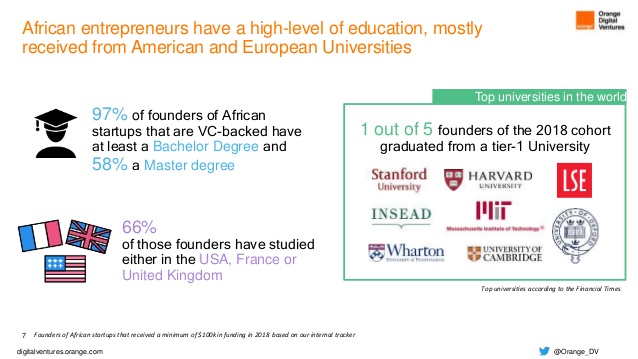
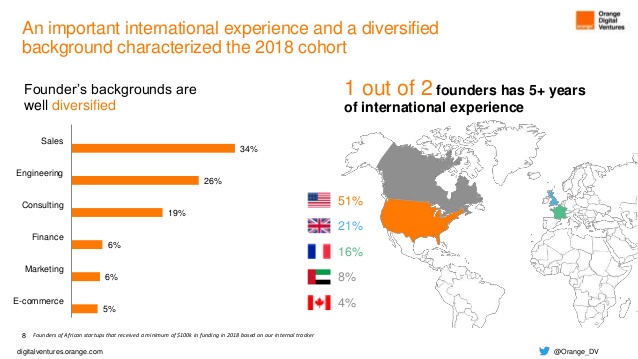
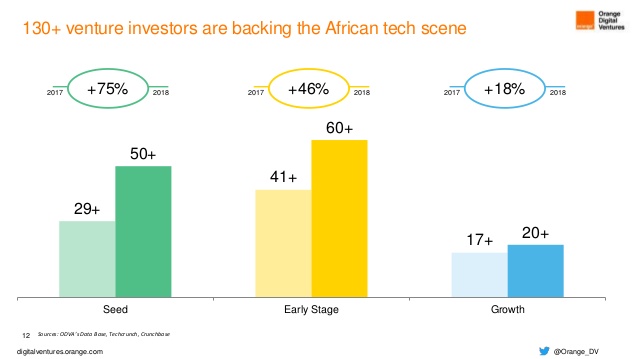
Orange Digital Ventures Africa has published a report titled The Rise of The African Tech Scene – 2019. It is not really a great work. Think of something a high school kid organized over lunch as he waited for lunch bell. Very strange it took Orange two years to produce this. Some slides from the report are presented below while the full report is linked at the end. We need the African equivalent of Mary Meeker Internet Trends report. At least $100k will be needed to collect, process and produce something at that level.