DD
MM
YYYY

PAGES

DD
MM
YYYY

spot_img

PAGES

Home Blog Page 686

Cryptos With the Most Potential: Cardano Eyes $1, Chainlink Gains Backing, While BlockDAG’s $376M Breaks Records

0

Cardano is pushing toward a long-awaited breakout, Chainlink is winning attention from whales and institutions, and BlockDAG (BDAG) is reshaping how mining and community adoption work.

These three names are gaining serious traction, but each is doing it in a different way. Cardano is aiming to clear the $1 mark, with strong technical patterns confirming bullish strength. Chainlink is seeing whale moves worth millions and institutional backing that is taking it closer to $30 and beyond.

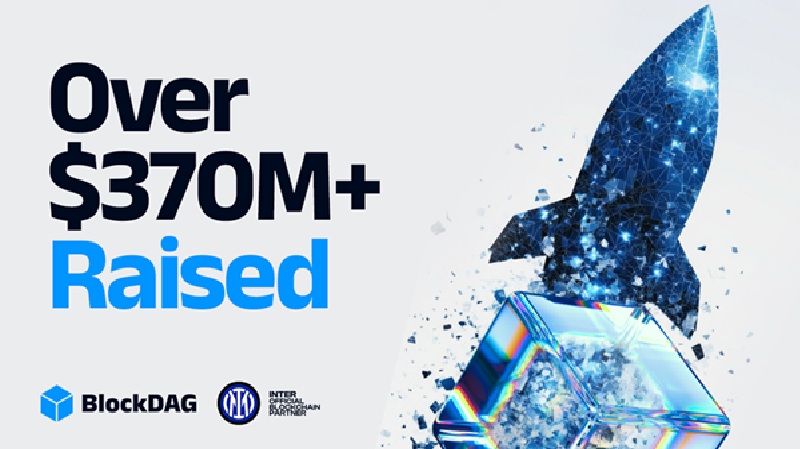
Then there is BlockDAG, already fueled by more than $376 million raised, over 25.2 billion coins sold, and 19,300 miners shipped worth $7.8 million. With these numbers and real-world partnerships, it could soon outpace both ADA and LINK in the race for crypto with the most potential.

Chainlink’s Whale Surge and Institutional Backing

Chainlink (LINK) has climbed over 30% this week, now trading at $23.50 after a 9% daily rise, with $1.35 billion in trading volume. Whale moves highlight the rally, including a 510,000 LINK ($11.13M) withdrawal from Binance to Compound, plus other buys totaling $13 million. Active addresses jumped from 5,500 to 9,410, proving both retail and whales are active.

Institutional adoption is also strong. Partners such as Fidelity, Swift, Citi, DTCC, JPMorgan, and BNP Paribas are using Chainlink in their systems. Chainlink Reserve also allows fiat-based payments in its network, boosting DEX volume to $1.298 billion in 24 hours.

Technically, LINK broke out after retesting $18 and now eyes $30. Analyst Posty calls it “too cheap,” suggesting a $100 target with market cap growth from $15B to $100B. This mix of whale action and Wall Street presence places LINK high in the crypto with most potential list.

Cardano’s Path Toward $1

Cardano (ADA) is trading close to $0.87, rising more than 4% as bullish momentum spreads across the market. Futures Open Interest jumped to $1.43 billion, up from $1.2 billion on August 3. This follows July’s rise to $0.93, when OI peaked at $1.74 billion before cooling.

In the past 24 hours, about $3.35 million in trades were liquidated, including $2.4 million from shorts, confirming buyers remain in control. ADA still faces a resistance trendline from December’s $1.32 high, but a clean breakout could open the door to $1.00 next.

Indicators support the move. ADA flashed a MACD buy signal, while Golden Cross formations are strengthening. If selling slows the run, support sits at $0.74, $0.72, and $0.71. Together, ADA’s setup shows why it remains a serious competitor for crypto with most potential.

BlockDAG’s Presale Boom: $376M Raised & 19,300 Miners Sold!

Unlike ADA and LINK, which chase price spikes, BlockDAG is building a foundation for long-term growth. Its presale has already secured more than $376 million, with BDAG priced at $0.0276 in Batch 29 and a listing price of $0.05.

A major driver is mining adoption. BlockDAG has distributed 2.5 million X1 mobile miners, letting users mine without expensive rigs. The project also launched its X10 miner, showcased live on July 23. The X10 generates up to 200 BDAG daily, ten times more than the X1, making it useful for both newcomers and serious miners. Already, over 19,300 miners have been sold, worth $7.8 million, delivering strong momentum.

Security has been a focus too. BlockDAG passed audits by CertiK and Halborn, fixing flagged issues and adding safeguards like multi-signature protection and parallel PoW processing. This ensures reliability for payments and enterprise adoption.

Beyond tech, BlockDAG is building awareness through official sports partnerships with the Seattle Orcas cricket team and Seattle Seawolves rugby team for 2025. These deals add NFTs, fan coins, and digital fan engagement to bring crypto closer to mainstream culture.

With 25.2 billion coins sold and early buyers seeing 2,660% ROI across batches 1–29, BlockDAG is not just another presale. It is scaling with community reach, practical mining, real-world links, and exchange listings lined up, making it the crypto with most potential heading into 2025.

Final Word

Cardano is approaching a breakout that could send it to $1. Chainlink is winning big whale and institutional support as it pushes toward $30. Both are strong, but BlockDAG’s foundation is different.

It combines $376 million raised, 25.2B coins sold, 19,300 miners shipped, sports deals, and strong audits. With these achievements already secured before launch, it is preparing for global scaling.

Where ADA and LINK rely mostly on market cycles, BlockDAG already shows proven adoption, mining access, and revenue strength. That is why in the race for crypto with the most potential, BlockDAG’s mining network and execution may be the real game changer for 2025.

Presale: https://purchase.blockdag.network

Website: https://blockdag.network

Telegram: https://t.me/blockDAGnetworkOfficial

Discord: https://discord.gg/Q7BxghMVyu
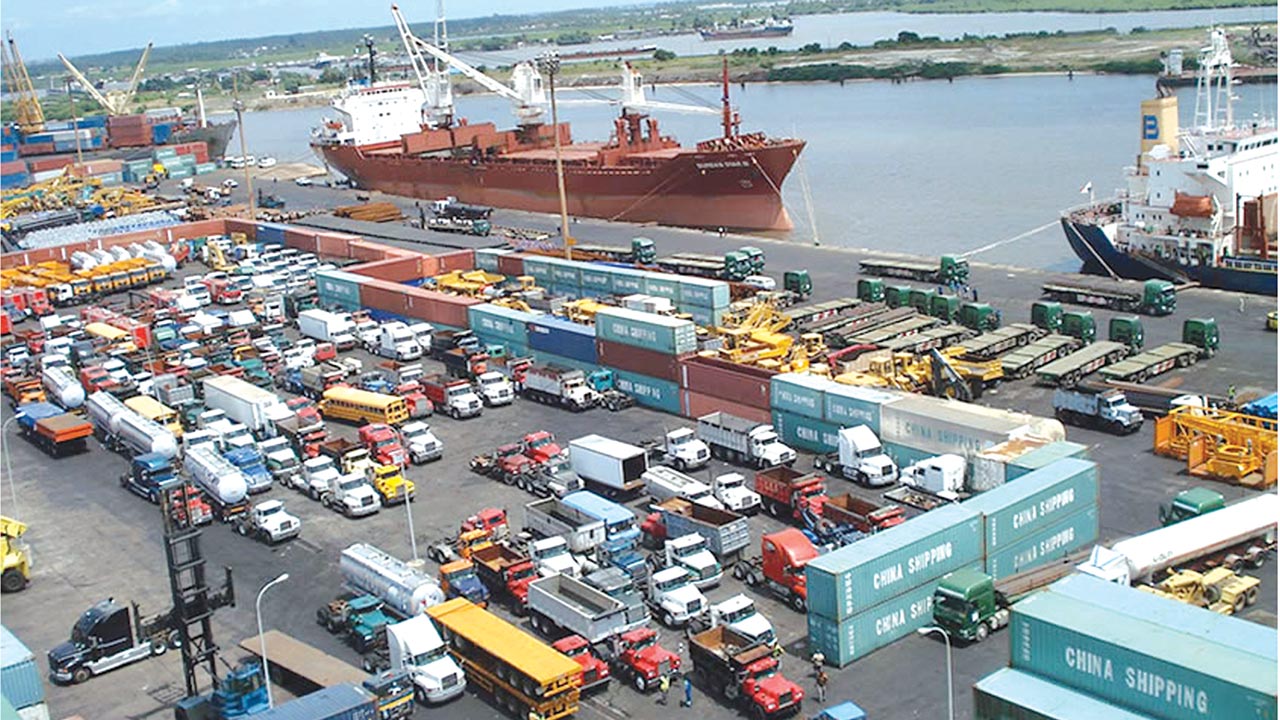
Nigeria Moves to Decentralize PPP Approvals, Empowering MDAs to Fast-Track Infrastructure Projects

0

The Infrastructure Concession Regulatory Commission (ICRC) has unveiled new guidelines on Public-Private Partnerships (PPPs), decentralizing approval powers to Ministries, Departments, and Agencies (MDAs) in a move aimed at accelerating project delivery and unlocking private sector investments for Nigeria’s ailing infrastructure.

The Commission announced the reforms in a statement on Sunday, explaining that the framework was developed under the ICRC Act of 2005 and aligns with a Presidential directive to overhaul Nigeria’s infrastructure delivery model through PPPs.

The new rules establish a structured process for the conception, development, and execution of PPP projects nationwide. They also grant MDAs greater authority to approve projects, while the ICRC retains oversight responsibilities to ensure compliance, transparency, and accountability.

Speaking during the launch of the framework at a high-level stakeholders’ engagement, ICRC Director-General Dr. Jobson Oseodion Ewalefoh underscored that the reforms are central to President Bola Ahmed Tinubu’s economic vision of liberalizing and modernizing the nation’s infrastructure financing.

“The new guidelines are in response to President Tinubu’s vision to liberalize the economy and in line with his charge to the ICRC to seek innovative ways to attract private sector finance to build infrastructure through PPPs,” Ewalefoh said. “They decentralize project approvals to empower MDAs for faster delivery while safeguarding the ICRC’s role as regulator of PPPs in Nigeria.”

Ewalefoh clarified that the ICRC will continue to act as a regulator and facilitator, not an operator or grantor of projects, and will remain central to coordinating negotiations between MDAs and private partners to ensure projects are bankable, transparent, and fair.

The Commission also emphasized that while MDAs now enjoy more flexibility, the decentralization comes with stricter accountability measures and a zero-tolerance stance on non-compliance. According to the ICRC, the combination of decentralized approvals and stronger compliance checks is expected to unlock billions of naira in private investment and cement Nigeria’s standing as one of Africa’s leading destinations for transformative infrastructure projects.

The guidelines build on a policy approved by President Tinubu in June 2025, which empowered the ICRC to independently approve projects below N20 billion without seeking Federal Executive Council (FEC) clearance. Under the updated rules, ministries can now greenlight projects under N20 billion, while agencies and parastatals can approve those below N10 billion. Larger projects above the threshold, or those spanning multiple ministries, will still require FEC approval.

To support this process, the framework introduces Project Approval Boards (PABs) within MDAs, tasked with vetting and approving eligible projects, subject to ICRC certification. Crucially, all PPPs must be fully financed by the private sector, with no federal treasury guarantees or commitments. Regardless of scope or value, every project must undergo ICRC’s due diligence before securing final approval.

Analysts say the move signals a bold attempt by the Tinubu administration to close Nigeria’s yawning infrastructure gap, estimated at over $100 billion, while reducing bottlenecks that have historically stalled project delivery.

Why This Matters

Nigeria’s big-ticket PPP projects—roads, bridges, ports, pipelines, and power plants—have historically been hampered by bureaucratic delays, fragmented approval processes, and underfunding. The new ICRC framework, by decentralizing approval authority via MDA-embedded Project Approval Boards (PABs) and streamlining due diligence, aims to:

  • Decrease lead times for project selection and contracting.
  • Enhance institutional capacity through accountability incentives.
  • Attract private capital by offering clarity and regulatory predictability.
  • Ensure compliance and value-for-money through ICRC oversight, zero public treasury guarantees, and mandatory private financing.

If applied effectively, this reform could help restart and scale landmark projects like the AKK Gas Pipeline—and put more stalled initiatives back on track.

European Leaders to Accompany Zelenskiy to Washington on Monday

0

European leaders are heading to Washington to stand beside Volodymyr Zelenskiy as he prepares for another tense meeting with U.S. President Donald Trump, who is pressing Ukraine to accept a swift peace deal with Russia.

The gathering, set for Monday, comes at a critical juncture as Trump, fresh from talks with Vladimir Putin in Alaska, signals a willingness to prioritize a final settlement over a ceasefire — a position that has unnerved many of Kyiv’s allies.

At the heart of the debate is Trump’s push for concessions that could see Ukraine surrender swathes of fortified territory in the east in exchange for limited Russian withdrawals elsewhere, while freezing the existing front lines. According to sources briefed on the Alaska summit, the U.S. and Russia floated proposals for a trade-off that would effectively redraw Ukraine’s borders, raising alarm in European capitals wary of legitimizing Moscow’s territorial gains.

Mikhail Ulyanov, Russia’s envoy to international organizations in Vienna, openly acknowledged that Moscow is open to a peace agreement provided it also secures security guarantees for Russia.

“Many leaders of EU states emphasize that a future peace agreement should provide reliable security assurances or guarantees for Ukraine,” he wrote on social media. “Russia agrees with that. But it has equal right to expect that Moscow will also get efficient security guarantees.”

Trump’s envoy, Steve Witkoff, went further in suggesting that Washington had won a significant concession, saying the U.S. could extend “Article 5-like protection” to Ukraine without full NATO membership — a pledge that could, in theory, deter further Russian aggression. Yet history speaks cautiously. Ukraine was already promised security guarantees under the 1994 Budapest Memorandum when it surrendered its nuclear arsenal, a commitment that failed to prevent Russia’s annexation of Crimea in 2014 and its full-scale invasion eight years later.

For Kyiv, the prospect of trading the Donbas for vague guarantees feels dangerously familiar. Zelenskiy is also under pressure to avoid a repeat of his bruising Oval Office encounter in February, when Trump and Vice President JD Vance accused him of ingratitude in front of cameras. Determined not to be cornered again, Zelenskiy will arrive in Washington with the backing of a united European front.

On Sunday, German Chancellor Friedrich Merz, French President Emmanuel Macron, and British Prime Minister Keir Starmer convened a high-level meeting of allies to rally behind the Ukrainian leader. Their joint communiqué pledged readiness to deploy a reassurance force once hostilities cease, secure Ukraine’s skies and seas, and help rebuild its armed forces. European Commission President Ursula von der Leyen, Italian Prime Minister Giorgia Meloni, and Finnish President Alexander Stubb — who has personally cultivated ties with Trump — will also join the Washington talks, underscoring the symbolic show of unity.

But there are still divisions. Some European leaders argue for an immediate ceasefire, a position Trump initially supported before shifting closer to Moscow’s preference for peace talks without halting the fighting. Poland’s foreign ministry dismissed the idea outright: “You cannot negotiate peace under falling bombs.”

Zelenskiy, for his part, insists that Ukraine’s sovereignty and independence remain non-negotiable. Posting on X, he wrote: “Everyone agrees that borders must not be changed by force. Any prospective security guarantees must really be very practical, delivering protection on land, in the air, and at sea, and must be developed with Europe’s participation.”

Trump, however, continues to frame the conflict in stark terms. “Russia is a very big power, and they’re not,” he told reporters last week, bluntly urging Ukraine to cut a deal. After his Alaska summit, Trump called Zelenskiy to relay that Putin had offered to freeze most front lines if Kyiv ceded all of Donetsk. Zelenskiy flatly rejected the demand, a signal that Monday’s talks could be just as fraught as those before them.

U.S. Secretary of State Marco Rubio has hinted that Washington sees movement in negotiations, though he acknowledged that both sides would have to make painful concessions.

“I’m not saying we’re on the verge of a peace deal,” Rubio told CBS. “But I am saying that we saw enough movement to justify a follow-up meeting with Zelenskiy and the Europeans, enough movement for us to dedicate even more time to this.”

With more than a million casualties since the war began, the stakes in Washington are higher than ever. For Zelenskiy, backed by Europe’s most powerful leaders, the question remains whether Trump’s vision of peace will come at too high a cost for Ukraine’s future.

OpenAI Softens GPT-5 Personality After Rocky Rollout, Promising a Warmer, Friendlier Model

0

OpenAI has announced a subtle but notable update to its latest flagship model, GPT-5, aimed at making it “warmer and friendlier” after days of mixed user reactions to its launch.

The announcement, made late Friday, comes in response to feedback from users who said GPT-5 felt “too blunt” or “detached” compared to earlier versions such as GPT-4o. CEO Sam Altman himself admitted the rollout was “a little more bumpy than we’d hoped for,” acknowledging that OpenAI’s most advanced release to date had not immediately resonated with everyone.

In a social media post, the company said the changes would not alter the underlying reasoning power of GPT-5 but would instead make its interactions “more approachable.” According to OpenAI, users can expect “small, genuine touches like ‘Good question’ or ‘Great start,’ not flattery,” while internal tests showed “no rise in sycophancy compared to the previous GPT-5 personality.”

At a dinner with journalists earlier in the week, OpenAI executives tried to shift attention to the company’s long-term strategy — including AI’s potential to reshape work, education, and even address looming demographic crises. But the uneasy launch of GPT-5 lingered in the background.

Vice President Nick Turley admitted that GPT-5, in its initial release, “was just very to the point,” a quality that frustrated some users who had grown used to the lighter tone and conversational fluidity of GPT-4o.

“This update will bring back some of that warmth,” Turley explained, framing the changes as a recalibration rather than a redesign.

The episode highlights a recurring pattern in OpenAI’s product evolution: every major release has faced a wave of pushback over tone and usability. When GPT-4o debuted earlier this year, some users complained it was “too chatty” and prone to filler language, prompting the company to tighten its style. Now, with GPT-5, the pendulum seems to have swung in the opposite direction, with users asking for more friendliness.

This back-and-forth underscores the difficulty of building AI systems that are both powerful and personable. For OpenAI, the challenge lies not only in advancing reasoning capabilities but also in meeting shifting user expectations about how AI should “feel.” Personality, it turns out, is just as important as raw intelligence when it comes to daily adoption.

Despite the rocky start, OpenAI remains the most highly valued AI company. Its most recent funding round placed its valuation at about $500 billion, far ahead of rivals like Anthropic, Mistral, and Google DeepMind. Analysts believe that even with occasional missteps, OpenAI continues to dominate adoption across industries, from enterprise software to healthcare applications.

The update is expected to serve as a test of whether GPT-5 can strike the right balance between intelligence and approachability. If it succeeds, the company could put its latest stumble behind it, reinforcing its position at the center of global debates over how AI should evolve — not just in terms of what it can do, but in how it relates to people.

$375M Presale Powerhouse: Why BlockDAG’s Mining, Apps, and Real Utility Are Driving Explosive Growth!

0

Most new projects talk about future potential, but very few deliver a fully developed ecosystem before launch. BlockDAG (BDAG) is changing the narrative by building a wide-reaching network that functions as more than just a tradable coin. By combining advanced mining tools, app-driven integrations, and multiple real-world utilities, BDAG positions itself as the best crypto to buy for those looking for deeper engagement.

With $375 million raised, 25 billion coins sold, and ROI already at 2,660% since batch 1, the momentum speaks for itself. Currently priced at $0.0276 in batch 29, BDAG reflects growing demand built on substance rather than short-lived hype, setting the stage for strong relevance post-launch.

Multiple Ways to Earn Within One Network

Most digital assets rely solely on speculative price swings, but BDAG is creating demand that sustains itself through real earning channels. This makes the network appealing for those seeking ongoing opportunities rather than short-term surges.

The project’s mining system provides direct involvement in securing the chain, with options ranging from hardware miners to the X1 mobile app. This flexible design makes the network accessible to a broad audience, from tech-savvy users to casual newcomers.

The focus goes beyond just holding coins in a wallet; it’s about interactive participation. By offering different ways to engage and earn, BDAG ensures holders remain consistently active, strengthening both community loyalty and network resilience.

2.5M Users Drive X1 Miner Success

Unlike projects limited to a single feature, BDAG is shaping a suite of products that highlight the coin’s utility in daily activity. Its X1 Miner App already boasts more than 2.5 million users, bringing simple crypto mining directly to smartphones with minimal barriers.

Every application launched expands BDAG’s reach. Coins can be held, swapped, or used in planned integrations like decentralized apps, payment processors, and NFT markets. This forward-looking design ensures BDAG becomes more than a speculative bet, evolving into a currency embedded in real digital use.

Through its role in transactions, gaming economies, and smart contracts, BDAG secures a place across varied online experiences, reinforcing its standing as a multi-purpose digital asset.

Why BlockDAG Won’t Fade After Launch

A common hurdle for presale projects is staying valuable after launch, but BDAG is addressing this by embedding long-term incentives. Its model encourages recurring engagement, ensuring people remain active within the network well into the future.

Mining rewards provide early traction and system security, while app-based functions keep coins in motion across different utilities. This steady circulation creates a feedback loop that drives sustained demand. Instead of leaning on one hype cycle, BDAG spreads its reach through apps, gaming, and payment systems.

With its mainnet launch scheduled for 2025 and plans to exceed 1,000 dApps by 2026, BDAG is on a path of scaling that strengthens its position as a lasting project rather than a temporary trend.

Final Thoughts

The progress behind BDAG is more than headline figures; it reflects real confidence in a model built for continuous growth. With $375 million secured, 25 billion coins sold, and an ROI of 2,660% since batch 1, the project has already laid a strong foundation.

Its mix of mining features, app integrations, and multi-utility design establishes a cycle where adoption boosts value, and value in turn fuels adoption. Currently priced at $0.0276 in batch 29, BDAG remains positioned for considerable upside as it moves closer to public release.

For those aiming at the best crypto to buy not just for short-term spikes but for consistent, long-term benefits, BDAG demonstrates how an ecosystem-driven model can redefine what holding in crypto truly means.

Presale: https://purchase.blockdag.network

Website: https://blockdag.network

Telegram: https://t.me/blockDAGnetworkOfficial

Discord: https://discord.gg/Q7BxghMVyu