DD
MM
YYYY

PAGES

DD
MM
YYYY

spot_img

PAGES

Home Blog Page 6861

Nigeria Needs Smarter Banning Policy on Commodities

0

By Samuel Nwite

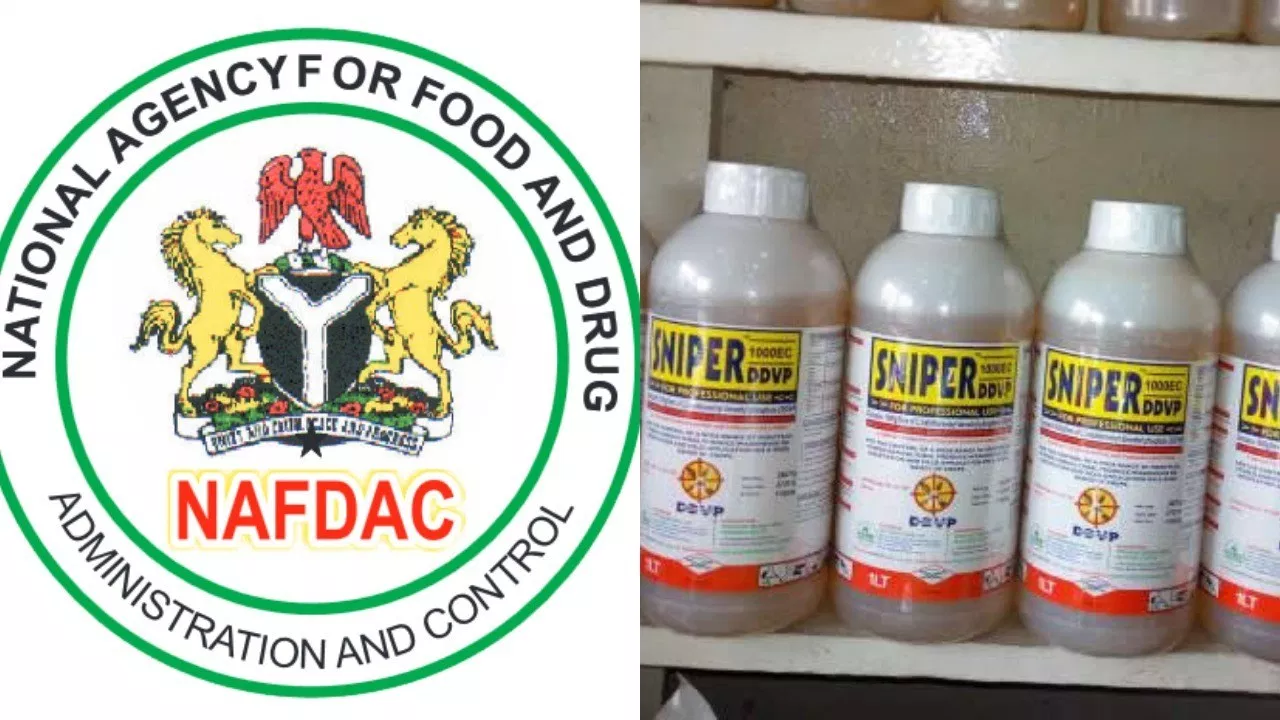
A few days ago, we woke up to the news that Sniper, a Dichlorvos or 2,2-Dichlorovinyl Dimethyl Phosphate, which is used in Nigeria as pesticide because of its effectiveness has been banned in open markets, due to the alarming rate that people use it to commit suicide recently. The move was widely commended by people in many places, after all, it’s the fastest way to curtail its accessibility that is wrecking a fatal havoc on the populace.  So on the claim of “suicide prevention” Sniper took its place among other banned commodities, like the Codeine Syrup that was banned on the ground of substance abuse.

There are over 100 commodity items that are under ban in Nigeria, each supported by the claim of “solution” to economic sabotage, public menace, health concern or suicide. Items ranging from food products, certain medicines, industrial products such as glass bottles and textile fabrics and consumer products that includes footwear and furniture are all in the list. And there is always a large number of people applauding from the side of the ban, not because it’s the solution to the problem, but because it offers some advantage.

In 2015, when president Buhari banned the importation of rice, it was in a bid to curtail the country’s spending on imported foods, and to create opportunity for local producers of rice to thrive. The N7.92trn spent on food importation annually, which rice alone took N.59trn, was a voluminous evidence that there’s urgent need to cut the spending, and Nigeria needed to produce more than it’s importing. And for these reasons, the ban was justified. Rice Farmers went ecstatic, even though they didn’t have the production capacity that will bridge the gap of food insufficiency that the ban would create, or the farming mechanism that will beat the challenge. However, there’s going to be more sales at higher prices, and that’s all that counts. The hunger and economic hardship on the other side of the ban will have to be borne until the experiment totally fails or succeeds.

So the brute spikes of the ban hit home with audacious consequences. Prices went up from N7, 000- N9, 000 to N19, 000- N22, 000 per a bag of rice. With no redeemable option from local producers, or increase in wages for people to keep up, hope waits in starvation. Businesses started weighing their survival choices, which hung on only one solution- Smuggling. And Nigerian porous land borders said Amen to their quest. Traders who couldn’t keep up with the illegalities of smuggling, and don’t have the political connection to secure limited import licenses simply went out of business.

Today, the Rice Processors Association of Nigeria (RIPAN) is lamenting that in the last 3 months alone, over 20 million bags of rice were smuggled into Nigeria, and called for tougher sanctions, even on the supposed watchdog, Nigerian Custom Service (NCS), who they believe is enabling the inflow by taking bribe from smugglers. Rice is the most consumed type of food in Nigeria, and exploding population keeps increasing the demand that local farmers are not yet ready to meet. And Nigerians practically can’t depend on the farmers’ insufficient produce. (In Nigeria, food items takes the largest share from household expenditure which is over 67 percent of total household expenditure. And over 18 percent of that is on the products affected by current import ban. As for non-food household items, over 14 percent is affected by the bans.)

In 2018, when the federal government of Nigeria announced a ban on the production and import of cough syrup containing codeine, it was received with resounding applause. The epidemic resulting from the abuse was escalating, especially in the North, tearing through the future and mental wellbeing of the youth. And on this ground, the ban was plausibly executed. A cheap solution to a deep-seated problem.

The enforcement took effect immediately, although, pharmaceuticals were allowed to sell off what they had in store, but no more production of the syrup and no more importation of codeine. The next week the price shot up from N2, 500 to N5, 000, it has become gold. But it beckons misfortune for the more than 20 pharmaceutical companies producing and selling it, they may suffer huge financial loss, cut the size of their workforce or liquidate. Other people on the spikes menu are patients on the syrup prescription, who have to find alternate drug that may not be so effective and their health will bear the consequences. But then it doesn’t matter, the only thing that matters is that the menace has been slowed down in the meantime, in the easiest way possible. It’s window dressing, never a solution. The project coordinator at Youth Rise Nigeria, an organization that researches drug-policy reform, Adeolu Ogunrombi, captured it well when he told Washington Post, “the cough syrup challenge is just a symptom of a faulty system, if we are just banning the cough syrup to try to solve the problem, then we are actually missing the point.” And he’s absolutely right.

We are talking about substance abuse epidemic that is beyond one product, we are talking about people who can try anything to get high: from sniffing a pit toilet to chewing Tramadol to mixing Paracetamol with hot drinks. The list goes on. It’s only a matter of time before they discover another substance to abuse to a high concentration, and the government will proffer the only solution it knows- “ban it.” And thereby put people out of business, creating another problem, ‘depression’ and eventual suicide.

Sniper is everywhere in the shops, with N500 or less you can get a bottle for yourself- a cheap way to die. But beneath the cheap sniper assisted suicide lies the “why” question that the government is not looking for its answer because the “how” question has easily been answered by shop owners who are only trying to make a living. In an era where over 42 Nigerian students have committed suicide, it’s obviously an epidemic beyond Sniper. Sniper is only the most famous among its contemporaries, and there are a thousand ways to suicide. If you ban ropes because people hang themselves with it, suicidal people will take to knives, electric wires, jumping the bridge etc. And if the ban is extended thus, it will become a sphere of fatal misfortune.

On the other end of the bans is economic misfortune that is evenly shared between the government and the people. Since apparently the bans don’t stop the products from being in circulation, they promote economic hardship by forcing households, individuals to pay more for the needed products from the little earnings they are trying to survive with. Because the products become more expensive in domestic markets than they are in international markets, and it is depriving consumers the right of variety to choose from: Only producers stand to benefit from this. And it shows that the welfare of consumers is never considered whenever the government moves to ban a commodity item. For instance, building material ban has yielded more pains than joy. The cost of building has tripled, enabling the vacuum in the housing sector by depleting the number of affordable houses and jobs that could have been created thereof.

On the other hand, the government is losing a great deal of revenue to private pockets. Duty fees generated through ports and borders have been significantly aiding government’s revenue generation. But no thanks to bans, the revenue has been cut in half by rogue ports and border officers who rake in millions allowing banned goods to be moved in to the country, and smugglers who would not pay to any of the parties, and government is the ultimate loser.

In the government that sees ban as a solution to the negative side of every product, goods and services, tariff is a rescue option. As the World Bank recommended, if bans are replaced by tariffs set at levels that reduce product prices, then the cost of living will fall and the welfare of domestic consumers will rise. And if regulation is used instead of ban, people will stay in business and government will generate more revenue.

E-waste: A Topical Issue on Environmental Degradation in Nigeria

0

By Oko Ebuka

The informal recycling of Electronic wastes otherwise referred to as E-waste has been causing environmental haphazard in the country by emitting unwanted chemicals which affects human health and increases high mortality rate.

According to the Ministry of Environment, the concern about E-waste arises from the fact that it contains about 1,000 hazardous substances such as toxins which are released to the environment from prevalent recycling practices where cables are burnt, process to extract copper and other precious like gold, diamond, etc.

These substances in the environment however, interfere with the body functional processes increasing risk of stroke, heart diseases, lung cancer, acute and chronic respiratory diseases including asthma and many other health problems.

Also, high mortality rate have been recorded from the inhalation of this noxious and toxic emission from informal recycling of e-waste.

According to the findings of Basel Action Network, from Basel centre, Nigeria study of 2005, about 500,000 used computers are imported in into the country annually through the Lagos port alone.

And an estimated 25% of the imports were functional while 75% were junks or unserviceable which is eventually burnt or dumped, the ministry said.

Areola affirmed that the project which is now backed up by law will aid in curbing the excessive wrong recycling across the nation and create job opportunities.

“This project is apt considering volumes of waste being generated and the need to use waste as a resource to grow the economy and generate employments along the waste value chain.

“The federal government has programmed a legal framework for curbing this menace through NESREA”, she said.

Disclosing this to journalists during the formal launching and inception meeting of project tagged “Circular Economy Approaches for the Electronics Sector in Nigeria”, organized by National Environmental Standards and Regulations Enforcement Agency, NESREA, in conjunction with United Nations Environment Programme, UNEP, and Global Environment Facility, GEF, recently held in lagos, the permanent secretary who was represented by Mrs. Oluwatoyin Areola, said that the project is mainly focused on life-cycle management to achieve a zero waste environment.

 “This is the underlining dynamism in the implementation of the extended producers’ responsibility (EPR) programme focused on the life cycle management of waste towards achieving a zero waste.

Also in the report, the Federal Ministry of Environment said that about 60,000 tons of used and unused electrical containers are imported in Nigeria per year by only buyers in Lagos ports. This also includes imports to lands from neighboring countries with most imported used electronics and electronic equipment, UEE, partially functional but a fraction still remains non-functional.

From the statistics also, it can be inferred that Nigeria may have imported at least, 15,700 tons of E-wastes most of which are LCD TVs containing mercury, refrigerators, and air conditioners containing HCFCs.

This goes a long way to prove the words of an environmental expert, Professor Oladele Osibanjo, who posited that e-waste is a national issue with global consequences as Nigeria is the only place the world choses to dump e-wastes in Africa.

He hopefully added that Nigeria should embrace the e-waste formal recycling business which has a special attraction and will be resourceful to the economy if properly utilized

Beyond ACFTA, The Real African Challenge

0
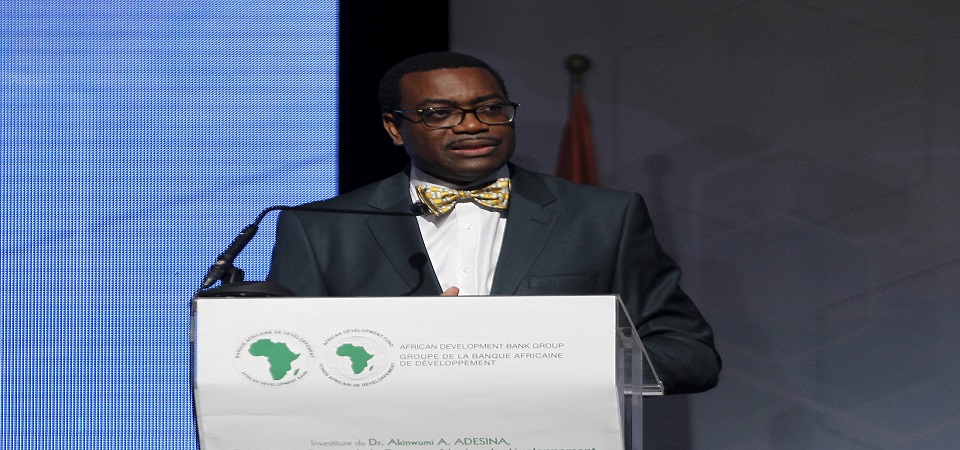
AfDB president Akinwumi Adesina
Akinwumi Adesina

ACFTA (African Continental Free Trade Agreement) has been heralded by many as a possible panacea to many trade frictions in Africa. Interestingly, the African Development Bank’s 2019 African Economic Outlook may have a clear insight on what really matters: “trade costs due to poorly functioning logistics markets may be a greater barrier to trade than tariffs and nontariff barriers”.  Yes, logistics paralysis in Africa is more critical than tariffs. So, even if you remove the tariffs among member states without dealing with supply chain infrastructures, nothing catalytic will happen. Those infrastructures will be seaports, airports and trade routes structured for intra-Africa trade, besides the current Africa-Europe which the colonial rulers built to help their missions many decades ago.

When writing the African e-commerce story, I often leap at the chance to explore only the enviable milestones the continent has made. Nevertheless, there still exist formidable challenges especially in logistics, a vital constituent of the industry. The African Development Bank, in its 2019 African Economic Outlook, notes that “trade costs due to poorly functioning logistics markets may be a greater barrier to trade than tariffs and nontariff barriers”. This side of the story must also be told; if we are to find sustainable solutions to what could be the gateway to growing Africa’s e-commerce by leaps and bounds.

Simply, unless ACFTA will fix these infrastructure challenges, the expectation that tariffs will do the magic is an illusion. Yes, I am not hopeful that ACFTA can deliver, since after many years, NEPAD (New Partnership for African Development) has failed to change the destinies of African people despite the workshops and partnerships. Of course, I am not saying we do not need integration, my point is that even after all the papers have been signed, Africa needs to build infrastructures, as I noted in this Harvard article, to power trade if it hopes for those signatures to impact positively the welfare of the citizens.

If logistics accounts for 50-75% of retail price of goods, in Africa, it means that is where the opportunities are to improve trading efficiency. Tariffs remain important but we cannot lose the sights where the real challenge is. I am not sure the reason why Nigeria is not trading more with Gabon is due to tariff; I do think the problem is that poor infrastructures make that intra-Africa trade more challenging. To fly into Gabon from Lagos, you may have to fly into Europe first, and then back to Africa; tariffs will not fix that, only building infrastructures will do.


President Buhari Must Consider MAN Position on ACFTA, Fixing “Rule of Origin” Prerequisite for Nigeria

African Diaspora and the Sustainable Development Goals: Making a case for Diaspora Resource Management

By Dr. Nnamdi Madichie & Dr. Chinedu Madichie

In a 2013 Special Issue on “Is the Middle East the land of the future?” a range of papers debated how the region was faring in terms of meeting the millennium development goals, and concluded that the targets had been missed in the most desperate sectors. Indeed, even in the fastest growing economies of the Middle East proved that nothing could be concluded as a given. A similar observation had been made in the case of Africa two years earlier in a journal special issue entitled “Is Africa the land of the future?”

In this article, the focus is on highlighting the role of the African diaspora in actualising the Sustainable Development Goals (SDGs) on the back of the missed targets of the Millennium Development Goals (MDGs) that elapsed in 2015. The study commences with a re-articulation of migration, the value and constraints of remittances, contribution of the African Diaspora and ultimately, what these all mean for success in achieving the SDGs.

Migration is often viewed negatively by home, transit, and destination countries. While African countries tend to label it a “brain drain,” destination and/ or recipient countries consider it as a burden on available resources. This has resulted in the inadequate attention migration and migrants contribute to sustainable development – especially from the purview of the youth and notably international students. It is for this reason that the African Diaspora Network in Europe (ADNE) advocates for the voice of diaspora to be included in development policy planning both in Africa and in Europe. It is the opinion of ADNE that well managed migration policies would bring about an optimal use of diaspora contribution to development considering the huge demographics of migrants in the world. Examples of such policies include easier access to legal status in destination countries, enabling dual-citizenship, reduced bureaucratic procedures and administrative hurdles, etc.

Indeed, the much-touted SDGs and the 2030 Agenda for Sustainable Development have provided new opportunities for African diaspora involvement in the face of the partly missed targets of the MDGs that preceded these goals. It is our view that the diaspora have the wherewithal to contribute towards the SDGs, particularly on the targets of ensuring safe, orderly, and regular migration; reducing the costs of diaspora remittances; and improving data on the skill sets of these groups.

While target #1 of the SDG on ending poverty, and target #12 on improving data with a view to establishing diaspora networks to facilitate the circulation of knowledge, ideas and technology for capacity building to take off, it is paradoxical that while the diasporas are important actors in economic development, they are still mainly considered shortcuts to leveraging financing – especially remittances – and channelling funds for sustained development in Africa – in a sub-optimal manner. This attitude underscores the need for alternative platforms of innovative contributions of the diaspora for the development of the region.

We posit, therefore, that the impact of diaspora on the 2030 Agenda should not just be multidimensional, but also multifaceted, requiring an in-depth consideration by African governments and other stakeholders in ensuring the actualisation, and effective deployment of three key initiatives – notably (i) leveraging diaspora remittances, trade and investment; (ii) capacity building (transfer of skills, knowledge and technology); and (iii)  advocacy and involvement in development policy making and implementation process.

Unpacking these further, first, as far as Remittances, trade and investment goes, there is a need for Diaspora remittances and financial contributions are well mobilised through various instruments including, but not limited to, bonds, securitised remittances, and special banking arrangements. The World Bank and other development partners have revealed that remittances by African diaspora surged by 3.4% to US$35.2 billion in 2015. However, this amount doesn’t directly translate to development due to many challenges such as the very high costs involved in money transfer, the technical complexity of alternative innovative platforms – going beyond funds for the day-to-day needs of families. A larger, more consolidated option channelled towards productive investments fostering entrepreneurial rather than dependency culture is needed.

Second, in relation to capacity building is another area where technology and skills transfers and modern management practices can contribute. Examples abound where diaspora have galvanised public private partnerships (PPPs) in sectors where such expertise is not locally available. This conduit in knowledge and skills transfers has proved effective especially during the Ebola epidemic when UK-based Sierra Leonean health workers volunteered to provide cultural awareness training for anyone travelling to Sierra Leone. Another example is BethAri Limited, a management consultancy with diaspora expertise working in partnership with West African Health Organisation(WAHO) on capacity building and skills development for pharmaceutical regulatory practices in West Africa. It is envisaged that these examples can be built upon in a more significant manner so as to make the SDG targets a reality by placing the diaspora engagement at the core of the development process.

Third, and finally, Advocacy and development policy engagement, the nation-building process also relies on social and political dialogue, advocacy and awareness, and stability for sustainable development. African governments have recognised the need to engage diaspora by providing an enabling environment for potential contributions of the latter. This includes creating economic and social linkages, accelerating structural reforms and providing incentives. It has also been established that country ownership of diaspora strategies and strong ties with the diaspora, underlined by a shared vision, helps commit the diaspora and government to act synergistically.

A typical example of this exemplary vision of diaspora engagement by the Nigerian government was the establishment of Nigerians in Diaspora Organisation (NIDO) worldwide, where office space is provided at embassies to facilitate such initiatives. Other African countries Rwanda, Kenya, Ethiopia, to name a few, have all launched initiatives to engage with the diaspora. We, therefore, advocate for the Diaspora to be viewed and treated as development partners – i.e. to be considered, not just as sources of finance for development, but also as development partners. As one study points out “for Africa’s economies to successfully transition from their current state of commodity-dominated production to high value-added production, governments in the continent must design and implement strategies to harness their grossly underutilized diaspora in developed countries.”

African diaspora may have the capacity and patriotic mind-set to contribute to national development, but require concerted efforts by all stakeholders to develop policy objectives that could facilitate diaspora mobilisation. However, poor policy choices, lack of clearly defined objectives, poor implementation plans, as well as weak and inaccurate data on the diaspora remain stumbling blocks.

There is an urgent need for national diaspora engagement strategy to build an African Diaspora Skills Database in order to fully understand the socio-economic and demographic characteristics of the diaspora, their attitudes, and possible areas of interest for collaboration, and most importantly, avenues for promoting the optimal use of diaspora expertise in their home countries. We hope to see more concerted efforts in this regard and institutional support that would enable these efforts come to fruition.

That in our view would open up a new world of Diaspora Resource Management (DRM)– arguably an offshoot of International Human Resource Management.


About the Authors

Dr Nnamdi Madichie is Director of the Centre for Research and Enterprise at the Bloomsbury Institute, London. He is a Fellow of the Higher Education Academy and former Editor in Chief of the African Journal of Business and Economic Research.  In addition to being a member and key participant of the Association of Commonwealth Universities, Dr Madichie has also worked on industry projects with the London Development Agency, as well as having contributed to the United Nations Conference on Trade & Development (UNCTAD), World Investment Forum Round Table, which culminated in the launch of the Business Schools for Impact project. He is also co-author of recently published book on Digital Entrepreneurship in Sub-Saharan Africa Challenges, Opportunities and Prospects as part of the Palgrave Studies of Entrepreneurship in Africa series, highlighting the intersections of entrepreneurship and the world of digital in the African context.

Dr Chinedu Madichie is former Chairperson of the Nigerians in Diaspora Organisation Europe (NIDOE), Belgium-Luxembourg Chapter and former Senior Adviser (Entrepreneurship & Private Sector) and Board Member of African Diaspora Network Europe (ADNE) based in Brussels. Dr. Madichie is a life-sciences graduate with almost 20 years professional experience in the pharmaceutical industry.  He is the Founder/CEO of BethAri limited, a general consultancy organisation whose clients include the Nigerian National Agency for Food and Drug Administration and Control (NAFDAC), the West African Health Organisation (WAHO) a Specialized Institution of the Economic Community of West African States (ECOWAS) responsible for health issues and numerous pharmaceutical companies in Africa & Europe.