‘’By striving to control your thoughts, you resist becoming a slave to your emotions, allowing yourself to live in a way that’s in harmony with your goals and values’’. Justin Bariso
Emotional intelligence can be defined as the capacity to be aware of, control, and express one’s emotions, and to handle interpersonal relationships judiciously and empathetically.
To survive in today’s world, we need to apply emotional intelligence in all aspects of relationships, be it family, place of work, social or religious gatherings.
I have come to the conclusion that human behaviour has a lot to do with upbringing, genetic influence, community influence and emotional intelligence.
Emotional intelligence is different from academic excellence, no matter the number of degrees we have like a thermometer or how exposed we think we are, our emotions have a great role to play in our relationships with people and how successful we become.
Some adults, although having grown in age, still have the emotion of a four year old, and would play tantrums if they don’t get what they want at a particular time. When you have a different opinion to theirs on any matter whatsoever, they see it as an insult and will become aggressive, controlling and sometimes violent.
Being hot tempered is not an excuse for aggressive behaviours or violence under the law,
Adults with poor emotional intelligence always seem to allow their emotions run out of control, a good example is the anger emotion; people control their angers in different ways.
People that lash out on others and hit their hands on tables or walls, break objects deem to have very poor emotional intelligence and are insecure so they treat other people badly and blame them for their response.
No one is perfect, but I believe if we consciously understand our emotions, and learn how to keep them in check, we may be able to live happy healthier lives.
Strive today to keep your emotions under control, practice one day at a time, and see how you gradually make progress in being a better person, and having better relationships with other people.
Most of all, a healthy emotion leads to a happier fulfilled life.
I would like to share Justin Bariso’s interpretation of emotional intelligence and how it appears in the real world. (13 points to apply).Justin intelligently describes the 13 things emotionally intelligent people do in his article published in INC newsletter. Those elements are:
You think about feelings.
You pause.
You strive to control your thoughts.
You benefit from criticism.
You show authenticity.
You demonstrate empathy.
You praise others.
You give helpful feedback.
You apologize.
You forgive and forget.
You keep your commitments.
You help others.
You protect yourself from emotional sabotage.
Clicking the piece, you can read more on how to apply these elements.
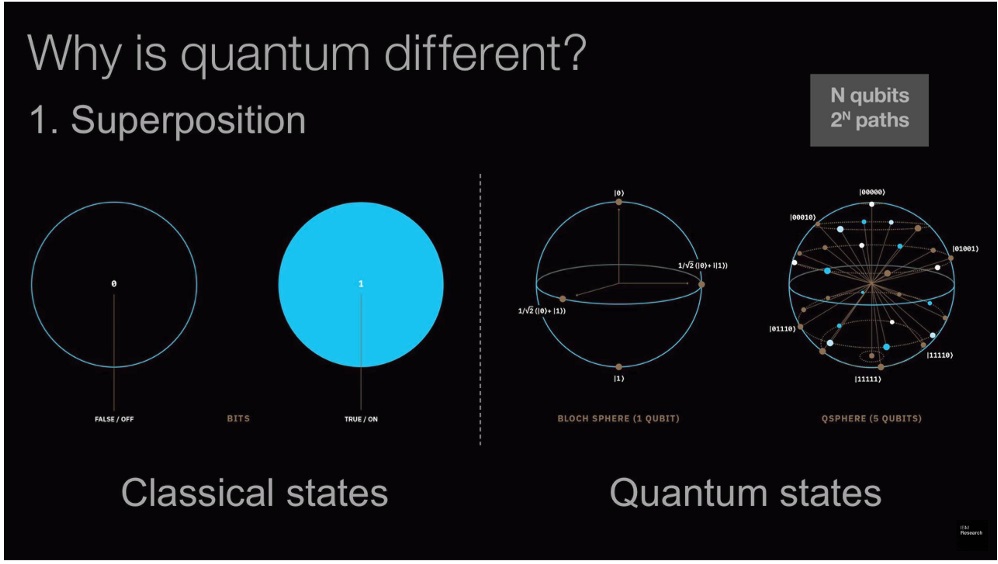
The quantum computers can capitalize on the prowess of atoms and molecules to perform memory and processing tasks. In this way, quantum computing presents an alternative approach to traditional computing which is based on a memory made up of bits. In traditional computers, data is encoded into binary digits (bits), each of which assumes either of the definite states of 0 and 1. The computation process in traditional computers is carried out using electronic transistors and capacitors. Unlike it, however, quantum computing relies on quantum-mechanical phenomena such as superposition and entanglement. Quantum computation uses quantum bits called qubits which maintains a sequence to represent a one, a zero or any quantum-superposition of those two qubit states.
In layman terms, today’s computers operate by manipulating bits that exist in either of the two states of zero or one. Quantum computers are not limited to two states, their ability to encode information into qubits which can exist in superposition. It means it can use symbols of 0 and 1 and all points in between.
Technically speaking, a quantum computer with n qubits can be represented in arbitrary superposition of different states simultaneously. This feature of quantum computation presents an edge over traditional computing that can only be in one of these at any one time.
Therefore, a quantum computer with the number of qubits equal to the bits of a classical computer is fundamentally different. The following example would help better shed light on the nature of difference between two computing systems. A traditional computing system requires storage of complex coefficients to represent the state of n-qubit system while state of classical n bit system can be represented with only n numbers. It points to the exponentially high information storage capacity of qubits than their traditional counterparts can do. In fact, the ability of quantum computers to hold multiple states simultaneously makes them potentially far powerful than today’s supercomputers.
Like traditional computers, quantum computers uses algorithm which is composed of fixed sequence of quantum logic gates. The problem is encoded by setting initial value of qubits and then measurement is made by decomposing the system of qubits each with value of zero or one into classical state. The end result, therefore, is at most n classical bits of information.
The ability of quantum computers to work on millions of computations simultaneously is known as parallelism. It comes from the superposition of qubits. In other words, quantum computers are capable of carrying out millions of computations at once while today’s computer can perform only one at a time. It is no surprise that a 30-qubit quantum computer contains processing power that a conventional computer can achieve by running at 10 teraflops (trillions of floating-point operations per second). Whereas the today’s typical computers run on a speed measured in gigaflops (billions of floating-point operations per second).
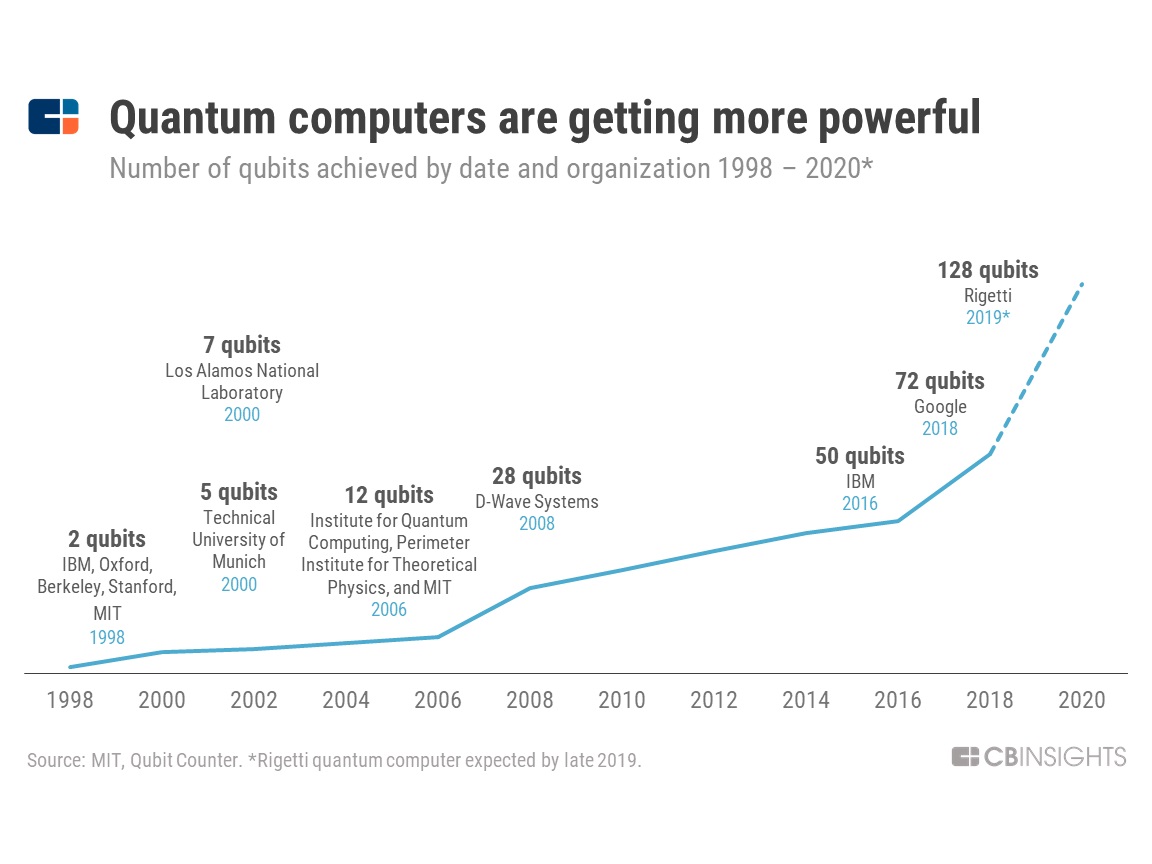
In coming days we can hope that quantum computers will replace silicon chips in a similar fashion as transistors replaced vacuum tubes. To date, the research to realize quantum bits based computation is in its infancy. And much of the research endeavoring to reach that goal can best be described as theoretical. The most advanced quantum computers can achieve only 16 qubits manipulation power which points that such efforts are far short of being used as practical applications. However, quantum computers have created a potential where one can expect that one day such computers can perform quickly and easily cutting the computation time required by conventional computers incredibly short.
Years of research and major breakthroughs in the field of mathematics, material sciences and computer sciences are shaping the advances to realize the quantum based computations. With their superfast processing power, these computers have potential to revolutionize by unleashing breakthroughs in several fields including materials and drug discovery, the optimization of complex systems, and artificial intelligence. But to transform quantum computing theory into reality, we need to revisit the information processing and machines that do it.
Source: CB Insights
Why we need quantum computing?
Every day we observe and experience the benefits brought to us by classical computation. Today’s computers prove very handy such that life without computers is hard to imagine in this technical era of time history. We seek help and have entertain ourselves, we connect with other people all over the world, and we process huge amounts of data to address problems and maintain complex systems using the computational power of today’s computers.
However, there are issues and problems that are too large to be addressed by today’s computing systems. Beyond a certain size and complexity, today’s computers fail to provide computing power to sufficiently address such challenges. To acquire a computational power that grows exponentially as the system size grows, we need a new kind of computing.
How potentially it can revolutionize our lives?
With unprecedented computing power, the quantum computers will disrupt every industry. They will transform the way we do business, place security to safeguard our data, conduct research to fight diseases and invent new material, and deal with climate and natural catastrophes. As the efforts to create first commercially viable computer intensifies, here are few of the ways it will revolutionize our lives and the world:
Artificial intelligence: The artificial intelligence and quantum computers present a perfect fit. The information processing that requires improving machine learning ideally can be achieved from quantum computing. With gigantic power to crush and analyze large quantities of data, the quantum computing can provide artificial machines feedback essential to improve their performance. The quantum computers’ inherent superiority to analyze and provide feedback over the traditional computers will result in significant reduction in learning curve for artificial intelligent machines. It will allow ever wide expansion of artificial intelligence into other industries as well as become more intuitive and insightful.
Drug development: During a drug development process chemists are keen to evaluate the interaction between various chemical components and elements to assess the extent medicines are effective against the diseases. Given the volume and scope of such analysis, it is a time and labor intensive task. Quantum computers with their ability to run multiple analyses simultaneously can help chemists to determine viable options much quicker.
Weather forecasting and climate change: The introduction of quantum computers into the met forecasting system will considerably reduce the time involved and improve the accuracy of the weather predictions. By allowing meteorologists to analyze data at once, these computers would enable to them better predict when the bad weather will strike.
Traffic control: Effective traffic whether air or on ground depends upon the route optimization through efficient scheduling. Quantum computers would allow traffic controllers to use their routes optimally while avoiding traffic congestion. The fast processing capabilities of quantum computing can also help to optimize the supply chains, fleet operations and deliveries.
A double edge-sword for developing nations
The quantum computing represents a disruptive innovation which is going to shake up every filed of the life. A disruptive change with a potential to influence our lives so profoundly can go either way for a developing nation like Nigeria. How the advent of quantum computers acts as a double edge sword for developing countries, following lights shed light on it.
All developing nations including Nigeria have two options to deal with wave of transformation and change which would accompany with quantum computing. First is to sit into an armchair and wait and watch how things playing out. Second, mobilize whatever resources they have to develop knowledge and expertise in order to place a foot into the fast running train of quantum computing.
Do nothing and pay for it
It means doing nothing in face of an emerging technology which has an astronomical potential to change the things entirely the way we experience them today. Unfortunately, in case of most of developing nations their attitude to such technological disruptions is that of ‘It’s none of our business’. Despite the World Bank and other international development agencies’ repeated assertions that sustainable development is not possible without making investments into disruptive innovations, majority of the developing nations particularly in Africa failed to design effective policy initiatives to reap the benefits of such technological advancements. By their inaction governments in developing world not only let lucrative opportunities to go but they widen the development gap between them and the developing nations of the world. As the technological gap grows large, the flow of economic resources and wealth get accelerated from poor to rich nations.
Finding ways to be a part of the breakthrough
On the other hand, developing nations like Nigeria can better off by taking timely and effective initiatives. Through such initiatives they can truly capitalize on the significant technological breakthroughs. Among myriad of options, these nations can direct their policy initiatives particularly at two areas. First find ways to develop their human resources and infrastructure so that when a disruptive technological breakthrough such as quantum computers unleashes, they are not strangers to it. It would allow them have their due shares in the economic yields that may result from such innovations. Second initiative involves the capacity building of their institutes so that they can timely understand the applications and implications of the quantum computing phenomenon. By integrating the prowess of this data processing giant into their systems they would be in a better position to effectively address the challenges and issues their nations are facing.
Quantum computing and two chronic problems of the Africa
Africa is undoubtedly world’s poorest region with GDP six times below the average GDP of the world. The two major problems can be blamed for that dismal GDP performance of the region, namely: Unemployment and ineffective governance. The unemployment in African countries including Nigeria is rampant and those who are employed get only miniscule of compensations. According to World Bank investments in disruptive technologies can stimulate economic activities rooted in high-tech business ventures and can effectively help to bring the unemployment rate down. Therefore the unfolding of the quantum computing advancement offers governments in the Africa an entire new set of opportunities. The technology based business ventures not only trigger a new kind of economic activities but also help to improve the lives of the people through better products and services. Government can utilize the wealth which may result from such economic activities to address other social issues and challenges they are facing.
The second challenge particularly Nigeria is facing is that of an ineffective and corrupt governance system. Using the gigantic data processing power the government can build systems that are more transparent and allow greater accountability. Different policy initiatives can be better designed using unprecedented computing power of quantum computing. For example, Nigeria is facing with serious environmental and climate change issues. With the simultaneous analysis of the large data volume, government may be able to predict and visualize the effects of their various environment related policy initiatives. In this way, quantum computing may greatly assist to effectively mitigate the dangers arising from environment and climate change.
To summarize, quantum computing presents a disruptive innovation which has the potential to revolutionize the world in way never seen and experienced before. By carefully formulating an effective strategy, the governments in developing nations can close the wealth generation gap that exists between them and the developed countries. Failing to be a part of this unfolding technological breakthrough may result developing states to languish further behind and witness the transfer of their much needed economic resources and wealth to developed nations in the world.
Curacel is a platform that uses Artificial Intelligence to tackle fraud, waste and, abuse (FWA), in healthcare insurance, thus helping health insurers realize massive time and cost savings. Its solution detects fraud and error in customer data, and speeds up the processing for health insurers, and their partner healthcare providers.
Using an intelligent rules engine, Curacel’s Platform helps Health Insurers realize massive time and cost savings
eClaims
When claims data enters the platform, each claim passes through an extensive data validation process powered by eClaims engine, producing risk scoring metrics and pinpointing FWA in each claim. eClaims comprises simple rules like age and gender as well as extensive machine learning algorithms that consider the full treatment histories.
eVerify
Once individual claims are validated and sanitized, eVerify sniffs its way through the entire database looking for behavioural patterns, collusion networks, and inefficiencies such as upcoding. The unsupervised graph based sweeps learn and adapt to new relevant patterns, spotting complicated patterns that are not visible to unaided human eye.
eMeasure
For top level managers, having the right tools to overview and monitor the business is paramount. eMeasure allows you to summarise and quickly produce management-level reports of your data. With eMeasure, you can narrow down on metrics and statistics such as processed claims, most common violations, total riskiness and estimated FWA figures.
EClaims API provides the main integration point for the customer allowing him or her to leverage the capabilities of Curacel using simple REST/JSON calls. It is simple and configured to work with any hardware as the software can handle both real time and bulk load depending on the use case.
As customer claims are submitted in real time, Curacel responds with live alerts which can easily be integrated into existing workflows to ensure you capture inefficiencies before they arise. In order to protect customer data, Curacel can be deployed on premises or VPN in a secured cloud. All certificates are supplied by the customer who retains full control of user access management and application tokens.
Curacel currently powers health insurance claims processing for some HMOs in Nigeria and Ghana.
The English language in Nigeria is gradually sliding away from its position as a second language to that of a first language. Observation has shown that most young children, especially those in urban areas, encounter challenges using their Nigerian indigenous languages. In fact, the younger they are, the more incomprehensible the native language is to them. Children below school age have shown very low level of competency in their mother tongue but a very high one in either English or Nigerian Pidgin. The reason behind this could be because the school-age children have been exposed to their mother tongue in school or other places they had contact with people outside their families. English is, indeed, gradually becoming Nigeria’s first language.
A number of campaigns have been carried out by different individuals and organisations to discourage children having English as their first language (L1) in Nigeria. They made several efforts to keep English in its position as the second language (L2), but they forgot one thing – English is spreading and seeping into the system as a result of the needs for the language. Let’s take a look at these needs one after the other.
When English came into Nigeria, it did so to satisfy the needs of the English missionaries and the colonial administrators. Some people will say that the missionaries taught this language in schools so that the new converts can read the bible. This is true, but it is just one of the needs back then. The language was mainly brought into the system because without it there will be no common language through which the administrators could enforce their authorities on the Nigerian natives. English became the language of the government from the colonial era. With time, Nigerians began to cherish this language because one’s ability to speak and understand it, irrespective of how ungrammatical it was, was an indicator of one’s close association with the ‘Masters’. English from that day assumed a prestigious position in the country.
Now, the colonialists have gone, but the language is still making waves throughout the country. One could not help but wonder why. The truth is that the ‘need’ is still there, and is even expanding. The ‘White Man’, during his reign in Nigeria, brought together different people from different autonomous communities that speak different languages and have different cultures and kept them under one community known as Nigeria. Today, Nigeria can boast of about 500 indigenous languages (beside English and Nigerian Pidgin) and 250 ethnic groups. The only language, or languages, that can bind all these languages, peoples and cultures are the English language, and, of course, the Nigerian Pidgin. This is the main reason English is spoken more in urban areas than in rural parts, because people from other ethnic groups migrate more to urban areas.
What is more? The need for English also comes because it is the world’s lingua franca. Even countries that do not hitherto use the language now employ English language teachers and pay them heavily just because they want to have knowledge of the language. The need to interact with the outside world encourages the survival and permeation of English into many Nigerian homes.
Speaking of Nigerian homes, a lot of parents frown at friends, relatives and strangers speaking any native Nigerian languages to their children and wards. A woman recounted of how she told her domestic staff not to talk to her children unless they can speak the ‘Queen’s English’. Another spoke of how she discourages her children spending time in their homestead because people there speak their native language or ungrammatical English. This group of people belongs to those who need English because of the social class it will place them in. Truly, the ability of one to speak good English in Nigeria places one among the higher class in the community.
The result of these factors is that English is gradually taking up the position of the L1 while Nigerian indigenous languages are now learnt as L2 or L3, that is if at all it is learnt. This is a call for concern because these native languages could slide into extinction if they fail to find speakers. This is mainly possible if the users of the languages fail to pass it on to the younger generations. If these speakers die off, the languages die with them, especially if it does not have a written form, such as literature.
So what is the way out? Feasible and workable solutions should be sorted and implemented. I will suggest the following:
Parents should encourage their children to be multilingual – the more the languages they learn and use, the better. I am not going to propose the language parents should choose as their children’s L1, but I will propose that they should not be uncomfortable if their children learn their native languages as this will not hinder their proficiency in English. This way, the native languages will continue to have speakers, even if they use them only when the needs come up.
Nigerian schools – nursery, primary and post-primary – should be enforced to teach the native language of their domiciled community. This means that it is not only the Nigerian major languages that should be taught in schools, but all the existing Nigerian indigenous languages. This will encourage the owners of different native languages to develop their languages more. Of course, for this policy to be more effective, the examination bodies in Nigeria will have to acknowledge these languages by creating examination curriculum and papers for them. The Ministry of Education in the States will then ensure that these languages are made compulsory subjects in their schools.
Literary artists are custodians of cultures and languages. They should endeavour to bring their native languages into their literary works. They can do this by writing the entire work in their native language, or by code-switching, code-mixing and borrowing. These literary devices are very important in writing folktales, myths and legends of a community. A published literary work can withstand the passage of time and has no geographical boundary. In other words, it can preserve and transmit languages.
Primary and secondary schools in Anambra State of Nigeria observe every Wednesday as Cultural Day, whereby pupils and students wear Nigerian cultural attire to school and are free to interact in Igbo language during school hours. This policy is not the same thing with the Cultural Day observed by some Nigerian private owned schools, which is done once or twice in a year. Here, the students wear cultural attires of different ethnic groups, even the ones that are not Nigerian, and still speak English. Should all the States of the federation adopt the cultural day policy created in Anambra State, there will be little or no worries about the survival of the Nigerian indigenous languages.
The economic situation of the country has taken the interest of researchers away from sociolinguistic situations in the country. No raw data could be found on languages used by Nigerians. This is a call to different researchers and research institutions to shift their gaze towards the disappearance of Nigerian languages and to proffer solutions towards their maintenance. Raw data should also be collected, analysed and stored by government MDAs, such as National Bureau of Statistics and Ministry of Arts and Culture, and non-governmental organisations to aid in the research.
In conclusion, Nigeria needs the English language, at least for a long time to come. Some people may advocate for one Nigerian language to be adopted as our lingua franca and official language. But then, whose language will be given this honour? Let us not worry about how to send the English language away. Let our headache be how we can strike a balance between our indigenous languages and the English language; we need them all. The disappearance of our indigenous language will definitely lead to the loss of our culture, and our identity.
“At this point many of his disciples turned away and deserted him. Then Jesus turned to the twelve and asked, “Are you going to leave, too?” Simon Peter replied, “Lord, to whom would we go? You alone have the words that give eternal life. We believe them and we know you are the Holy One of God” – John 6:66-69 (NLT)
That’s a conversation between a great leader and his followers. A display of loyalty. Loyalty is when your employees or customers are ready to suffer some inconveniences to continue working with you or doing business with you. You have been able to make them believe in a higher cause and have simply inspired loyalty in your customers and employees.
Price, quality, peer pressure, promotions, fear, can motivate and manipulate us to buy certain products/services. But it’s only our believe, culture, personality that can inspire customers to make purchase independent of competitive factors.
Motivation can cause a transaction, inspiration commands loyalty. Apple early adopters are loyal, simply because they believe what the company believes – to think differently. The company’s objectives, have been converted into their personal goals, drives and ambition.
Just as Simon Sinek mentioned, it’s beyond the letter “i” behind their products. They are a company that champions the creative spirit of an individual, and their products, marketing and services simply prove that consistently.
In fact, Apple insiders and their die-hard users are often referred to be part of the “Cult of Steve”. The word cult implies that we can recognize a deep faith, something irrational, that all those who believe share. His employees, loyal customers, exist to push boundaries, to think differently, and challenge the convention.
This is in line with what Peter Drucker described as Management by Objectives (MBO). According to him, “MBO relies on a process of self-control and seeks to achieve alignment between individual needs and the goals of the organization. MBO thus seeks to meld individual freedom andresponsibility with organizational performance and results. It rests on a high concept of human motivation and behaviour. It is the underpinning for a highly-spirited organization.”
There is a popular illustration to this, an old story tells of three stonecutters who were asked what they were doing. The first replied, “I am making a living.” The second kept on hammering while he said, “I am doing the best job of stonecutting in the entire country.” The third one looked up with a visionary gleam in his eyes and said, “I am building a cathedral.” The third man is definitely the one who sees beyond his daily task. He has a sense of purpose. He comes to work to be a part of something bigger than the job he’s doing. These are inspired employees who are more productive and innovative, and the enthusiasm they bring to work charms other people eager to work there as well.
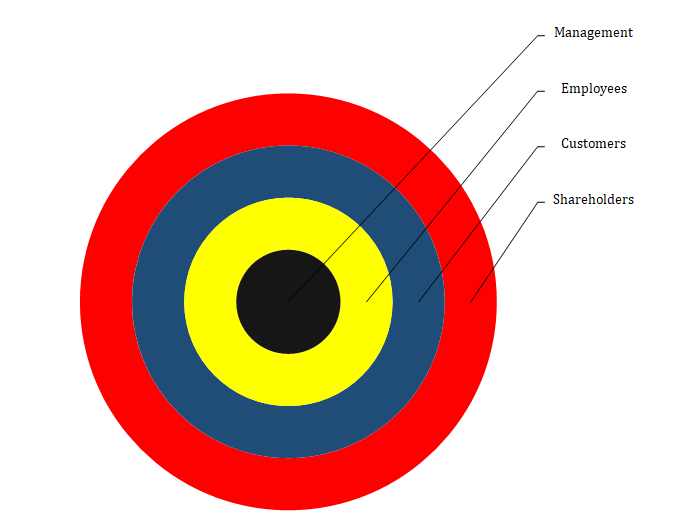
The job of a leader is not to bring up all the great ideas. The role of a leader is to create an exciting environment that can stimulate great ideas, and make them happen. Great leaders give their employees a purpose or challenge around which to develop ideas rather, than simply instruct them to be better at their job functions. Companies that offer great customer services, focus first on their employees. It is the trust, and cultural fit between the employees and the management that produce great customer service, and thereby, returning more profits to shareholders. The management inspires the employees to execute great ideas, while the customers and shareholders benefit from the execution.
Leadership circus
Until your customers and employees are ready to suffer inconveniences, just to remain with you, they are not loyal. Remember in the opening conversation, Simon Peter answered him, Lord, to whom shall we go? We believe and are sure that you are Christ, the Son of the Living God. This event took place after the miraculous multiplication of five loaves of bread and two fishes to feed over 5,000 people. Loyalty can’t be bought with extra incentives or discounts, it can only be obtained by giving your employees/customers a higher cause to believe in. Not every hardworking, committed manger can fit the CEO position. The CEO is a leader, who can inspire, and command loyalty. Not everyone leading is a leader.