DD
MM
YYYY

PAGES

DD
MM
YYYY

spot_img

PAGES

Home Blog Page 6864

Nigeria Needs National Prevention Strategy on Suicides

0

By Mutiu Iyanda

Death is inevitable, but it is always disheartening when a person killed himself or another person. Suicide occurs every day throughout the world, affecting the rich and the poor. From developed to developing countries, suicide rates are incredibly diverse with many reasons adduced for it. Six months to the end of this year, available statistics have shown that Lithuania, Russia, Guyana and South Korea have recorded significant numbers of suicide cases. In the Eastern Europe, Belarus, Suriname and Kazakhstan are leading the race. While the narrative on suicide rages on in those countries and others, suicide has been reported to be almost unheard of in Bahamas, Jamaica, Grenada, Barbados, Antigua and Barbuda.

In Africa, the story is not quite different as countries on the continent have their share of the global percent of suicide rates. Though, getting data on cases such as suicide incidents are difficult, the recent reports have further emphasised that suicide is real. For 2019, Nigeria is expected to have 9.5 of its 100,000 people committing suicide, while it would 11.6 in South Africa. Existing data also indicate that Ghana, Egypt and Kenya will have 5.4, 4 and 3.2 of 100,000 people committing suicide respectively.

Like other continents, suicide is considered a masculine behaviour, affecting mainly young males in recent years. For this year, 9.9 of the 100,000 expected to commit the offence are projected to be males, while females would be 9.2. In South Africa, it is 18.7 of the males and 4.7 for the females. When suicide cases occurred, hanging, poisoning, diving into rivers and the use of firearm have been recorded as preferred methods. However, the recent incidents where Sniper and Hypo were used have added a new narrative to the methods being used. The narrative has been both counter-narrative and alternative narrative. Some Nigerians believe that banning the two brands would reduce the rate of suicide in the country. To the public analysts and social workers, banning the brands is not the right solution to the problem.
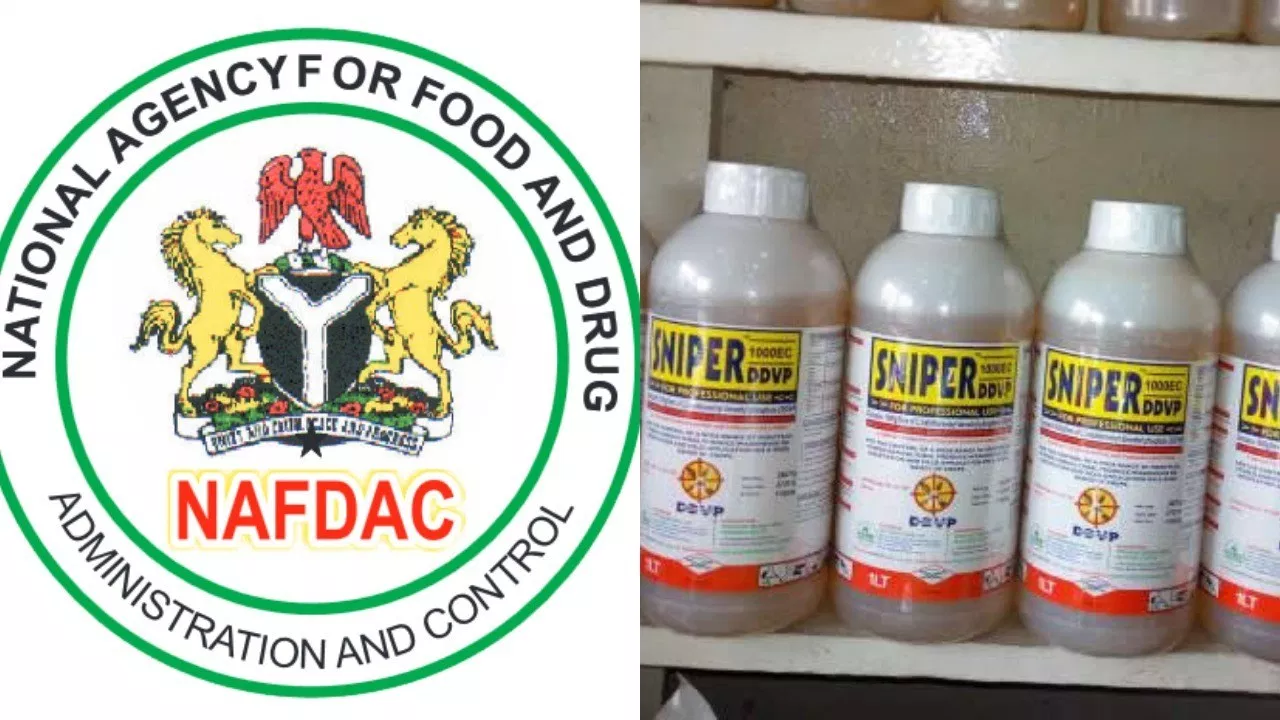
Nigeria bans Sniper

Beyond the materials being used to commit the offence, governments, concerned stakeholders and individuals need to collaborate on developing workable plans towards addressing various socioeconomic challenges in the country. This articles leverage soft and hard data to understand specific trends shaping the suicide rates in Nigeria.

In Search of Happiness, Life Expectancy, Information about Suicide

Being happy and live long are the two things everyone wants. When the first one becomes elusive, depression begins, which has been discovered to be one of the factors contributing to suicide incidents. Having the second depends on the number of years God has recorded for individuals to spend on earth. Apart from this, the presence of the right facilities, especially medical ones, could increase people’s livability.

From 2015 to 2019 Nigeria’s average life expectancy has been 53.9 years, while global happiness ranking is 90.4. The lowest life expectancy and high score on the happiness ranking are pointers that Nigerians will not hesitate to seek for information on how to better their life. While doing this, attention could be shifted significantly to understanding happiness and life expectancy in the country in relation with other countries.

As the media continue reporting suicide cases across the country, from January to June, 2019, analysis indicates that people in Taraba, Akwa Ibom, Borno, Katsina and Plateau have sought knowledge about happiness than any other state in the country, using the Internet. Osun, Enugu, Oyo, Edo and Lagos states, including Abuja are the places where people have searched about life expectancy, with a view of knowing the reasons behind the country’s status in the world and how governments could address the socioeconomic problems contributing to the decline life expectancy rate (in age). Data indicate that people in Bayelsa state only interested in understanding suicide. This could be linked to the high suicide cases reported in the south region of the country recently.

The search interests provide new data for understanding the suicide rates in the country. Leveraging this, analysis indicates that people’s interest about happiness from January to June, 2019 connects with the country’s 4 years and less than 5 months happiness ranking by 52.5%. The result is alarming, when the trending life expectancy was analysed along with the life expectancy. The trends and the real life expectancy in terms of age resonate by 68.7%. These insights have shown that people will continue to understand and seek for knowledge on the two issues based on the earlier information had through global and national reports.

Analysis further shows that a one percent increase in the people’s interest about suicide decreases interest about happiness by 0.8%. This is quite different for the life expectancy. Analysis reveals that one percent interest in understanding suicide increases interest about life expectancy by 1.7%. These results have established that when people do not possess what they want in life, suicide could be seen as an alternative. On the other hand, understanding the consequences of committing suicide and seeing governments’ efforts towards better living conditions could prevent people from committing suicide.

Key Forces Shaping the Trends

The key tool to achieving happiness and live long (as God wishes) is for people to meet and solve common needs and problems during specific periods. This cannot be attained absolutely without recourse to the right value system. To achieve the desired results, each one must be ready to participate actively and generously. Nigeria is a country with a lot of challenges that need collective solution mechanisms. However, the relationship between governments and citizens seem complex. Among the people, fostering strong relationships could be difficult when socioeconomic status becomes a key factor in initiating and building the relationships. In these situations, addressing social and economic problems leading to suicide would be difficult.

Using Nigeria’s national value scores, analysis reveals that people’s interest in knowing suicide links with the scores by 58%, while the interest about life expectancy connects with the scores by 28%. Over 33% of the interest about suicide was as a result of the scores, while 7.8% was recorded for the interest about life expectancy. Considering the interest about the life expectancy and the yearly status, analysis establishes that the scores facilitated the interest by 31.3%, while the yearly status connects with the scores by 56%.

What is at Stake?

From the data and further analysis, it is clear that both the trends and real data need to be used by the governments and other stakeholders to tame the suicide rates in the country. The linkage between the interest in understanding happiness and life expectancy with interest about suicide will continue in the next three months. It will dip in October and November and expect to increase in December, 2019. There is no doubt, suicide is not seen by governments as a public health problem which needs a national prevention strategy. Nigeria needs the strategy. The strategy must holistically address issues associated with older age, not married, low occupational group, depression, anxiety, somatic symptoms and disability.
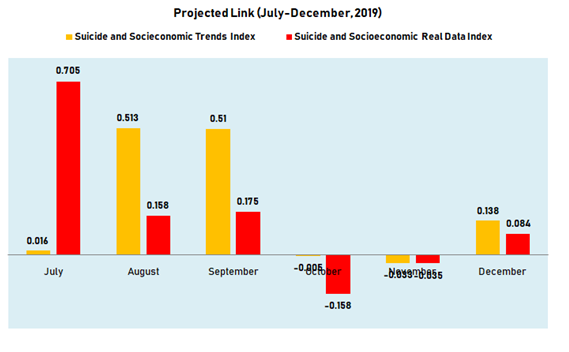
 

Source: Multiple Sources, Infoprations Analysis, 2019

Why Some U.S. Tech Firms Are Shipping Parts to Huawei Despite Ban

0

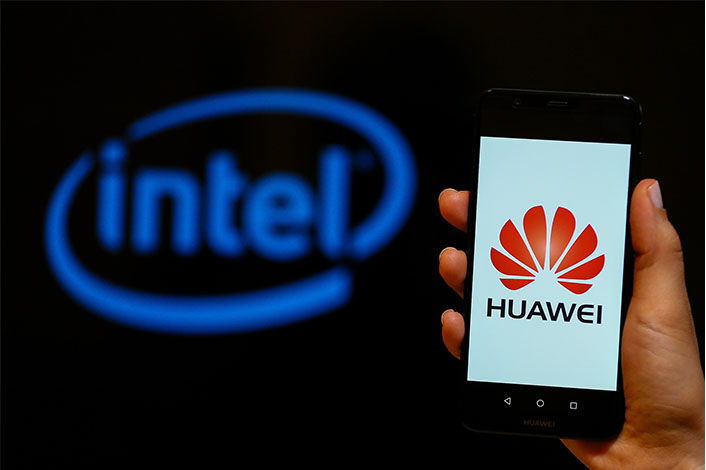
The U.S. tech firms innovate at scale, now legally. Yes, they have figured out how to do business with Huawei, the Chinese company which was largely banned by the U.S. government. Intel, Micron, and others are shipping to Huawei. The fact is this: some U.S. tech IPs are held in tax-havens outside U.S. They can call those entities non-U.S. entities and legally do business with Huawei. Yes, they have thrown the laws back to the U.S. government – and saying, if you think I am breaking the law, sue me, and I will explain while this Irish company that holds our IP should not comply with the U.S. ban.

U.S. tech firms, such as chipmakers Micron and Intel, have decided there are legal ways to continue supplying Huawei, to an extent, despite the American blacklisting of the Chinese telecoms giant. The loophole? The U.S.-headquartered companies are able to classify their technology as foreign, thanks to their overseas subsidiaries and operations (Fortune)

Now, the U.S. government will have to sue Intel Ireland, not Intel Corp. since some of these subsidiaries are structured in ways that give them “loose” legal separations even though financially they are entwined. Provided Intel Ireland is complying with Irish laws, they have openings to work with Huawei while complying with the general U.S. Export Control rules. These companies are very confident as some have even started shipping to Huawei without clearance from U.S. firm.

American technology companies have resumed selling certain products to Huawei Technologies Co. after concluding there are legal ways to work with the Chinese telecom giant in spite of its inclusion on a Trump Administration blacklist.

Micron Technology Inc., the largest U.S. maker of computer memory chips, said on Tuesday that it had started shipping some components to Huawei after its lawyers studied export restrictions. Intel Corp., the largest microprocessor maker, has also begun selling to Huawei again, according to a person familiar with the matter. It’s not clear how many other suppliers have reached the same conclusion.

The lesson is this: when you make rules, typically by say 10-15 people, expect a factor of 10 lawyers figuring out how to get around the rules. It seems the brilliant American lawyers have figured out Trump Administration ban on some Chinese companies. You cannot stand between American companies and more U.S. dollars.

The Books That Influenced

2

I get this question a lot; let me just address it here: “which books influenced you?”, “share your all-time great books”, “which books can you recommend to me”, or things in that line.

This is my expanded answer: Largely, I cannot say any book influenced me except of course the Bible. I do not have time to read books these days. I prefer magazines (Forbes U.S., Economist, Fortune and Bloomberg Businessweek). I have maintained their subscriptions for years; typically, I read them when I am traveling if time will not permit.

But on books, except The Richest Man in Babylon which Diamond Bank gave me as a gift in training school, nothing really that much. My biggest exposition was reading more than 50% of African Writers Series, from Things Fall Apart to as many as I could lay my hands while in secondary school.

In short, Things Fall Apart was used to rig our minds to go to secondary school in my village: those days the teacher will tell you the story of Nwoye’s mother and a little bit of Ikemefuna. You would like to know more … but he would stop, telling you that if you want to know the rest of the story, you must sign-up for common entrance to go to secondary school. The next day, sales of common entrance forms will begin and because of the quest of knowing what happened in the remaining part of the story, everyone will buy the form.

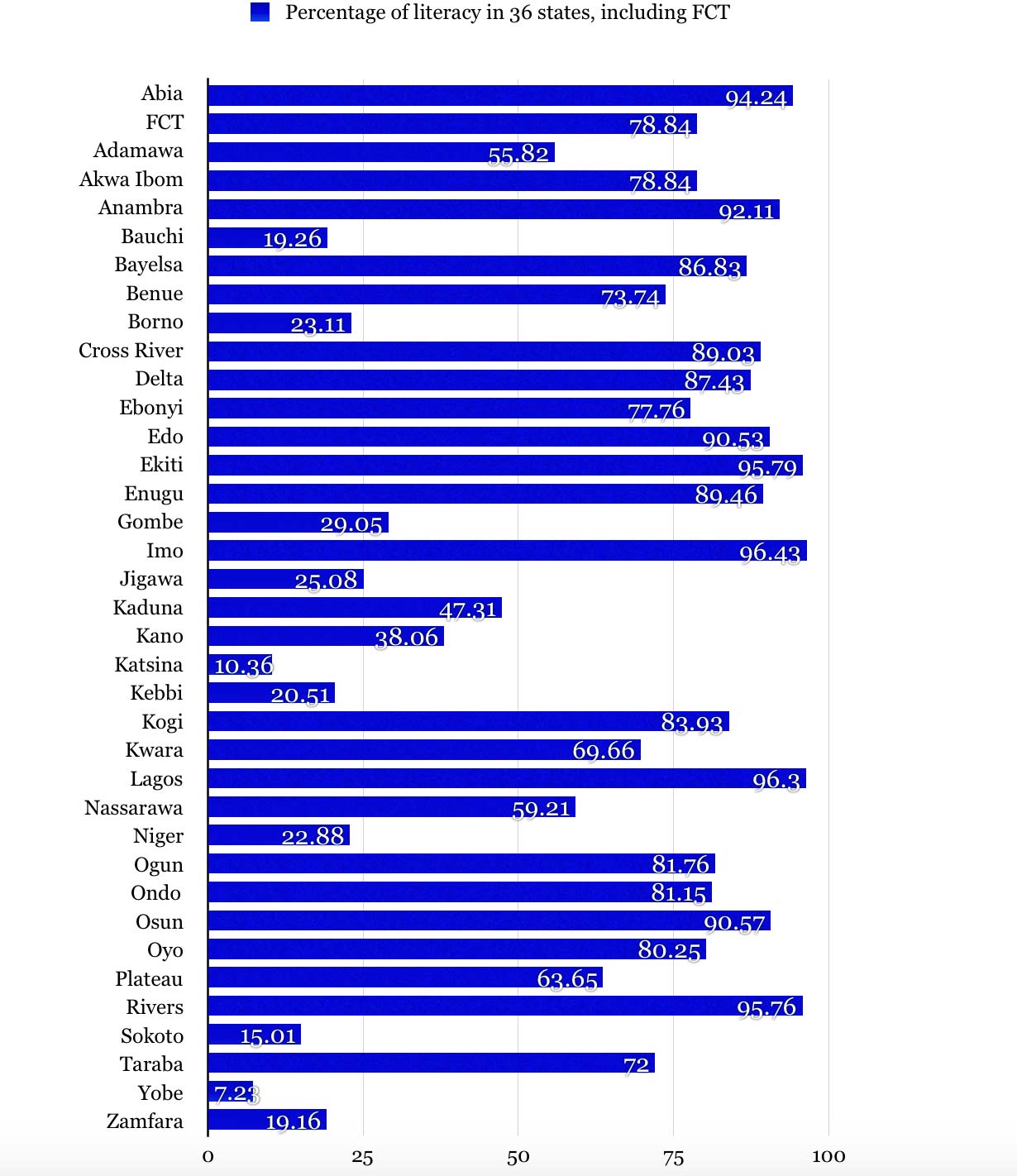
Then, once you get to secondary school, you will get a copy of Things Fall Apart from a local merchant. Abia State has 94% literacy rate (NBS data); Ovim, my village has 99% because everyone goes to school. I am not sure if anything motivated me going to secondary school than knowing the concluding part of the story in Day By Day Book 6 where they told the half story of Nwonye’s mother and Ikemefuna.

That said, I cannot lay hands on any book as being influential but I must note that the Richest Man in Babylon and Acres of Diamonds were impactful along with life cases of the African Writers Series. While in the university, I enjoyed Chinua Achebe’s Okike – an African journal of new writing – and proceedings of Ahiajoku lectures. An in-law had packed many editions of Okike, and I indulged on them. Achebe’s Okike was impactful as I began university education reading the series.

More so,  I did read “A Woman’s Temptation” and “Beyond Pardon” by Bertha M. Clay; I consider those among great foreign novels that I enjoyed in secondary school.

Of course, you can read mine – Africa’s Sankofa Innovation (paperback and kindle or online).

How to Make Business IT Work for your Company

1

IT can sometimes feel like a necessary evil if you’re a decision maker in a business. Without it, you’d have no business at all – but the structure that it provides comes at significant cost.

The truth is, IT is far more than just a necessary evil – but, if you want to make the most from tech, you need to be willing to explore what it can do for you – rather than how you can best work around the limitations that your spend or experience put on your company.

You don’t have to break the bank to make IT work for you, instead, you’ve just got to explore the options and find the smartest way of working…

Hosted telephones

Generally speaking, the human part of any IT process is the most insecure and inefficient; if you needed proof, a recent study discovered that around 59% of downtime is due to human factors. Compared to computers, we’re slow, and we make random errors – which is exactly why hosted telephone systems stand to revolutionise the efficiency that we get from both our computers and our staff.

A hosted telephone system does away with the need for copper line technology and exchanges – instead using your IT network and Voice over IP tech. As a result, phones become input devices with which your customers can directly interact with your systems – safely of course.

If you spend a lot of time on the phone to your customers, hosted phone services may be able to automate a lot of what you do. From automated card payment services that your customers can connect with without the need to engage staff, to auto-transcription services that will prevent the need for your team to spend a long time inputting details into a CRM system – hosted phones don’t just unlock time for your staff, they’re often far cheaper than there less-sophisticated predecessors.

SD WAN

Software-Defined Wide Area Networking (SD WAN for short) is a revolutionary new kind of network component that lets you control your business IT infrastructure without necessarily having to get an engineer to roll their sleeves up.

Traditionally, devices require some element of engineer contact to operate – whether that’s adjusting physical switches or simply reorganising connections and layout. An SD WAN system is a software overlay that operates as an additional layer to your infrastructure, providing a portal that allows you to adjust settings on virtually every networked device from anywhere you can get online access.

The result? Well, since you or your IT team can virtually get ‘hands on’ with your network from anywhere in the world, SD WAN opens up a world of possibility relating to your location, your network locations, and bringing additional services online quickly – expanding the possibilities of what’s feasible for your company.

Effective collaboration

A recent study into collaboration discovered something surprising. While we might expect to work better as part of a team if we’re in an office with those other people, the opposite is actually true – we are found to work more effectively as part of a team if we’re collaborating remotely – with individuals becoming up to 10% more effective.

This is an exciting revelation – since it increases staff working flexibility – especially for businesses who offer work from home positions or work with freelancers and contractors making up part of their workforce.

Fortunately, there’s a world of online collaboration tools that make this kind of teamwork possible. From project management tools to instant messenger features, cloud-computing makes the world a much smaller place for any team you manage.

Software as a Service

In day gone by, we had to rely on licences to unlock the software we wanted to use. Microsoft was a big player in the licence game – if you bought workstations for your team, you then had to follow that up with thousands of dollars of ‘keys’ – passwords that would allow you to unlock and access the Office suite.

Cloud computing has changed this model – and, thanks to these changes, even small businesses can get onboard with high-quality software for a fraction of the overall price. How does it work? Well, the model is called Software as a Service (SaaS) – and it’s essentially a subscription service that gives you access to the programs you want as long as you’re paying the monthly rate.

The real beauty of SaaS is the agility it gives your IT set up. Expanding and taking on more people? Simply add them as users to the package you currently pay for. If money’s tight and you need to scale things back a little – just cut down on the amount of users you have – or reduce the access they have to certain applications.

There’s no right way or wrong way to handle SaaS – instead, you get the flexibility to make the applications that underpin your team’s day work for your business.

Customer relationship management

Many companies don’t use a CRM (customer relationship management) tool – but, when you understand quite how powerful they can be, it seems extremely short-sighted that anyone would pass up the opportunities they make possible.

A CRM system essentially logs every opportunity your business sees – then tracks them through their full lifecycle. Typically, a CRM will have ways of interrogating your customer data, so you’ll be able to find opportunities that are yet to convert, existing customers, previous customers, customers who are in the process of ordering – and so forth. You can adapt a good CRM to meet your needs and reflect your workflows perfectly – so they become second nature for you team to use.

In 2018, a study into the use of CRM systems showed that they can improve conversions rates by up to 300%; reduce lead generation costs by almost 25%, and up customer satisfaction levels by over 75%. Since an online CRM system is likely to cost you just a few dollars per user each month, it could represent the kind of ROI that you simply will not see anywhere else.

Starting My Own Bigi Cola to Challenge Coca Cola in Nigeria

6

By  

How do you overtake Toyota company in car production?  Well, I’ll tell you a secret. Go to the moon or some planet, make some dollars of dollars and buy it off. Good idea right?

Let me tell you another big secret: You might not be able to overtake Toyota company if you start your own car company in the world.

So this post isn’t about how you want to overtake Toyota company. It is about how you can start a car company today and still make your profits, and who knows you could still overtake Toyota in sales.

Maybe not a car company, maybe just a company! However, I will use this Toyota company and starting a car company as an example throughout. You are free to add: How do you build Bigi Cola to overtake Coca Cola?

So, here I am, I have some billions of dollars and I have investors (in summary some money) and I want to start a car company (any business).

The first thing to look out for is a place where there are no cars, they need cars and they can afford cars. That’s my target market. Funny enough, no such place exists.

What does this mean? It means it’s almost impossible to start a business without having a competitor already in position or already thinking about the same thing. For every idea that pops us in your head, other people have it or have done it or doing it.

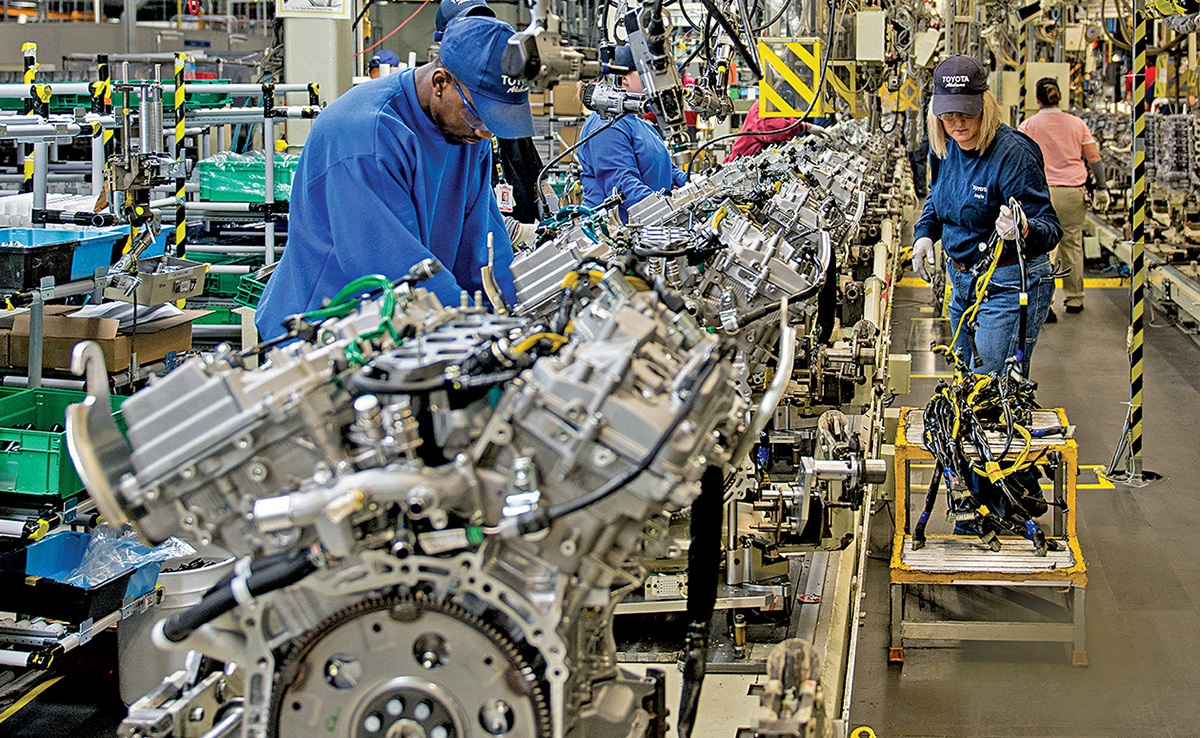
A factory

So, let’s agree you have competitors and you are quite aware of them. Chances are you will have issues scaling in that business and when I mean business, I’m not talking about all these un-scalable businesses.

I mean real businesses which are very few in Africa though. So how do you enter into the heart of your target audience who already belong to someone else?

It’s either you build your own audience and focus on a small niche, or compete with the existing audience just like Bigi Cola is doing to Coca Cola. Can Bigi Cola get its own niche? Tough; they need to compete with the likes of Coke and Pepsi which is like going to the lion’s den with a broom.

Do they have a chance? Yes! They need to apply what I call Design Thinking.

Now, let’s go back to the car company and assume it’s the same scenario. Hey! Young billionaire, that you have billions doesn’t mean you do as you like, in such a fixed situation as this is; you need to consult someone like me, make someone like me the CEO, and let me handle the rest.

So how do I apply Design Thinking to manufacture our own cars? At least the company needs to succeed so I’d keep being paid one million dollars salary monthly.

I need to consider some very important factors before even employing workers:

  1. I need to know everything about the customers of Toyota: Why do they buy Toyota? Is it for speed or for comfort? Is it for its affordability or its portability? I will draw a long list of reasons why they buy. Mind you, I’m the CEO; someone will be employed to do such. I’m just speaking generally.
  2. I need to know everything about Toyota cars. Like I have noted, a lot of our businesses are not scalable. They can only bring enough money to feed the family and after a few years buy a small car, and send the kids to private schools. Largely, we do not plan to build industrial empires here in Africa. The Igbos do though! I really need to know what Toyota stand for, what philosophy they have been selling and how they have been selling it.
  3. Lastly, I really need to pay all attention to design, distribution, cost etc. This is the most crucial part. What’s the distance covered per hour at top speed? What’s the fuel consumption at that same speed?

Mind you, I have already begun designing the model of the car for my billionaire boss based on all these.

The CEO Desk – Design Thinking

As the CEO of this new company, I will not want to ruin the company; I mean who wants to go home broke and suffering? My wife and kids will complain.

I need to do everything possible to make sure we succeed in the market place despite the fact that Toyota has been in market for a long time and it seems like everyone is using it. So back to the application of Design Thinking!

I earlier talked about studying Toyota brand and knowing their philosophy, selling point, and brand style. Now pay attention: If everyone in the country bought cars for convenience sake and not because of ostentation, I need to know as the CEO. You will see me yelling at Peter for not yet sending the research details about Toyota to my drop box.

Me: Peter, what the hell is wrong with you, are you crazy, it’s been three months and you haven’t sent the research document to me. Do you want to lose your job?

Well, I wouldn’t say this out loudly, I will treat my employees right but common, we are talking about selling good cars and not releasing an irrelevant product in the market. We just need to succeed.

Now here’s the point, as the CEO, I must be very vast, I must know trends, I must know the past, present and the future of the automobile world. I must know the past, present and the future of the road networks, I must know about the economy.

I must be damn vast in knowledge and insights. Personally, I am; I spend hours daily learning. If there’s any 23-year old going Nigerian who spends hours learning most, it’s me. I spend hours on LinkedIn reading papers on the African economists, I watch videos on the future of Africa, future of tech, read publications, journals, read books (read about 30 already this year), discuss with entrepreneurs across Africa.

Now back to my role as the CEO. Remember, there are other car brands like Mercedes, Ford, BMW, and a host of others. I will study them but in order to make things easier for you to read, I need to just consider Toyota.

First thing first, if I really pay attention to trends as a smart thinker, I will be able to play some safe risks. Actually in business there are no safe moves. The only safe moves are for those who want to remain at the bottom, and make some few pennies.

However, if you want to dominate, then you need to take different types of risks. There are calculated risks, safe risks and stupid risks. This post isn’t about defining risks!

I actually gave the attributes of a CEO so as to understand why it’s important to not just be a rash thinker as a CEO or even an entrepreneur. You cannot afford to think irrationally.

Let’s take a look at the Tesla car by Elon Musk. Elon is a great guy, and I think he’s my most respected tech guy, and if you understand tech well, you’d know that he is a god of tech. He is super-intelligent.

Tesla people wanted to start their market and they were starting in the U.S. where other great car companies were and making crazy sales.  Why not travel to another country with lesser brands and see if you will dominate? Elon took what I call a safe risk and here it is.

If I want to sell cars, I definitely needed a better selling point. And if there’s any place to win, it should be in all areas. I will talk better on that later but let’s see how Elon got a market for himself.

Prior to Tesla cars, all other cars used fuel and emitted carbon monoxide. Why don’t we build electric cars instead that will not emit green house gases. I mean let’s help save the world from green house effect. The world will soon end, let’s not end it now.

That’s the selling point!! Clean energy product!!!

Firstly, that’s very ridiculous. How do you plan to figure this out? I believe this must have been the internal argument. However, externally, it was a good selling point.

Nobody has used that selling point before! Finally, a loop hole in the automobile industry!

Does this automatically guarantee the success of Tesla cars? No! There are still so many things to consider: Cost, Distribution, Layout, Price, and Strength.

Let’s take it one at a time. Let’s talk about distribution.

Toyota has already a strong distribution system which means Tesla cars cannot combat head on with them. They needed to start with a small niche and the sport-racing industry was one. Why not make clean energy cars for the sport industry?

They still have a chance there than for the normal road transport. The biggest mistake you will ever make is to combat head on in distribution with a bigger competitor. How much do you have?

Except if you have a lot of money. Look at Bigi Cola making huge sales in Nigeria. They cannot win Coca Cola in distribution, they will fail. But they can win in other things. Bigi Cola cannot be a beverage sector player since Coca Cola owns that’s space. Bigi Cola has to invent something new.

Lacasera keeps selling because they have found a niche (fast drink for traveling). If they want to combat Coca Cola drink as best beverage brand, then, they need more power, strength, money, etc.

All Together

There are many things that go into building companies. Most of those elements do not change whether you want to build a new Toyota or Bigi Cola. The key is understanding the mission and purpose, and then executing them. I want to wish you good luck if you want to begin that journey. Simply, spend time to master the mechanics of business. And you can start your own Bigi Cola to take up Coca Cola in Nigeria. Begin with a clear differentiation and niche – and thrive.