DD
MM
YYYY

PAGES

DD
MM
YYYY

spot_img

PAGES

Home Blog Page 6867

Nigeria’s Need-Economy, Indomie Fans and Building Your Noodle Business

5
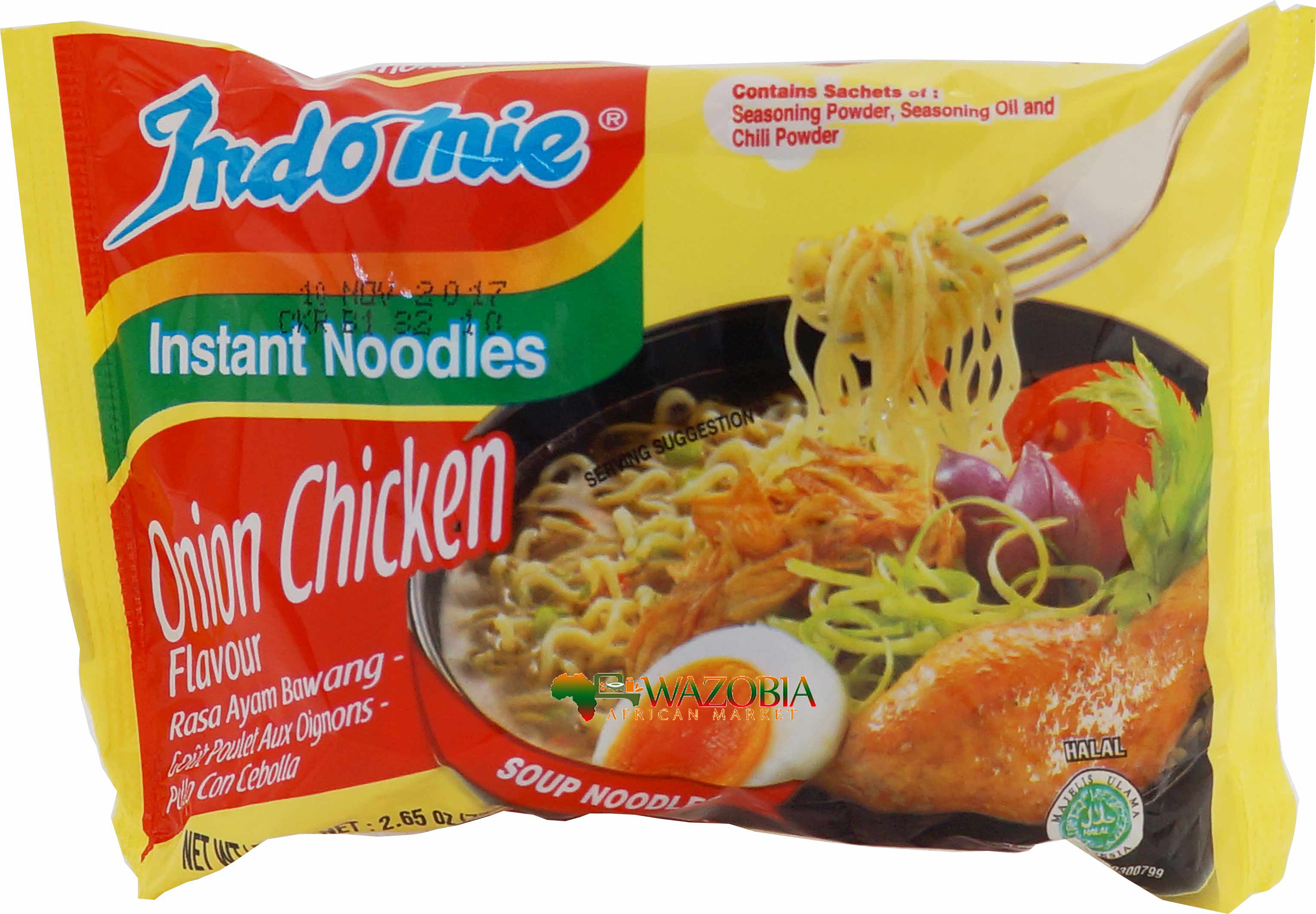
Indomie Noodle

By Ajayi Joel

If you are an entrepreneur and you have a product that people need to achieve a crucial goal in life, count yourself lucky. Let’s throw a big party over it. When I mean products people need, I’m talking about basic necessities just like food, clothes, transportation and shelter.

Let me break it down a little further, there are basic things we all need to survive. Guys, I’m talking Nigeria here. So let’s be practical, we have rice, beans, garri, vegetables, fish, etc. Let’s divert to clothes as well; if you sell cheap clothes especially for the ladies (no offense), you have a life’s necessity product for Nigeria.
You have a market and I rejoice with you my dear friends. I have not said you’ll automatically succeed as an entrepreneur, or as a business person doing this, but let’s say you’d still have some little cash daily to buy your family meals.

The reason is simple: people need them to stay alive or exist. They need food to stay alive; they need clothes to stay sane. You have no problem to worry about.

Okay, let me not confuse you, you have a few problems to worry about which could be fluctuating prices of products, competitors, and losses. But you can never have the problem of lack of customers; only if you have a huge supermarket on a mountain.

If it’s where humans live, then customers will come to you anyway and anytime. All you need to do to stay alive as a business is to learn how to solve your little problems, and they are not so huge if you learn from a professional. Problems like competitors, getting attention and all. I can teach you if you want. But let’s leave that light issue. All I’m saying is that you have a reason to wake up every day to go to work!
You are in the Need-Economy

The need-economy is a nice place to build a business, when even if you are not a core professional, you can still survive. A country like Nigeria thrives on need-economy. Our purchasing power is so weak that we can only afford what we need. I didn’t study economics but I will analyze some things right here.

A need is a want that has 3 out of 5-level of urgency and necessity in survival.

What I simply mean is this: everything in this world is a want. But when it gets to 3 out of 5 in the level of urgency for human survival, then it’s a need.

This may actually bore you if you are not into business, and this might be long but it will help your business. So let’s proceed…

A house is a want; it becomes a need when

  1. It saves people from harsh weather.
  2. It is also affordable that they can also cater for feeding.
  3. They have a lifetime assurance of it.

Now, let’s look at the flip side of the coin.

A 50 million naira house is not a need. It is a want because it doesn’t meet all three basic requirements for survival by implicitly over-exceeding it! Don’t forget we are confined to Nigeria and this applies to other countries but I am talking specifically about Nigeria since about 80 percentage of Nigerians are living below expensive lifestyles daily (hey, poverty line).

Under this construct, we have the following”

  • A 10,000 naira plate of food isn’t a need. It is a want. [$1 = N350 naira]
  • A 1,000 naira jeans and 500 naira shirt are all needs. A 2,000 naira skirt is a need.
  • A 50,000 naira suit is a want; a 12,000 naira shoe is a want.

Remember we are talking based on the 80 percent of average people in Nigeria. For the remaining 20 percent, you can still extract a need but you require a new game strategy. Yes, you have to cover the 3 essential things for living.

  • It solves a problem
  • It is affordable
  • It has an assurance.

Making Products for the Rich in Society

Now, let’s move to people who are building products that are wants to a percentage of Nigerians. Let’s say you sell 50,000 naira shoes, you sell 10 million naira houses, etc.

The first question to consider is if you will make money focusing on the remaining 20 percent. If you will, well there are still so many problems that you will face among which is Building a Tribe.

Your attention must be focused on them alone. But what if there are so many competitors as well? Do you guys begin to fight over small portions of that market? Is the idea scalable that way? That’s a very huge problem. If you are in this shoe: the need-economy can rock.

Indomie built a business and turned many consumers to customers, and then to fans. That is how it is; you get many believers in the need-economy. To build your own noodle business, you must master the three elements (solves problem, it’s affordable and offers assurance) and find how noodle can play a role in your strategy.

The Want-Economy

This is a battle ground and those who really understand business can play the cards well here. Present an ace or go home paying your debts. I have a very golden secret I will share. It is on – How to move your product from being a want to a need!

In explaining this, I will simply refer you to an excellent piece on Tekedia. What you need is to create a perception demand where magically the want becomes a need in your life. Once you accomplish that, you can get people to spend money on that product because you have percepted something that would have been want into a need. Now, you can relax, and the revenue will be increasing.

All Together

Business is a big game: you must have capacities to play your positions well to find success. If you want to play in the need-economy league, you need to know how to score goals in the minds of the customers. If you prefer the want-economy, it is critical you rewire the mindset to have a shift through perception. When you do those, excellently, you can attack any market including a noodle market, and improve your odds of becoming a category-king. Yes, I mean, winning in the sector.

inDriver Goes After Uber and Taxify with Centuries-Old Price Haggling

2

inDriver is eating into Uber and Bolt (formerly Taxify) domains when it comes to ride-hailing in Africa: “inDriver is an international Internet aggregator of passenger, freight and intercity transportation services”. This Russian startup is demonstrating that business model innovation can win markets and territories at scale. That model is simply the centuries-old price haggling which continues to be used in African commerce and markets. Yes, inDriver allows the rider to name his or her price for the driver to accept or counter-offer until they reach equilibrium.

But over the past seven months, inDriver, a five-year old Russian ride-hailing company, has gone from launching in its first African city to operating in four. Since launching in Arusha, Tanzania last November, inDriver has expanded to Nairobi, Johannesburg and Cape Town. The company says it aims to enter cities in Nigeria, Kenya, Ghana, Zimbabwe, Uganda and Namibia next

Unlike the established model for ride-hailing startups which typically includes estimated fares and automatic pairing between drivers and riders, inDriver is differentiating itself with the element of increased choice. It allows riders propose fares for their trips (based on pre-approved rates) after which nearby drivers who receive notice of the ride request can accept the rate or respond with counter-offers. A prospective rider then picks a preferred driver based on their agreed fare or driver rating.

Let’s Rise As A Nation By Design, NIGERIA

0

Across the nation, from the lagoons of Lagos to the mangroves of Calabar, from the plateau of Jos to the rainforest of Owerri, from the plains of Sokoto to the grasslands of Yobe, let’s BELIEVE that we can rise as a Nation. This is Sunday, the day of resurrection; may Nigeria rise to provide hope and opportunity to those desperately yearning for same!

Let’s Design this Nation. My old talk to students of Brown University and Rhode Island School of Design below…

Five Negotiation Tips You Should Know Before Sealing a Deal

0
BHL Solution is a leader in consulting services

By BHL Solutions

If you’re familiar with the game of monopoly, you will certainly know the subtle art of negotiation. Growing up, when we played monopoly, we would try to outdo each other; we would “sweet talk”  the other to sell out their landed property. The rule of the game was simple: stay rich or leave the game. In so many ways, this applies to the real world. Whether the size of your business is small or big, negotiations are crucial. Negotiations allow you the opportunity  to obtain what you want for your company and establish a rapport with other companies.

Here are some tips for a successful negotiation

Have a goal: The goal before a monopoly game is to stay rich. So what are the goals you want to achieve before starting a negotiation conversation? Do you want to negotiate a lower price on a warehouse stock or establish a trade agreement? Define what you are hoping to achieve before entering a negotiation conversation. Visualize the ideal situation of what you want. Then, communicate these goals to your negotiating partner.

Research about the other negotiating partner: Conduct a research on the other negotiation partner’s company, and find out strategies used in a past negotiation with them. Each side has their values, know these values and utilize them. Knowing what the other side of the bargaining table offers, gives you an insight of what a future deal with them looks like; either you are going to lose money or resources. Do a background check to be well leveled.

Contain your cost:  Before negotiating, have minimum acceptable offers. Do not accept offers below your initial cost. Spend what you have to, but then don’t spend more than you should. Have a budget and stick to it. For instance, don’t negotiate to sell retail good for a wholesale price, knowing that it affects your bottom line. In investing, the term for it is ‘stop loss.’  Let it be an offer that you are willing to comfortably accept not pressured to take even when it affects your profit.

When negotiating, money is not all that matters: Money is not everything. This probably sounds cliché. We often forget they are other things more important than money which can lead to long time relationships. Figure out what you and your negotiating partner value, and consider how it would be beneficial to you in the long run. You should ask for these things or offer what they want. Let’s say you are negotiating for a job, negotiate for more benefits; a higher spending budget, a certain colleague to be transferred to your team, higher commission, performance-based bonus, vacation days, or compensation package. Same goes for a deal, ask what is beneficial to your company in the long run, or puts lesser cost burden of the project on your side.

Consider Terms: Determine how long the agreement would last, in the event, the negotiation deal is sealed. The length of the agreement should be part of the negotiation process. Consider how long the results of the deal will manifest. And if it is a new company or small company which can’t carry you on for too long, then consider a short term agreement, with the prospect to turn it into a long time agreement if the conditions work out well for both sides.


Note: You don’t have to be experienced to negotiate. When you don’t have employees who are skillful in this area, a great option is to outsource it to agencies like BHL Solutions.

Can we have a dance in 2019? #afcon2019 [Video]

0

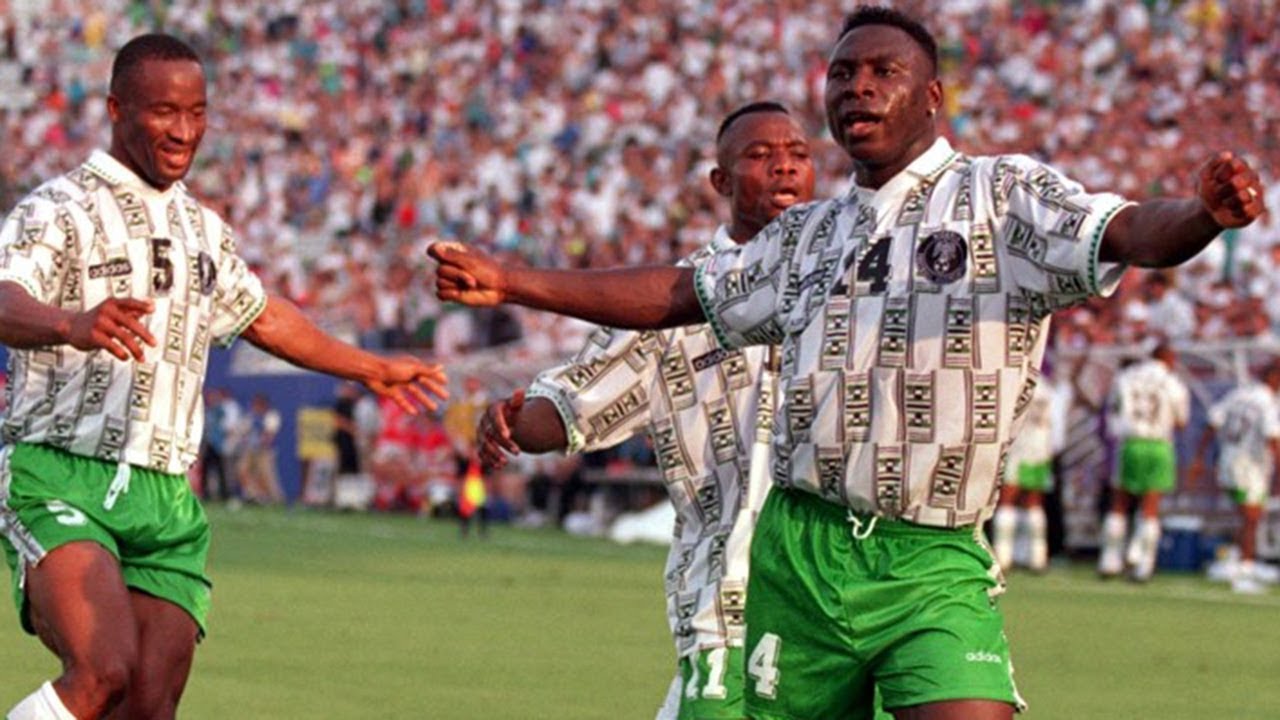
Can we have a dance in 2019? #afcon2019 . Photo from the archives of the greatest generation of Nigeria football class! In short, the greatest African team of all time minus Cameroon’s Roger Miller and Omam Biyik. Victor Ikpeba came from the bench. Jay Jay Okocha came from the bench. Emmanuel Amunike came from the bench. Others were better. The king – Rasheed Yekini – ruled his kingdom of goals.

Monaco was surprised that Ikpeba “The Prince of Monaco” was not good for Nigeria 11. Yes, one of French league finest midfielders was on bench.

Can we get a dance?