DD
MM
YYYY

PAGES

DD
MM
YYYY

spot_img

PAGES

Home Blog Page 6868

Hard Truth on Nigerians’ Migration: My Reactions to Your Comments

1

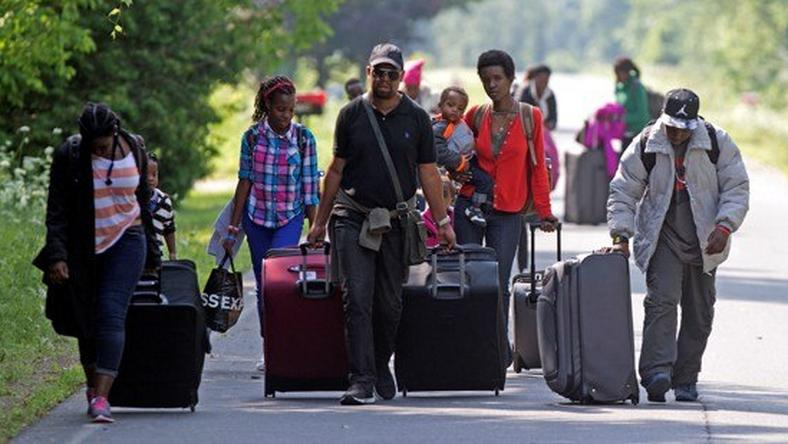
Since my article on Nigerians and migration was published on this platform, I have been receiving a lot of mixed reactions through the comment section of the LinkedIn profile of the publisher, Professor Ndubuisi Ekekwe, and direct messages. The first School of Reactions believes that Global South and North media cover issues leading to migration differently. People in the second School of Reactions are yet to come to the terms that media select, frame and publish stories that support their primary objectives –revenue or shaping policies towards a specific direction to suit certain actors.

We are all guilty

Our guiltiness lies in the fact that both the global south and north media cannot always be negative if our actions and inactions are not negatives. From the citizens to the political leaders and business owners, we are all guilty of the conspiracy on the migration be it in Nigeria, other countries placed within ‘developing’, ‘third world countries’ among other terms being used to describe ‘wealthy’ countries from ‘poor’ ones. Media is the voice of the society. But, the media could be voiceless on prioritising negative happenings when the people in the society talk less about them.

Content Production: Between Global South and North Media

Media cannot produce any product without mingling with the people in the society directly or indirectly. This is one of the reasons; theories guide their processes and outputs such as news we consume daily. These theories were not developed by spirits. They are the work of human beings. Surprisingly, most, if not all the theories that guide media and the professionals were not from the Global South. To the best of my knowledge, I have not seen any scholar from Africa or Nigeria, giant of Africa, who has made a theory of the media operations. Here, Global North still dominates us.

Another striking thing from the whole scenario is that media practitioners and owners in the Global North know how to select some of the assumptions and propositions of the theories to align with their local and national governments’ policies on critical issues, especially international ones. Again, this is one of the reasons; we may not hear or read that a high percent of people living in the Global North are having serious socioeconomic problems.

Below I reproduce some of the comments according to the School of Reactions;

The First School of Reactions

“…our media are just interested in selling themselves to attract more revenue instead of looking at the damage it can cause to the national reputation and integrity of the country. How the media report international scenarios of Nigerians leaving the country to countries like USA, Canada should not be negative. It is in our hands to build our country.” A.A.

“…there are countless ways to craft or shape a narrative, including those who will tell you that they just want to travel and make money, or to further their education, and by the time they achieve that, a new narrative emerges. When your compatriots who travel out and then start talking about how ‘nothing is working’ in Nigeria, you do not need to be reminded that their alliances have shifted.” F.O.

“If the story is not as bad as the media paint it, why would Nigeria, let that brilliant chap who made a perfect score (5.0) in UNILAG be whisked away by Stanford University as a Knight Hennessey Scholar? If the country is not as bad as the media paint it, why wasn’t the reward of such excellence by our own government competitive enough to keep the young man here? What more should the young man give to become valuable in our eyes or was it the media, too, that blinded our eyes to not recognise our own? The system isn’t just there, simple.” O.E.

 The Second School of Reactions

“If Nigerians are moving out to study because of the existing poor educational system, how is that the fault of the media? Are the Chinese also leaving China to study in North America and Europe because of foreign media reports? One of the notable thoughts around the media is its gatekeeper responsibility, expecting the media to do otherwise is simply looking for an ocean in the desert. Can you do a gap analysis to fault foreign mass media’s report on Nigeria? J.A.

“Strongly disagree with the insinuations and allusion of the article.” H.U.

From both schools, I have learned that people from the Global South sometimes hate data, especially when they (data) are not suiting the expected goals. For the two schools, most importantly the second school, reading this article titled migrants and the media: what shapes the narratives on immigration in different countries before publishing the research I and other colleagues did will stimulate the discourse on the conspiracy further.
Africa’s Single Currency Project As Facebook Unveils Libra – Revisiting My African Union Papers

3

As a consultant to the African Union Commission, I wrote this paper on its currency integration. In my doctoral program on banking and finance, I did works on economic integration and currency with layers of technology. That remains my appreciation to defunct Diamond Bank which funded that program.

This push for a single currency stands for an Africa of unity, integration and strength. However, there is a huge possibility of potential failure of a single currency if implemented haphazardly with enormous consequences to not only Africa’s global image but also for individual countries’ economies and, ultimately, the people.

A single African currency has many promises in terms of boosting trade across the continent and benefits for all member states through synergy and symbiosis. It has the capacity to increase economic cooperation among member AU nations and stimulate faster development efforts across the continent (Debrun, 2002). Many African nations are still oriented in trade toward former colonizers in Europe than immediate neighbors and across African capitals; there is an understanding that currency unification could be a key catalyst to transforming the continent.

The major challenge is how the continent could develop the plan to have this unified monetary union considering the opsided economic structures among the nations, which can affect response strategy during economic crises. This is fundamental as if major regional economic powers stay out of this unification for fear of being net losers, it could have adverse effects to realizing the continental goal.

Sure, I am all electrons now. But I cannot forget this paper which was extremely critical during the debate. I made my point that before Africa could have a single currency, it must first have prior convergence of the regional economies. Typically, currency union results to loss of sovereignty (for union members) of using traditional tools to drive monetary policies since a supranational bank formed from the union becomes the collective driver. If the integration fails, the result would be massive welfare losses to citizens. (This is one reason I am asking for caution on ACFTA; we need to get the “rule of origin” right).

With Facebook Libra, the game plan has changed as I had noted. Meanwhile, I am working on a Harvard Business Review piece on how Libra will affect Africa’s economy.

Nigeria’s National Assembly Must Debate Facebook Libra Cryptocurrency

0

There is a great debate on the sovereignty of monetary policies of nations like Nigeria when Facebook Libra cryptocurrency takes off. Libra could become a supranational bank, removing the capacities of central banks to use many tools to drive policies. The implication is massive as welfare losses can skyrocket in some economies.


Libra is not a Bitcoin competitor; it is Naira, Cedi, Rand, etc competitor. Nigeria’s National Assembly should debate Libra urgently for a plan of action. During this debate, they must get the Central Bank of Nigeria to explain the implications and offer a plan for action. Nigeria needs action plan because Facebook has just unveiled a native payment protocol for the Internet which was created with none. The Web 3.0 is largely here.

  • Web 1.0: Web 1.0 consisted of static documents and read-only data (static web pages)

  • Web 2.0: Web 2.0 introduced multimedia content, interactive web applications, and participatory social media, all of these mediated by two-dimensional screens.

  • Web 3.0: But over the next 2 to 5 years, the convergence of 5G, artificial intelligence, VR/AR, and a trillion-sensor economy will enable us to both map our physical world into virtual space and superimpose a digital data layer onto our physical environments. Suddenly, all our information will be manipulated, stored, understood and experienced in spatial ways.  That is the Web 3.0 which is also called spatial web.

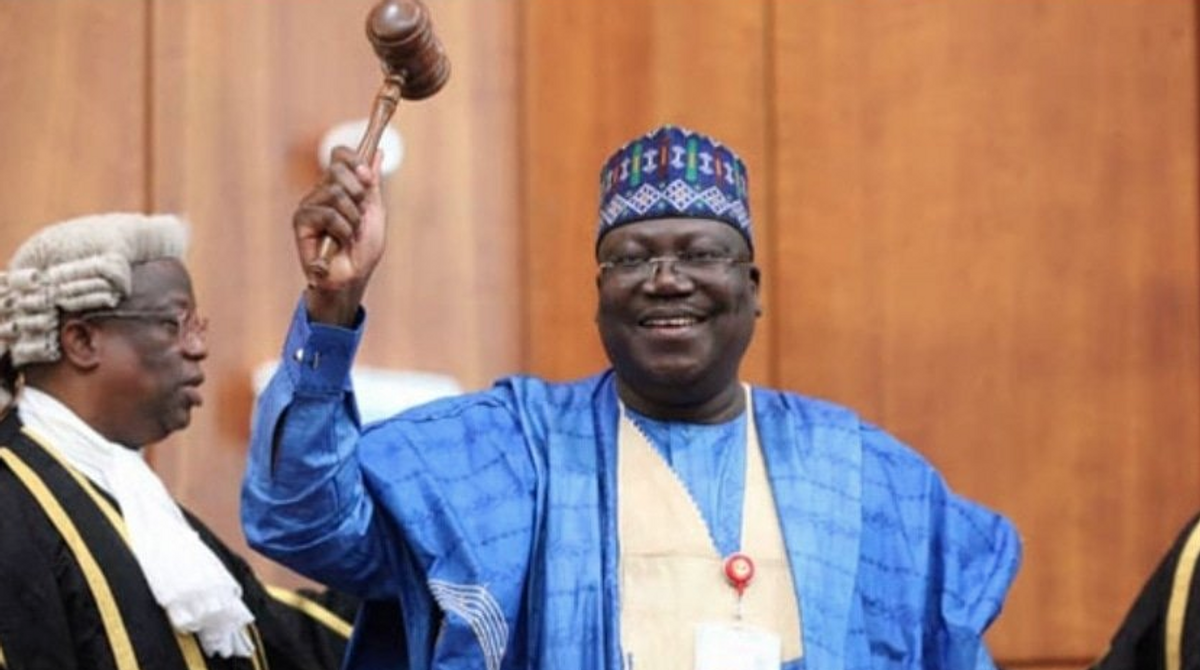
Senate President Ahmed Lawan, here is a moment. Under Libra, the Central Bank of Nigeria may lose capacity to use many tools to manage inflation, and broad monetary policy. At least, have a conversation to get a line of action. I understand that doing anything may be hard since Facebook is a planet of itself; I had noted that point in a Harvard Business Review article.

These companies aggregate the data and scale massively with near-zero marginal cost, which is all made possible by the internet. Because they are ahead with an enormous number of users, they keep getting better, and the data they accumulate drives improvements in their algorithms. Changing this order is largely hopeless, and that creates a competitive stasis for local entrepreneurs.

Read the main piece by clicking below.

How Facebook Libra Cryptocurrency Will Affect Nigerian Naira, Inflation, Banking

How Facebook Libra Cryptocurrency Will Affect Nigerian Naira, Inflation, Banking

0
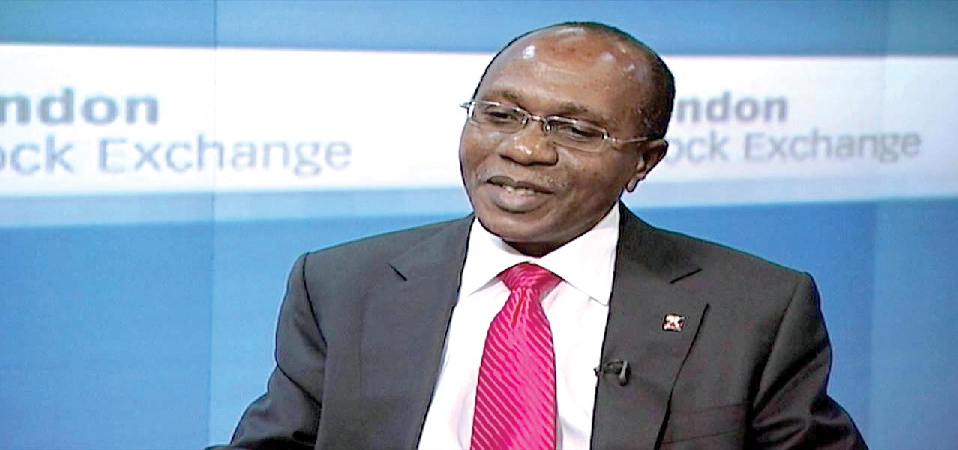
CBN Governor

Today, I gave a speech on Africa’s fintech and banking sector outlook with full consideration of the unveiling of Facebook Libra cryptocurrency. In my practice, our best product is being retained by firms so that CEOs or Chairmen can call in and ask for perspectives. But this was different: a fintech investor with focus on Africa wanted a quick insight.

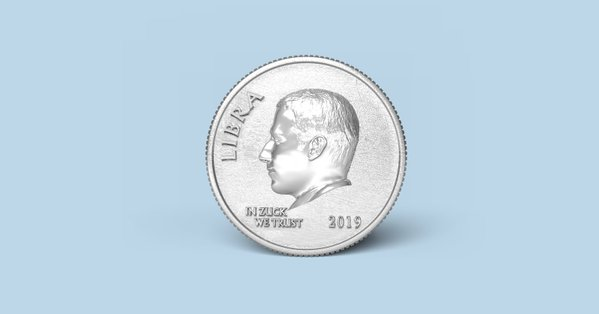
Simply, I want everyone to note that Libra will partly provide paths for citizens to “avoid” the inflationary paralysis on the Nigerian naira. Libra is not fully decentralized – it is largely a digital currency which is tied to major currencies under the supervision and regulation of the founding members like Visa and Stripe. You have to go through those gatekeepers to participate in Libra. That is it – its functionality is different from the fully decentralized Bitcoin even though the blockchain engine is typical. (Read Libra Whitepaper here; great vision, generally.)

And when in, within the Libra ecosystem, interesting things can happen:

  1. Cushion Against Inflation: Consider this scenario: I have been paid N1 million (in Nigerian naira) which I want to keep in my Naira bank account, but also worried that after a year, I will lose about 10% of value to inflation. With Libra, I can move that money into Libra which theoretically will not experience inflationary pull. With all frictions for Forex and currency conversion gone, this movement will be seamless. To avoid getting that inflated equivalent of N1m after a year, I will ask Facebook to pay me via my domiciliary dollar account in Nigeria trusting that my US dollars has marginal inflation. If I convert that USD back to Nigeria Naira, I would get better value compared leaving the money in Nigeria Naira bank account. (Assume Naira-US Dollar exchange rate is constant for a year). Using this, one can technically avoid inflation provided there is no significant friction in moving the money from bank account to Libra and out. Of course, Libra can say you must use the same bank account that you funded Libra wallet to get your local fiat currency. If that happens, this fails. But expect people to open Libra-anchored eShops so that they can pay themselves to have the capacities to move that Libra money to another bank account to overcome that inflation. Libra payment attracts no fees on users.
  2. Cushion Against Currency Exchange Rate Deterioration: Then consider a situation where a currency keeps losing value like Naira. The simplest and safest strategy is to move your Naira into Libra so that if Naira drops from N310 to $1 to $N320 per $1, your Libra will ensure you do not lose value due to Naira currency deterioration. In that case, Libra will become a store for value.

Sure – Facebook and members of Libra are not concerned on monetary policies but their technology will wrestle significant powers from central banks as citizens will make best decisions for themselves. Why keep Naira to lose value when a mere Facebook account can “protect” it against loss of value.

Facebook Libra Will Redesign Africaâ??s Commerce With Unified Payment

The Calibra Digital Wallet

Libra comes with a digital wallet called Calibra. That will anchor many things like financial services and possible credit services in future: ‘“t’s an anomaly that the Internet has no protocol for money,” David Marcus [Libra Project lead] tells Fortune, adding that Project Libra will also provide more competition in financial services, along with increasing access to capital.’ Global exchanges, from Coinformant Australia to Binance to Coinbase, will have to key into this redesign.

In addition, the company also announced a new digital wallet called Calibra, which will be operated by Facebook as a separate subsidiary and provide users with a way to store and spend Libra. The digital wallet, which won’t be available to the public for months, will display the value of users’ Libra in their local currency and provide a design similar to popular digital wallet Venmo for transferring money.

[…]

In addition, members will also maintain the supply of Libra in response to demand—meaning they will issue new Libra as needed, and destroy the digital currency when people redeem them….In order to avoid the notorious volatility of cryptocurrencies like Bitcoin, each unit of Libra will be backed one-to-one in a basket consisting of dollars, pounds, euros, and Swiss francs.

It is key to note that while Libra Foundation can create new Libras, it does not seem like new ones will devalue already existing ones due to the pegging imposed with the basket of currencies.

At the moment, only South Africa’s Naspers is in the Libra founding membership from Africa. Facebook expects 100 founding members (it has only 27 now), each pays $10 million.

All Together

It is important to understand that Libra will be the fiat currency of many fiat currencies just like central bank is the banks’ bank.

As this redesign happens, some of the most powerful institutions will be the institutions Libra will approve to connect Naira into Libra via the founding team. I will hope they will allow many and not just few. If not, there will be a dislocation. Yes, if they choose a Bank A, everyone will leave other banks for Bank A in order to have access into Libra.

My assumption is that Libra will have near-zero marginal cost with distribution and transaction costs largely insignificant. Yes, those costs will not drive the decisions of users in the practical way paying bank fees affect you when sending money from Nigeria to New York.

From all angles, Libra will become an operating system for global payment and will trigger major redesigns in global commerce. This is a global coin.

Ultimately it’s consumers who will determine whether Facebook’s grand gambit will succeed or fail, with the most important test of Libra likely being convenience. If the currency’s use becomes widespread and proves to be more useful than payment options like credit cards, debit cards, Venmo and Bitcoin, it could transform large parts of the tech and finance industries.

Then again, it could also inspire others—notably Apple or Amazon—to launch cryptocurrency networks of their own.

The Danger of Nigeria’s Indigenization

0

By Aaron Akpu Philip 

Hi Friends,

This is a conversation between a Lecturer and a 1st class graduate who completed top of his class in one of Nigeria’s state universities.

Paul: Sir, I made a first class but I have been told I cannot be retained as a Graduate Assistant

Lecturer: (Shocked): But why? You are the best graduating student in the faculty, why can’t you be employed?

Paul: The reason was I am not from this state.

Lecturer (infuriated and shocked): Just that?

Paul: Yes sir.

Paul toiled hard for several years to graduate top of his class but unfortunately cannot be employed by the University he graduated from. His crime is that he is not an indigene of the state. Many have suffered far more devastating deprivations and missed opportunities because they are not indigenes, despite being Nigerians. This painful deprivation occurs in the Education, Health, Agricultural and all sectors in our developing countries. A few scenarios come to mind:

  1. When applying for a job, you must provide a State/Local Government Indigene form. Many have argued that because of our multi-ethnic and multi-religious country, this will allow for equitable distribution of jobs and resources. Although this bears some truth, it has also led to the employment of many unqualified people who deeply hurt the Nigerian state. Unarguably, this has led to the employment of many fake/ghost teachers, doctors, etc. If I live in Abia state, why can’t I apply for a job in the Abia State Civil Service Commission without being faced with the question of “Are you an indigene?”. Sadly, you find Nigerians from a particular state having several Local Government Area (LGA) indigene forms in the bid to be safe when there is a call for employment. Imagine the tragedy- that as an indigene of Nasarawa state, I need to have multiple LGA indigene forms as a strategy of wanting to be employed.
  2. As a student in the University, my friends who were from other states had to pay twice the amount of tuition fee. Their crime? “Non-Indigenes”!!! The burning question remains “Why do non-indigenes have to pay more than the supposed indigenes?” Are they taught by different lecturers? Or do they use different school facilities?

Many might argue that we need indigenization for various reasons but in all my years of existing and rising the academic and professional cadre, I have observed indigenization to be highly problematic. It drives most of the cultural clashes that have laced our country.

I argue that although indigenisation may hold some benefits, I have witnessed more divisions and chaos from it. I join many to posit that:

“State of Origin (Indigenization) Be Replaced with State of Residence or State of Birth”.

Until we change this narrative, many of the problems that plague us will remain.

My name is Aaron Akpu Philip and I am NIGERIAN.