In 2016, when an Artificial Intelligence (AI) developed by Google’s DeepMind, beat the European Champion of the Chinese game Go, it set an unprecedented record that paved the way for a future where humans will have to compete for activities with machines. Although this future has been anticipated by many, it’s coming faster than we think.
In April 2019, Dr. Camilo Ortiz tweeted an amazing video of his Tesla car driving him all the way home from work, with no input from him: ” Changing lanes, merging on and off 3 highways, in rush-hour, in the rain, in New York City!” He ended the Tweet with one word, “Stunned.”
Im amazed. My car drove me practically all the way home, with no input from me, changing lanes, merging on and off of 3 highways, in rush hour, in the rain, in NYC traffic!!! Stunned. @Tesla @elonmusk pic.twitter.com/HC7mql5wYl
— Dr. Camilo Ortiz (@DrCamiloOrtiz) April 6, 2019
It was something that many people could have dismissed from their imagination in the 90s. But that’s just a segment of the proliferating Artificial Intelligence in North America. Other sectors like the medical field have long been enjoying their bits before now. And that’s what we see in Europe and Asia as well. Mouth gaping tech breakthroughs of machines acting in the stead of humans!
In May 2019, in Tijiani China, Titan, a human sized robot set the atmosphere of the third World Intelligence Congress (WIC) on fire when it started singing the theme song of “The Transformers” moving its lips and dancing to the beats. Awed jaws dropped in amazement, not only for the wonderment, but also for how far Asia has leapfrogged in AI science with China taking the lead: from smart homes to smart manufacturing, to autonomous vehicles, to health checks to education, and city management. And that begs the question: Where is Africa in the age of AI?
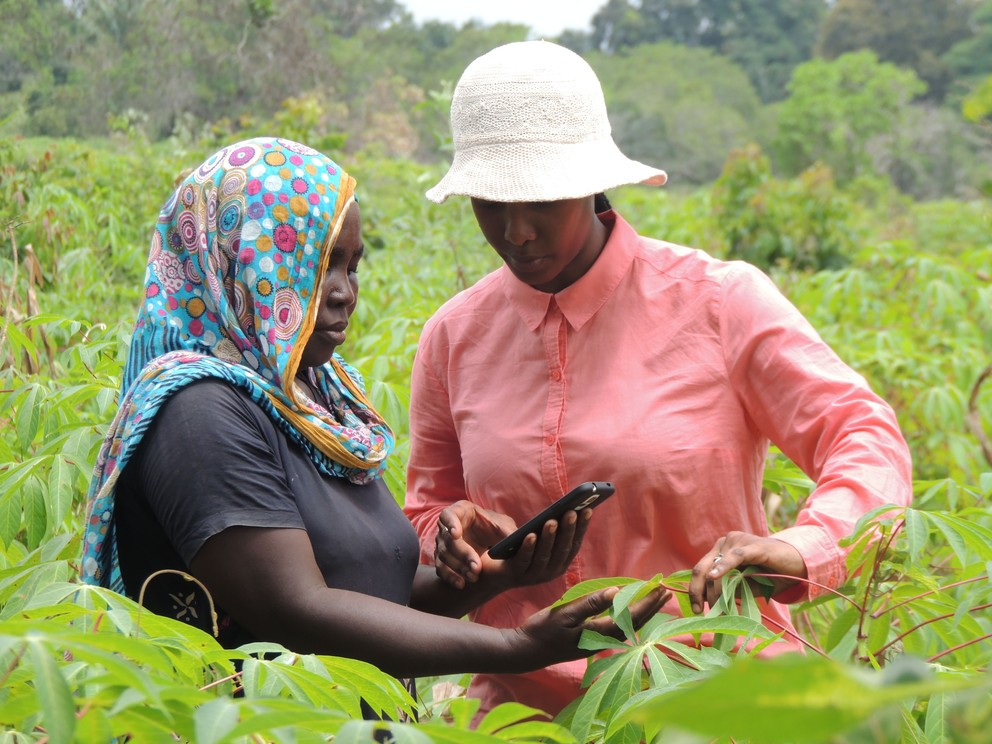
When Google opened the first AI lab center in Africa, in April, headed by the Senegalese Mustapha Cisse, it was widely welcomed as the impact of such development could be felt by the case of a Tanzanian farmer who diagnosed the problem with her cassava farm by merely hovering her phone over wilting cassava plant. The TensorFlow app, a Google AI machine, detected the problem and proffered solutions. That means, Africa needs Artificial Intelligence, not only to solve her farm problems, but also to curtail deficiencies in tech, healthcare and efficient labor. But the fact that Google, an American company, has to set up the first AI lab center in Africa, in 2019, tells so much about the continent’s lackluster perception of tech developments and how she could benefit from it: a problem that could be traced to poor education foundations, mental laziness and zero visionary leadership.
Most African schools don’t have the capacity of technological mental development. Talk of STEM and ICT, there are few basic schools in Africa that could present such a syllabus. We are talking about a continent with one of the most vibrant median age (19) in the world. So a youngster with a knack for tech will most likely lose his chances to develop, due to lack of tech supportive functional system. But that’s not all.
Some Africans have found a way to scale through the fundamental basic education hurdles and develop themselves in the science and technology world. For instance, Mustapha Cisse, taught himself AI, and developed to the point of being the head of the only AI center in Africa. There are few others like him in Nigeria, South Africa, Rwanda etc. people who need fund for research, coaching and AI development. Alas, Africa has learned nothing from their counterparts, like the EU that dishes out grants for research and tech development. The FP7 is one of those, with many branches like the ERA. One of its projects, the PROSYD, was funded with 2.1 million Euro, in a bid to find a solution to errors in silicon chips. The research was a success.
In 2008, when Elon Musk, proposed the expensive shift from building sports cars to more family-friendly Sedans, thereby widening its all electric vehicles project. The US government responded with $465 million loan, through the Advanced Technology Vehicle Manufacturing (ATVM) loan program. And so came the birth of Tesla’s self-driving cars. In Africa, apart from countries like Mauritius that is fostering tech ideas through the Mauritius Africa FinTech Hub, (MAFH) and Rwanda that is showing innovative spirit recently, others are more or less interested. So tech startups in Africa have to be privately funded, although companies like Google have been increasing their tech grants for Africa recently, the insouciant attitude of African governments is posing another problem.
One of the worries expressed by Mustapha Cisse is the inability of African nations to forge ties with their local AI expertise. Just like countries like China and France did and it resulted in huge success. So there is a problem of acceptance by African nations. Maybe due to lack of vision, or the fear that AI may do more harm than good. Considering the fact that it could, among other things, generate fake videos, thereby discredit the long held “seeing is believing” notion. This concern cannot be dismissed, and at the same time, shouldn’t be a threat when legislation is vibrant and swift. Other continents know that such dangers exist yet they embrace and nurture AI, seeking ways to contain ‘the would be’ excesses.
The following recommendations have been made as a way to curtail AI concerns:
Being ahead of technological developments and encouraging uptake by public and private sectors.
Prepare for socio-economic changes brought about by AI.
Ensure an appropriate ethical and legal framework.
But these aren’t before our mindset is prepared to accept the technological and scientific realities that are leaving prints of obsolescence on African soil. Cisse gave a practical advice on how to achieve this. He said: “we need to develop a coordinated plan to encourage AI education across the continent, incentivize entrepreneurship in the AI sector, and facilitate collaboration between AI researchers and experts in healthcare, agriculture and other sciences. We need a pan-African strategy, a set of ambitious goals for AI education, research, development and industrialization.”
The disregard of this advice will only mean one thing: that Africa will still be crawling when the rest of the world is flying with AI.
First, I am not a licensed counselor. But because I get many emails from people on their children, I think I can share my insights nonetheless. Do not be fixated on sending your under-12-year old kids to computer coding camps. I see in Lagos they have even coding classes for 6-year old kids. People, you are not helping that child.
Coding is a “language” mechanism and it has basic alphabets. Those alphabets are numbers (yes, mathematics). It is highly unlikely a child will thrive on real coding without affinity to numbers no matter how many coding classes you have exposed him or her. It is like teaching a child English writing when you have not explained what A, B, C … and Z stand for.
During this long vacation, take the child where they teach algebra (I know few exists now! That is unfortunate) over those coding classes. Time for coding camp will come when he/she can read very well and have basic mathematics from the12th birthday. Sure, the child can be introduced to coding but not making it everything.
There is a great difference between copying html codes online to make a website, and having mathematical capacities to solve huge business frictions with software solutions. Yes, mathematics is what solves extremely complex business issues, and if you cannot break those business frictions into mathematical elements, no coding can save you. And most of the people breaking the frictions understand what made them better – it was the number, not really the coding [sure, coding was not mainstream when they grew up].
Koduri and Shahi represent a new kind of Silicon Valley parent. Instead of tricking out their homes with all the latest technology, many of today’s parents working or living in the tech world are limiting — and sometimes outright banning — how much screen time their kids get.
The approach stems from parents seeing firsthand, either through their job, or simply by living in the Bay Area — a region home to the most valuable tech companies on Earth — how much time and effort goes into making digital technology irresistible.
In my business, 80% of the main software works are mathematics while the 20% is just the coding translation. You bring in series, calculus, trigonometry, etc to solve the problem before you can translate into codes. There is no way on this earth a kid without good foundation of mathematics will thrive in coding, on game changing ideas, unless you want him/her to be making static website which does not even require taking a class!
Sure – it could be that you want the camp as a form of socialization as well as a mechanism to expose the kid to technology. Go for it – it can inspire. (I take mine to Dave and Buster to expose the amazing emerging technologies coming in Augmented Reality, Virtual Reality, and more. But I did make sure to explain that mathematics and love of it is how those things come. That mathematics is physics, chemistry and the hard sciences.) But make sure the program curricula capture that the kid must still like mathematics. It is not a binary – if you want great success on coding, you must like numbers. I am yet to see any software successful entrepreneur (real entrepreneur, not the one making static websites) who is not a mathematical mind.
Try it on your child, you will be surprised that solving mathematics or learning sciences becomes like gaming. How do I battle to reach level 2? The battle here is mastering algebra or understanding photosynthesis, and because they have used the same motivation typical in video games, the child will not even know he or she is learning addition and multiplication.
A kid wins on mathematics lessons on early development, not coding classes. It is not a binary: you cannot hate mathematics and code world-changing solutions. The algebra of today is the Facebook of tomorrow.
Life is all about learning and understanding the fundamentals, no amount of manoeuvring can save you from this reality; you will always fall short, when the moment of truth arrives.
Just like Philosophy, it does not matter whether you are science or art inclined, if you fail to appreciate it, your understanding of human dynamics and things around you will always be shallow.
Mathematics doesn’t sound or look fanciful enough, but coding sounds cute, so you will see people congregating to learn coding, but when real life issues that require complex understanding of relationships and combination of natural phenomena are presented to them, they now want you to explain everything, before they can do the coding!
To be a great writer, you first learn the alphabets, then the meaning and use of words, then syntax rules; by the time you now fuse everything with your natural ability to draw relationships and combine things intelligently, the output is a masterpiece.
Yes, the castles will be up there in the sky, but without first putting the foundations on the ground, they cannot be seen up there. You cannot run away from your shadow, so it’s better to embrace mathematics, in order to make sense of your coding adventures.
COMMENT #2
Prof Ndubuisi Ekekwe this is absolutely true and it is a pity that our priorities are gradually changing. In fact parents are rushing the development of their kids.
This is what I tell parents of my student, ” I will not teach your ward Robotics in a month but I will teach them what they need to know to build their Robot in my absent”. What they need to know loops around sciences.
LET ME SHARE MY EXPERIENCE. During my robotics workshop, I asked the student a simple mathematics question – “what is the angle on a straight line?” They found it difficult to answer until I dissected a circle into halves. At another time, I asked Newton’s first law of Motion. I ended up answering my question myself. Parents these are some of the basic knowledge for building a Robots aside Coding.
FINAL WORD 1. Teachers please place more emphasis on important Issue.
2. To anyone reading this, do you know that to kickstart a career in Artificial Intelligence, the knowledge of mathematics is a prerequisite ? Don’t be deceived.
3. Parent let your children grow mentally as they ought to because if they are cheated by not knowing mathematics and other science subjects, they might struggle with the emergence of new technology.
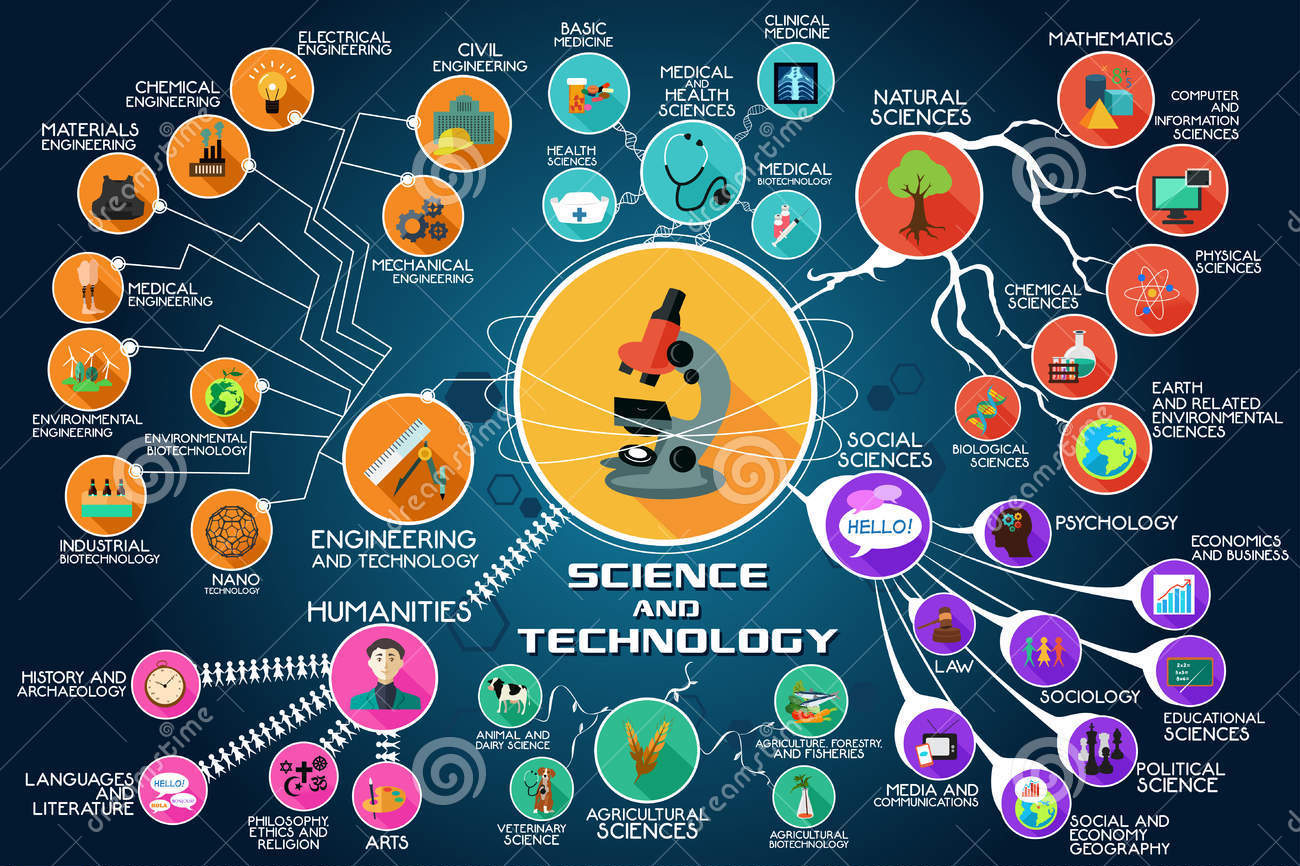
The world has changed! Its metamorphosis is due to the advancements in Science and Technology which has shaped the way we view the world through various dimensions. These dimensions would be too enormous to mention but the impact can be seen and felt by us all!
Though, It is still being debated if it has done more harm than good in various discuss but not withstanding, we have all seen and come to the conclusion that Science and Technology is still the future of the world from what lies before us and ahead of us; we have all come to the realization that from the good knowledge of it, lies a further developed, healthier and sustainable society.
Africa can really flow along the waters of new-age globalization – Science and Technology being taking over by the world. This can only be achieved if we start getting our younger generation scientifically empowered. There are, according to statistics, a lot of Africans especially the younger generation whom we look up to as the future leaders of tomorrow, are far adrift when it comes to possessing Scientific and Information Communication Technology (ICT) Knowledge – the two major catalysts that can champion the cause of development for developing countries.
Source: Dreamstime.com
Human capital development is a collective responsibility and the government, so far (taking Nigeria as a case-study), has done a commendable job in trying to elevate the youths in its various empowerment programmes. Yet, how far it has gone in hitting the nail on the head, or how far it has done at hitting the main target and engaging the younger ones remain debatable? For those that go to schools, especially public schools, how well are they being taught science related subjects to their understanding? How far has the government Intellectual Capacity Initiatives gone in resolving the brain-drain when it comes to Scientific Knowledge among our youths? And how far is government carrying the younger generation along in the quest to key into sustainable environmental pledges made so far?
One would also wish to ask the fundamental question, how do we combat Climate Change and make our environment sustainable when a bulk of the generation we hope will build on the works, efforts and goals designed for a safer and greener society by the government and stakeholders, don’t even have an idea of what climate change, greenhouse gases and even Global Warming are all about? So many a youth who are even in science classes cannot expertly explain what an Atom, Cell or radiation mean even though they have the definitions within them. These are just some of the narratives and this is as a result of the poor knowledge of Science and Technology that befalls our younger generation in Nigeria and virtually, whole of Africa, today. It is an irony to say that most of the latest gadgets being used by them daily are offshoots of Science and Technology – but do they know the mechanisms behind their functionality?
Africa can become a formidable hub in Science and Technology but as it stands, there is a huge brain-drain in science and technology amongst our youths – they have clung so much to the art world and totally ignoring the former; there are huge consequences if we don’t act fast! We need to start bringing initiatives to bridge these gaps so Africa possesses the intellectual skills and tools needed. Science is taking over…we shouldn’t be left out; we should also get fully involved – bring new technologies for social and economic development, bring in hybrid solutions for the adaptation and mitigation of Global Warming and the likes. Time is slipping out of our hands; it’s time we wake up!
Sanya Bakare is a Content Creator, Copywriter and Educationist.
Cyber-attacks and data breaches have become a thing of concern to every individual and organization. With more data being stored online, the threat that cybercriminals pose has never been greater. We wake up every day reading newspaper headlines or seeing and hearing news about data breaches around the world. It can happen to anyone and any type of organization. These data breaches are occurring at an increasingly alarming rate with most victims blissfully ignorant about a breach. It is safe to conclude that these data breaches cut across every sector and;
The Nigerian legal sector is also not left out from the prying eyes of cybercriminals. Nigerian law firms are a vital component of Nigerian businesses, having in their control and possession personal, business-sensitive, and commercially-sensitive information[1]. This makes them an attractive target for cybercriminals. As lawyers, we should not be misled into believing that data breaches are only a problem for others and not law firms. More dangerous is the belief that your law firm is well protected from any forms of data breaches, or that it is a concern for the top tier law firms in Nigeria. Small law firms and solo lawyers are also becoming constantly vulnerable to all forms of data breaches. Lawyers operating small law practices and solo lawyers should not take comfort in the illusion that they are too small to be victims of cyber-attacks. It-won’t-happen-to-me mentality is overly misguided. If DLA Piper[2], a multinational firm that has touted its expertise in cybersecurity, was hit by NonPetya, and as reported by ABA Journal[3] of 6 major law firms that have been hit by cyber-attacks, you or your law firm could be next.
Why Are Law Firms The New Target by Cyber-Criminals?
It is no news that the vast majority of Nigerian lawyers and law firms are not highly sophisticated in the use of technology. This makes it easy for hackers to have unauthorized access to clients’ sensitive information. The following reasons are why law firms have now become a suitable target and treasure trove for hackers:
Nearly every industry in the country, large and small, works or has something to do with a law firm in at least one capacity or the other. In doing so, Nigerian law firms have in their custody and control, sensitive and valuable client information. Essentially, today’s law firms have become a vault of sensitive and valuable information such as:
Client’s intellectual property such as trade secret, copyright, and information regarding prospective business deals;
Litigation tactics and strategy;
Clients confidential business information;
Attorney-client privileged legally privileged information and communications;
Clients personally identifiable information (PII);
Clients financial details and account access information;
Clients personal health information;
Corporate financial reports;
Proprietary software code;
Emails and other communications with clients.
All the above-listed information are incredibly valuable on the black market.
Secondly, Nigerian law firms and its lawyers are ill-prepared as far as facing these evolving threats are concerned. Despite growing cyber-security threats, majority of law firms and lawyers still lack the proper and requisite awareness, knowledge, policies, procedures, and precautions to establish a proper individual or organizational cyber hygiene and defense.
Why Is Cyber Security So Important And Why Should Lawyers And Law Firms Be Concerned?
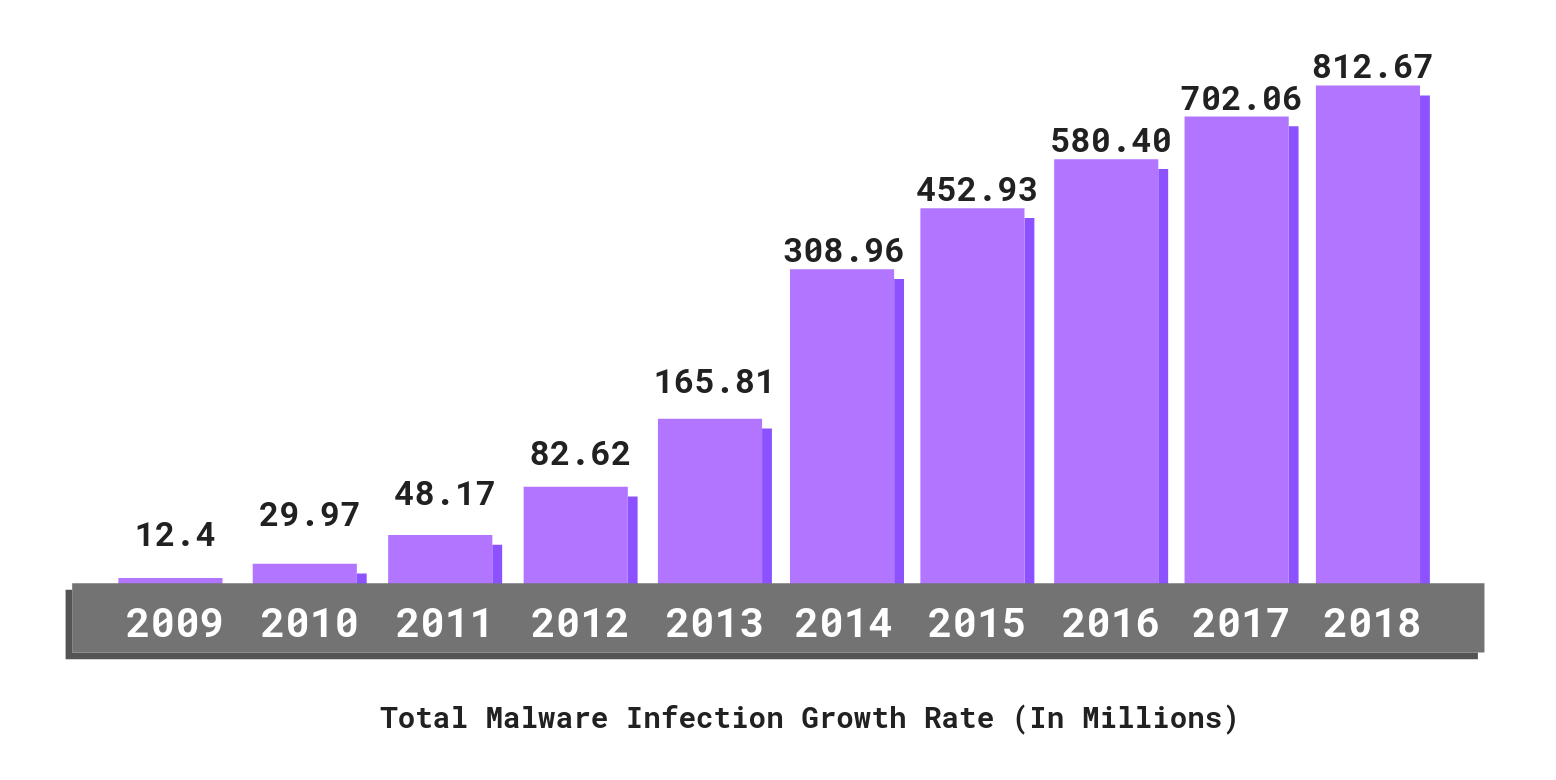
According to a 2016 report by Symantec, the threat of email hacking and malware is growing. Between 2014 and 2015, the amount of new malware grew from 317 million to 431 million. Crypto-ransomware attacks rose from 269,000 to 362,000. Web attacks also grew in the same timeframe from 493,000 per day to 1.1 million per day[4].
Therefore, the need for Nigerian law firms to pay more attention tocybersecurity is perhaps even more vital than boosting profitability and expanding clientele. With law firms in control and possession of clients’ sensitive and valuable information, they have an arduous task to keep this information safe and secured from unauthorized access. The law firm’s cyber hygiene forms part of the big picture when it comes to providing excellent, efficient service and peace of mind to clients. The risk of a cyber-attack should not be ignored because there are no expectations that these trends will reverse anytime soon[5]. Law firms will need to take proactive action to ensure that they protect their clients and themselves as much as possible by taking a number of steps to protect their firms and their client database.
If law firms are not able to safeguard the sensitive and valuable information in their custody, control, and possession, they are definitely leaving their doors open for possible cyber-attacks. And when this happens, not only will the firm’s reputation be damaged, such law firm or lawyer could also face legal action for not putting in place reasonable steps to prevent the data breach resulting in clients’ sensitive and valuable data ending up in wrong hands. The core of the law firm’s business, integrity and livelihood will also be negatively impacted; downtime and billable hours will be lost; files will be lost, destroyed, or otherwise corrupted; a huge amount of money will be spent on recovering from the data breach; and the lawyer might lose his or her practice license.
What Kind Of Threats Do Law Firms Face?
Having shown above why Nigerian law firms are targets of cybercriminals, it is vital that the legal community have a good idea about the various shapes the cybersecurity risks and threats they face take. These cybersecurity risks and threats are constantly evolving in the global landscape. However the shape they take, any of these threats can cause irreparable damage to a law firm. Some of the threats faced by law firms are:
Malware or malicious software: this is hostile or intrusive software which is employed by cyber-criminals to compromise information systems and network. These include viruses, worms, Trojan horse, ransomware, spyware, adware, scareware, and other variants of malicious software programs. Malware can take the form of executable code, script, active content and other variations of software.
Ransomware: This type of malware locks down a computer and threatens to shut down the system unless a ransom is paid. This is what infected the DLA Piper system in June 2017[6].
Virus: A virus uses code written with the express intention of replicating itself. A virus attempts to spread from one electronic device to another electronic device by attaching itself to a host program[7].
Worms: Worm uses self-propagating malicious code that can automatically distribute itself from one computer to another through network connections[8].
Trojan horse: This is a program that appears useful or harmless but which contains hidden code designed to exploit or damage the system on which it runs. This type of malware discretely creates backdoors which allow hackers or other malware to enter your system[9].
Spyware: Just as the name suggests, spyware is software used to spy on you. This includes recording your keystrokes to learn your passwords or secretly using your camera to watch you[10].
Phishing attacks: This is an attempt to obtain sensitive information or gain unauthorized access to client information or funds by masquerading as a trustworthy source via email[11].
Website Vulnerabilities: Cybercriminals continue to take advantage of vulnerabilities in legitimate websites to infect users, as website administrators fail to secure their websites. Nearly 75 percent of all legitimate websites have unpatched vulnerabilities[12].
Apart from the targeted and specialized attack mentioned above, data breach of law firm’s confidential and sensitive information can also occur through other means such as:
Insider threat in the form of a negligent or rouge staff or lawyer who has complete access to the firm’s sensitive and valuable information. Such rogue might sell, misuse or manhandle vital information obtained through this means;
External threats: This could be in form of competitors or a foreign government interested in disrupting the law firm’s legal operations, steal information or who are interested in espionage;
Loss of an unsecured laptop or mobile device;
Visiting questionable websites;
Communications over unsecured and public networks;
Downloading unapproved software onto the law firm’s computer network or onto a mobile device, which connects to a repository of confidential firm information;
Security issues with third-party providers and cloud system;
Hacktivists;
Weak or non-existent password management being weak or non-existent;
Use of outdated technology e.g. Microsoft Windows XP.
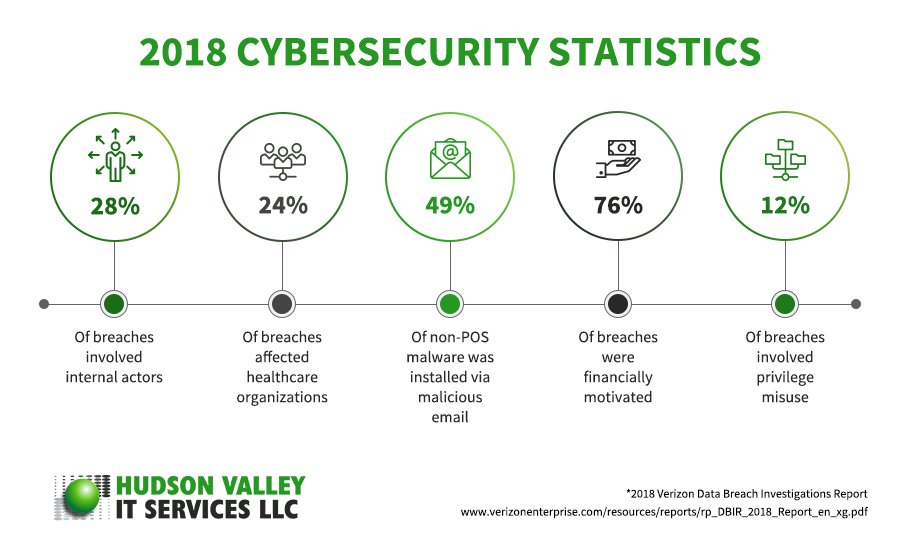
Source: Purplesec Cyber Security
Ethical and Legal Responsibilities of Lawyers and Law Firms
Lawyers can no longer afford to treat cybersecurity as an afterthought. Rather than being reactive, lawyers must learn to be more proactive. Lawyers have an ethical and professional obligation to ensure that clients’ sensitive and valuable information is protected from unauthorized access. The ethical standards for ensuring lawyers and law firms protect and maintain the confidentiality of clients’ information is provided in Rule 14(1) and 19(1) & (4) of the Rules of Professional Conduct for lawyers 2007[13]. It states as follows:
19(1) Except as provided under sub-rule (3) of this rule, all oral or written communications made by a client to his lawyer in the normal course of professional employment are privileged.
(4) A lawyer shall exercise reasonable care to prevent his employees’ associates and other services are utilized by him from disclosing or using confidences or secret of a client, but a lawyer may reveal the information allowed by sub-rule (3) through his employee.
A close reading of the above rules shows that a lawyer must act competently in protecting the confidentiality of its client’s information. A lawyer’s duties of confidentiality and competence require that he or she takes appropriate steps in ensuring that the use of technology in conjunction with client’s representation is not subject to undue risk or unauthorized disclosure.
What Can Law Firms Do?
Now that we are aware that cyber-criminals are interested in having access to the sensitive and valuable data law firms have in its possession and control, we have the responsibility of combating these threats. Here are a few recommended mechanisms or actions which can be applied in combating cyber breaches in Nigerian law firms:
Employer and Employee Awareness Training, and Education: Cybersecurity awareness training and education help firms’ staff and lawyers understand the ethical and professional responsibilities they have in ensuring data protection .They also need to be vigilant. These training should be conducted periodically and should be mandatory for all. (It is within the human nature the possibility of reverting to our old habits that may put data security at risk.)
Keeping Hardware and Software up to Date: It is important to update the law firm’s hardware and ensure it is running on the latest software version. These updates keep your network and devices safe from vulnerabilities.
Encryption of all portable devices and valuable data: They say encryption is the acid test of seriousness. All hardware’s including mobile devices that contain the firm’s valuable data and confidential information should be encrypted every time data is transmitted into or outside of the firm. Ensure that lawyers and other staff do not leave workstations unattended without locking devices.
Password Policy and Multi-factor authentication: Firms should have a policy that mandates lawyers and other staff to change passwords after a certain period of time and such password should contain characterizations consisting of numbers, letters, and special characters. Lawyers and other staff should be encouraged to use at least a two-factor authentication password.
Law firms must have up-to-date and clearly written cybersecurity policies and backup procedure: Law Firm’s cybersecurity policies should be documented, accessible, understood and implemented by all employees. These policies should be reviewed, maintained and revised on a periodic basis and should be updated at least once annually to stay on top of technology best practices. Some of these policies are incidence response, computer use, password policies, backup procedures etc.
Conduct regular vulnerability and penetration testing: This determines the weakness in the law firm’s application (software), infrastructure (hardware) and people in order to ensure that the controls and policies put in place are implemented and effective. Vulnerability and penetration testing should be done on an annual basis.
Have a cyber-liability insurance policy: A proper cybersecurity insurance policy should include reimbursement for investigation, business loss, required notification and credit monitoring to clients, legal expenses, cost of extortion and cover human error where possible.
Hiring the right cybersecurity personnel: Have a cybersecurity personnel who will be responsible for establishing and maintaining a comprehensive cybersecurity vision and strategy for your law firm. They will to enforce policy formulation and implementation. This will help ensure that valuable assets, technologies, and systems are adequately protected.
Conclusion
Cyber threats are real and growing daily. For many Nigerian lawyers, law firms (big or small), or solo lawyers, cyber security is always an afterthought, and that’s if we even have the time to bother about it. More attention is often directed at bringing in new clients and skyrocketing the law firm’s profits margin. We still practice the habit of carrying sensitive information on insecure thumb drives, using unencrypted email on the insecure electronic device, and using unsecured shared networks. This is highly risky and not consistent with the legal client’s best interest.
It’s about time we started implementing sound cybersecurity and data security practices as an essential business practice for our law firms. Protecting client data as well as the firm’s data should be top priority for law firms of all sizes. Whether we like it or not, we are by the very nature of our profession bestowed with the obligation of safeguarding our clients’ sensitive and valuable information. Law firms that chose to ignore this and fail to devote the right attention and proper resources to protect their client’s sensitive and valuable information do so at their own peril.
Yes, we were not trained in school to be aware of the evolving cybersecurity threats and data breaches. Notwithstanding, there is a growing need for us to educate ourselves about these evolving threats. This can only be achieved by making a conscious effort to educate ourselves and our colleagues about these threats and data breaches, and how we can stay protected. We also need to create plans in case of emergencies since there is no way we can perform legal tasks or provide legal services without using one form of technology or another or at least collecting personal data from their clients.
The bottom line is, if cyber-attacks are not going anywhere anytime soon—and they are not—then lawyers and law firms should also do away with their notoriously outdated, conservative and slow-to-change behavior towards cybersecurity hygiene. Beef up your security measures. Educate your employees, and communicate and report any cyber-attacks that do occur to keep everyone aware. It is legal.
REFERENCES
1. Mosadoluwa Adeleke, Cyber Security: A Critical Need for Law Firms in a Digital Age. https://www.lawyard.ng/cyber-security-a-critical-need-for-law-firms-in-a-digital-age-by-mosadoluwa-adeleke/ Retrieved February 9, 2019.
2. DLA Piper statement on malware attack. https://www.dlapiper.com/de/germany/news/2017/06/dla-piper malware-statement. Retrieved February 9, 2019.
3. Julie Sobowale, 6 Major Law Firm Hack in Recent Hinstroy. www.abajournal.com/magazine/article/law_firm_hacking_historyReterive 10, 2019
4. Symantec Internet Security Threat Report Volume 21, April 2016, https://www.symantec.com/content/dam/symantec/docs/reports/istr-21-2016-en.pdf. Retrieved February 9, 2019.
5. Natasha Turak, The next 9/11 will be a cyberattack, security expert warns, https://www.cnbc.com/2018/06/01/the-next-911-will-be-a-cyberattack-security-expert-warns.html. Retrieved February 9, 2019
6. Barney Thompson, DLA Piper still struggling with Petyacyber-attack, https://www.ft.com/content/1b5f863a-624c-11e7-91a7-502f7ee26895. Retrieved February 9, 2019.
7. TLP White, An Introduction to Malware. https://www.ncsc.gov.uk/content/files/protected_files/guidance_files/An-introduction-to-malware.pdf Retrieved February 9, 2019.
8. https://us.norton.com/internetsecurity-malware-what-is-a-computer-worm.html. Retrieved February 9, 2019.
9. Kunkun Wang, Xiaoyu Chen, YeshengXu. A Brief Study of Trojan. https://cdn.ttgtmedia.com/searchSecurity/downloads/Malware_Ch06.pdf Retrieved February 9, 2019.
10. Daniel Jonasson, Johan Sigholm, What is Spyware. https://pdfs.semanticscholar.org/5779/5aaa5fbbd931b21ab7c11b83b6e305ce35cd.pdf Retrieved February 9, 2019.
11. National Cyber Security Centre. Phishing Attacks: Defending your organisation. https://www.ncsc.gov.uk/content/files/protected_files/guidance_files/Phishing%20Attacks%20-%20Defending%20Your%20Organisation.pdf Retrieved February 9, 2019.
12. S. Zanero Ph.D. Student, Politecnico di Milano T.U. CTO & Co-Founder, Secure Network S.r.l. Automatic Detection of Web Application Security Flaws. https://www.blackhat.com/presentations/bh-europe-05/bh-eu-05-zanero.pdf Retrieved February 9, 2019.
13. Rules of Professional Conduct for Lawyers 2007. Rule 14(1) & 19(1) & (4)
[1]DLA Piper statement on malware attack. https://www.dlapiper.com/de/germany/news/2017/06/dla-piper malware-statement. Retrieved February 9, 2019
Julie Sobowale, 6 Major Law Firm Hack in Recent Hinstroy. www.abajournal.com/magazine/article/law_firm_hacking_historyReterive 10, 2019
[2]Symantec Internet Security Threat Report Volume 21, April 2016, https://www.symantec.com/content/dam/symantec/docs/reports/istr-21-2016-en.pdf. Retrieved February 9, 2019
[3]Natasha Turak, The next 9/11 will be a cyberattack, security expert warns, https://www.cnbc.com/2018/06/01/the-next-911-will-be-a-cyberattack-security-expert-warns.html. Retrieved February 9, 2019.
[4]Natasha Turak, The next 9/11 will be a cyberattack, security expert warns, https://www.cnbc.com/2018/06/01/the-next-911-will-be-a-cyberattack-security-expert-warns.html. Retrieved February 9, 2019.
[5] Barney Thompson, DLA Piper still struggling with Petyacyber-attack, https://www.ft.com/content/1b5f863a-624c-11e7-91a7-502f7ee26895. Retrieved February 9, 2019.
[6] TLP White, An Introduction to Malware. https://www.ncsc.gov.uk/content/files/protected_files/guidance_files/An-introduction-to-malware.pdf Retrieved February 9, 2019.
[7]https://us.norton.com/internetsecurity-malware-what-is-a-computer-worm.html. Retrieved February 9, 2019.
[8]Kunkun Wang, Xiaoyu Chen, YeshengXu. A Brief Study of Trojan. https://cdn.ttgtmedia.com/searchSecurity/downloads/Malware_Ch06.pdf Retrieved February 9, 2019.
[9]Daniel Jonasson, Johan Sigholm, What is Spyware. https://pdfs.semanticscholar.org/5779/5aaa5fbbd931b21ab7c11b83b6e305ce35cd.pdf Retrieved February 9, 2019.
[10] National Cyber Security Centre. Phishing Attacks: Defending your organisation. https://www.ncsc.gov.uk/content/files/protected_files/guidance_files/Phishing%20Attacks%20-%20Defending%20Your%20Organisation.pdf Retrieved February 9, 2019.
[12] Zanero Ph.D. Student, Politecnico di Milano T.U. CTO & Co-Founder, Secure Network S.r.l. Automatic Detection of Web Application Security Flaws. https://www.blackhat.com/presentations/bh-europe-05/bh-eu-05-zanero.pdf Retrieved February 9, 2019.
[11] Rules of Professional Conduct for Lawyers 2007. Rule 14(1) & 19(1) & (4)
I have heard times without number that agriculture has the potential to boost the African economy. I really do not agree with that school of thought. In Africa, agriculture precedes any other vocation. Apart from the fact that it is a cultural heritage passed down to us by our ancestors, agriculture is a major source of income, accounting for 65% of the total labour force and occupies 32% of the total GDP in Sub Sahara Africa according to African Development Bank.
If agriculture has the magical power to change the African economic narrative as we claim, it should have done that a long time ago.
The potential of African economy does not lie in agriculture but in agribusiness. It is business that grows the economy and that is exactly what is lacking or given little attention in the African agri-food sector. This truth has been discovered by the new generation of food and agricultural stakeholders in Africa and several attempts are being made by both the public and private sector players to change this narrative.
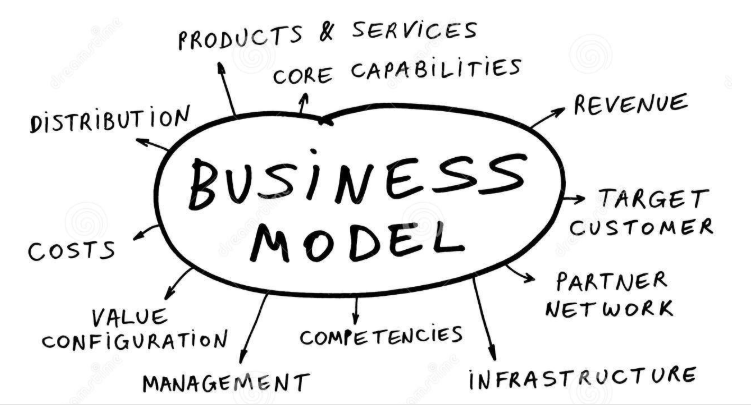
However, like any other business, the success of agribusinesses does not just lie in quality food and agricultural product or services but also in its business model. The business model in its simplest terms describes how an organization creates, delivers and captures values to its users. Many players in the Agri-food sector see themselves as just producers and suppliers rather than contractors, suppliers and product developers. As a result, they seem not to pay attention to building a scalable business model which is the bedrock of every successful business.
Business model (source: Forbes)
African agriculture entrepreneurs will have to deliver and capture values in innovative and cost-efficient ways to be able to meet the existing global challenges, emerging opportunities and changing consumer tastes. This is where Business Model Innovation (BMI) has its role.
According to Harvard Business Review, Business Model Innovation is “about delivering existing products that are produced by existing technologies to existing markets”. It neither requires new technology nor the creation of a new market. BMI in the agri-food sector has the potential to re-invent the African food systems and releases its potential of contributing significantly to the continent’s economic development. Furthermore, taking business model innovation seriously can set an agri-food company apart as it will position her to meet the constantly dynamic consumer demand and stand out of the competitors. Business Model Innovation often involves changes invisible to the outside world, thus it can bring advantages that are hard to copy.
Any food and agriculture business that must compete globally and grow sustainability need to have an excellent business model, and constantly re-invent the system through consistent business model innovation.
We are providing an opportunity to help businesses build a sustainable business model. Only 20 slots are available. You can contact us on +2348167303461 if you are interested.