

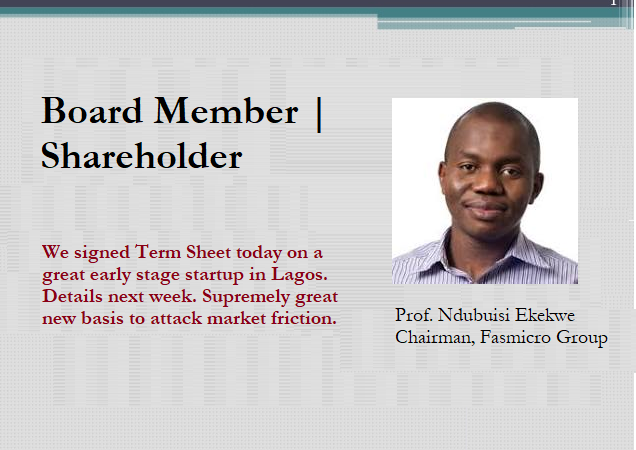
Today, I signed a term sheet with an amazing startup. We will be working with a remarkable team of great African techies to fix a specific market friction via an ingenious way. You will learn more next week when we unveil. BelieveInAfrica. BelieveInNigeria
Nigeria’s Max Raises About $7 Million To Scale Ride Hailing Motorbikes to Ghana and Ivory Coast
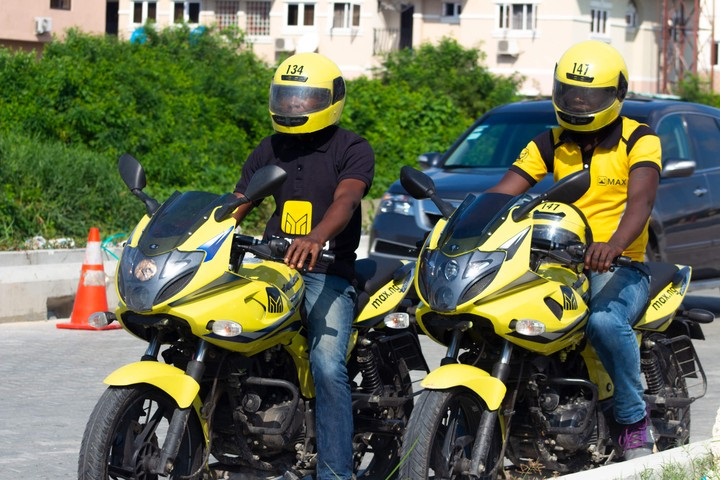
There is a major shift: transportation startups are raising tons of money right now in Africa. Gokada raised $5.3 million few weeks ago, and has now added boats in its business. Today, we are learning that Max .ng, a motorbike ride-hailing startup, has raised up to $7 million. As that happens, ORide from Opera, has $100 million to dip from as they work to fix the logistics friction in Nigeria. These companies are overlaying technology on what has been with us – informal motorcycle taxis – and they hope to “win market share by offering trained, accountable drivers and the convenience of booking rides through a mobile app”, as Reuters notes.
Nigeria’s Max.ng recently raised between $5 million – $7 million according to an interview with Reuters. The motorbike taxi startup will use the funds to expand into Ghana and Ivory Coast later this year. Max.ng started its ride-hailing service in 2017 and completed 200,000 rides in May. The company is looking to complete 2 million rides by the middle of 2020. Max.ng is the oldest motorbike taxi startup in the country but it faces competition from new entrants including Gokada, Safeboda, Oride by OPay and a few more foreign companies looking to set up shop. (TC Daily).
Zido which I hold shares focuses on keke – three wheelers – for the same reason noted by Reuters: “Africa offers huge potential for motorcycle ride-hailing firms due to low personal car ownership, rapidly expanding populations and a lack of efficient mass transport systems in fast-growing cities that are clogged with cars.” There is innovation in the broad transportation space, not just in Africa, but also in U.S. and beyond: Uber is now offering helicopters. Yes, hail a helicopter and Uber helicopter will answer; I will be waiting for that one in Lagos, fiercely urgently!
While limited core infrastructures are being built by these startups, technology can use better planning algorithms to bring efficiencies in the transportation system. We will enjoy those productivity improvements until they hit the ceiling of diminishing returns. By then, governments can rise to provide better infrastructures that will drive long-term sustained transportation efficiency in Nigeria especially with the understanding that rural urban migration continues to skyrocket. But right now, appreciate the startups; they are doing the best they can.

Gokada Boat
Become a Data Legend – Data Science Nigeria Unveils Data/AI Masterclass

Non-profit Data Science Nigeria has a great data science Masterclass for everyone. The class will focus on conceptual explanation of all Data Science concepts/theories as applicable to business issues using drag-and-drop tools (Microsoft Azure, BigML, Knime and Tableau). No coding required.
Training Cost is N150,000 but a special discount of half rate of N75,000 is available if you register and pay on or before June 14, 2019
Call Seun on 08139721779 now to book a seat. Payment details and direct registration can also be done at http://bit.ly/2HFW6JU
Data Science and Business Analytics for Professionals Masterclass – Starts July 6
Tecno Maker Extends Lead in Africa over Samsung on Phone Shipment – IDC
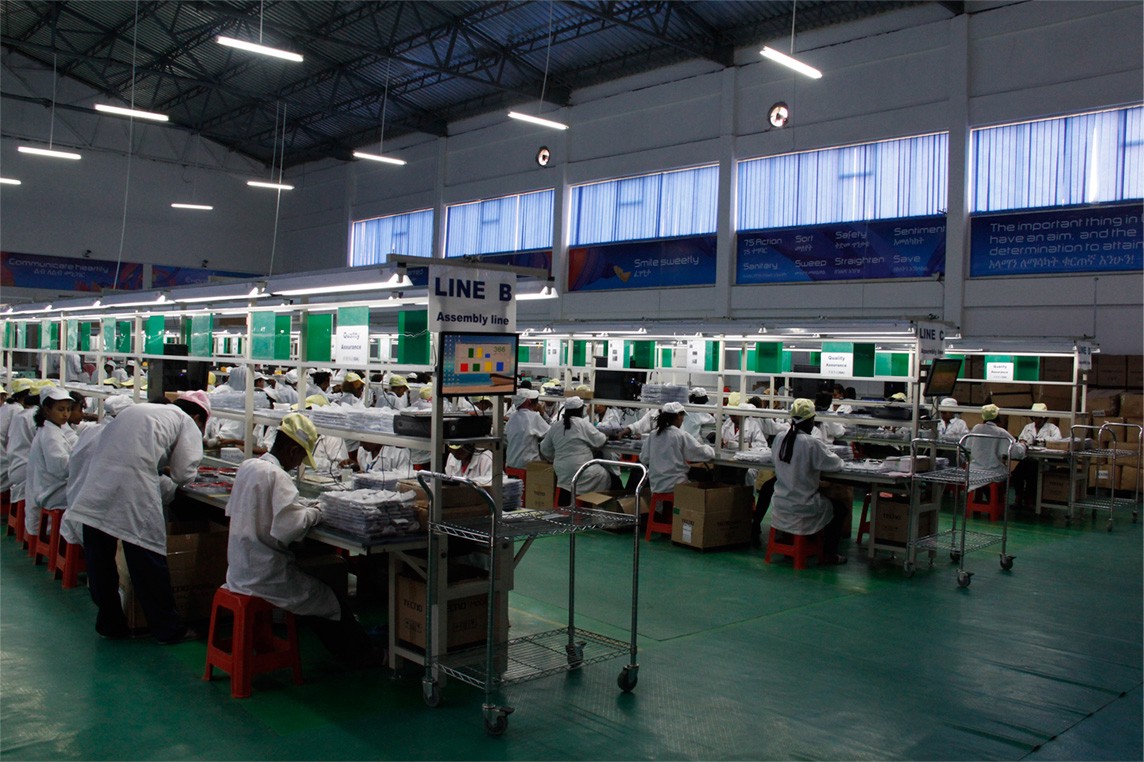
Tecno maker Transsion (maker of Tecno, itel, Infinix) continues to rule the smartphone market in Africa, notes IDC, a consultancy. Transsion brands command 33.1%, Samsung lost more grounds at 24.5% while Huawei came third with 11.8%. Yet, feature phone remains the king: “Feature phones still constitute a significant 59.9 per cent share of the total mobile phone market due to their relative affordability and durability, and they continue to play an important role in connecting even more Africans to the internet.” And, “2G and 3G mobile devices remain resilient as an economical option for price sensitive consumers”.
IDC noted that the Africa’s smartphone market continues to be spurred by the growing popularity of low-end to mid-range devices.
Transsion brands (Tecno and Itel) top these segments and remain the continent’s leaders in terms of overall smartphone shipments, together accounting 33.1 per cent of the market’s volume in Q1 2019. Samsung followed in second place with 24.5 per cent unit share. Huawei ranked third with a unit share of 11.8 per cent
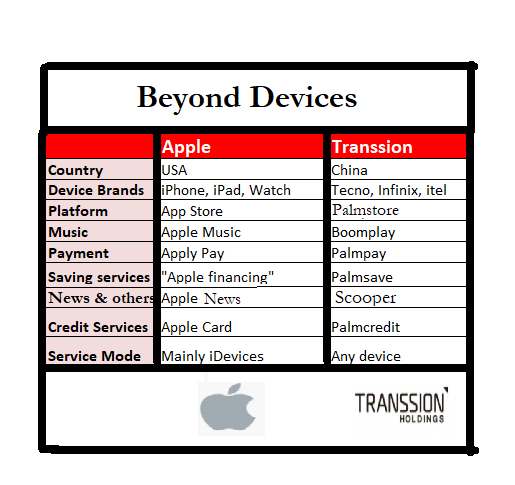
Just as I have noted, cheap hardware comes before operating system in Africa for most people. If U.S. bans Huawei and it makes a decent OS by forking Android, Google’s real Android will lose Africa especially if Chinese hardware makers unite around anything Huawei decides to make. Google understands that risk and is asking Trump to exempt Android from the ban.
When it comes to emerging markets, cost matters. So far, Chinese phone makers dominate therein. That they use your software and pay the necessary fees should not be taken for granted. If Trump puts heat and they create an alternative one, by ripping Android apart, future phones in Africa will not be powered by Android. Sure, Samsung will continue to have offices in Africa but it has lost market share because of price. Simply, Samsung will not save Android.
Sure – many can afford Google Pixel $1,000 Android phone but majority of Africans will decide with their purses. Provided people are still buying feature phones, it means those great features in Android do not come before the device affordability. You need to have the capacity to afford the device before you worry on how good the OS features are. They know that Apple iPhone is great, yet it has no market share in Africa. Why? Affordability.
Banning Huawei (and China) will diminish Android.
Comment on LinkedIn Feed
Comment:
The US government has issues with China, and specifically with Huawei, so it doesn’t really look at what Africans can afford when it comes to buying phones. It may affect Google, but what the US is fighting for is way beyond what hurts Google, Boeing Max aircrafts have been grounded for months, and yet the aviation sector hasn’t closed down.
Part of what will keep Africa grounded is that erroneous belief that buying cheap imported products will help the citizens. The consequences of ‘cheap labour’ and ‘cheap goods’ from outside your territory are unemployment, lack of human capital development and stunted economic growth within your own borders. So when we yearn for certain things, we must be ready to bear the consequences.
Why do most developed economies struggle to sell cheap products? Because labour cost is high, when you push for pay rise, there’s no way to keep the goods cheap. And what do some inept politicians do? They allow companies to manufacture overseas where labour cost is lower and then sell to their citizens. The result? The jobs start drying up in your own country while those seeking entitlements from the government are on the increase.
Trump is smarter than bunch of politicians in many parts of the world!
My Response
“It may affect Google, but what the US is fighting for is way beyond what hurts Google, Boeing Max aircrafts have been grounded for months, and yet the aviation sector hasn’t closed down.” Recall that Apple got exemptions from any Trump action in China. Google would be naive not to ask for one. Apple wins on hardware on exclusive OS; Google wins on “open” OS. If US exempts Apple, Google will struggle because its partners will see artificial raise in prices in U.S. Also, despite your comment, U.S. is actually listening after many rural telecom projects in U.S stalled a week ago because without Huawei, most projects will run over budget. Yes, U.S. makes decisions not to HURT its best firms. America is thoe companies. That is why China asked all the leading US tech firms in China and told them: Go home and lobby, if not, your days are numbered in China.
Nigeria’s Chekkit Technologies is Providing Modern Anti-counterfeiting Services
By Nnamdi Odumody
Chekkit Technologies, founded by Dare Odumade, provides cutting-edge solutions for product distribution tracking and consumer intelligence through blockchain and QR/USSD-powered anti-counterfeiting services which make physical products smart and traceable across supply chains offline and online.
Chekkit is an Ethereum blockchain powered anti-counterfeiting, product tracking and customer experience analytics platform. It is a software company leveraging automation, blockchain, big data and Internet of things technologies to provide anti-counterfeiting security, real-time consumer data analyses and procurement automation for trade and strengthening supply chain integrity.
Its innovative products include:
- Consumer Intelligence Platform: It provides product anti-counterfeiting, brand protection and real time market insights. Currently in use by two leading FMCG brands in Nigeria and has registered over 30,000 consumers data and authentication within 3 months with one million naira worth of airtime distributed. It helps FMCG and Pharmaceutical brands gain Return On Investment for all promotional/marketing and brand protection spends.
- Supply Chain Tracking Platform: This helps in product distribution and inventory/asset tracking. This is a proprietary/disruptive innovation an asset distribution tracking solution without any need for sensor enabled device to monitor truck movement in real time. It has 10+ medium and large scale distributors in Nigeria, Ghana and Kenya onboard to track fleet of 100 trucks and above.
This tools helps its customers save time, prevents their stock running out and ensures end to end transparency throughout the product supply chain/distribution process.
Chekkit is a needed solution considering the fact that a report by the ICC and BASCAP stipulates that counterfeiting will cause an economic loss of $4.2 trillion and jeopardize over 5.4 million legitimate jobs by 2022. The National Bureau of Statistics reports that NAFDAC seized fake and substandard goods worth 3 billion naira in 2017.