DD
MM
YYYY

PAGES

DD
MM
YYYY

spot_img

PAGES

Home Blog Page 6927

The Kobo360 Mission via G-LOS – Nigeria, Togo, Ghana, Kenya…loading countries…

0

Ndubuisi Ekekwe had since resigned from Kobo360 board.

Kobo360, the technology logistics platform, says it will soon expand its operations into Accra, Ghana and Nairobi, Kenya.

Kobo360 is a tech-enabled digital logistics platform that aggregates end-to-end haulage operations to help cargo owners, truck owners and drivers, and cargo recipients to achieve an efficient supply chain framework. Through an all-in-one robust logistics ecosystem, Kobo uses big data and technology to reduce logistics frictions, empowering rural farmers to earn more by reducing farm wastages and helping manufacturers of all sizes to find new markets. Kobo enables unprecedented efficiency and cost reduction in the supply chain, providing 360-visibility while delivering products of all sizes safely, on time and in full. The Kobo mission is to build the Global Logistics Operating System that will power trade and commerce across Africa and Emerging Markets

The announcement follows recent news that the company launched in Lome, Togo – home to West Africa’s largest shipping port, and sees a period of rapid expansion for the African start-up.

Backed by international and African investors, including International Finance Corporation [IFC], Y Combinator and TLcom, the move comes as Kobo360 seeks to build a global logistic operating system [G-LOS] that will power trade and commerce across Africa and Emerging Markets. Positioned as key trading and transport hubs on the African continent, the new territories have seen almost exclusively double-digit growth Togo (12%), Kenya (10%) and Ghana (7.9%), and Kobo is now strategically positioned to grow with them.

The company is currently rolling out a beta operation in Ghana, recording over 100 trips and collaborating with clients such Olam Ghana, and expects to test the Kenyan market further, in the coming weeks, where the team will meet with drivers and equip them with the tools they need to run trips effectively, while also imbuing our culture and brand affinity with the supply chain.

In Nigeria, Kobo360 has stood at the forefront of logistics, covering over 80% of the country and recording a 40% cost reduction in the supply chain. The company now plans to aggressively extend to other key markets and expects to be in nine African countries before the end of 2019.

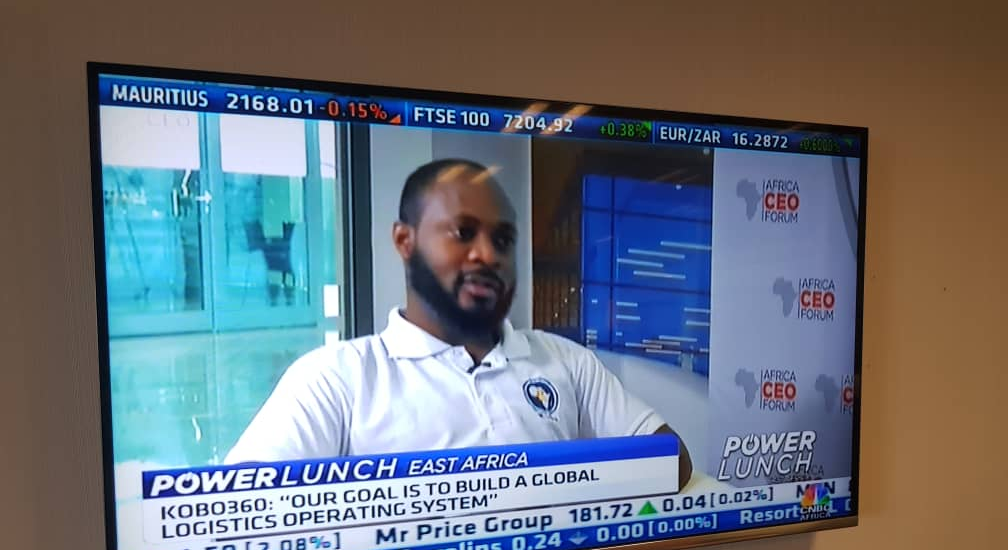
Speaking from the Africa CEO Forum in Kigali, Co-founder and CTO of Kobo360, Ife Oyedele, said: “We estimate that Africa needs 10X the number of trucks to meet short-term commercial transport needs, since rail continue to underperform. Time, cost and quality are key drivers of success in logistics which is why we, at Kobo360, are building a global logistics operating system [G-LOS] that will ensure fast movement of goods at a lower cost for businesses across Africa.

“Kenya is the hub of East Africa, it is the most innovative market in Technology and if we win here, we have won across the region. From here we will expand to Uganda and Tanzania. By adding Ghana to our West African territories of Togo and Nigeria, we will link all the market to a Global Logistics System and this will help us to serve our customers  across a seamlessly lined Pan-African market. By this we create value to our customers as we are in all the key countries in the continent”.

“Location is a critical factor in global logistics, and each African country we’ve chosen to expand into has its own value proposition. These markets are among the fastest growing economies and we want to grow with them by supporting the thousands of freight companies who require a safe, reliable and cost effective delivery of their goods to cargo recipients across the continent.”

To date, the company has partnered with global logistics brands including Dangote Group, DHL, Unilever and Lafarge and has moved over 297M KG of goods, serviced over 1,450 businesses and aggregated a fleet of over 10,000 drivers and trucks. Launched in 2016, with a vision to revolutionize the logistics value chain in Africa, currently estimated at $150 billion, Kobo360 won ‘Disrupter of the Year’ award  at the Africa CEO Forum Awards – a recognition given to the CEO of a young African company within the budding tech sector on the continent.
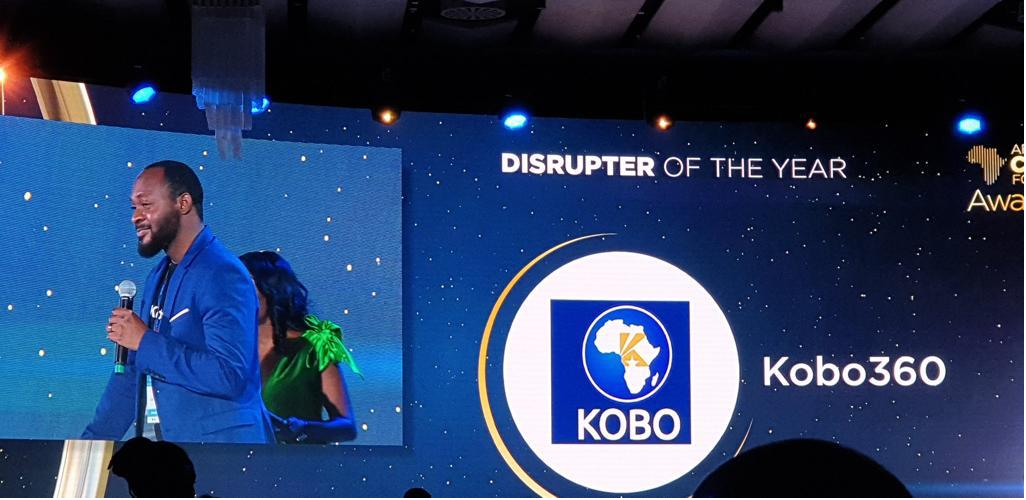
Kobo360 efficiently connects end-to-end haulage operations to help cargo owners, truck owners and drivers, and cargo recipients to achieve an efficient supply chain framework. Through an all-in-one robust logistics ecosystem -reducing logistics frictions in supply chain via a combination of Internet of things (IOT), mobile technology and data analytics.

In less than six hours, Kobo360 matches a user’s request with a selection of quality trucks of all categories, anytime with service delivery guaranteed – no telephones, opaque pricing or expensive middlemen needed. Led by Kagure Wanmuyu, COO East Africa and Bilal Abdullah, COO West Africa, the team is also recruiting for top talent to join its new teams on the ground.

Kobo360 officially launched in Togo in March, where the company announced its affiliation with the Ministry and Office of Postal Affairs and Digital Economy, as well as the Mediterranean Shipping Company.

*I am in the Board of Kobo360
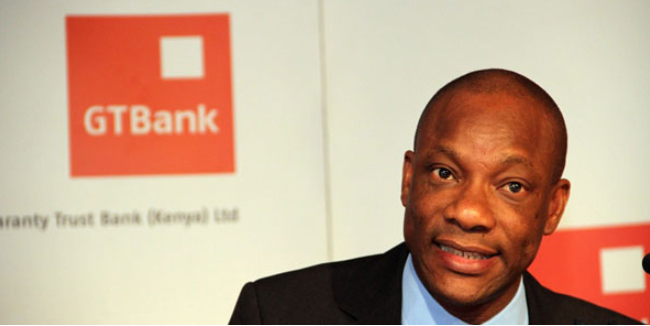
The GTBank’s Special Letter

0

Guaranty Trust Bank has congratulated President Muhammadu Buhari on his re-election as the president of Nigeria. The letter which was addressed to the President, and signed by the bank’s CEO and GMD, Segun Agbaje, on behalf of the Board, Management and Staff of the bank, was made known to State House correspondents by Femi Adesina, the president’s Special Adviser on Media and Publicity, in a statement in Abuja, on Tuesday. Part of the letter reads as follows:

Your re-election rewards a tireless commitment to serving the Nigerian people. It is also the greatest achievement of an exceptional campaign that demonstrated the strength and maturity of Nigeria’s democracy to the entire world.

In re-electing you as President, the Nigerian people have embraced change, hope and confidence in your leadership.

Undoubtedly, the trust placed in you for the second time by the citizenry will be a source of great inspiration to continue the good work which will steer Nigeria firmly on the path of development.

My comment: this is not typical. Most business leaders just tweet or release statements but never go the extent of writing directly the actors. This is another platform-banking from GTBank.

Nigerian Banks Are Redesigning as Technology Companies

0

By Nnamdi Odumody

Since the commencement of banking operations in 1945, Wema Bank has proven itself as an incubator of inventions and creative ideas. With the launch of ALAT, Nigeria’s first digital banking platform, the bank extended the limits of experiential banking.

ALAT is the first step for Wema Bank. In the next few years, depending on its progress, ALAT can be divested from Wema Bank, to allow it to compete more aggressively in the African market without being tethered to a bank and the associated regulation. The regulation is important and there is nothing wrong with that: banks like Wema Bank take customer deposits, unlike most fintechs, and should be regulated. So, ALAT can become an operational arm of Wema Bank while the bank remains a dumb pipeline, typical of most traditional banks today (i.e. not much intelligence due to lack of deep insights), to support what that modern banking named ALAT does. Perhaps in 10 years, Wema Bank may even simply change its name to ALAT if this new modern banking solution evolves into its future.

Wema Bank won the 2018 Accenture Nigeria Innovation Index – Banking Innovation Masters Award, Banking Innovation Concepts Award and Banking Strategy Ideation Absorption Award. Now it is organizing Hackaholics, a two day hackathon from March 29-31 2019 which will bring together tech professionals to create innovative solutions. Innovators and creative thinkers have the opportunity to convert visionary concepts into workable opportunities for financial and social problems. It comes with a prize sum of $10,000 and the winning ideas will be nurtured to become marketable, and will also receive technical support.

Hackaholics is a radical gathering of developers, web designers and creative thinkers interested in building products and developing solutions to improve financial services and other sectors of Nigerian life. We are particularly excited about potential innovations in personal finance, big data, retail banking, mobile payments, risk management, currency and stock trading, investment, regulatory compliance as well as health and the environment.

Winning solutions will stand a chance of being incubated and developed into marketable solutions. Also, the best ideas will get full technical support and funding up to 10,000 USD while talented individuals who will exhibit their agility and innovative thinking during the Hackathon will be approached to work further with the bank, in a full time basis.

Heritage Bank’s introduced its intelligent banking assistant in 2018 to enable its customers perform seamless financial transactions across channels. It recently unveiled the HB Lab, an Accelerator programme for product development teams and technology startups creating solutions to critical problems in Nigeria. It will run for 12 weeks with the winning team receiving $25,000 and mentorship from the Heritage Bank network.

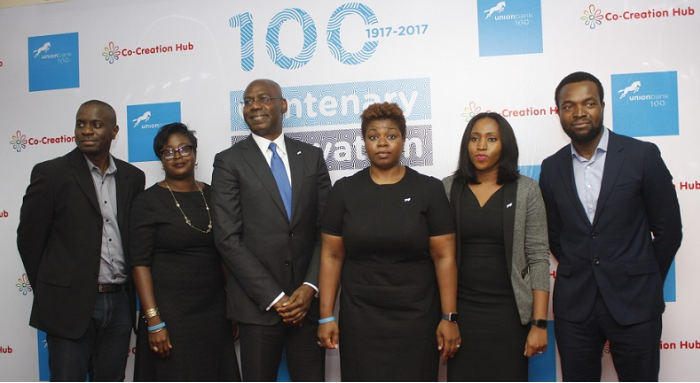
Union Bank in 2017 launched an annual ‘’Innovation Challenge’’ to encourage innovators who are creating innovative solutions to social and business challenges. Last year, in partnership with the Co Creation Hub, it launched ‘’Startup Connect’’ which provides an opportunity for Nigerian businesses creating technology-based solutions for the emerging African market to partner with the bank, and the social innovation lab, for growth. It recently unveiled its Techventures proposition tailored for technology companies to support them in various stages of their lifecycle, with access to Venture Capital funding, Business Advisory, Mentorship and Accelerator Partnership.

Diamond Bank pioneered this trend with its Diamond Yello partnership with MTN that saw it acquire over a million customers. Last year, the bank launched Dreamville, a gamified platform powered by Microsoft for kids, to learn financial skills. Her Ada Chatbot was a game-changer in offering the unique customer experience, causing other banks to deploy chatbot services on their platforms, targeting the tech-savvy generation.

The bank of the future will be a technology company, which will utilize data analytics to offer personalized real-time financial services, to its customers, no matter where they are located. It will likely operate mainly with limited physical branches, unbounded by locations – rural or urban, thereby promoting financial inclusion for all. Some banks in Nigeria are already redesigning their strategies to key into this redesign which has become evident to technology leaders. For these banks, technology does not just run them, technology is transforming them, and that is great.

Wema Bank on ALAT Now

How Africa Lost Its Largest Corporation, Naspers, to Europe [Audio]

0

Naspers has a market capitalization of close to $100 billion, about 25% of the total value of the Johannesburg Stock Exchange (JSE), and more than 3x the value of the Nigerian Stock Exchange. But Naspers has more than $50 billion dissipation value since its $100 billion, in JSE, is way below its total market values in all its properties across the globe. For example, the market value of its Chinese super-app Tencent is $133 billion. Because of this weighting paralysis, Naspers has to leave Africa, to list in Europe.

In this Tekedia Daily, I explain why it is time for Africa to merge its major exchanges into one. Unless we do so, we will still remain playgrounds where the likes of Jumia, Transsion (makers of Tecno phones), will do business here and never list because they cannot simply do same.

LinkedIn Comments on Feed

  1. just seeing this. Most African countries still believe that stock exchanges are national champions and must remain so. We have failed to realize that globally stock exchanges are internationally oriented businesses and the international competition guarantees a race to the top. ICE group has stakes from NYSE to Euronext, and this enables it to retain the best businesses. Same with the LSE. The JSE, the KSE and the NSE sadly are still within their national silos and cannot be attractive (as a primary listing venue) to any top-rated investment grade issuer. Naspers is an investment grade business and it must seek an appropriate primary listing home. Even if we do not find the merger of exchanges option attractive, we can enter into strategic partnerships with advanced exchanges. For instance: to develop its derivatives exchange, Bursa Malaysia entered into a strategic partnership with the CME (giving CME 25% equity). Well, I don’t need to tell you how advanced BMD currently is, especially in relation to Islamic derivatives.
  2. A very brilliant idea. African countries should hurry up and stop dealing with the world as individual, subscale players. In this case, an African stock exchange will be better capitalised, structurally stronger and institutionally safer from sovereign risks. The EU already shows the benefits of pooled sovereignty and that it can work.
  3. The idea of merging major stock exchanges within Africa is one that really worth exploring, nothing really to lose, but certainly there’s so much to gain. Since it’s about markets, the framework can be pushed through AU with the currency of trade first denominated in dollars, until Africa agrees on single local currency. Most problems in Africa require scale and sizable capital to be able to confront them. The idea of individual countries looking towards China is not really a viable and sustainable solution, we need to reimagine and rethink a grand African Policy on economy.

The Genius in Naspers’ New Strategy to Continue Creating Value for Investors

0

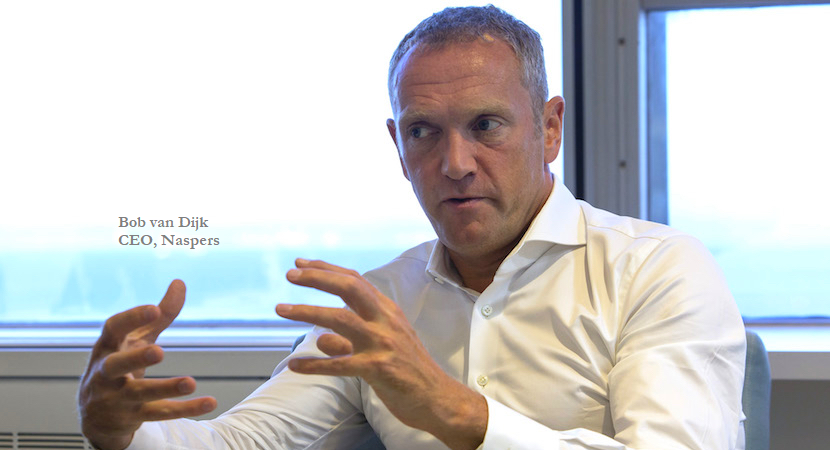
Africa’s largest company by market cap, Naspers, has a big problem: over-capacity and over-concentration of its shares in the Johannesburg Stock Exchange (JSE). When one company accounts for 25% of the total value of an exchange (from 5% just few years ago), that firm has a big problem. Why? The stock will tank because market forces will cease working for it, as most pension funds and institutional investors will not buy the stock to avoid over-concentration in a single company. These  investing entities do have asset diversification guidelines and risk models they follow.

The African media giant Naspers, which owns almost a third of the Chinese online giant Tencent, is to make a European listing that will spin off that stake and other international investments such as its stake in Russia’s Mail.ru. Naspers will own 75% of the new company, which should be “Europe’s largest listed consumer internet company by asset value.” It will be listed on the Euronext Amsterdam and in Johannesburg (Fortune Newsletter)

So, even though the Naspers’ financial numbers can be looking great, more companies can only be selling to avoid that over-concentration in the hand of one company. That is partly why it listed MultiChoice as a separate company few weeks ago. But MultiChoice is not the real solution as the overweight from Naspers on the JSE remains evident.

So, Naspers has to have plans if it wants to keep adding value for investors. And it does: it will float its shares in the Euronext Amsterdam, assembling all those clusters of empires it holds in Russia, China and beyond in one entity thereby reducing the cage on the small JSE: “Naspers now intends to spin off its 31% Tencent stake, plus its investments into platforms such as Russia’s Mail.ru and Germany’s Delivery Hero, into a new company with a primary listing in the Netherlands and a secondary listing back home in South Africa”. Naspers will retain 75% of this new firm which is planned this year and the rest sold to global investors.

If it does that, values will accelerate and room will open up for South African investors to unload on Naspers. Of course, they may not as some of the fine pieces may not even be traded, in full, in Africa – the new Naspers in Europe will be traded as a secondary stock in the JSE. Yes, if you move the Tencent business exposure to Europe, what is there to buy? Today, the value of Naspers holding in Tencent is $133 billion but Naspers in JSE is worth less than $100 billion, implying that $33 billion is “not optimally” priced in. Add the other foreign businesses, and Naspers may be dissipating more than $50 billion in the translation process in the JSE. So, this new strategy is very good to unlock more values for investors.

Africa’s biggest media company, Naspers, is promising to create Europe’s biggest consumer Internet company with a listing later this year on the Euronext Amsterdam.

The South African firm has a long and varied history in print and broadcast media, but it really hit paydirt with a 2001 investment in China’s Tencent that turned $32 million into $175 billion. Naspers now intends to spin off its 31% Tencent stake, plus its investments into platforms such as Russia’s Mail.ru and Germany’s Delivery Hero, into a new company with a primary listing in the Netherlands and a secondary listing back home in South Africa.

The as-yet-unnamed spinoff, to be floated no earlier than the second half of this year, will include all of Naspers’s online stakes outside of South Africa. The mothership aims to retain around 75% ownership and will offer up the rest to global investors.

Simply, a great move as the best strategy is to ensure that investors do not sell your stock. If Naspers executes this strategy, it will unlock huge values for investors. The plan is magical to deal with market dynamics that cannot be fixed by better financial ratios. But, unfortunately, the best of Naspers will depart Africa, for Europe – and that is unfortunate, nonetheless.

Why Naspers Unbundled MultiChoice (DStv, GOtv, etc) As A Separate Company