DD
MM
YYYY

PAGES

DD
MM
YYYY

spot_img

PAGES

Home Blog Page 6951

Vibes From My BDBAC Talk: Bill Gates and Mark Zuckerberg Are Not Dropouts

0
????????????????????????????????????

A blogger captured a brief element of my BDBAC talk earlier in the month – still expecting the full video from the organizers. On the Mark Zuckerberg and Bill Gates line, I had made it before: Mark and Bill were premium-dropouts because they left boring university teachers they paid money. via tuitions, to join dynamic venture capitalists that paid them money, as investors, and yet offered anything professors could have provided them.

In a way, they replaced mass-training professors in Harvard with private Harvard-quality professors. If you check very well, they got better deals. You cannot have a private Harvard-quality professor and still claim you dropped out!

Now, you can see why a kid in Nigeria must stay in school and stop touting how Mark and Bill dropped out to build Facebook and Microsoft respectively. They did not drop out – they upgraded from the common mass educational system to another type that is more premium! But admission into that one requires having a great product vision which makes it harder; getting the cut is not for drop outs but visionaries transiting into a new domain.

Summary from the blogger:

The Co-Chairman of JPL Financial Group, a California-based financial advisory firm and blogs at Harvard Business Review, Prof. Ndubuisi Ekekwe speaking on Abundance in the Data of Nations said:

“Data analytics knowledge in Nigeria is at infancy stage. But, opportunities abound as there are many aspects of our economy and culture that foreign ideas won’t solve the problems; they require local talents. Start-ups and young entrepreneurs are going to tap into it. For instance, Kobo360 is doing very great in their areas”.

He highlighted the importance of education that reflects the 21st Century learning which does not depend on paper qualifications.

“Education: It is so painful that we deceive ourselves. Bill Gates and Mark Zuckerberg dropped out of school but didn’t drop out of learning. They left the four walls of the university where professors taught them to the boardroom where venture capitalist taught them and also wrote the cheques.

“Africa needs to build processes; not to prepare the young people for certificates but a life time growth trajectory.

He also called for broadband affordability as key to unleash Big Data and Business Analytics in Africa. “It amazes me that Facebook can be free in Nigeria but most online courses and materials are not free. I believe that with Satellite broadband will bring down the cost of connectivity and most African kids can have access to the internet to learn new courses and improve on their skills”.

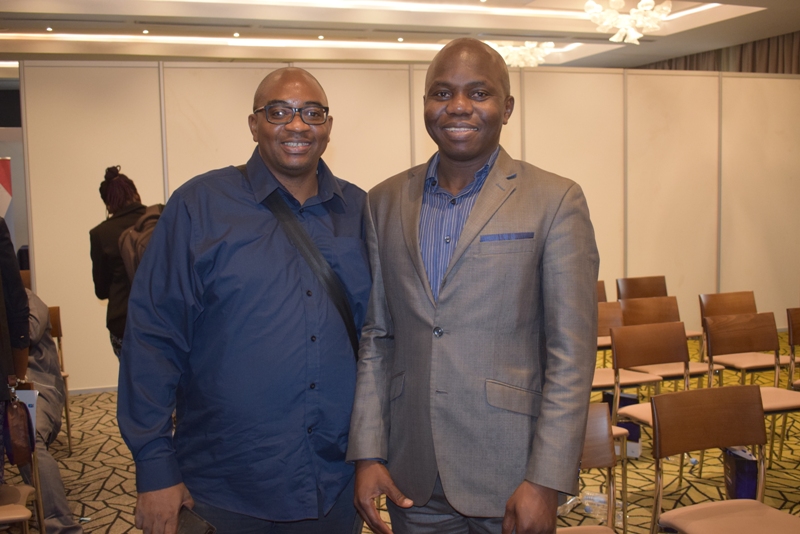
NB: Photo – With Emeka Okoye, CEO of Cymantiks, after my talk in BDBAC this month.

LinkedIn Comment on Feed

COMMENT #1: I think we need to redefine the concept of education and its qualifiers, that way – the notion of equating quality education with four walls of classroom in a certain location in the world could become moribund.

If the purpose of education is to liberate minds, then the mind that does not suffer any form of inhibition or distraction is the most educated of course. Schools make it possible to standardise learning and make it robust, reducing biases or tendency for one to only learn about few things that interest him/her. Schools also make it possible for a teacher to not only teach the subject he/she likes or the one that pleases, which could lead to skewed learning outcome.

The greatest institutions remain humans, not the buildings or locations where they are sited. If Harvard or MIT professors come to your village to teach you, obviously you have acquired a Harvard/MIT level of education, but you may not receive a paper certificate bearing those iconic names.

Some of us have been privileged to learn from the finest minds across the globe, without sitting in classrooms to be taught by them. With a lifelong learning mindset, you could be more educated than your professors, only that they have the papers...

COMMENT #2: Interesting fact. And just like young Nigerians keep holding on to the assertion that Mark, Bezos, and co started in a garage and built a world-class business, so they too can start from nothing.

But the bitter truth is that none started from nothing. Mark and Saverin invested a thousand dollars each (approximately N300k then) in 2004 to start Facebook of which within a few months they got a seed capital of $500k from Peter Thiel.

In the same light, according to Bezos recently, he brought together about 20 investors who brought in checks of $50k each raising a seed capital of $1million for Amazon. This is excluding the initial investment he got from his rich parents.

These guys started from their garages but surely didn’t start with just a laptop and an internet connection. Money was invested.

So, thinking they are school dropouts and wanting to “imitate” them might be a big mistake. With these tech gurus, there is more to them than we think. They are the most educated bunch we have seen.

The Mirage of Lagos Dropouts – Mark Zuckerberg and Bill Gates

Millennials Trust Tech More Than Traditional Banks

0

Traditional banks have over the ages relied on a reactive approach to their customers’ needs. To attract customers, the sector has developed a severe image that exudes security, endurance, wealth and integrity.

Enter the millennial customer

This temple of finance replete with artless atriums, Doric columns and an ionic temple front has been massively rejected by millennials. It is a generation that hates restrictions and anything that ties them down; values the banks espouse. The only long-term financial obligation that this new generation has is a student loan!

Millennials have rejected bank products and services that baby boomers worshipped banks for. These include car and home ownership financial products, for car share services like Uber and co-living.

The dominant generation post the 2008 financial crisis, it is still dealing with the trauma the downturn caused a decade down the line. Dealing with acute financial needs and a difficult job market have pitted them against major financial institutions.

This distrust has affected their choices as far as low rates of large purchases, high job transfers, and low birth rates are concerned. It does not then come as a surprise that a majority of them view banks as “the Kodaks of the 21st century”; vehicles of success for their grandparents or parents and not theirs.

At the forefront of their needs is access. Over 3/4 of millennials prefer to get financial services from tech companies such as PayPal than traditional banks. This exclusive club boasts of more than 1.8 billion people or a quarter of the world’s population and will be worth over US$24 trillion as they enter their prime earning years. It is a market that has been very ripe for disruption by Fintech firms and one that has welcomed this change with open arms.

Why have millennials been so open to Fintech?

  • They are a naturally skeptical generation

Half of all millennials are proudly independent politically while a third of them prescribe to no religious ideal. This religiously and politically dissatisfied generation is also the most educated in history. It comes as no surprise that banks viewed as precursors to the 2007/08 financial crisis are amongst the least loved institutions by them.

The economic downturn turned most of them against virtues that banks extol. They hate banks and what they stand for, but they enjoy banking services that offer location and technology convenience.

And while most of them cannot relate to a huge bank building with a guard at the door, at least 1 in 6 have at least $100,000 in savings in a nation where only a paltry 39% can afford a $1000 in emergency savings.

  • Paperwork makes no sense

Paperwork has been the bane of the banking industry as far as their disconnect with millennials is concerned. Physical money too is quickly going the way of the American penny, thanks to magnetic strips for plastic money and near-field communication (NFC) for mobile payment.

 43% of Millennials prefer the ease of setting up an account via a mobile app to going to a bank to set up a checking account. And why not? There’s nothing enjoyable about time wasted filling out paperwork in banks alleys and waiting for checks in the mail. With the number of mobile phone users expected to hit five billion by 2019, millennials can’t wait for paperwork to go the way of the dinosaurs.

  • They love convenience

 While the older generations went for security and access in their relationships with banks, the new generation has more choice in the management of that relationship.  This change in lifestyles has not changed traditional ways of saving.

Fintech has simplified investment and saving smartening up finances with artificial intelligence. A generation that hails Uber for rides, for example, loves apps like Squirrel that will set up an account and split a salary into an allowance, bill, and savings format. The aspects of empowerment, control and convenience, and the lessening of the boring manual stuff are what millennials are out for.

  • They hate bank fees and inefficiency

 While millennials will pay for value, they chafe at “just because’ policies and hidden and unexplained fees, especially overdraft fees. They love transparency and efficiency, which is why clearing a check in 5 days makes no sense to them.

  • They have a social conscience

 They support causes they identify with and are very passionate about making investments that impact society positively. 88% of them will only bank with institutions that share their values. Wealthify, for example, found out that 74% of all UK new generation investors will go for ethical investments, and created five investment plans that are committed to positive societal change.

So who has the attention of this new generation now?

Digital banks

Also known as challenger or neo banks, these new and glitzy online edifices are offering the young that exceptional personalized customer experience that’s driving online sales through the roof. With no high street branches, they utilize the most innovative technology available as banks slowly adapt albeit through loads of sector red tape and management bureaucracy.

New outfits like Revolut, Tandem, Atom or Monzo have quickly enjoyed patronage among the new generation because of the convenience they bring to the table. They face less operational friction, incorporating newer and fresher products as fast as they or third parties can innovate. The convenience of choice means that you can access a bank account with a video of yourself or an ID online.

They will go a step further and offer helpful recommendations on saving, security or novel ways of transacting cash through Bluetooth for example. Riding high on the recent favorable regulatory changes across Europe and the UK they can now offer low fees to larger numbers of customers than ever before.

These startups are not looking to be linchpins of the economy, instead bypass all the strict regulations of being a bank and enjoy the more profitable bank add-ons. According to a well-known credit matching service helping to find nearest best digital loan lenders online, these include investment advisory fees, loaning and payment fees, leaving traditional banks with less income-generating services to run their mammoth entities.

Well, when good artists copy, great artists steal so traditional banks are slowly moving to these new products to keep in pace with their challengers.  They still have a higher level of customer trust going for them, a factor Neo banks are still struggling with. Customers still rely on traditional banks to keep their money safe.

Mortgages

Fintech lenders have lending efficiencies on their side that should leave traditional banks green with envy. Research shows that these firms can reduce loan lending periods by as much as 10 days in comparison to brick and mortar financial institutions. They also refinance 15 days faster than traditional lenders.

This fast lane, one click loan approach of major Fintech firms like Lending Tree, Rocket Mortgage, Lenda or Quicken Loans rides on machine learning technology and is perfect for finicky tech-savvy clients. This sector has now grown from a 2% market share in the US in 2010 to a $161 billion or 8% market share in 2016.

Smartphones

Millennials and Gen Z are notorious ‘mobivores’, known to check on their IoT gadgets at least 43 times a day. This new generation is constantly asking banks “why can’t I do that on my smartphone?” At least 90% of this generation uses mobile banking more than any service smartphones have to offer to users including shopping.

With this group’s spending power expected to hit $1.4 trillion by the year 2020, it comes as no surprise that traditional banks are falling over themselves in the chase for the perfect mobile app. No one wants to go to the bank anymore, so brick and mortar are slowly shrinking.

The Neobank Chime, for example, has over 750,000 accounts so far from its mobile banking facilities for millennials. Working from a low fee account, debit card and app angle that provides real-time notifications and automatic savings, its growth has been out of this world extraordinary.

It has no adversarial products that seem to benefit from their client’s misfortune unlike those of traditional banks and no minimum balances or overdraft fees.

Cryptocurrencies

Over 30% of all millennials would rather invest $1000 in Bitcoin rather than stocks or bonds. Fueled by a merging distrust in ‘the man’, bitcoin growth has gained traction since the 2008 recession.

Blockchain’s features of transparency, accessibility across platforms and security has formed a counter financial system free of control and desirable to the free-spirited and disillusioned millennial.

A single bitcoin today is worth $ 3,672 up from $4.72 in 2011, and Wall Street giants such as Citigroup and J.P Morgan have come to embrace it. The Japanese government has gone one step further and approved for the payment of services and goods with bitcoin.

The final word

Traditional banks have finally woken and smelt the coffee, noticed the disruption and began to adapt. Fintech is on everybody’s mind, not only banking more of the unbanked but providing quality services that are changing their lives for better. The changes that this disruption brings to the challengers, and the incumbents can only signal good for the person that should matter most; the customer.

Prepare for a New African Economy

0

In the midst of the dislocation, disruption and disintermediation, this chart shows the state of our world. A LinkedIn user shared it. No matter what you do, there needs to be alignment and realignment to retain the new demand-supply equilibrium framework, within a new economic architecture, where marginal cost is tending towards zero, and unlocking new domains in commerce.

Sure, when market frictions are solved at near-zero marginal cost, because of technology, not many humans will find lots of jobs therein. Simply, the rate of labour dislocation will be faster than new labour created because digital systems are never efficient in transfer of value from the meatspace to the digital space.

Yes, the money Skype destroyed for MTN and Glo did not show up in Skype bank accounts – you simply kept your money. And that means MTN may not hire more even as Skype does not need to hire also. Of course you can spend that “saved” money but the jobs it will create cannot compensate for the paralysis Skype has caused on broad telecom sector.

Making it practical – WhatsApp had only 15 engineers when it sold for $19 billion. The total value of the Nigerian Stock Market is less than $33 billion. Now look at the value created with total of less than 30 people and the amalgam of tens of thousands of people working in NSE companies, from Dangote to GTBank. Simply, as digital systems advance, labour paralysis will get more severe. We need to have plans for same in Africa. JP Morgan Chase has a plan as noted below.

JPMorgan this morning will announce plans to give $350 million over five years to support global workforce training programs. CEO Jamie Dimon said the program will focus on removing “the stigma of a community college and career education” and support “opportunities to upskill or reskill workers.” As we’ve written before in this space, training for the future of work is one of the great challenges facing our generation. Good to see more businesses stepping up to address it. (Fortune newsletter)

How to Get a Job in This Era

LinkedIn Comment on Feed

The insights on the image are invaluable, bringing fine and diverse perspectives about our ever-changing world.

Educational institutions will play even more important role going forward, because as nature of work keeps changing, people need to learn, unlearn and relearn; to be able to do what the ‘new order’ requires.

The interesting thing about market is that as we are providing solutions to problems, more complex problems are being created, and so they need solutions as well. The world can never be perfect, therefore, there remains boundless opportunities to create and amass wealth.

There will always be challenges facing humans, so as long as you make yourself relevant and useful, there is a role for you. Learning and adaptation will do the magic!

The Standard Bank’s Message to Africa: 91 Branches Closed, 1200 Staff Fired

0

Standard Bank South Africa, one of Africa’s largest banking institutions, will cut 1,200 jobs and close 91 branches in the nation. The reason? Digitization of banking operations and systems. If you add the auxiliary workers like guards and contractors (cleaners, cooks, gardeners, etc), you may be looking at 3,000 people losing their jobs. Yet, check the financials in 12 months, the bank will likely hit better numbers as the customers serve themselves, by themselves, using their smartphones and laptops. This is the new normal.

South African lender Standard Bank will cut around 1,200 jobs and close 91 branches as part of efforts to digitise its retail and business bank, it said on Thursday.

South Africa’s lenders, like others around the world, have been shuttering branches and trimming their headcount in an attempt to cut costs and adapt to customers’ growing preference to bank online or on their mobile phones.

“This has not been an easy decision to make,” the bank, South Africa’s largest by assets, said in a statement, adding it would implement a “comprehensive exit package” that goes beyond the legal requirements

This is a big trajectory in the world and especially in Africa. Take a walk from CBN headquarters in Abuja to the Cadastral zone in the Central Business District in Abuja, count the number of bank branches remaining. If you are street-aware, you would have noticed that more than 50% of the branches have closed shops there, including Union Bank which used to occupy a big space at the end of the Cadastral zone, and Sterling Bank, in the last two years. The remaining ones have been severely trimmed. That is partly why many of the banks are returning superior cost-to-income ratios as operating (labour) costs have been shelved to the bones.

Take that experience around the nation and the conclusion is this: software is eating banking, and workers are being displaced. Sure, some will argue they can get other jobs. Unfortunately, it does not work that way. Nigeria has only three key sectors now that pay really decent wages across board: oil & gas, telecoms and banking. Others are sub-optimal.

As the world looks at the impacts of automation and digitization, Africa needs to get to work also.

Great Opportunity For Investing In Vietnam

0

Vietnam is growing rapidly with an estimated population of about 90 million. The majority of them are under 30 years old. The country has a promising growing economy with ongoing reforms in technology, manufacturing, exporting, and the creation of major infrastructure. The governments is making it a favorable place for investors to do business in the country.

Another reason to invest in Vietnam is the country has rich untapped natural resources, a big market for their goods, strategic geo-location, political and economic stability, and open to trade, peace, and reliable labor force.

  1. Invest in Vietnamese currency

The Vietnamese dong is among the best long-term investment currency to invest in. The country’s economy is expected to grow rapidly making the currency stronger than before. It’s still relatively cheap to buy the dong with United State dollars.

Investors are encouraged to buy large amount of Vietnam dong with the US dollar now they are relatively cheap and sell them tomorrow once the currency has increased. Many Vietnam economists expect the economy to experience an “economic miracle.”

Before buying the dong, investors are encouraged to use the Vietnam currency app converter to get the correct currency rate. Both the dollar and the dong keep on changing constantly due to economic and political changes. It’s advisable to be up to date with the current news about currency in cash blogs, podcast, financial journals, and forum. It’s good to be on the lookout to know when it’s expected to be raised.

  1. Renewable energy source

The majority of Vietnam’s current electricity sources are hydro-power, gas turbines, and coal. As the population continues to grow, there is an issue to meet all of the demands. By 2030, the government of Vietnam is planning to triple the number of renewable energy sources.

Vietnam has among the best geographic and climatic conditions to favor renewable energy source like wind and solar. They have an annual rate of sunshine; 1,800 – 2,400 hours per year. This is among the highest in the world. With an annual wind speed rate ranging between 5.2-7.5 ms, they work very with the modern wind turbine in the market.

Mostly, the coastal region and the mountain areas experience high wind rates making it suitable for setting up the wind turbine projects. The southern region is relatively flat and experiences high sunshine level thus making it suitable to set up solar panels.

The government is encouraging foreign investment in the country. Due to the diverse change in the energy sector, one is encouraged to partner with the local people, thus making it easy to rip more from the business venture.

  1. Luxury hotels

The tourism sector in Vietnam is growing really fast. In 2016, the government collected $9 billion dollars in revenue and it’s expected to double very quickly. The majority of the luxury hotels, especially those rating 4 stars, are a great investment opportunity as it’s mostly untapped.

Foreign investors are encouraging to join with the local people so as to make it easy to tap into the market; the local and the investor in an agreement to add an international operator that manages and control the assets involved.

  1. Financial service

The majority of the Vietnam banking and financial sector is not well tapped leaving a huge market opportunity. Retail banking, technology payment service and wealth management service are the most recommended.

Banks/financial institutions should invest more in there technology so as to support the growing demand of e- payment platform. Almost half of the population has access to mobile phones thus making a good platform to create a cashless community.

Other favorable businesses include textile production, construction industry, cosmetics, and agricultural productions.

Since Vietnam government has changed and softened some of its laws, it has made it favorable for many investors to enter their market. The open economy has made it appealing for many investors and it has not disappointed with great returns. Most of the companies like Samsung, Shell, and Sony have enjoyed the growing domestic demand, inexpensive labor, low cost of doing business, and promising potential.