
DD
MM
YYYY

PAGES

DD
MM
YYYY

spot_img

PAGES

Home Blog Page 6954

These African Women Are Using Technology To Solve Major Societal Challenges

0

By Nnamdi Odumody

African women are amazing. From Queen Amina who fought invaders that threatened Zaria to Princess Inikpi and Queen Idia who paid the ultimate sacrifices to save their respective kingdoms, women have always stood in the gap when demanded. Across the continent, a new generation of women is innovating, and creating disruptive solutions to some common problems.

Brenda Katwesigye was shortsighted. This compelled her to start Wazi Vision which provides affordable and accessible eye care services to children. Her affordable eyeglasses, made out of recycled plastics by female artisans in Uganda, reduce the cost of eyeglasses by 80 percent while increasing accessibility for people. Also, she managed the development of a mobile application that uses virtual reality to perform visual acuity tests, bringing eye testing closer to people in areas that cannot afford expensive eye testing equipment.

Beth Koigi witnessed water scarcity in her native Kenya. This led her to start Majik Water which harvests water from air and converts it to drinking water using solar energy. Her device which won first prize at the EDF Africa awards this year could provide a solution for 1.8 billion people which are estimated to have water shortage globally. In Sub-Saharan Africa, 319 million people do not have access to clean and safe water. Out of this amount, 12 million people don’t have access to adequate clean drinking water, and over the next decade water shortages are expected to get much worse.

Majik Water uses desiccants such as silica gels to draw water from the air. The gels are then heated up with solar power to release the water and then collect the released water vapour, making it energy efficient. The current system can generate up to 10 litres of filtered water per day with the team looking to scale up to 100 litres at a cost of only 0.08 pounds per 10 litres. According to her, there are six times more water in the air than in all the rivers in the world. Majik’s Water device can work in low humidity of 35 percent and above in most and semi arid areas in Kenya.

Nneile Nkholise is the founder of IMed Tech, a biotechnology company, specializing in the design and manufacturing of custom made medical solutions to improve lives of Africans with 3D printing. Their products are produced with the goal of creating innovative medical solutions to help people requiring custom made medical prosthesis, bio-implants and other medical solutions to assist in enhancing lives and improving the overall health of Africans. She also founded 3DIMO that optimizes injury detection and prevention using athlete specific biomechanics data.

Dr Omolabake Adenle, founder of Ajala Studios, created voice recognition and speech synthesis software that can understand and digitize spoken African languages. The solution can synthesize speech from African languages and present them as digitized text. Digitizing African languages in this way allows Africans to interact with hardware devices such as mobile phones and digital services such as call centre applications by speaking their local languages. The software can be integrated into a wide range of devices and third party software applications.

Philipa Ngaju Makobore from Uganda invented an Electronically Controlled Gravity Feed (ECGF) infusion set, a medical device designed to accurately administer intravenous (IV) fluids and drugs by controlling the rate of fluid flow based on feedback from a drop sensor. Over 10 percent of children admitted to East African hospitals need immediate infusion therapy. Findings from a trial indicates that over infusion in children increased the absolute risk of death by 3.3 percent at 48 hours. Erroneous delivery rates can result into serious adverse effects. The ECGF solves this problem as it is very easy to operate and has key safety features which include alarms for rate of infusion (rapid or slow), total volume (over or under) and faulty sensors. A battery utilizing a hybrid (AC main and solar) charging bed powers the device. The ECGF has the potential to save lives by providing accuracy and safety at 8 percent the cost of a brand new infusion pump.

Across generations and in our own time, African women continue to lead. Even in this new era, their works continue to inspire.

It Is Official – NNPC Is Recruiting; Fresh Grads, Managers in Tech and Admin Areas

0

The Nigerian National Petroleum Corporation (NNPC) says it has opened its portal for recruitment of fresh graduates and experienced professionals into the system.

Ndu Ughamadu, its Group General Manager, (Public Affairs Division), confirmed this to the News Agency of Nigeria (NAN) in Abuja on Wednesday.

He said that the portal for the recruitment was opened on Wednesday.

The recruitment portal address is https:/careers.nnpcgroup.com.

“The portal was opened today and I have received hundreds of inquiries whether it is correct or not.

” We are going to recruit people from different engineering fields, especially fresh graduates and equally in the administrative areas,” he said

Mr Ughamadu said that recruitment would be in three categories of fresh graduates, senior officers/ supervisory cadre and managerial cadre. (NAN)

Nigeria’s GlooNG Pivots from Ecommerce to E-Procurement as Gloopro

0

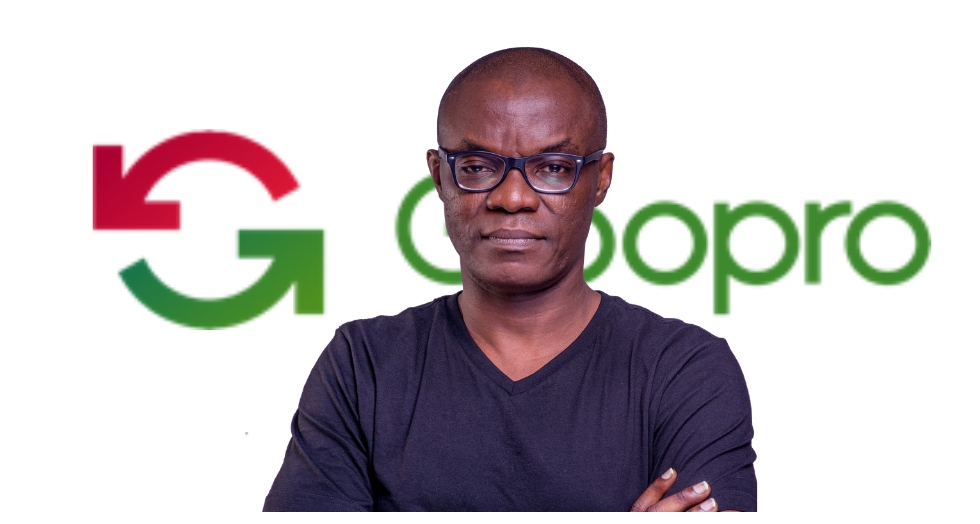
Gloo.ng has fully evolved and it is now called Gloopro. The company has left ecommerce for B2B e-procurement services. It will supply large and medium scale companies with everything from laptops to pencils, and in the process earn monthly fee and a percentage on goods delivered. Gloopro is a pivoting vision as it is simply adding a technology layer to solve a problem which already exists in markets: procurement.

Across many Nigerian business sectors, from banking to insurance, there are vendors supplying items to their business clients. Gloopro has joined that except that it has structured its services as a digital platform. With great visibility for its clients, to monitor inventory pipelines, there is a latent opportunity here to differentiate in the sector.

In addition to Unilever, Gloopro clients include Uber  Nigeria, Cars45 and industrial equipment company LaFarge. Cars45 CEO Etop Ikpe and a spokesperson for Uber Nigeria confirmed their client status to TechCrunch.

Olusanya believes the company can compete with other global e-procurement providers, such as SAP Ariba and GT-Nexus, by “leveraging our sourcing and last-mile delivery experience in Nigeria” and expertise working around local requirements in Africa.

Gloopro expects to hit $4 million in revenue by the end of the year and the company could reach $100 million over the course of its international expansion into countries like South Africa, Kenya, Morocco, Egypt and the Ivory Coast, according to Olusanya. A seed investor briefed on Gloo.ng’s estimates confirmed the company’s revenue expectations with TechCrunch.

There is a promise here as the old marginal cost paralysis in its ecommerce business has gone. Now, it can build a business and scale, knowing clearly that it is not a digital business, but a business that uses digital tools to improve its operations.

Marginal Cost And How To Price Digital Products

Recognising Taste & Smell as Trademark in Nigeria: Protecting Trade Secrets

2

By Ifeanyi Emmanuel Okonkwo

Trademark in Nigeria means a mark used or proposed to be used in relation to goods. A mark itself, as recognised and defined by the Trade Marks Act (TMA) 1967 indicates ‘a device, brand, heading, label, ticket, name, signature, word, letter, numeral, or any combination thereof’.[1]

The above definition, unfortunately, does not cover brands of taste and smell. So why companies may protect their names, signatures, et al, from infringement, a germane aspect of their trade, a brand-taste/smell from which they are known for, is exposed to commercial exploitation.

Indeed, to protect itself, Companies embark on ‘Restraint of Trade’ contracts with employees, affiliates and agents. But we know the sad realities of such contracts – unless they fall in line with public policy and are found to be reasonably necessary, such contracts are usually judged void. When the blue pencil rule is applied in interpreting such restraint clause, what is often left may just not be enough to protect the trade secrets of the proprietors. Besides, why should the law hesitate to protect the rights of every free citizen to participate in trade? Indeed, and truly, sometimes, the restraint of trade clause is not the best of methods. How best then can we protect the trade secrets of a proprietor/employer?

The Trademarks Act essentially is there not to restrain trade/traders, but to protect and promote trade. It is an Act that protects the right to use one’s invented trade mark to the exclusion of others. The owner of such a mark could, of course, assign or licence another to use the mark. The point is that the consumers are not deceived into mistaking the origin of the goods of the proprietor. That way, the proprietor’s customers are protected, and so is the proprietor’s goods, goodwill, and accruable profits.

Suppose then, that the Nigerian TMA defined a mark to include smell and taste, the consequence would be positive. Thus, even when an employee leaves the employer’s company, that employee cannot produce the same product of the employer nor a confusingly similar or identical product. This is because the TMA protects against the use of such mark or confusingly similar marks.[2] Any such mark must be distinctive of a registered mark. 

The Problem

Now, apart from the fact that the Nigerian Act did not define a mark to include taste and smells, there is another problem. The problem here is that a mark sought to be registered, has to be presented or placed in a graphical manner. Such is the necessary interpretation of regulation 23, 24, 25 and 30 of the Trade Marks Regulation (TMR).

The problem is not unknown to developed countries. According to Cornish, Lleweelyn and Aplin:

smell marks face even greater difficulties. When the smell is the main object of the product (as with scent or an air freshener) it should not be capable of being a trademark at all. Even when it is secondary additive (detergent, shampoo, notepaper) it is registrable only on very strong evidence of recognition as a trade mark, assuming that in some way the applicant has complied with the ‘graphical representation’ requirements set out in Sieckmann (2003) R.P.C 38 ECJ’[3]

While it is easy to represent such marks as names, letters, numerals, even colour in the space provided in Form 5, Some have argued that it may be practically impossible (I have used may because I do not believe in impossibilities) to represent a smell or taste in the space provided and present same online. Submitting in person however, may be much easier than through online submission. This is because the product could be glued to the space and covered. Upon opening, the nostrils of the Registrar are visited by the smell. Same can be said when the product is tasted. Now the application makes it clear that what is sought to be registered is not the product but the smell or taste.

Truly, sounds, smells, taste and touch have been successfully recorded and registered in the foreign practice of trade marks. Accordingly, Lea and Cornford assures us:

‘Smell marks are recorded both as having been registered, such as ‘the smell of fresh cut grass’ for tennis balls, and as having been refused registration, such as the ‘smell, aroma, or essence of cinnamon’ in relation to furniture… However, the ECJ in Sieckmann, whilst confirming that smells may act as distinctive signs, appears to have rejected all current practical methods of representing them graphically.’[4]

It is to be noted that the requirement of a graphical representation is a condition established by the Trade Mark Laws of these Countries. Unfortunately, the Nigerian TMA did not expressly provide for such. The graphical representation is a consequence of the Trade Marks Regulations.

Kerly brought out the full fact and implications of the Sieckmann case. He reported:[5]

‘In Sieckmann, the application was to register an olfactory mark comprising “the pure chemical substance methyl cinnamate ( = cinnamic acid methyl ester)” and the structural formula was provided: C6H5-CH=CHCOOCH3. In  addition, Mr Sieckmann gave details where one could obtain the chemical, he submitted with his application an odour sample of the sign in a container and stated that the scent was usually described as ‘balsamically fruity with a slight hint of cinnamon’. The ECJ answered the various questions referred to it in the following way. First, it stated that a trade mark may consist of a sign which is not in itself capable of being perceived visually, provided that it can be represented graphically. Second, so far as the graphic representation is concerned, it laid down the requirements that it must be clear, precise, self-contained, easily accessible, intelligible, durable and objective. Third, the ECJ stated that, in respect of an olfactory sign, the requirements of graphic representability are not satisfied by a chemical formula, description in written words, deposit of an odour sample or combination of those elements’.

Kerly went on to provide his view on the matter on pages 17-18:

‘In the light of those emphatic statements one may ask: how else can one attempt to provide a satisfactory graphic representation of an olfactory mark? There are some possibilities which Mr Sieckmann did not put forward, such as defining the odour by reference to accepted standards of classification for odorants such as Zwaardemaker, … but it is very difficult to find any alternative which would satisfy the requirements laid down by the ECJ. The practical effect of the Sieckmann judgement is probably that it is impossible to obtain a valid registration of an olfactory mark unless or until the requirements for recording the ‘sign’ in question are changed to allow representations other than purely graphic or descriptions in words’.   

Kerly concluded that the same fate befalls a taste mark. It is to be noted that the major reason behind the graphical presentation is certainty. There has to be certainty to even a lay man as to what is sought to be registered. 

The Way Forward

As far as signs/marks of smell and taste are concerned in foreign countries, the ECJ has made their registration almost practically impossible. That fate however, is not and should not be the same for Nigeria.

First, our deduction of the ‘graphical requirement’ is traced to the Regulation which can be amended easily by the Minister of Trade and Commerce.

Secondly, it is my hope that the IPCOM bill sought to be passed would redefine the meaning of a mark and trademark to include smells and taste. That way, many of the problems on restraint of trade will be alleviated if not totally solved; proprietors can be fully protected; and employees/traders can enjoy the fullness of their rights to work/trade.


[1] Section 67 TMA.

[2] Section 5, 11, 13 TMA

[3] Cornish, Llewelyn and Aplin, Intellectual Property: Patents, Copyright, Trade Marks and Allied Rights (7 edn:

Sweet & Maxwell) 2010, p. 738 paras. 18-34.

[4] Gary Lea & Peter Cornford, Trade Marks: law and practice (3rd edn: Jordans, 2012) Pp. 27-28.

[5] Kerly’s Law of Trade Marks and Trade Names (14th, edn: Thomson; Sweet & Maxwell) 2005, p. 7