DD
MM
YYYY

PAGES

DD
MM
YYYY

spot_img

PAGES

Home Blog Page 6958

Entrepreneurial Governance as a Panacea to Sustainability of Nigerian States

0
The coat of arm of Nigeria

By Nnamdi Odumody

The Senate of the Federal Republic of Nigeria recently approved the sum of 30,000 naira as the national minimum wage. Over the past few months the Federal Government, States and the Organized Labour representatives have been involved in discussions with the Senate making a case of impossibility of meeting up with the sum. Considering rising inflation in Nigeria, the sum of N30,000 is nowhere near sustaining an average working citizen for a month. The Nigerian Labour Congress said that the Federal Government and States spend huge running costs which if slashed will make it possible for them to pay the demanded wages.

Nigeria runs a dependency system where all the 36 states and Federal Capital Territory, despite the numerous natural resources available in them, depend on monthly allocations from crude oil earnings. The federal government takes a large percentage while states take the rest.

Abia State estimated Gross State Product was 838.89 billion naira or 0.74 percent of Nigeria’s GDP in 2017. Its agricultural output was 45.59 billion naira (0.19 percent of the country), crude oil output was 117 billion naira. Its Non Oil Industrial Output was 63.1 billion naira contributing 0.4 percent of the country’s non oil industry while its Manufacturing output was 43 billion naira.

Considering the fact that Abia State is home to Aba which is famed for being home to leather and garment manufacturers and other industries, due to absence of enabling infrastructure by previous and the current administrations, its potential and capacity hasn’t translated to prosperity for state government in terms of revenue generation.

Despite its abundant hydrocarbon deposits, there is no petroleum refinery, gas processing industry or petrochemical plant which will have aided its industrialization drive. Its Internally Generated Revenue was 18 billion naira- a paltry sum. Recurrent expenditure, at 31.1 billion naira, was more than capital expenditure, an enabler of unlocking its productivity, which stands at 16.9 billion naira. This made it impossible for the state to pay salaries, and was bailed out by the Paris Club package which the Federal Government gave states across the federation.

Nasarawa State had an estimated Gross State Product of 1.2 trillion naira. Its agricultural output was 962.8 billion naira in 2017, and earned 4.4 billion naira as Internally Generated Revenue. Considering the rich deposits of solid minerals in commercial quantity around the state, the state could have increased her earning capability if it had marketed the assets well. She too was a recipient of fund bailout by the FG to pay salaries of her workers.
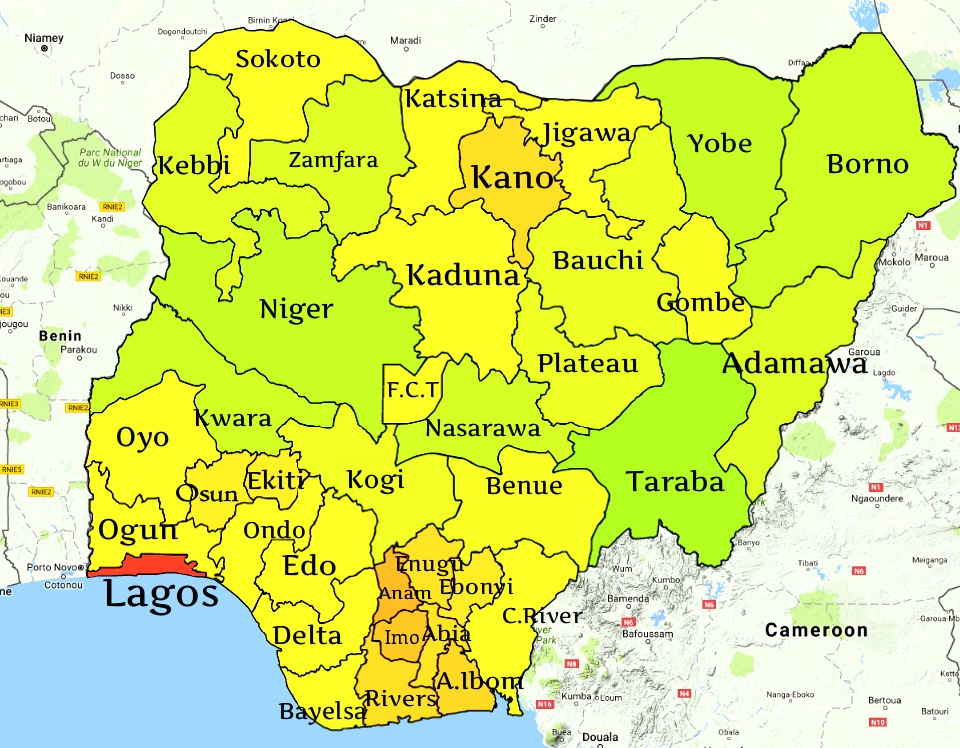
States in Nigeria

Kano State, the Commercial and Industrial Hub of Northern Nigeria, had an estimated Gross State Product in 2017 of 4.26 trillion naira. Considering its rich human and natural resources, strategic location, it should do better in Internal Revenue Generation than it did with 22.2 billion naira generated. Her recurrent expenditure was 157 billion naira while Capital Expenditure was 9.8 billion naira an amount too low to make impact on her 13.4 million people.

Nigerian State Governors should adopt an entrepreneurial approach to governance by unlocking the potentials which abound in their states to create competitive economies which will grow the GDP of the Nigerian economy.


Pursue a first major win with vigor

0

Victory makes relations, enabling more victories: pursue a first major win with vigor. It could be a talk, an article, an exam, a trade, or whatever you find yourself doing. There is always a First for all legends who have built or transformed empires.


Digital Technologies for African Agriculture

0

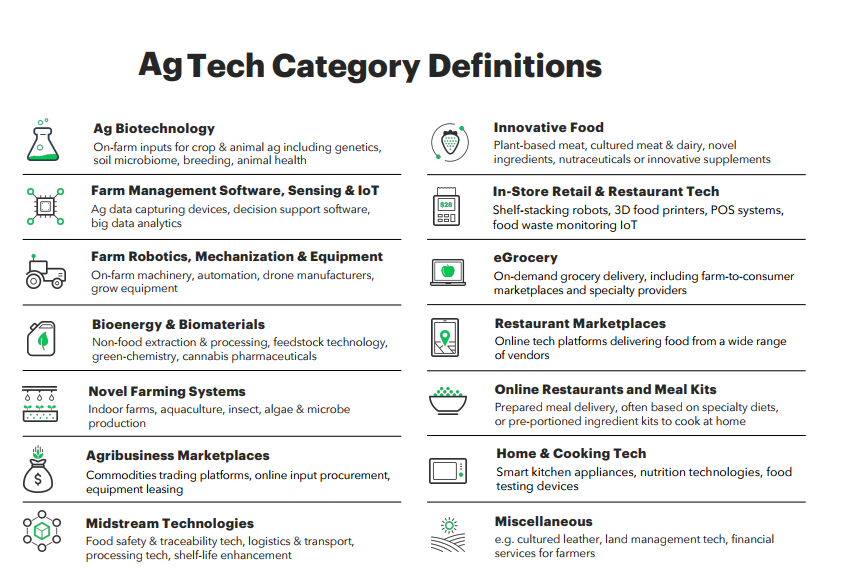
Digital technologies are tackling Africa’s food challenges including low farm productivity, high transaction costs, limited use of modern inputs, minimal levels of commercialization, climate change, and rural-urban migration. While digital tools have already proven to be effective elsewhere in the world, agricultural technology pioneers in Sub-Saharan Africa face roadblocks to scaling up, as the majority of the continent’s farmland is managed by smallholder farmers.

This is particularly evident in Nigeria where agriculture is the backbone of the economy, while its practice has remained unchanged over millennia. Digital agricultural technologies present an opportunity to leapfrog traditional technologies and redefine how food is produced, processed and marketed, disrupting the status quo across the Nigerian agricultural value chain.

A nation where more than 60% of the working population works in agriculture, and yet still farming mass poverty, in the communities of farmers, certainly needs a redesign. Nigeria must adopt emerging digital technologies to feed its growing population.

30 Agro and Agtech Venture Ideas – Execution and Commercialization (Videos & Text)

*Adapted from World Bank newsletter.

Remittances From Nigerian Diasporas Now Exceed The National Budget

0

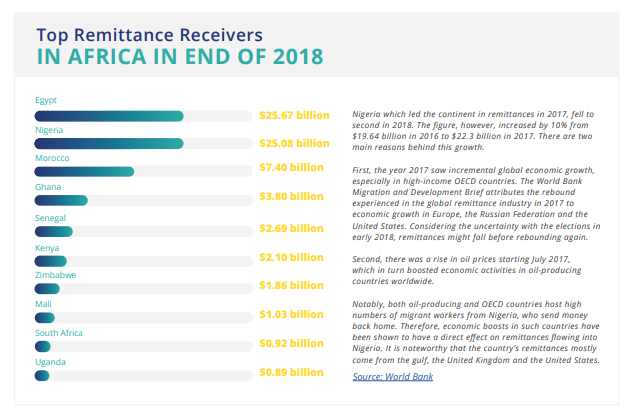
Remittance from Nigerian diasporas (those living outside the country) has exceeded the national budget if you use black market rate. Remittance brought in $25.08 billion last year while our 2019 national budget is $24.53 billion if you use black market exchange rate. Of course there are many elements of the remittance inflow which the World Bank system does not capture. Largely, if you add all of them, the government may decide to create another ministry – Ministry of Remittance Taxation – to boost internally generated revenue in Nigeria! Lol.

With the burgeoning trends of the African diaspora, the citizens of the continent provides a massive economic opportunity both inside and outside Africa. According to the World Bank, the 10% increase in remittance inflows from 2016 to 2017, and is only expected to grow more in the coming few years. While the outside world may see the rising number of Africans moving abroad, this is actually fueled by the relative improvement of economic activities in OECD countries, not by a relative declining of the conditions within Africa. The economic value that Africans creating abroad are the main sources of remittances for Sub-Saharan African countries.

[…]

Nigeria which led the continent in remittances in 2017, fell to second in 2018. The figure, however, increased by 10% from $19.64 billion in 2016 to $22.3 billion in 2017. There are two main reasons behind this growth.

This number for Nigeria is more than the total national budget.

LinkedIn Comment on Feed

Looking at the chart, in other words, if a country is making progress, or show signs of development, less people travel out, and you have decreased remittance…

Head or tail, it’s a pathetic situation, the paltry national budget of less than $25B is nothing, with the level of deficits we are already in. So as the remittances grow, the national productivity output lowers; and decay in infrastructures will accelerate…

There is serious problem here, the countries that have been answering “developing countries” may remain so forever, because the tides are already against them.

You cannot develop a country of Nigeria’s size via remittances that go to families, herein lies the challenge.

We are about to spend half of the year on elections and squabbles that go with them, while more people line up at Immigration offices, waiting for their “calls” to be answered.

The Problem Is Execution, Not Competition

0

Poor execution destroys more startups than any competition. That is why after they are gone, the market frictions remain unfixed. Spend more time thinking on your execution than worrying about competition which may not really matter in inventive but not innovation societies. Inventive societies are full of ideas but innovation societies are full of products and services.

Comment on LinkedIn Feed

It is in execution that capabilities are tested, not at ideas or talking stages. Both in football stadiums and TV studios, we have ‘coaches’ all over the place, until you bring them to sit on the bench; then the brain begins to short-circuit…

Of course when you are starting a business, it’s very easy to sit in your house and imagine how you will acquire 10k customers in six months, or sell N50 million worth of products/services per quarter. By the time you go out to talk to the first prospect, you suddenly realise how tough it really is out there.

Yes, ten people can have similar product ideas, including those who are worried about their ideas being stolen. Anyone who can execute better will always have better chance of winning. What makes a TV or car to come alive is not found in any textbook, it’s always hidden!

The Problems With Inventive Societies [Video]