DD
MM
YYYY

PAGES

DD
MM
YYYY

spot_img

PAGES

Home Blog Page 696

WTO DG Okonjo-Iweala Says Nigeria’s Economy Stable, Next Step Is Growth

0

The Director-General of the World Trade Organization (WTO), Dr. Ngozi Okonjo-Iweala, on Thursday, met behind closed doors with President Bola Tinubu at the Presidential Villa, commending his administration for the economic reforms she said were restoring stability to Nigeria’s economy.

Okonjo-Iweala, who described the meeting as “very good,” said the President was “gracious” to receive her shortly after she joined First Lady, Senator Oluremi Tinubu, to launch a new Women Exporters Fund. The fund, jointly managed by the WTO and the International Trade Centre (ITC) in Geneva, is designed to help Nigerian women entrepreneurs expand their businesses, create jobs, and boost household incomes, especially in the growing digital economy.

She revealed that Nigeria competed and emerged as one of only four countries selected globally for the programme. Out of a staggering 67,000 Nigerian women who applied, 146 were chosen as beneficiaries. Sixteen of these winners, under the “Booster Track,” already operate businesses that will now be scaled up with 18 months of technical and business support from the WTO, ITC, the Federal Ministry of Industry, Trade and Investment, and the Nigerian Export Promotion Council. Another 100 will each receive $5,000 in direct funding alongside a year of business development support, while the remainder will gain tailored assistance to strengthen their enterprises.

“This is just the beginning,” Okonjo-Iweala said, stressing the programme’s potential to diversify Nigeria’s economic base while empowering women. She explained that such initiatives not only stimulate entrepreneurship but also act as an informal safety net, enabling women to better withstand economic shocks.

On Nigeria’s economy, Okonjo-Iweala—who served as Minister of Finance and Coordinating Minister of the Economy under former President Goodluck Jonathan—credited the Tinubu administration with achieving a level of stability she described as a necessary foundation for growth.

“You cannot really improve an economy unless it’s stable,” she noted. “The President and his team have worked hard to stabilize the economy. The reforms have been in the right direction. The next step is growth, and alongside that, building social safety nets so those feeling the pinch of reforms can get support.”

She specifically commended the government’s key policy moves, including the removal of the petrol subsidy and the unification of Nigeria’s multiple foreign exchange windows—measures she acknowledged were difficult but essential for restoring macroeconomic balance. However, she cautioned that while reforms were crucial, they also came with short-term pain, particularly for the most vulnerable Nigerians.

To this end, she urged the Federal Government to prioritize targeted social safety nets to cushion the impact of rising living costs on poor households.

“Growth, job creation, and income expansion must go hand-in-hand with measures to protect those at risk of being left behind,” she said, adding that neglecting such interventions could weaken public support for necessary reforms.

The meeting between Tinubu and Okonjo-Iweala comes just two weeks before the expiration of her first term as WTO Director-General on August 31, 2025, and the commencement of her second term on September 1, 2025. Her historic appointment in 2021 made her the first African and first woman to lead the 164-member global trade body.

Accompanied by Trade Minister Jumoke Oduwole, Okonjo-Iweala also briefed the President on the operational framework of the Women’s Exporters Fund for the digital economy.

She emphasized that the initiative is not just about business growth but also about empowering women to “weather the storms of the economy and create jobs for themselves.”

“This is part of the thinking behind social safety nets and what we can do to support Nigerian women to contribute more to the economy and to themselves,” she said. “Sixteen of them have won what we call the Booster Track—those who already have businesses but whose operations will be scaled up with our support. Another 100 will each get $5,000 to start or strengthen their businesses with 12-month development support.”

Rekt Drinks and Base Collaboration Underscores The Transformative Role of NFT Culture in Building Rekt’s Dominance as a Web3-Native Brand

0

Rekt Drinks announced a collaboration with Base to release a limited-edition flavor called Based Lime. This sparkling water, featuring zero alcohol and zero caffeine, will be available online worldwide, at select Base IRL events, and at select Coinbase offices.

The announcement was made via a post on X by @rektdrinks on August 15, 2025, with the release date stated as “coming soon.” The collaboration with Base, a layer-2 Ethereum scaling solution backed by Coinbase, reinforces Rekt’s strategy of partnering with prominent Web3 platforms to enhance its brand visibility.

Previous collaborations with OpenSea, Abstract, and Jupiter demonstrate Rekt’s ability to leverage NFT infrastructure to drive product launches. The Base partnership extends this model by aligning with a platform focused on accessibility and scalability, potentially broadening Rekt’s reach to a larger crypto audience.

By offering Based Lime at Base IRL events and Coinbase offices, Rekt taps into both physical and digital touchpoints, creating a hybrid engagement model that blends Web3 rewards with tangible products. This approach exemplifies how NFT culture can bridge digital assets with real-world utility, enhancing consumer engagement.

Rekt’s success is rooted in its strong, engaged community, initially built around the free Rektguy NFT mint in 2022. The collaboration with Base continues to leverage this community by offering a collectible product tied to Web3 principles, such as potential rewards (e.g., DRANK points or $REKT tokens), which incentivize participation.

The equity distribution to Rektguy NFT holders in 2024, a pioneering move in Web3, aligns community interests with the brand’s success, fostering loyalty. The Based Lime drop could further incentivize community engagement, potentially through additional token or point rewards, strengthening Rekt’s dominance in community-driven brand building.

Rekt Drinks’ prior success in selling over 600,000 cans and securing shelf space in 7-Eleven stores highlights its ability to transition from a crypto-native brand to mainstream retail. The Base collaboration could further this trajectory by associating Rekt with Coinbase’s reputable brand, potentially easing skepticism from non-crypto consumers.

Potential for NFT-Driven Marketing Innovation

The collaboration could involve NFT-based mechanics, similar to past drops where NFTs were redeemable for physical products and tied to rewards like DRANK points, OpenSea XP, or Abstract XP. If Based Lime follows this model, it could introduce Base-specific rewards, further gamifying the purchase process and reinforcing NFT culture’s role in innovative marketing.

The term “Based” aligns with Web3 and memecoin culture, particularly resonating with communities like those supporting $BRETT on Base. This cultural synergy could amplify Rekt’s appeal among memecoin enthusiasts, potentially integrating $REKT token rewards to deepen engagement.

By tapping into Base’s ecosystem, Rekt positions itself at the intersection of NFT and memecoin culture, potentially driving speculative interest in $REKT and reinforcing its cultural dominance in Web3. Rekt Drinks uses NFTs not just as collectibles but as a mechanism to bridge digital and physical products.

For instance, the Ship Rekt drop with OpenSea involved 7,500 NFTs, each redeemable for a 24-pack of drinks, alongside rewards like DRANK points and platform-specific XP. This model creates a “drink-to-earn” dynamic, where purchasing physical products yields digital benefits, a hallmark of NFT culture’s innovation.

Community Ownership and Decentralized Branding

Rekt’s adoption of Creative Commons Zero (CC0) licensing for Rektguy NFTs allows holders to create derivative works, fostering a decentralized approach to brand expansion. This has led to fan art, merchandise, and community-driven initiatives, amplifying Rekt’s cultural footprint.

The equity distribution to NFT holders further embeds community ownership, aligning with Web3’s ethos of decentralization. This model has helped Rekt build a loyal community that actively promotes its products, contributing to rapid sell-outs and mainstream traction.

NFT culture enables Rekt to transition from a digital art project to a physical beverage brand. The Rektguy character, initially a free NFT mint, has become a recognizable symbol that resonates with both crypto enthusiasts and mainstream consumers. Its imagery on drink cans creates a seamless bridge between digital identity and physical products.

The Rektguy character embodies the “rekt” ethos of crypto traders, turning market losses into a badge of resilience. This cultural resonance has made Rekt a Web3 phenomenon, with high-profile endorsements from figures like Snoop Dogg and Gary Vaynerchuk amplifying its reach.

By leveraging NFT-driven marketing, community ownership, and cultural resonance, Rekt bridges digital and physical markets, achieving rapid sell-outs and mainstream retail presence. The Based Lime drop could further amplify this by tapping into Base’s ecosystem and Coinbase’s credibility, potentially introducing new NFT or token rewards.

However, sustaining this dominance requires balancing crypto hype with broad consumer appeal, navigating market volatility, and addressing skepticism about NFT-driven products. Rekt’s journey from a free NFT mint to a beverage brand in 7-Eleven stores exemplifies how NFT culture can redefine brand-building, positioning Rekt as a leader in the evolving Web3 consumer landscape.

Democratic Senators Ask Trump to Reverse Decision Allowing Chips Export to China

0

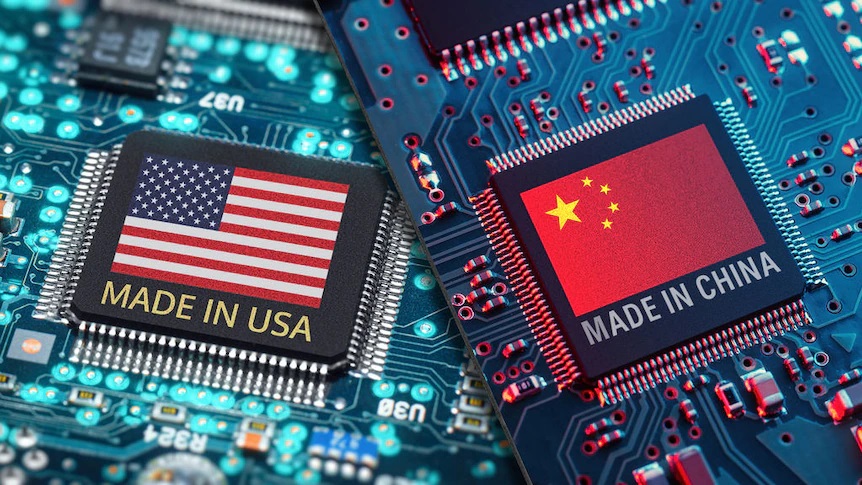
Six Democratic senators have called on President Donald Trump to reverse his decision to allow Nvidia and Advanced Micro Devices (AMD) to resume selling advanced artificial intelligence chips to China in exchange for a 15% cut of revenue from those sales.

The rare open letter, signed Friday by Senate Majority Leader Chuck Schumer (D-N.Y.) and Senators Mark Warner (D-Va.), Jack Reed (D-R.I.), Jeanne Shaheen (D-N.H.), Christopher Coons (D-Del.), and Elizabeth Warren (D-Mass.), sharply criticized the arrangement announced by Trump on August 11. The lawmakers said the deal undermines U.S. national security by trading away America’s technological advantage in sensitive domains for what they described as a mere “commission” on sales.

“Our national security and military readiness relies upon American innovators inventing and producing the best technology in the world, and in maintaining that qualitative advantage in sensitive domains,” the senators wrote. “The willingness displayed in this arrangement to ‘negotiate’ away America’s competitive edge that is key to our national security in exchange for what is, in effect, a commission on a sale of AI-enabling technology to our main global competitor, is cause for serious alarm.”

At the heart of the dispute are Nvidia’s H20 chip and AMD’s MI308 chip, both of which had been restricted under U.S. export controls because of their potential dual-use applications in civilian and military systems. Lawmakers warned that providing these high-end chips could strengthen China’s defense capabilities.

Nvidia has pushed back on that claim. In a statement to CNBC, the company said: “The H20 would not enhance anyone’s military capabilities, but would have helped America attract the support of developers worldwide and win the AI race. Banning the H20 cost American taxpayers billions of dollars, without any benefit.”

But beyond the national security debate, questions are now being raised over the legality of the 15% revenue arrangement itself. Article 1, Section 9 of the U.S. Constitution — the “export clause” — prohibits taxes or duties on goods exported from any U.S. state. The Supreme Court has previously struck down attempts to collect fees or taxes on exports, notably in United States v. IBM (1996) and United States v. United States Shoe Corp. (1998). In both cases, the Court sided with businesses, ruling that such levies violated the export clause.

Also, several analysts have argued that the plan may be unconstitutional, since the power to impose tariffs, duties, and taxes on foreign trade lies with Congress, not the executive branch. The legal argument is that while presidents have broad authority under national security statutes to restrict exports, there is no clear provision that allows them to monetize those restrictions through direct revenue-sharing with private companies.

The senators have demanded that the Trump administration provide a detailed explanation of the Nvidia and AMD arrangement, along with any similar deals under consideration, by August 22. They also urged the White House to “quickly reverse course and abandon this reckless plan to trade away U.S. technology leadership.”

The Trump administration, however, has brushed off both the constitutional concerns and the national security warnings. White House spokesman Kush Desai dismissed the letter, framing it as political posturing.

“It’s quite rich to see Democrats and irrelevant ‘experts’, who were totally MIA when Joe Biden’s autopen administration let H20 chips and other advanced technologies freely flow to China, now pretend to care about our national and economic security,” he said.

Even with Trump reopening the door for Nvidia and AMD, early signs suggest that Beijing is not eager to welcome the companies back. According to Bloomberg, Chinese regulators have instructed domestic firms to avoid purchasing U.S. chips. Qingyuan Lin, a senior semiconductor analyst at Bernstein, told CNBC that authorities are actively halting additional orders of Nvidia’s H20 chips for certain companies.

Separately, The Information reported that China’s regulators have ordered major tech firms, including ByteDance, Alibaba, and Tencent, to suspend Nvidia chip purchases until a national security review is completed.

The clash underscores the deep tension in U.S.–China technology relations. On one hand, Washington is trying to balance domestic industry competitiveness with national security concerns. On the other hand, China is doubling down on efforts to reduce its reliance on U.S. suppliers, signaling that even when restrictions are relaxed, American chipmakers face an increasingly hostile market.

The controversy over the 15% deal not only puts Trump’s semiconductor strategy under scrutiny but also opens the possibility of a looming legal battle in U.S. courts, one that could further complicate the already turbulent technology cold war between Washington and Beijing.

Trump-Putin Summit Ends Without Ceasefire, Rekindles Debate Over U.S. Role in Europe’s Security

0

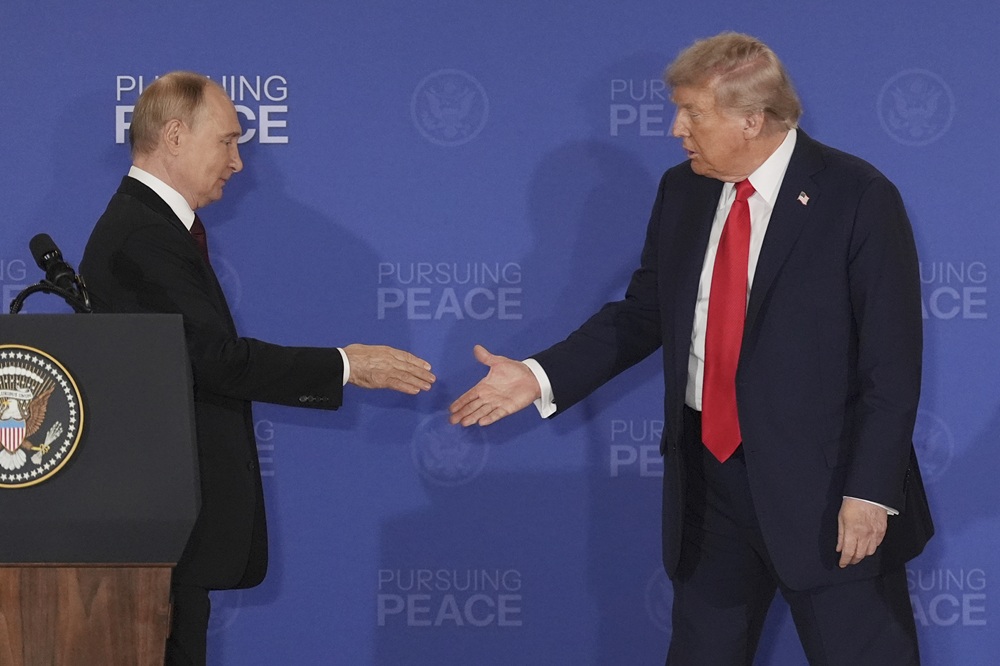
U.S. President Donald Trump’s long-anticipated summit with Russian President Vladimir Putin ended Friday without a ceasefire deal in Ukraine, setting off unease in European capitals and sparking renewed debate over America’s role in the war.

Trump struck a confident tone after the hours-long meeting, telling his supporters on social media that the talks “went very well.” But his refusal to push for a ceasefire immediately, opting instead to emphasize a broader “Peace Agreement,” underscored the fault lines between Washington, Kyiv, and European leaders.

“It was determined by all that the best way to end the horrific war between Russia and Ukraine is to go directly to a Peace Agreement, which would end the war, and not a mere Ceasefire Agreement, which often times do not hold up,” Trump wrote.

The framing marks a sharp contrast with Ukraine and its allies in Europe, who view a ceasefire as an urgent necessity to stop the bloodshed while paving the way toward longer-term peace. European leaders released a joint statement insisting that “it will be up to Ukraine to make decisions on its territory” and warning that without a ceasefire, Russia retains the upper hand on the battlefield.

Ukrainian President Volodymyr Zelenskyy, excluded from the summit, responded cautiously but said he plans to meet Trump in Washington on Monday to “discuss all the details regarding ending the killings and the war.” Trump, in turn, suggested that if progress is made with Zelenskyy, he would then move toward a second meeting with Putin.

The summit also reignited a familiar debate in Europe about Trump’s approach to Russia. Since his first term in office, Trump has been accused by critics of showing unusual deference to Putin. His questioning of NATO’s value, coupled with repeated threats to reduce U.S. commitments to the alliance, has unsettled European leaders who see Washington as indispensable in countering Moscow’s aggression.

At the same time, Trump has often argued that Europe relies too heavily on American defense spending and has pushed allies to shoulder more of the burden. His latest diplomatic overture to Putin deepens the perception among some European capitals that the U.S. president is willing to cut side deals with Moscow, even if it sidelines NATO unity or Kyiv’s priorities.

Moscow seized on this moment to project victory. Putin described the talks as “very frank, meaningful and, in my opinion, this brings us closer to the necessary decisions.” Russian senator Andrei Klishas went further, declaring that “a new European and international security architecture is on the agenda and everyone must accept it.”

For Trump, the summit fits into his longstanding pattern of pursuing personal diplomacy with strongmen—whether with Putin, North Korea’s Kim Jong-un, or China’s Xi Jinping—arguing that direct leader-to-leader engagement can achieve breakthroughs where traditional diplomacy stalls. His critics, however, warn that such a strategy risks legitimizing adversaries while undermining alliances built over decades.

The stakes are particularly high in Ukraine. Without a ceasefire, Russia retains room to expand its territorial grip and test the resolve of Europe’s sanctions regime. European leaders vowed to keep the pressure on Moscow: As long as the killing in Ukraine continues, we stand ready to uphold the pressure on Russia, they said, promising to strengthen sanctions until “there is a just and lasting peace.”

The outcome of the summit means the war continues for now. Trump is betting that his personal brand of dealmaking can deliver what months of Western pressure and battlefield struggles have not: a negotiated peace. Whether that gamble pays off or deepens divisions within the West will become clearer after his meeting with Zelenskyy in Washington.

The great illusion of Vibe Coding

0
The Vibe Coding Journey begins in the LLM (Large Language Model) Experience 

When AI is asked about the number of Rs in “cranberry”, “elderberry” or “barberry”, different answers might be given each time, ranging from two to four, and only sometimes three. This inconsistency isn’t a glitch, but rather a fundamental aspect of the transformer architecture that underlies language models.

Unlike humans, these models don’t count letters; instead, they rely on probability distributions to sample tokens. So, an inquiry about the number of Rs in a word prompts the system to predict the typical token sequence that follows that question pattern, without examining the word letter by letter.

The predictions are sometimes correct and sometimes not, as there’s no symbolic reasoning or mental model of the word as a sequence of characters at play. The transformer architecture compresses words into embeddings that capture semantic relationships and contextual token patterns, but these embeddings don’t preserve structural information about spelling.

As a result, the model can’t “see” individual letters the way humans do when spelling out a word like C-R-A-N-B-E-R-R-Y. To the model, two Rs are simply a token, not two distinct letters. This limitation has significant implications, as humans can count letters with perfect accuracy every time, simply by holding the word in mind as a sequence and counting systematically. In contrast, large language models (LLMs) require careful orchestration, step-by-step prompting, and external tools, as well as human guidance for every symbolic operation. While it’s possible to work around these limitations using techniques like chain of thought prompting and retrieval systems, these workarounds are essentially patches that cover up fundamental gaps in the models’ capabilities.

The economic promise of general intelligence breaks down when every simple task demands complex scaffolding. The reality is that LLMs excel at pattern matching, but they need constant supervision to perform basic symbolic operations accurately. Moreover, these models tend to prioritize likelihood over truth and are inherently brittle.

Like simple spell checker and calculator technology before them, the user MUST have an instinctive ‘feeling’ for the suggested data, otherwise  ‘invested’ may be accepted, when the word needed is ‘invented’ or 2047 instead of 20,047.

But this broader grasp of rudimentary language or mathematics being ‘right’ is something we have mastered leaving primary school.

Coding is something completely different. In 2025, most people finishing secondary school may have done some very basic programming, perhaps in Python.

Serious programming for most people is a professional pursuit they follow afterwards.

Vibe coding is an AI-assisted software development method where users describe their desired software in natural language, and the AI generates the corresponding code. While it makes coding more accessible, it also presents several significant challenges.

They begin by creating prompts in an approach that’s similar to using LLM. In most cases, the inherent skills they have to proof read for a spell check result, or do a quick ‘rough’ mental arithmetic to check a calculator result, is replaced by overview and interrogation skills beyond most vibe-coders.

Software design is a less exact science, and because something looks great, and seems to work, doesn’t mean it’s secure, free of malicious things, efficient, or even right all the time.

Add that many vibe-coders have no clue how to discover and fix subtle or nuanced problems.

Vibe coding places the challenges AI models have in ‘LLM’, ‘on steroids’.

Repeat problems experienced with vibe-coding.


Security.  The most concerning risk with AI-coded software is security vulnerabilities due to the code’s learning from public repositories, including insecure patterns. AI models suggest code with known vulnerabilities, such as malicious code, SQL injection, and insecure file handling, as they are an average of all developers’ shared work, including their security failings.

Maintenance and Scaling. AI-generated code from vibe coding can be hard to maintain or scale. It often passes initial tests but is brittle and poorly organized, with inconsistent structure, minimal comments, and ad-hoc logic. This lack of documentation and organization makes the software difficult to understand or extend. The codebase quickly accrues technical debt due to inefficient or overly complex solutions. AI-introduced inconsistencies in naming, coding styles, or logic flows make the codebase harder to navigate. Scaling applications created with vibe coding tools is challenging, as adding new features or handling more users may require a costly and time-consuming rewrite due to the underlying system design.

A Triumph of Style over Substance. AI may over-engineer simple features, introducing unnecessary complexity, convoluted patterns, or extra components. This results in a more complicated app that’s harder to understand or slower to load. Flashy design doesn’t replace well-thought-out user experience design, and relying on vibe coding can prioritize appearance over substance, requiring human judgment to ensure the design serves the product’s goals without unnecessary complexity.

Inadequate and insufficient training content. Vibe coding platforms are optimized for common use cases and standard tech stacks. Their training is often pre 2021 and they struggle with much that’s exotic. This includes much in Web 3.

Tools like Lovable and Bolt have limited integrations and building blocks. If a feature is outside their environment, custom code is required. Integration with less-common frameworks may be limited or impossible.

We’ve seen many people make interesting posts with them on platforms like LinkedIn, but other than an interesting looking support image or video for the post, there’s no evidence any of these things actually work.

There’s probably some good stuff out there, but we’re not yet finding anything we can endorse.

The Verdict on Vibe Coding.

At the moment, Vibe Coding has limited application due to:

  •  Limited and aged training library
  •  Insufficient security scrutiny by content selection algorithms
  • Insufficient intuitiveness for efficiency and eloquence of code assembly and expression
  • Overblown expectations of being an easy tool for everyone
What it can be used for:
  •  Static and Simple constructs that lack evolving back-ends, interoperability, bridges, integrations,  handling personal or valuable data, such as:  – Simple Websites, Html Email footer design, Code-rich Social Media visual data, virtual presentations, some testing, some educational.
  • ‘Heavy Lifting’ by experienced coders who are authoring AI components in sandboxes and integrating them with manual steps in a project they manage end-to-end.
What to be careful of:

Just like from 2021 we had the bitcoin grafters and 2022 began the Web 3 grafters, we now have these software engineer/product design grafters who have appeared out of thin air claiming they can code anything. Experienced technicians will have a portfolio with credible referees. Validate that they have a substantial body of work pre-2023 (pre vibe-coding), especially if the arrangement will be remote.

It will get better, but ‘we’re still early’

Credit : Veronica Bridgewater, 9ja Cosmos Ambassador focusing on LinkedIn presence – Cocktail of Social Media extracts.

Glideapps Article.

9ja Cosmos is here…

.det0x Domains

Detoxant 3 Tokenized Artworks

Detoxants – FiendYard Fruit & Veg

Opaque Emotion Pathways Tokenized Artworks

Preview our Sino Amazon/Sinosignia releases (Ente)

Visit 9ja Cosmos LinkedIn Page

Visit 9ja Cosmos Website