DD
MM
YYYY

PAGES

DD
MM
YYYY

spot_img

PAGES

Home Blog Page 698

Nedbank Sells 21.22% Stake in Ecobank to Bosquet Investments, Ending 17-Year Shareholding

0

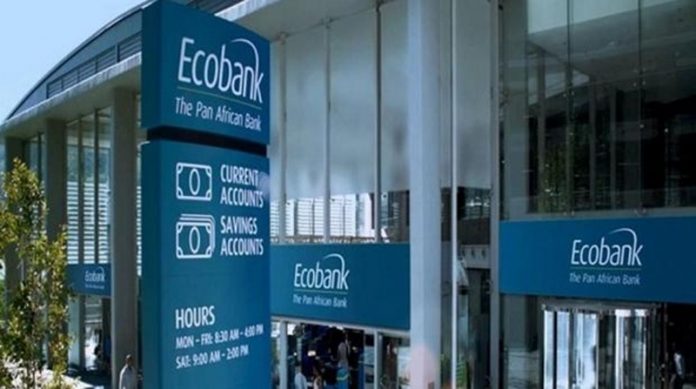
Business circles across Africa are viewing Nedbank Group’s decision to sell its 21.22% stake in Ecobank Transnational Incorporated (ETI) as a natural evolution in both banks’ strategic priorities.

Many industry analysts say the move is mutually beneficial — allowing Nedbank to sharpen its focus on its home markets in Southern and Eastern Africa, while ushering in a new phase of growth for Ecobank under a shareholder deeply rooted in its history and committed to its expansion.

The deal, announced on Friday by ETI in a filing on the Nigerian Exchange (NGX), will see Bosquet Investments Ltd., the private investment vehicle of former ETI Chairman Alain Nkontchou, acquire the stake from Nedbank. The transaction remains subject to regulatory approvals. Enko Capital Management LLP is acting as the lead advisor, with Absa Bank Limited’s Corporate and Investment Banking division serving as co-financial advisor.

Nedbank’s 2008 Entry into Ecobank

Nedbank first entered Ecobank’s shareholding in 2008 during the height of the global financial crisis, when African banks were exploring cross-border synergies to boost resilience and market reach. The South African lender invested around US$500 million in a strategic alliance with ETI. The partnership aimed to create a pan-African banking network that could serve clients seamlessly across both Southern Africa — Nedbank’s stronghold — and Ecobank’s West and Central African footprint.

Under the alliance, the two banks referred clients to each other, collaborated on trade finance, and provided joint services to multinational corporations operating across Africa. For years, the relationship was held up as a textbook case of African banking integration.

Strategic Shifts Leading to the Exit

However, in recent years, Nedbank has been recalibrating its priorities amid changing market dynamics and regulatory pressures. The group’s recent strategy update has emphasized deepening its presence in Southern and Eastern Africa, where it holds majority control of its operations, rather than maintaining large equity positions in markets where it has no operational control. Analysts say the exit from ETI reflects this sharper focus on geographic and operational consolidation.

For Ecobank, the move comes at a time when the pan-African lender has been pursuing its “Growth, Transformation, and Returns” strategy under CEO Jeremy Awori, with renewed emphasis on digital banking, SME financing, and strengthening profitability after a period of restructuring.

Alain Nkontchou, founder of Bosquet Investments, said he was “very pleased” to have reached this stage with the Ecobank Group, pledging to support the bank’s strategic ambitions and expressing confidence that the institution would “seize the opportunities ahead and lead the organization into a new era of sustained success.”

Awori welcomed Bosquet Investments as a “significant shareholder,” describing the transaction as “a strong vote of confidence” in Ecobank’s trajectory.

“This important milestone reflects a deep and enduring commitment to our Group’s growth and success. Their investment is a strong vote of confidence in our Growth, Transformation, and Returns strategy, our performance, and our people,” Awori said.

He paid tribute to Nkontchou’s leadership since joining the board in 2014 and serving as chairman from 2020 to 2024, a period in which Ecobank returned to profitability. Awori also extended “deep appreciation” to Nedbank for a “constructive partnership” over 17 years, noting they remain “a valued commercial partner.”

About Bosquet Investments

Bosquet Investments Ltd. is the private investment vehicle of Alain Nkontchou. Beyond his Ecobank role, Nkontchou is co-founder and managing partner of Enko Capital, an African-focused asset management firm managing about US$1.2 billion in alternative and traditional funds across the continent.

If regulatory approvals proceed smoothly, this deal will mark one of the most significant shifts in Ecobank’s shareholder base since Nedbank’s landmark 2008 investment — closing one chapter of South Africa–West Africa banking collaboration while opening another built on insider commitment and pan-African ambition.
Oando Completes First Phase of 679.3m Share Distribution to Boost Shareholder Value

0

In Nigeria’s oil sector, Oando Plc, an indigenous energy giant, is making headlines with a major shareholder reward initiative. The company has completed the first tranche of its planned share distribution, allocating 679,364,206 fully paid shares to eligible investors in what the company describes as a strategic move to deliver long-term value.

The allocation marks the completion of the first phase of a two-stage distribution involving a total of 1,283,712,601 shares, a plan approved by Oando’s Board of Directors in January 2025. The process stems from a settlement arrangement ratified at the company’s 45th Annual General Meeting in December 2024, where shareholders agreed to surrender a portion of their holdings for redistribution. Shares were earmarked for allocation on a pro-rata basis, ensuring that investors benefited in proportion to their existing stakes.

The first tranche, launched on February 14, 2025, was completed after receiving regulatory clearance in July. Under the plan, shareholders received one fully paid share for every twelve they already held, representing an 8.3 percent yield based on the prevailing market price at the time. The second tranche will be allocated to investors on record as of June 30, 2025, with details to be announced in the coming months.

Commenting on the development, Oando’s Group Chief Executive, Wale Tinubu, CON, described the initiative as a demonstration of the company’s “unwavering commitment to delivering tangible value to our shareholders.” He noted that the issuance came with no dilution to existing holdings, effectively increasing investors’ stakes without requiring additional capital.

For shareholders, the distribution not only boosts ownership but also offers the potential for future value appreciation, particularly if the company maintains strong performance.

From a corporate perspective, Oando sees the move as an opportunity to optimize its share structure, manage outstanding shares, reinforce investor loyalty, and ensure compliance with regulatory requirements. The company has encouraged any eligible shareholders who have not yet received their first tranche allocation to contact its registrar and update their records.

The distribution forms part of Oando’s broader strategy to streamline operations and strengthen its capital base, a plan aligned with resolutions from an Extraordinary General Meeting held on August 12, 2025, to address capital diminution. At that meeting, shareholders reviewed measures in accordance with Section 137 of the Companies and Allied Matters Act, 2020, aimed at reducing the company’s capital for the 2024 financial year.

The EGM came on the heels of Oando’s 46th Annual General Meeting earlier the same day, where a series of ordinary and special resolutions were approved. Among the key decisions was authorization for the company to raise up to N500 billion in fresh capital, a move seen as essential to funding growth initiatives and navigating market volatility.

With the first phase of the share distribution now complete, attention will turn to the execution of the second tranche later this year and the potential impact of Oando’s capital-raising efforts on its market position. For investors, the company’s latest moves signal a strong bid to balance shareholder rewards with long-term growth ambitions.

NCC Attributes Nigeria’s Telecom Sector’s $1bn Investment Boost to Market-Driven Pricing

0

Business leaders in Nigeria’s telecom industry say the government’s recent shift back to market-driven pricing is one of the most decisive steps taken in years to revive the sector, restore investor confidence, and close the yawning gap in infrastructure.

The Nigerian Communications Commission (NCC) now confirms that the policy has already attracted more than $1 billion in fresh infrastructure investments in 2025, just months after it took effect.

Speaking at an interactive session with journalists in Lagos on Friday, NCC Executive Vice Chairman Aminu Maida said the landmark pricing reform—rolled out in January and February—ended nearly a decade of frozen tariffs for mobile network operators (MNOs). The new framework allows operators to adjust tariffs by up to 50%, reversing years of underinvestment and sluggish network expansion.

“This act alone has allowed investments to flow in,” Maida said. “We will be revealing more specific figures in the coming weeks after verification, but we are talking about over a billion dollars’ worth of investment in 2025 alone.”

Breaking a Decade-Long Stalemate

For years, Nigeria’s telecom sector operated under a rigid pricing structure that left MNOs unable to adjust service rates despite spiraling costs. Tower companies, by contrast, had annual leeway to revise prices in line with inflation and foreign exchange fluctuations, creating an uneven playing field.

The freeze, according to industry insiders, discouraged investment, delayed equipment upgrades, and eroded service quality—particularly as global telecom technology evolved rapidly. The NCC opens the way for operators to reposition Nigeria among competitive telecom markets worldwide by restoring the principles of the 2000 National Telecom Policy and the 2003 Communications Act, which advocate for market-driven pricing while safeguarding competition and consumers.

“This is an industry that requires continuous investment,” Maida said. “The world is moving ahead, and if we do not create the right conditions, we will be left behind.”

Maida disclosed that telecom operators began placing fresh equipment orders earlier this year, with deliveries starting in June. Network expansion and upgrades are now underway across the country.

“We are closely tracking the rollout,” Maida explained. “We hold weekly calls with operators to monitor site builds, upgrades, and to step in when they face challenges with authorities.”

Industry analysts say these upgrades could significantly boost capacity, improve internet speeds, and enhance voice service quality—factors that are crucial to Nigeria’s digital economy ambitions.

Cost Pressures Still Loom

While celebrating the new investment inflow, Maida acknowledged that operators still face enormous operational cost burdens. The sector consumes more than 40 million liters of diesel each month—most of it imported—to power base stations.

The foreign exchange dependency is equally crippling. All network hardware and software is imported, with no domestic production capacity for critical telecom equipment.

“There is nothing you need to build or upgrade a network today in Nigeria that you can buy locally,” Maida said.

Securing the Lifeline of the Digital Economy

The NCC is also addressing the security risks to Nigeria’s telecom backbone. Working with the Office of the National Security Adviser (ONSA), the regulator is developing region-specific rapid response frameworks to protect infrastructure.

The approach varies by geography—coastal areas require more community engagement, while volatile regions need a stronger civil defense presence. Maida stressed that the strategy goes beyond deploying force; it tackles the root causes of site vulnerability, such as inadequate security, generator theft, and disputes with host communities.

With the new pricing model breathing life back into the sector, and with targeted investments and security measures in motion, many believe Nigeria could be on the cusp of its most significant telecom transformation in a decade—provided the momentum is sustained.

Trump’s Revenue-Sharing Deal With Nvidia and AMD Could Expand Beyond Chips, Even As Its Legality Comes Into Question

0

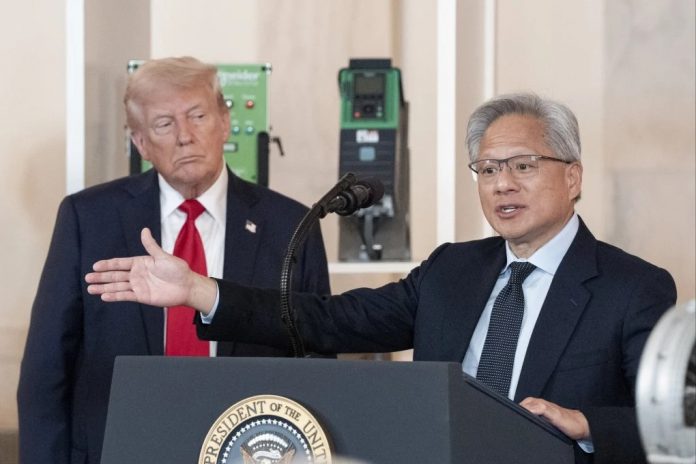
The U.S. government’s landmark 15% revenue-sharing agreement with Nvidia and AMD on Chinese chip sales is drawing both praise and legal questions, as the Trump administration positions it as a model for future deals across other industries.

U.S. Treasury Secretary Scott Bessent described the arrangement as a “beta test” in a Bloomberg TV interview, hinting that the framework could be replicated beyond semiconductors.

“We could see it in other industries over time,” Bessent said, underscoring the administration’s confidence in the policy’s revenue potential.

The deal, announced earlier this month, is part of the Trump administration’s broader effort to increase domestic funding from foreign sales without directly imposing tariffs that might trigger retaliation. Under the agreement, Nvidia and AMD will pay the U.S. government 15% of their revenue from certain high-performance chips sold to China — chips that are not subject to outright export bans but still fall within Washington’s strategic technology oversight.

The move also fits into the White House’s push to use new tariffs and revenue-sharing deals to slow the growth of America’s $37 trillion national debt. According to the Committee for a Responsible Federal Budget, these measures are already bringing in enough money to noticeably offset deficit expansion.

However, the deal faces potential constitutional challenges. Article 1, Section 9 of the U.S. Constitution — the “export clause” — prohibits taxes or duties on goods exported from any U.S. state. The Supreme Court has previously struck down attempts to collect fees or taxes on exports, notably in United States v. IBM (1996) and United States v. United States Shoe Corp. (1998). In both cases, the Court sided with businesses, ruling that such levies violated the export clause. Whether today’s Court would rule the same way remains uncertain, especially given recent rulings that have expanded the powers of the Executive Branch in trade and national security matters.

The Nvidia–AMD deal traces back to months of tense negotiations between the White House, chipmakers, and national security officials. President Trump had initially floated the idea of a complete ban on advanced chip sales to China, citing concerns about military applications.

Industry leaders, led by Nvidia CEO Jensen Huang and AMD CEO Lisa Su, warned that such a move would severely impact revenues, global market share, and America’s technological leadership. The compromise — a revenue-sharing model — allowed companies to continue selling certain downgraded products to China while providing the U.S. government with a steady income stream.

Analysts say the arrangement could become a blueprint for balancing national security concerns with corporate interests in other sensitive sectors, from aerospace to biotech. Yet the constitutional cloud hanging over the policy raises the prospect of legal challenges that could force the courts to revisit the export clause for the first time in over two decades.

Beijing and Washington’s continued weaponization of exports and global supply chains means companies are bracing for further disruption. The disruption comes with some rapid policy shifts that defy the norm. For the Nvidia–AMD agreement, it is not clear if the entities involved, or anyone else, intends to challenge the legality. However, it will be of great interest to business leaders to see if the deal survives court scrutiny.

BlockDAG’s Presale Soars to $374M: Here’s Why It’s the Top Altcoin to Buy Right Now!

0

In a space crowded with short-term hype plays, BlockDAG is cutting through the noise with long-term potential that’s hard to ignore. The project has already secured $374 million in its presale and is now in Batch 29 at $0.0276, powering toward its $600 million milestone.

Holders aren’t just picking up a coin; they’re stepping into an expanding ecosystem with advanced tech, genuine adoption, and a rapidly growing global base. Market chatter points to a possible $1 valuation after listing, meaning today’s entry into BlockDAG could translate into more than 36x gains in the coming months!

$374M Raised and Still Climbing

BlockDAG’s presale has been a showcase of nonstop momentum. With 200,000+ holders, 19,000 ASIC miners sold, and over 2.5 million global X1 Miner app users, the scale of adoption before launch is impressive. Batch 29’s $0.0276 pricing already sets up early buyers for close to an 81% gain compared to the confirmed $0.05 listing price, before trading even begins.

Recent purchase trends highlight strong whale accumulation, driven by BlockDAG’s rare combination of hybrid Proof-of-Work + DAG consensus and EVM compatibility. This pairing delivers both security and scalability, with flexibility for developers.

Brand visibility is also expanding through major sponsorships with Inter Milan, the Seattle Seawolves, and the Seattle Orcas, giving the project a presence across Europe, North America, and Asia. On top of that, community engagement is thriving through AMA sessions, referral rewards, and frequent feature updates, further cementing loyalty and ensuring ongoing user participation ahead of launch.

Why Builders Choose BlockDAG

BlockDAG is building far more than market hype; it’s laying the foundation for long-term network growth. Already, 4,500+ developers are active across 300+ decentralized applications spanning DeFi, NFTs, and more.

Thanks to EVM compatibility, Ethereum-based projects can migrate seamlessly, rapidly boosting the dApp landscape. This places BlockDAG as a credible Layer-1 contender against names like Solana, Avalanche, and Kaspa.

The project’s developer-friendly environment is also supported by grants, hackathons, and detailed technical documentation, helping teams bring projects to life faster.  By fostering innovation at every stage, BlockDAG is ensuring that its ecosystem won’t just be big at launch; it will continue expanding with new platforms, tools, and use cases.

With a $0.05 listing price locked in, analysts are eyeing a potential run to $1 during the next major bull phase. If achieved, Batch 29 buyers could see a 36x increase, turning $5,000 into $180,000, making it one of 2025’s standout altcoin opportunities.

The Window For Gains is Closing Fast

Each presale batch comes with a built-in price increase, meaning those buying today secure better entry than anyone tomorrow. With BlockDAG halfway to its $600M target, available supply is shrinking as demand ramps up. The momentum is accelerating, whales are locking in positions, retail buyers are coming in via the X1 Miner app, and global sponsorships are pushing awareness further. The sub-$0.03 window won’t last long.

From unprecedented presale figures to a thriving developer network and wide-reaching marketing, BlockDAG has positioned itself as the top altcoin to buy right now.

Sitting at $0.0276 in Batch 29 with $374M raised and a realistic $1 price target after launch, this is one of those rare crypto moments where early action could set the tone for future gains. Offering both real utility and growing hype, BlockDAG is already on the radar of the market’s smartest players.

Presale: https://purchase.blockdag.network

Website: https://blockdag.network

Telegram: https://t.me/blockDAGnetworkOfficial

Discord: https://discord.gg/Q7BxghMVyu